INTERNACIONAL
Quién es Leonardo Bertulazzi, el integrante de las Brigadas Rojas italianas que se fugó en San Telmo


Leonardo Bertulazzi tiene 74 años, es italiano y formó parte de las Brigadas Rojas, una organización armada de extrema izquierda que protagonizó una serie de secuestros, atentados y asesinatos durante las décadas de 1970 y 1980. Este martes, su nombre volvió a quedar en el centro de la escena después de que escapara del arresto domiciliario que cumplía en un departamento del barrio porteño de San Telmo, mientras esperaba ser extraditado a su país.
El exintegrante de la organización tenía una condena de 27 años de prisión dictada por la Justicia italiana. Uno de los principales hechos por los que fue sentenciado fue el secuestro del ingeniero naval Pietro Costa, ocurrido en enero de 1977.
Además, las investigaciones lo vincularon con tareas logísticas relacionadas con el secuestro del ex primer ministro italiano Aldo Moro, uno de los episodios más resonantes de la historia política de Italia.
Su participación en las Brigadas Rojas
Bertulazzi integró la columna de Génova de las Brigadas Rojas, una de las estructuras territoriales de la organización. El grupo armado desarrolló buena parte de su actividad durante los llamados años de plomo, un período marcado por la violencia política, los atentados y los enfrentamientos entre organizaciones extremistas en Italia.
El 12 de enero de 1977, el ingeniero naval Pietro Costa fue secuestrado por integrantes de la organización. Costa pertenecía a una familia vinculada con la industria de los astilleros y permaneció cautivo hasta fines de marzo de ese año, cuando fue liberado después del pago de un rescate.
Por ese episodio y su pertenencia a la organización armada, Bertulazzi recibió una condena de 27 años de prisión. La sentencia quedó firme en Italia. Su nombre también apareció relacionado con el secuestro de Aldo Moro, quien había sido primer ministro italiano y era una de las figuras más importantes de la Democracia Cristiana.
El secuestro y asesinato de Aldo Moro
El 16 de marzo de 1978, un comando de las Brigadas Rojas interceptó el vehículo en el que viajaba Moro, asesinó a sus cinco custodios y secuestró al dirigente político en Roma.
El ex primer ministro permaneció cautivo durante 55 días. Finalmente, el 9 de mayo de ese año, su cuerpo fue encontrado dentro de un automóvil abandonado en el centro de la capital italiana.
Bertulazzi fue señalado por su participación en tareas logísticas de la organización durante ese período. Si bien su condena de 27 años estuvo vinculada principalmente con el secuestro de Pietro Costa, su trayectoria dentro de las Brigadas Rojas también quedó asociada a uno de los crímenes más impactantes de la historia contemporánea italiana.
Sus primeros años prófugo y su llegada a la Argentina
Bertulazzi permaneció prófugo durante décadas. Llegó a la Argentina en 2002 y ese mismo año fue detenido por primera vez, aunque recuperó la libertad meses después.
En 2004 obtuvo el reconocimiento como refugiado político, una condición que impidió que avanzara su extradición a Italia. De esa manera, pudo permanecer en el país durante años pese a los requerimientos de la Justicia italiana.
La situación cambió en agosto de 2024, cuando el Gobierno argentino le retiró esa condición y volvió a detenerlo en Buenos Aires, después de un operativo de inteligencia en el que participaron distintas áreas del Estado.
Desde entonces, permanecía bajo arresto domiciliario mientras se resolvía el proceso de extradición. La Corte Suprema de Justicia había declarado procedente el pedido de Italia, aunque todavía quedaban cuestiones judiciales pendientes vinculadas con su anterior condición de refugiado.
Tras la fuga, el Gobierno nacional oficializó una recompensa de $20 millones para quienes aporten información que permita localizar y detener a Bertulazzi.
La medida quedó establecida mediante la Resolución 1168/2026, publicada en el Boletín Oficial, en el marco del Programa Nacional de Recompensas. Quienes tengan información sobre su paradero pueden comunicarse de manera gratuita con la línea 134.
Italia, Terrorismo, secuestro












INTERNACIONAL
Dakota Meyer survived a battle he thought would kill him. 15 years after leaving the Marines, he went back
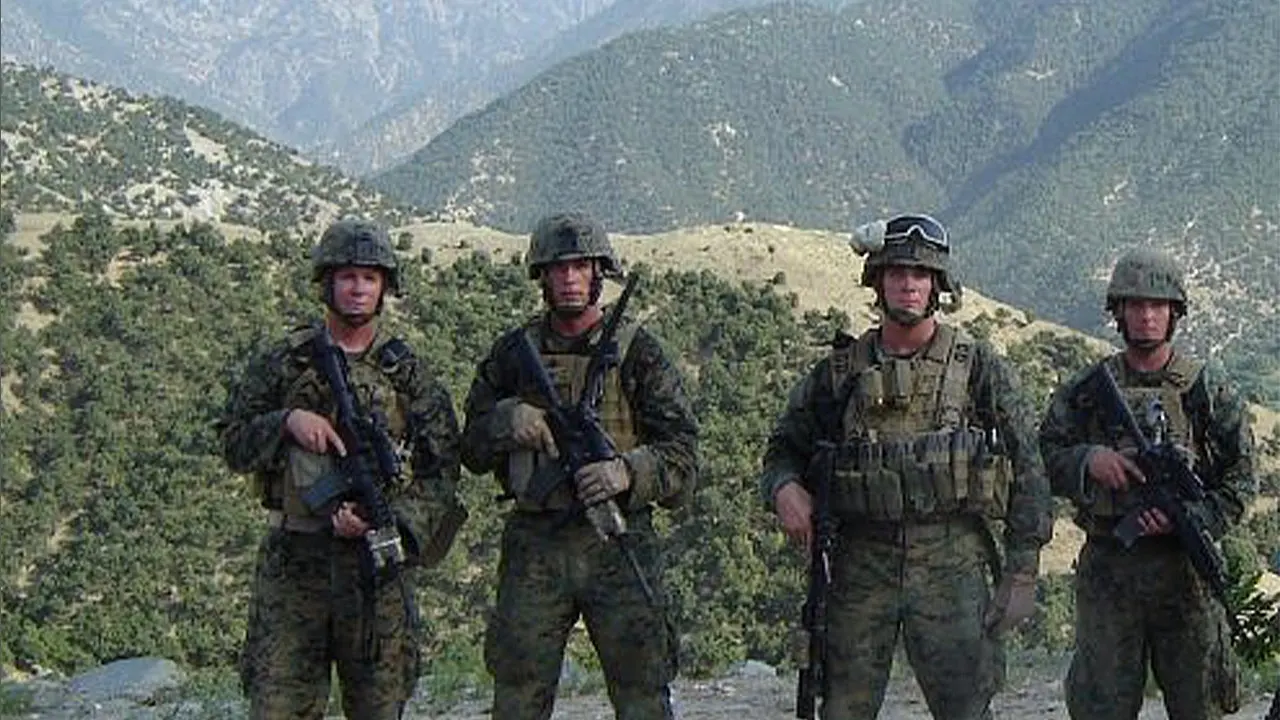
Fifteen years after Dakota Meyer left the Marine Corps, the Medal of Honor recipient decided to put the uniform back on — becoming the first with the award to ever reenlist.
Meyer was 36. He had fought in Afghanistan, struggled with the transition home from war and spent years building a life outside the military. But he said the desire to serve never went away.
«Every day after I took that uniform off, that desire to serve didn’t just end because my commitment to the country did,» Meyer told Digital in an interview ahead of Veterans Day.
AMERICAN WAR HERO DETAILS DIRE LIVING CONDITIONS US TROOPS FACE AS HEGSETH TAPS HIM TO ‘FIX’ IT
Meyer rejects the idea that receiving the Medal of Honor meant he had already done enough.
«I think sometimes it’s looked at as you’ve done your part, and I am wholeheartedly against that,» he said. «I believe that the only time you’ve done your part is when you’ve done all that you can.»
For Meyer, Veterans Day is a reminder that service does not necessarily end when someone leaves the military.
«Sometimes we look at the veteran title as it is something that represents something we’ve done,» Meyer said. «And it’s not. It’s something that we are doing, and it is something that we can continue to do.»
Meyer re-enlisted in 2025 and later entered the training pipeline to become a reconnaissance Marine, completing the grueling course in his late 30s.
«To be able to do that at 38, it was definitely one of the — hands down — probably the hardest thing that I’ve ever had to do,» Meyer said.
His first stint in the Marines had taken him to Afghanistan, where at 21 he fought in the 2009 Battle of Ganjgal in Kunar Province.
Meyer had been assigned to remain with the vehicles at a rally point while other members of his team accompanied Afghan troops toward the village roughly a mile away. The patrol was ambushed by more than 50 insurgents firing from fortified positions on the surrounding slopes.
MEDAL OF HONOR RECIPIENT JAMES CAPERS JR. SAYS RECOGNITION IS BITTERSWEET AFTER LOSING ‘SO MUCH’
Meyer and Staff Sgt. Juan Rodriguez-Chavez could hear the battle unfolding over the radio. Four members of Meyer’s team were trapped inside the ambush.
After repeatedly asking for permission to go in, Meyer and Rodriguez-Chavez drove toward the fighting, with Meyer manning the gun turret.
«I think often we try to make these decisions as if it’s some heroic decision, and it’s really not,» Meyer said. «It’s just about following through on what my promise that I had made to them.»
The pair made repeated trips into the ambush, helping evacuate wounded troops as Meyer continued searching for his teammates.
«I think it was at that point that I did realize that I just accepted that I was going to die,» Meyer recalled. «But I was gonna make sure that I would do everything I could up until that last breath.»
His four teammates were ultimately found dead. Meyer would receive the Medal of Honor for his actions that day.
Leaving the Marines the following year brought a different battle.
«I struggled. I mean, I struggled,» Meyer said. «The horrors of war definitely haunted me when I got out.»
Meyer said one of the hardest parts of returning to civilian life was figuring out what could replace the sense of purpose he had found in the military.
«The hardest part was finding purpose,» he said. «It wasn’t about being successful in anything.»
Eventually, he said, he realized that neither money nor professional success was what he was looking for. He wanted to feel that his work had an impact.
Years later, while speaking to a group of Marines at Camp Pendleton, that question of purpose came back to him in a different way.
A Marine attending a leadership course told Meyer he was deciding whether to reenlist. He had a family and could make more money outside the military, but he loved serving.
«Do you think it’s still worth serving?» he asked.
Meyer said yes, but the answer bothered him.
«I felt it was one of the most unbecoming things that I had ever said back to that crowd,» Meyer said, explaining that he was telling someone else to accept the sacrifices of continued service while he was free to return to civilian life.
«I told them that I would walk out of there and I would go about reenlisting or I would never say that to anybody again.»
It ultimately took Meyer about two years to return to the Marines.
Once back, he pursued a goal he had held since first seeing a Recon Marine poster in a recruiting office as a young man.
«They were the people that we were all trying to be inside of the Marine Corps,» Meyer said.
At 37 and 38, keeping up physically wasn’t necessarily the problem, but recovering felt different.
«What got me was the cumulative fatigue at my age,» Meyer said. «These kids can recover like nothing else.»
The experience also gave Meyer a close look at a generation of Marines nearly two decades younger than the one he had served alongside in Afghanistan.
He came away impressed.
«When we talk about service members or this next generation being weaker, it’s absolutely not the case,» Meyer said. «These kids are hands down, they will rise to the level of expectation that is set for them.»
Meyer said the Marine Corps itself has changed since he left in 2010, but he viewed much of that change as necessary. He recalled younger Marines giving him an hour-long lesson on their «new language» during a break in training and said he often found himself learning from them.
«They do things a lot smarter,» Meyer said. «I found myself learning a lot more from them than I did them probably learning from me.»
He said today’s young service members don’t have a «generational problem,» and said they still want the challenge, purpose and sense of belonging that drew those to serve before them.
politics, veterans, us marines, military, heroism, pentagon
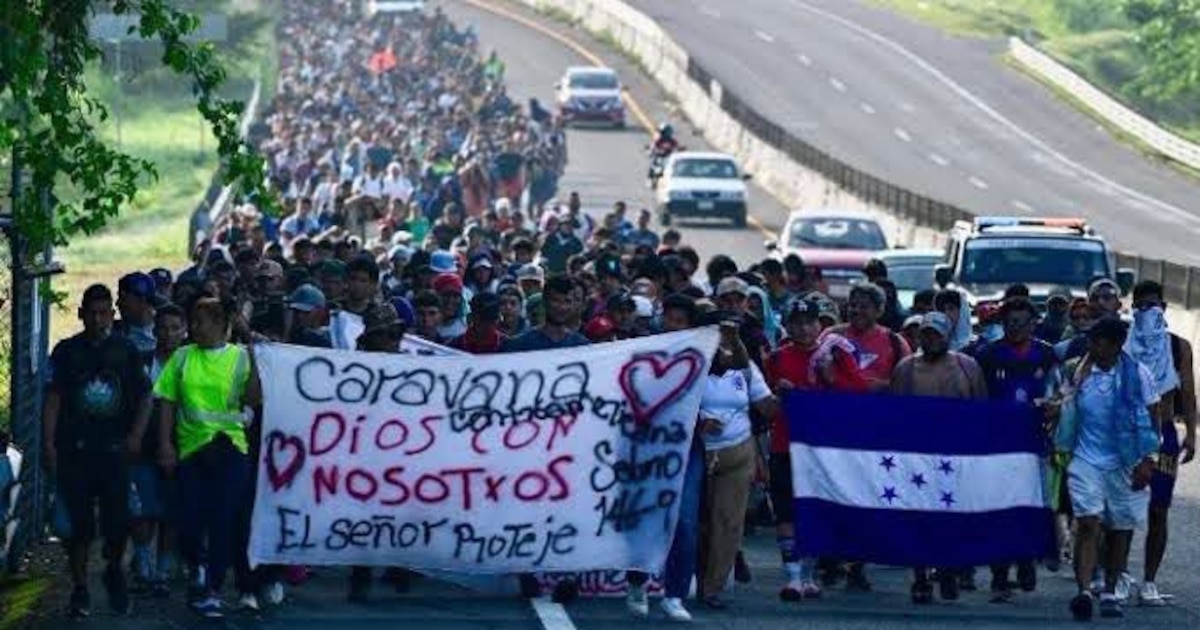
Una nueva caravana integrada por aproximadamente 2,000 migrantes de Honduras, El Salvador, Guatemala y Nicaraguasalió este martes de Tapachula, en el estado mexicano de Chiapas, con la intención de avanzar hacia la frontera de Estados Unidos, en medio de las expectativas de un posible cambio en las políticas migratorias de Washington.
La movilización, que comenzó el pasado sábado desde San Pedro Sula, Honduras, continuó su recorrido desde el sur de México, donde los participantes esperan avanzar de manera pacífica y conseguir mejores oportunidades para sus familias.
El desplazamiento ocurre una semana después de las elecciones de medio mandato en Estados Unidos, cuyos resultados modificaron el escenario político para el presidente Donald Trump, luego de que los demócratas recuperaran el control legislativo, un resultado que despertó expectativas entre los migrantes sobre un posible freno a las políticas migratorias restrictivas.
Sin embargo, aunque los integrantes de la caravana mantienen la esperanza de encontrar oportunidades en territorio estadounidense, organizaciones que acompañan a la población migrante consideran que los resultados electorales no necesariamente provocarán cambios inmediatos en las medidas migratorias.

De acuerdo con información proporcionada a la agencia EFE, uno de los participantes es Álvaro José Vanegas Estrada, migrante de Nicaragua, quien emprendió el recorrido con apenas 20 dólares, dejando atrás sus actividades agrícolas, a su esposa y a sus dos hijos.
El hombre explicó que decidió salir de su país con la expectativa de encontrar una oportunidad laboral que le permita mejorar las condiciones económicas de su familia.
Vanegas considera que la participación de la comunidad latina en diferentes sectores productivos de Estados Unidos podría representar una oportunidad para quienes buscan ingresar al mercado laboral.
«El gobierno estadounidense sabe que el 19 % de la comunidad latina es la que hace el trabajo pesado, lo que es la construcción y la hotelería. Entonces en este momento ha visto que ha bajado ese punto de trabajo y creo que tal vez, nos dé la oportunidad de entrar», expresó a EFE.
No obstante, el migrante explicó que su intención inicial no necesariamente es cruzar de inmediato hacia Estados Unidos, sino llegar al norte de México, permanecer allí durante un tiempo y conseguir trabajo para enviar dinero a su familia mientras espera posibles cambios en las decisiones migratorias estadounidenses.

Entre los participantes de la caravana también se encuentra el hondureño Bili Noe Martínez Colindres, quien hizo un llamado al Instituto Nacional de Migración (INM) de México para que permita el desplazamiento de los migrantes sin obstáculos y de manera pacífica.
El compatriota manifestó que las personas que integran la movilización buscan oportunidades para mejorar la vida de sus familiares y pidió respeto durante el recorrido por territorio mexicano.
«Nosotros solo queremos un sueño para nuestras familias, respeto a nosotros, respetamos a México y Guatemala. Es el llamado que le hacemos como hondureños a usted señora presidenta (Claudia Sheinbaum), que nos apoye con ese permiso», manifestó.
La petición está dirigida a las autoridades mexicanas, particularmente a la presidenta Claudia Sheinbaum, para que los integrantes de la caravana puedan continuar su desplazamiento sin enfrentar dificultades relacionadas con su condición migratoria.
El recorrido hasta la frontera mexicana con Estados Unidos representa un trayecto de aproximadamente 3,000 kilómetros, una distancia que los migrantes deberán cubrir en diferentes etapas y bajo condiciones que pueden complicar su avance.

Entre los migrantes existe la percepción de que el cambio en la composición del Congreso estadounidense podría abrir espacios para revisar algunas de las medidas migratorias impulsadas por el mandatario republicano.
Sin embargo, Luis García Villagrán, representante del Centro de Dignificación Humana A.C., organización que trabaja en la frontera sur de México, consideró que no se esperan modificaciones importantes en la política migratoria estadounidense como consecuencia inmediata de los resultados electorales.
«No creo que vaya a cambiar mucho, pero en ánimo de la gente sí ayudó mucho, para que la gente se anime a salir caminando y tratar de llegar lo más cerca de la frontera norte», señaló el activista.
corresponsal:Desde Tegucigalpa, Honduras
INTERNACIONAL
Trump’s first Iran war escalation post-midterm losses seeks to choke off Tehran’s trade
President Donald Trump isn’t backing off his pressure campaign against Iran despite claims the conflict contributed to sweeping Republican losses in last week’s midterm elections.
In fact, Trump is doubling down by expanding U.S. efforts to choke off the trade routes Tehran increasingly relies on as it tries to rebuild its military in the midst of war.
The new effort, dubbed Task Force Iron Gate, takes aim at a vulnerability that has persisted despite the U.S. naval blockade: the land and Caspian Sea routes Iran can use to bring in goods, dual-use technology and military supplies beyond the reach of American warships.
That approach, one expert claims, fits into a broader administration strategy of tightening the squeeze on Tehran while stopping short of restarting full-scale military operations. Meanwhile, others caution that it could produce escalation rather than an immediate diplomatic breakthrough.
IRAN VOWS ‘ASTONISHING’ STRIKES AND LIFTS MISSILE-RANGE LIMIT AS US TARGETS LAND ROUTES
«We have Operation Iron Gate that just went into effect. That means nothing comes in by land,» Trump said Sunday.
But the roughly 20-person task force established at U.S. Central Command headquarters in Tampa is taking a quieter approach than Trump’s sweeping description might suggest.
«This is not a deployable special operation task force,» Farzin Nadimi, a senior fellow at the Washington Institute for Near East Policy, told Digital, describing Iron Gate instead as a «fusion cell» coordinating military, civilian and intelligence efforts.
US ECONOMIC CHOKEHOLD ON IRAN REACHES PEAK LEVERAGE AS COLLAPSE RISKS EMERGE
Nadimi said its immediate role is likely to center on gathering intelligence about activity along Iran’s borders and building cooperation in the region that could support sanctions and other efforts to disrupt the flow of goods.
Secretary of State Marco Rubio, who heads the department responsible for spearheading the administration’s diplomatic foreign agenda, supports taking action that could decrease military escalation.
«We don’t need to conduct military strikes if we’re achieving the same objective through economic means and economic pressure,» Rubio told reporters on Tuesday.
He rejected the suggestion that the U.S. and Iran were at a stalemate, arguing that sanctions, the naval blockade and other measures were steadily weakening Tehran.
«They’re bleeding. They’re bleeding economically,» Rubio said. «It is an increased pressure on Iran that continues to grow every day.»
The push comes a week after an election in which the war proved a political liability for Republicans.
The Iran war was a crucial factor in the House vote for 34% of voters, according to the Voter Poll, while about six in 10 said the U.S. had made the wrong decision to take military action against Iran.
A separate Fox News/NORC survey conducted around Election Day found 68% said avoiding a prolonged military conflict in Iran was very important. When forced to choose, 61% said ending U.S. military involvement to lower gas prices was more important than restarting military action to stop Iran from developing nuclear weapons, while 35% chose restarting military action.
Yet four days after the election, CENTCOM announced Iron Gate, extending the administration’s pressure campaign to the land routes Tehran could use to blunt the effects of the naval blockade.
CENTCOM said the task force would coordinate efforts to disrupt advanced weapons, dual-use technologies, sanctioned materials and illicit revenue moving across Iran’s land borders and the Caspian Sea.
«We will not allow the Iranian regime to rebuild its weapons factories or replenish its arsenal with materials smuggled across its borders,» CENTCOM commander Adm. Brad Cooper said in announcing the task force.
CENTCOM declined to provide additional details about how Iron Gate would operate beyond its announcement.
The challenge is the sheer scale of the territory involved.
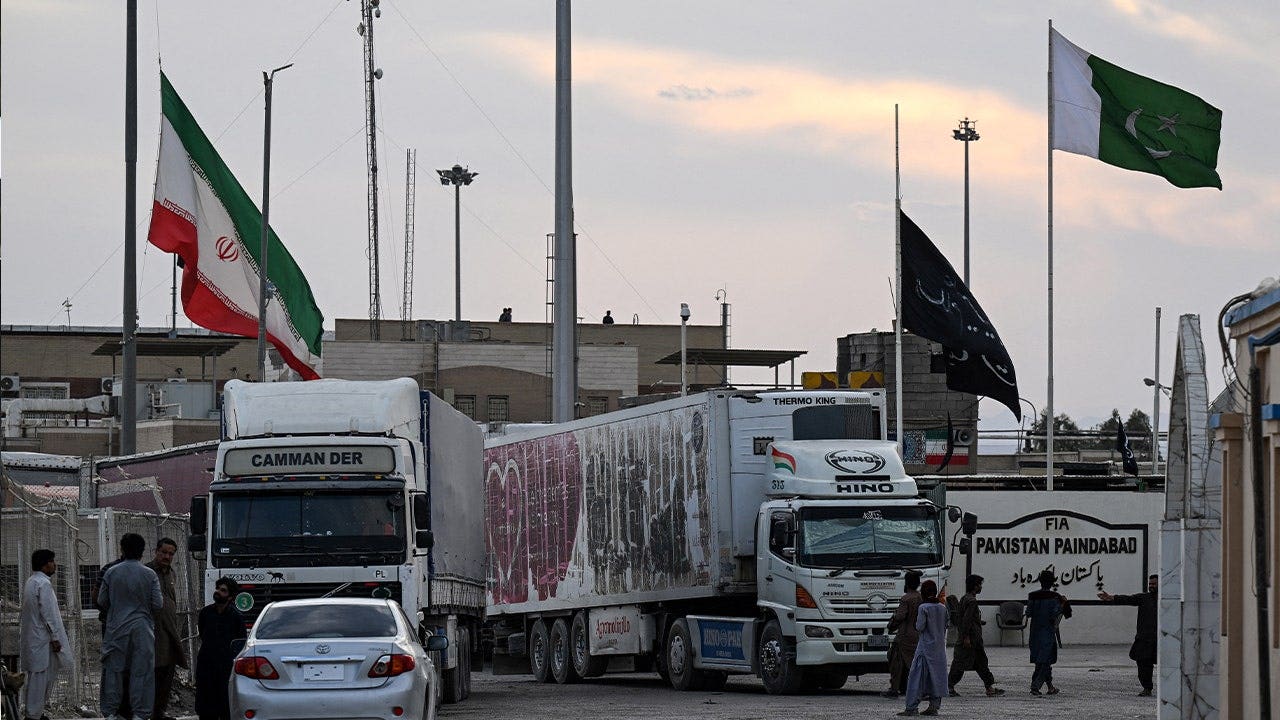
Iran shares land borders with Afghanistan, Armenia, Azerbaijan, Iraq, Pakistan, Turkey and Turkmenistan, spanning roughly 6,000 kilometers, according to Nadimi. While it has dozens of official border crossings, goods can also be smuggled through mountainous and desert terrain.
«It will be extremely difficult to know where and how things get in or out of Iran,» Nadimi said.
Much of Iron Gate’s effectiveness will also depend on governments outside Iran.
Nadimi said the task force could build relationships with military and intelligence services in neighboring countries to identify and disrupt suspicious shipments. Turkey and Pakistan have already placed some limits on goods moving across their borders with Iran, he said, contributing to long truck lines and higher shipping costs.
But even if neighboring governments cooperate, Iran and the Islamic Revolutionary Guard Corps are likely to look for ways around the restrictions.
Behnam Ben Taleblu, senior director of the Iran program at the Foundation for Defense of Democracies, said the effort should not be judged by whether Washington can completely eliminate Iran’s overland trade.
«That is not going to mean zeroing out this trade overnight,» Taleblu told Digital. Instead, he said the goal is to increase the cost of moving goods, pressure the foreign companies and individuals facilitating Iranian trade and give Washington more leverage over Tehran.
«This is literally akin to boxing in the Islamic Republic,» he said.
The routes have taken on added importance as Iran’s other avenues to the outside world have narrowed.
Taleblu said Iran’s missile program remains dependent on foreign inputs including fuel precursors and high-strength steel. China and Russia are important to those flows, he said, but Iraq, Turkey and Pakistan also represent important regional routes.
Nadimi described effectively restricting Iran’s land trade as a «mid- to long-term project» and predicted Tehran would initially «become more aggressive» as the pressure mounts.
Taleblu issued a similar warning.
«It is entirely plausible that you squeeze them hard enough that they feel like the only way to throw off the strangulation is to throw a punch,» he said.
That leaves the administration trying to increase its leverage over Iran without reigniting the full-scale fighting voters strongly signaled they wanted to avoid — while Trump has publicly described the objective in much starker terms.
«Nothing comes in by land.»
war with iran, national security, politics, foreign policy, middle east foreign policy, iran, sanctions, military

Irán declaró “organizaciones terroristas” a la Armada y la Fuerza Aérea argentinas: qué implica la decisión

Para Morgan Stanley hay demasiado pesimismo en el precio de la deuda argentina: cuál es el bono que considera atractivo

El presidente de Konami descarta un impacto de la IA en el desarrollo: «La clave sigue estando en las personas»

La perla italiana del Como que va con la absoluta sin debutar en Serie A

Los invitados políticos a la última misa del Papa, con fuerte presencia del peronismo

El desesperado llamado al 911 de la familia de Marcos Camino: la escalofriante escena que halló la Policía al encontrarlo sin vida

La queja de Yanina Latorre tras asistir al VIP de la misa del papa León XIV: “Estuve al rayo del sol haciendo nada y…”

Así fue el saludo entre Javier Milei y el papa León XIV en Aeroparque tras la llegada a la Argentina

Gimnasia de Mendoza vs Independiente Rivadavia: formaciones, hora y dónde ver por tv

Franco Colapinto le hizo probar mate a Lewis Hamilton en un evento durante el GP de Brasil: la reacción del piloto de Ferrari

 CHIMENTOS2 días ago
La queja de Yanina Latorre tras asistir al VIP de la misa del papa León XIV: “Estuve al rayo del sol haciendo nada y…”
- POLITICA3 días ago
Así fue el saludo entre Javier Milei y el papa León XIV en Aeroparque tras la llegada a la Argentina
- POLITICA3 días ago
Elecciones desdobladas y lejos de las nacionales: la estrategia de los gobernadores patagónicos en 2027