INTERNACIONAL
The Hitchhiker’s Guide to what happens next on Capitol Hill

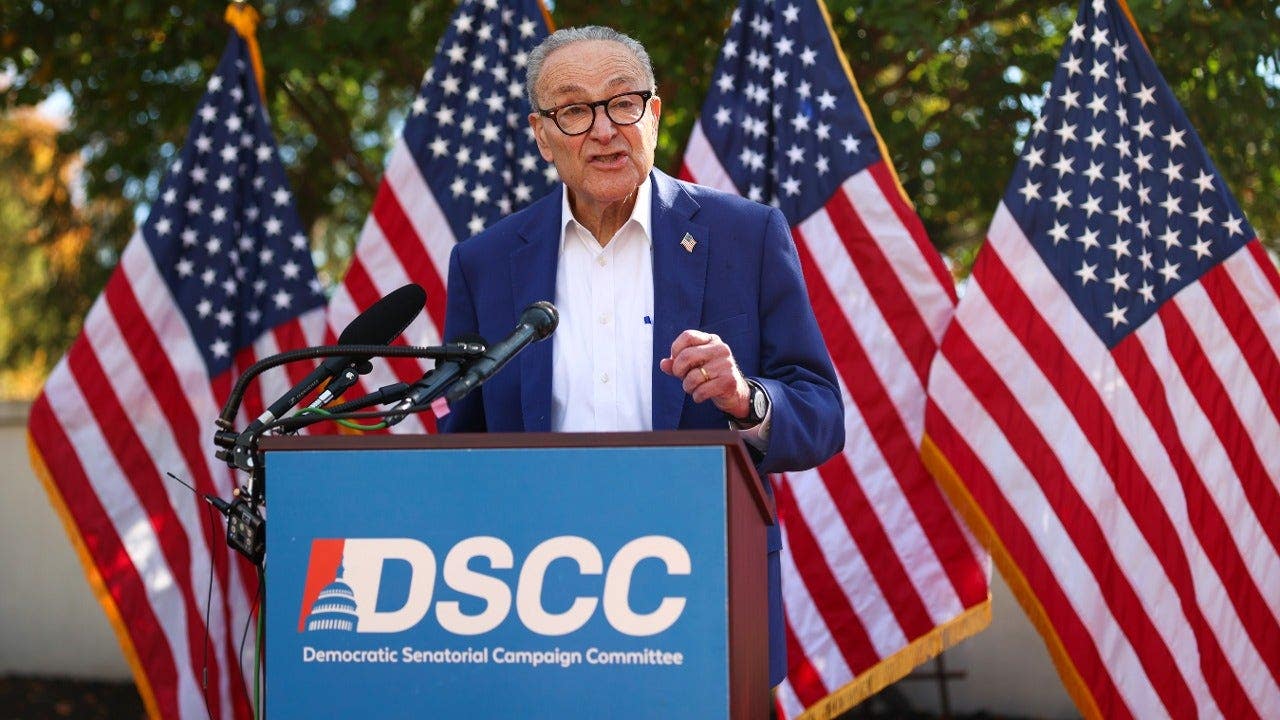
The midterms are over. But even more pitched battles are underway.
These are internal House and Senate leadership elections. House Speaker Mike Johnson, R-La., won’t pursue the minority leader post.
President Trump doesn’t always see eye-to-eye with Senate Majority Leader John Thune, R-S.D., but the president hasn’t demanded a change there.
Some incoming House and Senate progressives have expressed their reservations about House Minority Leader Hakeem Jeffries, D-N.Y., and Senate Minority Leader Chuck Schumer, D-N.Y., despite the stunning Democratic wins from Tuesday night.
REPORTER’S NOTEBOOK: A DEMOCRATIC MAJORITY COULD EXPOSE THE LIMITS OF THE PROGRESSIVE AGENDA
Sen.-elect Abdul El-Sayed, D-Mich., has long warned he might not support Schumer for Majority Leader.
«If you’re Chuck Schumer, I’m dangerous,» El-Sayed advised in late June.
The Michigan Democrat ducked the question when asked about supporting Schumer on NBC just after the election.
«I am going to vote for the option that gives me the best chance of getting money out of politics. Putting money in pockets and passing Medicare for all,» said El-Sayed. «I’m interested to see, working with the rest of our caucus, what options we’ve got.»
By Thursday on CNN, El-Sayed was reiterating his support for Sen. Chris Van Hollen, D-Md., who hasn’t announced he’s running for anything.
«I think he’d be an amazing Senate majority leader,» said El-Sayed of Van Hollen.
But even other newcomers weren’t committing to Schumer.
«No, I will not (support Schumer),» Sen.-elect Adam Hamilton, D-Kan., said on Fox before the election. «And I’ve already said I’m not going to vote (for him).»
«I think it’s really clear that both parties are ready for a new generation of leadership,» Sen.-elect Annie Andrews, D-S.C., told colleague Bret Baier.
«I told Sen. Schumer that I’m going to support somebody else,» offered Sen.-elect Troy Jackson, D-Maine.
But Schumer is shrugging that off.
«I’ll be re-elected as majority leader,» Schumer said when asked by reporters on Wednesday. «But the issue is focusing on the American people and what they want.»
Schumer only needs around 29 of his members to support him in a secret caucus vote to become majority leader. That’s a majority of expected Senate Democrats who will serve next year.
At least five members of the Democratic Socialists of America are pledging to withhold their support for Jeffries as the first Black House speaker in U.S. history unless they secure commitments for their agenda. The successful candidate for speaker requires an outright majority of the entire House — 218 votes of 435, if all Representatives-elect cast ballots — when the new Congress convenes Jan. 3.
Keep in mind that House Democrats may score more than 260 seats once all races are settled. So, he can afford dozens of defections.
For House Republicans, Johnson may have signaled his future last month when speaking to colleague Aishah Hasnie.
«If God moves on our hearts and says we should go back to my hometown of Shreveport and start a lawn business, I’ll do that,» said Johnson.
Now it’s far from certain that Johnson will soon channel Groundskeeper Willie from the Simpsons. But perhaps becoming «The Lawnmower Man» is a better option for Johnson than getting mowed down by your own colleagues in a bid for minority leader.
Maybe the grass IS greener back in Louisiana.
House Majority Leader Steve Scalise, R-La., and Rep. Jim Jordan, R-Ohio, are running to become the House’s top Republican. House Majority Whip Tom Emmer, R-Minn., wants to return as minority whip. He’s facing a challenge from Rep. August Pfluger, R-Texas.
But here’s the trick. How do these House Republicans win the leadership positions yet maintain their own coalitions? It’s unclear if Republicans think that Jordan and Scalise are right for the party — right now. Both are aligned with President Trump. And some Republicans hope to move past that.
Regardless, Democrats campaigned on two things: the cost of living and holding the Trump administration accountable. But what does the Democrats’ legislative agenda look like?
This isn’t like 1994, when former House Speaker Newt Gingrich, R-Ga., famously crafted the 10-point Contract with America as a pledge to voters as to what Republicans would do if they flipped the House for the first time in 40 years.
CHUCK SCHUMER AFTER SWEEPING DEMOCRATIC MIDTERM VICTORIES: ‘I’LL BE RE-ELECTED AS MAJORITY LEADER’
Democrats have a host of ideas on what they plan to vote on.
«We have to first get in there and really focus on rolling back the cuts from the one big ugly bill,» Sen.-elect Juliana Stratton, D-Ill., promised on CNN.
Also expect votes on renewing expired Obamacare subsidies. Democrats demanded money to offset the costs of rising premiums in exchange for their votes to fund the government. The House finally passed a bill to do that. But the Senate didn’t. The standoff over the Obamacare aid was the key component to last year’s record-breaking, 43-day government shutdown.
«The shutdown sharpened the American people’s view of the distinction between the parties on this crucial issue,» Schumer said.
Democrats are also focused on a key issue from the midterms: the future of AI and data centers. They’re concerned that AI threatens American jobs.
«This revolt against data centers are just the initial tremors of a bigger AI earthquake that is upending American politics,» said Rep. Greg Casar, D-Texas, chairman of the Progressive Caucus. «And we have to be on the right side of this issue.»
There will undoubtedly be votes to end the war in Iran — perhaps by cutting off money for those operations. The House approved three «war powers» resolutions. The Senate green-lighted one. But those machinations did nothing to hem in the president on the war.
Democrats believe that ending the war will reduce gas prices. And that, in turn, will lower the cost of groceries.
Congressional Republicans balked at unwinding tariffs imposed by President Trump. So, there could be votes on that front, too. Democrats believe the election shifted the dynamic of Republicans aligning behind the President in near lockstep.
«This is the time for (Republicans) to show the courage to end this irrational and self-defeating tariff regime that Trump has put in place,» said Rep. Greg Stanton, D-Ariz.
«Most of them realize that the tariffs from a fiscal and economic perspective are completely self-defeating.»
However, some Republicans aren’t ready to abandon the old playbook, clinging to the GOP’s hallmark legislative achievement of this Congress.
«I think the tax cuts and the Big, Beautiful Bill were underappreciated by the electorate,» Rep. Chris Smith, R-N.J., proffered.
President Trump signaled he’ll both work with Democrats and deploy his veto pen. But it’s about the math. When all House races are settled, Democrats could control more than 260 House seats.
That’s astonishing.
They’re guaranteed 54 Senate seats with Mississippi and Alaska still undecided
It’s about the math. Overriding a veto requires two-thirds of both bodies. That’s 290 in the House and 67 in the Senate. If Democrats hover around 260 seats in the House — and Republicans are ready to ditch the president — hitting the 290 mark isn’t out of reach.
If Democrats clock in at 56 seats in the Senate, cobbling together 11 GOP votes to reach 67 might be tougher. Especially with GOP Trump antagonists like former Senate Majority Leader Mitch McConnell, R-Ky., and senators John Cornyn, R-Texas; Bill Cassidy, R-La.; and Thom Tillis, R-N.C., departing. But they’re in range.
It all hinges on what Democrats can pass. And what the president is willing to sign.
politics, congress, midterm elections, house of representatives, senate, chuck schumer, mike johnson











INTERNACIONAL
Honduras: Cabecillas de la MS-13, Pandilla 18 y Cártel del Diablo podrían enfrentar extradición a Estados Unidos

Los máximos líderes de la Mara Salvatrucha (MS-13), la Pandilla 18 y el denominado Cártel del Diablo podrían enfrentar solicitudes de extradición hacia Estados Unidos, advirtió el director de la Policía Nacional, Rigoberto Oseguera Mass, al referirse al endurecimiento de las acciones contra las organizaciones criminales.
El funcionario señaló que el reconocimiento de estas estructuras como organizaciones terroristas por parte de Estados Unidos abre la posibilidad de que sus principales cabecillas sean requeridos por las autoridades de ese país.
“De la MS, cabecillas de la Pandilla 18, incluso del Cártel del Diablo, que pueden ir a parar a Estados Unidos con peticiones de extradición, porque estos grupos ya fueron reconocidos por el país como asociaciones terroristas en la región y con Estados Unidos”, manifestó Oseguera.
El jefe policial instó a los integrantes de estas organizaciones a abandonar las estructuras criminales, al advertir que las acciones de seguridad tendrán un alcance mayor y utilizarán nuevas capacidades operativas y tecnológicas.

“La persecución va a ser implacable y no solo de Honduras, de la región, del mundo, con tecnología, con capacidades logísticas distintas. Lo que viene el otro año es mucho más duro de lo que estamos viendo”, expresó.
Sus declaraciones anticipan un endurecimiento de las operaciones contra las organizaciones delictivas durante 2027, con una estrategia que, según explicó, no se limitará al territorio hondureño, sino que involucrará esfuerzos de cooperación internacional.
En paralelo a las advertencias sobre el combate a las estructuras criminales, más de 70 personas privadas de libertad, acusadas del delito de terrorismo, permanecen recluidas en el área de Máxima Seguridad del Centro Penitenciario Nacional de Támara.
Las autoridades penitenciarias informaron que esta medida forma parte de las acciones destinadas a fortalecer el orden, la disciplina y el control dentro de los establecimientos carcelarios del país.

Como parte de estas disposiciones, durante esta semana se coordinaron nuevos traslados de privados de libertad procedentes de diferentes centros penitenciarios, quienes fueron incorporados al régimen de máxima seguridad.
De acuerdo con la información oficial, los movimientos buscan garantizar el cumplimiento de las normas institucionales, reforzar el sometimiento a la autoridad y mantener una vigilancia estricta sobre los internos clasificados bajo estos regímenes.
La permanencia de más de 70 personas acusadas de terrorismo en el área de máxima seguridad se enmarca en las medidas implementadas por las autoridades para evitar que estructuras criminales mantengan capacidad de organización y control desde los centros penitenciarios.
Las advertencias del director policial y los recientes movimientos en el sistema penitenciario se producen en medio del endurecimiento de las medidas de seguridad contra las organizaciones criminales que operan en Honduras.

Bajo este régimen, los movimientos de los internos y sus condiciones de reclusión están sujetos a controles especiales, de acuerdo con las disposiciones institucionales.
El traslado de privados de libertad desde diferentes centros penitenciarios también responde a la reorganización de la población carcelaria y a los criterios de clasificación establecidos por las autoridades.
Estas acciones buscan evitar que los integrantes de organizaciones delictivas conserven espacios de influencia dentro de las cárceles, donde históricamente se han identificado problemas relacionados con el control de actividades ilícitas y la comunicación entre miembros de estructuras criminales.
En el caso de Honduras, el combate a las maras y pandillas constituye uno de los principales desafíos en materia de seguridad, debido a la capacidad de estas organizaciones para desarrollar actividades delictivas dentro y fuera de los centros penitenciarios.

Por esa razón, las autoridades han planteado la necesidad de reforzar los controles y mantener una coordinación entre los organismos encargados de la seguridad pública y la administración penitenciaria.
A nivel internacional, la cooperación entre organismos de seguridad también adquiere relevancia en las investigaciones relacionadas con estructuras criminales que operan en diferentes territorios.
policía,inspección,Guatemala
INTERNACIONAL
“Bienvenidos al funeral más barato del mundo”: la crónica del lento apagón del béisbol cubano

Un turista extranjero retrató la pérdida de público y el deterioro material del Estadio Latinoamericano de La Habana, una escena que vinculó con el desgaste cotidiano de una isla atravesada por apagones, dificultades para conseguir alimentos y la salida de jóvenes peloteros hacia otros países.
El visitante llegó al principal estadio de béisbol de Cuba con la expectativa de asistir a una jornada marcada por la música, el bullicio y la rivalidad deportiva. Pagó una entrada de 20 pesos cubanos, una suma que, según relató, equivale a menos de diez centavos de dólar en el mercado informal. Encontró, en cambio, tribunas extensas con pocos asistentes, sectores visiblemente desgastados y un ambiente distante de las postales que durante años identificaron a la pelota cubana.
Las imágenes tomadas desde las gradas mostraron filas de asientos vacíos frente al terreno de juego. En otro sector, un grupo de espectadores avanzaba por un pasillo azul hacia una zona de tribunas, sin que la afluencia altere la sensación general de un recinto con capacidad para decenas de miles de personas y una ocupación reducida.
El Latinoamericano conserva el juego, pero perdió parte de su público
El estadio sigue abierto y los partidos continúan. Los jugadores saltan al terreno, el marcador permanece encendido y los vendedores circulan en los pasillos. Pero el visitante describió una escena en la que el béisbol cubano parece sostenerse por inercia, con una distancia marcada entre la importancia histórica del deporte y la realidad de las tribunas.
“El espectáculo hace rato que hizo las maletas”, resumió el turista al observar los asientos vacíos. Su relato no cuestiona que la pelota conserve seguidores en la isla. Plantea, en cambio, que parte del público dejó de acudir con la frecuencia de otros años porque las prioridades diarias se impusieron sobre el ocio.
Durante décadas, el béisbol funcionó como uno de los principales espacios de reunión popular en La Habana y otras ciudades cubanas. Un juego ofrecía varias horas de distracción, conversación y rivalidad entre provincias. El visitante contrapuso esa memoria con el presente que encontró: una tarde en la que el silencio de las gradas resultaba más visible que el desarrollo del partido.
La situación no se limita a la asistencia. Según su impresión, la falta de vínculos duraderos entre los fanáticos y los planteles también contribuye al desinterés. Los jugadores con mejores condiciones físicas y deportivas suelen buscar oportunidades fuera de Cuba, una expectativa que transforma a la Liga Nacional en un espacio de tránsito para muchos talentos.
La salida de peloteros redujo la posibilidad de que el público se identifique durante años con las mismas figuras. Para el aficionado, seguir a un prospecto puede implicar asumir que su permanencia será breve. Esa discontinuidad afecta la construcción de referentes y erosiona una de las bases tradicionales del espectáculo deportivo.

Una entrada barata no resuelve el costo de asistir al partido
El bajo precio de los boletos no se traduce necesariamente en estadios llenos. El turista interpretó que la explicación excede el valor de la entrada. Para una persona que atraviesa cortes eléctricos prolongados o destina buena parte de su jornada a conseguir alimentos, transporte y productos básicos, pasar varias horas bajo el sol en un estadio puede dejar de ser una opción viable.
El partido cuesta 20 pesos cubanos, pero asistir exige tiempo, traslado, comida y energía. El relato coloca esos elementos en el centro de la experiencia: la entrada puede ser accesible, aunque las condiciones materiales que rodean al encuentro hagan difícil convertirla en un plan cotidiano.
La oferta dentro del estadio también aparece como parte de esa austeridad. El visitante señaló que la comida se reducía prácticamente a pan con lechón, aderezado con vinagre. No lo presentó como una rareza gastronómica, sino como un reflejo de las limitaciones que observó durante su recorrido por la capital.
El contraste entre el costo de la entrada y el estado del escenario fue uno de los aspectos que más llamó su atención. Las estructuras azules, las escaleras, las barandas y los asientos mantienen la escala del recinto, pero también dejan ver desgaste en distintas zonas. Desde las gradas altas, la distancia entre el tamaño del estadio y la presencia de público acentúa la percepción de abandono.

La pelota continúa, aunque el entusiasmo parece agotado
El turista resumió su experiencia con una frase: “Bienvenidos al funeral más barato del mundo”. La expresión condensa una mirada personal sobre el estado del béisbol profesional cubano, aunque también abre una lectura más amplia sobre las dificultades que atraviesa la vida cotidiana en la isla.
No se trata de que el deporte haya desaparecido. El calendario continúa, los equipos juegan y el estadio recibe asistentes. El problema que retrató el visitante es la distancia entre una tradición deportiva masiva y la capacidad actual de la población para convertir esa tradición en una celebración.
El Estadio Latinoamericano sigue allí, con sus tribunas azules, su campo de juego y su lugar central en la historia de la pelota cubana. En la escena observada por el turista, el marcador conserva su función, los jugadores disputan cada entrada y algunos fanáticos todavía ocupan los asientos. Pero el ruido que antes acompañaba esas jornadas parece haber dejado lugar a un silencio que, para él, explica más que el resultado del partido.
INTERNACIONAL
Reporter’s Notebook: A user’s manual to upcoming leadership elections in the House and Senate
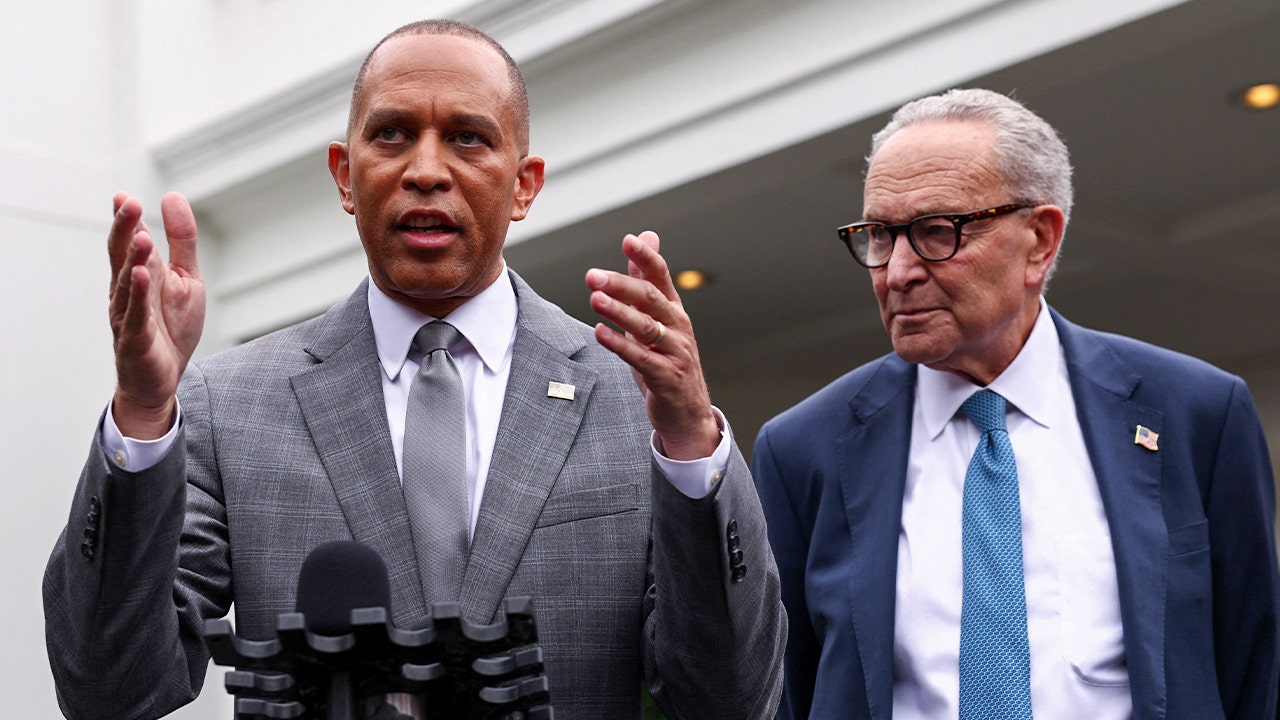
Internal party House and Senate leadership elections are some of the most fascinating exercises that unfold on Capitol Hill.
Both House and Senate Democrats and House and Senate Republicans will choose their leaders in the coming days. And the changes are going to be seismic.
But not everyone is on board with heir apparent leaders. That’s what makes this process so intriguing.
However, there are only two rules in leadership elections: You can’t beat someone with no one. And, perhaps more importantly, it’s about the math.
PROGRESSIVES FUME AT HAKEEM JEFFRIES FOR SAYING DEMOCRATS WON’T ‘GET EVEN’ WITH TRUMP
There are some progressives and DSA-affiliated Democrats who will be House Members next year who want someone other than House Minority Leader Hakeem Jeffries, D-N.Y. Who? Well, no one has said. Again, you can’t beat someone with no one. And, frankly, it’s hard to believe that Democrats would not elect the first Black speaker of the House.
But drill down on the math.
For the sake of argument, let’s say Democrats have 260 House seats in the new Congress. First, Democrats must tap a nominee for speaker in their caucus. That needs a simple majority. So, surely Jeffries will score at least 131 votes in a private ballot for speaker.
The speaker of the House is the constitutional officer for the legislative branch of government, much like the president is for the executive branch and the chief justice of the United States for the judicial branch. Thus, the ENTIRE House votes for speaker when it convenes the new Congress at noon on Jan. 3.
There are 435 members. If all members cast ballots, Jeffries simply needs 218. Jeffries could lose 40 votes or so and still prevail. So, that is not going to happen. It might not even lose more than a couple votes, frankly.
Now let’s look at the GOP and their case for minority leader. House Majority Leader Steve Scalise, R-La., is running against Rep. Jim Jordan, R-Ohio.
If Democrats have 260 seats, Republicans would have 175. All INCOMING House Republicans (including non-voting delegates from U.S. territories) are allowed to vote in CONFERENCE. The selection of minority leader does NOT go before the entire House like speaker. So, the winning candidate only needs a simple majority. That would be 88.
The same for the race between House Majority Whip Tom Emmer, R-Minn., and Rep. August Pfluger, R-Texas, for minority whip.
MIKE JOHNSON’S NO 2 LAUNCHES GOP TAKEOVER BID AS HOUSE FALLS TO DEMOCRATS
The Senate Democratic Caucus and Republican Conference work much the same way as the House. A simple majority wins for majority leader in the Democratic Caucus and minority leader in the Republican Conference.
However, the selection of Senate majority leader is not a vote that plays out on the floor. The concept of «Senate majority leader» has only been around since the early 20th century and is not mentioned in the Constitution. Remember what we said about the House speaker being the head of this branch of government.
It would be hard to envision a scenario where Senate Minority Leader Chuck Schumer, D-N.Y., would not become majority leader after Democrats flipped the Senate in a beatdown.
First, who else is running? Well, Sen. Brian Schatz, D-Hawaii, is popular among Senate Democrats. But he’s running for majority whip to succeed retiring Senate Minority Whip Dick Durbin, D-Ill. One could see Democrats defaulting to Schatz if something happens with Schumer.
Sen.-elect Abdul El-Sayed, D-Mich., has said he wants to look at his options and has endorsed Sen. Chris Van Hollen, D-Md., for majority leader.
But Van Hollen isn’t running. Sen.-elect Annie Andrews, D-S.C., told colleague Bret Baier she wants a «generational change» in leadership. Sen.-elect Troy Jackson, D-Maine, and Sen.-elect Adam Hamilton, D-Kan., both said they would oppose Schumer.
FIRST MUSLIM SENATOR, FIRST BLACK FEMALE GOVERNOR: 2026 MIDTERM ELECTION RESULTS MAKE HISTORY
But again, you can’t beat someone with no one.
Here’s the math: Let’s say Democrats do win Mississippi and Alaska, giving them 56 senators who caucus with the Democrats. All Schumer needs is 29 Democrats to support him in the Caucus, and he’s the next majority leader.
There has not been as much rumbling about the future of Senate Majority Leader John Thune, R-S.D. Heretofore, President Trump has not called for new leadership in the Senate.
But Senate Republicans would choose Thune or anyone else on a secret ballot in the Senate GOP Conference. A simple majority would win. If Republicans are down to 44 seats, the winner would just need 23 votes.
politics, leadership, congress, senate, house of representatives

Andrés Malamud: “El problema de la Argentina no es cultural: es un Estado que no premia al que cumple ni castiga al que incumple”

Aumentos de nafta en Buenos Aires: qué dice el proyecto de ley que impulsa el oficialismo

Mar del Plata: allanaron a dos jóvenes de 20 y 21 años investigados por material de abuso sexual infantil

La Justicia procesó al financista de la AFA y lo embargó por $40.000 millones

La influencia del Barça en el Como de Cesc: ‘Queremos ser como ellos. Tener el balón, presionar arriba, dominar la posesión y practicar un fútbol atractivo’

El balance de Franco Colapinto tras el primer día en Brasil: cuál fue el punto fuerte y qué deben mejorar en Alpine

La oposición cuestionó la suspensión de embargos a las pymes y criticó el plan económico: “Llegaron tarde”

Milei parte nuevamente a España y en el gobierno dicen que no bajará el tono de sus críticas a Pedro Sánchez

Sindicatos del transporte y de la industria se diferencian de la estrategia de la CGT y deciden acciones propias

El embajador de EEUU ratificó el apoyo de Trump a la Argentina tras la derrota republicana: “Nuestro compromiso es firme”

 POLITICA3 días ago
La oposición cuestionó la suspensión de embargos a las pymes y criticó el plan económico: “Llegaron tarde”
- POLITICA3 días ago
Sindicatos del transporte y de la industria se diferencian de la estrategia de la CGT y deciden acciones propias
- POLITICA2 días ago
El embajador de EEUU ratificó el apoyo de Trump a la Argentina tras la derrota republicana: “Nuestro compromiso es firme”