INTERNACIONAL
Trump turns to emerging tech giant in multi-billion bid to ramp up US submarine production

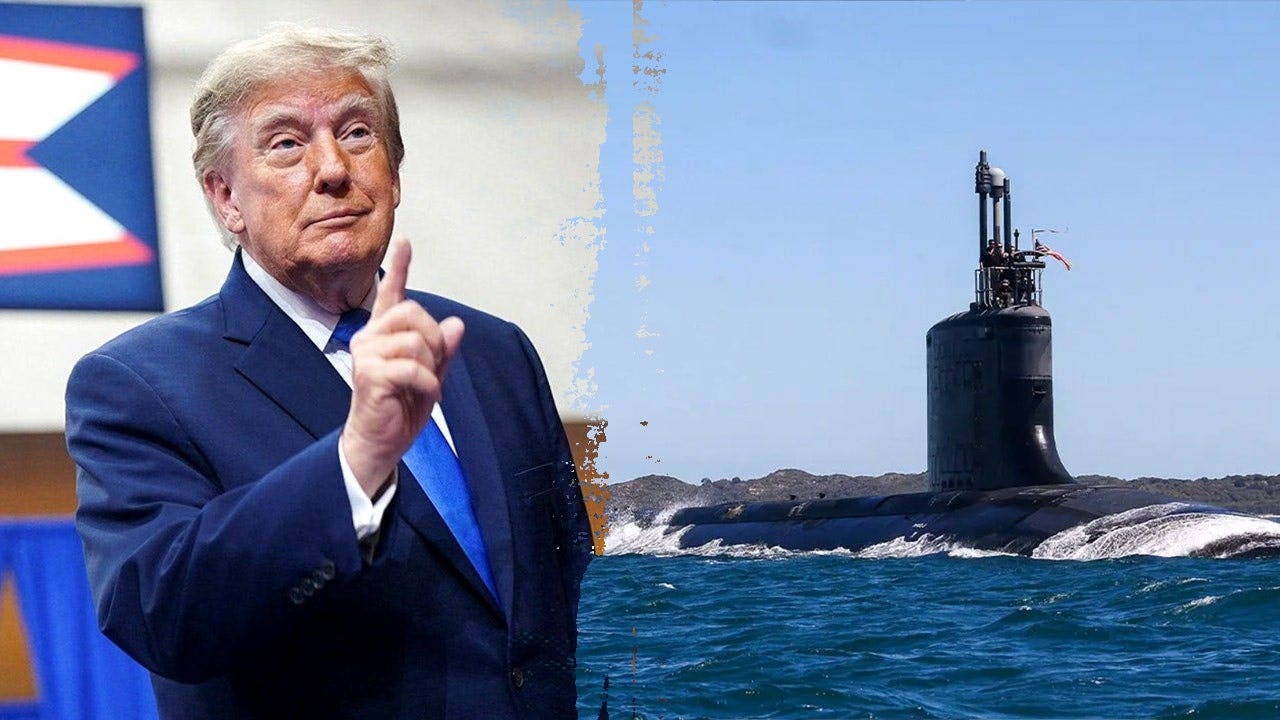
The Trump administration is turning to a defense technology giant in a $6.6 billion effort to speed production of submarines as the U.S. struggles to keep pace with China’s vast shipbuilding capacity.
The ramp-up in production brings a Silicon Valley-style manufacturer into one of the Pentagon’s most troubled industrial bases as they fall behind expected pace of two Virginia-class attack submarines per year.
Anduril will build a more than 2-million-square-foot shipyard at Sparrows Point shipyard just outside of Baltimore to manufacture critical submarine components, eventually scaling up to large sections of the vessels. A senior administration official said the facility could add roughly 9 million labor hours a year, equivalent to about a 15% increase in submarine production capacity.
President Donald Trump will visit the shipyard on Tuesday afternoon to formally announce the new initiative in Baltimore alongside Anduril leadership.
NAVY SECRETARY WARNS SHIPYARDS MUST ‘ACT LIKE WE’RE AT WAR’ AS CHINA’S AI-POWERED FLEET RACES AHEAD
The investment takes aim at a problem the Navy has struggled for years to solve: shipyards are delivering roughly 1.3 Virginia-class submarines a year, well short of the Navy’s goal of two, even as demand for the nuclear-powered attack boats grows. The Navy currently projects reaching the two-per-year rate around 2032. It currently has 26 Virginia-class submarines and expects to add two more in the spring, according to a senior administration official.and
For the submarine project, Anduril plans to invest $3.7 billion of its own capital to build the facility, workforce and manufacturing capacity. The Navy could spend up to another $2.9 billion purchasing the resulting production.
The deal represents an unusual bet on a commercial model for fixing one of the Pentagon’s most stubborn industrial problems: Anduril will risk billions of dollars of its own capital building new submarine production capacity, while the Navy pays for what the company can successfully produce.
«I wouldn’t say that the government’s paying us back. We feel the government [is] buying the results of what we’re able to produce,» an industry official told reporters of the deal.
EMERGING TECH HAS NEW ARMY LEADERS WARNING TROOPS CAN’T ‘AI’ THEIR WAY TO VICTORY ON THE BATTLEFIELD
The deal also deepens Anduril’s growing relationship with the Pentagon just days after War Secretary Pete Hegseth tapped company founder Palmer Luckey, along with Elon Musk and former House Speaker Newt Gingrich, to launch Project Meridian — a 120-day study of how future wars will be fought and what weapons and technologies the U.S. military will need.
The arrangement puts Luckey in a position to help shape recommendations about the Pentagon’s future technology needs as the company he founded expands its own business selling weapons and other systems to the department. Project Meridian does not have procurement authority, and the Pentagon has said «appropriate» safeguards will be used to address potential conflicts of interest.
Anduril will work under General Dynamics Electric Boat and alongside HII’s Newport News Shipbuilding, initially producing components that have become bottlenecks in the construction of new Virginia-class boats.
Among the first will be torpedo tubes , which a senior administration official described as a current «gating component» holding up production. The official said getting those tubes earlier could allow the Navy to move.
Anduril has already begun work on torpedo tubes at a facility in California and plans to shift that production to Baltimore as the new shipyard, dubbed Arsenal-2, comes online. The company eventually hopes to move from individual components to complex modules and large sections of submarines.
«We just need new production capacity,» an industry official said. «We need to grow the maritime industrial base, the submarine industrial base, so that we can produce more submarines.»
The company plans to build Arsenal-2 around software, automation and digital manufacturing to break historically complex shipbuilding work into simpler tasks that can be done without years of shipyard experience.
The push comes as the Navy faces growing pressure to expand the attack-submarine fleet while also preparing to transfer Virginia-class submarines to Australia under the AUKUS security pact. Meeting those commitments will require the industrial base not only to reach the Navy’s longstanding two-per-year goal, but eventually move beyond it.
Arsenal-2 is expected to create 3,100 direct jobs and another 11,000 indirect jobs nationwide. Anduril expects the Baltimore facility to begin operations around 2030, though the company said production of some submarine components is beginning now in California.
The approach will still have to clear the certification and safety requirements that govern nuclear submarine construction. Anduril acknowledged that it will have to prove it can meet those standards before graduating from individual components to increasingly complex sections of the boats.
military tech, politics, us navy, navy






INTERNACIONAL
Contraloría presentó una denuncia penal contra Panama Ports Company, filial del conglomerado chino CK Hutchison
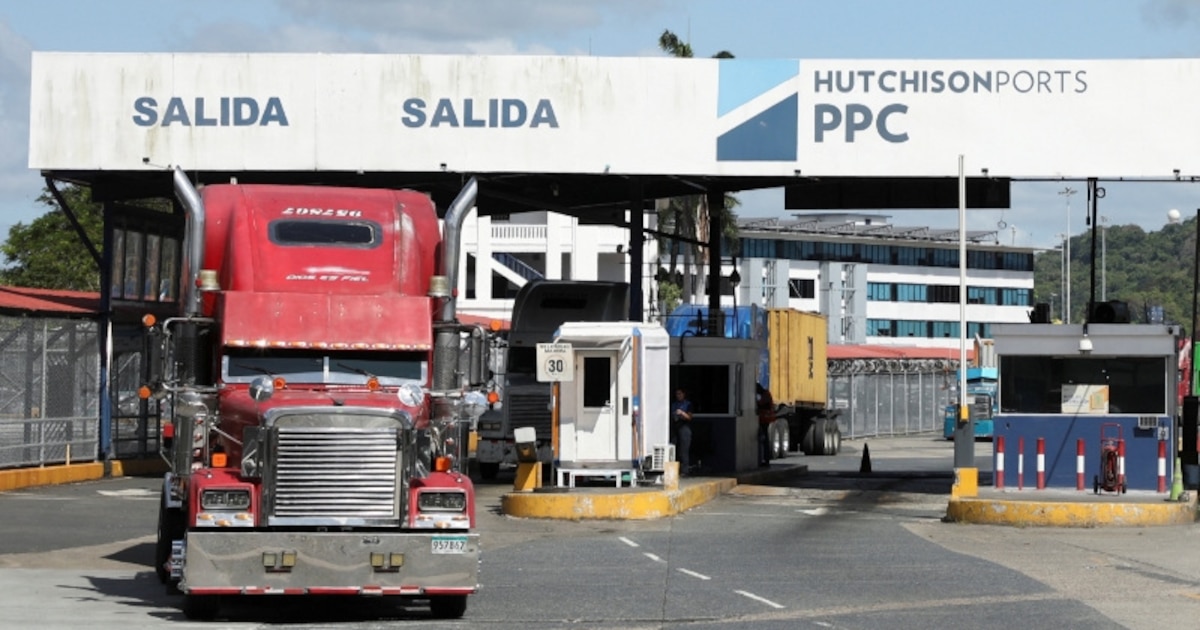
La Contraloría General de la República de Panamá presentó una denuncia penal contra Panama Ports Company (PPC) y antiguos funcionarios de la Autoridad Marítima de Panamá (AMP), tras identificar presuntas irregularidades en la administración de la concesión portuaria.
La acción judicial, anunciada este miércoles 18 de noviembre, comprende posibles delitos contra la Administración Pública relacionados con el contrato que permitió a la compañía operar durante casi tres décadas los puertos de Balboa y Cristóbal.
La denuncia fue presentada el 17 de noviembre ante el Ministerio Público por la Dirección Nacional de Asesoría Jurídica de la Contraloría, que entregó documentación para determinar la existencia de eventuales responsabilidades de carácter penal.
Entre los denunciados figuran quienes integraron, como principales y suplentes, la junta directiva de la AMP entre 2014 y 2023, así como los funcionarios que ocuparon el cargo de administrador general de la institución.
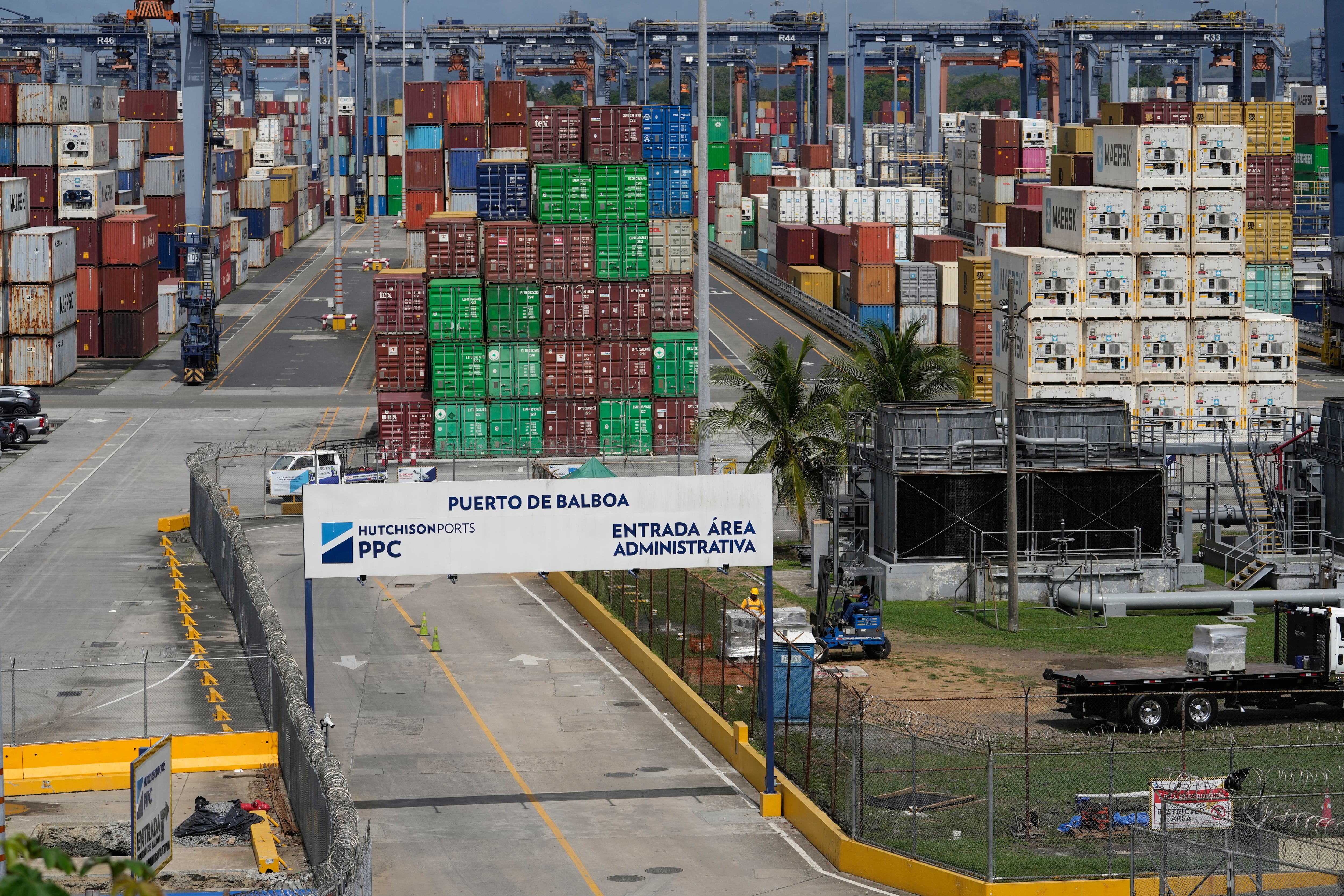
Los hallazgos están contenidos en un informe de auditoría financiera y de cumplimiento que examinó las operaciones de PPC entre enero de 2014 y diciembre de 2024, incluyendo sus estados financieros y las obligaciones contractuales.
La denuncia constituye un nuevo capítulo en la controversia entre el Estado panameño y la compañía, que perdió la administración de ambas terminales tras un fallo de inconstitucionalidad y mantiene abierto un arbitraje internacional contra Panamá.
Las investigaciones de la Contraloría sobre la concesión adquirieron relevancia en 2025, cuando el contralor Anel Flores sostuvo que el Estado había dejado de percibir 1.337 millones de dólares durante la administración de ambos puertos.
Flores también cuestionó la información financiera presentada por la compañía y la subcontratación de empresas para prestar servicios dentro de las terminales, por cuyos ingresos el Estado presuntamente no recibió las participaciones económicas correspondientes.

Una denuncia presentada originalmente en 2021 fue reabierta por el Ministerio Público en junio de 2025, tras conocerse los resultados de la auditoría, y posteriormente fue declarada una investigación de alta complejidad, bajo reserva del sumario.
El 29 de enero de 2026, la Corte Suprema de Justicia declaró inconstitucional la Ley 5 del 16 de enero de 1997, que aprobó el contrato con Panama Ports Company, así como la prórroga otorgada en 2021.
El fallo fue publicado el 23 de febrero en la Gaceta Oficial, fecha en que el Gobierno de José Raúl Mulino ordenó la ocupación temporal de bienes de la compañía para garantizar la continuidad de las operaciones portuarias.
La transición fue coordinada por el asesor presidencial Alberto Alemán Zubieta, mientras que la Autoridad Marítima asumió el control de las instalaciones y estableció contratos transitorios con dos operadores portuarios internacionales.
El puerto de Balboa, situado en la entrada del Pacífico del Canal, quedó bajo la administración de APM Terminals Panamá, perteneciente al grupo danés Maersk, mediante una concesión temporal de hasta 18 meses.

En el extremo atlántico, la operación del puerto de Cristóbal fue asignada a TIL Panamá, vinculada al grupo naviero Mediterranean Shipping Company (MSC), bajo condiciones similares y mientras se prepara una nueva licitación pública.
Panama Ports Company y su matriz, el conglomerado hongkonés CK Hutchison Holdings, rechazaron las actuaciones del Gobierno, al considerar que la terminación de la concesión y la ocupación de sus instalaciones vulneraron sus derechos contractuales.
PPC inició en febrero un arbitraje ante la Cámara de Comercio Internacional (CCI), cuyas reclamaciones fueron ampliadas posteriormente hasta superar los 2.000 millones de dólares, por la pérdida de la concesión y la ocupación de sus activos.
En agosto, CK Hutchison promovió un procedimiento arbitral independiente contra Panamá, reclamando más de 1.500 millones de dólares por la presunta vulneración de las garantías establecidas en un tratado de protección de inversiones.

Para enfrentar ambos procedimientos, el Gobierno autorizó la contratación de la firma internacional Hogan Lovells Cadwalader, por 4,3 millones de dólares para el caso de PPC y otros 3,88 millones de dólares para el de CK Hutchison.
La nueva denuncia penal abre otro frente judicial en la controversia portuaria, aunque corresponderá al Ministerio Público establecer si las irregularidades detectadas por la Contraloría constituyen delitos e identificar a los eventuales responsables.
Corporate Events
INTERNACIONAL
Jeffries survives Dem vote to secure speaker position as progressive resistance clouds his chances
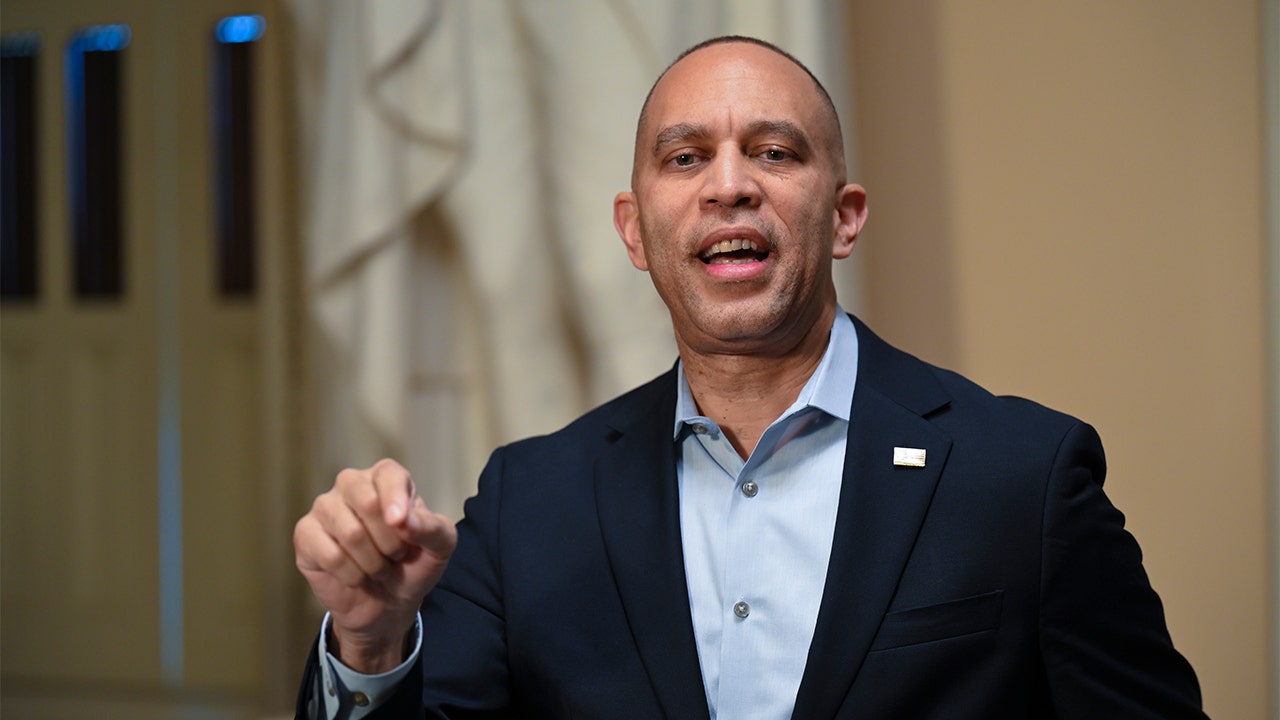
House Democrats selected Minority Leader Hakeem Jeffries, D-N.Y., as their nominee for speaker of the House in the 120th Congress following the party’s sweeping midterm victories, a senior House Democratic staffer confirmed to Digital.
Despite growing opposition from progressives over his leadership and ties to the Democratic establishment, Jeffries survived the secret-ballot vote on Wednesday in a «landslide,» according to the staffer, advancing him as the party’s nominee to lead the majority in the new Congress. Only 11 Democrats voted against his speaker nomination.
The New York lawmaker must now win a full House vote in January to secure the position.
SENATE DEM CHALLENGING SEN CHUCK SCHUMER FOR LEADERSHIP POST BACKS HAKEEM JEFFRIES FOR HOUSE SPEAKER
Jeffries ran unopposed for the nomination, although recent reports indicated Democratic congressional offices had been inundated with calls from frustrated voters urging lawmakers to select an alternative candidate.
After he cleared the vote, the committee room where the incoming class of Democratic members, made up of re-elected and newly elected caucus members, erupted in cheering and clapping immediately following the vote.
«It was a blowout number,» Rep. Bennie Thompson, D-Miss., told Digital after the vote.
The Democratic leader has faced criticism from progressive members of his party over his support for Israel and his ties to corporate political action committees, which critics argue reflect the priorities of the Democratic establishment rather than the party’s progressive base.
Rep.-elect Don Leonard, D-Ohio, who flipped a district carried by Trump in 2024, told local media that he would be «shopping for a new leader» if Jeffries did not commit to changing his position on Israel.
When asked by Digital if he voted against Jeffries on Wednesday, Rep.-elect Adam Hamawy, D-N.J., a new member of the progressive caucus, declined to comment. After the vote count was reported, it was confirmed that Hamawy voted against Jeffries’ nomination.
Rep. elects Darializa Avila Chevalier, D-NY., Frederick Haynes, D-Texas, Melat Kiros, D-Colo., Donavan McKinney, D-Mich., Chris Rabb, PA, and Claire Valdez, D-N.Y., joined Hamawy in opposing Jeffries.
FOLLOW THE LEADER: DEMOCRATS FACE PARTY BATTLE AS DIVISIONS DEEPEN
Rep. Jonathan Jackson, D-Ill., told Digital that the members who voted against them were «unfair» as they had never seen his abilities as a legislator, minority leader and let alone Speaker of the House.
Jackson added that these new representatives probably voted against Jeffries because they were following what their constituents wanted them to do.
Rep. Josh Gottheimer, D-N.J., told Digital that these new representatives are members of the Democratic Socialists of America (DSA), not the Democratic Party, and have their own independent legislative agenda outside that of the establishment.
After the vote, the coalition who voted against Jeffries released a statement claiming that they opposed Jeffries’ nomination because the minority leader does not represent the agenda they believe in, which includes abolishing Immigration and Customs Enforcement (ICE), and Medicare-for-all.
Democrats are preparing to use their new majority in January to immediately launch investigations, challenge President Donald Trump’s policies through legislative oversight and hold congressional hearings. If Jeffries advances to speaker, he will lead that effort.
Despite the opposition, Jeffries has maintained support from prominent Democratic leaders, including former House Speaker Nancy Pelosi, D-Calif., who publicly backed his bid for the speakership.
Jeffries’ nomination does not guarantee that he will become speaker when the new Congress convenes in January. The New York Democrat must still secure enough votes from the full House to win the position, but with the overwhelming victory on Wednesday, the path to speakership appears clearcut.
The looming vote could test whether progressive dissatisfaction with Jeffries’ leadership translates into opposition on Capitol Hill or remains largely confined to grassroots activists.
The controversy also raises questions about whether incoming Democrats who campaigned against the party’s establishment will ultimately support its chosen leader or demand policy concessions in exchange for their votes.
During the secret ballot session on Wednesday morning, Democrats selected Rep. Ted Lieu, D-Calif., to become the party’s next caucus chair.
politics, congress, house of representatives, democrats elections
INTERNACIONAL
Japan scrambles fighter jets after Russian aircraft breach airspace amid rising Pacific tensions

NEWYou can now listen to Fox News articles!
Japan scrambled fighter jets early Tuesday after two suspected Russian aircraft entered Japanese airspace, prompting a rapid military response ahead of Prime Minister Sanae Takaichi’s warning of rising global instability during the Quad Leaders’ Summit in Manila.
Hours later, President Donald Trump had also joined Takaichi, Indian Prime Minister Narendra Modi and Australian Prime Minister Anthony Albanese at the summit, where the leaders voiced opposition to actions threatening regional peace and stability.
«We strongly oppose any destabilizing or unilateral actions that seek to change the status quo, including by force or coercion, which escalate tensions and undermine regional peace and stability,» the leaders said in a joint statement later released by the White House.
TRUMP KICKS OFF HIGH-STAKES ASIA TRIP WITH XI, PUTIN MEETINGS LOOMING ON WORLD STAGE
Japan scrambled fighter jets after two suspected Russian aircraft entered Japanese airspace, prompting a rapid military response. (Aviation-images.com/Universal Images Group via Getty Images)
On Wednesday, two U.S. military officials confirmed to Fox News that the aircraft carrier USS George Washington was departing the Middle East for the Pacific.
Sen. Mazie Hirono, D-Hawaii, questioned acting Navy Secretary Hung Cao Tuesday about the lack of aircraft carriers in the Pacific, noting that three carrier strike groups had been deployed to the Middle East.
«There are none in the Indo-Pacific area when we are looking at China, not to mention North Korea and especially what China may have in mind,» Hirono said.
«See, this is stretching and stressing our resources. You can’t take away the strike group out of the Indo-Pacific.»
The Russian aircraft entered Japanese airspace northwest of Okinoshima, an island in southwestern Japan’s Fukuoka Prefecture, at about 4:07 a.m. local time Nov. 17, according to Japan’s Defense Ministry.
Fighter jets from the Japan Air Self-Defense Force’s Western Air Defense Force were scrambled to issue warnings and take other measures, the ministry said in a statement posted on X.
The first suspected Russian aircraft entered Japanese airspace at approximately 4:07 a.m. and remained for three minutes.
A second aircraft entered the same area at approximately 4:09 a.m. and departed three minutes later.
THREE MANILA MOMENTS THAT GIVE TRUMP MOMENTUM GOING INTO TALKS WITH CHINA

U.S. President Donald Trump, second from right, poses for photos with Japanese Prime Minister Sanae Takaichi, left; Indian Prime Minister Narendra Modi, second left; and Australian Prime Minister Anthony Albanese as they take part in a meeting of the Quad group at the Solaire Resort on the sidelines of the 49th Association of Southeast Asian Nations Summit in Manila Nov. 17, 2026. (Mandel Ngan/AFP via Getty Images)
Japan’s Defense Ministry said the aircraft traveled through the Tsushima Strait and passed between Japan’s Yonaguni Island and Taiwan before continuing into the Pacific Ocean.
«In response, the Self-Defense Forces scrambled fighter jets from the Japan Air Self-Defense Force’s Western Air Defense Force to issue notifications and warnings and take other measures,» the Ministry of Defense said.
Japanese Defense Minister Shinjiro Koizumi said Tokyo lodged a strong protest with Moscow and demanded measures to prevent further airspace violations.
The incidents «not only constitute a grave infringement upon Japan’s sovereignty but also pose a threat to our security. They are entirely unacceptable,» Koizumi said.
This came as Takaichi warned of growing instability in the international order and promised a bigger role for Japan in maintaining regional security.
CHINA, RUSSIA, IRAN AND NORTH KOREA FORM ‘AXIS OF AGGRESSORS’ THAT COULD OVERWHELM US, BOOK WARNS
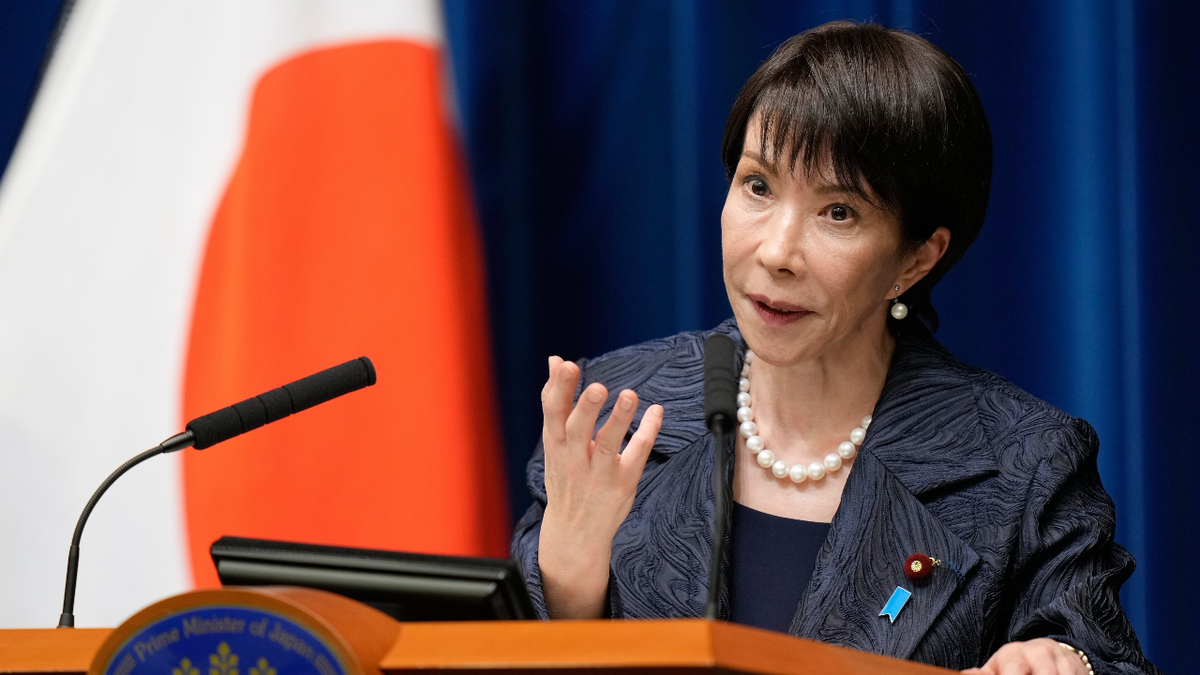
Japanese Prime Minister Sanae Takaichi speaks during a news conference at the prime minister’s office in Tokyo Oct. 21, 2025. (Eugene Hoshiko)
«While the international order is experiencing a period of great instability, Japan will play a more proactive role,» Takaichi said during the Association of Southeast Asian Nations summit in Manila.
Takaichi emphasized Japan’s commitment to maintaining an international order based on freedom, openness and the rule of law while strengthening cooperation with Southeast Asian nations.
«Our countries are the four corners of a free, open, stable and prosperous Indo-Pacific,» Trump had also said ahead of the Quad meeting.
The leaders had expressed «grave concerns» about economic coercion, including arbitrary export restrictions, and outlined plans for a joint military exercise involving maritime patrol aircraft in 2027.
KIM JONG UN’S NUCLEAR BUILDUP SPARKS ‘SERIOUS CONCERN’ AHEAD OF TRUMP-XI-PUTIN SUMMIT

An F-35C stealth jet sits on the deck of the USS Carl Vinson in the Western Pacific, south of Japan. (Reuters/Tim Kelly)
The airspace incursion comes amid broader security concerns across the Indo-Pacific, where Japan and its regional partners have increasingly monitored Russian and Chinese military activity.
On Tuesday, South Korea’s air force also scrambled fighter jets as multiple Russian military aircraft had entered the country’s air defense identification zone, according to the Ministry of National Defense.
Otherwise, Japan’s relations with Moscow have deteriorated since Russia invaded Ukraine in 2022, with Tokyo joining Western allies in imposing sanctions on the Kremlin.
The two countries are also locked in a decades-old territorial dispute over islands north of Japan’s northernmost main island of Hokkaido. Russia administers the islands, which Japan claims as its Northern Territories.
Japan previously scrambled fighter jets in 2024 after a Russian military patrol aircraft entered Japanese airspace near Hokkaido three times.
pacific, us air force, russia, china, japan, south korea, military, navy

Horas de definiciones por las codiciadas sillas del Senado en el Consejo de la Magistratura

Contraloría presentó una denuncia penal contra Panama Ports Company, filial del conglomerado chino CK Hutchison

El irónico dardo de Dibu Martínez que sorprendió a Maxi López en plena goleada de Argentina ante Costa Rica

Así cambió el negocio de vender autos en la Argentina: cuánto cayó el margen de ganancia y qué buscan las concesionarias

Jeffries survives Dem vote to secure speaker position as progressive resistance clouds his chances

Japan scrambles fighter jets after Russian aircraft breach airspace amid rising Pacific tensions

La inflación de octubre: el dato que sorprendió a casi todos y la distancia que persiste con los parámetros internacionales

U2 vuelve con 12 nuevas canciones y una pregunta incómoda sobre si el rock todavía puede decir algo nuevo

Milei dijo que el riesgo país sube por el miedo a "Orcolandia" y afirmó: "Los argentinos no van a votar hacia el pasado"

Caída de sistemas, fallas y sospechas: qué hay detrás de la suspensión del tráfico aéreo y los problemas en los bancos de EE.UU.

 POLITICA2 días ago
Milei dijo que el riesgo país sube por el miedo a "Orcolandia" y afirmó: "Los argentinos no van a votar hacia el pasado"
- INTERNACIONAL2 días ago
Caída de sistemas, fallas y sospechas: qué hay detrás de la suspensión del tráfico aéreo y los problemas en los bancos de EE.UU.
- ECONOMIA3 días ago
Se agudiza la suba de tasas y se complica la economía mundial