INTERNACIONAL
Un diente de elefante de 700.000 años revela cómo era el refugio de los primeros humanos

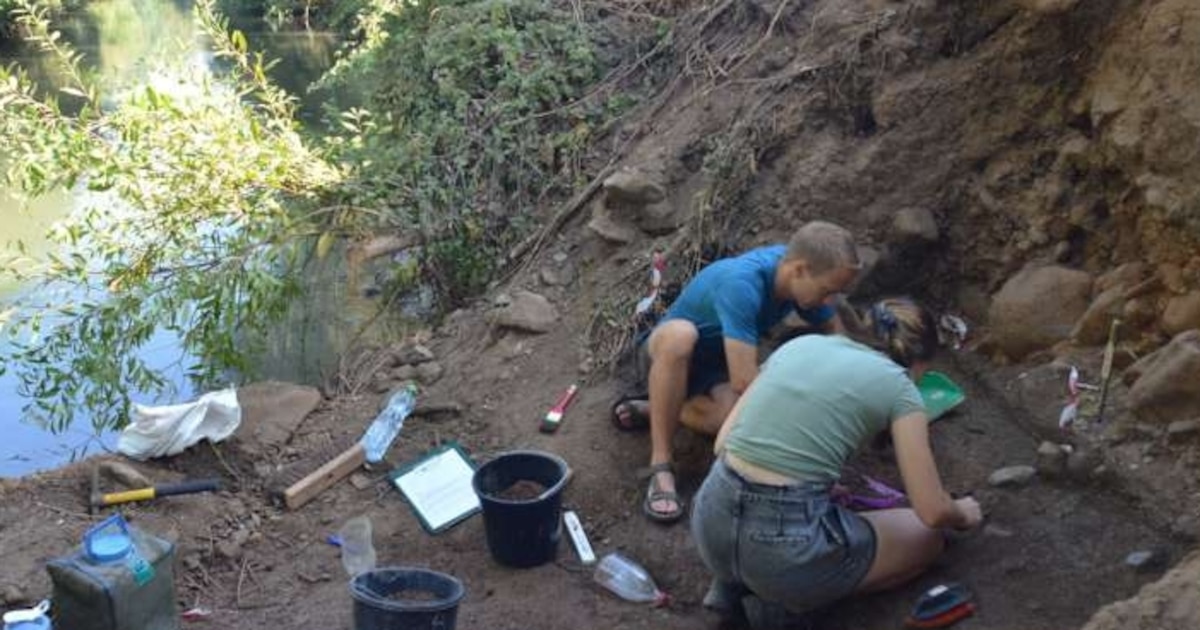
Un molar de elefante conservado durante cerca de 700.000 años permitió reconstruir el paisaje que compartieron algunos de los primeros grupos humanos y grandes mamíferos en el norte de Israel. El hallazgo revela un sistema de bosques, humedales, ríos y praderas en torno al yacimiento prehistórico de Gesher Benot Ya’aqov, donde también aparecieron herramientas de piedra de la tradición achelense.
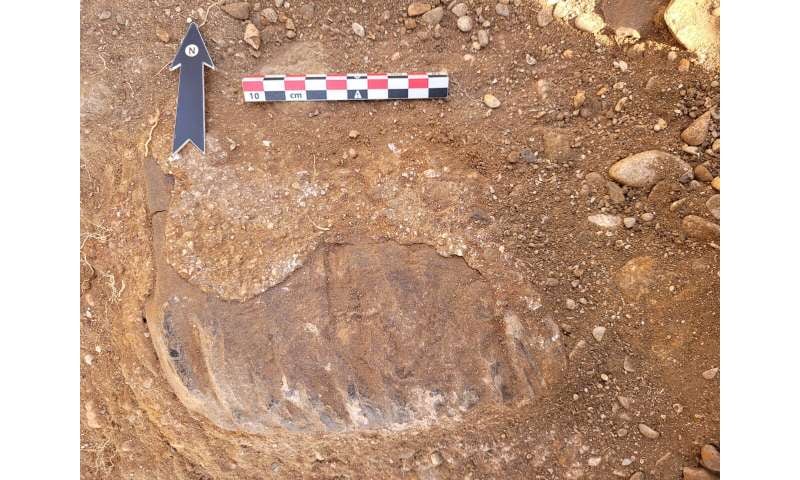
La pieza perteneció a un Palaeoloxodon antiquus, conocido como elefante de colmillos rectos, una de las especies terrestres de mayor tamaño del Pleistoceno. Los científicos analizaron el diente como un registro biológico del ambiente que rodeaba al animal y de las condiciones que pudieron favorecer la presencia humana en la zona.
El estudio, dirigido por la doctoranda Hannah Farrell, de la Universidad de Haifa, fue publicado en la revista Quaternary Science Reviews. El trabajo se centró en restos recuperados en el sitio de Gesher Benot Ya’aqov, en el valle del Rift del Jordán, al sur del actual valle de Hula.
Qué revela el diente de elefante de 700.000 años
El molar y varios fragmentos de colmillo fueron hallados cerca de hachas de mano y hendedores de basalto. Se trata de utensilios vinculados con la tradición achelense, una tecnología lítica extendida entre poblaciones humanas prehistóricas durante cientos de miles de años.
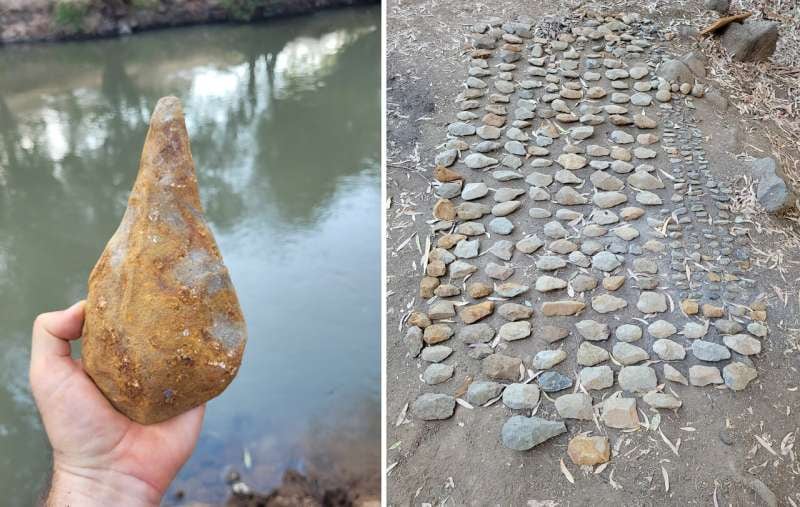
La proximidad entre los restos animales y las herramientas no permite establecer por sí sola una relación directa de caza o procesamiento del elefante. Aun así, sitúa a los grandes mamíferos y a los grupos fabricantes de instrumentos de piedra en un mismo escenario ecológico.
El equipo aplicó tomografías computarizadas, reconstrucciones tridimensionales, análisis microscópicos de desgaste, estudios de isótopos y análisis de polen recuperado de los sedimentos. La combinación de esos métodos permitió identificar qué comía el animal, qué tipo de vegetación predominaba y cuánta agua había disponible en el entorno.
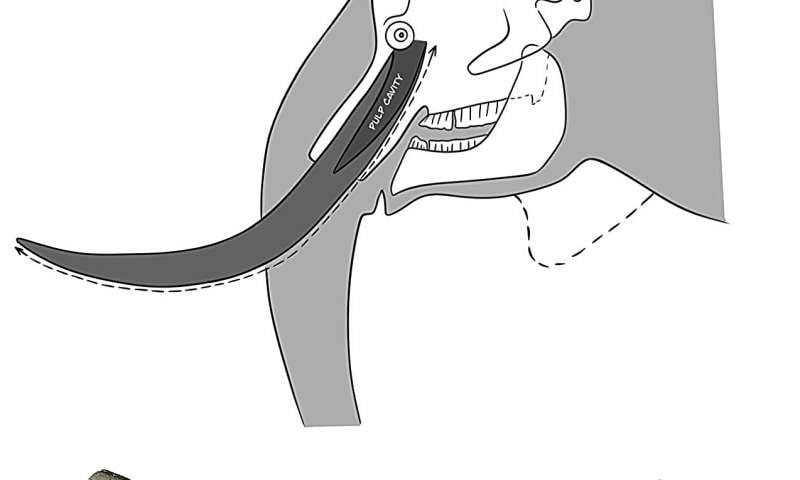
Las imágenes de alta resolución determinaron que el fósil era un tercer molar inferior. Las marcas microscópicas presentes en la superficie de masticación mostraron una dieta compuesta por hojas y pastos. Esa señal apunta a que el elefante se alimentaba tanto en sectores arbolados como en áreas abiertas próximas a cursos de agua.
Cómo reconstruyeron los científicos el ambiente del Pleistoceno
Los valores de isótopos de carbono y oxígeno en el esmalte dental indicaron que el elefante vivió en un ambiente con disponibilidad sostenida de agua. Los investigadores hallaron, además, polen de plantas asociadas con humedales, riberas y cuerpos de agua poco profundos.
Entre los restos vegetales identificaron juncos, ciperáceas, sauces, tamariscos y otras especies acuáticas. El conjunto se sumó al polen de árboles mediterráneos y de vegetación propia de praderas abiertas.
Según explicó el profesor Gonen Sharon, de la Universidad Tel-Hai de Kiryat Shmona: “Comprender cómo los humanos y los animales respondieron al cambio ambiental hace cientos de miles de años ayuda a entender mejor las fuerzas que moldearon nuestra especie”.
La información recuperada a partir del diente y los sedimentos sugiere que el sector norte del actual territorio israelí no era un paisaje uniforme. Había bosques, pastizales, pantanos, ríos y zonas de aguas bajas en una superficie relativamente acotada. Dicho de otro modo, los animales podían acceder a distintos alimentos y fuentes de agua sin desplazarse hacia regiones lejanas.
El valle de Hula habría funcionado como un refugio ecológico con recursos previsibles, una condición relevante para las poblaciones de fauna y para los grupos humanos que circulaban por el área.
Por qué Gesher Benot Ya’aqov fue clave para los primeros humanos
El yacimiento se localiza dentro del llamado Corredor Levantino, la franja terrestre que conectó África con Eurasia. Durante el Pleistoceno, esa ruta fue utilizada por distintas especies animales y por poblaciones humanas en sus desplazamientos entre ambos continentes.
El nuevo trabajo aporta datos sobre las condiciones locales en un período del que existen registros limitados. Los investigadores plantean que el agua, la vegetación y la presencia de animales determinaron los espacios donde podía sostenerse la vida en esa vía de paso.
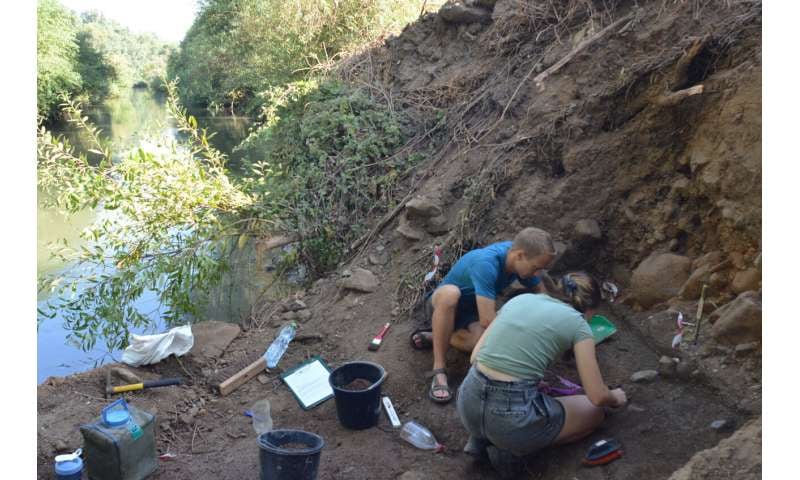
“La disponibilidad de agua, vegetación y recursos animales determinó dónde podían sobrevivir los humanos y la fauna silvestre”, señaló Sharon. El investigador añadió que los humedales, ríos y bosques del valle de Hula ofrecían condiciones favorables a lo largo de una de las rutas migratorias más antiguas conocidas.
La investigación también ayuda a precisar la relación entre el ambiente y las herramientas halladas en Gesher Benot Ya’aqov. Las hachas de mano y los hendedores de basalto muestran la presencia de grupos con capacidad para producir instrumentos cortantes y resistentes. Esas herramientas formaban parte de actividades cotidianas como el procesamiento de recursos vegetales y animales, aunque el estudio no adjudica una función específica a cada pieza encontrada junto al elefante.
El valor científico del molar no reside únicamente en la identificación de una especie extinta. El esmalte dental conserva señales químicas y físicas de la alimentación y el ambiente del animal. Por eso, los investigadores lo utilizaron para reconstruir parte del ecosistema que existía alrededor del valle del Jordán hace cerca de 700 milenios.
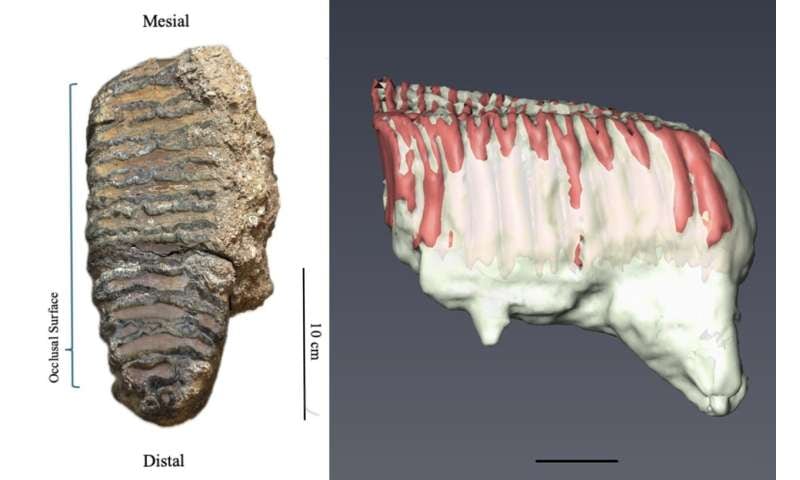
En términos simples, el diente funcionó como un archivo natural. Su composición permitió inferir que el elefante consumía recursos de ambientes diversos y vivía en una región con acceso frecuente al agua. El polen complementó esa información al ofrecer una imagen de la vegetación que crecía cerca del lugar donde se depositaron los restos.
La arqueóloga Hannah Farrell trabajó con especialistas de la Universidad de Haifa y de la Universidad de Tel Aviv. Cheryl A. Makarewicz estuvo a cargo de los estudios isotópicos; Nimrod Marom participó en el análisis arqueozoológico; mientras que Minji Jin y Dafna Langgut analizaron el polen.
Los resultados sitúan a Gesher Benot Ya’aqov como un punto de referencia para estudiar el vínculo entre clima, disponibilidad de recursos, grandes animales y ocupación humana en el Levante durante el Pleistoceno.

INTERNACIONAL
Woman, 87, dies after being carried from home of 70 years on stretcher during eviction in Spain
NEWYou can now listen to Fox News articles!
The death of an 87-year-old woman who was evicted from her longtime home has intensified a political crisis in Spain, where nationwide protests over soaring housing costs have helped force an early election.
María del Carmen Abascal, known as «Maricarmen,» died Wednesday after being hospitalized following her eviction from a Madrid apartment where she had lived for seven decades, according to The Associated Press.
Her death came just days after Spanish Prime Minister Pedro Sánchez called a snap election for Nov. 29 after his government’s failure to pass emergency housing measures through Parliament.
The controversy has put renewed pressure on Sánchez’s Socialist Party as Spain grapples with widespread frustration over rising rents and housing affordability.
SPANISH OPPOSITION LEADER CALLS PRIME MINISTER A ‘TRAITOR’ OVER CEUTA MIGRANT CRISIS
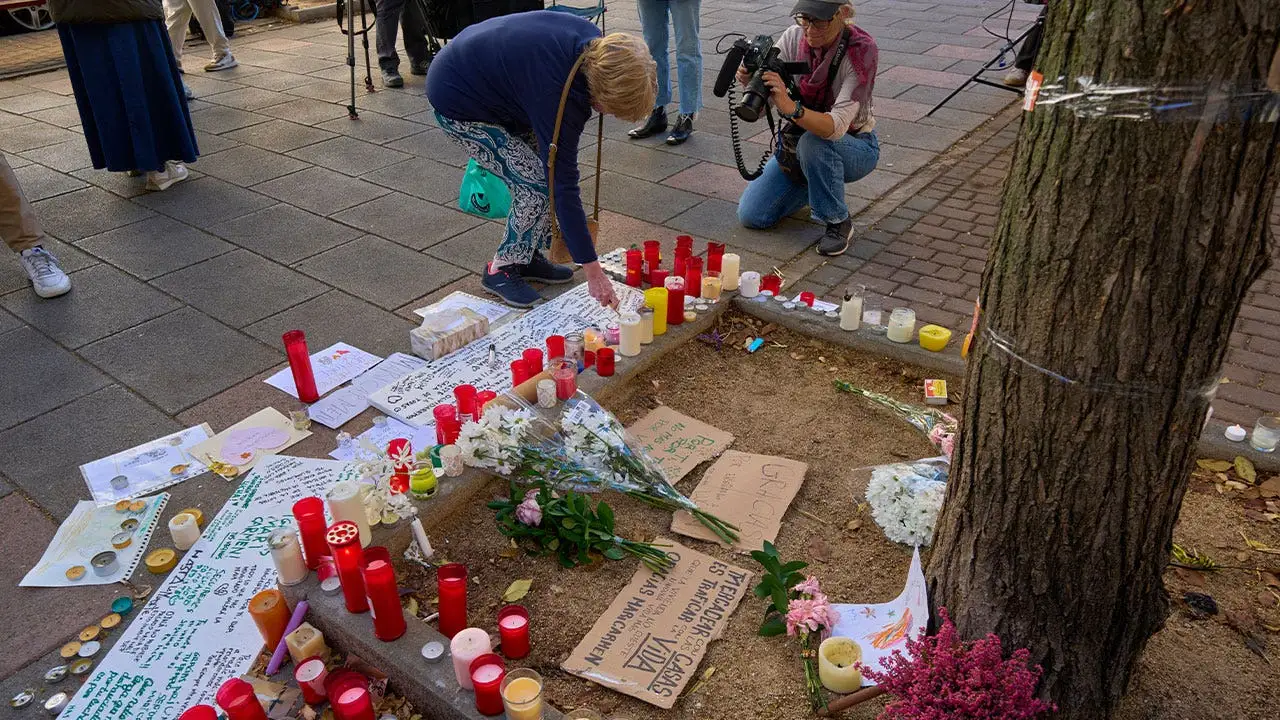
People rally in downtown Madrid, Spain, to honor the memory of Maria del Carmen Abascal, 87, whose eviction from her home sparked nationwide protests Thursday, Oct. 8, 2026. (AP Photo/Manu Fernandez)
At the center of the uproar was Abascal’s Sept. 23 eviction, which drew national attention after images showed the elderly woman, who used a wheelchair, being carried from her apartment on a stretcher.
Police had cordoned off the street and removed demonstrators who attempted to stop the eviction.
The images sparked demonstrations in Madrid and other Spanish cities, turning Abascal into a symbol of the country’s housing crisis.
The real estate company responsible for her eviction had sought to lease the apartment at a substantially higher price, according to the AP.
ANGRY LOCALS BLOCK FAMOUS BEACH AS MASS TOURISM PROTESTS ESCALATE AT VACATION HOT SPOT
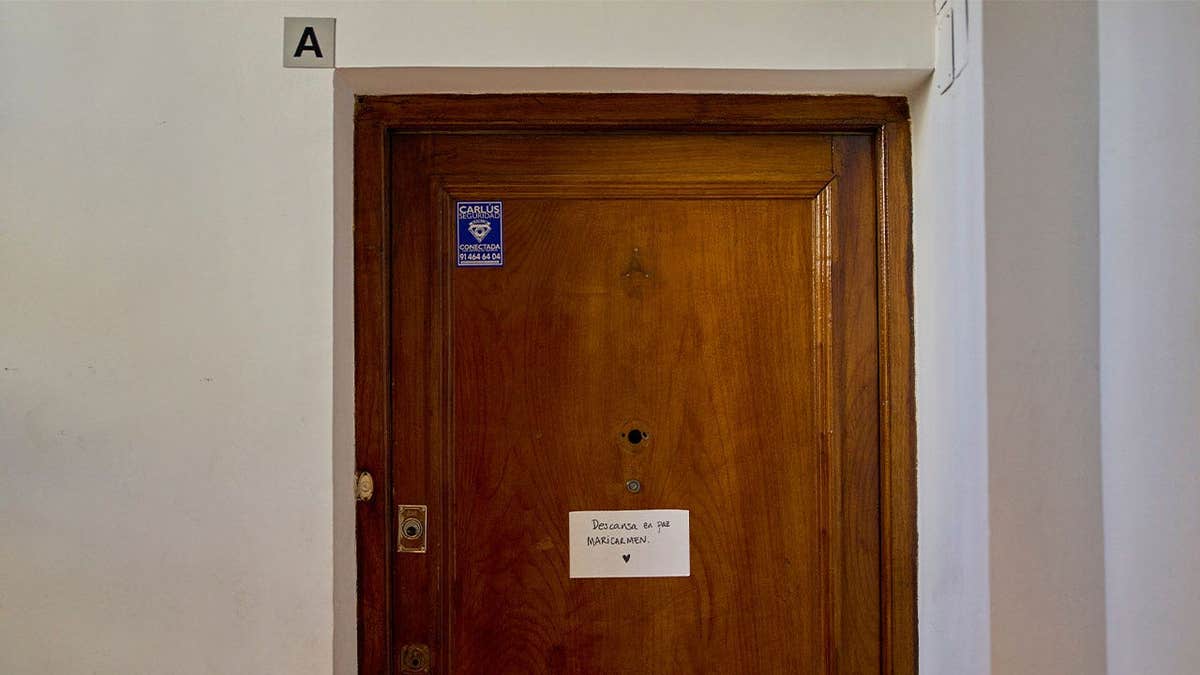
A view of the door of the home from which Maria del Carmen Abascal, 87, was evicted, sparking nationwide protests, with a sign reading «Rest in peace, Maricarmen,» in Madrid, Spain, Thursday, Oct. 8, 2026 (AP Photo/Manu Fernandez)
Facing mounting public pressure, the company eventually agreed to allow Abascal to return to her home. She died before she could move back.
Her cause of death has not been disclosed.
After news of her death, demonstrators gathered outside Spain’s Parliament and in Madrid’s Puerta del Sol square, where some observed a minute of silence.
Protesters also chanted, «Maricarmen lives, the fight goes on!»
TENS OF THOUSANDS FLOOD STREETS TO PROTEST SPAIN BORDER CRISIS
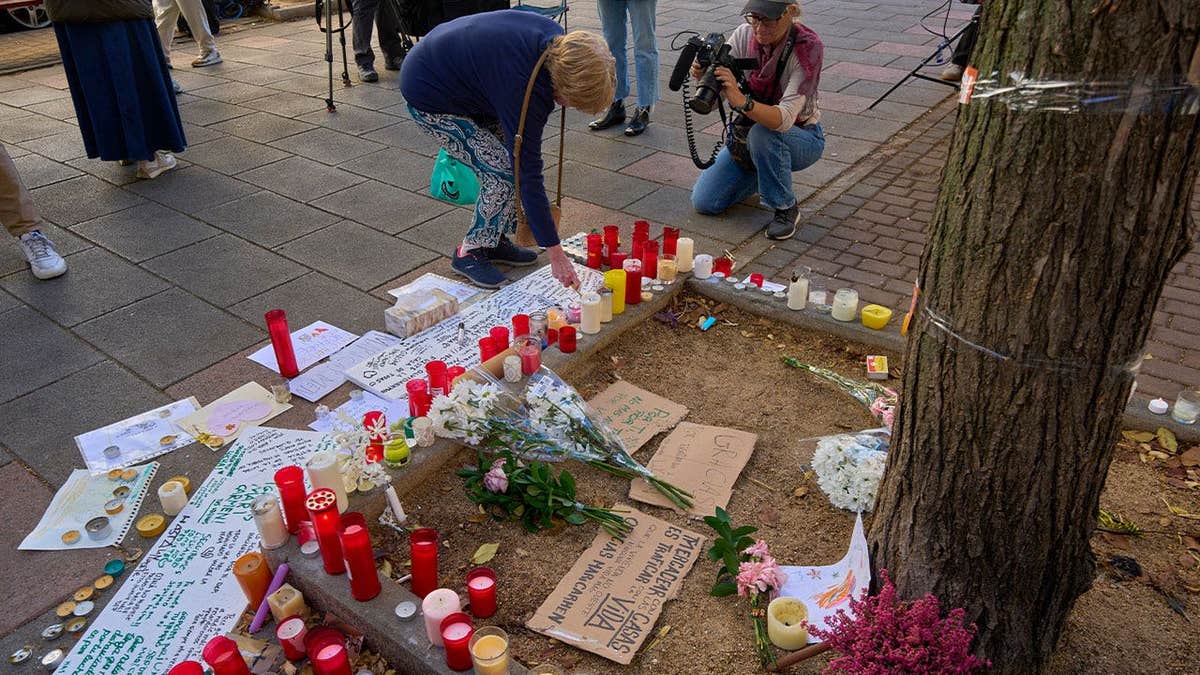
A woman places flowers in Madrid, Spain, Thursday, Oct. 8, 2026, near the entrance to the building where Maria del Carmen Abascal, 87, was evicted from her home, sparking nationwide protests. (AP Photo/Manu Fernandez)
Sánchez offered condolences in a statement on X.
«All my love to Maricarmen’s family and loved ones,» he wrote. «A hug as well to all of us who feel this loss as our own today. Rest in peace.»
Conservative opposition leader Alberto Núñez Feijóo also expressed condolences and urged political leaders not to use the woman’s death for political gain.
«No campaign, no party, no use for political advantage,» he wrote. «When faced with the death of a person, we must only show respect.»
Abascal’s eviction and death have become a rallying point for housing activists demanding changes to Spain’s rental policies as the country prepares for its November election.
The Associated Press contributed to this report.
spain, world, housing, world protests
INTERNACIONAL
Minnesota Senate hopeful warns threat level rising amid rash of Somali gang crime, terror plot

The Republican Senate nominee in Minnesota is sounding the alarm about crime levels in the state amid a wave of Somali gang violence and a foiled terror plot by an American born to Somali parents.
«I hear a lot of concerns from Minnesotans on the campaign trail about crime, and no matter what form that crime takes, Minnesotans know that they feel under a level of threat that has increased lately here in Minnesota, and in the last week and just today,» Michele Tafoya, running as a Republican against Minnesota’s Lt. Gov. Peggy Flanagan, told Digital on Wednesday. «We saw the arrest of an 18-year-old Somali American citizen to Somali parents arrested for a terrorist — planning a terrorist attack — at the Mall of America during a Hmong celebration.»
The suspect in that alleged terror plot is 18-year-old Sheikhdoon Abdullahi Mohamud, born in the United States to Somali nationals who are naturalized American citizens, law enforcement sources told Digital. Federal court documents said that Mohamud was arrested after purchasing an AK-47-style rifle, magazines and ammunition from an undercover FBI agent whom he believed to be a loyal ISIS member.
MALL OF AMERICA TERROR PLOT THWARTED, SUSPECTED ISIS SYMPATHIZER ARRESTED, FBI ANNOUNCES
The FBI alleges Mohamud had digital communications beginning in December 2024 with a confidential human source he believed was a member of al-Shabaab, a Somali Islamist terror group and offshoot of ISIS.
«I can’t wait until I kill kuffar man. October 24 is the day insha Allah,» one of the messages said. «Kuffar» is a term used to refer to non-Muslims, and «insha Allah» means «God willing.»
The Hmong people are indigenous to Southeast Asia and boast a relatively large population in the United States.
«We have a large Hmong community here in Minnesota as well, and he basically stated that he wanted to take out anyone who was not a Muslim. He also noted that the Mall of America is owned by people who are Jewish,» Tafoya said. «And so this was his plan, and thank goodness for the FBI in Minneapolis here and local law enforcement for catching onto this plan and derailing it well in advance. This is a guy who has pledged his allegiance to ISIS. Again, he is of Somalian descent and terror is alive and well and thank God we averted this massive crisis.»
TAFOYA MAKES ‘COMMON SENSE’ PITCH TO DISAFFECTED DEMOCRATS AS SHE VOWS TO FIGHT MINNESOTA’S ‘SOCIALIST LURCH’
The thwarted plot follows a rash of gang violence attributed to Somalis by law enforcement in the suburbs of Minneapolis.
Police in Eden Prairie, Minnesota, said a shooting during the local high school’s homecoming celebration last week was carried out by rival Somali gangs. Similarly, a shooting at a Bloomington, Minnesota, gas station over the weekend was attributed to Somali gangs. In the latter incident, more than 100 rounds of ammunition were fired.
«And we have had Somali-related — Somali gang-related — attacks here locally in our suburbs at a high school football game during homecoming, at a Catholic Church parking lot, at a gas station, and this is all just really started to peak here in the last couple of weeks. So it’s undeniable. Our law enforcement here are calling it out as the product of Somali gang violence, and we’ve got to identify it, and we have to find a way to deal with it.»
Tafoya also mentioned the Somali fraud scandals have enveloped Minnesota this year.
BILL MAHER RIPS IMMIGRANTS WHO REFUSE TO ADAPT, SAYS AMERICAN VALUES ARE ‘NOT NEGOTIABLE’
«I don’t know how you can legislate that assimilation, but we simply cannot tolerate the level of crime,» she said. «We’ve seen it with fraud here. It’s in the paperwork that the Feeding Our Future fraud was largely … in terms of percentage, probably 98%, Somali people involved in that fraud,» she said.
«What I do think is any guests of this country who commits crime should be sent home with no pathway back,» she said. «If you’re coming here to be a guest of this country or to live in this country you cannot break our laws, and if you’re an American, you cannot break our laws, period.»
Tafoya is not against immigration, noting that she’s the granddaughter of immigrants, and she has an adoptive Colombian daughter who is as patriotic as they come.
But she’s not going to stop in her mission to battle crime, no matter the background of the criminals, she said. She plans to be an «equal opportunity pain in the a–» to all of them, specifically mentioning corrupt politicians.
«I’m going to represent Minnesotans and Americans, and so there’s, there’s not going to be any limit on the way that I see crime. Crime is crime, and it’s going to be committed by a wide variety of people, and they all need to be held accountable and accountability has been in short supply here in Minnesota.
Fox News’ Bill Melugin contributed to this report.
politics, terrorism, terror, minnesota, migrant crime
INTERNACIONAL
Balotaje en Brasil: Flávio Bolsonaro aventajó por cuatro puntos a Lula da Silva en el primer sondeo y sumó un respaldo clave

El senador ultraderechista Flávio Bolsonaro lidera el primer sondeo de cara a la segunda vuelta de las elecciones presidenciales de Brasil, con el 49% de la intención de voto, frente al 45% que recibe el presidente Luiz Inácio Lula da Silva.
La primera encuesta de intención de voto previa a la segunda vuelta el 25 de octubre, divulgada este jueves por Datafolha, indica una diferencia de 4 puntos porcentuales entre ambos candidatos.
Según la encuestadora, ambos estarían técnicamente empatados, ya que el margen de error es de dos puntos porcentuales a más o a menos.
Poco después de anunciarse el sondeo, el candidato presidencial brasileño Augusto Cury, tercero en el primer turno, anunció su apoyo a Flávio Bolsonaro de cara al balotaje. Cury obtuvo el 2,89% de los sufragios, con 3.348.569 votos.
En una nota de su campaña divulgada este jueves, Cury afirmó que su apoyo no constituye “un cheque en blanco” y que estará sujeto al cumplimiento de principios como el de la transparencia, la responsabilidad fiscal y el respeto a las instituciones democráticas
El 94% de los encuestados ya decidió su voto
De acuerdo con el sondeo, un 5% de los encuestados pretende votar en blanco o anular su voto y solo un 1% dice que aún está indeciso.
Entre los que ya eligieron a un candidato, un 94% asegura que está totalmente decidido de su voto y un 6% admite que aún pueden cambiar.
Bolsonaro, aspirante por el ultraderechista Partido Liberal (PL), fue el más votado en la primera vuelta del pasado domingo, con el 47,03% de los votos, y Lula, postulado a la reelección por el progresista Partido de los Trabajadores (PT), lo siguió con el 45,16%.
El resultado de las urnas, sin embargo, contradijo las previsiones de todas las encuestas, que proyectaban un empate técnico pero con el líder progresista en primer lugar.
Silva

Se reaviva la interna entre Axel Kicillof y Máximo Kirchner por el reparto de poder en el Congreso del PJ bonaerense

Dalma Maradona sorprendió al contar la única elección que no le permite hacer a sus hijas: “Todo menos eso”

Gimnasia de La Plata vs Atlético Tucumán: formaciones, hora y dónde ver por tv

El foco de tensión que el Gobierno menos deseaba

“Deja de usar bótox, pareces una manzana”: la burla en vivo de Cristiano a un periodista que lo criticó por su conflicto en Portugal

La economía argentina se recupera, pero el bolsillo sigue ajustado: qué cambió en los hogares

¡Precios de Manhattan con sueldos de Argentina! Cómo los créditos hipotecarios inflaron las propiedades y congelaron el sueño de la casa propia

Escándalo total en la AFA: reventa millonaria, un homenaje paupérrimo a Messi y el pedido urgente de renuncia a Chiqui Tapia

El gobernador de la provincia que más ATN recibió de la Casa Rosada no integró la comitiva de Milei en París

Israeli medical workers who treated Oct 7 wounded relive day terror hit home

 DEPORTE1 día ago
Escándalo total en la AFA: reventa millonaria, un homenaje paupérrimo a Messi y el pedido urgente de renuncia a Chiqui Tapia
- INTERNACIONAL2 días ago
Después de su prohibición, las plataformas de apuestas deportivas y los casinos en línea ya están fuera de servicio en Brasil
- POLITICA2 días ago
Marcha contra la Corte: sectores del PJ, la izquierda, gremios y piqueteros protestan por el fallo que libera la venta de tierras para extranjeros