INTERNACIONAL
The Supreme Court appears to side with parents in religious liberty dispute over storybooks

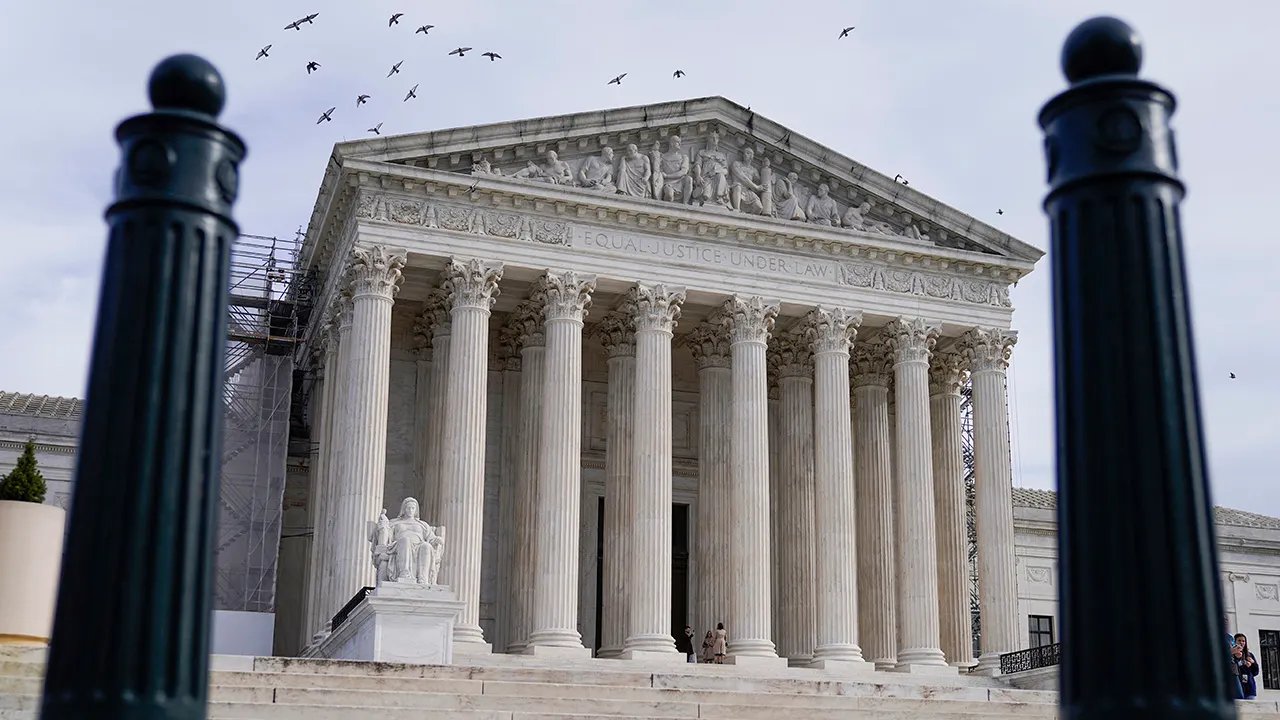
The Supreme Court’s conservative majority offered strong support for parents seeking the religious liberty right to be informed about and opt their children out of reading material in elementary schools that they say conflicts with their faith.
The Montgomery County, Maryland school board withdrew its original opt-out policy for books related to gender and sexuality, prompting a federal lawsuit.
In a marathon two-and-a-half oral argument, the justices debated whether parents have been unfairly burdened in exercising their constitutional rights.
It is one of three high-profile religious-themed cases the high court will decide this term—including disputes over tax exemptions for religious groups, and taxpayer funding for private religious charter schools—which will be argued next week.
GORSUCH, ROBERTS SIDE WITH LEFT-LEANING SUPREME COURT JUSTICES IN IMMIGRATION RULING
Justice Sonia Sotomayor and her liberal colleagues appeared to back the county’s position on the storybooks. She noted a lower appeals court had refused a preliminary injunction to temporarily reinstate the opt-out policy.
«They never reached the issue of whether or not there was disruption, or what the motive was for taking away the opt out,» said Sotomayor. «What they decided was that there wasn’t coercion here, that there was mere exposure. I understood from the record that all that was required is that the books be put on the bookshelf. If that’s all that’s required, is that coercion?»
But Justice Samuel Alito echoed the views of several of his conservative colleagues, about returning to the previous policy that he said most schools around the country permit.
«What is the big deal about allowing them to opt out of this?» he asked.
Supreme Court Justice Samuel Alito. (Erin Schaff/The New York Times via AP, Pool, File)
Alito also questioned the content of several of the books raised in the appeal dealing with same-sex marriage.
«I don’t think anybody can read that and say: well, this is just telling children that there are occasions when men marry other men,» said Alito. «It has a clear moral message, and it may be a good message. It’s just a message that a lot of religious people disagree with.»
Hundreds on both sides of the issue rallied outside the court, some carrying signs like «Let Parents Parent» and «Include All Families.»
The suburban Washington county introduced new books with LGBTQ+ characters and themes into the elementary school curriculum in 2022, as part of the district’s «inclusivity» initiative.
PROSECUTION CALLS THEIR SECOND WITNESS AT KAREN READ’S RETRIAL FOR MURDER
One of the challenged storybooks raised in the appeals is «Prince & Knight,» described as a «modern fairy tale» for ages 4-8, of the two males falling in love after working together to battle a dragon threatening their kingdom, and later marrying.
Another book mentioned repeatedly in the court’s public session was «Uncle Bobby’s Wedding,» about a little girl’s reaction to her favorite relative’s plans to marry a man.
The school district refused to allow parents to opt out of their

Grace Morrison is one of the parents petitioning the Supreme Court to rule that a Maryland school district’s ban on parental opt-outs is unconstitutional. (Becket/Getty Images)
The school district refused to allow parents to opt out of their elementary school from the reading program – the same way older students can forego sex ed instruction.
While the school board initially allowed parents to keep their children out of this curriculum, the plaintiffs say officials quickly reversed course, announcing in March 2023 that exceptions would not be granted and that parents would not be notified before the books were introduced into their children’s classrooms. Officials cited increased absenteeism as one of the reasons for the change.
«We felt as parents that we would present these things to our children like we always have, when they’re ready to receive them. And especially a child with special needs, it’s even more difficult for her to understand,» said Grace Morrison, one of the plaintiffs. She and her husband, both Catholics, now homeschool their daughter, after the school refused an accommodation.
«Starting to present issues of gender ideology to a child like this could be extremely confusing and damaging, let alone to the faith that we’re raising her in,» she told Fox News Digital.
A federal appeals court ruled for the school district, concluding educators did not apply any pressure on children to abandon their religious beliefs, and «simply hearing about other views does not necessarily exert pressure to believe or act differently than one’s religious faith requires.»
State officials told the court that parents who choose to send their children to public school are not «coerced» simply by their classroom exposure there to religiously objectionable ideas.
The practical feasibility of an opt-out policy at was the key focus of the high court’s public session.
«Once we articulate a rule like that,» said Justice Elena Kagan, «it would be like, opt outs for everyone.»
SCOTUS HEARS ARGUMENTS OVER PARENTS’ FIGHT TO OPT CHILDREN OUT OF LGBTQ CURRICULUM
But Kagan also raised concerns about young children being exposed to some of the books offered in Montgomery County.
«I too, was struck by these young kids picture books and, on matters concerning sexuality. I suspect there are a lot of non-religious parents who weren’t all that thrilled about this.»
Justice Brett Kavanaugh, who noted he grew up in the affluent county and still lives there with his wife and two school-age daughters, said he was «mystified» at the why the county canceled its original opt-out policy.
Some on the bench raised concerns about a sweeping «a la carte» discretion parents would have to object to what goes in schools.
«What about a trans student in the classroom?» said Justice Ketanji Brown Jackson. «There’s a student who’s in the class. Must the teacher notify the parents of the student’s existence and give them an opt out to not be in the same classroom with this child?»
Dozens of briefs were filed by advocacy groups on both sides of the issue, including competing coalitions of states and lawmakers.
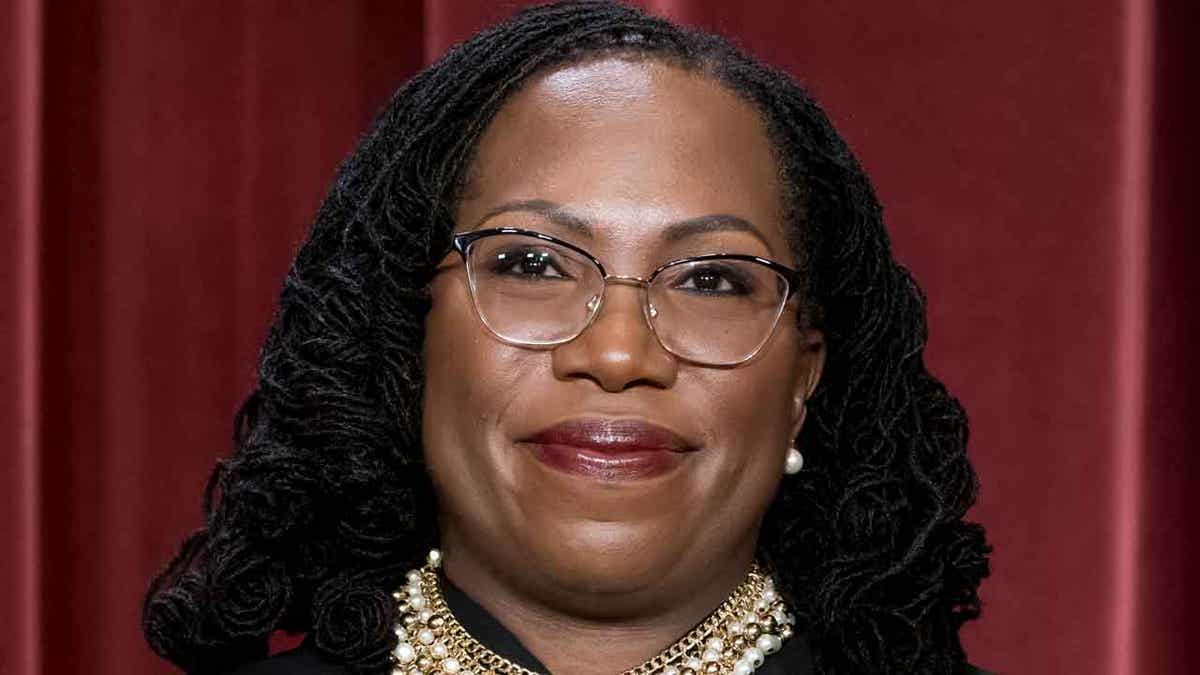
Associate Justice Ketanji Brown Jackson stands as she and members of the Supreme Court pose for a new group portrait following her addition, at the Supreme Court building in Washington, Oct. 7, 2022. (AP Photo/J. Scott Applewhite, File )
Many educators say they should be given deference to develop lesson plans that reflect the community at large, and that navigating a flood of individual religious rights claims would make classroom instruction and collaboration extremely problematic.
Parents rights and religious groups counter impressionable children should not be forced to participate in reading activities that undermine their families’ teachings and spirituality. The Becket Fund for Religious Liberty, representing the parents who sued, called the school policy «compelled instruction.»
The Trump administration is backing the parents, saying in a written brief the board’s no opt-out policy «compromises parents’ ability to act consistent with those [religious] beliefs regardless of whether their children feel pressured or coerced by the instruction.»
CLICK TO GET THE FOX NEWS APP
The case is Mahmoud v. Taylor (24-297). A ruling is expected before the court’s summer recess in late June.
Kristine Parks and Jessica Sonkin contributed to this report.
US,Supreme Court,Supreme Court Oral Arguments,Politics,US Education,Education Controversies,First Amendment Religious Freedom












Ukraine marks four years since Russia’s invasion
Fox News senior foreign affairs correspondent Greg Palkot joins ‘America’s Newsroom’ reporting on Ukrainian President Volodymyr Zelenskyy’s call for peace and strength four years after Russia’s invasion.
NEWYou can now listen to Fox News articles!
The Swedish Armed Forces jammed a suspected Russian drone Feb. 25 as it approached a French nuclear-powered aircraft carrier while docked in Malmö during major NATO drills, according to reports.
The Charles de Gaulle warship, the flagship of the French Navy, was visiting the southern Swedish port as part of the mission LA FAYETTE 26.
The drills brought NATO naval forces into the Baltic Sea region at a time of rising tensions with Moscow.
Rafale M (Marine) fighter jets parked on the flight deck with the conning tower in the background as the French aircraft carrier Charles De Gaulle. (Johan NILSSON / TT NEWS AGENCY / AFP via Getty Images)
The drone security breach unfolded when the carrier was in port, underscoring mounting concerns over Russian-linked drone activity near critical Western military assets, according to SVT.
The Swedish broadcaster reported that the drone was launched from a nearby Russian vessel and moved toward the carrier before being detected by Swedish forces.
‘THEY WERE SPYING’: SULLIVAN SOUNDS ALARM ON JOINT RUSSIA-CHINA MOVES IN US ARCTIC ZONE

Putin is testing the boundaries of NATO with aircraft incursions, allied states say. (Ramil Sitdikov/Pool/Reuters )
A ship from the Swedish Navy found the suspected drone during ongoing sea patrols in the Öresund Strait.
In response, Swedish operatives activated electronic countermeasures, disrupting the aircraft’s control systems.
«A ship from the Swedish Navy observed a suspected drone during ongoing sea patrols in the Öresund,» the Swedish Armed Forces said in a statement, SVT reported.
«In connection with the observation, the Swedish Armed Forces took countermeasures to disrupt the suspected drone. After that, contact with the drone was lost,» the statement said.
‘THEY WERE SPYING’: SULLIVAN SOUNDS ALARM ON JOINT RUSSIA-CHINA MOVES IN US ARCTIC ZONE

One of three Swedish Air Force JAS 39 Gripen fighter aircraft takes off from the Blekinge Wing F17, based in Kallinge southern Sweden for a base in Sardinia to join the Nato-led operation in Libya, on Saturday, April 2, 2011. As Sweden joins NATO, it bids a final farewell to more than two centuries of neutrality. (AP Photo/Scanpix/Patric Soderstrom, File)
As yet, it remains unclear whether the drone returned to the Russian vessel or fell into the sea after being jammed.
Swedish Defence Minister Pål Jonson told SVT Thursday that the drone came «probably from Russia, as there was a Russian military vessel in the immediate vicinity at the time of the facts,» according to Le Monde.
«A drone was jammed yesterday by a Swedish system at about seven nautical miles from the Charles de Gaulle. The Swedish system worked perfectly and this did not disrupt operations on board,» French General Staff spokesman Colonel Guillaume Vernet also said.
CLICK HERE TO DOWNLOAD THE FOX NEWS APP
This incident came just hours after Poland sent fighter jets overnight in response to another wave of Russian strikes over Ukraine, heightening tensions between Moscow and NATO, according to reports.
It also follows warnings from Russian President Vladimir Putin, who said that his «adversaries know how things could end» if they resort to using a «nuclear» response.
Related Article

sweden,russia,military,nato,threats,europe
INTERNACIONAL
Tensión en Oriente Medio: Estados Unidos e Irán concluyeron una nueva ronda de conversaciones sin acuerdo mientras aumenta el riesgo de guerra

Un escenario muy terrible
Conversaciones en Ginebra, las terceras desde la guerra de junio

EE.UU. sospecha que Irán está reconstruyendo su programa
Amenaza de acción militar aviva temores de guerra

NEWYou can now listen to Fox News articles!
A resolution led by Reps. Thomas Massie, R-Ky., and Ro Khanna, D-Calif., aimed at curbing President Donald Trump’s war powers in Iran is getting the blessing of the House of Representatives’ top Democrat.
House Minority Leader Hakeem Jeffries, D-N.Y., released a statement alongside other Democratic leaders Thursday announcing that they will force a vote on Massie’s resolution next week.
«As soon as Congress reconvenes next week, we will compel a vote of the full House of Representatives on the bipartisan Khanna-Massie War Powers resolution,» the joint statement read.
«This legislation would require the President to come to Congress to make the case for using military force against Iran. The Iranian regime is brutal and destabilizing, seen most recently in the killing of thousands of protesters. However, undertaking a war of choice in the Middle East, without a full understanding of all the attendant risks to our servicemembers and to escalation, is reckless.»
House Minority Leader Hakeem Jeffries is backing an effort by Reps. Thomas Massie and Ro Khanna to force a vote on reining in President Donald Trump’s war powers. (Nathan Posner/Anadolu via Getty Images; Saul Loeb/AFP via Getty Images; Kenny Holston-Pool/Getty Images)
Jeffries and other top Democrats argued that any military force against Iran would be illegal without approval from Capitol Hill.
«We maintain that any such action would be unconstitutional without consultation with and authorization from Congress. Next week, every Member will have the opportunity to go on the record as to whether they support military action against Iran absent Congressional approval,» they said.
Massie cited Congress’ war powers in the Constitution in unveiling the legislation earlier this month alongside Khanna.
GOP MUTINY FORCES HOUSE SPEAKER MIKE JOHNSON TO DELAY VOTE ON KEY PIECE OF TRUMP’S AGENDA
«Congress must vote on war according to our Constitution,» he posted on X. «[Khanna] and I will be forcing that vote to happen in the House as soon as possible. I will vote to put America first, which means voting against more war in the Middle East.»

Buses that were burned during Iran’s protests, in Tehran, Iran, Jan. 21, 2026. (Majid Asgaripour/WANA (West Asia News Agency) via Reuters)
There are multiple mechanisms for forcing a vote over the will of House leadership. But the quickest route is called a «privileged resolution,» which mandates that a specific piece of legislation is considered by the full chamber within two legislative days of its introduction.
Before a vote on the measure itself, however, House GOP leaders can call for a preliminary vote to «table» the legislation or refer it to the relevant committee, both ways of effectively killing those resolutions.
It’s considered easier for lawmakers in the majority party to vote to kill resolutions on that procedural vote before they have to take a vote on the bill itself.

Reps. Thomas Massie, R-Ky., left, and Ro Khanna, D-Calif., conduct a news conference after reviewing unredacted portions of the Jeffrey Epstein files, outside a Department of Justice office in NoMa on Feb. 9, 2026. (Tom Williams/CQ Roll Call, Inc. via Getty Images)
CLICK HERE TO DOWNLOAD THE FOX NEWS APP
Privileged resolutions, which are traditionally seldom used, have gained popularity in recent years as Republicans grapple with a razor-thin House majority.
In this case, Speaker Mike Johnson, R-La., can only afford one GOP defection if all Democrats vote to proceed with blocking Trump’s war powers.
Because Massie is already likely to vote with the minority party, all remaining Republicans in the chamber must vote in lockstep to block the resolution.
Related Article

politics,house of representatives politics,iran

Sweden jams suspected Russian drone near French carrier as NATO war fears rise

Lanús venció 3-2 a Flamengo y es el campeón de la Recopa Sudamericana

Tras la detención de activistas de Greenpeace, siguen las protestas frente al Congreso contra la reforma de la Ley de Glaciares

El Gobierno promulgó el acuerdo comercial entre el Mercosur y la Unión Europea tras la sanción en el Senado

Evangelina Anderson explicó por qué el supuesto romance con Ian Lucas quedó solo en un juego de televisión

Entre Ríos colocó u$s300 millones y entre provincias y empresas acumulan más de u$s12.000 millones

Jorge Macri prepara su discurso para abrir el año legislativo: el deseo de reelección y el espejo en Bukele

Daiana Fernández Molero defendió la reforma laboral: “Va a haber mayor creación de empleo porque va a ser más fácil contratar en blanco”

Crisis en la industria: otra multinacional se achica y cierra una planta en la Argentina

Uno por uno, todos los famosos que saludaron a Mirtha Legrand por sus 99 años

 POLITICA2 días ago
Jorge Macri prepara su discurso para abrir el año legislativo: el deseo de reelección y el espejo en Bukele
- ECONOMIA1 día ago
Crisis en la industria: otra multinacional se achica y cierra una planta en la Argentina
- CHIMENTOS3 días ago
Uno por uno, todos los famosos que saludaron a Mirtha Legrand por sus 99 años