INTERNACIONAL
Inclusive tone of new pope isn’t sitting well with some in the ‘America First’ movement


The morning after his election, Robert Prevost — now Pope Leo XIV and the first American pontiff in the Catholic Church’s 2,000-year history — presided over his first Mass.
In a nod to his predecessor, the late Pope Francis, Leo pledged to align himself with «ordinary people» and pointed to a loss of religious faith for contributing to «appalling violations of human dignity.»
«A lack of faith is often tragically accompanied by the loss of meaning in life, the neglect of mercy, appalling violations of human dignity, the crisis of the family and so many other wounds that afflict our society,» the new pope said in his homily delivered at the Vatican’s Sistine Chapel on Thursday.
However, the message from the pope – who, like his predecessor, appears to hail from the more inclusive and progressive wing of the Catholic Church – does not appear to be receptive to some in the «America First» movement.
FIRST AMERICAN-BORN POPE INSPIRES FAITH LEADERS ACROSS THE NATION
Newly elected Pope Leo XIV, Cardinal Robert Prevost of the United States, appears on the balcony of St. Peter’s Basilica at the Vatican on May 8, 2025. (Guglielmo Mangiapane/Reuters)
The founder and leader of the movement, President Donald Trump, on Thursday quickly praised the selection of Leo, who was Chicago-born but has lived much of his adult life in Peru.
«It is such an honor to realize that he is the first American Pope. What excitement, and what a Great Honor for our Country. I look forward to meeting Pope Leo XIV. It will be a very meaningful moment!» Trump wrote in a social media post.
Additionally, Vice President JD Vance, only the second Catholic vice president in U.S. history, congratulated the new pope, adding, «I’m sure millions of American Catholics and other Christians will pray for his successful work leading the Church. May God bless him!»
PRESIDENT TRUMP CALLS FIRST AMERICAN POPE LEO XIV AN ‘HONOR’ FOR US, ‘VERY HAPPY’
However, thanks to a paper trail of weighing in on major American lighting rod issues such as illegal immigration, gun control, and even the 2020 death of George Floyd – which sparked nationwide protests targeting police brutality towards minorities – the new pope was bound to be controversial among some of Trump’s millions of MAGA supporters.
Steve Bannon, the former White House chief strategist in Trump’s first administration and a conservative Catholic, wrote, «Worst pick ever,» in responding on social media to the new pope’s election.
That sentiment from Bannon, and much harsher words from some far-right podcasters and social media influencers, was likely fueled in part by apparent past posts from the new pope – which could not be independently verified by Fox News – that were critical of the Trump administration’s sweeping and controversial immigration policies.
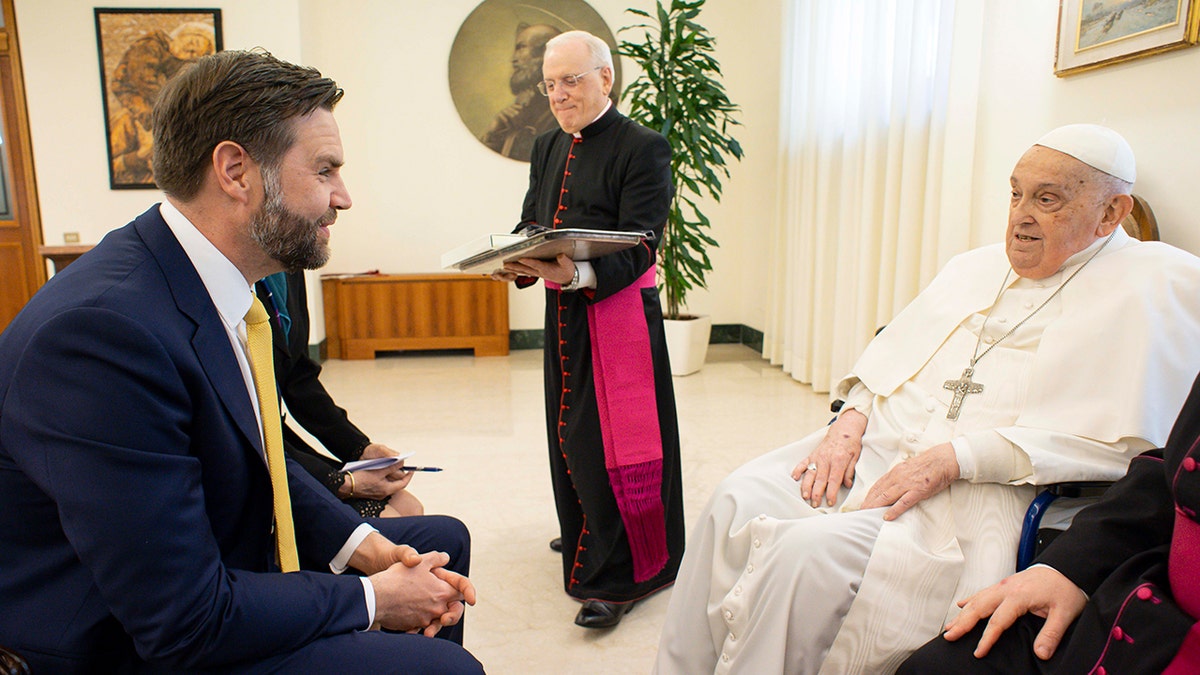
Pope Francis, days before his death, meets with Vice President JD Vance, left, and his delegation during an audience at Casa Santa Marta on April 20, 2025 in Vatican City. (Vatican Media via Vatican Pool/Getty Images)
Pro-Trump conservative commentator Joey Mannarino took to X to charge that «the new Pope has recently attacked JD Vance, shown solidarity with Kilmar Abrego-Garcia and begged Trump to open the borders like Biden had them. This guy is worse than Francis.»
LIVE UPDATES: CARDINAL ROBERT PREVOST ANNOUNCED AS FIRST AMERICAN POPE, TAKING NAME LEO XIV
However, influential conservative activist and commentator Charlie Kirk, a MAGA world rock star and Trump ally who leads the powerful Turning Point USA youth organization, was more measured.
«Let’s just say, not so great tweets about having some willingness for open borders. We’ll see kind of how he is on that. Also some George Floyd stuff that I’m not too crazy about,» Kirk said in a video posted on X.
Kirk added that «overall, it seems like he’s a pro-life warrior. There’s a lot yet to learn about this pope, but I hope that he will be a strong advocate for strong borders. And for sovereignty.»
Popular conservative commentator and radio host Hugh Hewitt seemed receptive to the new pope.
Trump has warmly embraced American Catholics in recent years and captured nearly 60% of the Catholic vote in last year’s presidential election, according to a Fox News voter analysis. Four years earlier, former President Joe Biden, the nation’s second Catholic president, narrowly captured the Catholic vote.
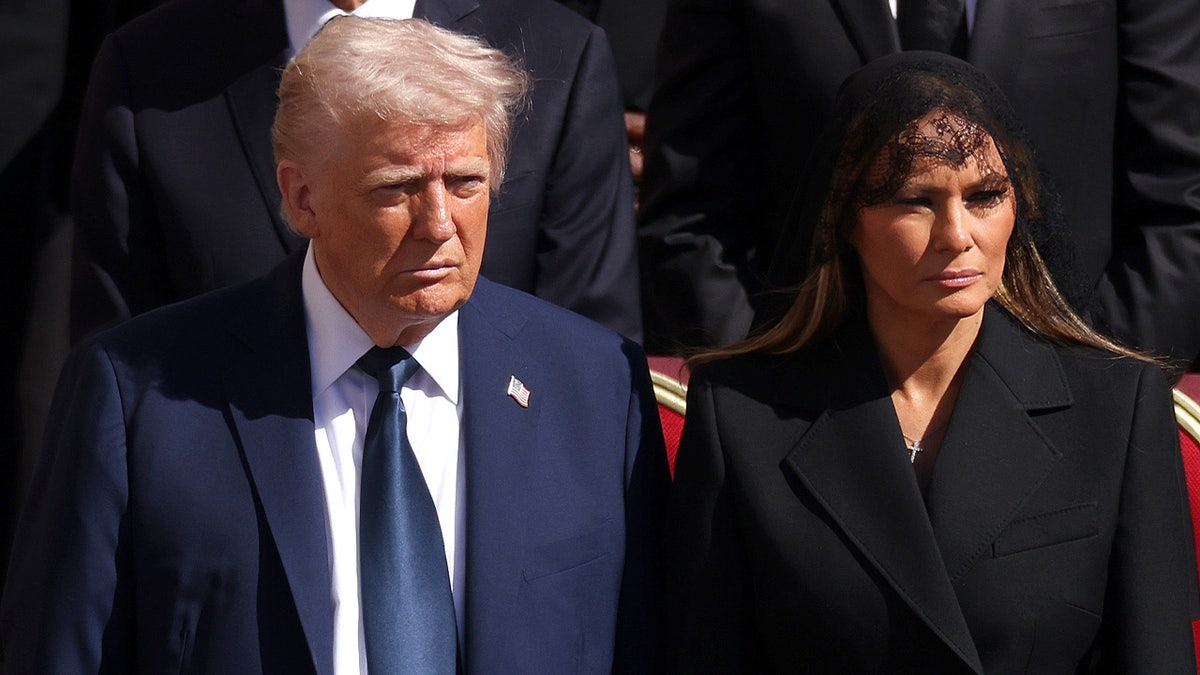
President Donald Trump and First Lady Melania Trump attend Pope Francis’ funeral on April 28, 2025 at the Vatican. (Photo by Dan Kitwood/Getty Images)
Among those Catholics who supported Trump is former New Hampshire state House Speaker Bill O’Brien, who is one of the state’s two members on the Republican National Committee.
O’Brien told Fox News that he’s «very respectful of the votes of the conclave, and I’m also proud that we do have a pope from America.»
«I certainly would have liked to have seen someone more in the tradition of Pope Benedict, who held more closely to the traditional doctrines of the church,» O’Brien said. «But I’m not sure that Pope Leo is really established now in terms of where he will be. And the fact that he criticized Trump, I suppose that probably shows a less than developed political sense than it does a doctoral sense, which is more important.»
CLICK HERE TO GET TO THE FOX NEWS APP
O’Brien noted that «any pope, any religious figure for that matter, is going to be concerned about those who are powerless in our society, and rightfully so, but that doesn’t mean he’s given intense thought to the importance of national borders.»
He additionally emphasized that «I’m thrilled about where he comes from, and I’m hopeful about where he’s going.»
Pope Leo XIV,Donald Trump,JD Vance,Pope Francis,Roman Catholic,Politics,Republicans








INTERNACIONAL
Shapiro fires back at DHS, says truck driver accused in deadly crash had legal status in database
NEWYou can now listen to Fox News articles!
Pennsylvania Gov. Josh Shapiro’s team is disputing the Department of Homeland Security’s (DHS) assertions about the immigration status of a semi-truck driver involved in a crash that left four dead in Indiana. The driver was taken into U.S. Immigration and Customs Enforcement (ICE) custody after a detainer was placed on him.
DHS said the driver, Bekzhan Beishekeev, a 30-year-old national of Kyrgyzstan, came into the U.S. «illegally» using the controversial CBP One app and was later issued a commercial driver’s license (CDL) in Pennsylvania. The department confirmed to Fox News that Beishekeev entered the country on Dec. 19, 2023, at the Nogales, Ariz., port of entry, using the CBP One app and was released into the U.S. via parole by the Biden administration.
«Not only was Bekzhan Beishekeev released into our country by the Biden administration using the CBP One app, but he was also given a commercial driver’s license by Governor Shapiro’s Pennsylvania. These decisions have had deadly consequences and led to the death of four innocent people in Indiana on Tuesday,» DHS Assistant Secretary Tricia McLaughlin said in a statement.
McLaughlin then called on «sanctuary» governors to stop issuing CDLs to illegal immigrants «before another American gets killed.»
SEMI-TRUCK DRIVER HELD ON ICE DETAINER AFTER 4 KILLED IN HEAD-ON CRASH
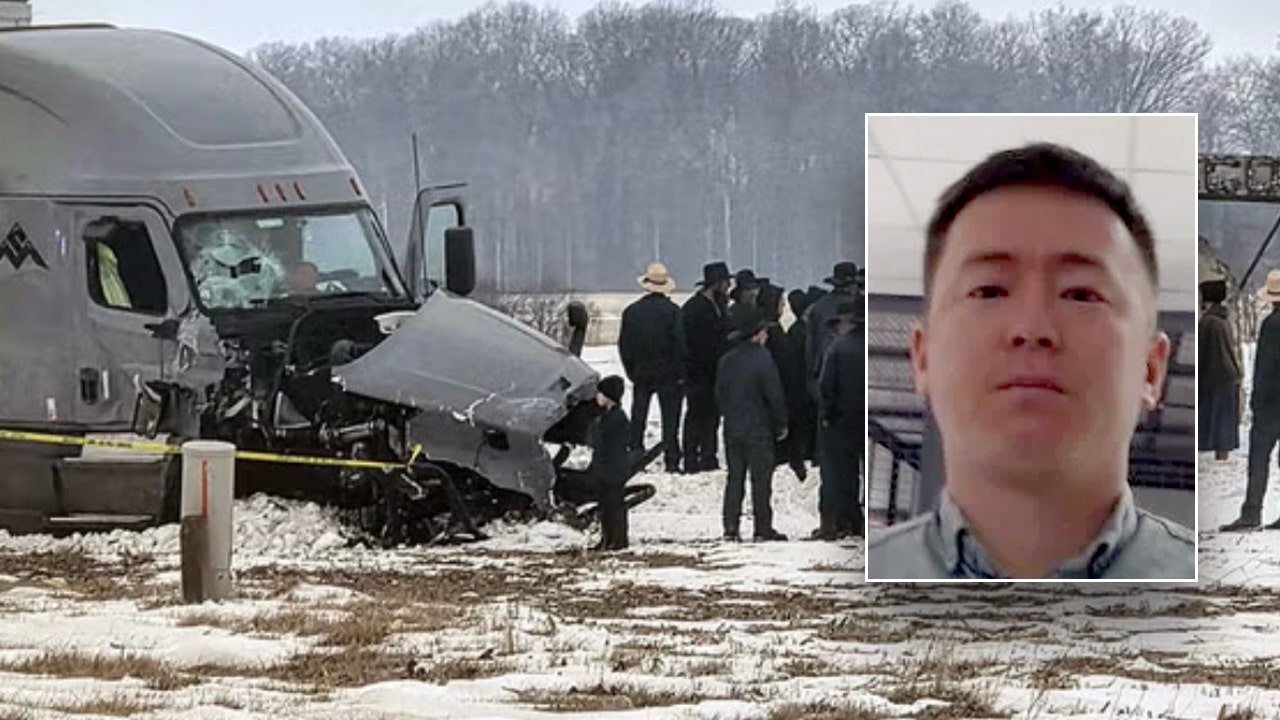
Bekzhan Beishekeev, a 30-year-old national of Kyrgyzstan, was allegedly involved in a crash that left four dead. (Fox News/DHS)
Shapiro’s office argues that Beishekeev had legal status when he was issued the license in July 2025 and that he could still be eligible under a DHS database to receive one.
«Every person who applies for a non-domiciled commercial driver’s license issued by PennDOT must provide proof of identify and proof of their legal presence in the United States. That information is verified by the federal Systematic Alien Verification for Entitlements (SAVE) database, administered by Kristi Noem and the United States Department of Homeland Security,» Shapiro spokesperson Alex Peterson said in a statement provided to Fox News.
«The individual in question had legal status in Kristi Noem’s database when the license was issued in July 2025 and still shows as eligible to receive a license as of today. Kristi Noem should focus on minding the shop in her own agency, as her incompetence and operational failures seem to be matching the scale of her moral failures as the Secretary of Homeland Security,» Peterson added.
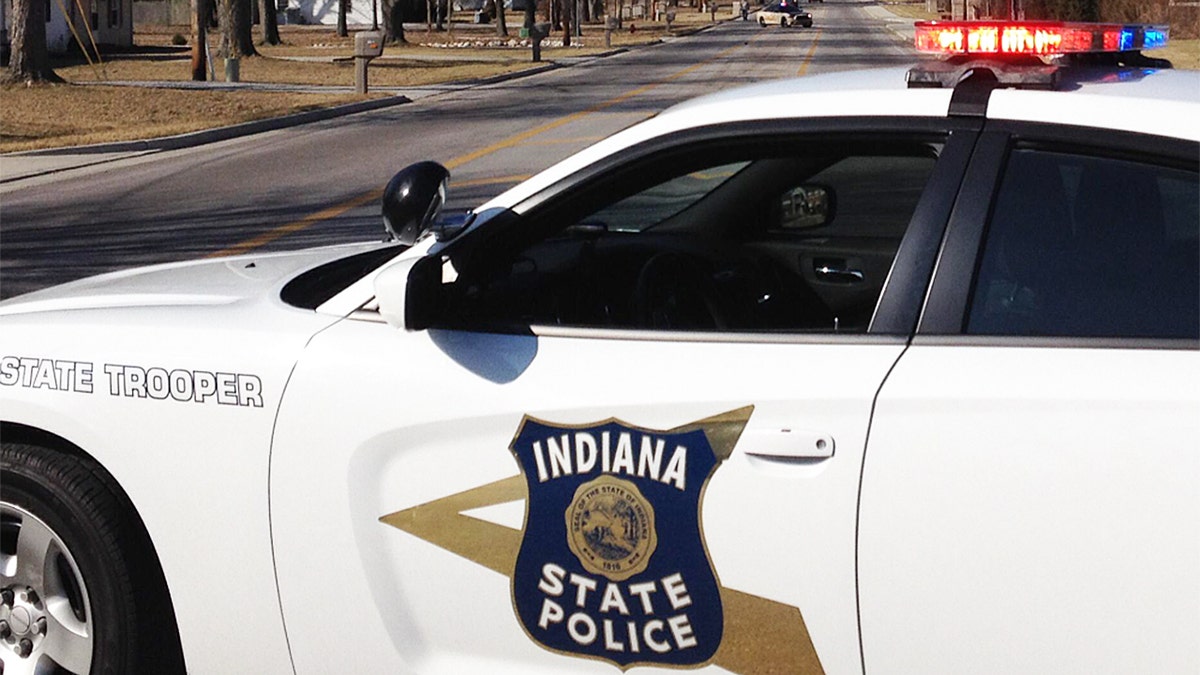
The Indiana State Police is investigating the crash in Jay County. (Indiana State Police)
ILLEGAL IMMIGRANT ALLEGEDLY RAMS ICE VEHICLE, BITES AGENTS AFTER FAILED GUN PURCHASE IN PITTSBURGH
The deadly crash occurred on Feb. 3 at approximately 4:00 p.m. when Beishekeev was driving eastbound on Indiana’s State Route 67 and allegedly failed to break for a slowed semi-truck in front of him, according to DHS and Indiana State Police. Beishekeev then allegedly swerved into oncoming traffic and slammed into a van carrying 15 passengers. Four people were killed in the crash. DHS said the fatal incident is being investigated by the Indiana State Police, the Jay County Sheriff’s Department and the Jay County Coroner’s Office.
DHS and the U.S. Department of Transportation (DOT) have warned about the dangers of CDL issuing practices in several states following a series of fatal crashes allegedly involving illegal immigrants.
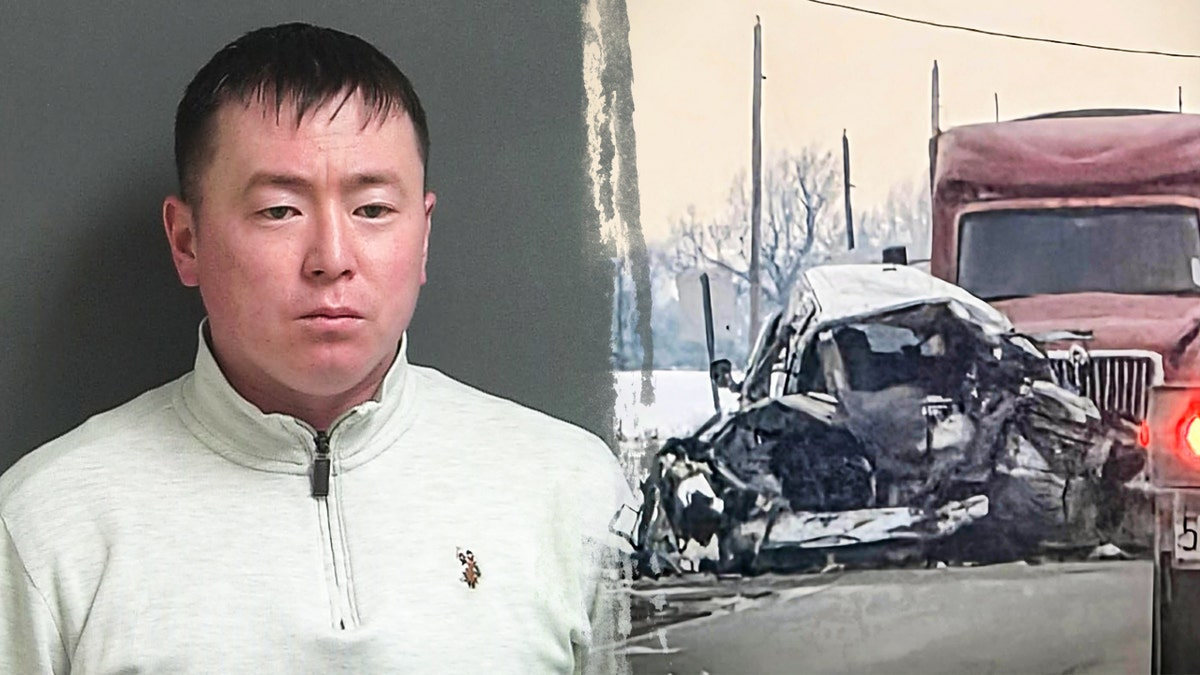
Bekzhan Beishekeev, left, has been taken into ICE custody following a fatal crash on Feb. 3, 2026, in Jay County, Ind., near the state’s border with Ohio. (Jay County Sheriff’s Department)
CLICK HERE TO DOWNLOAD THE FOX NEWS APP
In its statement on Beishekeev, DHS noted that ICE had previously arrested another illegal immigrant who was issued a CDL in Pennsylvania.
Akhror Bozorov, 31, is an Uzbek national who DHS said was wanted in his country of origin for belonging to a terrorist organization. Bozorov was arrested in Kansas on Nov. 9 while working as a commercial truck driver, using a CDL issued in Pennsylvania, according to DHS. Bozorov was allegedly granted work authorization in January 2024 under the Biden administration.
Fox News’ Alexis McAdams and Fox News Digital’s Gregary Norman-Diamond contributed to this report.
politics,us,illegal immigrants,pennsylvania
INTERNACIONAL
Iran’s Khamenei stays away from talks as JD Vance says dynamic makes diplomacy ‘much more complicated’

NEWYou can now listen to Fox News articles!
As indirect talks between the U.S. and Iran started on Friday in Oman, remarks from Vice President JD Vance earlier in the week questioning the absence of the Supreme Leader Ali Khamenei from talks have raised a core dilemma for Washington — the person with ultimate authority in Tehran is not sitting at the negotiating table.
In the interview, Vance said, «It’s a very weird country to conduct diplomacy with, when you can’t even talk to the person who’s in charge of the country. That makes all of this much more complicated… It is bizarre that we can’t just talk to the actual leadership of the country. It really makes diplomacy very, very difficult,» he said on Megyn Kelly’s podcast.
IRANIAN SUPREME LEADER BLAMES TRUMP FOR INCREASINGLY INTENSE DEMONSTRATIONS
Iran’s Supreme Leader Ali Khamenei waves to the audience during a speech in Tehran, Iran, on Nov. 3, 2025. During his address marking the anniversary of the 1979 takeover of the U.S. Embassy in Tehran, known as the «National Day of Fight against Global Arrogance,» Khamenei stated that cooperation between Tehran and Washington is impossible as long as the U.S. continues to support Israel and maintain military bases in the region. ( Iranian Leader Press Office/Anadolu via Getty Images)
The Supreme Leader has no equals
Ayatollah Ali Khamenei, 86, has served as Iran’s supreme leader since 1989 and remains the country’s highest political and religious authority, with ultimate control over military, security and strategic decisions. That concentration of power means any diplomatic outcome must ultimately pass through him.
Sina Azodi, the director of the Middle East Studies Program at George Washington University, told Fox News Digital that Khamenei’s authority stems from direct control over Iran’s core power centers. «He is very powerful because he is the commander in chief of the armed forces and appoints the heads of the IRGC, the Artesh (conventional military), the judiciary and other important institutions.»
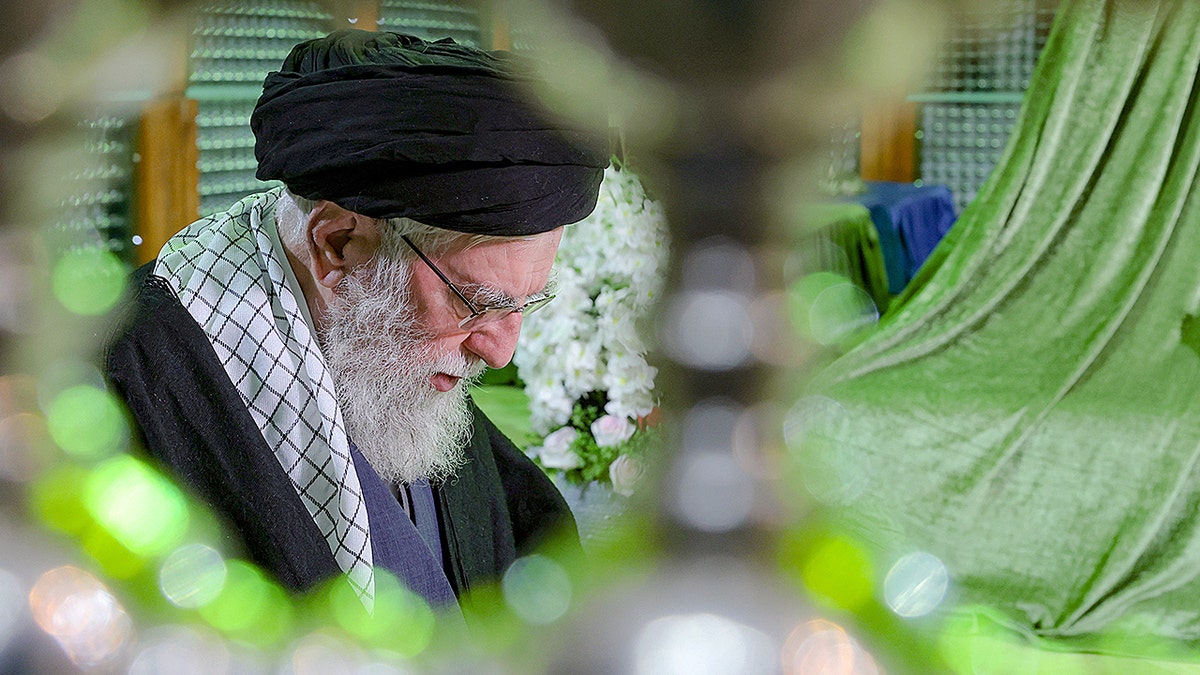
Iran’s Supreme Leader Khamenei makes first public appearance in weeks with fresh U.S. threats. (Office of the Iranian Supreme Leader Credit/Associated Press)
Azodi added that protocol and hierarchy also explain Khamenei’s absence from negotiations. «Iranians are very adamant about diplomatic protocols — that since other countries don’t have the equivalent rank, he does not participate in any negotiations because his ‘equal’ rank does not exist,» Azodi said. «Even when foreign heads of state visit him, there is only the Iranian flag, and foreign flags are not allowed.»
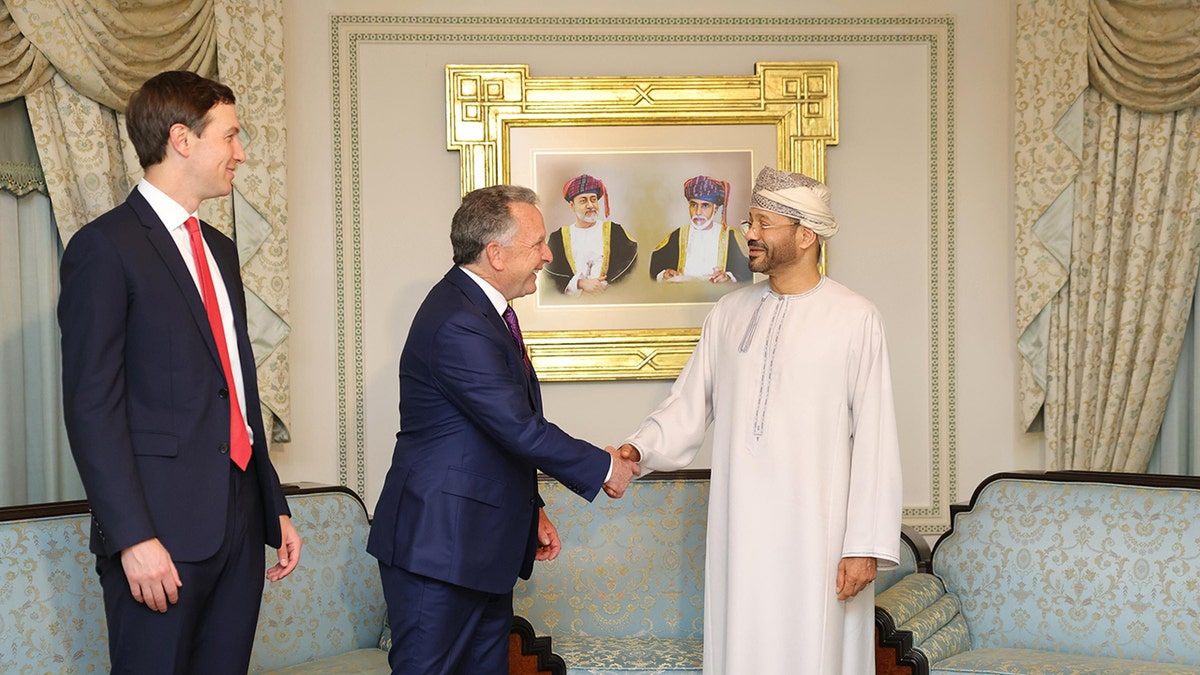
Omani Foreign Minister Sayyid Badr Hamad Al Busaidi, President Donald Trump’s Special Representative for the Middle East, Steve Witkoff and U.S. negotiator Jared Kushner meet ahead of the U.S.-Iran talks, in Muscat, the capital of Oman, on Feb. 6, 2026. (Oman Foreign Ministry/Anadolu via Getty Images)
Iranian sources familiar with internal discussions described Khamenei as operating from a legacy mindset at this stage of his life. «The supreme leader sees the confrontation with Washington as defining his historical role and believes Iran can retaliate against U.S. interests in the region. Khamenei is not focused on personal risk and views strategic confrontation as part of preserving his legacy,» a Middle Eastern source speaking on the condition of anonymity told Fox News Digital.
Behnam Ben Taleblu, a senior fellow at the Foundation for Defense of Democracies, told Fox News Digital that Khamenei remains the decisive figure in Iran’s system even as the regime faces pressure at home and abroad.
«He wields great influence in Iran but also exercises the greatest veto in Iran’s political hierarchy»
«He wields great influence in Iran but also exercises the greatest veto in Iran’s political hierarchy,» Ben Taleblu said.
He added, «The Iranian strategy… is to raise the cost of war in the thinking of the adversary,» he said, describing a system that signals willingness to talk while simultaneously preparing for confrontation.
He warned that «regimes that are afraid and lethal and weak can still be dangerous,» and said Tehran may believe threatening U.S. assets could deter a broader war even if such escalation risks triggering a stronger American response.
TOP IRANIAN GENERAL THREATENS TO ‘CUT OFF’ TRUMP’S HAND OVER POTENTIAL MILITARY STRIKES
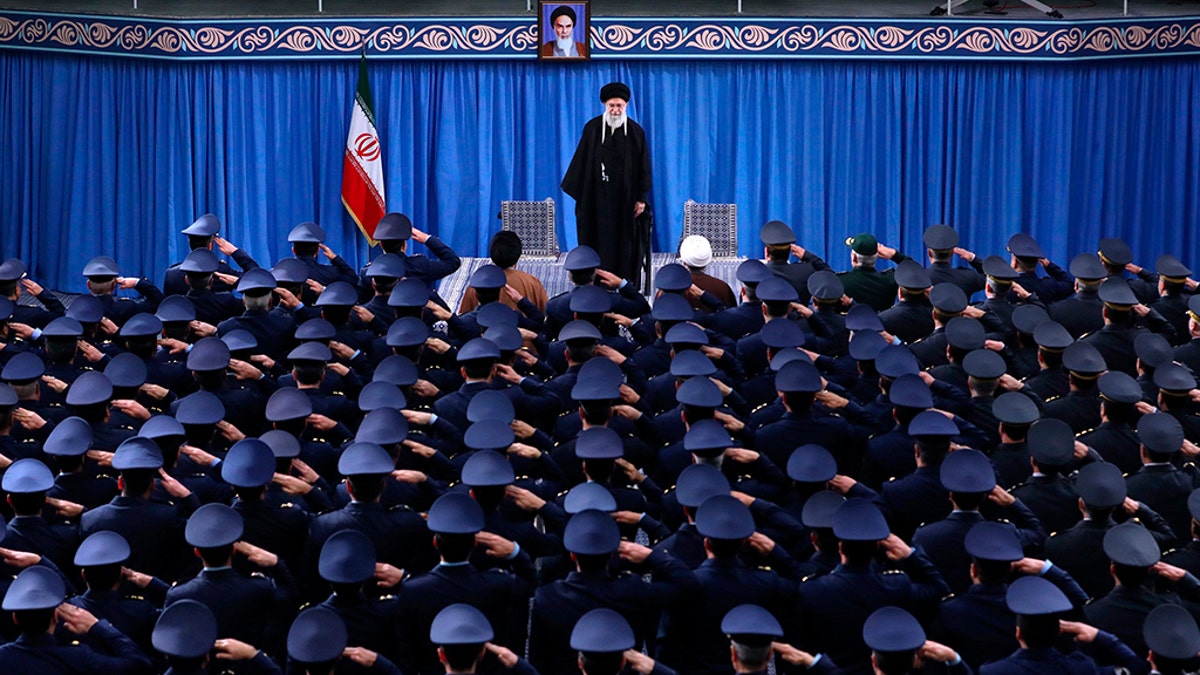
In this picture released by the official website of the office of the Iranian supreme leader, Supreme Leader Ayatollah Ali Khamenei stands as army air force staff salute at the start of their meeting in Tehran, Iran, Friday, Feb. 8, 2019. Khamenei is defending «Death to America» chants that are standard fare at anti-U.S. rallies across Iran but says the chanting is aimed at America’s leaders and not its people. (Office of the Iranian Supreme Leader via AP)
«Very difficult to say what Khamenei’s mindset is, but I think that he, along with other senior officials, think that the current conflict is not an isolated phenomenon but rather the continuation of the June 2025 conflict and the recent protests, which he called ‘an American coup,’» Azodi told Fox News Digital.
«I think that he thinks that the U.S. is definitely after a regime change and that needs to be resisted at all costs,» he added.
Inside Iran, frustration with Khamenei has become increasingly visible, according to a journalist reporting from within the country.
TRUMP SAYS IRANIAN SUPREME LEADER KHAMENEI SHOULD BE ‘VERY WORRIED’ AMID TENSIONS
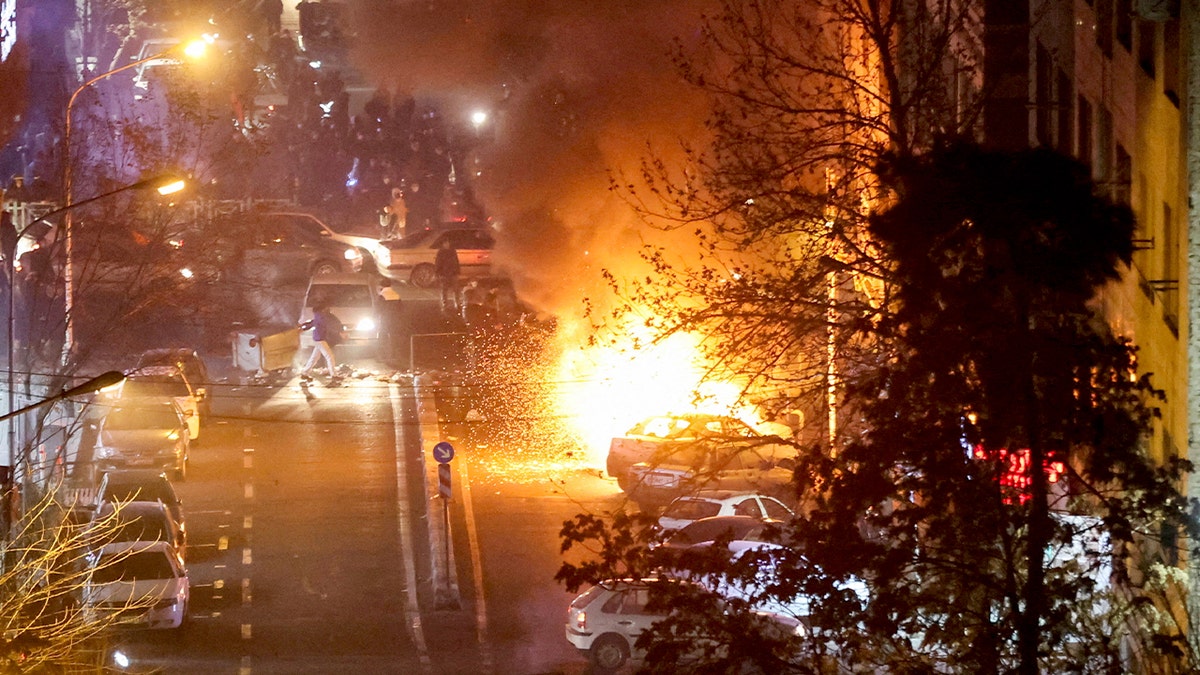
Cars burn in a street during a protest over the collapse of the currency’s value in Tehran, Iran, Jan. 8, 2026. (Stringer/WANA (West Asia News Agency) via REUTERS)
«What people want more than anything else is for Khamenei to die… I hear it every day, everywhere I go — why doesn’t he die?» the journalist told Fox News Digital.
«He is perceived as God’s representative, while leaders of enemy states are viewed as representatives of Satan, which is why he never meets with them.»
«You just open the Twitter of Iranians… the tweet is, why don’t you die? And everybody knows who we are talking about. So a nation is waiting for him to die.»
The journalist said many Iranians no longer believe political reform is possible and instead see generational change as the only turning point.
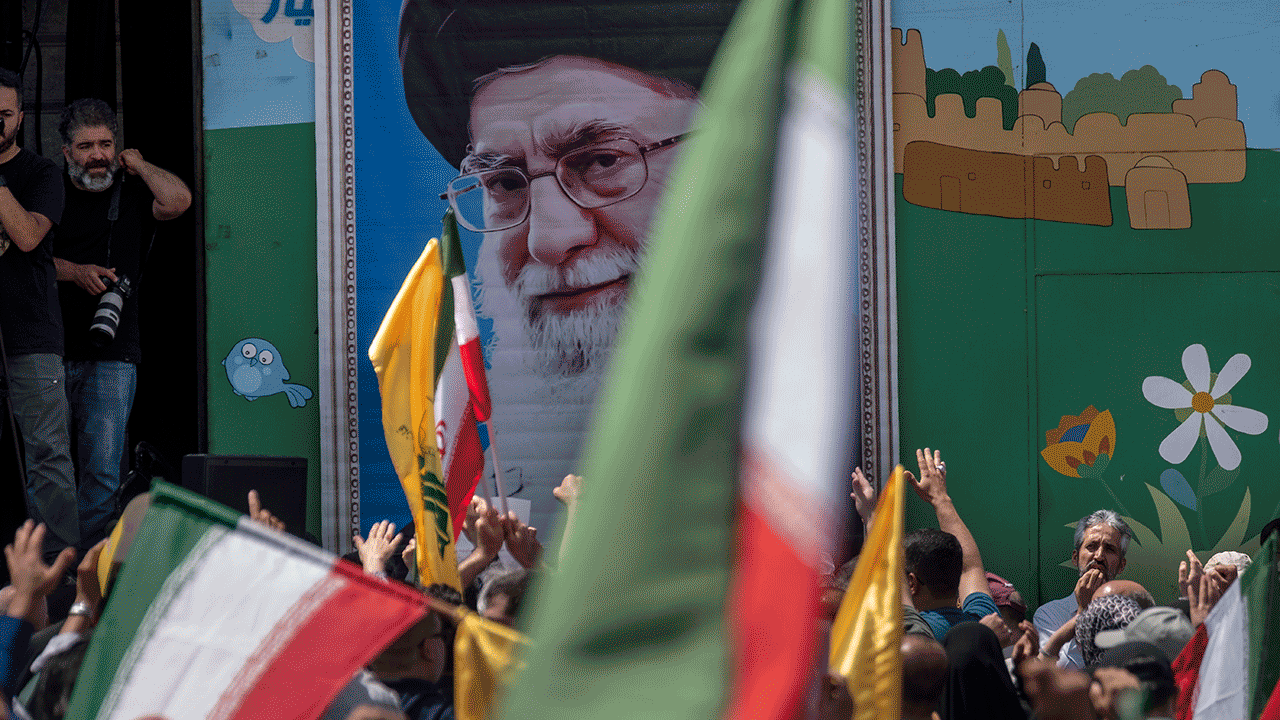
Iranian worshipers hold up their hands as signs of unity with Iranian Supreme Leader Ayatollah Ali Khamenei during an anti-Israeli rally to condemn Israel’s attacks on Iran, in downtown Tehran, Iran, on June 20, 2025. (Morteza Nikoubazl/NurPhoto via Getty Images)
An Iranian journalist in exile, Mehdi Ghadimi, told Fox News Digital that, «The Islamic government considers itself obligated to enforce Islamic law across the entire world. They harbor hatred toward Iranians and Jews, whom they regard as enemies of Islam,» he explained, «In such a structure, the leader is seen as more than a political ruler; he is perceived as God’s representative, while leaders of enemy states are viewed as representatives of Satan, which is why he never meets with them. If dialogue or compromise were to take place, his sacred image would collapse in the eyes of his supporters.»
He continued, «For this reason, groups labeled as ‘moderate,’ ‘reformist’ or ‘pro-Western’ are created so that the West can negotiate with them,» Ghadimi added. «No one within the structure of the Islamic Republic thinks about anything other than defeating the Western world and establishing Islamic dominance globally. The diplomats presented to Western politicians as moderates are tasked with using diplomacy to buy time for Khamenei.»
CLICK HERE TO DOWNLOAD THE FOX NEWS APP
The negotiations come amid heightened regional tensions, U.S. military deployments and unresolved disputes over Iran’s nuclear program and missile capabilities.
Regional analysts say that for the U.S., the central challenge remains unchanged. Diplomats can negotiate, but the final decision rests with one man — a leader shaped by decades of confrontation with the United States, focused on regime survival and determined to preserve his legacy even as Iran enters a new round of talks.
ali khamenei,iran,jd vance,foreign policy,donald trump,world protests
INTERNACIONAL
Una mesita y alfajores con forma de corazón: intimidades de la firma del acuerdo comercial con EE.UU.


Bruselas exige cambios a TikTok por ser demasiado adictivo para los menores

Alerta aeropuerto: si ves estas letras en tu pasaje de avión podés terminar en un interrogatorio

PJ Bonaerense: crecen las chances de un acuerdo para que Kicillof asuma en lugar de Máximo Kirchner

Apartan a la UIF como acusadora en medio del juicio contra Odebrecht por el pago de coimas

Así es la vida de Endrick en Lyon: un fisio que abandonó el Madrid, cocinero de estrella Michelin y un ‘filmaker’ personal

Shapiro fires back at DHS, says truck driver accused in deadly crash had legal status in database

La trama detrás del sorpresivo portazo de Lavagna en el INDEC y el desacuerdo con Milei por el IPC

Mariana Fabbiani mostró fotos de sus vacaciones soñadas en la playa: «Desde el paraíso»

Flor de la V contó las dificultades que vivió junto a Pablo Goycochea cuando se conoció su romance: “Había una persecución”

Jorge Macri: «Hay una percepción de que hay cosas que aumentan más que la inflación»

 CHIMENTOS1 día ago
Flor de la V contó las dificultades que vivió junto a Pablo Goycochea cuando se conoció su romance: “Había una persecución”
- POLITICA2 días ago
Jorge Macri: «Hay una percepción de que hay cosas que aumentan más que la inflación»
- ECONOMIA1 día ago
Milei dejó trascender que Lavagna quería un índice de inflación más alto porque «jugaba para Massa»