INTERNACIONAL
Social media giant hit with scathing ad campaign amid anger over AI chatbots sexually exploiting kids


A nonprofit parents coalition is calling on multiple congressional committees to launch an investigation into Meta for prioritizing engagement metrics that put children’s safety at risk.
The call is part of a three-pronged attack campaign by the American Parents Coalition (APC), launched Thursday. It includes a letter to lawmakers with calls for investigations, a new parental notification system to help parents stay informed on issues impacting their kids at Meta and beyond, and mobile billboards at Meta D.C. and California headquarters, calling out the company for failure to adequately prioritize protecting children.
APC’s campaign follows an April Wall Street Journal report that included an investigation looking into how the company’s metrics focus has led to potential harms for children.
FBI TARGETS 250 SUSPECTS IN ‘764’ NETWORK OF ONLINE PREDATORS MANIPULATING KIDS INTO VIOLENT, EXPLICIT VIDEOS
«This is not the first time Meta has been caught making tech available to kids that exposes them to inappropriate content,» APC Executive Director Alleigh Marre said. «Parents across America should be extremely wary of their children’s online activity, especially when it involves emerging technology like AI digital companions. This pattern of bad behavior from Meta shows they cannot be trusted to self-correct, and we are urging Congress to take meaningful action in holding Meta accountable for not prioritizing child safety.»
Pictured is mobile billboard artwork being displayed at Meta headquarters in Menlo Park, California, and Washington, D.C., as part of the American Parents Coalition’s attack campaign launched against the tech company Thursday. (American Parents Coalition)
The April Wall Street Journal investigation not only reported on internal concerns that Meta was skirting ethical lines to make its AI chatbot system more advanced, but also shared how the report’s authors tested out the system themselves.
The reporters’ test conversations found that Meta’s AI chatbot systems engaged and sometimes escalated sexual discussions – even when the chatbot knew the user was underage. The investigation found that the AI chatbot could also be programmed to simulate a minor’s persona while engaging with the end-user in a sexually explicit conversation.
In some instances, the test conversations were able to get Meta’s chatbot to speak about romantic encounters in the voice of Disney movie characters.
META LAUNCHES COMMUNITY NOTES FOR FACEBOOK TO REPLACE FACT-CHECKING

In some instances, test conversations were able to get Meta’s chatbot to speak about romantic encounters in the voice of Disney movie characters, a recent report says. (Getty Images/META)
«The reporting referenced in this letter doesn’t reflect how people actually experience these AIs, which for teens is often in valuable ways, like helping with homework and learning new skills,» a Meta spokesperson told Fox News Digital in response to the campaign. «We recognize parents’ concerns about these new technologies, which is why we’ve put additional age-appropriate guardrails in place that allow parents to see if their teens have been chatting with AIs, and to place time limits on our apps. Importantly, we don’t allow AIs to present as under 18s and we prohibit sexually explicit conversations with teens.»
Per the Journal’s reporting, which Meta contests, the company made multiple internal decisions to loosen guardrails around its chatbots to make them as engaging as possible. Meta reportedly made an exemption to allow «explicit» content within its chatbot as long as it is in the content of romantic role playing.
At the same time, Meta has taken steps to help improve its product safety for minor users, such as the introduction of Instagram’s «Teen Accounts» with built-in safety protections that came out in 2024 amid increased scrutiny over the company’s AI.
In April, Meta announced the expansion of these accounts to Facebook and Messenger. On these accounts, minors are prohibited from conversations about sexually explicit content with chatbots.
CLICK HERE TO GET THE FOX NEWS APP
Meta also has parental supervision tools built into its AI chatbot system that are supposed to show parents whom their kids are talking to on a regular basis, including chatbot, and has tools to shut down accounts exhibiting potential suspicious behavior tied to child sexual exploitation.
Coinciding with APC’s campaign attacking Meta, the group launched a new website titled «DangersofMeta.com» with links to APC’s letter to members of Congress, images of the mobile billboards they are deploying, a link to the new «lookout» notification system, and recent articles about Meta’s work pertaining to children’s safety.
Parents,Kids,Facebook,Instagram,Politics










NEWYou can now listen to Fox News articles!
Congressional Republicans are pushing back against Democratic claims that their marquee voter ID legislation would wreak havoc on elections in the country.
Congressional Democrats have panned the Safeguarding American Voter Eligibility (SAVE) America Act as a tool of voter suppression — saying it’s a bill that allows the Department of Homeland Security (DHS) to monitor Americans’ voter information and create barriers for married women to vote, among several other claims.
Along with requiring photo ID to vote, the bill would require proof of citizenship to register to vote in federal elections, mandate states to actively verify and remove noncitizens from voter rolls, expand information sharing with federal agencies, including DHS, to verify citizenship, and create new criminal penalties for registering noncitizens to vote.
GOP WARNS DEMOCRATS USING DHS SHUTDOWN TO STALL SENATE VOTER ID PUSH
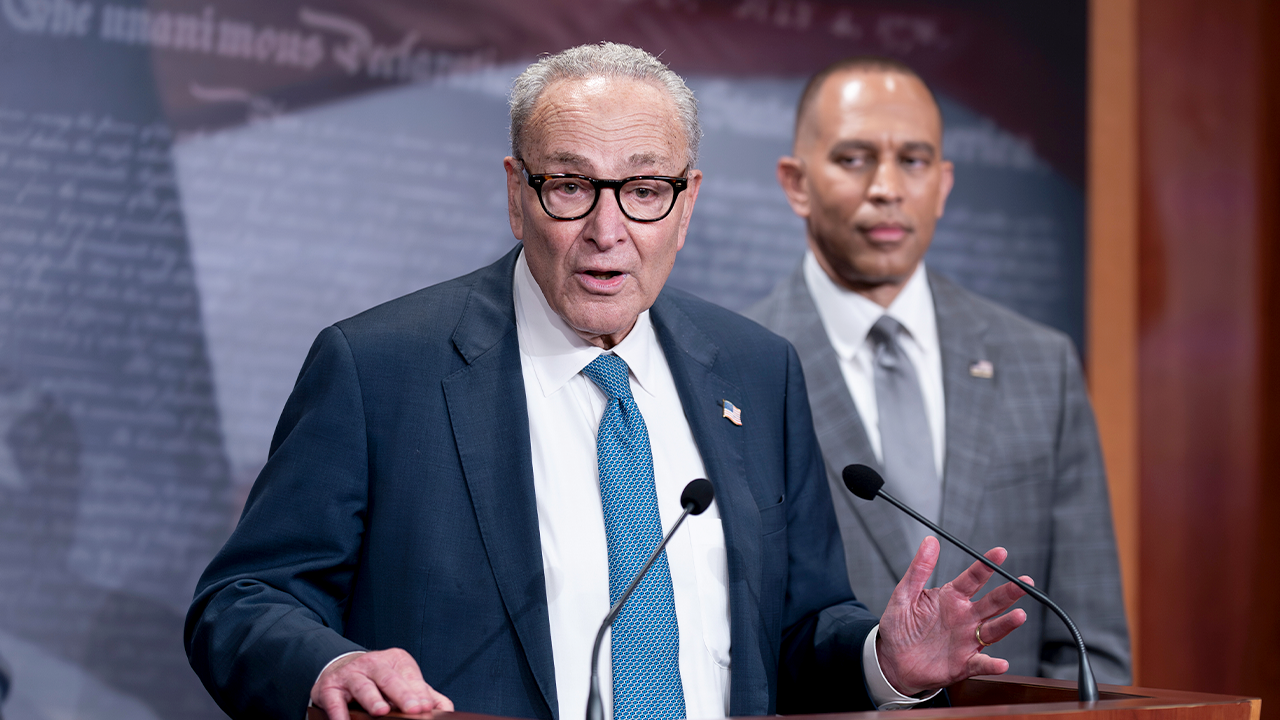
Senate Minority Leader Chuck Schumer, D-N.Y., and House Minority Leader Hakeem Jeffries, D-N.Y., right, have panned the SAVE America Act as «Jim Crow 2.0» and warned it would be a mechanism of widespread voter suppression. (J. Scott Applewhite/AP Photo)
Trump has time and again pushed voter ID, calling the election reforms in the bill a «CAN’T MISS FOR RE-ELECTION IN THE MIDTERMS, AND BEYOND.»
Some of the bill’s strongest proponents fact-checked those claims in interviews with Fox News Digital.
«If you look at what it actually says, rather than what Democrats aggressively and, I believe, disingenuously are arguing right now — they’re overlooking the requirements of the SAVE America Act — those requirements are actually really generous,» Sen. Mike Lee, R-Utah, told Fox News Digital. «They’re really flexible.»
Here’s a closer look at some of the most common claims Democrats have made about the SAVE America Act — and how Republican supporters of the bill are responding.
Claim: ‘Federalizing voter suppression’
Senate Minority Leader Chuck Schumer, D-N.Y., routinely has bashed the SAVE America Act as «Jim Crow 2.0» — the segregationist laws of the Deep South largely done away with by the Civil Rights Act.
«It has nothing to do with protecting our elections and everything to do with federalizing voter suppression,» Schumer said earlier in February on the Senate floor.
But Republicans argued that Democrats were being «hypocritical» in their voter suppression charge, particularly when it comes to voter ID.
TOM EMMER BLASTS DEMOCRATS’ DOUBLE STANDARD ON SAVE ACT: ‘THEY REQUIRE PHOTO IDS’ AT THEIR OWN DNC
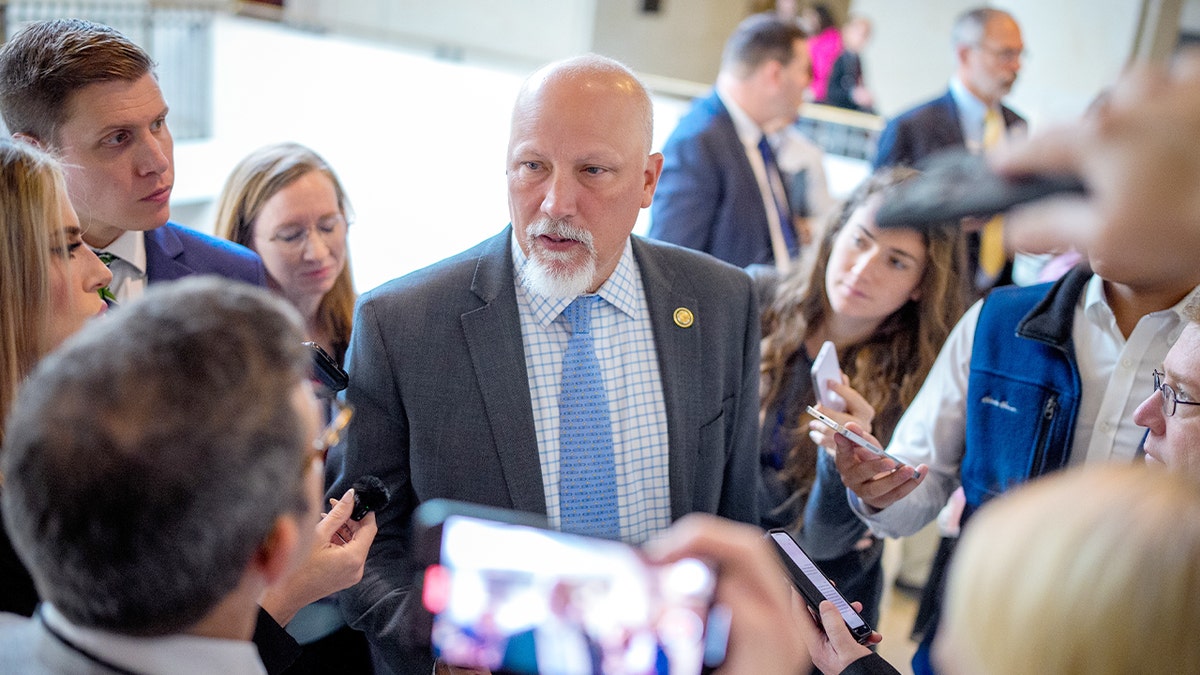
Rep. Chip Roy, R-Texas, speaks to reporters after a news conference on Capitol Hill on Oct. 20, 2025, in Washington, D.C. (Andrew Harnik/Getty)
Sen. Rick Scott, R-Fla., whose home state is one of 36 that either requests or requires a form of photo identification before voting, argued that voter ID laws across the country had no effect on turnout.
«This idea that they’re saying that it’s going to suppress any vote — it’s never done that anywhere,» Scott told Fox News Digital. «They said that when Georgia passed it, and they had record turnout. So it’s not true at all. I mean, how many people do you know who don’t have an ID?»
Claim: DHS will have access to legal voters’ data
House Minority Leader Hakeem Jeffries, D-N.Y., argued during a press conference that this iteration of the SAVE Act — with its new name — is «worse» than the version that passed the House in April because it gave DHS access to Americans’ voter data.
He appeared to be referring to a provision that would allow DHS to begin potential deportation proceedings against a noncitizen found on a state’s voter rolls.
«This version, as I understand it, would actually give DHS the power to get voting records from states across the country,» Jeffries said earlier in February. «Why would these extremists think that’s a good idea? That we as Democrats are going to accept at this moment in time? We’d want DHS and ICE, who have been brutally, viciously and violently targeting everyday Americans, to have more data about the American people? It’s outrageous.»
Rep. Chip Roy, R-Texas, who led both the SAVE Act and SAVE America Act in the House, argued Democrats were «really reaching» for criticism.
«This actually allows and empowers states to be able to — as many of them want to do — check their voter rolls against the citizenship database that they’re currently prohibited from doing under a judicial interpretation of federal law,» Roy said.
«So, long-winded way of saying, no — the SAVE system exists, we have citizenship data, and we’re simply going to allow the checking of voter rolls against citizenship data.»
THUNE GUARANTEES VOTER ID BILL TO HIT THE SENATE DESPITE SCHUMER, DEM OPPOSITION: ‘WE WILL HAVE A VOTE’
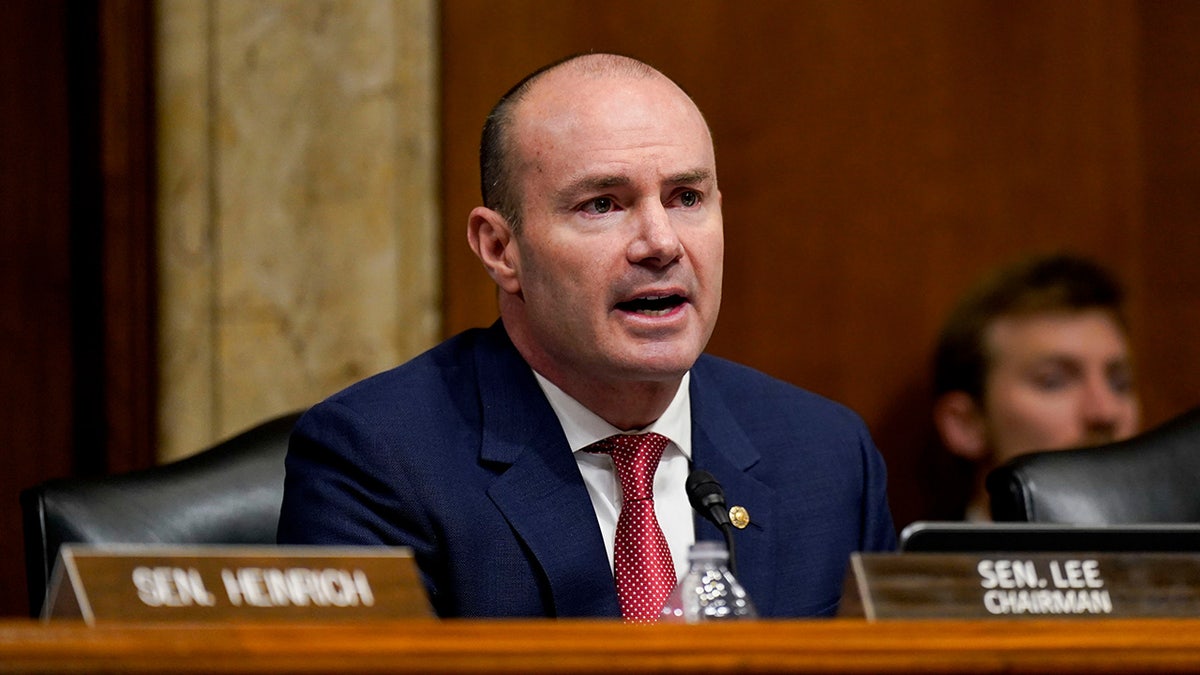
Senator Mike Lee, a Republican from Utah and chairman of the Senate Energy and Natural Resources Committee, during a confirmation hearing in Washington, DC, US, on Thursday, Jan. 16, 2025. (Al Drago/Bloomberg via Getty Images)
Claim: Suppresses married women’s right to vote
Another oft-repeated argument by Democrats is that the legislation would make it harder for American women to vote — specifically married women whose last names are now different from those on their birth certificates.
That’s because the bill would require proof of citizenship, like a birth certificate or a Real ID, to register to vote.
«Republicans aren’t truly afraid of noncitizens voting, which we all know is already illegal, already grounds for deportation,» House Minority Whip Katherine Clark, D-Mass., said earlier this month. «They’re afraid of women voting.»
Rep. Emilia Sykes, D-Ohio, said during the same press conference, «If your current name does not exactly fit and match the name on your birth certificate or citizenship papers, you could be blocked from registering to vote, even if you are a lifelong naturalized or American-born citizen.»
But Roy again said this was untrue.
CLICK HERE TO DOWNLOAD THE FOX NEWS APP
«This is absolute nonsense, and we specifically allow for a provision to make sure that no one can possibly be left behind,» he said.
«If a woman tried to register to vote with different names on her birth certificate and driver’s license,» Roy said. «We literally put in the statute that all you have to do is sign an affidavit under penalty of perjury that, ‘I am that person. This is my birth certificate … and this is my driver’s license that is reflecting my married name.’»
politics,senate,house of representatives politics,elections
INTERNACIONAL
As war losses near 2 million, Russia accused of trafficking foreign recruits from Africa, Asia
NEWYou can now listen to Fox News articles!
As the war in Ukraine enters its fifth year, the central challenge facing both Moscow and Kyiv is no longer territory alone. It is manpower.
Both Russia and Ukraine face a growing manpower crisis. Western estimates put Ukrainian military casualties at roughly 500,000 to 600,000 since 2022, including more than 100,000 killed, while Russia is believed to have suffered about 1.2 million casualties. Combined battlefield casualties on both sides may now be approaching two million, according to recent analyses.
Now, in an exclusive statement to Fox News Digital, the Ukrainian human rights organization Truth Hounds said Russia is increasingly turning to vulnerable foreign nationals, including recruits from Africa and Asia, through coercive and deceptive recruitment practices that in some cases may amount to human trafficking.
PUTIN VOWS VICTORY IN UKRAINE IN NEW YEAR’S ADDRESS AMID TRUMP-BACKED PEACE TALKS
Portraits of Ukrainian soldiers are seen at the Memorial for the Fallen at Independence Square on the third anniversary of Russia’s invasion in Kyiv, Ukraine, on Feb. 24, 2025. (Bo Amstrup/NTB/AFP via Getty Images)
«The patterns of recruitment in different countries and regions are quite similar,» Truth Hounds said. «Two main categories for foreign fighters could be defined. First, persons who were already in Russia, such as students and migrant workers. Second, those who were recruited in their countries of origin.»
According to the organization, many recruits were promised civilian jobs with substantially higher salaries than in their home countries but were later compelled to sign military contracts written in Russian without translation.
«In many of these cases — both when recruitment happens outside and inside Russia — there are plenty of facts indicating potential human trafficking,» the group said.
Truth Hounds said it documented cases in which individuals detained inside Russia were beaten, tortured or otherwise coerced into signing military contracts.
UKRAINE, US NEAR 20-POINT PEACE DEAL AS PUTIN SPURNS ZELENSKYY CHRISTMAS CEASEFIRE OFFER

Nationals of African countries sit in a dedicated section where foreign fighters captured while serving with Russian forces in Ukraine are held at a detention center for Russian prisoners of war in western Ukraine on Nov. 26, 2025. Since Russia invaded Ukraine in 2022, many reports have emerged of African nationals fighting alongside Moscow’s forces, with some accusing the Russian military of using deceptive tactics to recruit them. In November 2025, Kyiv said it had identified 1,426 fighters from 36 African countries serving in the Russian army. (Genya Savilov / AFP via Getty Images)
«Under such circumstances, it is difficult to characterize their enlistment in the Russian army as voluntary. Rather, these cases involve coercion into military service and exploitation — patterns that are consistent across documented cases globally, when it comes to Russian recruitment practices,» the organization said.
The group cited figures from Ukraine’s Coordination Headquarters for the Treatment of Prisoners of War indicating that more than 18,000 foreigners had joined the Russian army as of late last year, with the number continuing to grow. Truth Hounds said its interviews with foreign prisoners of war, including several from African states, revealed similar recruitment patterns.
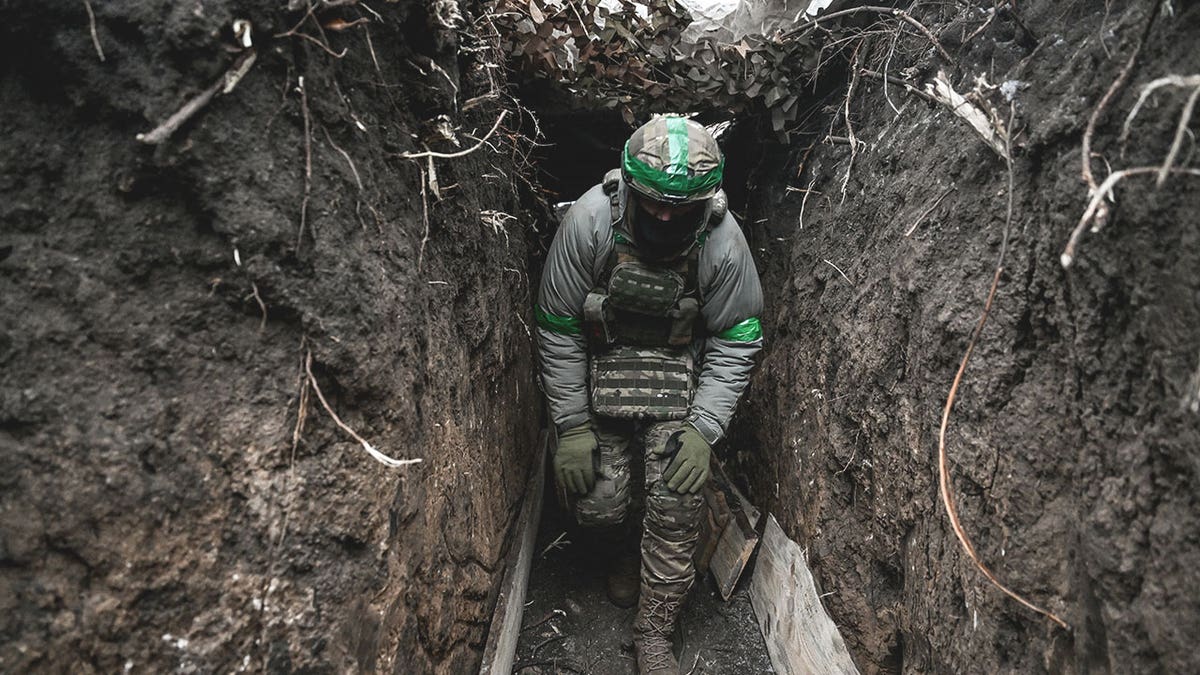
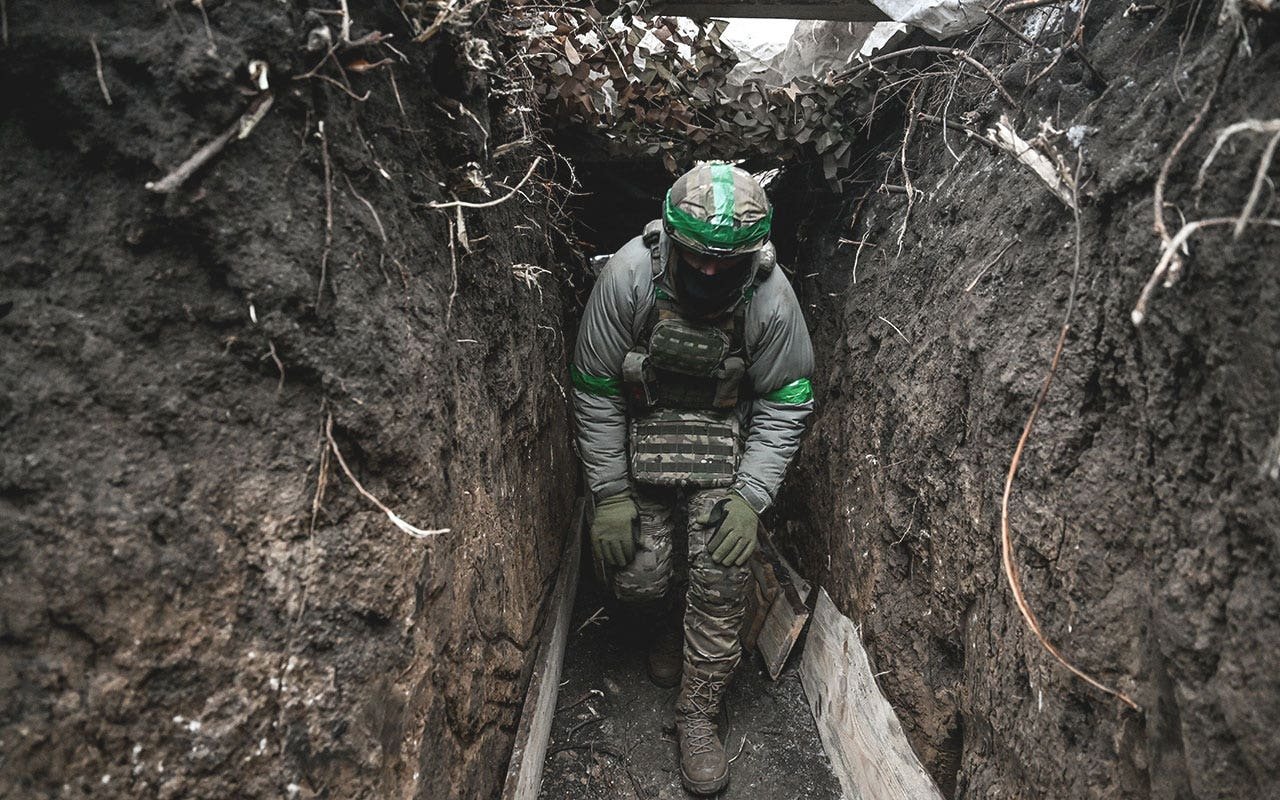
A soldier from a Ukrainian 2S22 Bohdana 155 mm self-propelled howitzer crew of the Striletskyi special forces police battalion of the National Police in the Zaporizhzhia region walks along a trench at a position in the Pokrovsky direction in the Donetsk region, Ukraine, on Jan. 23, 2026. (Dmytro Smolienko/Ukrinform/Nur Photo via Getty Images)
According to a report published by INPACT in February 2026, nearly 1,500 Africans were enlisted between 2023 and mid-2025, 316 of whom died because of a few kilometers of snow in Ukraine, a loss rate of 22%. Many others are missing or cannot be reached by their families.
At the same time, the organization cautioned that not all foreign recruits were forced to serve, noting that some joined with a full understanding of the purpose of their travel to Russia and the terms of the contract, though the proportion remains unclear.
UKRAINE–RUSSIA AT A CROSSROADS: HOW THE WAR EVOLVED IN 2025 AND WHAT COMES NEXT
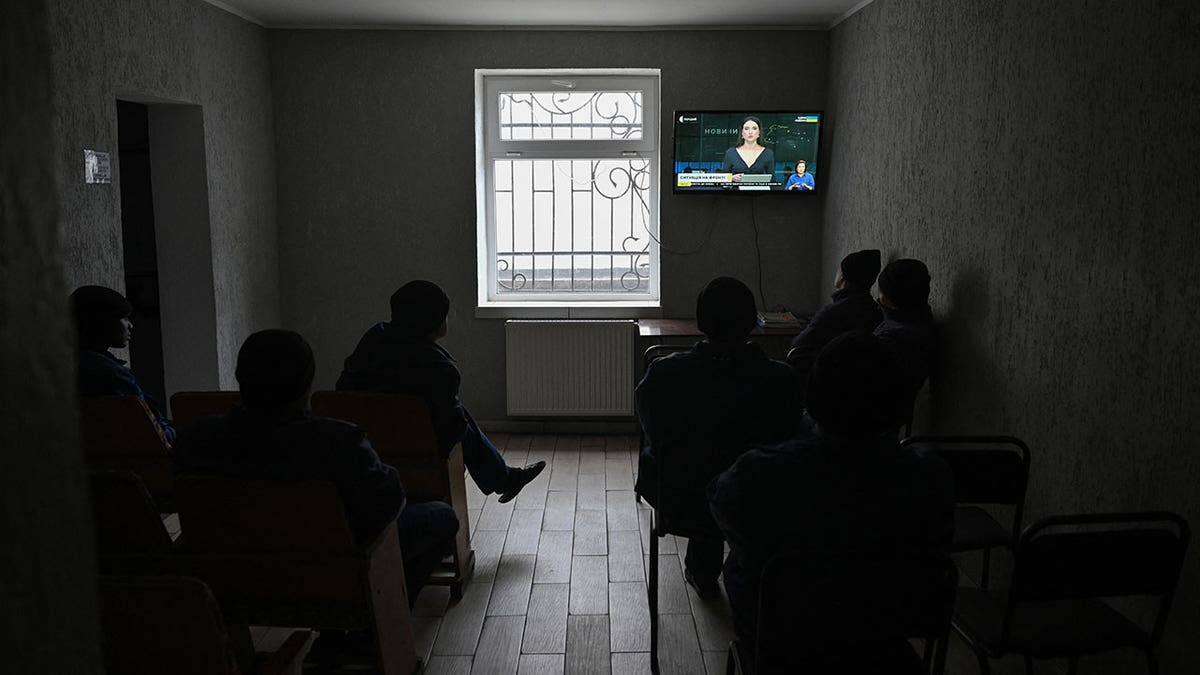
Nationals of African countries watch TV in a dedicated section where foreign fighters captured while serving with Russian forces in Ukraine are held at a detention center for Russian prisoners of war in western Ukraine on Nov. 26, 2025. Since Russia invaded Ukraine in 2022, many reports have emerged of African nationals fighting alongside Moscow’s forces, with some accusing the Russian military of using deceptive tactics to recruit them. In November 2025, Kyiv said it had identified 1,426 fighters from 36 African countries serving in the Russian army. (Photo by Genya Savilov / AFP via Getty Images)
The allegations come as African leaders have begun publicly raising the issue. Kenya’s foreign minister said Nairobi would confront Russian authorities over the recruitment of Kenyan nationals, while South African President Cyril Ramaphosa raised concerns with Russian President Vladimir Putin following distress calls from South African citizens believed to be caught in the conflict, according to Reuters.
Truth Hounds said the legal status of foreign fighters presents a complex overlap between international humanitarian law and international human rights law. Individuals who sign contracts with Russia’s Ministry of Defense are treated as members of the armed forces and are entitled to prisoner-of-war protections, though some cases may also meet the criteria for human trafficking, creating additional legal questions.
«The main question remains how to effectively stop Russia from recruiting such individuals and hold it accountable for the ruined lives of those who have already ended up there,» the organization said.
CLICK HERE TO DOWNLOAD THE FOX NEWS APP
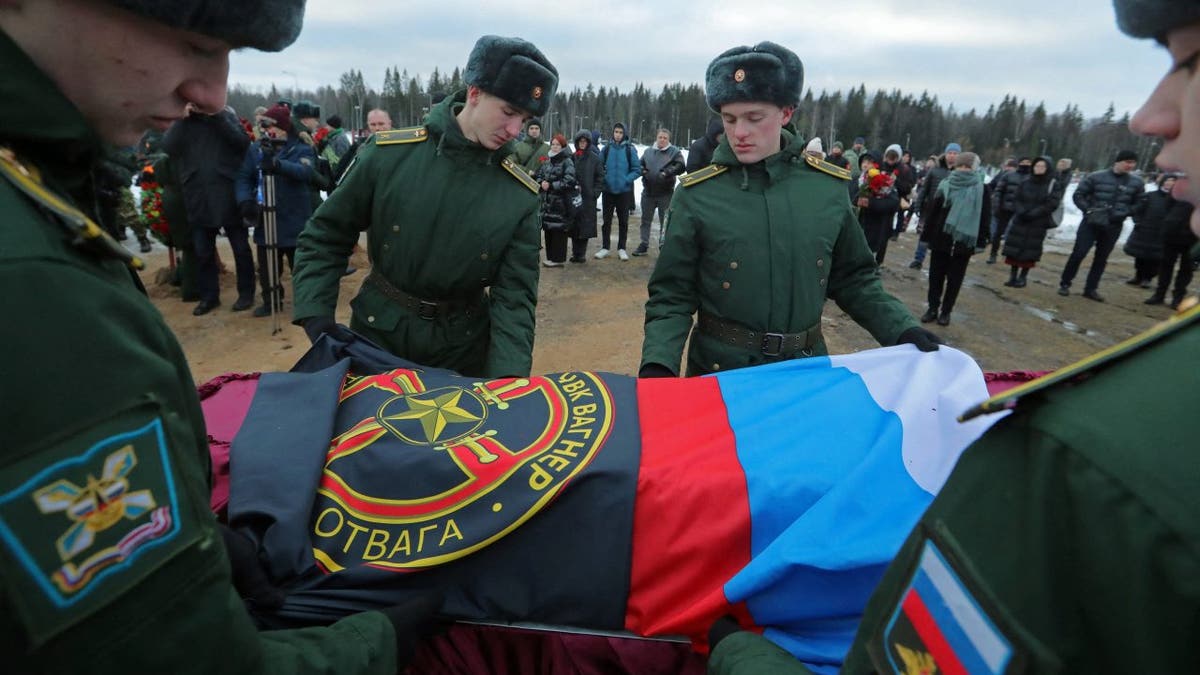
Cadets of a military academy cover the coffin with flags during the funeral of Dmitry Menshikov, a mercenary for the private Russian military company Wagner Group, killed during the military conflict in Ukraine, in the Alley of Heroes at a cemetery in Saint Petersburg, Russia, on Dec. 24, 2022. (Igor Russak/Reuters)
Moscow has previously said foreign nationals may voluntarily enlist in its armed forces. It has not publicly acknowledged coercive recruitment practices.
As the war grinds on, the battle for manpower is stretching beyond Europe’s borders, pulling in vulnerable populations from Africa and Asia and raising new diplomatic and legal challenges for governments far from the front lines.
russia,world,africa,ukraine,world politics

La oposición venezolana y organismos de derechos humanos cuestionaron el alcance de la ley de amnistía aprobada el jueves por la Asamblea Nacional y consideraron que la norma dejaría afuera a numerosos presos políticos y exiliados, entre ellos a María Corina Machado.
“Tengo que esperar a tener el texto definitivo. Pero es sumamente excluyente”, dijo a TN el activista Gonzalo Hmiob, vicepresidente de la ONG Foro Penal.
Leé también: La izquierda volvió al poder en Perú: la apuesta por el caos se cuela en las luchas electorales de la derecha
La amnistía podría beneficiar a cientos de presos políticos detenidos en cárceles de todo el país, pero al mismo tiempo podría excluir a opositores como la exiliada premio Nobel de la Paz y a militares condenados.
Uno de sus artículos más cuestionados es precisamente el que excluye “a las personas que se encuentren o puedan ser procesadas o condenadas por promover, instigar, solicitar, invocar, favorecer, facilitar, financiar o participar en acciones armadas o de fuerza contra el pueblo, la soberanía y la integridad territorial de la República Bolivariana de Venezuela por parte de Estados, corporaciones o personas extranjeras”.
Esa fue una de las acusaciones habituales contra la líder opositora y otros dirigentes como Leopoldo López, también en el exilio.
“Advertimos que la ley contempla un injustificable exceso de exclusiones, que no la exigen ni la Constitución ni los instrumentos internacionales. Esto, sin duda, no se corresponde con el espíritu de paz y reconciliación que debería tener una norma de esta naturaleza”, dijo a TN el activista Oscar Murillo, secretario general del Programa Venezolano de Educación Acción en Derechos Humanos (PROVEA).
No está claro tampoco si la amnistía beneficiará a los argentinos Nahuel Gallo, acusado tras su arresto de planear el asesinato de Delcy Rodríguez, y de Germán Giuliani, vinculado a una causa de narcotráfico (un delito que está excluido de la norma), según la versión oficial y que sus familias y el gobierno argentino niegan.
Las liberaciones de más de 600 presos políticos que el Foro Penal estima que aún siguen detenidos podrían concretarse después que la presidenta encargada promulgue la ley, posiblemente este mismo viernes.
“Un paso”
El analista venezolano Andrés Cañizalez, investigador de la Universidad Católica Andrés Bello de Caracas, dijo a TN que la aprobación de la amnistía marca “un paso” hacia adelante.
“No es el paso que quisiera la sociedad democrática nin las ONG de derechos humanos. Es un paso para aliviar un gran sufrimiento que hay en Venezuela”, afirmó.
Los legisladores aprobaron el proyecto de ley de amnistía en la Asamblea Nacional en Caracas, Venezuela, este jueves 12 de febrero de 2026. (Foto: Cristian Hernández/AP)
Pero la dirigencia opositora cuestionó varios artículos, en especial las exclusiones de la ley.
“Es una situación que crea muchísima incertidumbre. Hay que seguir insistiendo y continuar la resistencia que es algo absolutamente pacífico y a lo que ellos no están acostumbrados”, dijo a TN la exprecandidata presidencial Corina Yoris, muy cercana a Machado.
Leé también: “Un shock total”: cómo se vive en el Reino Unido la libertad bajo investigación del príncipe Andrés
Además, la dirigente opositora dijo que “no se cumplen los estándares de una ley de amnistía” y afirmó que ”no contempla la reparación de las víctimas».
“La ley de amnistía tendría que acogerse a la justicia transicional como establecen los estándares de la ONU. Son muy graves las omisiones de la ley y el deseo de pasar ´agachado´ y meter la manera de perdonar los crímenes que ellos han cometido. Es muy fuerte», afirmó.
Qué dicen los organismos de derechos humanos
Antonio González Plessmann, co-director del grupo defensor de derechos humanos Surgentes, dijo a TN que esta “es una mala ley, porque deja a muchas personas por fuera, pero sirve para mitigar daños y avanzar”.
Según afirmó, “la ley señala de manera taxativa un conjunto de hechos que son insuficientes para proteger centenares de casos de personas judicializadas por razones políticas”.
Entre estos puntos, mencionó detenciones por reclamar derechos laborales, expresar críticas, denunciar hechos de corrupción y luchar por los derechos de los campesinos.
Leé también: Trump aseguró que Obama reveló información clasificada cuando habló de la existencia de extraterrestres
“Mención aparte merecen los funcionarios militares acusados de cometer delitos militares, que fueron explícitamente excluidos”, apuntó.
Además, señaló: “La Ley crea una Comisión de seguimiento (sin participación social) que tendrá la potestad de sugerir casos no previstos que puedan ser amnistiados, generando con ello alta discrecionalidad”.
Para el activista, “la inmensa mayoría de las personas amnistiadas no cometieron ningún delito”. Por ello, dijo que era necesario “un texto que señalara que ser beneficiario de la amnistía no implica el reconocimiento de ningún delito o falta; ni inhibe la posibilidad de exigir una reparación integral por la violación a sus derechos humanos en el marco de los procesos de judicialización, detención o sanciones administrativas que sufrieron”.
“Aún con todo estos defectos, la Ley sirve para extinguir la acción penal en cientos de casos”, indicó.
Oscar Murillo, de PROVEA, aseguró: “Antes y ahora con esta ley, vamos a seguir exigiendo la liberación plena, incondicional e inmediata de todas las personas privadas arbitrariamente de libertad por razones políticas”.
“Asimismo, planteamos que deben abordarse con carácter de urgencia temas como la derogación o declaratoria de nulidad de leyes o normas utilizadas para la criminalización”, en implícita alusión a la llamada Ley del Odio que el chavismo prometió reformular, concluyó.
Venezuela, amnistia

Tres agentes heridos tras una explosión en la Escuela de Gendarmería: investigan un paquete sospechoso

La Justicia confirmó el sobreseimiento de Santiago Caputo en la causa por amenazas que promovió Facundo Manes

Expensas en jaque: la morosidad ya alcanza el 31% en CABA y crece la tensión en los consorcios

Tras la votación de la reforma laboral, resurgió la interna entre CFK y los gobernadores del PJ que apoyaron a Milei

Republicans shred ‘nonsense’ Dem claims against Trump-backed voter ID bill

¿Dónde ver EN VIVO y ONLINE el Lanús vs. Flamengo por la Recopa Sudamericana?

Reforma laboral bomba: menos indemnización, más horas y despidos más fáciles — el cambio que puede sacudir el empleo en Argentina

Cristian Ritondo: “Vamos a apoyar la ley de modernización laboral, pero no el régimen de licencias por enfermedad”

El dólar no sólo cae en la Argentina: qué pasa con otras monedas emergentes y cuáles son las causas

Tras el anuncio de la CGT, también habrá paro total de los medios de transporte de pasajeros en el país

 POLITICA3 días ago
Reforma laboral bomba: menos indemnización, más horas y despidos más fáciles — el cambio que puede sacudir el empleo en Argentina
- ECONOMIA2 días ago
Ayuda Escolar Anual: a cuánto asciende, donde se tramita y quien puede cobrarla
- POLITICA3 días ago
El Gobierno endurece las medidas de seguridad y control en la marcha prevista contra la reforma laboral en el Congreso