INTERNACIONAL
Trump ignoró a Netanyahu en su gira por el Golfo

 El Sr. Trump en el monumento de Yad Vashem al Holocausto en Jerusalén en 2017. Foto Stephen Crowley/The New York Times
Bandos
Vínculo
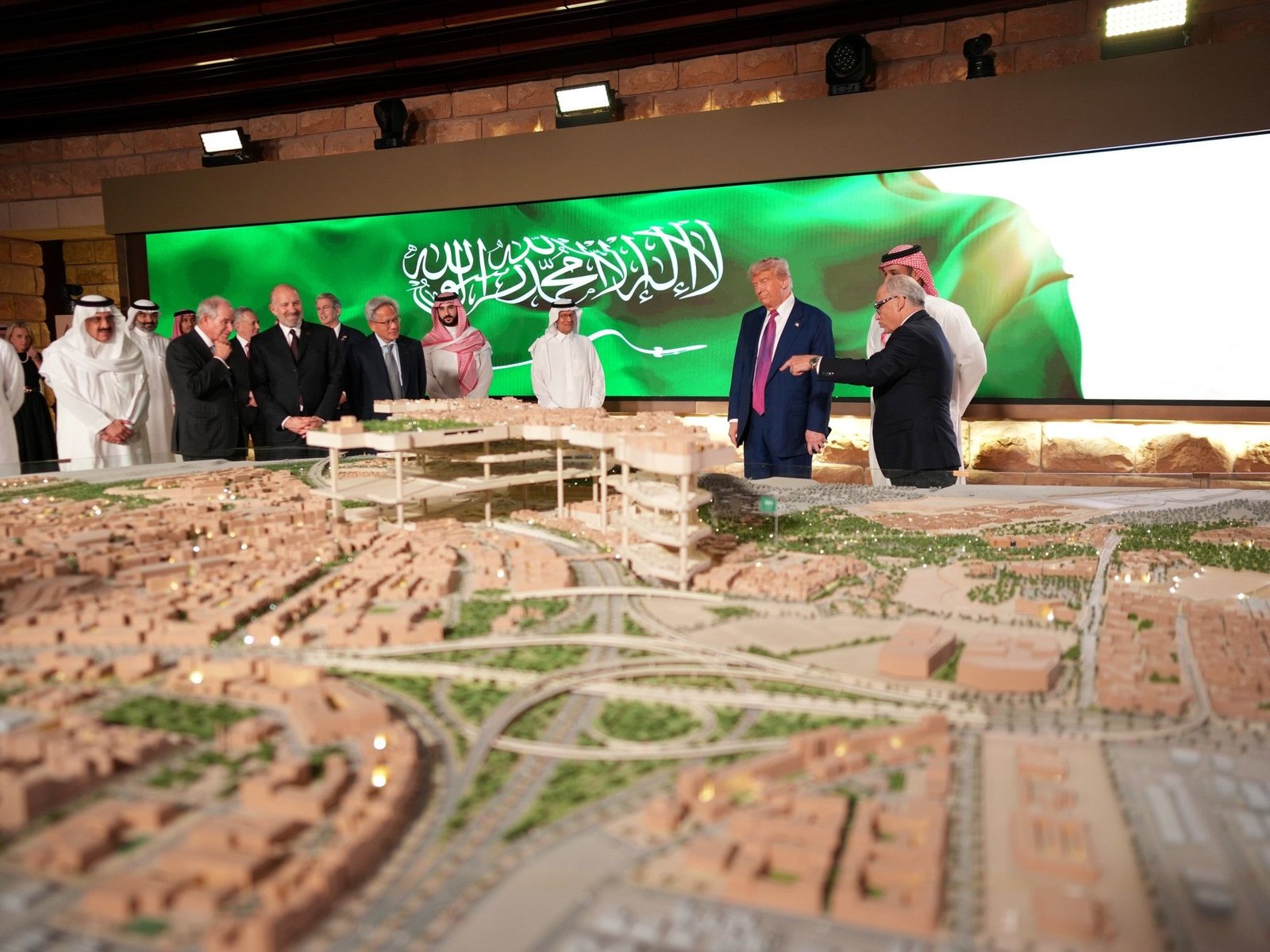
 El presidente Trump reunido con el presidente Ahmed al-Shara de Siria y el príncipe heredero Mohammed bin Salman de Arabia Saudí, en una foto difundida por el Palacio Real saudí. Foto Bandar Al-Jaloud/Palacio Real saudí
 Palestinos lloran a la víctima de un ataque en Jabaliya el jueves. Foto Saher Alghorra para The New York Times
INTERNACIONAL
Trump convenes first ‘Board of Peace’ meeting as Gaza rebuild hinges on Hamas disarmament
NEWYou can now listen to Fox News articles!
President Donald Trump’s newly created Board of Peace is set to hold its first meeting Thursday, with administration officials and participating countries framing the gathering as a step toward implementing the next phase of the Gaza ceasefire and reconstruction effort rather than a moment likely to deliver an immediate breakthrough.
At least 20 countries are expected to attend the inaugural session in Washington, where Trump is slated to chair discussions on a multi-billion-dollar reconstruction framework, humanitarian coordination and the deployment of an international stabilization force.
Trump unveiled the initiative at the World Economic Forum in Davos last month. Initial members include the United Arab Emirates, Saudi Arabia, Egypt, Qatar, Bahrain, Pakistan, Turkey, Israel, Hungary, Morocco, Kosovo, Albania, Bulgaria, Argentina, Paraguay, Kazakhstan, Mongolia, Uzbekistan, Indonesia and Vietnam.
RUBIO REVEALS SHARED INTELLIGENCE PREVENTED POSSIBLE HAMAS ATTACK, DISCUSSES INTERNATIONAL STABILIZATION FORCE
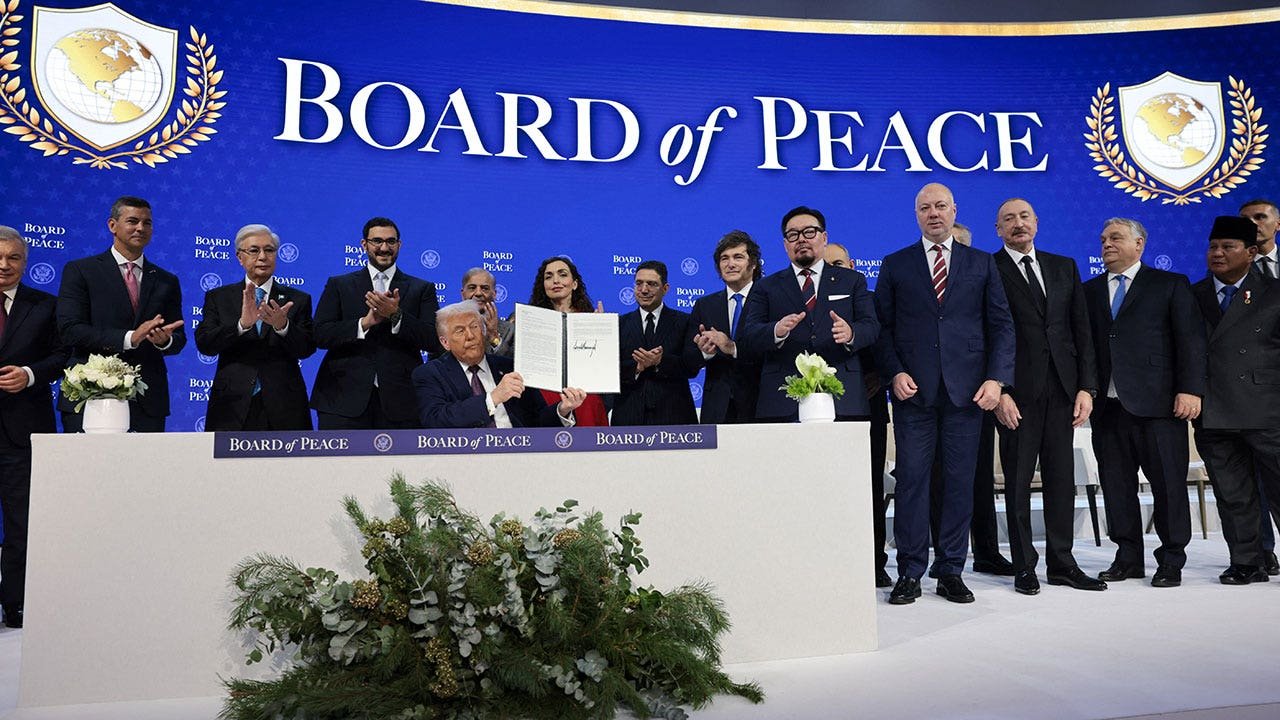
President Donald Trump, center, holds up a signed Board of Peace charter during the Annual Meeting of the World Economic Forum in Davos, Switzerland, Thursday, Jan. 22, 2026. (Evan Vucci / AP Photo)
On Sunday, Trump said members of the initiative had already pledged $5 billion toward rebuilding Gaza and would commit personnel to international stabilization and policing efforts. «The Board of Peace will prove to be the most consequential international body in history, and it is my honor to serve as its Chairman,» Trump wrote in a social media post announcing the commitments.
Italy’s foreign minister, Antonio Tajani, has announced a plan to train a future Gaza police force, while Indonesia has committed thousands of troops to a prospective international stabilization mission expected to deploy later this year.
The United Arab Emirates, a founding participant in the initiative, said it plans to continue its humanitarian engagement in Gaza.
«The UAE remains committed to scaling up its humanitarian efforts to support Palestinians in Gaza and to advancing a durable peace between Israelis and Palestinians,» the UAE Ministry of Foreign Affairs said in a statement, noting its role as a founding member of the Board of Peace and part of the Gaza Executive Board.
Even as Gulf and regional partners signal willingness to fund humanitarian needs, long-term reconstruction remains tied to security conditions on the ground.
TRUMP SEEKS DAVOS SIGNING CEREMONY FOR GAZA BOARD OF PEACE
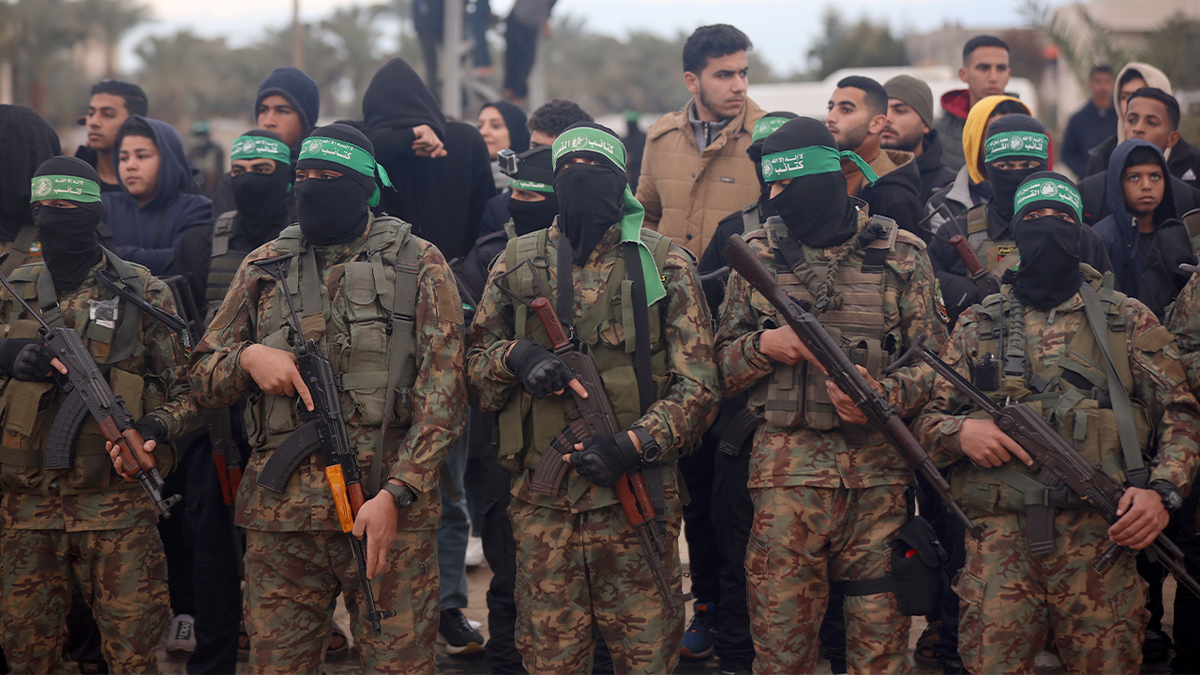
Hamas terrorists stand in formation as Palestinians gather on a street to watch the handover of three Israeli hostages to a Red Cross team in Deir el-Balah, central Gaza, on Feb. 8, 2025. (Majdi Fathi/NurPhoto via Getty Images)
Disarmament remains the central test
Analysts say the meeting’s significance will hinge less on headline announcements and more on whether participants align on the unresolved core issue shaping Gaza’s future: Hamas’ disarmament.
Ghaith al-Omari, a senior fellow at the Washington Institute, argued the meeting’s credibility will depend on whether participants coalesce around a clear position on disarmament. «Unless there is going to be a joint statement coming out of it that clearly says Hamas has to disarm — to me the meeting would be a failure,» he said, because it would show «the U.S. cannot get everyone on the same page.»
Funding is also expected to dominate discussions, though diplomats and analysts caution that pledges may not translate quickly into large-scale reconstruction.
«We’re going to see pledges,» al-Omari told Fox News Digital, «with a footnote that a pledge does not always translate to deliverables,» urging attention to which countries commit funds and whether the money is earmarked for humanitarian aid, stabilization or long-term rebuilding.
John Hannah, a senior fellow at the Jewish Institute for National Security of America (JINSA), also cautioned that early financial pledges are unlikely to translate into immediate large-scale reconstruction. «I can’t imagine that much of that initial pledge or any of it is going to actual long-term or even medium-term reconstruction of Gaza. Just too many parties won’t support it, pending actual progress on the core question of disarmament and demilitarization of Hamas,» he said.
Hannah added that the financing challenge remains enormous. «It’s been a major outstanding question: How are you going to fund this tremendous bill that is going to come due over the course of the next several years?» he said. «I’ve been watching this now for 35 years, and if I had $100 for every time a major Arab country pledged support for the Palestinians but not delivered, I’d be a relatively wealthy man.»
NETANYAHU AGREES TO JOIN TRUMP’S GAZA BOARD OF PEACE AFTER INITIAL PUSHBACK
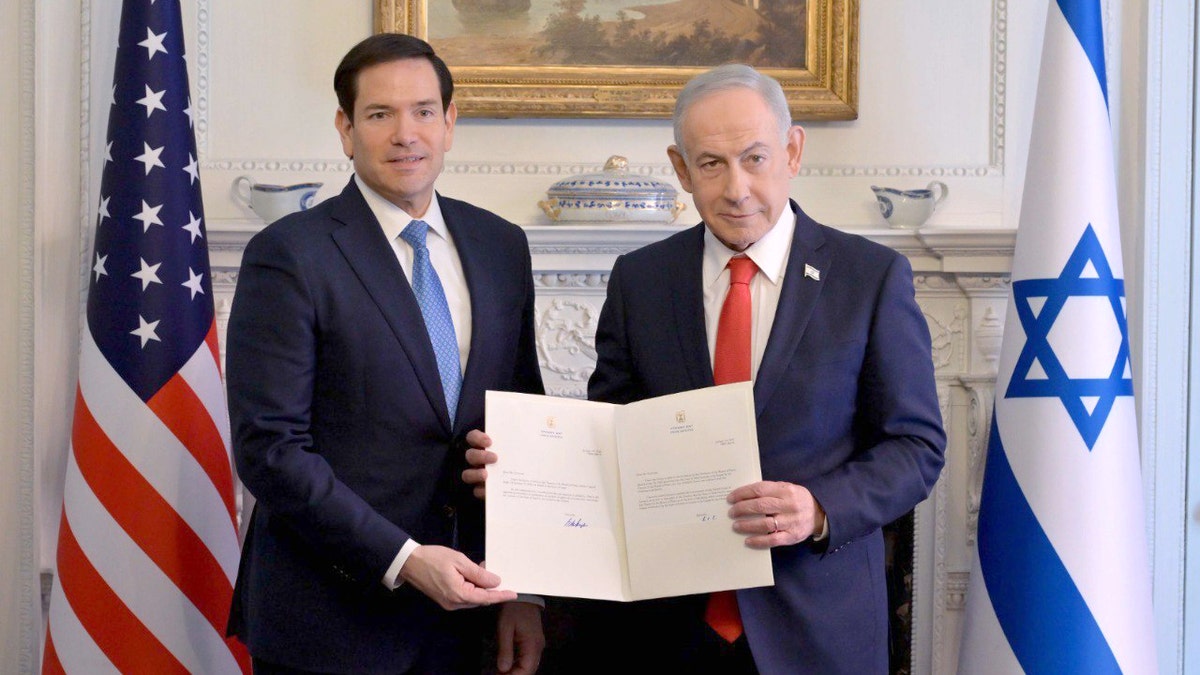
U.S. Secretary of State Marco Rubio (L) and Israeli Prime Minister Benjamin Netanyahu (R) hold a document after their meeting in Washington, United States, on Feb. 11, 2026. (Avi Ohayon/GPO/Anadolu via Getty Images)
Netanyahu signs on despite Turkey, Qatar tensions
The initiative has also highlighted political tensions surrounding Israel’s participation, particularly given the involvement of Turkey and Qatar.
Israeli Prime Minister Benjamin Netanyahu signed on to the agreement last week during a meeting with Secretary of State Marco Rubio, placing Israel formally inside the framework despite earlier Israeli objections to Ankara and Doha playing a central role in Gaza’s future.
Hannah said Netanyahu’s decision reflects strategic calculations tied to Washington. «I think the prime minister doesn’t want to anger the president. He’s prioritizing his really good strategic relationship with Trump over this tactical difference over Turkey and Qatar,» he said. «The prime minister is just making a basic calculation of where Israel’s interests lie here and trying to balance these competing factors.»
US MILITARY TO OVERSEE NEXT PHASE OF PEACE DEAL FROM COORDINATION BASE IN ISRAEL
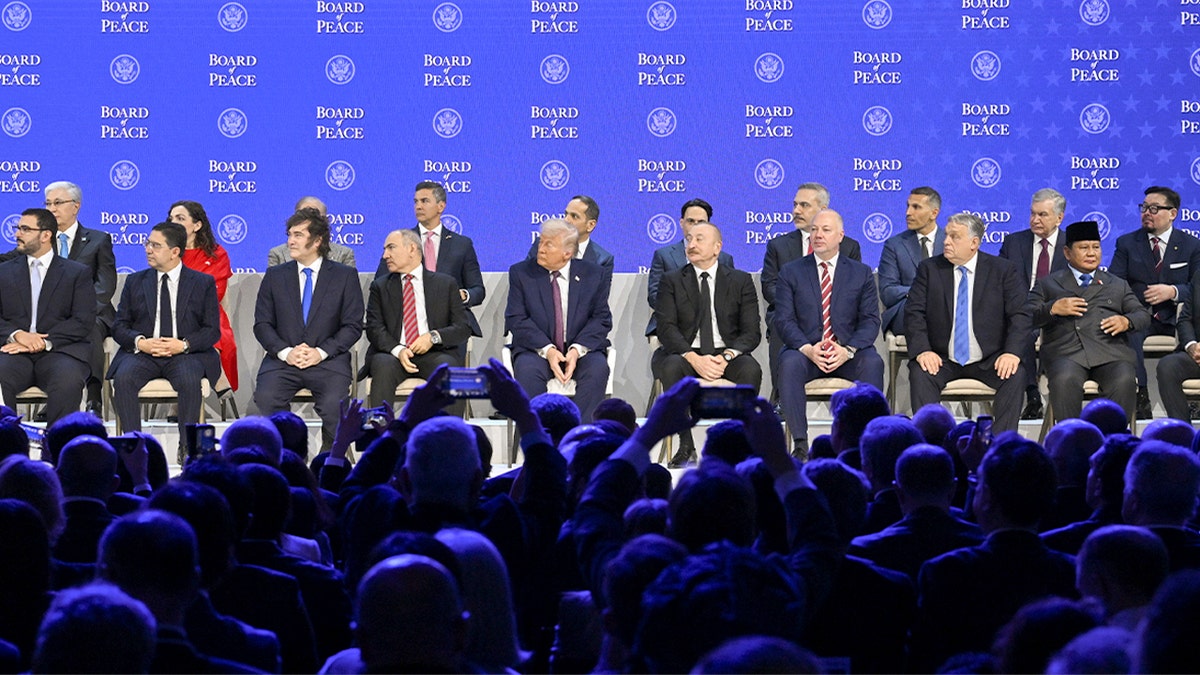
President Donald Trump and several foreign leaders attend the signing ceremony of the Peace Charter for Gaza at the World Economic Forum in Davos, Switzerland, on Jan. 22, 2026. (Harun Ozalp/Anadolu via Getty Images)
European allies raise legal concerns
Beyond Gaza, the initiative has sparked concern among European allies, many of whom have declined to join the board.
European officials told Fox News Digital the group’s charter raises legal and institutional questions and may conflict with the original U.N. framework that envisioned a Gaza-focused mechanism.
Speaking at the Munich Security Conference, European leaders argued the Board of Peace’s mandate appears to diverge from the U.N. Security Council resolution that initially supported a Gaza-specific body.
European Union foreign policy chief Kaja Kallas said the resolution envisioned a time-limited structure tied directly to Gaza and to the U.N., but that the board’s current charter no longer reflects those provisions. «The U.N. Security Council resolution provided for a Board of Peace for Gaza… it provided for it to be limited in time until 2027… and referred to Gaza, whereas the statute of the Board of Peace makes no reference to any of these things,» she said. «So I think there is a Security Council resolution but the Board of Peace does not reflect it.»
In response, U.S. Ambassador to the United Nations Mike Waltz criticized what he described as excessive concern over the initiative and argued the status quo in Gaza was unsustainable, and attacked what he said was «hand-wringing» about the Board of Peace — saying the cycle of war with Hamas in control had to be broken.
UN AMBASSADOR WALTZ REVEALS TRUMP’S MIDDLE EAST PEACE PLAN IS ‘THE ONLY WAY FORWARD’
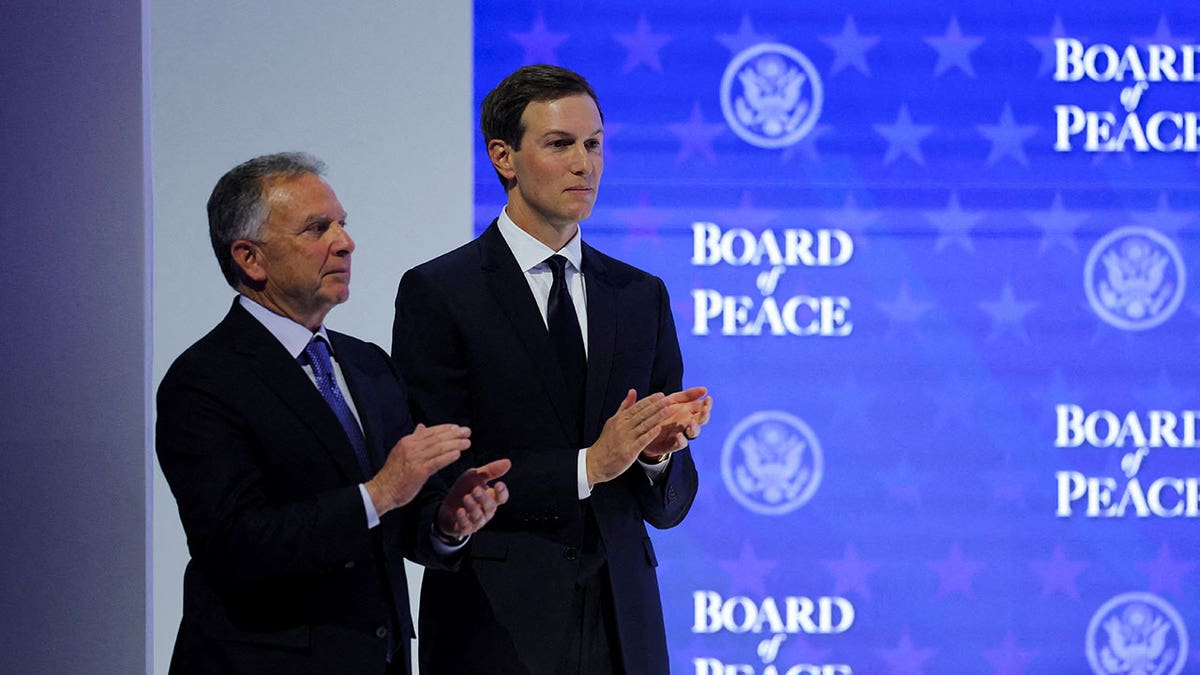
U.S. President Donald Trump’s son-in-law, Jared Kushner, and U.S. Special Envoy Steve Witkoff take part in a charter announcement for the president’s Board of Peace initiative aimed at resolving global conflicts, alongside the 56th annual World Economic Forum (WEF). The event took place in Davos, Switzerland, on Jan. 22, 2026. (Denis Balibouse/Reuters)
Not a replacement for the United Nations
Despite European unease, analysts say the Board of Peace is unlikely to replace the U.N. system.
Al-Omari dismissed the idea that the initiative poses a serious institutional challenge, arguing that major powers remain deeply invested in the existing multilateral structure.
CLICK HERE TO DOWNLOAD THE FOX NEWS APP
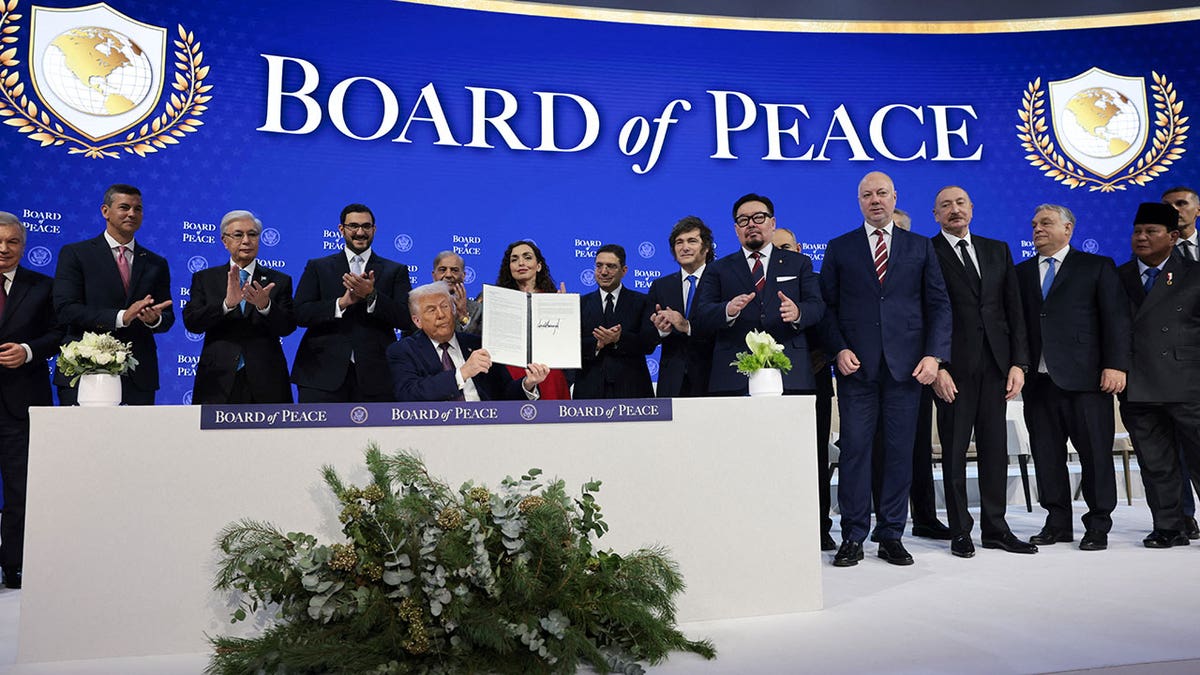
U.S. President Donald Trump takes part in a charter announcement for his Board of Peace initiative aimed at resolving global conflicts, alongside the 56th annual World Economic Forum (WEF), in Davos, Switzerland, Jan. 22, 2026. (Jonathan Ernst/Reuters)
Hannah agreed, saying the administration appears to view Thursday’s meeting primarily as incremental progress rather than any kind of major breakthrough. «The way the administration is looking at this is just another sign of continued progress and momentum, rather than any kind of major breakthrough,» he concluded.
donald trump,middle east foreign policy,israel,benjamin netanyahu,wars,turkey,united nations,europe,world
INTERNACIONAL
Quién será el nuevo presidente del Perú: ya comenzó la sesión del Congreso para votar al sucesor de José Jerí
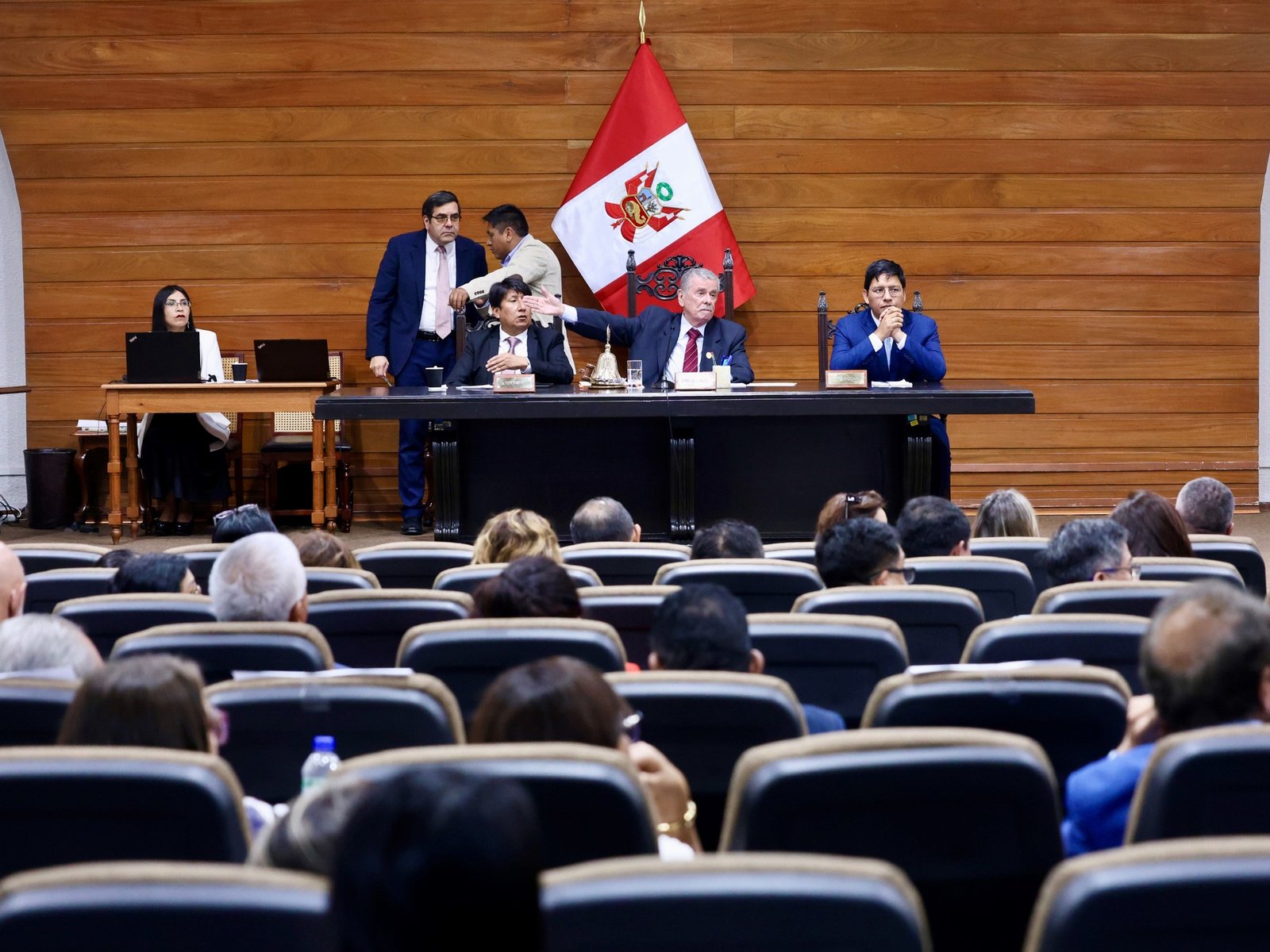
El Congreso de Perú elige este miércoles a un nuevo presidente -el octavo en 10 años- un día después de la censura exprés de José Jerí por reuniones clandestinas con un empresario chino y la polémica contratación de nueve mujeres en el Estado tras encuentros con el expresidente.
La cita comenzó a las 18 (hora local, 20 de la Argentina), con el quórum de 62 congresistas. Hay cuatro candidatos y se necesita mayoría simple para que uno de ellos se convierta en presidente.
La elección es para titular del Congreso, que ejercerá como presidente del país sólo hasta el 28 de julio, cuando tenga que entregarle la banda a quien resulte ganador de las elecciones del próximo 12 de abril.
Un número récord de más de 30 candidatos aspira a llegar a la presidencia en las elecciones de abril.
Las opciones para elegir al presidente interino eran limitadas porque la gran mayoría de los legisladores se presentarán a reelección en dos meses.
De los 130 parlamentarios, 57 postulan al Senado, 29 a la Cámara de Diputados y dos al Parlamento Andino. Por lo que quedaban 42 congresistas elegibles y la mayoría cuenta con niveles de popularidad muy bajos. De ese grupo salieron, finalmente, los aspirantes a la Presidencia del Perú.
Cuatro candidatos se presentaron para reemplazar a Jerí: María del Carmen Alva Prieto (Acción Popular); José María Balázar (Perú Libre); Edgard Reymundo (Bloque Democrático Popular); y Héctor Acuña (Honor y Democracia). En una interna con Alva, Silvia Monteza, de AP, presentó ella misma su candidatura pero no fue incluida porque debía ser presentada por el partido.
Todo apunta a que Alva es la candidata con mayores probabilidades de victoria. Cuenta con experiencia ya que fue presidenta del Congreso entre 2021 y 2022, y otros partidos de derecha estarían dispuestos a respaldarla.
Minutos antes de la sesión, Fuerza Popular confirmó su respaldo a Alva, a través de un pronunciamiento del congresista César Revilla.
Balcázar representa al ala más radical de la izquierda, suele tener un techo de votos difícil de romper. Su figura es polémica porque en 2023 se abstuvo de votar el dictamen de la norma que prohíbe el matrimonio infantil y expuso que «las relaciones sexuales tempranas ayudan al futuro psicológico de la mujer».
Acuña representa a una facción que busca consenso, pero su bloque es más pequeño. Es hermano de César Acuña, líder de Alianza para el Progreso, quien sin embargo ya advirtió que no va a apoyarlo. «Van a pensar que hay un interés familiar», se justificó el congresista de Alianza para el Progreso.
Reymundo es el candidato de la izquierda moderada y sectores progresistas.
Por reglamento, la votación debe producirse 24 horas después del cierre del plazo de inscripción de las listas y será por orden alfabético.
Los votos se introducirán en una urna (ánfora) ubicada en el Auditorio del Edificio José Faustino Sánchez Carrión. El conteo se hace voto por voto y gana la lista o candidato que obtenga mayoría simple. En ese caso, el ganador presta juramento y asume de inmediato. Si eso no sucede, se va a una segunda votación.
Perú atraviesa desde 2016 una crisis de inestabilidad institucional caracterizada por un poder legislativo dominante sobre un Ejecutivo débil. En las próximas elecciones, se volverá al esquema de Congreso bicameral (130 legisladores en la Cámara Baja y 60 en el Senado) que Alberto Fujimori había eliminado con la Constitución de 1993.
El objetivo de la unicameralidad era darle celeridad al Congreso para dar medidas rápidas en un contexto de crisis económica y social. Pero en los últimos años también ha fogoneado la inestabilidad política que vive el país. De los últimos siete presidentes, cuatro fueron destituidos por el Congreso -Martín Vizcarra, Pedro Castillo, Dina Boluarte y José Jerí- y dos renunciaron antes de correr la misma suerte: Pedro Pablo Kuczynski y Manuel Merino. Solamente uno, Francisco Sagasti, pudo terminar su mandato interino.
«Incapacidad moral es una cláusula política que está hecha para deshacerse de un presidente cuando no tiene la aceptación del congreso», le dijo el constitucionalista Aníbal Quiroga a AFP.
El Congreso aprobó una moción de censura contra Jerí por «inconducta en sus funciones y falta de idoneidad para ejercer el cargo». El abogado de 39 años había asumido en octubre pasado luego que la entonces presidenta, Dina Boluarte, fuera destituida en un juicio político exprés en el cual se alegó su incapacidad para resolver una ola de extorsiones y asesinatos.
Boluarte, a su vez, que fue vicepresidenta de Pedro Castillo había asumido luego de que se declarara la vacancia presidencial por «incapacidad moral«. Antes de que lo destituyeran, Castillo había anunciado la disolución de la Cámara y la instauración de un «gobierno de excepción».
INTERNACIONAL
Trump marks Black History Month, announces Medal of Freedom for Carson and praises Nicki Minaj
NEWYou can now listen to Fox News articles!
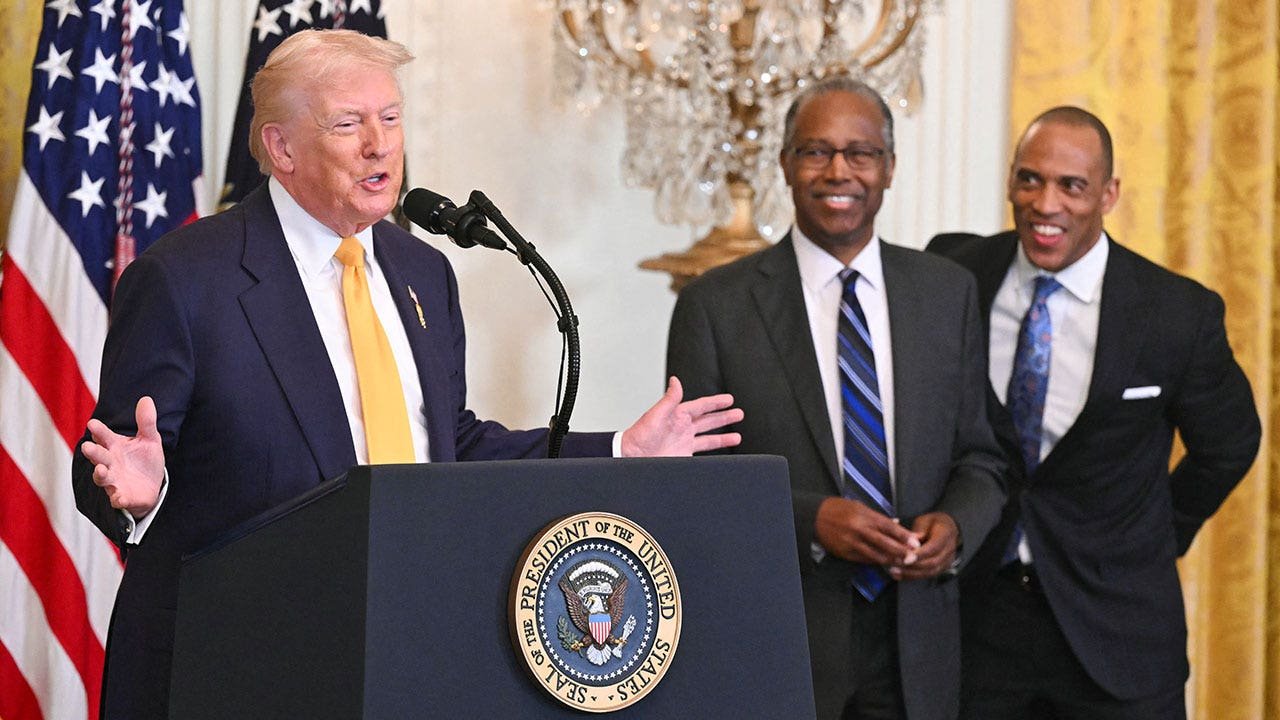
President Donald Trump announced that former Housing and Urban Development (HUD) Secretary Ben Carson will receive the Presidential Medal of Freedom during a White House event marking the 100th anniversary of Black History Month, as attendees at one point broke into chants of «four more years.»
«Ben’s getting the Presidential Medal of Freedom,» Trump said. «It’s the highest award you can have outside of the Congressional Medal of Honor.»
Trump said Carson would receive the nation’s top civilian honor at a future ceremony, telling him, «Ben, I’ll be seeing you back here pretty soon. I think you’re going to get the award.»
The announcement came as Trump mixed tributes and cultural references with policy and political claims including criminal justice reform, crime reduction and border enforcement while hosting what he described as «many exceptional African American leaders and patriots» at the White House.
NICKI MINAJ BROKE FREE FROM IDENTITY POLITICS — AND THE LEFT CAN’T STAND IT
Trump opened the event by noting, «we celebrate the 100th anniversary of Black History Month.»
He then addressed the death of the Rev. Jesse Jackson, saying, «I wanted to begin by expressing a sadness that the passing of a person who was. I knew very well Jesse was a piece of work. He was a piece of work. But he was a good man.»
«I just want to pay my highest respects to Reverend Jesse Jackson,» Trump added, calling him «a real hero,» and saying «he really was special, with lots of personality, grit and street smarts.»
Trump introduced HUD Secretary Scott Turner and brought Carson to the front of the room, noting Carson had recommended Turner. Carson praised Turner’s role in opportunity zones, saying «he was really the driving force behind the Opportunity zones,» and described Trump’s approach as «public private partnerships, and had everybody with skin in the game.»
TRUMP ALLY BEN CARSON SWORN IN AS NATIONAL ADVISOR FOR NUTRITION, HEALTH, AND HOUSING WITH USDA
US President Donald Trump speaks alongside former Secretary of Housing and Urban Development Ben Carson and current Secretary of Housing and Urban Development (HUD) Scott Turner during a Black History Month event in the East Room of the White House in Washington, DC, on February 18, 2026. (Saul Loeb/AFP via Getty Images)
Moments later, Trump returned to Carson and elaborated on the award.
«It’s better because, you know, a lot of people get the Congressional Medal of Honor, and they’re not around,» Trump said. «But it’s the highest award [for] a civilian.»
After remarks from Leo Terrell whom Trump thanked, saying, «Leo, that was very good,» the crowd assembled broke into a chant of «four more years.»
Later, while listing Black artists and athletes, Trump singled out rapper Nicki Minaj.
NICKI MINAJ DOUBLES DOWN ON TRUMP SUPPORT AFTER BACKLASH, CALLS HERSELF HIS ‘NUMBER ONE FAN’
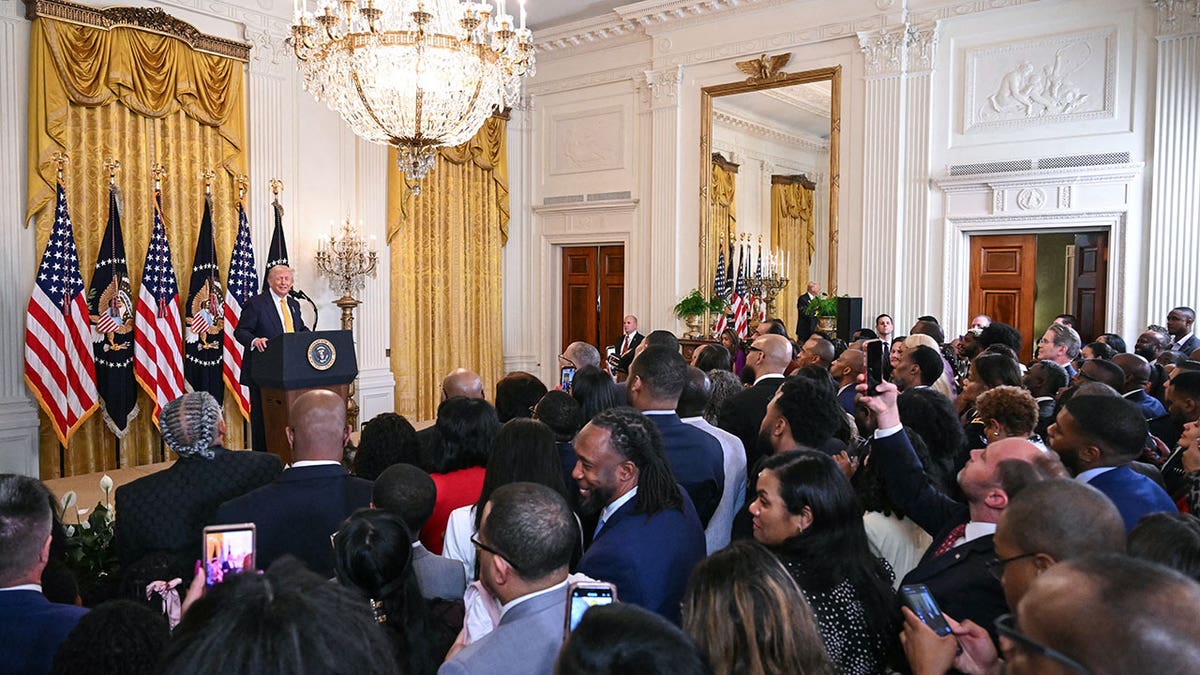
US President Donald Trump speaks during a Black History Month event in the East Room of the White House in Washington, DC, on February 18, 2026. (Saul Loeb/AFP via Getty Images)
«I love Nicki Minaj. She was here a couple of weeks ago.»
«So beautiful,» he added, before saying, «and she gets it. And more importantly, she gets it.»
Trump connected Wednesday’s celebration to a broader national moment, saying, «Black History Month is really all about American history,» and referencing upcoming America250 programming.
The President outlined a series of policy accomplishments for the black community, saying he «single handedly secured record long term funding for» historically Black colleges and universities and reiterated, «we got criminal justice reform done,» adding, «Nobody thought it can be done.»
‘MELANIA’ WORLD PREMIERE: PRESIDENT TRUMP, FIRST LADY, RFK JR., NICKI MINAJ AND MANY MORE LIGHT UP RED CARPET
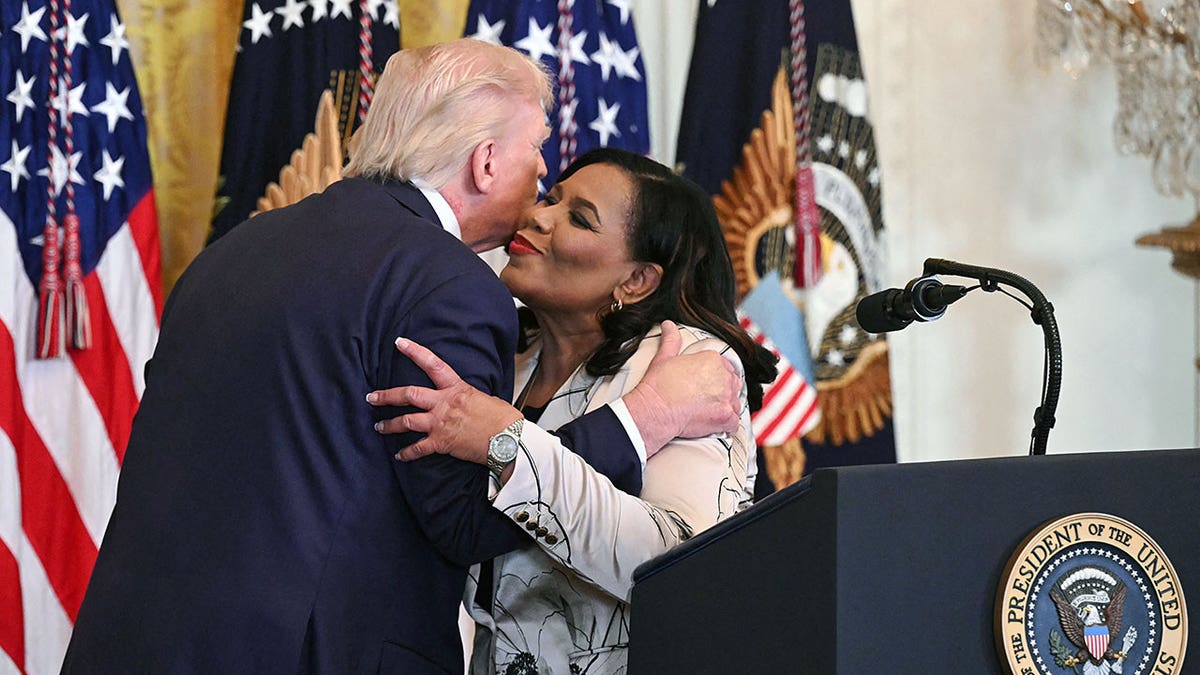
US President Donald Trump greets Alice Marie Johnson, the «White House Pardon Czar,» during a Black History Month event in the East Room of the White House in Washington, DC, on February 18, 2026. (Saul Loeb/AFP via Getty Images)
Trump tied those policies to electoral performance, saying, «it’s no wonder that in 2024, we won more African-American votes than any Republican president in history.»
Trump also cited economic indicators, saying, «Earlier this month the Dow Jones Industrial Average rose above 50,000 for the first time ever,» and adding, «The S&P broke 7000.»
«More Americans are working today than at any time in American history,» he said, before stating, «Since I took office, African American employment has increased by 182,000.»
The president also promoted a tax proposal, inviting a small business owner from Arkansas to speak. She told the audience, «no tax on tips has been amazing blessing for me.»
Trump later pivoted to crime and border enforcement, arguing «we need order,» and claiming, «Washington DC is amazing. It was a crime capital. It was a horror show a year ago. It was really dangerous. And now it’s one of the safest cities anywhere in the country.»
«We have the lowest murder numbers in 125 years since 1990,» he said, adding, «just one year ago, we had the absolute worst border that we’ve ever had, and now we have the safest border that we’ve ever had.»
He also said he had «deployed the National Guard to bring back safety to Memphis and to New Orleans and Washington,» calling the Guard «incredible.»
He also gave the floor to Alice Johnson, whom he described as the White House «pardon czar,» recounting her case: «We got her out. We did a commutation… I said, full pardon.»
CLICK HERE TO DOWNLOAD THE FOX NEWS APP
Johnson credited Trump with the First Step Act, saying, «President Trump did something historic in his first term. He signed the First Step act into law,» and adding, «Over 40,000 individuals have come home to their families early.»
Trump closed by calling the gathering «a very special group of people,» and said, «So happy Black History Month, happy black history year, and happy black history century.»
donald trump,white house,politics

EDEN: el sistema de IA que aprende de un millón de especies para diseñar nuevos tratamientos

De socios inseparables a enemigos declarados: el feroz descargo de Luis Ventura contra Jorge Rial

Trump convenes first ‘Board of Peace’ meeting as Gaza rebuild hinges on Hamas disarmament

Insider trading: el Gobierno investiga a un director de Celulosa por supuestas operaciones fraudulentas por más de $4.500 millones

Nicolò Tresoldi, el delantero del Brujas que dejó el tenis y puede sumarse a la Selección Argentina

La UTA y La Fraternidad pararán desde esta medianoche a pesar de haber sido intimados por el Gobierno

Reforma laboral bomba: menos indemnización, más horas y despidos más fáciles — el cambio que puede sacudir el empleo en Argentina

Cristian Ritondo: “Vamos a apoyar la ley de modernización laboral, pero no el régimen de licencias por enfermedad”

El dólar no sólo cae en la Argentina: qué pasa con otras monedas emergentes y cuáles son las causas

Uno de los jefes de la CGT adelantó que convocarán a un paro general por la reforma laboral: “Trabajaremos para que sea una gran huelga”

 POLITICA1 día ago
Reforma laboral bomba: menos indemnización, más horas y despidos más fáciles — el cambio que puede sacudir el empleo en Argentina
- POLITICA2 días ago
Cristian Ritondo: “Vamos a apoyar la ley de modernización laboral, pero no el régimen de licencias por enfermedad”
- ECONOMIA2 días ago
El dólar no sólo cae en la Argentina: qué pasa con otras monedas emergentes y cuáles son las causas