INTERNACIONAL
Un grupo de ciberespionaje apoyado por Rusia logró acceso a redes de países de la OTAN y empresas de tecnología occidentales


El grupo de ciberespionaje apodado Laundry Bear ha perfeccionado técnicas de ataque como el uso de dominios falsificados y campañas de spear-phishing para infiltrarse en organizaciones clave de Europa y Norteamérica, según reportó The Register. Esta agrupación, también identificada por Microsoft como Void Blizzard, ha intensificado sus operaciones desde abril de 2024, enfocándose en entidades gubernamentales, fuerzas policiales, empresas tecnológicas occidentales y sectores estratégicos de interés para el gobierno ruso. Las agencias de inteligencia de los Países Bajos, la AIVD y la MIVD, confirmaron que el grupo actúa con respaldo estatal ruso y representa una amenaza internacional significativa.
De acuerdo con The Register, la primera detección de Laundry Bear ocurrió durante una investigación sobre un ataque de robo de credenciales dirigido a la policía neerlandesa en septiembre de 2024. Las autoridades neerlandesas detallaron que, ese mismo año, los ciberespías rusos lograron infiltrarse en empresas de defensa, aeroespacial y tecnología espacial, así como en compañías que desarrollan tecnologías avanzadas restringidas para Rusia debido a las sanciones impuestas por países occidentales tras la invasión a Ucrania.
Por su parte, Microsoft Threat Intelligence informó que en octubre de 2024, el grupo accedió a cuentas de usuarios de organizaciones ucranianas del sector aeronáutico. Esta entidad ya había sido blanco de ataques previos por parte de Seashell Blizzard (también conocido como Sandworm), otro grupo vinculado a la inteligencia rusa, en 2022. Según el informe de Microsoft, Laundry Bear ha intentado comprometer de manera regular a organismos gubernamentales y fuerzas del orden en Europa y América del Norte, además de atacar sectores como telecomunicaciones, defensa, salud, educación, tecnología de la información, transporte, medios de comunicación y organizaciones no gubernamentales.
La agencia de noticias Reuters consignó que los ataques contra instituciones neerlandesas forman parte de una amenaza cibernética internacional más amplia. En una carta conjunta al parlamento, la AIVD y la MIVD subrayaron que el grupo operó de manera encubierta hasta su descubrimiento en septiembre de 2024, cuando accedió a información confidencial de funcionarios policiales de los Países Bajos. El objetivo principal de estos ataques ha sido obtener información sobre la adquisición y producción de equipamiento militar por parte de gobiernos occidentales y sobre los envíos de armas a Ucrania.
The Register detalló que, hasta la fecha, Laundry Bear solo ha ejecutado ataques cibernéticos no destructivos, orientados principalmente al espionaje. El grupo suele emplear credenciales robadas obtenidas en ecosistemas de malware de robo de información y, una vez dentro de las organizaciones víctimas, recopila grandes volúmenes de correos electrónicos y archivos. En abril de 2025, Microsoft Threat Intelligence Center observó que Void Blizzard amplió su repertorio con campañas de spear-phishing dirigidas al robo de credenciales, enfocándose en más de 20 organizaciones no gubernamentales en Europa y Estados Unidos.

Durante estas campañas, los atacantes se hicieron pasar por organizadores de la European Defense and Security Summit, enviando correos electrónicos con archivos PDF maliciosos que contenían un código QR. Al escanearlo, las víctimas eran redirigidas a una infraestructura controlada por Void Blizzard en el dominio falsificado micsrosoftonline.com, que simulaba la página de inicio de sesión de Microsoft. El montaje utilizaba la herramienta de código abierto Evilginx para interceptar nombres de usuario, contraseñas y cookies de sesión cuando los usuarios intentaban “registrarse” en el falso evento.
El uso de dominios falsificados, conocido como typosquatting, representa una táctica novedosa para el grupo, lo que indica una evolución hacia operaciones más dirigidas y un aumento del riesgo para sectores críticos, según advirtió Microsoft. Una vez obtenida la entrada inicial, los atacantes explotan interfaces legítimas de la nube, como Exchange Online y Microsoft Graph, para acceder a buzones de correo, incluidos los compartidos, y archivos alojados en la nube, automatizando la recolección masiva de datos.

Microsoft también observó que, en algunos casos, los atacantes accedieron a conversaciones y mensajes de Microsoft Teams a través de la aplicación web, y utilizaron la herramienta pública AzureHound para mapear la configuración de Microsoft Entra ID de las organizaciones comprometidas, obteniendo información sobre usuarios, roles, grupos, aplicaciones y dispositivos.
Aunque muchas de estas tácticas son comunes entre los grupos de espionaje y ofensiva cibernética del gobierno ruso, tanto Microsoft como los servicios de inteligencia neerlandeses sostienen que Laundry Bear constituye una agrupación distinta. Según el aviso conjunto de la AIVD y la MIVD, las operaciones de Laundry Bear presentan similitudes con el modus operandi de APT28 (también conocido como Fancy Bear), otro grupo vinculado al GRU ruso, que desde 2022 ha atacado a proveedores logísticos, empresas tecnológicas y organismos gubernamentales de países occidentales y de la OTAN que brindan asistencia a Ucrania.
En las últimas semanas, 21 agencias gubernamentales de países como Estados Unidos, Reino Unido, Canadá, Alemania, Francia, República Checa, Polonia, Austria, Dinamarca y Países Bajos alertaron sobre una campaña en curso de Fancy Bear dirigida a servidores de correo electrónico y cámaras conectadas a internet en pasos fronterizos ucranianos, con el objetivo de rastrear envíos de ayuda.

A pesar de la coincidencia en la selección de objetivos y el uso de técnicas como los ataques de password spraying, los servicios neerlandeses enfatizaron que Laundry Bear y APT28 son actores diferentes. The Moscow Times también reportó que la investigación de las agencias neerlandesas reveló que Laundry Bear ha estado detrás de operaciones cibernéticas contra gobiernos occidentales y otras instituciones desde al menos 2024.
El análisis de las agencias de inteligencia neerlandesas, citado por Reuters y The Moscow Times, concluyó que los ciberataques contra instituciones de los Países Bajos forman parte de una amenaza internacional más amplia, con el objetivo de obtener información estratégica sobre la producción y suministro de equipamiento militar occidental y la entrega de armas a Ucrania.

INTERNACIONAL
El cuestionado servicio anti inmigrantes de EE.UU. se encargará de la seguridad durante el Mundial de Fútbol: temen arrestos y deportaciones de fans


Preocupación

INTERNACIONAL
Western Hemisphere defense chiefs convene after border drone scare prompts airspace closure

NEWYou can now listen to Fox News articles!
Top U.S. military leaders are hosting more than 30 nations in Washington as the Trump administration moves to deepen security cooperation across the Western Hemisphere, prioritizing border control, drug trafficking and regional threats from global adversaries.
«To put America First, we must put the Americas First,» War Secretary Pete Hegseth said, according to remarks shared by Joseph Humire, U.S. Acting Assistant Secretary of War for Homeland Defense and the Americas.
NORAD AIRCRAFT TO ARRIVE IN GREENLAND FOR ROUTINE EXERCISES
«We must work together to prevent any adversary or criminal actor from exploiting your territory or using your infrastructure to threaten what a great former American president, Teddy Roosevelt, once called ‘permanent peace in this hemisphere.’»
The meeting, convened by Joint Chiefs Chairman Gen. Dan Caine, comes amid a broader national security strategy that places heightened emphasis on threats closer to home: from fentanyl pipelines and transnational criminal networks to Arctic competition and instability in Venezuela.
The conference also coincides with U.S. action against Mexican cartel drones that breached American airspace near El Paso, Texas.
An administration official told Fox News that «Mexican cartel drones breached U.S. airspace. The Department of War took action to disable the drones. The FAA and DOW have determined there is no threat to commercial travel.»
Gen. Dan Caine, chairman of the Joint Chiefs of Staff, is hosting a meeting for the Western Hemisphere defense chiefs in Washington. (Alex Brandon/AP)
The Federal Aviation Administration temporarily restricted flights in and out of El Paso International Airport for what it described as «special security reasons.» Federal officials have not released operational details, but the administration official said the action was directly tied to counter-drone measures along the southern border.
The incident underscores the growing use of unmanned systems by cartel networks and the increasing overlap between traditional criminal activity and homeland defense concerns — a theme expected to surface in discussions among defense leaders gathered in Washington.
Top military leaders from Denmark, Britain and France, nations that have territory in the western hemisphere, have also been invited, according to The New York Times.
FAA WARNS ABOUT FLYING IN CENTRAL, SOUTH AMERICA AND EASTERN PACIFIC, CITING POSSIBLE ‘MILITARY ACTIVITIES’
Gen. Francis Donovan, the new chief of Southern Command, which oversees Latin American and Caribbean operations, is expected to press regional counterparts to intensify cooperation against drug-trafficking organizations and transnational criminal groups that operate across borders and increasingly leverage advanced technology. U.S. officials have warned that cartel networks are using drones, encrypted communications and sophisticated smuggling routes to move narcotics and personnel.

Video shows a kinetic strike on a narco-terror vessel in international waters from Wednesday, Dec. 31. The strikes come amid broader military pressure in the region following high-profile security actions. (U.S. Southern Command via X)
Gen. Gregory M. Guillot, the head of U.S. Northern Command, which leads homeland and north of the U.S. defense including Greenland, is reportedly expected to talk about border controls and integration of advanced sensors across air, land, sea and space domains.
Arctic security also us likely to feature prominently in discussions. The administration has pointed to increased Russian and Chinese activity in the Arctic as a long-term strategic concern and has emphasized the importance of Greenland’s geographic position for missile warning, maritime access and critical mineral resources.
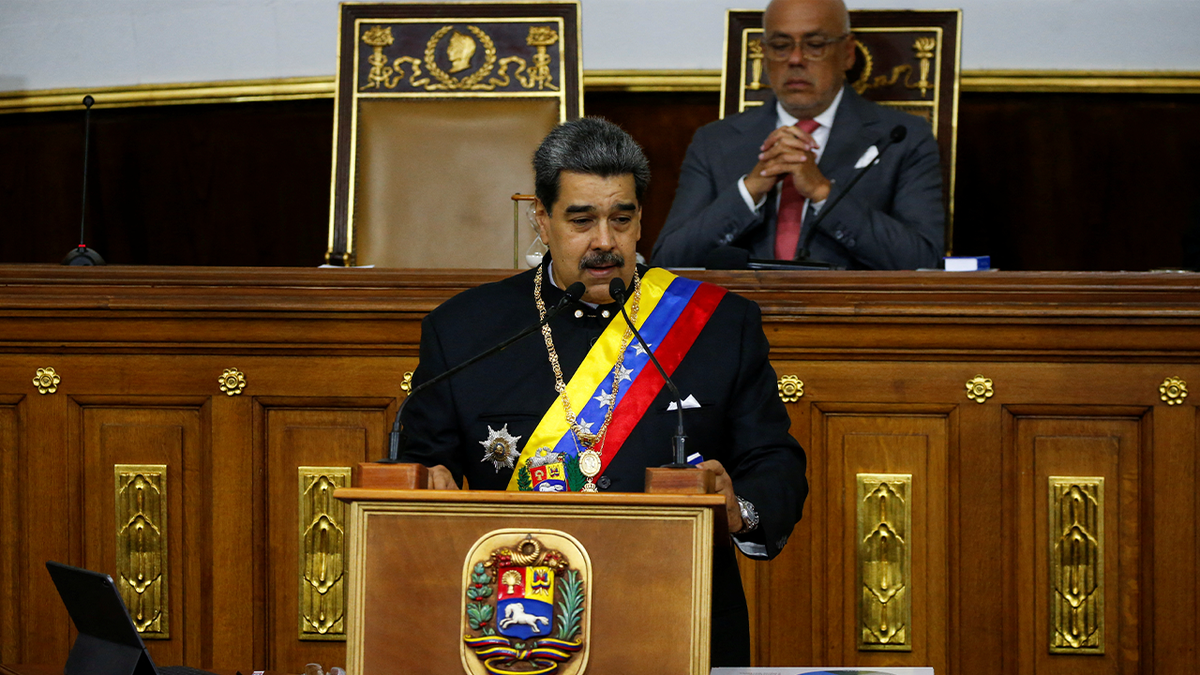
Former Venezuelan President Nicolás Maduro, who was captured by U.S. forces in January in a high-stakes operation and is now facing federal drug-trafficking charges in the United States. The capture has reshaped U.S. security discussions in the Western Hemisphere. (Leonardo Fernandez Viloria/Reuters)
CLICK HERE TO DOWNLOAD THE FOX NEWS APP
The summit comes on the heels of the dramatic U.S. military capture of Venezuelan leader Nicolás Maduro in early January after months of counternarcotics boat strikes.
As the hemisphere’s security landscape continues shifting, defense officials and regional allies alike will be watching to see how other governments with hostile policies toward the U.S. respond to Washington’s increasingly assertive posture.
latin america,pentagon,conflicts defense,drugs,border security,location mexico,joint chiefs of staff,homeland security
INTERNACIONAL
Russia agrees to abide by expired New START nuclear arms limits — as long as US does the same
NEWYou can now listen to Fox News articles!
Russia has reportedly agreed to abide by the limits of a nuclear arms pact it reached with the U.S. years ago after the agreement expired last week — as long as Washington does the same.
The New START Treaty’s expiration, which occurred on Feb. 5, leaves the nations with the two largest atomic arsenals with no restrictions for the first time in more than a half-century, The Associated Press reported. The expiration has fueled fears of a possible unconstrained nuclear arms race.
In September, President Vladimir Putin said Russia would abide by the nuclear arms deal for another year after its expiration date as long as the U.S. followed suit, the AP reported. However, President Donald Trump has said he wanted China to be part of a new pact, something that Beijing has rejected, according to the AP.
«Rather than extend ‘NEW START’ (A badly negotiated deal by the United States that, aside from everything else, is being grossly violated), we should have our Nuclear Experts work on a new, improved, and modernized Treaty that can last long into the future,» Trump wrote on Truth Social upon the treaty’s expiration.
WORLD ENTERS UNCHARTED ERA AS US-RUSSIA NUCLEAR TREATY EXPIRES, OPENING DOOR TO FASTEST ARMS RACE IN DECADES
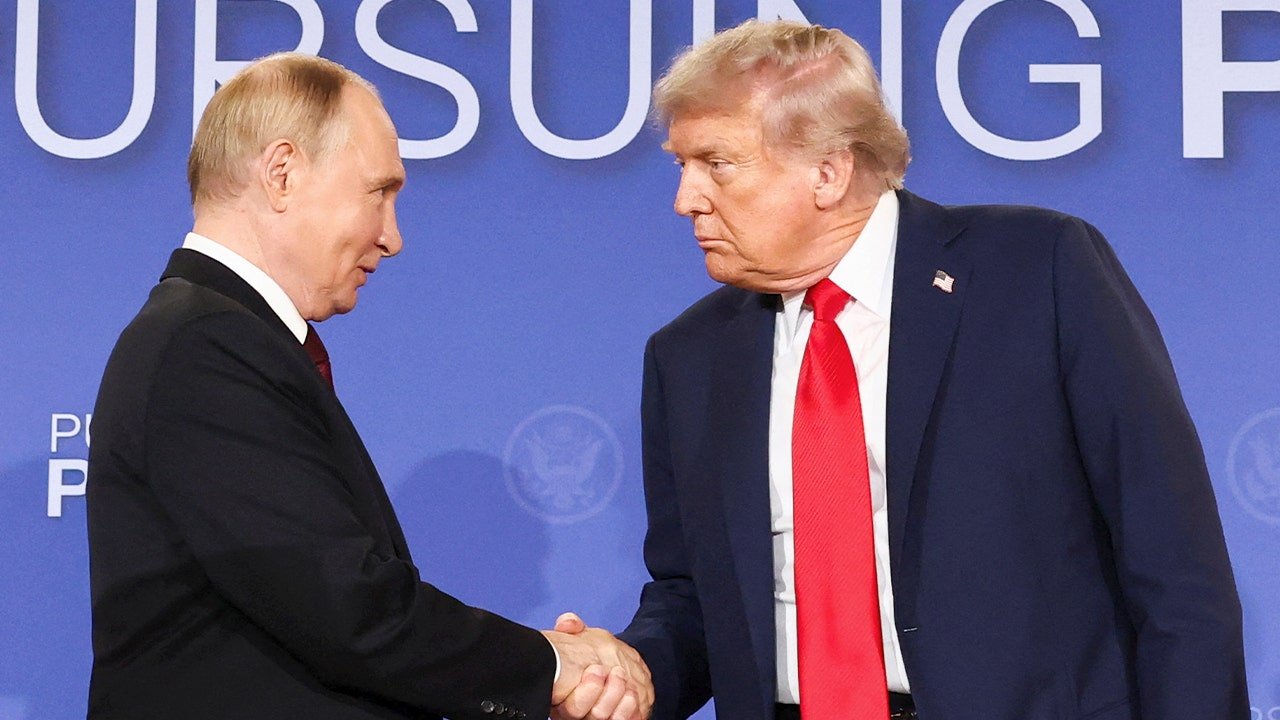
President Donald Trump and Russian President Vladimir Putin meet in Anchorage, Alaska. (Reuters/Kevin Lamarque)
In response to Fox News Digital’s request for comment on the now-expired treaty, the White House pointed to the president’s Truth Social post.
Russian Foreign Minister Sergey Lavrov spoke to lawmakers about the treaty, saying Moscow would «act in a responsible and balanced way on the basis of analysis of the U.S. military policies,» the AP reported.
Lavrov added that «we have reason to believe that the United States is in no hurry to abandon these limits and that they will be observed for the foreseeable future.»
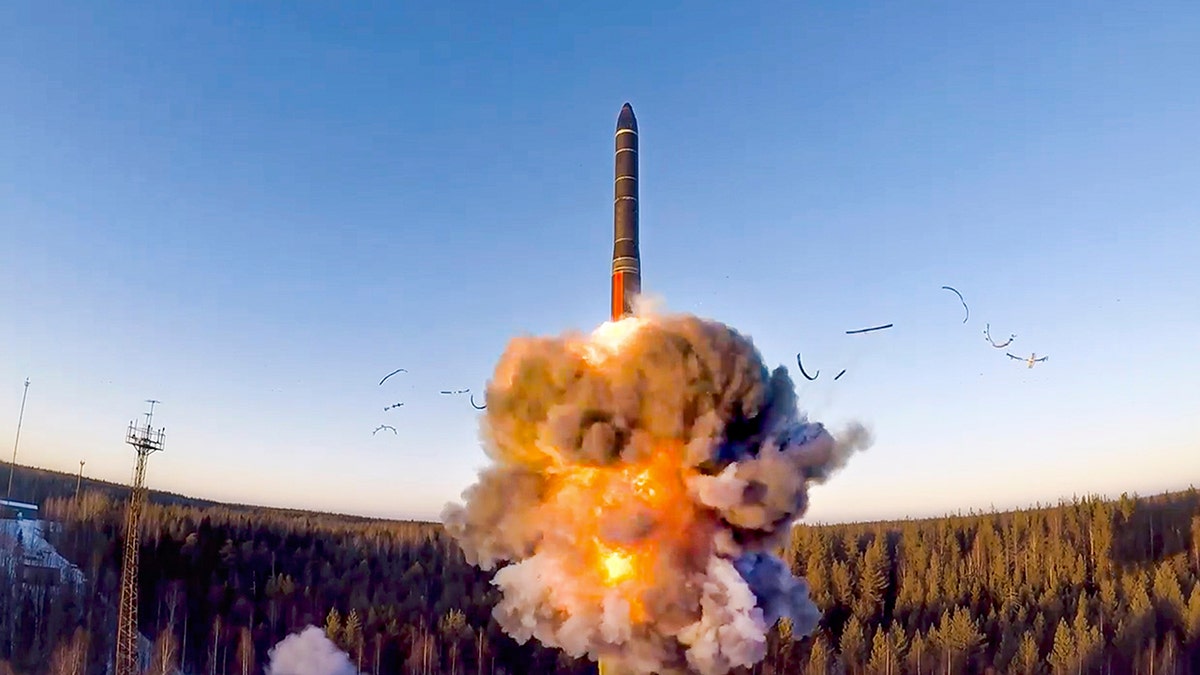
A rocket is launched as part of a ground-based intercontinental ballistic missile test at the Plesetsk facility in Russia on Dec. 9, 2020. (Russian Defense Ministry Press Service via AP, File)
«We will closely monitor how things are actually unfolding,» Lavrov said. «If our American colleagues’ intention to maintain some kind of cooperation on this is confirmed, we will work actively on a new agreement and consider the issues that have remained outside strategic stability agreements.»
TRUMP CALLS FOR NUCLEAR EXPERTS TO WORK ON ‘NEW, IMPROVED, AND MODERNIZED TREATY’
The New START Treaty was signed in 2010 by President Barack Obama and his Russian counterpart, Dmitry Medvedev, and was entered into force on Feb. 5, 2011.
The treaty gave the U.S. and Russia until Feb. 5, 2018, to meet the central limits on strategic offensive arms. The treaty caps each side at 700 deployed ICBMs, SLBMs and nuclear-capable heavy bombers; 1,550 deployed warheads; and 800 deployed and non-deployed launchers and bombers. The parties were then obligated to maintain the limits as long as the treaty remained in force, which it did until last week.
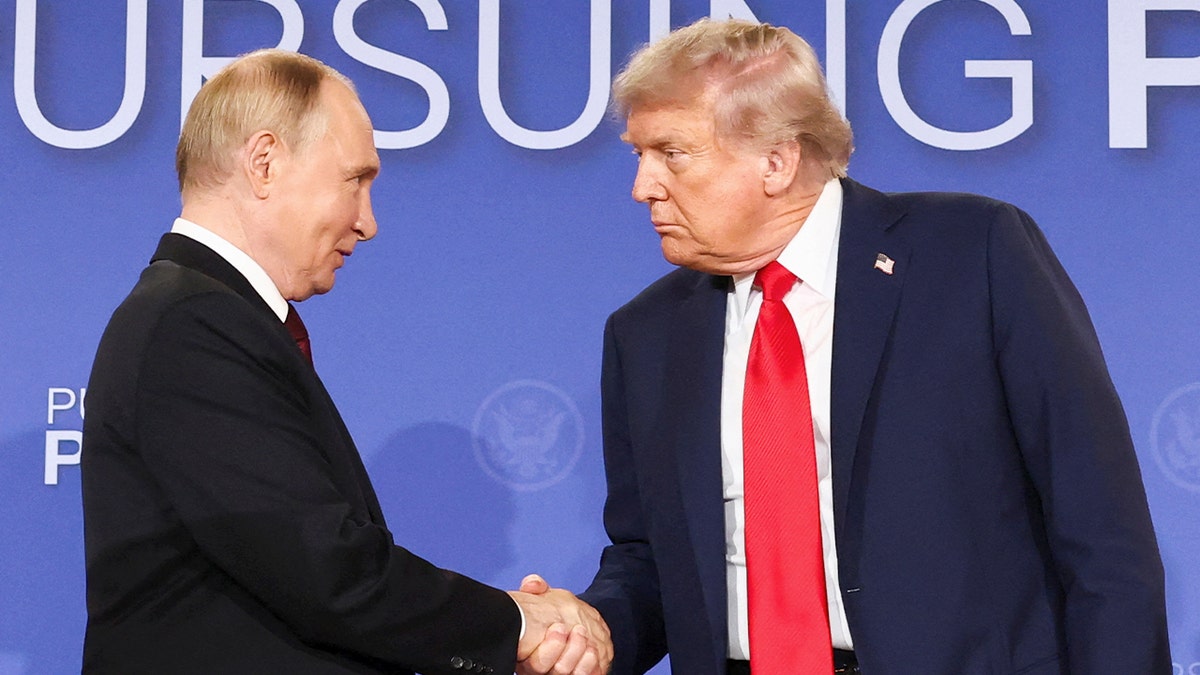
President Donald Trump and Russian President Vladimir Putin shake hands during a press conference following their meeting on Ukraine, in Anchorage, Alaska,, Aug. 15, 2025. (Kevin Lamarque/Reuters)
CLICK HERE TO DOWNLOAD THE FOX NEWS APP
The expiration of the treaty comes just after a meeting involving U.S. and Russian officials in Abu Dhabi. Axios previously reported that the two nations were closing in on a deal to observe the treaty for at least six months after its expiration. The outlet added that during the six-month period there would be negotiations for a new deal.
The State Department did not immediately respond to Fox News Digital’s request for comment.
world,russia,nuclear proliferation,donald trump,vladimir putin

La debacle de su último juego no es una excepción. Riot Games va de fracaso en fracaso desde hace años y el problema siempre es el mismo

Broker de la City avisa: este CEDEAR que pocos tienen en el radar puede «volar» en Wall Street

La figura de España que será baja por cuatro meses y no estará en la Finalissima ante la Selección

¿Cómo estará el clima en el fin de semana largo de Carnaval?

El Gobierno denunciará a los manifestantes que causaron los incidentes en el Congreso

Los gobernadores peronistas no alineados al kirchnerismo festejan como una victoria los cambios a la reforma laboral

El sector industrial advierte que la apertura económica exige eliminar las distorsiones internas

Mirtha Legrand se quebró desconsolada al hablar de la renuncia de Jimena Monteverde a su mesaza

Acuartelamiento policial en Santa Fe: reclamo salarial y temor a un conflicto nacional de seguridad

Mercados: subió la Bolsa argentina y cortó una serie negativa de siete ruedas consecutivas

 POLITICA1 día ago
Acuartelamiento policial en Santa Fe: reclamo salarial y temor a un conflicto nacional de seguridad
- POLITICA1 día ago
La advertencia de ATE a los gobernadores que apoyan la reforma laboral: “Firmarán su sentencia de muerte”
- ECONOMIA1 día ago
Cuánto le cuesta a la clase media llenar el changuito y cómo varían los precios de los alimentos entre provincias