INTERNACIONAL
Ooh la law: France snuffing out smoking in parks, beaches, more

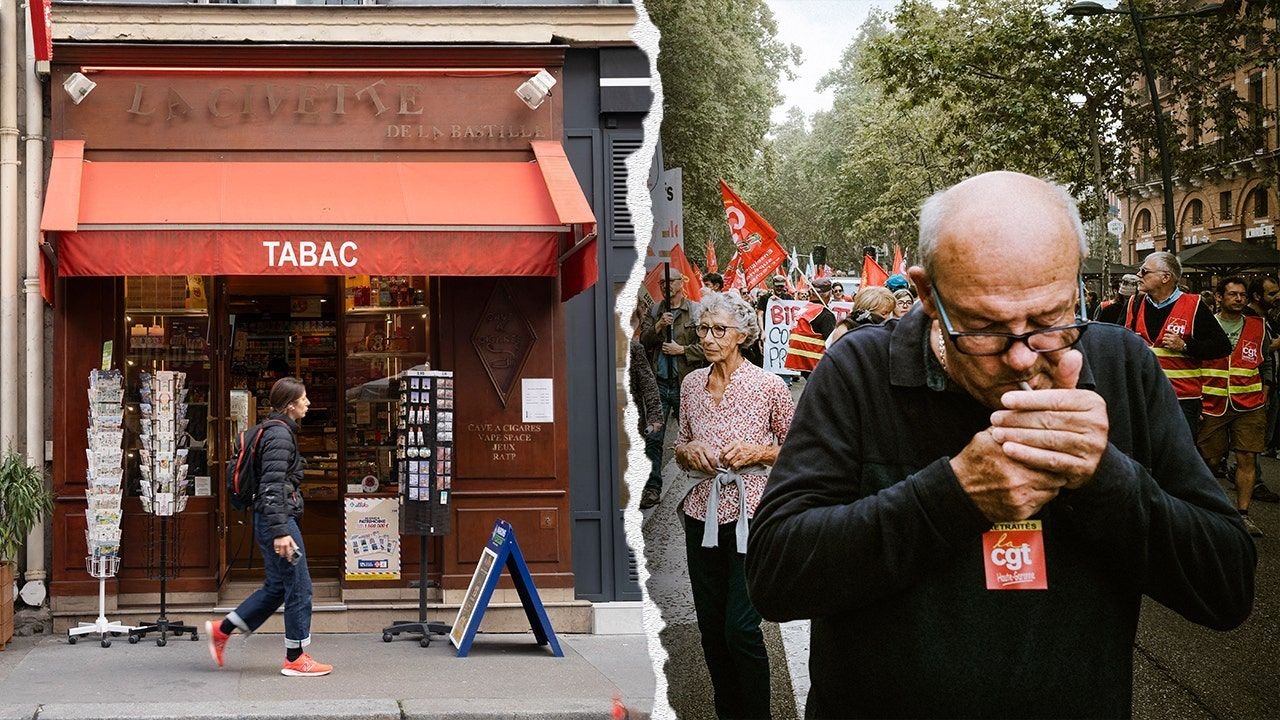
The French government is cracking down on cigarettes in public, announcing a sweeping outdoor smoking ban that aims to clear the air for the next generation of Parisians (and everyone else).
Beginning July 1, France will ban smoking in a wide range of outdoor public areas, including beaches, public parks, gardens, bus stops, sports venues and anywhere near schools, according to reporting from the BBC and Agence France-Presse (AFP).
«Tobacco must disappear where there are children,» Health and Family Minister Catherine Vautrin told Ouest-France, a regional French newspaper, in an interview published Thursday.
21,000% SPIKE IN MA VAPE SEIZURES THROWS CIGARETTE BAN INTO QUESTION, EX-ATF OFFICIAL SAYS
A protester lights a cigarette during a demonstration organized by unions and youth organizations calling for the repeal of a pension law and the increase in salaries in Toulouse, France, on Oct. 1, 2024. (PAT BATARD/Hans Lucas via AFP/AFP via Getty Images)
«The freedom to smoke must end where the freedom of children to breathe fresh air begins.»
Under the new rules, lighting up in these designated areas could earn violators a fine of up to $153, as reported by AFP. Enforcement will primarily be handled by regular police, though Vautrin said she’s counting on a dose of «self-regulation» from the public.
There’s a carve-out for culture, though. France’s iconic «terrasses,» the bustling outdoor café seating areas, are exempt from the ban.
Smokers can still enjoy a cigarette with their espresso and croissant, provided they’re seated at a café. The BBC confirmed that these social spaces, which are practically a national institution, won’t be affected.
SOUTH CAROLINA BILL WOULD BAN SMOKING INSIDE CARS WHILE CHILDREN ARE PASSENGERS
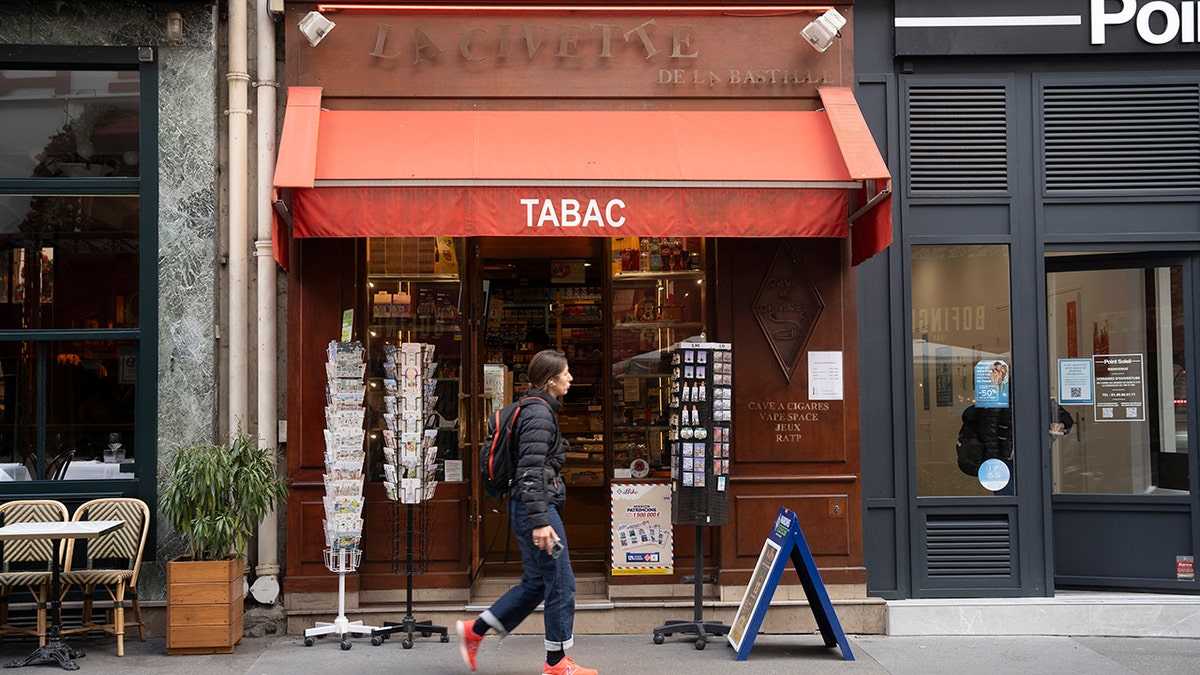
A cigarette and tobacco shop in the 4th arrondissement of Paris is seen on Sept. 13, 2024. (ANTOINE BOUREAU/Hans Lucas/AFP via Getty Images)
E-cigarettes are also currently excluded from the restrictions, but Vautrin told Ouest-France that her office is working on future limits to the nicotine levels allowed in vapes.
The move marks a significant expansion of France’s existing anti-smoking laws.
Smoking has already been banned in restaurants, nightclubs and indoor public places since 2008. Local efforts to restrict smoking in public spaces have been growing steadily. According to AFP, more than 1,500 French municipalities have already enacted their own outdoor smoking bans and hundreds of beaches have been smoke-free for years.
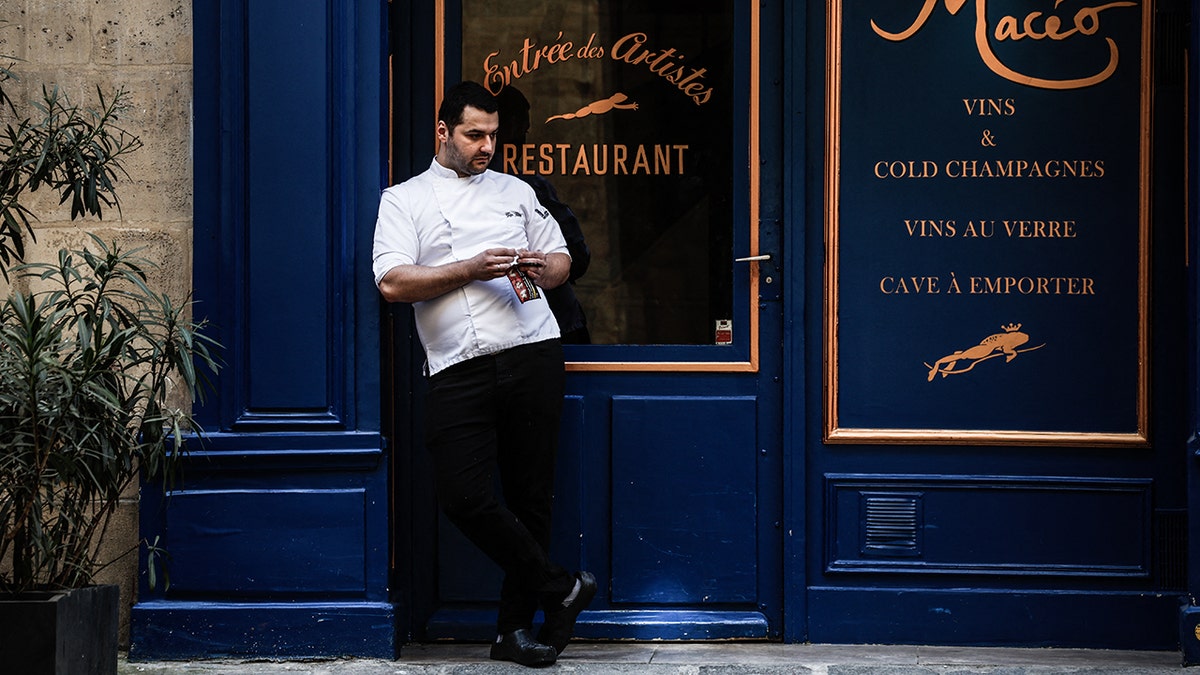
A chef rolls a cigarette during a break outside a restaurant in Paris on April 8, 2025. (XAVIER GALIANA/AFP via Getty Images)
According to data from the French Monitoring Centre for Drugs and Drug Addiction cited by the BBC, just 23.1% of French adults smoke daily, the lowest level ever recorded and a drop of over five percentage points since 2014.
Still, tobacco-related illnesses remain a leading cause of death. France’s National Committee Against Smoking reports that more than 75,000 people die each year from smoking, around 13% of all annual deaths in the country.
Support for the new restrictions appears strong. A report from La Ligue Contre le Cancer, a prominent French cancer association, found that nearly 80% of French citizens favor smoke-free public areas like parks, beaches and woodlands.
But while many in France welcome the move, some have raised concerns over the balance between public health and personal liberty. Conservatives may see the ban as another example of top-down government overreach.
CLICK HERE TO GET THE FOX NEWS APP
Be careful lighting up on your summer vacations in France this year as it may just get you a fine.

INTERNACIONAL
GOP lawmaker shocked after anti-ICE sheriff was stumped by ‘fifth-grade civics’ question
NEWYou can now listen to Fox News articles!
North Carolina Republican state Rep. Allen Chesser said he was taken by surprise when a Democratic sheriff who has long opposed cooperating with U.S. Immigration and Customs Enforcement (ICE) could not answer a basic question about how the government works.
A North Carolina House Oversight Committee hearing spurred on by the recent killing of a young Ukrainian woman, Iryna Zarutska, in Charlotte, took an unexpected turn when Chesser asked Mecklenburg County Sheriff Garry McFadden, «What branch of government do you operate under?»
McFadden, who is the top law enforcement officer in the county where Zarutska was killed, simply answered, «Mecklenburg County,» prompting Chesser to repeat, «What branch of government do you operate under, sheriff?»
The sheriff answered, «The Constitution of the United States,» to which Chesser responded, «That is what establishes the branches of government; I’m asking what branch you fall under.»
After McFadden answered, «Mecklenburg County» again, Chesser remarked, «This is not where I was anticipating getting stuck. Um, are you aware of how many branches of government there are?» The sheriff quickly shot back, «No.»
CHARLOTTE LIGHT-RAIL STABBING MURDER SPURS LANDMARK CRIMINAL JUSTICE REFORM FROM NORTH CAROLINA REPUBLICANS
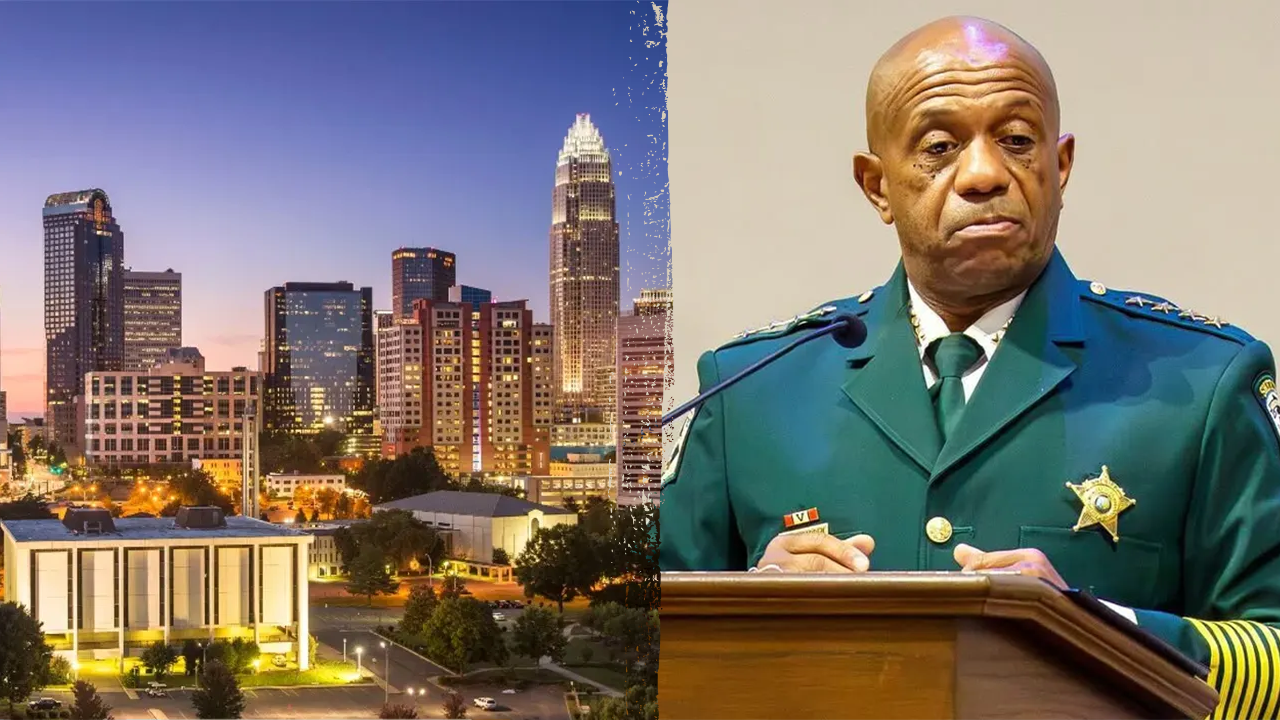
Left: The skyline of the City of Charlotte, North Carolina, which sits in Mecklenburg County. Right: Sheriff Garry McFadden. (Andrea Evangelo-Giamou / EyeEm via Getty Images; The Mecklenburg County Sheriff’s Office/Facebook)
After a long pause, Chesser continued, «For the sake of debate, let’s say there are three branches of government: legislative, executive, judicial. Of those three, which do you fall under?»
The sheriff answered, «I believe I fall under the last one … judicial.»
«You are incorrect, sir. You fall under the executive,» said Chesser.
After that, Chesser continued to press McFadden about how he reconciles his responsibility as an officer under the executive branch to enforce the law with his opposition to cooperation with ICE. Chesser asked McFadden how he reconciled his responsibility with a previous statement in which the sheriff said, «We do not have a role in enforcement whatsoever, we do not have to follow the rules and the laws that are governed by our lawmakers in Raleigh.»
The sheriff said that Chesser was taking his quote out of context, saying it was strictly in reference to immigration enforcement.
Though declining to offer more context on the statement, McFadden affirmed his office is now abiding by state law requiring cooperation with ICE, saying, «We follow the law, when the law is produced, we follow the law.»
HOUSE DEM EXPLODES ON TOP TRUMP IMMIGRATION OFFICIAL, SAYS HE ‘BETTER HOPE’ FOR PARDON FROM PRESIDENT
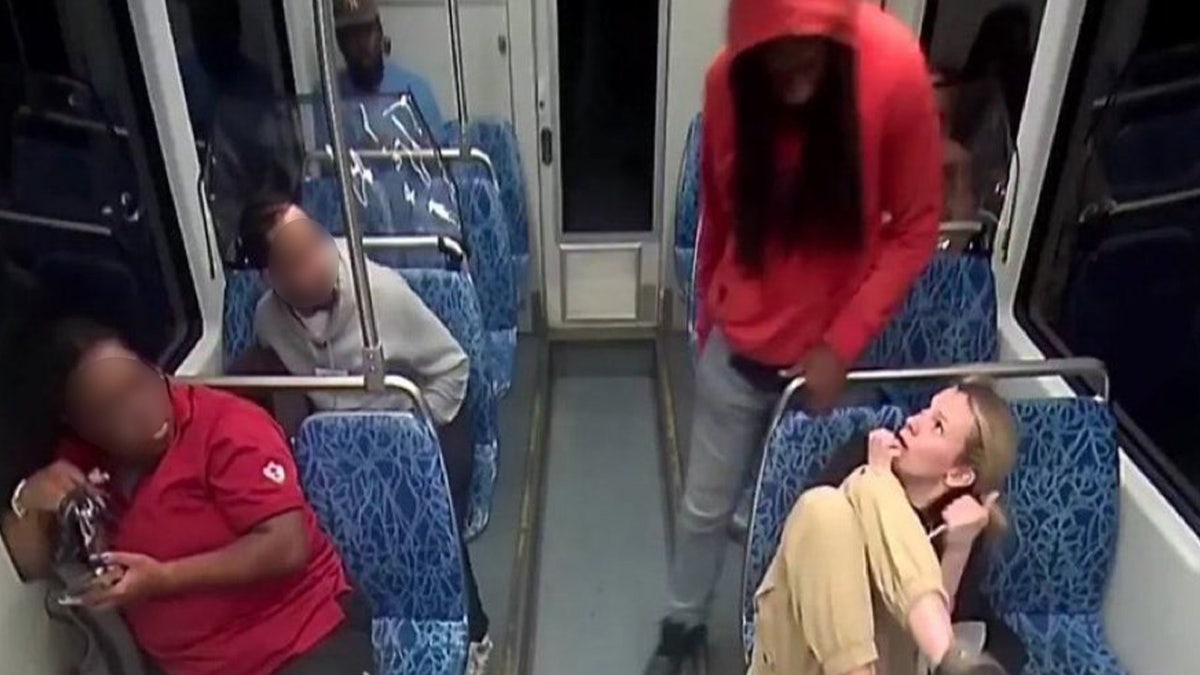
Iryna Zarutska curls up in fear as a man looms over her during a disturbing attack on a Charlotte, N.C., light rail train. (NewsNation via Charlotte Area Transit System)
In an interview with Fox News Digital the day after the hearing, Chesser, who is an Army veteran and former police officer, said that, «Obviously, those weren’t the cache of questions that I was thinking we were going to get him on.»
«I had several statements that he had made to the media and to the local press and in different interviews that kind of conflicted with some of the testimony that he provided yesterday about following the law. We made it to [only] one of those statements because we got held up on what I thought was baseline, just kind of setting a baseline of how we were to establish that his role is to enforce the law,» he explained, adding, «I was not expecting to have to get into a fifth-grade civics lesson with a duly elected sheriff.»
He said that McFadden has «decided to make himself kind of a centerpiece in the refusal to enforce immigration law here in North Carolina,» adding, «It’s not so much the refusal to enforce immigration law, but it’s the refusal to enforce state law that says he must cooperate with ICE and ICE detainers when people are in custody in his facilities.»
WHO IS IRYNA ZARUTSKA, UKRAINIAN REFUGEE KILLED IN CHARLOTTE TRAIN ATTACK?
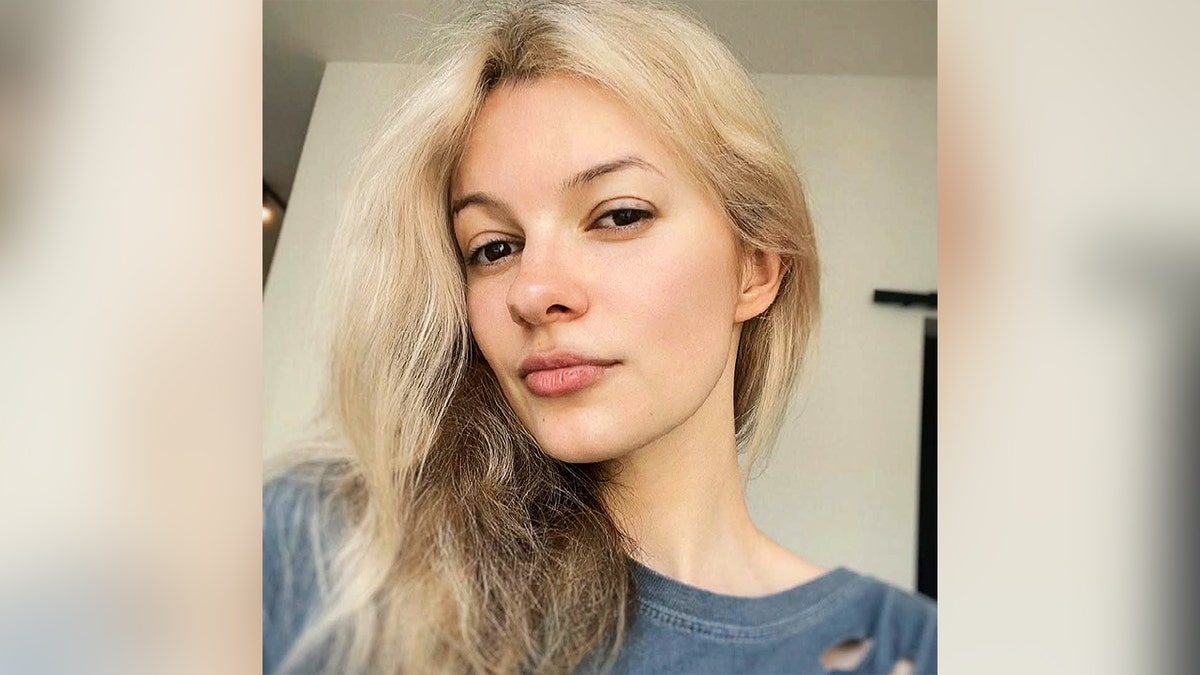
Ukrainian Iryna Zarutska came to the U.S. to escape war but was stabbed to death in Charlotte. (Evgeniya Rush/GoFundMe)
«Last summer, we had the unfortunate death of a young Ukrainian national that had sought refuge in our country and in our state,» Chesser went on. «I think that all North Carolinians, and all people who find themselves in North Carolina, should be able to count on one thing when it comes to public safety, and that is whether or not you are safe and whether or not the law will be enforced is not dependent on what county you find yourself in.»
CLICK HERE TO DOWNLOAD THE FOX NEWS APP
«North Carolina is a safe state for all the people who choose to come here, and that is the point of the Oversight Committee [hearing] that we were having was, making sure that the law is equally applied and fairly applied across all imaginary lines in our state,» he said.
The Mecklenburg County Sheriff’s Office did not immediately respond to Fox News Digital’s request for comment.
democratic party,immigration,enforcement,north carolina,charlotte raleigh piedmont,police and law enforcement,migrant crime

NEWYou can now listen to Fox News articles!
Ukrainian President Volodymyr Zelenskyy is reportedly planning to announce a presidential election and a referendum on a potential peace deal to end the war with Russia, with the declaration expected on Feb. 24, the fourth anniversary of Moscow’s full-scale invasion.
The Financial Times, citing Ukrainian and European officials involved in the planning, reported on Wednesday that both a presidential vote, in which Zelenskyy would seek re-election, and a nationwide referendum could be held by May 15.
The outlet said Kyiv could risk losing proposed U.S. security guarantees if it does not hold both votes by that date.
The Financial Times noted that although earlier U.S.-imposed deadlines have come and gone, American officials are this time applying heavier pressure on Ukraine as the November midterm elections loom.
ZELENSKYY READY TO PRESENT NEW PEACE PROPOSALS TO US AND RUSSIA AFTER WORKING WITH EUROPEAN TALKS
A note marks a ballot box for voters with high temperatures at a polling station during the 2020 Ukrainian local elections in Rubizhne, Luhansk Region, eastern Ukraine, on Oct. 25, 2020, amid the coronavirus pandemic. (Kovalyov Oleksiy/Ukrinform/Future Publishing via Getty Images)
It added that the timeline could also be complicated by the wide gap between Moscow and Kyiv on key territorial issues, including control of the Donbas region and the Zaporizhzhia nuclear power plant, as well as the need for parliament to amend legislation because martial law currently bars national elections during wartime.
Zelenskyy previously stressed that the timing and format of any elections are matters solely for Ukraine and its citizens, rejecting any suggestion that the Kremlin could dictate the process.
In several lengthy posts on X in December, he argued that two key factors would determine whether voting is possible: security and legislation.
ZELENSKYY SAYS US SECURITY GUARANTEES DOCUMENT IS ‘100% READY’ FOR SIGNING
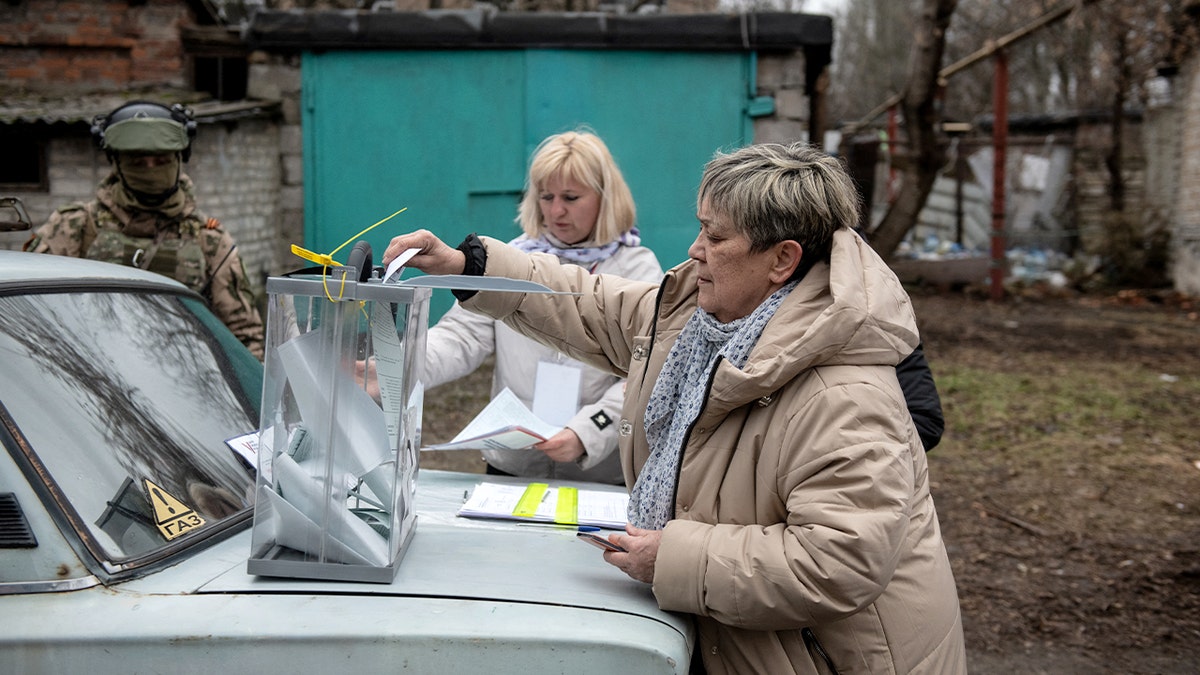
A woman casts her ballot at a mobile polling station during early voting in Russia’s presidential election in Donetsk, Russian-occupied Ukraine, on March 14, 2024. (Stringer/AFP via Getty Images)
Zelenskyy said voting can only take place on Ukrainian-controlled territory and must ensure the participation of soldiers defending the country. Elections cannot be held in Russian-occupied areas, he explained, because of concerns over how they would be conducted.
He also suggested that a ceasefire, at least for the duration of an election or referendum, may be necessary to guarantee secure conditions, including protected airspace and the presence of international observers.
The reported deadline from the Trump administration comes after The Associated Press reported that Washington is aiming for the war to end by June.
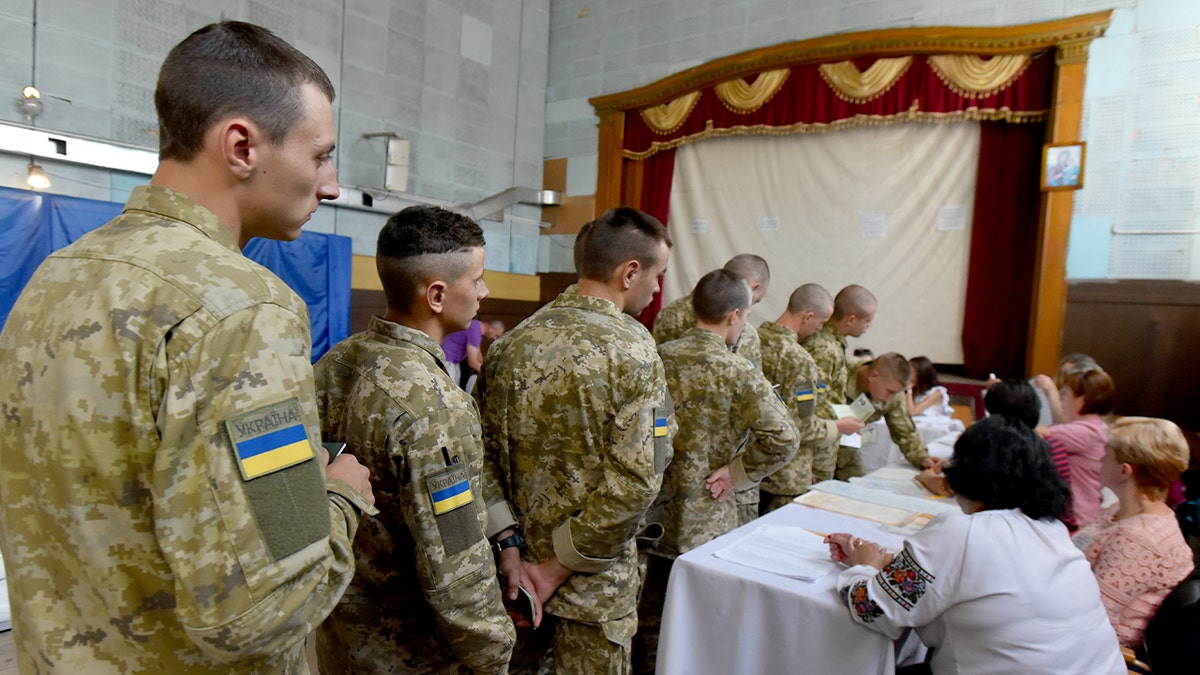
Ukrainian servicemen vote at a polling station during Ukraine’s parliamentary elections in Velyki Mosty, Lviv Oblast, on July 21, 2019. (Mykola Tys/Global Images Ukraine via Getty Images)
Trilateral talks between the United States, Russia and Ukraine were held in Abu Dhabi in early February, where the sides met twice but emerged with only a limited breakthrough — agreeing to a 314-person prisoner exchange, the first such swap in five months.
CLICK HERE TO DOWNLOAD THE FOX NEWS APP
U.S. special envoy Steve Witkoff said Washington and Moscow agreed to reestablish a military-to-military dialogue, calling the channel «crucial to achieving and maintaining peace.»
He said trilateral discussions would continue in the coming weeks after the delegations report back to their respective capitals.
ukraine,russia,world
Objetivos

Vidas


Javier Milei le envió una carta al papa León XIV para invitarlo a la Argentina

Ricky Martin mostró cómo se preparó para cantar junto a Bad Bunny en su histórico show del Super Bowl

Reforma laboral: el nuevo apretón de manos de Milei con la “casta sindical”

GOP lawmaker shocked after anti-ICE sheriff was stumped by ‘fifth-grade civics’ question

Reforma laboral: qué pasará con los precios de los autos tras la eliminación del impuesto interno

Inspiración en Pokémon Rubí y Zafiro, colaboración con Koei Tecmo y más claves de Pokémon Pokopia ofrecidas por Shigeru Ohmori – Nintenderos

El sector industrial advierte que la apertura económica exige eliminar las distorsiones internas

Mirtha Legrand se quebró desconsolada al hablar de la renuncia de Jimena Monteverde a su mesaza

Central Córdoba vs. Unión: formaciones, hora y dónde ver por tv

Acuartelamiento policial en Santa Fe: reclamo salarial y temor a un conflicto nacional de seguridad

 POLITICA1 día ago
Acuartelamiento policial en Santa Fe: reclamo salarial y temor a un conflicto nacional de seguridad
- ECONOMIA3 días ago
Argentina usa la canasta más vieja de la región: así mide el INDEC frente a países vecinos
- ECONOMIA1 día ago
Cuánto le cuesta a la clase media llenar el changuito y cómo varían los precios de los alimentos entre provincias