INTERNACIONAL
Top House Democrat grills Hegseth on submarine spending plans: ‘Give us the details’

NEWYou can now listen to Fox News articles!
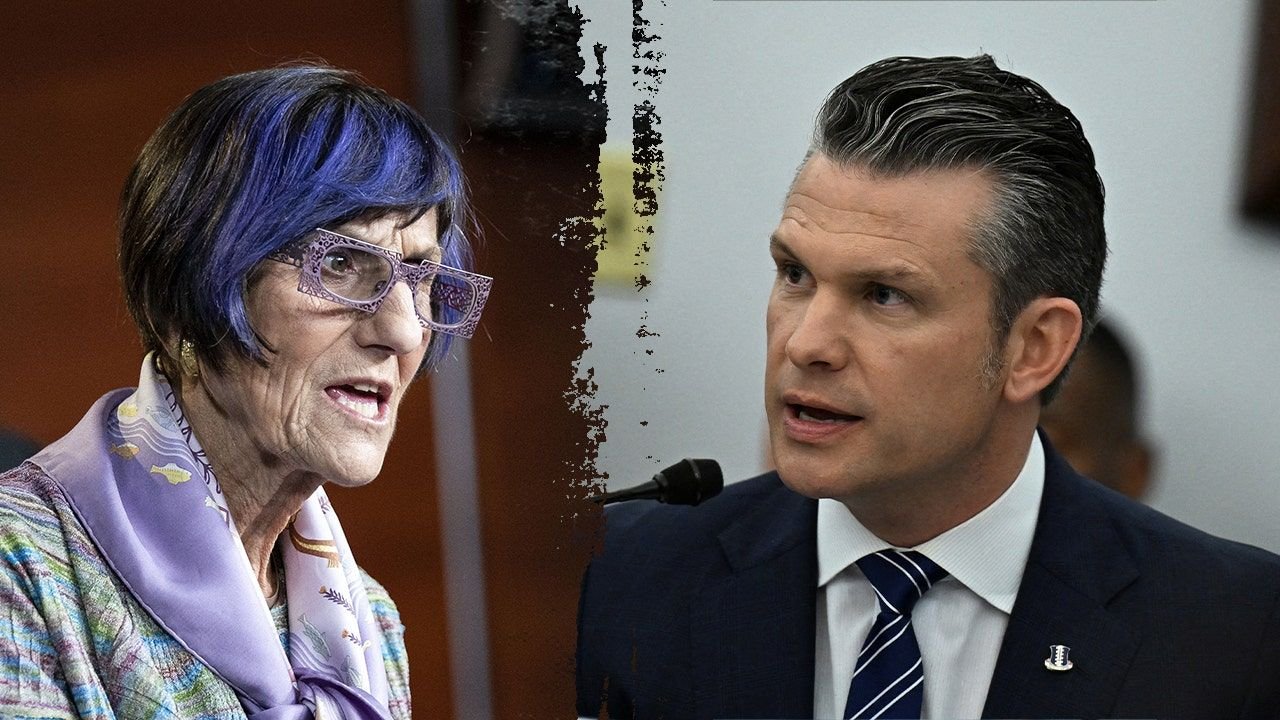
Rep. Rosa DeLauro, D-Conn., confronted Defense Secretary Pete Hegseth during a heated House Appropriations Committee hearing Tuesday over years-long lags in the nation’s shipbuilding capacity.
The top Appropriations Democrat accused the Defense Department (DOD) of failing to present a clear, transparent plan to ramp up production at a time when China’s shipbuilding capabilities are estimated to be 230 times greater than the U.S.’s. She said the Biden administration had been similarly opaque.
DeLauro zeroed in on what she characterized as a troubling shortfall between the Navy’s current production capacity and future strategic needs.
«Do you know where our submarine production currently stands and whether current production is sufficient to bridge the gap between current fleet size and projected need?» she asked.
HEGSETH DEFENDS NATIONAL GUARD LA DEPLOYMENTS, SAYS ICE AGENTS MUST BE PROTECTED
Rep. Rosa DeLauro confronted Defense Secretary Pete Hegseth during a heated House Appropriations Committee hearing Tuesday over years-long lags in the nation’s shipbuilding capacity. (Al Drago/Bloomberg via Getty Images)
«There is a gap,» Hegseth admitted, «but we believe we are closing it.»
But DeLauro wasn’t satisfied, demanding detailed data to back up that claim.
«We do not have any information or data that can substantiate what you’re saying,» she shot back. «Give us the details.»
«We’ve had difficulty with the prior administration, and I don’t mind calling them out. What is your plan for the future?»
Asked what the status is of the department’s investment in submarine programs, Hegseth boasted of a 14% increase in funding in the fiscal year 2026 budget request for the Columbia-class nuclear-powered ballistic missile submarines and a «substantial increase» in the Virginia-class fast-attack submarines as well.
But the congresswoman raised concerns about reports that the Pentagon plans to shift $3.1 billion in funding for the Columbia-class submarine program from FY2026 to FY2027 and FY2028.

China’s shipbuilding capacity is estimated to be 230x greater than the U.S. (US Navy via AP)
«This creates a serious problem for industry in the short term and hampers shipbuilders’ ability to reach an adequate production rate,» DeLauro warned. «Have you been in contact with Electric Boat or Huntington Ingalls about your plans?»
Hegseth pushed back, saying top Pentagon officials were in regular communication with shipyards.
«Almost every day,» he said. «We’re actively engaged… to make sure their needs are being met and their shortfalls are being addressed so we can close that gap in real time.»
DeLauro pointed to a missed deadline for placing key submarine contracts authorized under the December continuing resolution. Congress had approved $5.7 billion for two Block IV and one Block V Virginia-class submarines, with the understanding that contracts would be in place by February 2025. The Defense Department did not finalize the contracts until April 30.
«We have made a serious investment,» DeLauro said. «Now we want to know where that is going and what your plan is.»
MOVE OVER, BLACK HAWK: ARMY UNVEILS THE MV-75, TILTROTOR AIRCRAFT TO REPLACE ICONIC ASSAULT CHOPPER
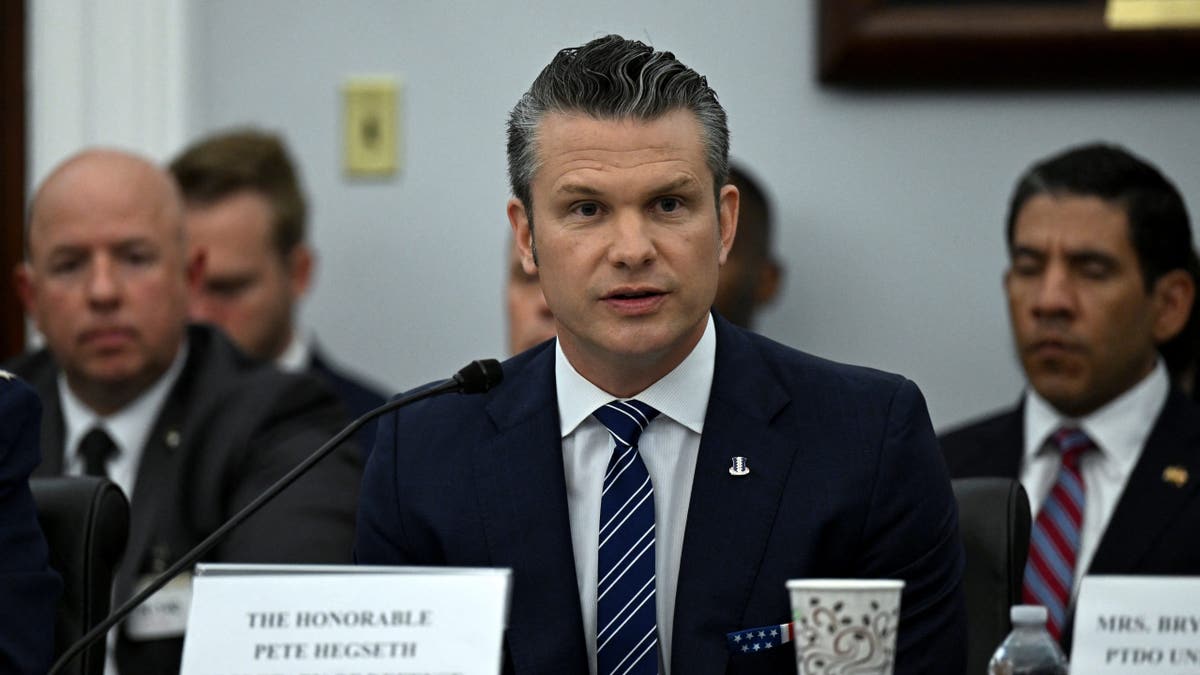
«There is a gap,» Defense Sec. Pete Hegseth admitted of the nation’s shipbuilding capacity and its needs (REUTERS/Annabelle Gordon)
When pressed for specifics, Hegseth thanked the committee for its flexibility and acknowledged prior mismanagement under previous administrations. But DeLauro cut him off.
«I want your plan,» she said. «Can we get that in writing and on paper? Because we don’t have anything today. We have zip, nada.»
Hegseth promised to provide the committee with written details of the department’s submarine production plan.
«We have the details, and we will provide them,» he said.
DeLauro insisted she wanted the information before the committee’s markup later the same day.
The U.S. Navy’s shipbuilding capacity has been on the decline since the Cold War. In the 1980s, the U.S. aimed for a 600-ship fleet; today, it struggles to maintain 300 operational vessels.
The Navy currently operates under 50 attack submarines, well below the long-term requirement of 66 boats, as outlined by recent Navy force structure assessments.
CLICK HERE TO GET THE FOX NEWS APP
Shipyards like Electric Boat (General Dynamics) in Connecticut and Huntington Ingalls Industries in Virginia and Mississippi are the primary builders of nuclear submarines—but both are operating near maximum capacity and face major workforce and supply chain challenges.
Shipbuilders report significant difficulties in hiring, training and retaining welders, pipefitters, engineers and designers. Shipbuilding’s highly specialized supply chain was hit especially hard by the Covid-19 pandemic and has been slow to recover.

INTERNACIONAL
Cientos de tractores bloquearon Madrid en rechazo al acuerdo comercial de la Unión Europea con el Mercosur

Madrid paralizada

Qué implica el acuerdo
Los argumentos de Pedro Sánchez

“Más ganadores que perdedores”
INTERNACIONAL
Trump threatens ‘consequences’ after 6 House Republicans voted to reverse his Canada tariffs
NEWYou can now listen to Fox News articles!
President Donald Trump is threatening to back election challengers against the six House Republicans who joined Democrats in voting to reverse his tariffs on Canada.
The president sent out an ominous warning to GOP lawmakers in the House and Senate just before his agenda suffered a blow on Capitol Hill Wednesday evening.
«Any Republican, in the House or the Senate, that votes against TARIFFS will seriously suffer the consequences come Election time, and that includes Primaries!» Trump posted on Truth Social.
He argued that the trade deficit was reduced significantly while U.S. financial markets hit significant high points because of his tariff policies.
TRUMP’S TARIFFS COULD BE UNDONE BY ONE CONSERVATIVE DOCTRINE: ‘LIFE OR DEATH’
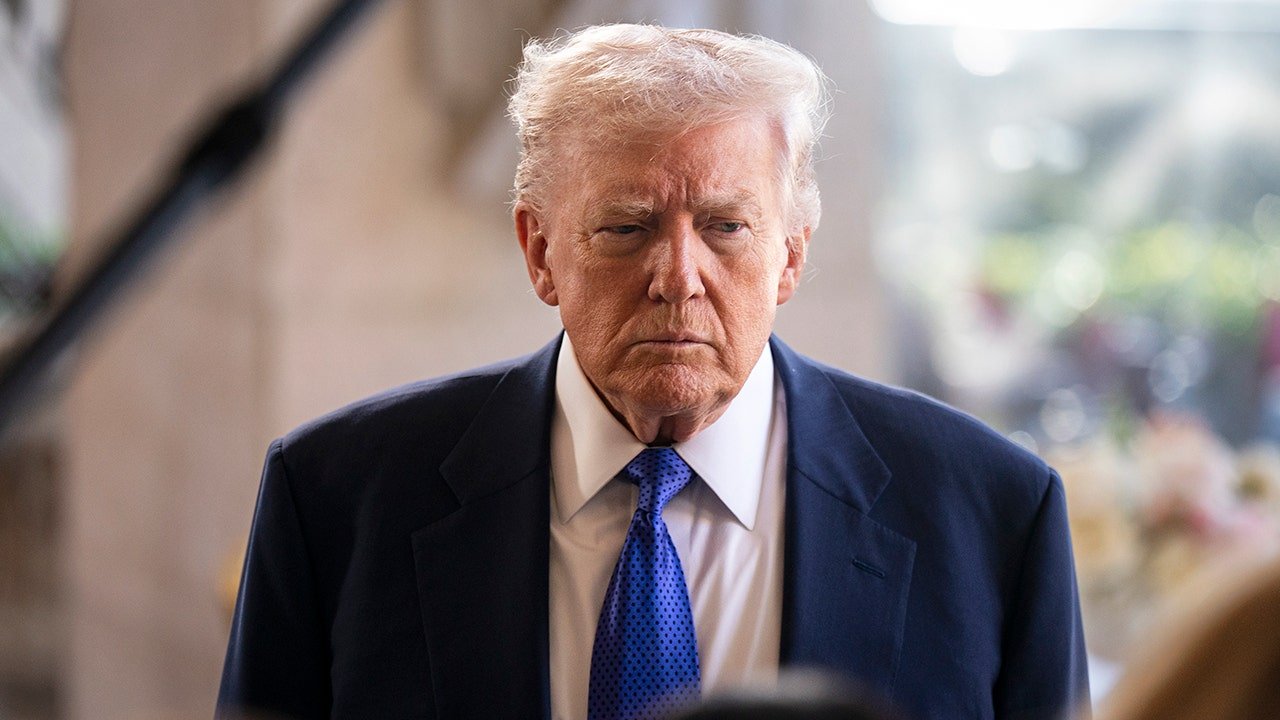
President Donald Trump speaks to reporters and members of the media at Mar-a-Lago Feb. 1, 2026, in Palm Beach, Fla. (Al Drago/Getty Images)
«In addition, TARIFFS have given us Great National Security because the mere mention of the word has Countries agreeing to our strongest wishes,» Trump continued.
«TARIFFS have given us Economic and National Security, and no Republican should be responsible for destroying this privilege.»
Democrats successfully got a vote on a measure to reverse Trump’s national emergency at the northern border using a mechanism for forcing votes over the objections of House majority leadership called a privileged resolution.
TRUMP’S SIGNATURE TARIFFS HANG ON KEY QUESTION ABOUT CONGRESS’ POWER BEFORE SUPREME COURT
The six Republicans who voted in favor of the measure were Reps. Dan Newhouse, R-Wash.; Kevin Kiley, R-Calif.; Don Bacon, R-Neb.; Jeff Hurd, R-Colo.; and Brian Fitzpatrick, R-Pa.
One Democrat, Rep. Jared Golden, D-Maine, voted with the majority of Republicans on the matter. It passed 219-211.
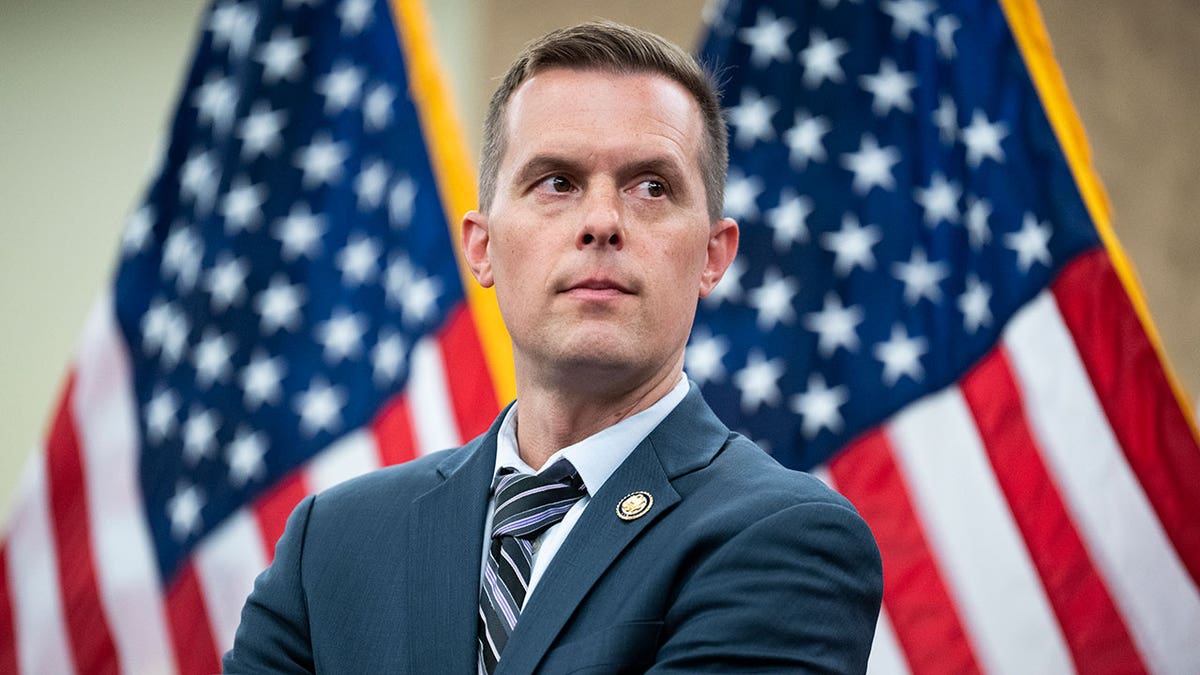
Rep. Jared Golden, D-Maine, attends a news conference in the Capitol Visitor Center in Washington July 17, 2025. (Tom Williams/CQ-Roll Call, Inc via Getty Images)
It’s not clear how much impact Trump’s threat will have, however.
Neither Newhouse nor Bacon is running for re-election in the 2026 midterms, and Trump is already endorsing a primary challenger against Massie.
Kiley, whose district was heavily altered by California Democrats’ new congressional map, has not yet said whether he will run for re-election or where he will do it.
He told Fox News Digital when asked for a response to Trump, «This was a resolution regarding the emergency declared by the president over fentanyl from Canada. Congress has an obligation under the National Emergencies Act to evaluate every six months if the emergency still exists. Canada has now significantly cracked down on fentanyl, so there’s no basis to extend the emergency another six months.»
Fitzpatrick and Hurd are both well-liked incumbents in their districts, which are top targets for Democrats come November.
Hurd told Fox News Digital his constituents were «directly affected by these policies.»
«Today’s vote is grounded first and foremost in the Constitution. Article I gives Congress the authority to regulate commerce with foreign nations and to levy tariffs. Over time, Congress has delegated limited authority to the executive branch, particularly in matters involving national emergencies. But those delegations were never intended to serve as a permanent vehicle for sweeping, long-term trade policy,» he added.
«If we normalize broad emergency trade powers today, we should expect that a future president — of either party — will rely on the same authority in ways many of us would strongly oppose. Institutional consistency matters. The Constitution does not shift depending on who occupies the White House. My responsibility is to defend the separation of powers regardless of political convenience.»
Trump signed an executive order in February 2025, enacting an additional 25% tariff on most goods from Canada and Mexico. Energy from Canada was subject to an additional 15% tariff.
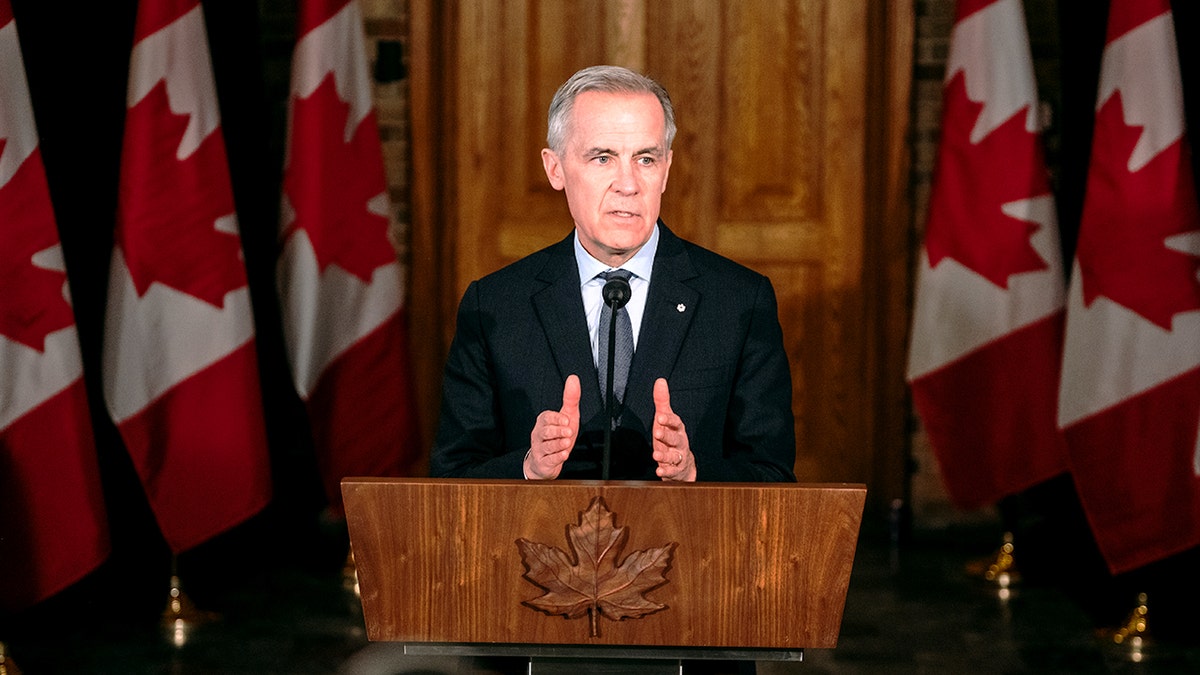
Prime Minister Mark Carney delivers remarks in Quebec City, Quebec, Jan. 22, 2026, after his participation at the World Economic Forum in Davos. (Renaud Philippe/Bloomberg via Getty Images)
CLICK HERE TO DOWNLOAD THE FOX NEWS APP
At the time, the White House said it was punishment for those countries’ unwillingness to do more to stop the flow of illegal immigrants and illicit drugs into the U.S.
Opponents of Trump’s tariff strategy have criticized his moves against Canada in particular, arguing it was unjustly harming one of the closest allies and trading partners of the U.S. to the detriment of Americans.
But Republicans who voted against the legislation pointed out that Trump said the fentanyl crisis was the reason for issuing the emergency in the first place, adding the drug was still killing Americans.
The legislation now heads to the Senate, where Republicans have voted to rebuke Trump’s tariff strategy in the past despite similar warnings from the president.
house of representatives politics,politics,donald trump
Además de Huawei, se informa que la República Popular China ha aprovechado la presencia de su observador en el Parlamento Centroamericano (PARLACEN), con sede en Ciudad de Guatemala, para facilitar las visitas regulares de su embajador en Costa Rica a Guatemala y así interactuar con políticos, funcionarios locales y empresarios costarricenses, incluyendo viajes pagados a China. Según informes, dicho viaje en 2025 incluyó a Luis Aguirre de CABAL, Cristian Álvarez y José Pablo Mendoza de Creo, Luis Rodríguez de VAMOS y Cornelio García de TODOS, entre otros. Según quienes monitorean estos asuntos en Guatemala, se está considerando otro viaje similar para el primer semestre de 2026.
Además de los viajes a la República Popular China, los agentes del país también han llevado a congresistas guatemaltecos al Parlamento de América Latina y el Caribe (PARLATINO), con influencia de la República Popular China, entre ellos Andrea Villagrán de Semilla y Duay Martínez de Vamos. La República Popular de China también ha recurrido a grupos de presión para forjar relaciones con funcionarios guatemaltecos, como Lina Chen, quien se reunió en septiembre de 2025 con el presidente de la Asamblea Legislativa guatemalteca, Neri Ramos, entre otros.
Además del PARLACEN, se informa que la República Popular de China también está intentando, con menos éxito, obtener representación en el Sistema de la Integración Centroamericana (SICA) y el Banco de Integración Centroamericana (BCIE).
En el ámbito comercial, la importación de productos chinos se ha convertido en un negocio lucrativo para importadores guatemaltecos como Cofiño Stahl, Grupo de los Tres, Grupo Q y Siekavizza en los sectores automotriz y de motocicletas. Grandes puntos de venta de productos chinos, como China Mall, China City y China Depot, se han expandido significativamente en el país, perjudicando a las tiendas minoristas y productores locales. El empresario guatemalteco Luis Pedro Barnoya, importador de productos chinos de nivel medio y organizador de viajes de negocios a la República Popular de China, ha establecido un pequeño consejo para promover dichas actividades. Las actividades semiencubiertas de facilitación comercial de la República Popular China en la Ciudad de Guatemala son objeto de chismes públicos, incluyendo su organización de promoción comercial, CCPIT, que durante un tiempo celebró reuniones en el hotel Barceló, y su uso del restaurante Tamarindo en la Quinta Avenida para organizar reuniones con ejecutivos visitantes de la República Popular China.
En el sector de las telecomunicaciones, además de las iniciativas ya mencionadas de Huawei, los dispositivos de la compañía, así como los de ZTE, se ofrecen a través de los dos principales proveedores de telecomunicaciones, Claro y Tigo. Las empresas chinas Xiaomi y Honor también tienen presencia en el país.
La empresa Hytera, con sede en Shenzhen, condenada por robo de propiedad intelectual de Motorola, habría suministrado radios digitales a las fuerzas de seguridad guatemaltecas.
En el sector de la seguridad, una importante compra de 1000 vehículos Isuzu de fabricación china para la policía guatemalteca, bajo la dirección del primer ministro del Interior del presidente Arévalo, Francisco Jiménez, fue cancelada debido a preocupaciones sobre corrupción. Se informa que operadores portuarios privados del país, como APM y Chiquita Brands, utilizan grúas, escáneres y otros equipos digitales de la marca ZPMC china. Hikvision, empresa china de equipos de vigilancia, desempeña un papel importante en el mercado guatemalteco de seguridad comercial y personal. Durante administraciones anteriores, empresas chinas intentaron, sin éxito, adquirir terrenos tanto en el Atlántico como en el Pacífico para construir instalaciones portuarias.

En el ámbito delictivo, empresarios chinos también han estado involucrados en lavado de dinero y otras actividades ilícitas. Entre ellos se encuentra Wenshen “Alex” Xu, quien fue arrestado en julio de 2025 por importar precursores químicos para drogas sintéticas a través de Guatemala y extraditado a Estados Unidos.
En el ámbito periodístico, personas como Claudia Méndez, de Con Criterio, y el reconocido bloguero Ben Kei Chin, han sido llevadas por agentes chinos a la República Popular China y a otros destinos en múltiples ocasiones y se han convertido en reconocidos defensores públicos del cambio en las relaciones diplomáticas del país.

A medida que la República Popular China y sus agentes han avanzado en Guatemala, Taiwán ha buscado proteger al país contra tales esfuerzos, siendo un buen socio en múltiples ámbitos, como la seguridad, el desarrollo, la educación y el comercio. En agosto de 2025, Taiwán donó 252 motocicletas a la policía guatemalteca y 50 vehículos al Ministerio de Desarrollo Social (MDS) de Guatemala. También construyó un hospital en Chimaltenango, inaugurado en febrero de 2023, y un centro neonatal en San Juan de Dios, Ciudad de Guatemala, en abril de 2024. Taiwán también financia y supervisa regularmente proyectos de infraestructura de transporte guatemaltecos, en particular las mejoras a una carretera que conecta Ciudad de Guatemala con la costa atlántica del país. En educación, Taiwán ha otorgado 600 becas en las últimas dos décadas, incluyendo 66 tan solo en 2025.
En comercio, en las últimas tres décadas, Taiwán ha importado aproximadamente mil millones de dólares en productos guatemaltecos, incluyendo 90 millones de dólares en azúcar guatemalteca tan solo el año pasado, así como café y otros productos.
A pesar de estas actividades, Taiwán tiene un perfil relativamente bajo entre los guatemaltecos como un importante proveedor de beneficios para el país. Algunos consultados para este trabajo expresaron su frustración por la falta de proyectos de mayor visibilidad en Taiwán, como un estadio. Si bien las empresas taiwanesas Lakymen y Diforza son importantes empleadores en Guatemala, algunos consultados para este trabajo perciben que las empresas taiwanesas podrían invertir más en el país para generar empleos de alta calidad.
Si bien algunos miembros del gobierno guatemalteco, según se informa, simpatizan ideológicamente con el establecimiento de relaciones con la República Popular China, prácticamente todos los consultados para este trabajo creían que el presidente Arévalo no abandonará a Taiwán. Sin embargo, los guatemaltecos entrevistados para este trabajo ya están concentrados en las próximas elecciones nacionales de julio de 2027. La República Popular China ha cortejado a líderes de prácticamente todos sus principales partidos. Quien prevalezca podría calcular que los beneficios materiales de abandonar a Taiwán superan los riesgos de ofender a Estados Unidos. Washington y Taipéi, sin duda, seguirán de cerca esta posibilidad.
* El Dr. Evan Ellis es investigador del Centro de Estudios Estratégicos e Internacionales (CSIS, por sus siglas en inglés).
diplomacia,interior,políticos,reunión con secretario general partido comunista en hanoi,viaje presidente chino a vietnam

El Gobierno quitó el capítulo de Ganancias e hizo 28 cambios a la reforma laboral para garantizar la media sanción en el Senado

Cientos de tractores bloquearon Madrid en rechazo al acuerdo comercial de la Unión Europea con el Mercosur

Los famosos de MasterChef Celebrity se enfrentaron al reto de la panopea: “Es un reality salvaje”

Reforma laboral completa: artículo por artículo, así es el proyecto de Milei que aprobó el Senado

Aumentos 2026: cómo impactan los servicios en la economía familiar de la clase media

La filosa reflexión de un legendario entrenador cuando le compararon a Cristiano Ronaldo con Messi y Maradona

El sector industrial advierte que la apertura económica exige eliminar las distorsiones internas

Acuartelamiento policial en Santa Fe: reclamo salarial y temor a un conflicto nacional de seguridad

Cuánto le cuesta a la clase media llenar el changuito y cómo varían los precios de los alimentos entre provincias

La advertencia de ATE a los gobernadores que apoyan la reforma laboral: “Firmarán su sentencia de muerte”

 POLITICA2 días ago
Acuartelamiento policial en Santa Fe: reclamo salarial y temor a un conflicto nacional de seguridad
- ECONOMIA2 días ago
Cuánto le cuesta a la clase media llenar el changuito y cómo varían los precios de los alimentos entre provincias
- POLITICA2 días ago
La advertencia de ATE a los gobernadores que apoyan la reforma laboral: “Firmarán su sentencia de muerte”