INTERNACIONAL
Senate shuts down Kaine’s attempt to check Trump’s war powers

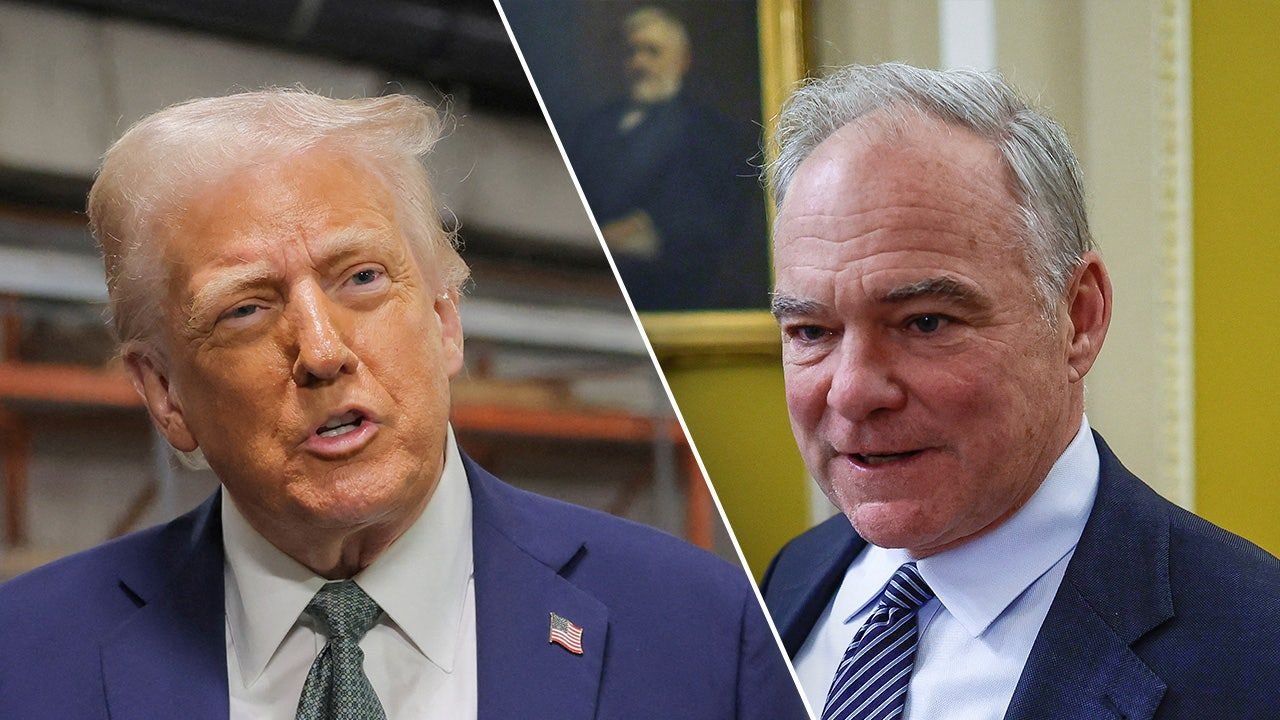
What is the War Powers Act?
UC Berkeley Law professor John Yoo discusses U.S. strikes on Iran and the War Powers Act on ‘Life, Liberty & Levin.’
NEWYou can now listen to Fox News articles!
A Senate Democrat’s push to put a check on President Donald Trump’s powers and reaffirm the Senate’s war authority was shut down by lawmakers in the upper chamber Thursday.
Sen. Tim Kaine’s war powers resolution, which would have required Congress to debate and vote on whether the president could declare war, or strike Iran, was struck down in the Senate on a largely party-line vote, save for Sen. John Fetterman, D-Pa., a staunch advocate of Israel who supported Trump’s strike on the Islamic Republic, and Sen. Rand Paul, R-Ky., who has been vocal in his thoughts about congressional war powers in recent days.
Earlier in the week, the Virginia Democrat vowed to move ahead with the resolution despite a fragile ceasefire brokered between Israel and Iran following weekend strikes on the Islamic Republic’s key nuclear facilities that were not given the green-light by Congress.
DEM SENATOR PLOWS AHEAD WITH WAR POWERS RESOLUTION DESPITE CEASEFIRE
The White House said the president’s advisors would urge him to veto Kaine’s resolution. (Reuters)
Kaine argued that the ceasefire gave his resolution more credence and breathing room to properly debate the role that Congress plays when it comes to authorizing both war and attacks abroad.
He said ahead of the vote on the Senate floor that he came to Washington to ensure that the country does not again get into another «unnecessary» war, and invoked the rush to approve war powers for President George W. Bush over two decades ago to engage with Iraq.
«I think the events of this week have demonstrated that war is too big to consign to the decisions of any one person,» Kaine said.
‘NOT CONSTITUTIONAL’: CONGRESS EVOKES NEW WAR POWERS RESOLUTION TO REJECT TRUMP’S STRIKES ON IRAN
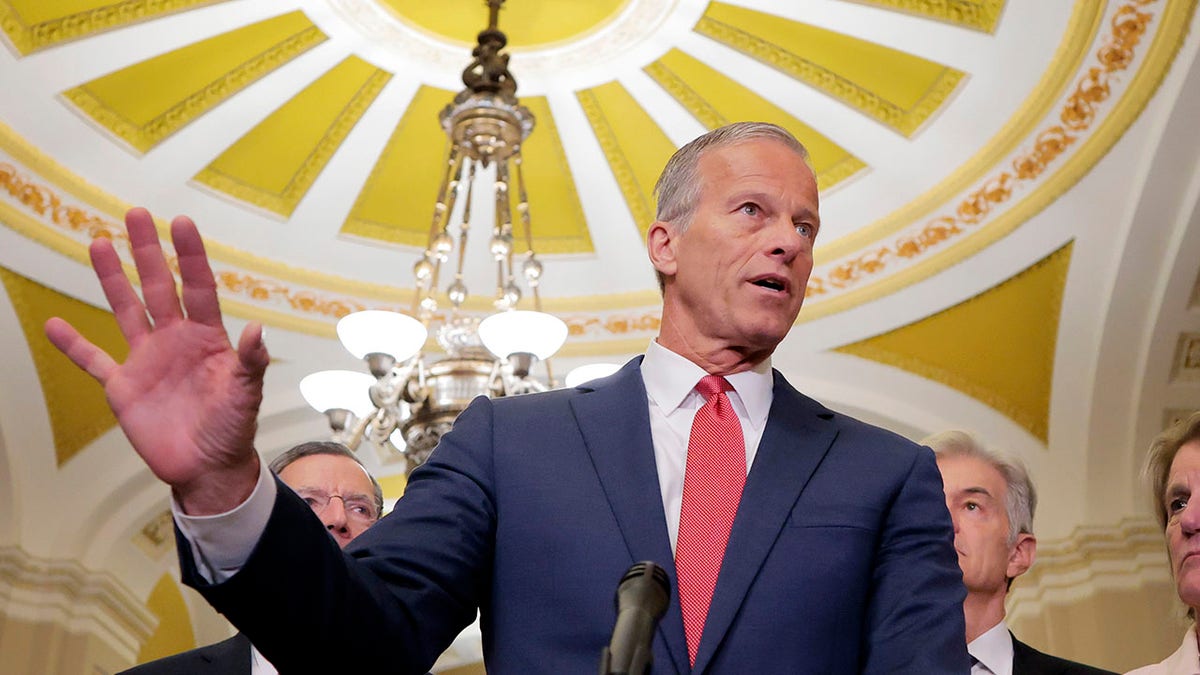
Senate Majority Leader John Thune speaks during a news conference following the weekly Senate Republican policy luncheon at the U.S. Capitol on June 17, 2025. (Getty Images)
Indeed, his resolution became a focal point for a debate that has raged on Capitol Hill since Israel began its bombing campaign against Iran: whether the strikes like those carried out during Operation Midnight Hammer constituted an act of war that required congressional approval, or if Trump’s decision was under his constitutional authority as commander in chief.
CLICK HERE TO GET THE FOX NEWS APP
Senate Republicans have widely argued that Trump was well within his purview, while most Senate Democrats raised constitutional concerns about the president’s ability to carry out a strike without lawmakers weighing in.
Experts have argued, too, that Trump was within his executive authority to strike Iran.
The Constitution divides war powers between Congress and the White House, giving lawmakers the sole power to declare war, while the president acts as the commander in chief directing the military.
And nearly two centuries later, at the height of the Vietnam War, the War Powers Resolution of 1973 was born, which sought to further define those roles.
But the most impact lawmakers could have is through the power of the purse, and Sen. Mitch McConnell, R-Ky, who plays a large role in controlling the purse strings as the Senate Appropriations Subcommittee on Defense, had a sharp message against Kaine’s resolution.
McConnell used instances where Democratic presidents over the last three decades have used their authority for limited engagements in Kosovo, Libya, Syria and Yemen, and questioned why «isolationists» would consider the strike on Iran to kneecap its nuclear program a mistake.
«I have not heard the frequent flyers on War Powers resolutions reckon seriously with these questions,» he said. «Until they do, efforts like this will remain divorced from both strategic and constitutional reality.»

INTERNACIONAL
El metrocable movilizará hasta 7,000 pasajeros por hora entre la Zacamil y el Centro Histórico de San Salvador

El metrocable que se construye en San Salvador prevé transportar hasta 7,000 pasajeros por hora en ambos sentidos, beneficiando a unas 200,000 personas de la zona de Mejicanos y áreas cercanas. Según detalló el ministro de Obras Públicas y de Transporte, Romeo Rodríguez, en la entrevista Frente a Frente de Telecorporación Salvadoreña, la obra se extiende por 3.5 kilómetros desde la colonia Zacamil hasta el Centro Histórico de San Salvador.
El ministro explicó que el proyecto tendrá cuatro estaciones: la primera en la colonia Zacamil sobre la 5a. avenida Norte, la segunda frente a la Universidad de El Salvador, la tercera en el sector del Centro de Gobierno y la última en la calle Rubén Darío, cerca del Hospital 1 de Mayo. “Con este proyecto consideramos que vamos a beneficiar cerca de 200,000 mil personas, aproximadamente”, afirmó el funcionario, quien señaló que actualmente un usuario puede tardar hasta una hora y cuarto en ese recorrido, tiempo que se reducirá a menos de un cuarto de hora.
La operación del metrocable está prevista durante 18 horas al día, comenzando alrededor de las 3:00 de la mañana y finalizando cerca de las 9:00 de la noche, superando el horario habitual del transporte colectivo. “La idea es que este sistema pueda tener un horario más extendido, para poder garantizar que la población que viaja hacia el centro histórico, las personas que están en el centro histórico, puedan regresar después, sin ningún problema”, destacó Rodríguez.
La flota incluirá 153 góndolas, cada una con capacidad para diez pasajeros sentados, y con espacio para personas con movilidad reducida. “La capacidad va a ser de diez pasajeros sentados por góndola. Son 153 góndolas las que se han adquirido para este proyecto, con la posibilidad de poder incrementar de acuerdo a la demanda”, sostuvo el ministro. Todas las estaciones serán accesibles para personas con movilidad reducida. “Va a tener rampas, elevadores, todo lo necesario en las cuatro estaciones para que las personas puedan movilizarse sin ningún inconveniente”, aseguró el funcionario.

El sistema estará soportado por 22 torres de concreto, cada una cimentada sobre diez pilotes, para un total de 220 pilotes a lo largo del recorrido. El equipamiento electromecánico se adjudicó a la empresa francesa Poma, líder mundial en este tipo de transporte. “Nosotros pedimos el full, el full extra. Por la seguridad de la población salvadoreña se han tomado medidas de diseño, cumplimos con normativas internacionales de calidad para poder garantizar que cada una de las pilas de las torres y de cada obra que se haga, sea con la mejor calidad posible”, detalló Rodríguez.
La inversión para esta etapa supera los $110 millones, de los cuales $56 millones corresponden al sistema electromecánico y el resto a la obra civil. El ministro remarcó: “Es un proyecto bastante grande, una inversión millonaria la que se está ejecutando. Son más de $100 millones los que se están invirtiendo para el desarrollo de esta obra”.
En cuanto al costo del pasaje, el ministro informó que aún no se ha definido una tarifa final, aunque garantizó que no representará un incremento para los usuarios. “La decisión del tema del pasaje siempre va a ser en beneficio de cada uno de ellos, que no genere mayor impacto. La idea es que, de alguna manera, se mantengan los gastos que la población normalmente tiene al abordar unidades de transporte público”, precisó. El sistema de pago permitirá el uso de tarjetas, billetes y monedas: “La idea es tener algo parecido a lo que existe en los parqueos de los centros comerciales, que uno mete las monedas o los billetes o paga con tarjeta. La gente podrá tomar la decisión de pagar como lo desee”.
La construcción del metrocable tiene un plazo de 18 meses desde el inicio de las obras. Según el ministro, el proyecto se desarrolla “pensando en integrarlo” a futuros sistemas de transporte como metro o tranvía, y forma parte de un plan integral para descongestionar las principales vías de la capital.
corresponsal:Desde San Salvador, El Salvador
INTERNACIONAL
DOJ solicits examples of ‘judicial activism’ from prosecutors as it weighs impeachment referrals
NEWYou can now listen to Fox News articles!
A Department of Justice official raised the possibility of referring federal judges to Congress for impeachment in what would be a dramatic escalation of the administration’s fight with judges it views as activist and obstructionist.
The idea was floated by a senior DOJ official during a recent virtual meeting with U.S. attorneys across the country, a source familiar told Fox News Digital. It marked a new possible avenue for the executive branch to confront the judiciary — by turning to Congress, which has sole authority over impeachment, to take the rare step of voting to oust federal judges.
The meeting, led by Associate Deputy Attorney General Aakash Singh, was routine, but impeachment had not been raised in one before, the source said. Singh broached it after the DOJ received numerous complaints from the U.S. attorneys’ offices about judges, the source said. Bloomberg Law first reported on the meeting.
HOUSE REPUBLICANS REVIVE PUSH TO IMPEACH ‘ACTIVIST’ JUDGES AFTER JOHNSON’S GREEN LIGHT
Department of Justice seal on a podium (Cheriss May/NurPhoto via Getty Images)
Singh asked the U.S. attorneys to compile examples of issues they have had with judges, which the DOJ could then use to determine if referring judges for impeachment was appropriate.
A DOJ spokesperson confirmed the move in a statement to Fox News Digital, saying the Trump administration is «facing unprecedented judicial activism from rogue judges who care more about making a name for themselves than acting as impartial arbiters of the law.»
«The Department of Justice solicited the most egregious examples of this obstruction from our U.S. Attorney Offices to assist Congress with efforts to rein in judges violating their oaths in accordance with their constitutional oversight authority of the judicial branch,» the spokesperson said.
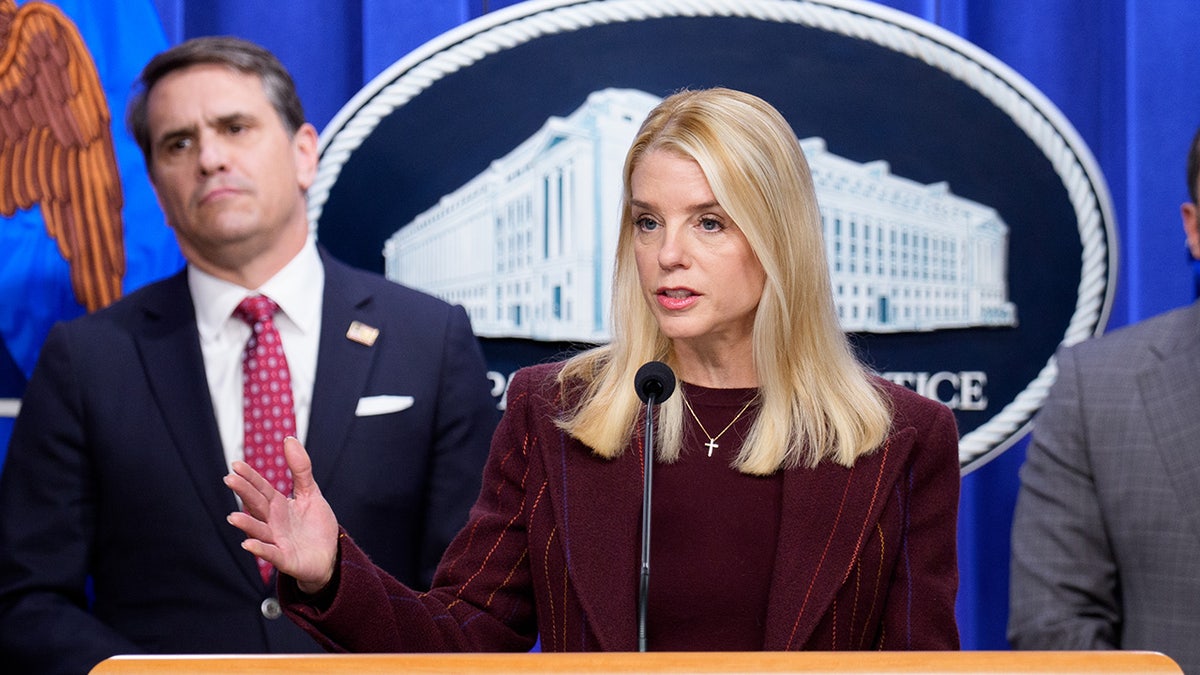
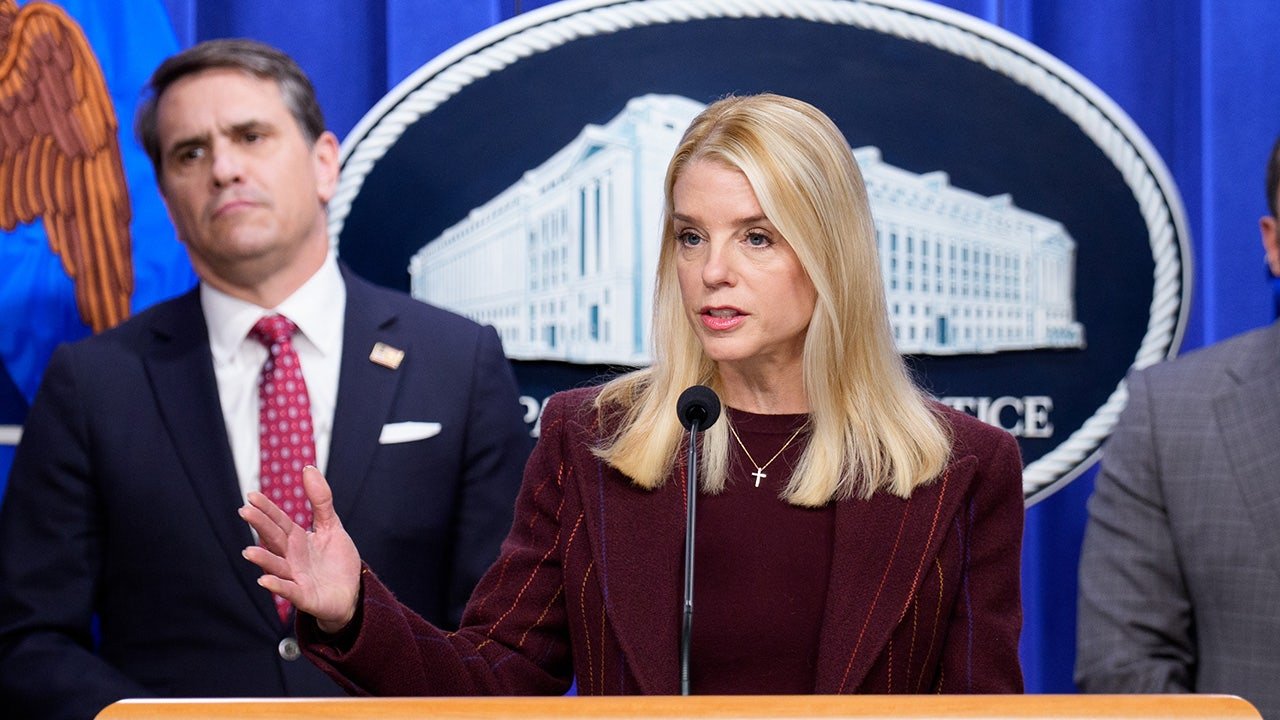
Attorney General Pam Bondi, accompanied by Deputy Attorney General Todd Blanche, speaks during a news conference announcing an indictment at the DOJ on Nov. 19, 2025, in Washington, D.C. (Andrew Harnik/Getty Images)
Any referral would be sent to the House, which must then vote on impeachment. Doing so would be extraordinarily rare as the House has only ever impeached 15 judges, typically for crimes like corruption and bribery.
This year, Congress has weighed impeaching at least two federal judges, James Boasberg and Deborah Boardman.
Boasberg, an Obama appointee, has made a handful of adverse rulings against the Trump administration in high-profile immigration cases, while Boardman deviated heavily downward in her eight-year sentence for Justice Brett Kavanaugh’s attempted assassin. Numerous Republicans have called for their impeachment, but the House has not moved to initiate the proceedings.
APPEALS COURT DISMISSES DOJ MISCONDUCT COMPLAINT AGAINST FEDERAL JUDGE
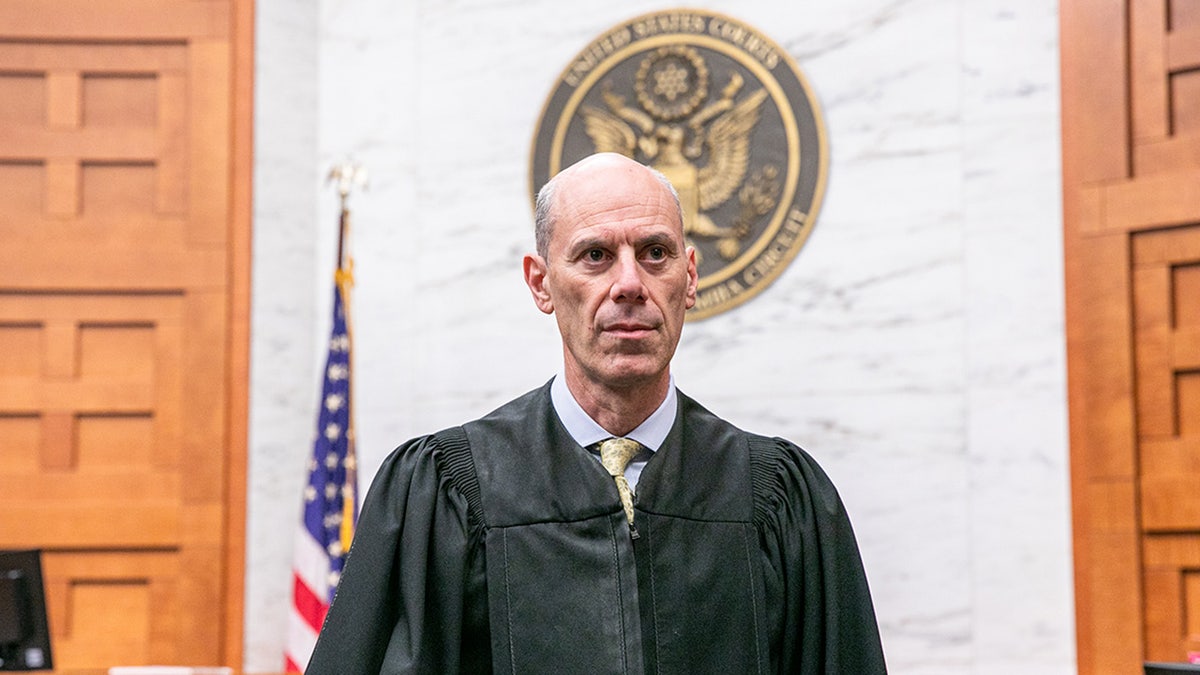
James Boasberg, incoming chief judge of the US District Court, in Washington, DC, US, on Monday, March 13, 2023. (Valerie Plesch/Bloomberg via Getty Images)
As a recourse against adverse rulings, the DOJ has publicly decried judges’ decisions or appealed them, the latter of which requires layers of internal approvals.
Calling on the House, narrowly led by Republicans, to impeach judges would be a new approach. Two-thirds of the Senate would then need to vote to convict the judges, which would strip them of their lifetime appointments.
The DOJ has been managing hundreds of lawsuits, a large fraction of which deal with the administration’s aggressive crackdown on immigration and controversial deportation tactics. Adverse rulings and reprimands from lower court judges have been frequent.
Prosecutors, for instance, charged Juan Espinoza Martinez with engaging in a murder-for-hire plot against U.S. Border Patrol official Greg Bovino. However, Espinoza Martinez was acquitted in January after a Clinton-appointed federal judge in Chicago rejected the DOJ’s requests to inform the jury that Martinez allegedly belonged to the Latin Kings gang, contending that the department did not have enough evidence to raise that claim in court.
CLICK HERE TO GET THE FOX NEWS APP
The DOJ spokesperson further outlined the department’s frustrations, telling Fox News Digital that district court and magistrate judges have refused to sign criminal complaints or search warrants when clear probable cause exists, made bad rulings about evidence and jury instructions, granted emergency restraining orders against the government without giving the DOJ a reasonable time to respond and «erroneously» involved themselves in the U.S. attorney nominations process.
Fox News Digital reached out to the House Judiciary Committee, which would vet any judicial impeachments, about how it would handle the possible referrals.
justice department,federal judges,judiciary,politics,congress

NEWYou can now listen to Fox News articles!
The United States is warning Peru that China’s growing control over a major Pacific port could threaten the country’s sovereignty, escalating tensions over Beijing’s expanding footprint in Latin America.
The concern centers on the $1.3 billion deep-water port in Chancay, north of Lima, which has become a flashpoint between Washington and Beijing after a Peruvian court ruling limited government regulatory oversight of the project.
The State Department’s Bureau of Western Hemisphere Affairs said on social media that it was «concerned about latest reports that Peru could be powerless to oversee Chancay, one of its largest ports, which is under the jurisdiction of predatory Chinese owners,» adding: «We support Peru’s sovereign right to oversee critical infrastructure in its own territory. Let this be a cautionary tale for the region and the world: cheap Chinese money costs sovereignty.»
CONGRESSIONAL COMMISSION WARNS CHINA’S PACIFIC INFRASTRUCTURE PROJECTS COULD POSE A MILITARY THREAT
A drone view shows cranes and containers at the new megaport being built by China’s state-owned Cosco Shipping, promising to shorten sea routes to Asia for Peruvian and some Brazilian goods, in Chancay, Peru Oct. 24, 2024. (Angela Ponce/Reuters)
China’s foreign ministry rejected the comments as «rumor-mongering and smearing» and insisted the project remains under Peruvian authority, according to The Associated Press report.
Asia analyst Gordon Chang told Fox News Digital: «Chancay is so central that analysts say it will redirect trade across the South Pacific. We know Beijing considers ports to be dual-use and strategic. China, held up the BlackRock deal to acquire the CK Hutchinson port operations in the Panama Canal Zone even though the ports are nowhere near China itself.»
«In times of war, China will not allow its port operations to load, unload, or service American ships or ships coming from or going to U.S. ports,» he warned.
Jack Burnham, senior analyst in the China program at the Foundation for Defense of Democracies, said the port reflects a broader strategic push by Beijing in the region.
SOUTH AMERICAN LEADER DEFIES TRUMP’S ‘DONROE DOCTRINE’ IN BOLD CHINA PIVOT TOWARD XI
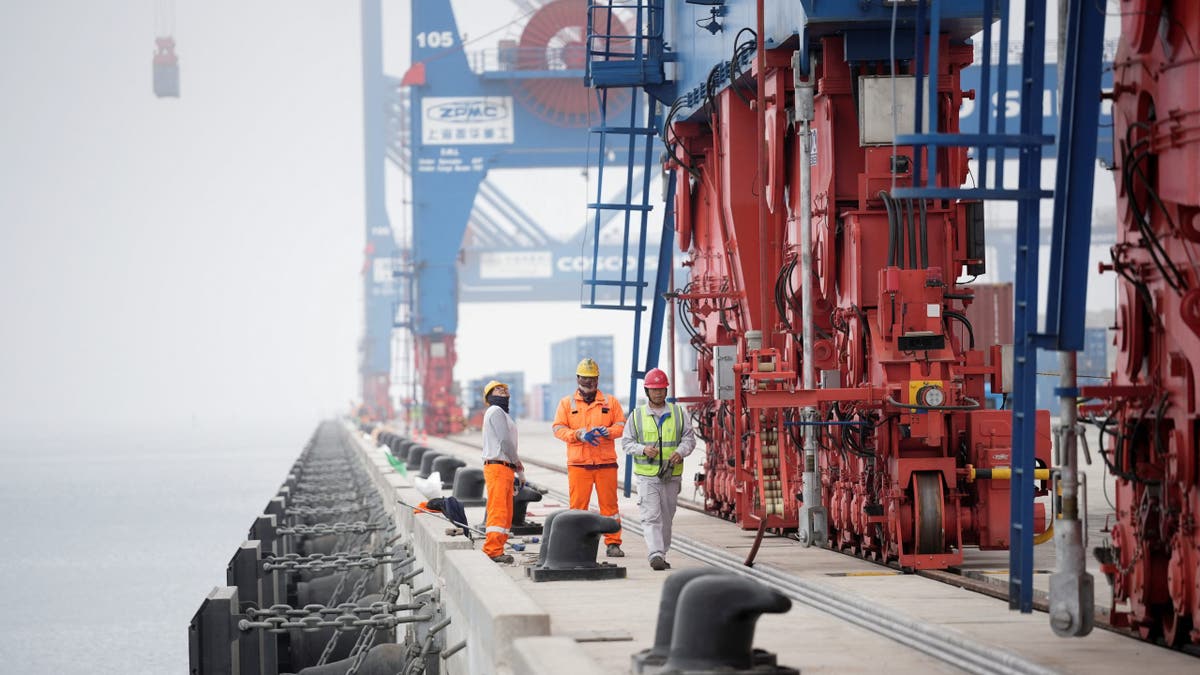
Workers stand next to cranes at the new megaport being built by China’s state-owned Cosco Shipping, in Chancay, Peru. Oct. 24, 2024. (Angela Ponce/Reuters)
«The Chancay port is a keystone in China’s investment in Latin America — its size and proximity provide a bridge across the Pacific and access to another market to fuel Beijing’s export-driven economic engine,» Burnham said.
«China’s investment in Peru is predicated on Beijing grasping the sinews of Lima’s critical infrastructure to gain influence. With effective control over the port cemented for now by a lower Peruvian court ruling, China gains access to one of the largest critical infrastructure projects in the region, a position from which it could exercise significant control.»
The dispute comes as Washington and Beijing compete for influence across Latin America, where China has expanded investment through infrastructure projects and trade, analysts say.
CLICK HERE TO DOWNLOAD THE FOX NEWS APP
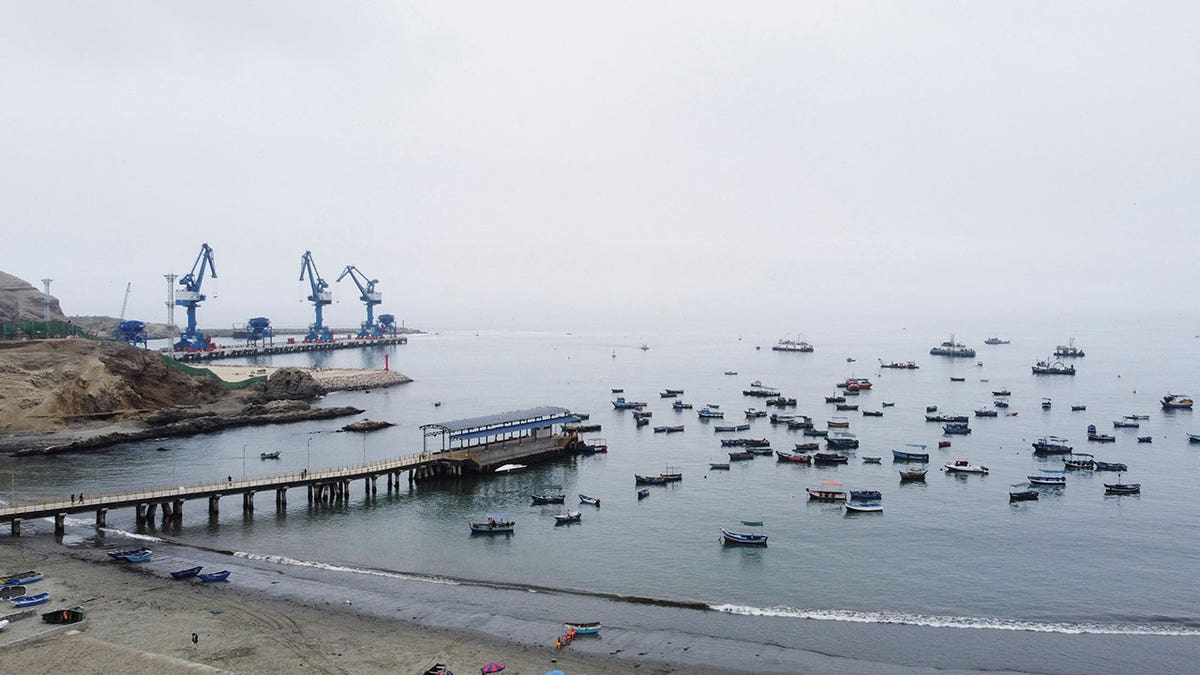
Fishing boats are anchored in the bay near the new megaport being built by China’s state-owned Cosco Shipping, in Chancay, Peru Oct. 24, 2024. (Angela Ponce/Reuters)
China’s state-owned shipping giant Cosco, which holds a majority stake in the project, dismissed U.S. concerns and said the court ruling «in no way involves aspects of sovereignty,» adding that Peruvian authorities still oversee security, environmental compliance and customs, according to The Associated Press.
Peru’s transport infrastructure regulator, Ositran, has said it plans to appeal the ruling, arguing the port should not be exempt from the same oversight applied to other major facilities.
China’s Embassy in Washington, D.C., did not provide a comment in time for publication.
The Associated Press contributed to this report.
china,state department,latin america,trade,national security

Causa por violencia de género: Fabiola Yáñez rechazó un planteo y pidió que Alberto Fernández vaya a juicio oral

Juan Carlos de Pablo advirtió por la inflación y pidió al Gobierno priorizar una solución

Arda Güler negó rumores de hostigamiento y respaldó al vestuario del Real Madrid

El gesto que enfureció a Grabois y la dura respuesta del dirigente en medio de la sesión

Las primeras horas de Bad Bunny en Argentina: la vigilia de los fans y la previa de sus tres shows en River

El metrocable movilizará hasta 7,000 pasajeros por hora entre la Zacamil y el Centro Histórico de San Salvador

Acuartelamiento policial en Santa Fe: reclamo salarial y temor a un conflicto nacional de seguridad

La advertencia de ATE a los gobernadores que apoyan la reforma laboral: “Firmarán su sentencia de muerte”

Cuánto le cuesta a la clase media llenar el changuito y cómo varían los precios de los alimentos entre provincias

Pago al FMI: se usaron reservas del BCRA y se redujo a USD 651 millones la acumulación neta de dólares en lo que va del año

 POLITICA2 días ago
Acuartelamiento policial en Santa Fe: reclamo salarial y temor a un conflicto nacional de seguridad
- POLITICA2 días ago
La advertencia de ATE a los gobernadores que apoyan la reforma laboral: “Firmarán su sentencia de muerte”
- ECONOMIA2 días ago
Cuánto le cuesta a la clase media llenar el changuito y cómo varían los precios de los alimentos entre provincias