INTERNACIONAL
Party of ‘crazies’: Dems comply with outrageous redistricting stunts due to primary threats, state rep says

NEWYou can now listen to Fox News articles!
Many of the Texas Democrats who fled the Lone Star State to Democrat-stronghold states amid a Republican redistricting effort are complying with the political stunt out of fear of being primaried by «someone even crazier» within the party, Republican Texas state Rep. Briscoe Cain told Fox News Digital in a Thursday interview.
«If they were to come back, they would lose in a primary to someone even more socialistic than they are,» Cain told Fox News Digital in a Thursday Zoom interview. «So yeah, they’re actually there out of fear, not out of fear of the Republican legislation, but out of fear of their own people. And so they’ll continue to sit out of state at their own detriment, all because of the fear of being primaried by someone even crazier than they are.»
«I can tell you that many of them don’t want to be there. They know that ultimately they’re going to lose, but because their party’s run by a bunch of crazies, they have to be there,» he continued of the Democrats who left the state ahead of Monday.
Dozens of Democratic state lawmakers fled Texas for liberal bastions such as Illinois, Massachusetts and New York to prevent a quorum for a special session as state lawmakers prepared to vote on a redrawn congressional map for the state ahead of the 2026 midterms.
State lawmakers have reported they plan to be absent from the state until the end of August, when the special session ends.
ABBOTT, PAXTON LAUNCH LEGAL BLITZ ON FLEEING DEMOCRATS IN REDISTRICTING SHOWDOWN
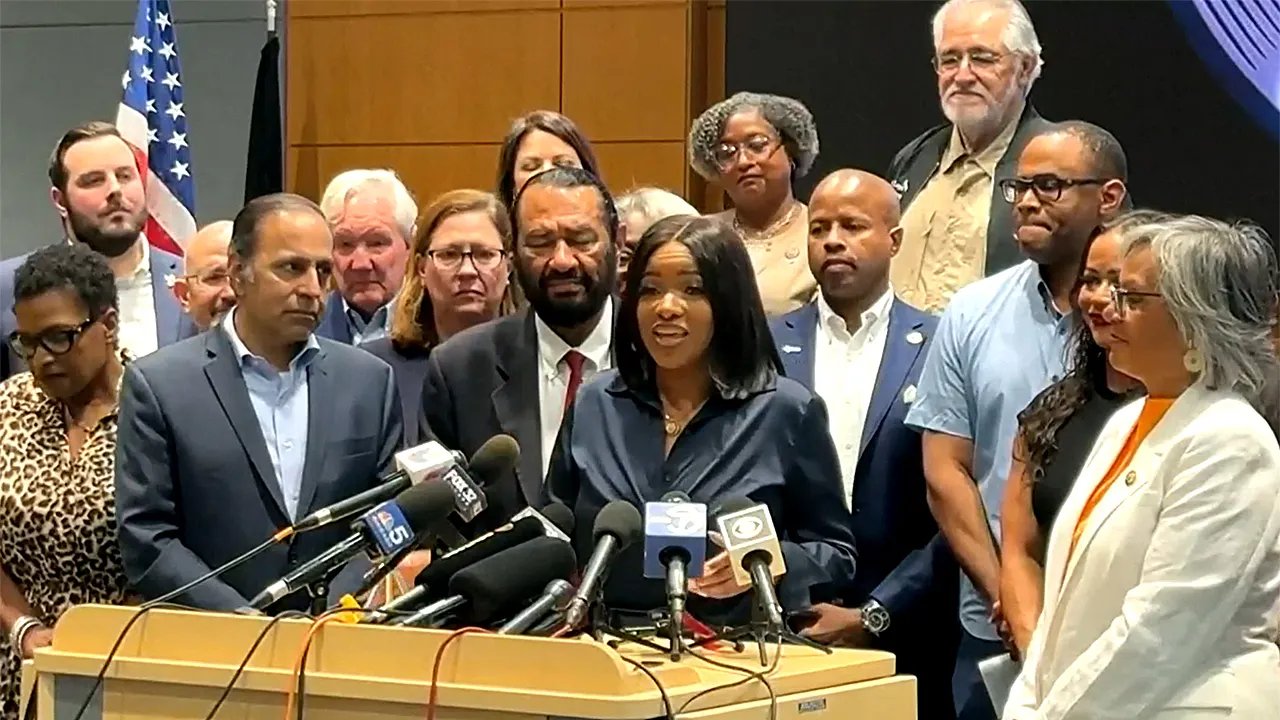
Texas Democrats stood next to Illinois lawmakers on Aug. 4, 2025 to oppose redistricting measures proposed by Texas Republicans. (Fox News)
Texas law requires at least two-thirds of lawmakers in either chamber be present to proceed with legislative matters, with the Democrat minority party currently holding 62 seats in the Texas house to the GOP’s 88.
The Texas House has been at a standstill since the Democrats fled over the weekend. Six Democrats are in the Austin area this week, Cain explained, meaning six more Democrats are required before the body can reach a quorum.
Cain said that he heard three additional Democrats are in the Houston area and likely «taunting» Republicans to potentially arrest them over their absence.
«They’re older members, and they’re kind of taunting us to arrest them with the idea that ‘who would arrest grandma?’ It’s kind of a clever play by the Democrats,» he said.
Texas Speaker of the House Dustin Burrows signed arrest warrants for the absent Democrats on Monday, following the state House approving of such warrants and Gov. Greg Abbott calling on the Texas Department of Public Safety to arrest the «delinquent Texas House Democrats.» The arrest warrants are largely viewed as symbolic as they only apply to those within state lines.
TEXAS RESIDENTS SAY ‘THERE SHOULD BE CONSEQUENCES’ FOR DEMS FLEEING STATE TO AVOID VOTE
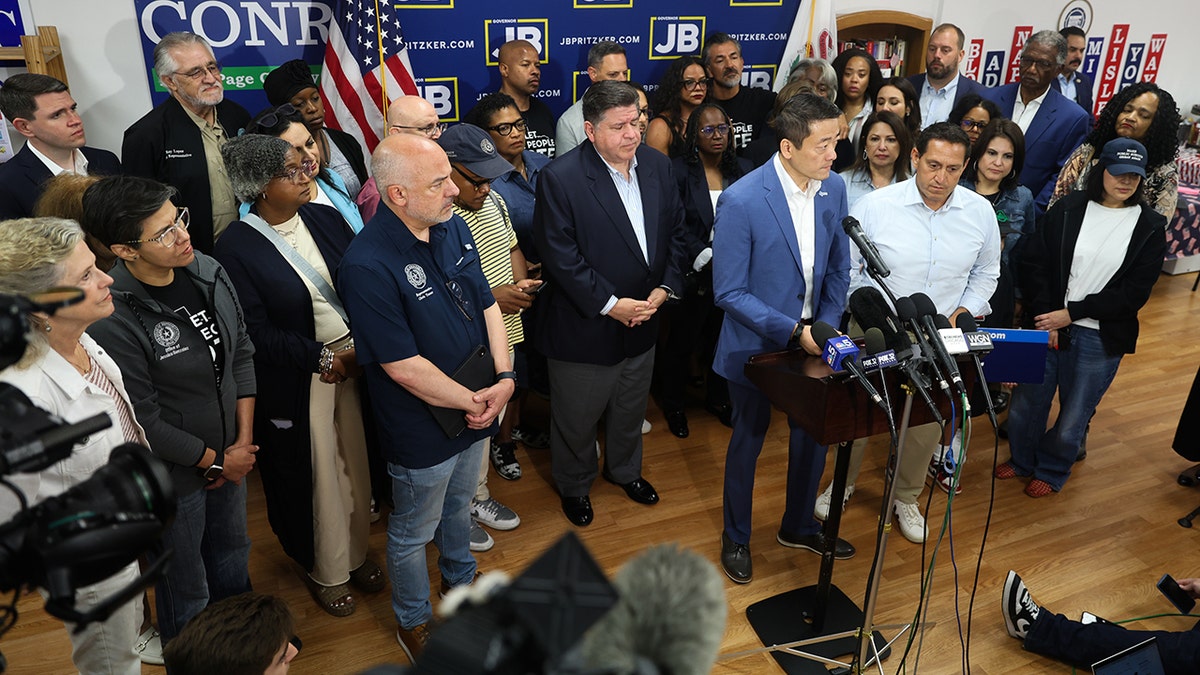
Texas House Democratic Caucus Chair Gene Wu speaks to reporters on Aug. 3, 2025 as Democrats fled Texas to prevent a quorum. (Scott Olson/Getty Images)
Sen. John Cornyn (R-Texas) reported Thursday that the FBI agreed to his request to help assist in locating the whereabouts of the derelict lawmakers as Republicans work to reach a quorum upon the Democrats’ returns.
«I thank President Trump and Director Patel for supporting and swiftly acting on my call for the federal government to hold these supposed lawmakers accountable for fleeing Texas,» Cornyn said in a Thursday news release. «We cannot allow these rogue legislators to avoid their constitutional responsibilities.»
Cain told Fox Digital that Republicans are doing «everything in our power» after Democrats fled the state, including launching investigations into potential bribery. Texas Attorney General Ken Paxton announced an investigation Wednesday into former presidential candidate Beto O’Rourke’s nonprofit, Powered by People, over claims it was helping fund the Democratic exodus from the state, which he described as a political bribe.
«They’re being investigated for potential bribery,» Cain told Fox Digital. «And the Attorney General has launched an investigation into Beto O’Rourke’s organization for bribery as well. I’ll tell you, under the Texas Penal Code, offering or accepting or knowingly doing … a benefit to an elected official in exchange for their vote or some kind of discretionary action, like showing up to work, is considered bribery here in Texas. And it kind of looks like that and we need to launch an investigation.»
In response to the investigation, O’Rourke described Republicans in Texas as «thugs» who are attempting to «steal our country» and accused Paxton of bribery himself.
TEXAS DEMS ALSO SKIPPED TOWN IN 2021 TO AVOID A VOTE, AND SEVERAL CAUGHT COVID-19 IN DC
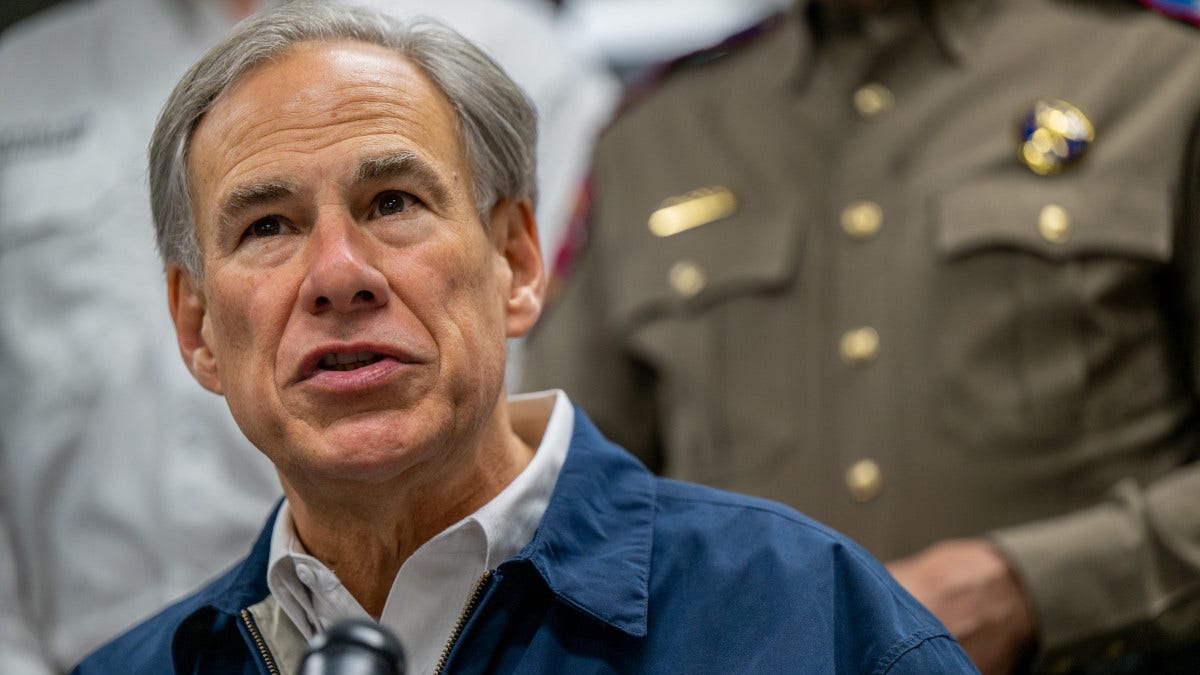
Texas Gov. Greg Abbott has slammed lawmakers who fled the state as «delinquent Texas House Democrats.» (Brandon Bell/Getty Images)
Democratic governors, such as Illinois Gov. J.B. Pritzker and New York Gov. Kathy Hochul, have since opened their proverbial doors to the Texas Democrats who fled the Lone Star State.
Cain remarked the irony is not lost on him that the Democrats fled to states that have long histories embracing gerrymandered voting lines.
«The irony of this entire walkout, of course, they go to states that are some of the worst gerrymandered states that we’ve seen.
«We’re now being able to expose and show the world the maps of these hypocrites. And they also call themselves brave. But as to quote Governor Greg Abbott, they’re very un-Texan, Texans don’t run from a fight,» he continued.
TEXAS DEMOCRATS FLEE STATE TO BLOCK TRUMP-BACKED REDISTRICTING VOTE IN DRAMATIC LEGISLATIVE MOVE
Texas lawmakers have used quorum breaking as a political strategy going back to 1870, and last unfolded in 2021, when Democratic state lawmakers fled to Washington, D.C., out of an attempt to block the passage of voting and election integrity legislation, as well as the 2004 walk-out also over redistricting.
Cain said history shows such stunts have not proven fruitful for Democrats.
«Democrats lost seats every time they came back – might be a hint that the voters don’t appreciate those things. We also still passed the legislation. So it’s really a costly, futile move whereby it’s just pure theater, a chance to go and fundraise, but really they’re not standing up for democracy at all. Rather, they’re just being pure obstructionists and obstructing the will of the people that have elected them,» he said.
President Donald Trump has encouraged redistricting in Texas, including remarking on Tuesday that efforts to redistrict in Texas could lead to the GOP picking up five seats.
«In California, it’s all gerrymandered,» Trump said during an interview with CNBC Tuesday. «And we have an opportunity in Texas to pick up five seats. We have a really good governor, and we have good people in Texas. And I won Texas. I got the highest vote in the history of Texas, as you probably know, and we are entitled to five more seats.»
For Cain, redistricting in Texas is needed as its demographics have shifted since 2020, when the state last redrew its voting maps.
CLICK HERE TO GET THE FOX NEWS APP
«Over the last few years, Texas has drastically changed, our population has tremendously changed, not just from the open border policies of Joe Biden, but also because of our great economic conditions that have caused people to flee California and Illinois and Boston to come and want to live here. In order to reflect that population change, we need to update our map,» he said.
Fox News Digital’s Diana Stancy and Alec Schemmel contributed to this report.
texas,elections,donald trump,voting,democratic party









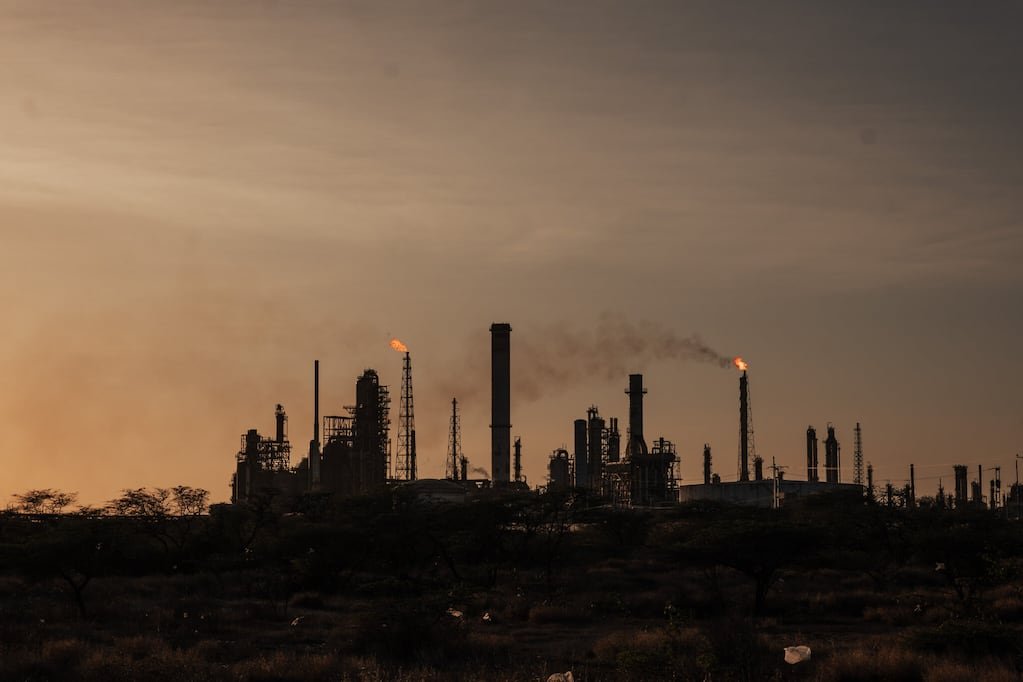
El secretario de Energía estadounidense, Chris Wright, llegó a Venezuela el miércoles para presionar en favor de una revisión más audaz de la industria energética, y con ello deja claro que Estados Unidos podría utilizar su posición de coloso económico para lograr sus objetivos.
Wright es uno de los funcionarios estadounidenses de más alto rango que visita Venezuela en casi 30 años, lo que refleja cómo se están estrechando los lazos entre ambos países después de que las fuerzas estadounidenses capturaron en enero al exlíder de Venezuela, Nicolás Maduro, y lo trasladaron por la fuerza a Estados Unidos.
Leé también: La presidenta de Venezuela recibió al secretario de Energía de EE.UU. para avanzar con la reforma petrolera
A pesar de que la Asamblea Nacional de Venezuela aprobó el mes pasado cambios radicales en la legislación que regula la industria petrolera, Wright dijo que deseaba que el gobierno venezolano fuera mucho más lejos en la apertura de su economía a las empresas energéticas extranjeras. La presidenta de Venezuela, Delcy Rodríguez, recibió al secretario de Energía de EE.UU., Chris Wright, en Caracas. (Foto: EFE)
“La idea es utilizar la influencia para impulsar el progreso”, declaró Wright a los periodistas en Caracas, la capital, el miércoles. Sobre la nueva ley energética, dijo: “Es un paso significativo en la dirección correcta, probablemente en mi opinión no lo suficientemente lejos y claro como para fomentar los grandes flujos de capital que les gustaría ver”.
Algunos gigantes petroleros estadounidenses, como Exxon Mobil, cuyas operaciones en Venezuela fueron nacionalizadas hace dos décadas, han expresado su escepticismo sobre la posibilidad de volver a Venezuela, con los argumentos de los riesgos legales y la posibilidad de agitación política.
Aunque reconoció que se podría hacer más para atraer inversiones estadounidenses a Venezuela, Wright subrayó que las empresas petroleras internacionales suelen arriesgarse a hacer negocios en países con un historial de agitación porque es allí donde a menudo se encuentra el petróleo. Citó la “avalancha de inversiones” que se espera que llegue a Libia, controlada por dos facciones rivales.
Leé también: Delcy Rodríguez salió al cruce de María Corina Machado: “Cuando vuelva, tendrá que responder ante Venezuela”
Al comienzo de su visita de tres días, Wright se reunió con la sucesora de Maduro, la presidenta Delcy Rodríguez. Dijo que tenía previsto viajar con Rodríguez el jueves para ver de primera mano las operaciones de producción de petróleo.
Wright, exdirector ejecutivo de una empresa petrolera que está en el centro del auge de la fracturación hidráulica en Estados Unidos, valoró muy positivamente la voluntad de Rodríguez de introducir grandes cambios en la economía y el sistema político de Venezuela.
Dijo que Venezuela había realizado importantes esfuerzos para mejorar las condiciones económicas en las semanas transcurridas desde la captura de Maduro, quien presidió un desgarrador colapso económico. Además, Wright dijo que esperaba que Venezuela llegara a una transición hacia un sistema político más representativo.
Wright citó áreas en las que Venezuela podría progresar más para el desmantelamiento de su régimen autoritario y una alineación más estrecha con Estados Unidos, tras décadas de forjar alianzas con países que a menudo estaban enfrentados con Washington.
“Aquí todavía hay presos políticos en las cárceles”, dijo Wright, aludiendo a las cientos de personas que siguen detenidas tras la reciente liberación de otras. “Todavía tienen aquí relaciones con China, con Rusia, con Irán. Son cosas que hay que transicionar”.
La visita de Wright suscitó escepticismo en Caracas. Las fuerzas de seguridad abrieron el camino para que sus numerosos equipos de seguridad y comitiva recorrieran la ciudad, donde los murales siguen celebrando los vínculos de Venezuela con los dirigentes iraníes y cubanos.
Los cambios en Venezuela se están produciendo después de que Estados Unidos montara una campaña militar de meses de duración contra Maduro, que incluyó decenas de ataques mortales contra pequeñas embarcaciones que, según dijo el gobierno de Donald Trump, traficaban con drogas ilícitas. Trump ha advertido a Rodríguez que podría correr una suerte similar a la de Maduro si no coopera con Estados Unidos.
Después de reunirse con Rodríguez, ella y Wright respondieron brevemente a las preguntas de los periodistas fuera del palacio presidencial, una muestra de apertura inusual por parte de la nueva dirigente de Venezuela. Más tarde, Wright se reunió con periodistas extranjeros en el hotel JW Marriott.
“Una prensa libre”, dijo, “es una parte fundamental de una sociedad civil”.
*Simon Romero es corresponsal del Times en México, Centroamérica y el Caribe. Reside en Ciudad de México.
The New York Times, data-cc, data-cc-nyt
INTERNACIONAL
Noem slams Dems blocking DHS funding bill citing TSA, FEMA, Coast Guard: ‘I hope they come to their senses’
NEWYou can now listen to Fox News articles!
Department of Homeland Security (DHS) Secretary Kristi Noem warned Thursday that a lapse in funding for her department could disrupt airport security, disaster response and counterterrorism operations, escalating a partisan standoff in Congress over immigration policy.
Senate Democrats demanded stringent reforms to immigration enforcement and blocked multiple attempts Thursday to keep the agency open, though Immigration and Customs Enforcement (ICE) only accounts for 11% of the bill’s funding, according to Noem.
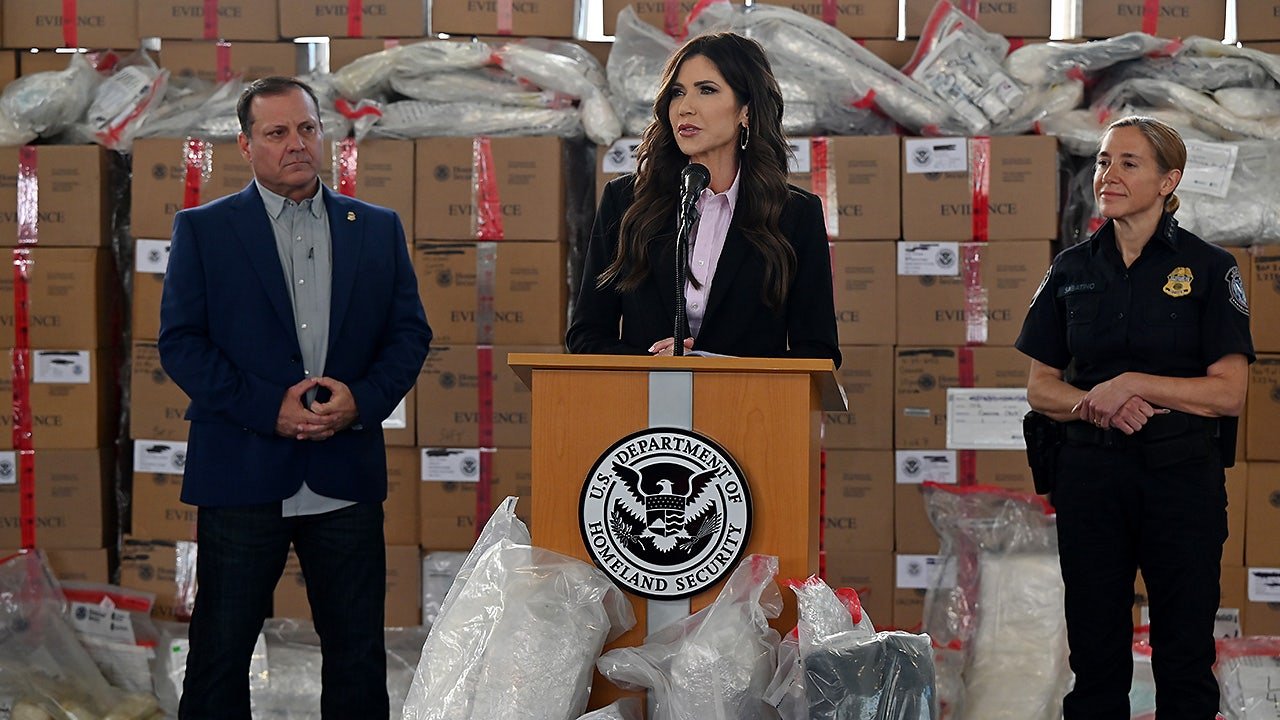
Noem’s comments came as she joined U.S. Border Patrol Chief Mike Banks and Executive Commissioner of Customs and Border Protection Diane Sabatino in Otay Mesa, California, to discuss ongoing drug seizure operations.
Noem accused Democrats of sending «the wrong message,» arguing that failing to fund DHS undermines national security. Democrats have said the dispute centers on immigration enforcement policies, not disaster response or transportation security.
NOEM RIPS DEMS FOR USING FAMILIES AS ‘POLITICAL WEAPONS’ AS DHS FUNDING FIGHT THREATENS LIFE BEYOND ICE
DHS Secretary Security Kristi Noem speaks during a news conference at the Otay Mesa Port of Entry accompanied by U.S. Border Patrol Chief Mike Banks and Acting Executive Assistant Commissioner of the Office of Field Operations at CBP Diane J. Sabatino, Thursday, in Otay Mesa, Calif. (Carlos A. Moreno/Getty Images)
She warned other DHS-funded agencies will see the impacts of the shutdown, including the Federal Emergency Management Agency (FEMA).
«If we had some kind of an attack or a terrible disaster that hit our country, FEMA is the agency that’s responsible for running our government, for stabilizing our country — and the Democrat Party is choosing not to fund FEMA and putting us in jeopardy in that situation.»
According to DHS, disaster grant funding could be stuck due to the FEMA GO system being offline, National Fire Academy classes will be canceled, and preparedness exercises will be paused nationwide.
The housing market could also see disruptions, as federally-backed mortgages require national flood insurance, managed by FEMA.
Noem added that Transportation Security Administration (TSA) employees, who keep the skies safe, will not be paid after Friday — leading to increased wait times at airports and safety concerns.
SENATE REPUBLICANS WEIGH DEM DEMAND TO SPLIT DHS BILL, TURN TO SHORT-TERM EXTENSION TO AVOID SHUTDOWN
«They’re expected to still show up. How long would you continue to show up for a job that you’re not being paid for,» she said. «These TSA employees just went through a 43-day shutdown where they weren’t paid. How often do you expect these good patriots to keep showing up and to do their job, knowing that their salaries won’t be taken care of and their families’ bills won’t be taken care of.»
The U.S. Secret Service (USSS), which is tasked with protecting current and former administration officials and visiting dignitaries, will also go unfunded, along with the U.S. Coast Guard, which is addressing winter weather impacts on the East Coast.
«The Coast Guard right now is keeping rivers open on the East Coast so that critical food and energy sources can get to our largest cities,» Noem said. «… What you’re saying by not funding the Coast Guard, is that the Democrat Party doesn’t think it’s important that people eat, or that they stay warm, or that our national security is protected.»
«This is a dangerous situation that we’re in, that the Democratic Party has chosen to shut down the department that was created after 9/11. This department was created recognizing that we are vulnerable to terrorist attacks,» she continued. «… We have responsibility for cyber operations … and going after terrorists who would attack our critical infrastructure, our electrical grid, our water systems, that would come in and hack into our intelligence agencies and our national security operations.»
KENNEDY CLAIMS ‘KAREN WING’ WILL PUNISH ANY DEMOCRAT WHO VOTES TO KEEP DHS OPEN AMID BUDGET STALL
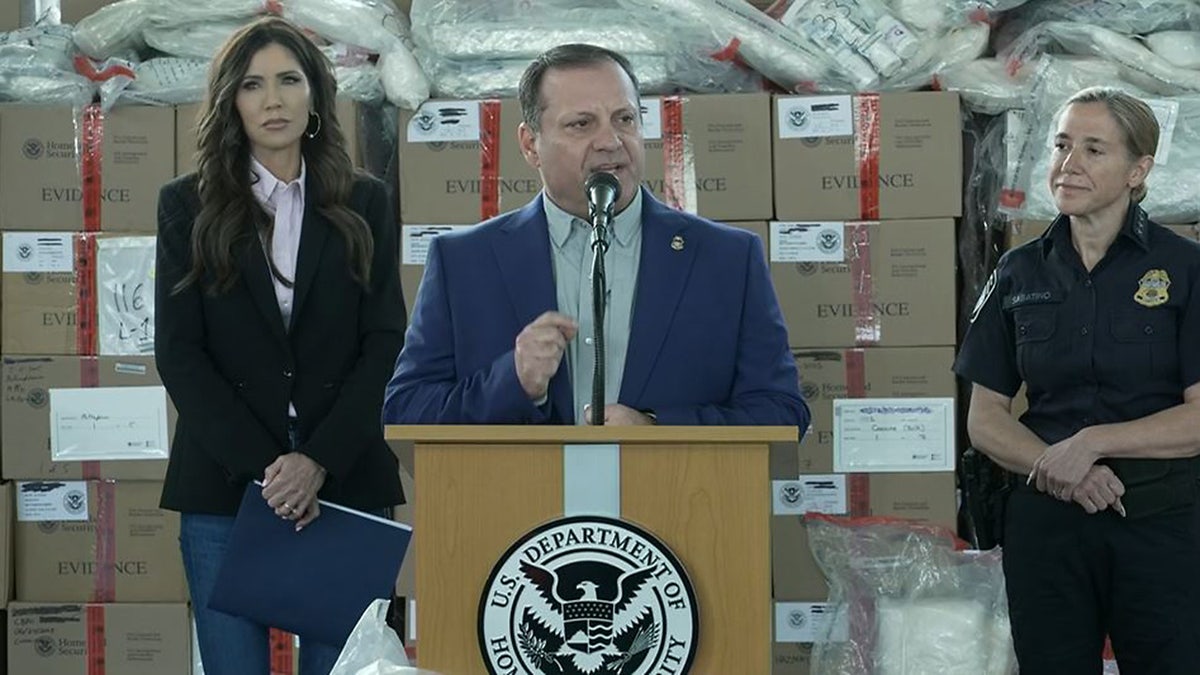
U.S. Border Patrol Chief Michael Banks speaks during a news conference with DHS Secretary Kristi Noem, left, at the Otay Mesa Port of Entry, Thursday, in Otay Mesa, Calif. (Pool)
The Countering Weapons of Mass Destruction (CWMD) Office lacks legal authority to operate during the lapse, leaving biodetection and mail screening disrupted.
«The Democrat Party is choosing not to fund [DHS] and making us very vulnerable to those terrorists being successful here in our homeland,» Noem said. «I hope that they will come to their senses, recognize that the American people need to come first, and have a policy discussion.»
During Noem’s plea for critical funding, anti-ICE protesters gathered nearby chanting, «shame, shame» through megaphones, while blowing horns.
House Appropriations Committee Chairman Tom Cole, R-Oklahoma, released a statement Thursday afternoon, emphasizing the urgency of a deal.
SCHUMER ROLLS OUT LIST OF ICE DEMANDS AS WHITE HOUSE SAYS DEMS ‘BLOCKED’ DEAL-MAKING SESSION
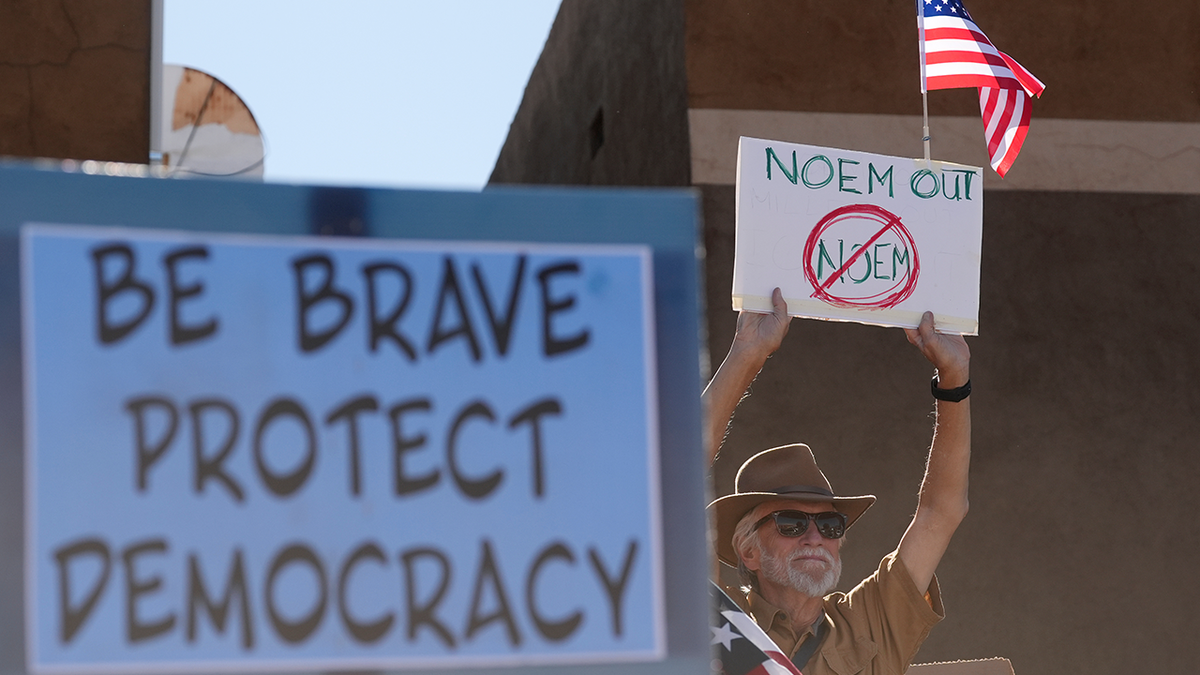
Protesters held signs during a protest against immigration enforcement operations after DHS Secretary Kristi Noem spoke at the southern border Wednesday, in Nogales, Ariz. (AP Photo/Ross D. Franklin)
«There will be a burden shouldered, and the cost will be paid by people who never asked to be part of the fight,» Cole wrote. «… And while all these consequences are slated to start tomorrow at midnight, Senate Democrats are still readying to get on a plane out of town — instead of focusing on completing the job they were elected to do. Flying home or abroad while leaving TSA in limbo isn’t the message of leadership I’d want to send.»
He added the House has «acted in good faith at every turn,» as the House and Senate previously struck a bipartisan and bicameral deal to finalize all Fiscal Year 2026 appropriations bills.
After helping negotiate the deal, Senate Democrats altered it at the last minute, undermining DHS funding.
CLICK HERE TO DOWNLOAD THE FOX NEWS APP
«The consequences are real, and the responsibility for them in this moment is clear,» Cole wrote.
Senate Minority Leader Chuck Schumer, D-N.Y., and his caucus have demanded a list of reforms to ICE.
«The administration doesn’t actually want to reform ICE,» Schumer said. «They never do it on their own. That is why we need — we are fighting for — legislation to rein in ICE and stop the violence.»
The Democratic Strategic Communications Committee did not immediately respond to Fox News Digital’s request for comment.
kristi noem,homeland security,congress,democrats senate,coast guard,fema,politics
INTERNACIONAL
Apareció la autobiografía que Jacobo Timerman decidió no publicar: la tortura, el periodismo, las anécdotas falsas
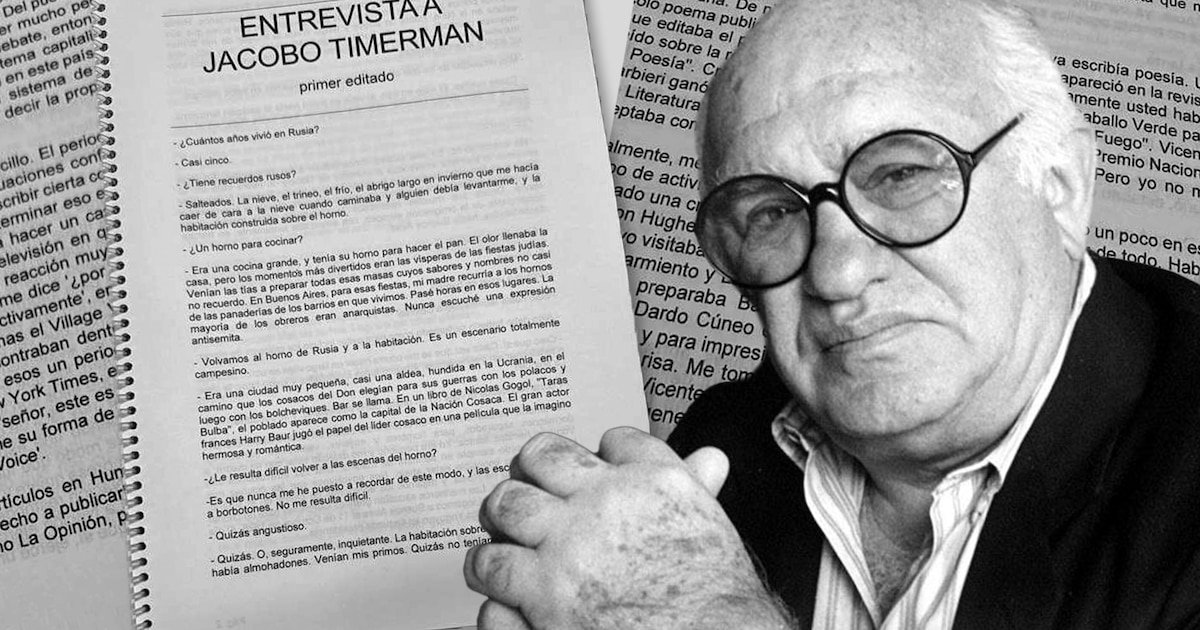
Todo empieza con un tuit. Javier Timerman cuenta que apareció un relato autiobiográfico inédito de su padre. Su padre es Jacobo Timerman y es un mito del periodismo argentino. El que fundó las revistas Primera Plana y Confirmado y el diario La Opinión. El que, en 1977, fue secuestrado, como miles, por la dictadura militar. El que fue blanqueado y siguió preso y cuando salió, se fue del país. El que escribió todo en un libro cuyo título estremece: Preso sin nombre, celda sin número. El que volvió, declaró ante la CONADEP. El de las mil anécdotas con periodistas. Duras, muchas.
Jacobo Timerman murió en la Argentina en 1999… y resulta que ahora hay un relato autobiográfico, “un libro”, dice su hijo Javier. Donde opina, donde cuenta anécdotas, donde desmiente lo que otros –Osvaldo Soriano– han escrito sobre él. Son 220 páginas y ahora las tiene el hijo.
Javier se entusiasma y quiere leer eso. Estamos hablando por teléfono, pero se ve que busca y vuelve con la cita. Lee el párrafo sobre Soriano: “Muchos de sus libros traen anécdotas sobre mí. Son todas mentiras. Son divertidísimas. Pero no hay ni una cierta. Ni una. Son cosas que él vio, que él entendió, que él imaginó, que él soñó, que él creyó haber visto, pero que no tienen nada que ver conmigo”.
Decía que el periodista, el creador, la persona que él había sido, se terminaron en el momento en que lo torturaron
Se ríe, Javier. Porque lee y al leer escucha, vuelve, la voz de su padre: “Sentí que que el libro refleja muy bien lo que fue mi padre. El miedo y el coraje a la vez. A él todo el mundo lo veía como muy valiente, como muy omnipotente, como muy poderoso. Sin embargo se sentía profundamente vulnerable muchas veces y sufría por eso, pero tenía que dar las peleas que tenía que dar. Lo hacía con miedo, pero lo hacía”.
El relato, en realidad, no sale de la pluma de Jacobo Timerman sino de la de Carlos Ulanovsky. El periodista fue contratado por la editora Julia Constenla para entrevistar largamente a Timerman y escribir ese libro de memorias, que no llegó a publicar pero dejó en marcha en 1988. ¿Dónde quedaron esas páginas? ¿Cómo las encontraron ahora?

Javier Timerman siempre había querido recopilar las anecdotas de su padre. Hace unos meses se decidió y llamó a otro periodista, Claudio Polosecki, para que lo hiciera. Polosecki se puso a investigar: “Me costaba bastante encontrar testimonios, gente que quisiera hablar. Entonces revisé libros, se me ocurrió que en uno de Horacio Verbitsky podía haber algo”, le dice ahora a Infobae. “No encontré nada que me interesara y, porque sí, me puse a revisar la bibliografía y ahí decía, en dos renglones: ‘Entrevista inédita a Jacobo Timerman. Archivo Giussani Constenla, Biblioteca Nacional Mariano Moreno’. Se ve que, cuando murió Constenla, la Biblioteca recibió el material. Ahi estaba, me lo dieron en una caja, me tuve que poner guantes. En la Biblioteca me ayudaron y hasta lo digitalizaron. Llevó mucho tiempo, pero lo encontramos”.
Polosecki se devoró el material. Notó tensiones. “Es una especie de esgrima entre Ulanovsky y Jacobo. Jacobo quería hablar de su opinión sobre lo que pasaba en el mundo, el estado de la cultura, lo que él pensaba de distintas cosas. Y Carlos quería que le contara su vida. Claro. Y Jacobo muchas ganas de contar su vida no tenía”.
El periodista tiene derechos y el dueño del diario tiene derechos. Hay situaciones en que es difícil determinar si el periodista, al escribir cierta cosa, afecta los intereses del diario o no los afecta.
Desde el otro lado del teléfono, Javier Timerman suena a veces entusiasmado, a veces emocionado. “No puedo parar de llorar, lo escucho a mi viejo”, dirá un rato después de la entrevista, cuando arreglemos detalles por Whatsapp. Pero, ahora, cuenta:
-Mi papá había decidido no publicar nada de esto que se había hablado, era una especie de autobiografía dialogada con Ulanovsky. Yo me había olvidado del tema y creo que Ulanovsky también. Lo estoy terminando, pero veo que es un libro que dice mucho de él de su creatividad, de su personalidad.
-¿Qué cuenta?
-Hay varias anécdotas de su vida como linyera, literalmente viviendo en trenes, recorriendo el país, escribiendo poesía o, o viajando en tranvía horas para poder leer libros. Cuenta cómo conoció a Borges cuando no él era nadie, simplemente se presentó en la casa para hablar de poesía.

-Había nacido en Rusia. ¿Hablan de eso?
-Claro, incluso arranca el libro diciendo: “¿Cuántos años vivió en Rusia?» “Casi cinco”. ¿Tiene recuerdos rusos?” Y ahí habla un poco de cómo era la vida en Rusia, lo que se acuerda, cómo llegaron a Argentina, la pobreza, cómo empezó a leer, cómo empezó a interesarse por el periodismo… Hay mucho foco en eso del periodismo.
-¿Te sorprendió algo de lo que decía?
-No, la verdad que no. Aaunque no haya conocido las anécdotas, hay cosas que eran tan parte de la personalidad de mi padre…
-¿Por ejemplo?
-En un momento hablan del trato a los periodistas y mi padre dice que nunca le faltó el respeto a un periodista, sino que les exigíaa, pero siempre desde el respeto. Y habla de una anécdota que cuenta Soriano, que mi padre dice que no existió. En esa anécdota, mi padre ponía los pies sobre la mesa, sobre el escritorio y con un habano le gritaba a un periodista. Y mi padre dice: “Nunca hice eso y nunca haría eso, no con un periodista, sino con nadie. Puedo haberle gritado a un periodista en algún momento porque una nota no cerraba o porque no traía la nota que tenía que traer, pero jamás pondría los pies sobre el escritorio porque yo no le falto al respeto a nadie”. Y es exactamente como nos educó a nosotros.

Javier Timerman busca el párrafo y lee. Ahora habla Jacobo: “Si alguien dice que yo estaba con los pies sobre el escritorio con un cigarro atendiendo un periodista, bueno, él dice que me vio hacer eso, yo digo que nunca lo hice, que siempre atendí a mis periodistas con mucho respeto. Frente a frente, charlando, a veces gritando, a veces ironizando, como cuando una vez tomo un artículo de Osiris Troiani y le digo: ‘Mire, es muy largo, vea usted, Troiani, que saco cualquiera de las hojas, la tiro y el artículo sirve igual´. Sí, he hecho estas ironías despiadadas, pero nunca con los pies sobre la mesa fumando un cigarro, que es una actitud despectiva que nunca tuve ante nadie».
-¿Habla de cuando estuvo desaparecido y detenido?
-Dice una cosa que lo he escuchado decir muchas veces y es que él sentía que después de la tortura desapareció como persona, que ya nunca más fue lo mismo. Que el periodista, el creador, la persona que él había sido, se terminaron en el momento en que lo torturaron. Después de la tortura ya es otra persona. Que no pudo encontrar algo que lo apasionara.
-¿Leíste algo que no supieras?
-Hay muchas anécdotas sobre periodismo, sobre política, relaciones de él con intelectuales… Cuenta que se encontraba con intelectuales, por ejemplo, en Edelweiss y hablaban hasta que el humo no dejaba ver. Ese tipo de cosas. Estaban ahí Leopoldo Torre Nillson y Juan José Sebreli, “el joven Sebreli”.
Entre las cosas que dice sobre periodismo, cuenta Javier Timerman, hay dos cosas que subrayar. Una es su defensa de una pluralidad que permitía que en las mismas páginas escribiera gente que pensaba muy distinto. Otra, su visión como empresario periodístico.

Esto dice Jacobo Timerman:
“Uno dice: ‘Bueno, pero escribían tipos que pensaban distinto’. Pero eso forma parte de la realidad, no es una oposición hipócrita. Sí, escribía Mariano Grondona que defendía una cosa y Mariano Montemayor que defendía otra, o cuando yo tenía dos columnas enfrentadas, una de Mariano Montemayor y una de Emilio Jardoy, el conservador, ¿qué van a decir? ¿que la revista era hipócrita? No. Yo publicaba las dos posiciones que creía que todo el mundo quería leer. Pero no, no era una hipocresía la revista, no era que bailaba en dos casamientos al mismo tiempo. Eso es lo que no entienden».
Y también: “Una vez dije estas cosas que se dicen porque todo el mundo estaba asombrado de cómo yo conseguía buenos periodistas, olvidándose todo el trabajo creativo que yo hacía con cada redactor. Entonces, yo dije una frase: ´’A los que despiden, yo los tomo’. Con eso, con los desechos, hago mis publicaciones. Y una vez en Israel, en la televisión, el que me entrevistaba me dice: ‘¿Es verdad que usted aprovecha la represión de los directores de diarios para pagar salarios más bajos?’ Y yo lo miré asombrado y le digo:’ ¿A qué se refiere?’ «
Es que el Jacobo Timerman empresario también aparece acá. Dice:
“¿Qué quiere decir la propiedad privada en un diario?. Es un proceso muy complejo. No es tan sencillo. El periodista tiene derechos y el dueño del diario tiene derechos. Hay situaciones confusas en que es difícil determinar exactamente si el periodista al escribir cierta cosa afecta los intereses del diario o no los afecta. Es muy difícil determinar eso en todos los casos. Hay casos en que es fácil determinar, y voy a hacer un caso concreto: Eliaschev hizo una audición de televisión en que preguntaba sobre el tamaño del pene. Y hubo una reacción muy grande al respecto. Lo consulto y le digo que había hecho mal, me dice: ‘¿Por qué?’ Si es un tema que todo el mundo puede hablar. Le digo ‘efectivamente’. ‘Entonces ¿por qué el canal me sanciona?’. Le digo: ‘Mirá”, si vos tomas el Village Voice en Nueva York hay una cantidad de artículos que se encontraban dentro de la personalidad del Village Voice, ahora si un artículo de esos, un periodista en vez de llevarlo al Village Voice lo quiere publicar en el New York Times, el dueño del New York Times tiene derecho a decir que no, le dice ‘Señor, éste es el New York Times, tiene su personalidad, tiene su identidad, tiene su forma de comunicar, usted no puede traerme algo que es para el Village Voice’.
Trayéndolo a la Argentina, hay artículos en Humor que yo lucharé hasta la muerte para que Humor tenga derecho a publicarlos pero no los publicaría en un diario como La Opinión, porque no tienen nada que ver…«
Cuenta Polosecki que fueron seis entrevistas y que aunque en los papeles que estaban en la Biblioteca Nacional hay mucho material, todavía queda por hacer una edición que lo convierta en un libro. Ese será el próximo paso: el libro autobiográfico que Timerman hizo, junto con Carlos Ulanovsky, en 1988 y que estuvo “perdido”. Pero bien cuidado.
Jacobo Timerman,entrevista,documento,publicado,periodismo,escritor,historia,medios,Argentina

Estados Unidos presiona a Venezuela para que haga más por estimular la inversión

Cruce picante: qué se dijeron Adorni y Zaracho

Acciones argentinas cayeron con fuerza en Wall Street y una empresa tecnológica se desplomó 11%

Pinilla confesó que sufre cáncer

La ANMAT retiró del mercado un jabón para la ropa importado por no contar con un rótulo en español

Pokémon Pokopia muestra más escenas en estos nuevos vídeos promocionales de Japón – Nintenderos

Acuartelamiento policial en Santa Fe: reclamo salarial y temor a un conflicto nacional de seguridad

La advertencia de ATE a los gobernadores que apoyan la reforma laboral: “Firmarán su sentencia de muerte”

Cuánto le cuesta a la clase media llenar el changuito y cómo varían los precios de los alimentos entre provincias

A quién afecta la Reforma laboral: estos son los puntos clave del proyecto de Milei

 POLITICA3 días ago
Acuartelamiento policial en Santa Fe: reclamo salarial y temor a un conflicto nacional de seguridad
- POLITICA3 días ago
La advertencia de ATE a los gobernadores que apoyan la reforma laboral: “Firmarán su sentencia de muerte”
- ECONOMIA3 días ago
Cuánto le cuesta a la clase media llenar el changuito y cómo varían los precios de los alimentos entre provincias