INTERNACIONAL
Iran expands it ‘shadow empire’ across Middle East as Trump pulls troops from Iraq, Syria

NEWYou can now listen to Fox News articles!
Just six months after the Trump administration said it would begin drawing down U.S. forces in Syria, the U.S. confirmed this week it will also begin reducing the number of U.S. forces in Iraq under an agreement reached by the Biden administration – a move security experts warn could benefit Iran and its «shadow empire.»
Just six months after the Trump administration announced plans to draw down U.S. forces in Syria, the Biden administration confirmed this week it will also reduce troop levels in Iraq under a new agreement – a move security experts warn could strengthen Iran and its «shadow empire.»
The changes have come amid a perceived reduction in threat from the terrorist network ISIS and a growing U.S. desire to end «forever wars.»
US ‘UPS THE ANTE,’ DESIGNATES IRAN-BACKED GROUPS IN IRAQ TERRORIST ORGANIZATIONS
But a reduced U.S. presence in both Iraq and Syria has security experts deeply concerned about the power vacuum it will create in both countries, and the immediate threat that Iran poses.
Iran for decades has been expanding its influence in both Iraq and Syria, and it has established a complex and highly embedded presence in the region militarily, politically, economically and socially, making it difficult to divert or thwart its influence even amid a regime change in Syria.
People wave guns in the air as they gather to celebrate the fall of the Syrian regime in Umayyad Square Dec. 8 in Damascus, Syria. (Ali Haj Suleiman/Getty Images)
«The relationship between Islamic Revolutionary Iran and Syria goes all the way back to the ’80s. It’s not something that just started with the advent of the Syrian civil war,» Gregg Roman, Executive Director of the Middle East Forum, told Fox News Digital. «They took 40 years of relations and eventually turned that into an enterprise.»
Iran has used Shia militant forces from not only Syria, but Iraq, Afghanistan and Lebanon, to construct a «parallel military infrastructure» in coordination with the Islamic Revolutionary Guard Corps (IRGC) that has transformed Syria into an «Iranian forward operating base.»
According to an investigative report compiled by the Middle East Forum, using on-the-ground sources embedded in Iranian military installations across Syria since 2018, Iran has not only constructed underground tunnels and weapons depots for its disposal. Tehran has embedded itself deeply into the everyday lives of Syrians through an integrated system that has blended military duties with civil programs.
It’s command structure also transcends traditional nation-state borders by integrating Iranian, Lebanese and Iraqi commanders.
While Iran now faces opposition in Syria following the collapse of the Bashar al-Assad regime with the December 2024 takeover by the Sunni paramilitary organization Hay’at Tahrir al-Sham (HST) – once deemed by the U.S. as a terrorist organization deriving from al Qaeda – Tehran has the potential to take advantage of that of lack of a unified government across Syria, as well as an immensely complex geopolitical dynamic where Israel, Turkey and Russia are all vying for more influence in the nation.
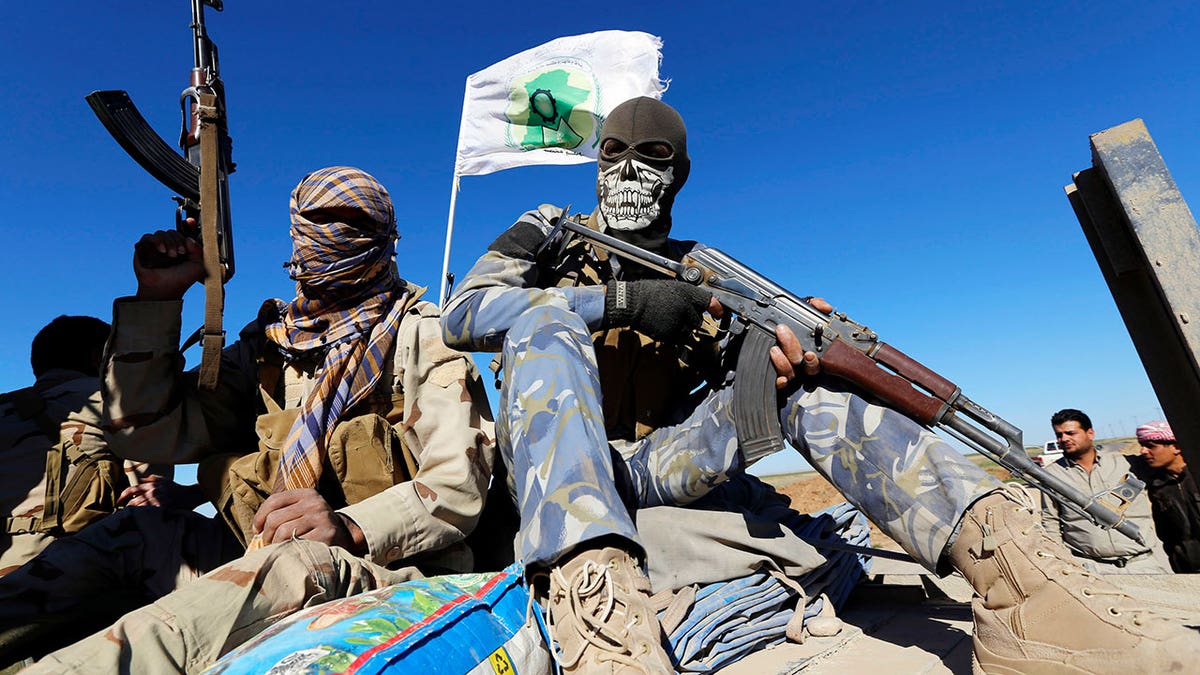
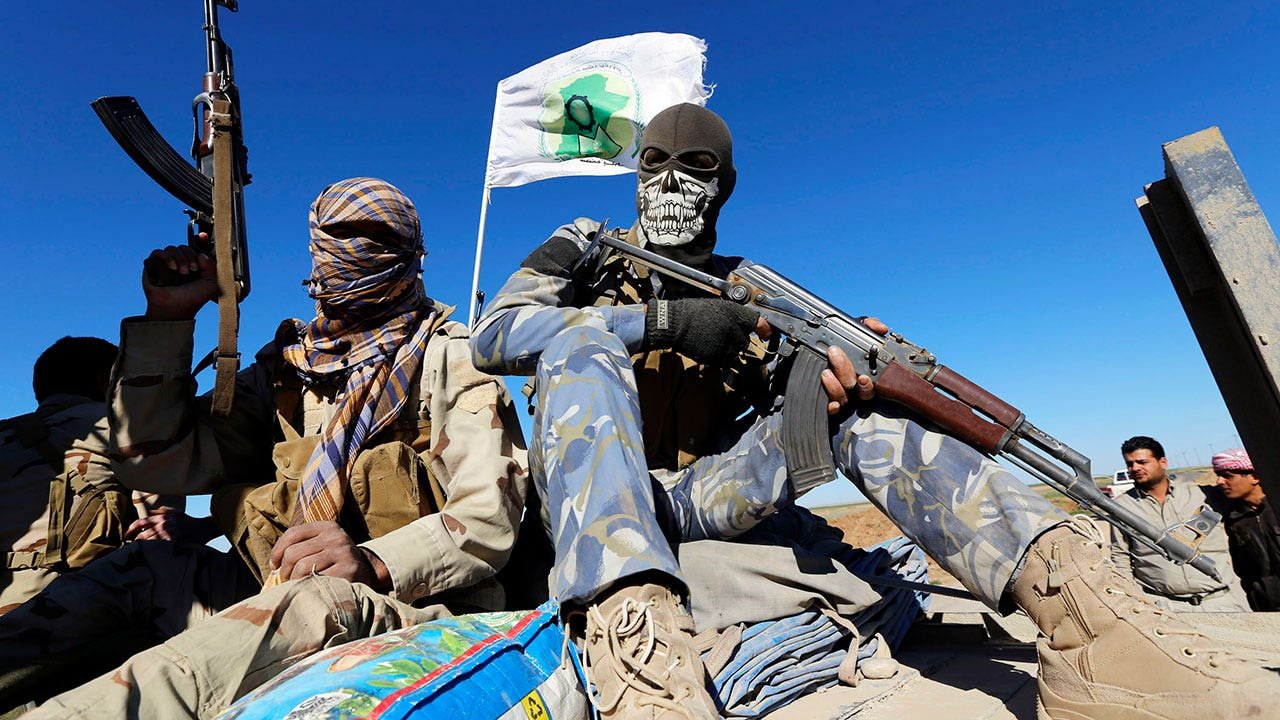
Masked Iran-backed Shi’ite fighters hold their weapons in Iraq’s Al Hadidiya, south of Tikrit, en route to the Islamic State-controlled al-Alam town, where they are preparing to launch an offensive March 6, 2015. (Reuters/Thaier Al-Sudani)
IRAQI PRESIDENT SAYS NATION IS ‘100% SAFE’ AMID LINGERING ISIS, MILITIA CONCERNS
Roman pointed out that if HST, in coordination with the Kurds in the northeast or the Druze in the southwest, are not able to create a «bulwark» against Iranian influence, then Tehran could be well positioned to expand its regional interest under its «shadow empire.»
«Perhaps most concerning is the precedent established by Iran’s success in constructing this shadow empire,» the report found. «The ability to build parallel military infrastructure, operate independently of host government control, and maintain strategic capabilities despite international scrutiny provides a template that could be replicated elsewhere in the region.»
Though its strategy may be slightly different, Iran has repeatedly used power vacuums to extend its reach and counter U.S. influence, as seen in both Afghanistan, where it backed the Taliban, and in Iraq, where it began backing Shia militia groups fighting the U.S. as early as 2003.
«The Iranians have a strategy in Iraq, and it’s effective,» Bill Roggio, expert terrorism analyst and senior editor of the Foundation for Defense of Democracies’ «Long War Journal,» told Fox News Digital. «They’re using military, political and economic means to achieve their goals, and their proximity to Iraq really helps them achieve that.»
Roggio said there are hundreds of thousands of Iran-backed militants in Iraq who are largely a part of the Popular Mobilization Forces, which were heavily influential in fighting ISIS and are a part of the Iraqi Armed Forces under the command of the prime minister, but which are also heavily influenced by Tehran.
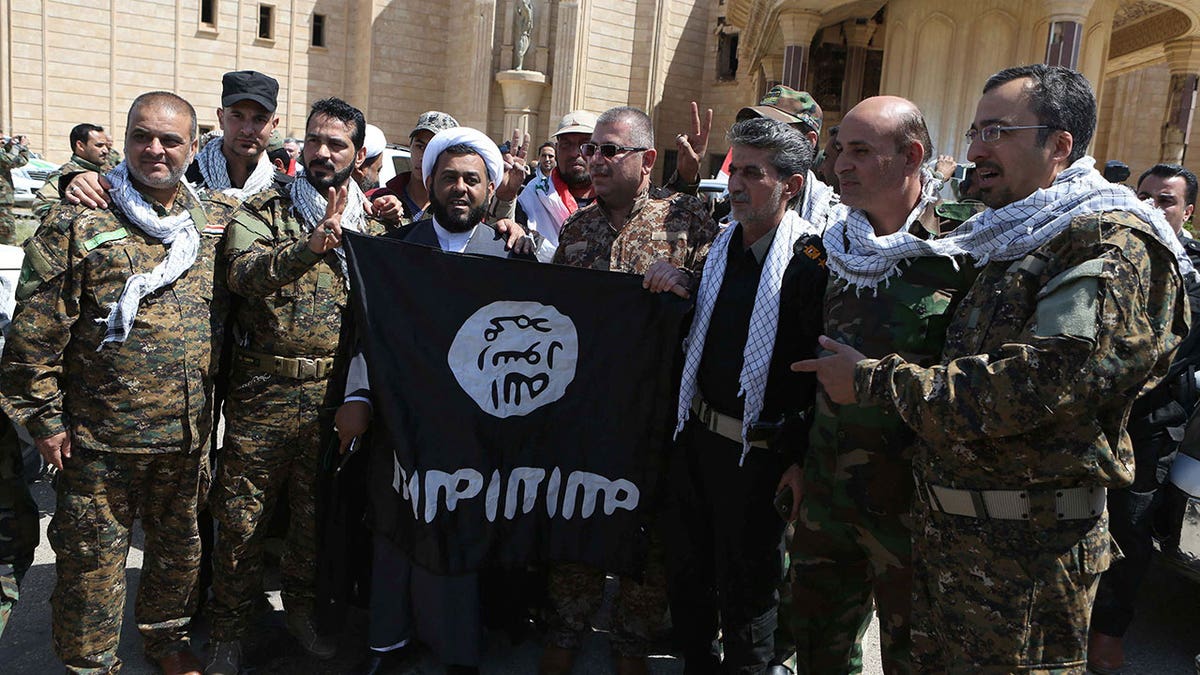
Iraq’s Popular Mobilization Forces, dominated by Iran-backed Shiite militias, hold an Islamist flag after Iraqi forces retook the northern city from ISIS earlier in the month on April 5, 2015, in Tikrit, Iraq. (Mohammed Sawaf/AFP via Getty Images)
IRAN PRESIDENT ACCUSES US OF ‘GRAVE BETRAYAL’ WITH NUCLEAR STRIKES IN UNGA SPEECH
«They wield significant influence in the Iraqi government. They occupy a large, dominant block in the Iraqi parliament. And these militias also have economic power,» Roggio said. «Iran built these militia forces along the same lines as Hezbollah, and they essentially want them to ultimately become like the Islamic Revolutionary Guard Corps is in Iran.»
Both Roman and Roggio expressed concern over the withdrawal of U.S. troops from the region and, more significantly, the removal of U.S. influence at a time when Iran is looking to heavily counter Washington and its interests.
«We haven’t learned the lessons of Afghanistan and even the lessons of Iraq,» Roggio said. «I don’t care if we have 100 or 100,000 troops in Afghanistan or anywhere else. Do we have the right troops to achieve the mission that we put out for them?
«We talk about numbers of troops. … We’re not really talking about what is our mission in Iraq? Is it a counter-ISIS mission? Is it a stave off Iranian influence mission?
«And do we have the right mixture of military and diplomatic and political and economic influence in Iraq to achieve those goals? I don’t believe we do.»
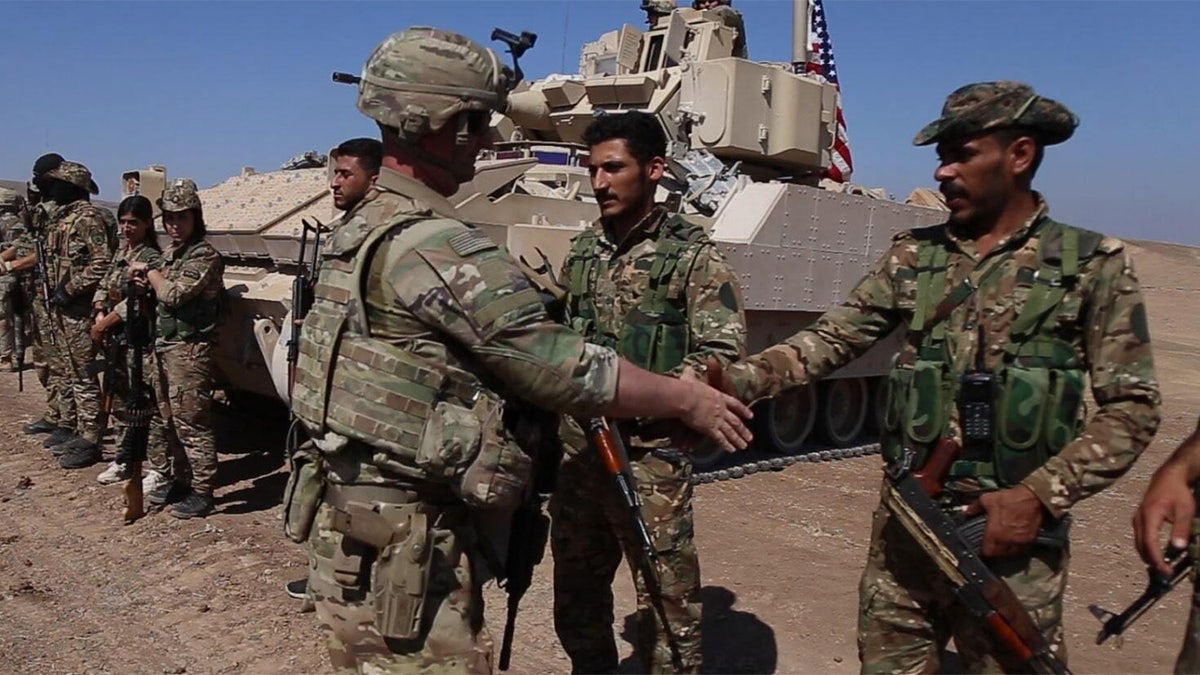
U.S. forces provide military training to members of the YPG/SDF, which Turkey considers an extension of PKK in Syria, in the Qamisli district in the Al-Hasakah province, Syria, Aug. 18, 2023. (Hedil Amir/Anadolu Agency via Getty Images)
CLICK HERE TO GET THE FOX NEWS APP
Both experts pointed out that the U.S. has a long history of not taking Iran and the threat it poses seriously enough, a problem that has spanned decades across both Republican and Democratic administrations.
«The Iranians are patient. They’re operating on timeframes of decades and generations. And we aren’t patient. We operate in timeframes and two and four-year election cycles,» Roggio said. «Ultimately, Iran is looking to drive the U.S. from the region and expand its influence in neighboring countries, be it Afghanistan, be it Iraq, be it the Gulf states.
«The ultimate goal is to get the U.S. out so it can expand its influence.»
iran,middle east,syria,iraq,donald trump,terrorism,world








INTERNACIONAL
Manifestantes se movilizan hacia la Casa Blanca con críticas a Trump por los ataques a Irán

Cientos de manifestantes de distintas organizaciones sociales se movilizan este sábado hacia la Casa Blanca con críticas al presidente de Estados Unidos, Donald Trump, por los ataques a Irán.
Mientras crece el conflicto en Medio Oriente y también el temor en Estados Unidos a una guerra prolongada, en las inmediaciones de la casa del gobierno estadounidense se concentran cientos de personas que, con banderas y carteles, protestan contra la decisión de Trump de atacar Irán.
El mandatario estadounidense es blanco de críticas en Washington por haber ordenado la Operación Furia Épica (Operation Epic Fury) que, según un comunicado del Comando Central de Estados Unidos, es «la mayor concentración regional de poderío militar estadounidense en una generación».
Entre los manifestantes que gritan «no a la guerra en Irán» y sostienen carteles reclamándole a Trump que no arroje bombas a ese país también hay una buena cantidad de latinos que, en español, cantan «el pueblo unido jamás será vencido».
Mientras cada vez más manifestantes se suman a las protestas en la capital estadounidense, Trump sigue desde su residencia en Mar-a-Lago el minuto a minuto de la escalada de tensión tras el ataque a Irán.
La portavoz de la Casa Blanca, Karoline Leavitt, informó que Trump ha estado toda la noche siguiendo la operación, bautizada por Estados Unidos como «Furia Épica», y que tuvo una llamada telefónica con el primer ministro israelí, Benjamín Netanyahu.
«El presidente y su equipo de seguridad nacional continuarán monitoreando de cerca la situación durante todo el día», declaró Leavitt.
President Donald J. Trump Monitors U.S. Military Operations in Iran: Operation Epic Fury, February 28, 2026 pic.twitter.com/OfnMkmBZ8G
— The White House (@WhiteHouse) February 28, 2026
El Gobierno distribuyó una primera fotografía que muestra una sala de crisis improvisada en Mar-a-Lago con cortinas negras y un mapa de Irán. Trump con saco y camisa pero sin corbata y una gorra con las siglas de USA (EE.UU., en inglés), estuvo acompañado por el secretario de Estado, Marco Rubio; el director de la CIA, John Ratcliffe, y la jefa de gabinete de la Casa Blanca, Susie Wiles, además de otros asesores.
Desde la Casa Blanca, en Washington, siguieron el operativo el vicepresidente, JD Vance, junto a la directora de Inteligencia Nacional, Tulsi Gabbard, y el secretario del Tesoro, Scott Bessent, entre otros.
President Trump monitored the situation overnight at Mar a Lago alongside members of his national security team. The President spoke with Prime Minister Netanyahu by phone.
Prior to the attacks, Secretary Rubio called all members of the gang of eight to provide congressional…
— Karoline Leavitt (@PressSec) February 28, 2026
Mar-a-Lago es la residencia donde Trump suele pasar los fines de semana y desde allí ofreció de madrugada el mensaje en video en el que anunció el lanzamiento del ataque contra Irán, cuyo objetivo último es la caída del régimen. Desde esa misma mansión, monitoreó el pasado 3 de enero el ataque estadounidense contra Venezuela que terminó con la captura de Nicolás Maduro.
Estados Unidos e Israel lanzaron este sábado un ataque contra objetivos en Teherán y otras ciudades en Irán, que respondió con el lanzamiento de misiles hacia territorio israelí y bases militares estadounidenses en toda la región.
Según el primer ministro israelí, Benjamín Netanyahu, hay «señales» que apuntan a que el líder supremo iraní, Alí Jamenei, «dejó de existir» tras el ataque israelí a su residencia de este sábado.
El secretario de Estado, Marco Rubio, notificó del ataque con antelación a siete de los ocho congresistas del llamado Grupo de los Ocho, del que forman parte los líderes republicanos y demócratas de la Cámara de Representantes y del Senado.
Varios legisladores demócratas han denunciado no haber sido avisados del ataque y acusan al Gobierno de iniciar una guerra encubierta sin pasar por el Congreso, que tiene la potestad de autorizar un conflicto bélico en el exterior.
Donald Trump is dragging the United States into a war the American people do not want. Let me be clear: I am opposed to a regime-change war in Iran, and our troops are being put in harm’s way for the sake of Trump’s war of choice.
Read my full statement: pic.twitter.com/JmxZaC8vBr
— Kamala Harris (@KamalaHarris) February 28, 2026
Además de las críticas de legisladpres opositores y de las manifestaciones en las inmediaciones de la Casa Blanca, en las últimas horas se multiplicaron los cuestionamientos a Trump.
La exvicepresidenta Kamala Harris dijo que Trump «está arrastrando a Estados Unidos a una guerra que el pueblo estadounidense no desea». Y cerró: «Seamos claros: me opongo a una guerra de cambio de régimen en Irán, y nuestras tropas están siendo puestas en peligro por la guerra predilecta de Trump».
NEWYou can now listen to Fox News articles!
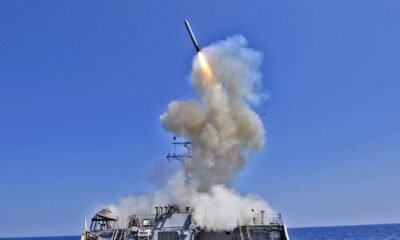
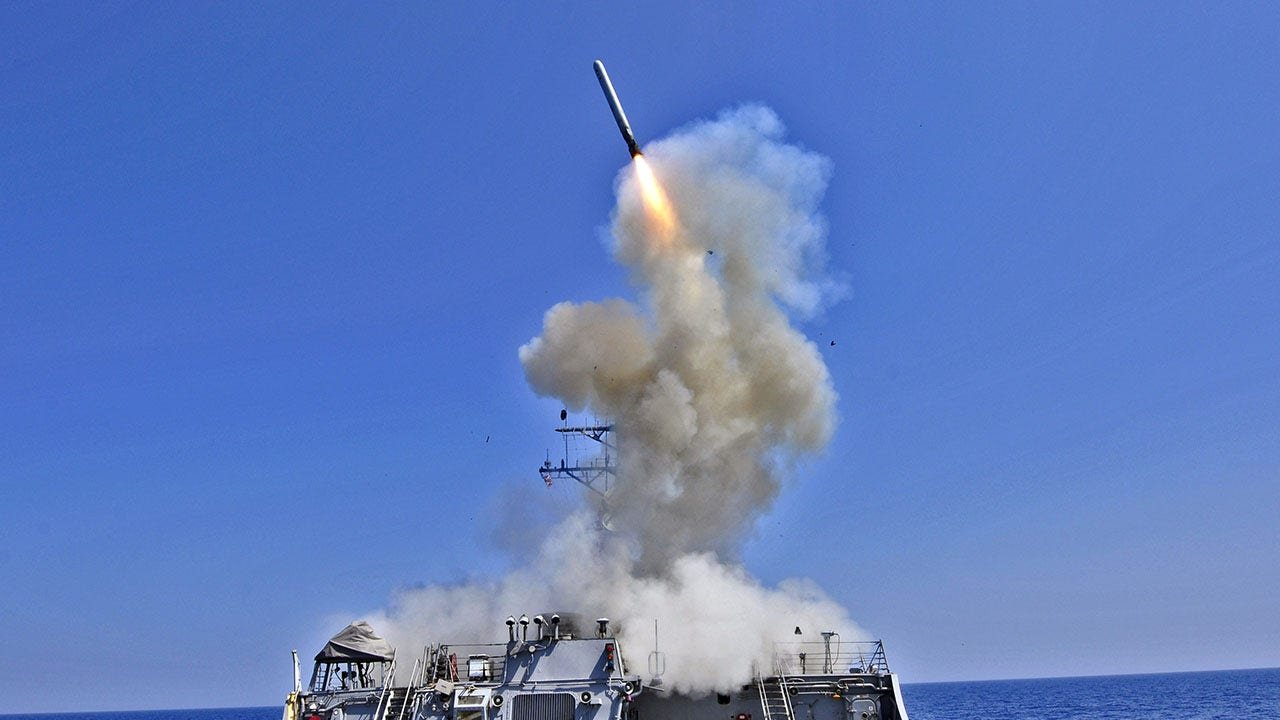
The first missile in the U.S. arsenal used against Iranian targets in Saturday’s pre-dawn strike was the Tomahawk, a long-range cruise missile launched from Navy ships and submarines.
About half the length of a standard telephone pole, the Tomahawk flies at the speed of a commercial airliner and can carry a 1,000-pound warhead about the distance from Washington, D.C., to Miami.
Fired from destroyers or submarines positioned hundreds of miles away, the missiles allow a president to respond rapidly to a crisis without sending pilots into contested airspace or deploying ground forces.
The Tomahawk has become a go-to option for limited military action, because it offers precision and flexibility while keeping the U.S. footprint small. The missiles can hit fixed targets with high accuracy, reducing the risk of broader escalation.
Presidents of both parties have used Tomahawks in the opening hours of military operations, from strikes in Iraq in the 1990s to more recent operations in Syria and elsewhere.
Defense officials and military analysts say the weapon’s long range, reliability and relatively low risk to American personnel make it an attractive first-strike option when the White House wants to send a message quickly but stop short of a wider war.
That combination of speed, distance and precision has kept the Tomahawk at the center of U.S. military planning for decades.
The Tomahawk missile is manufactured by U.S. defense contractor Raytheon, also known as RTX. (U.S. Navy via Getty Images)
Manufactured by defense titan Raytheon — now RTX — the Tomahawk has been a mainstay of the Navy’s arsenal since the 1980s. It was first used in combat during the 1991 Gulf War and has since become a go-to option for presidents seeking to strike from long range without putting U.S. service members in harm’s way.
«Year in and year out, administration in and administration out, it’s the long-range land attack cruise missile that presidents reach for first in a crisis,» Thomas Karako, director of the Missile Defense Project at the Center for Strategic and International Studies, told Fox News Digital.
But heavy use has taken a toll. «We’ve been using them far more frequently than we’ve been producing them,» Karako said.
Prior to Saturday’s operation, the missile was used in June 2025 during a U.S. strike on Iranian nuclear facilities.
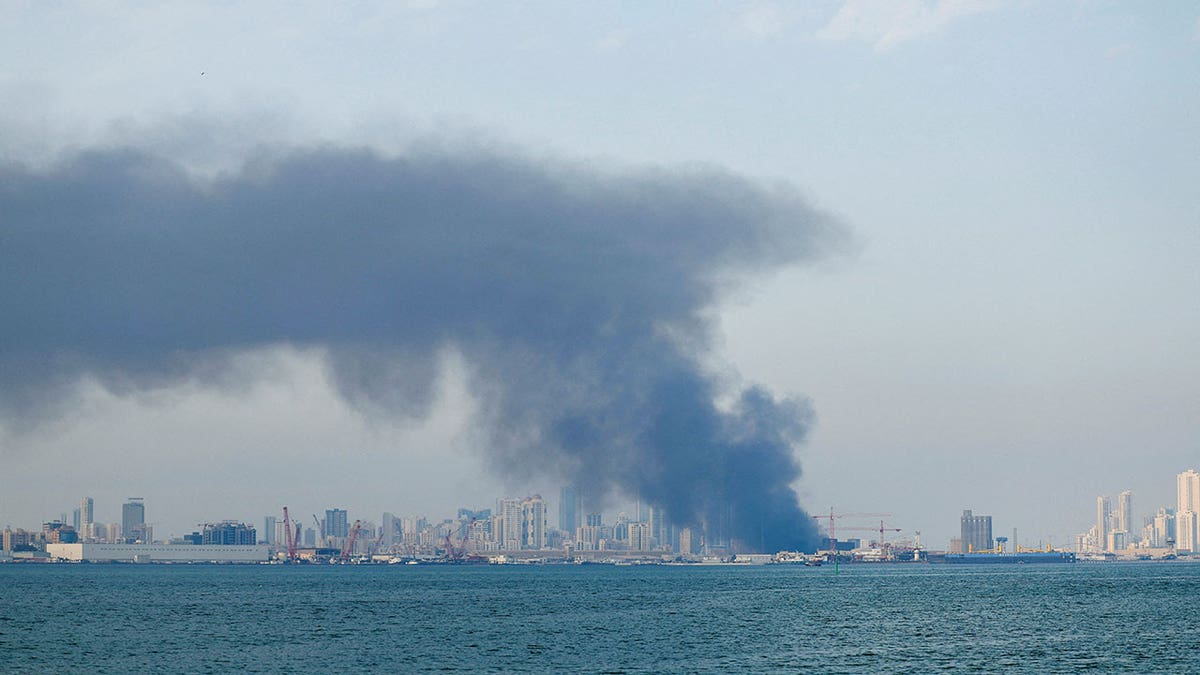
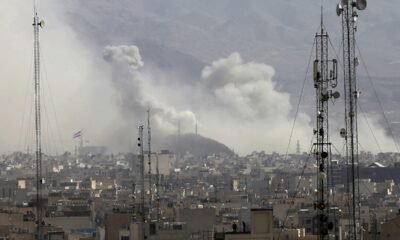
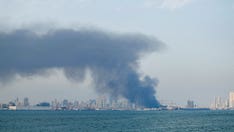
Smoke rises after reported Iranian missile attacks, following strikes by the United States and Israel against Iran, in Manama, Bahrain, Feb. 28, 2026. (Reuters)
Overall, the Tomahawk has been deployed more than 2,350 times.
At roughly $1.4 million apiece, the Tomahawk missile has an intermediate range of 800 to 1,553 miles and can be launched from more than 140 U.S. Navy ships and submarines.
The Tomahawk strike was just one piece of a broader U.S. military posture in the region.
Ahead of the strikes, the U.S. military amassed what Trump previously called an «armada» in Iran’s backyard. Mapped out across the Persian Gulf and beyond, the deployment tells its own story, one of calculated pressure backed by credible capability.
THE ONLY MAP YOU NEED TO SEE TO UNDERSTAND HOW SERIOUS TRUMP IS ABOUT IRAN
The deployment coincided with indirect negotiations between Washington and Tehran over Iran’s disputed nuclear program. Trump has warned that the regime must fully dismantle its nuclear infrastructure or face consequences.
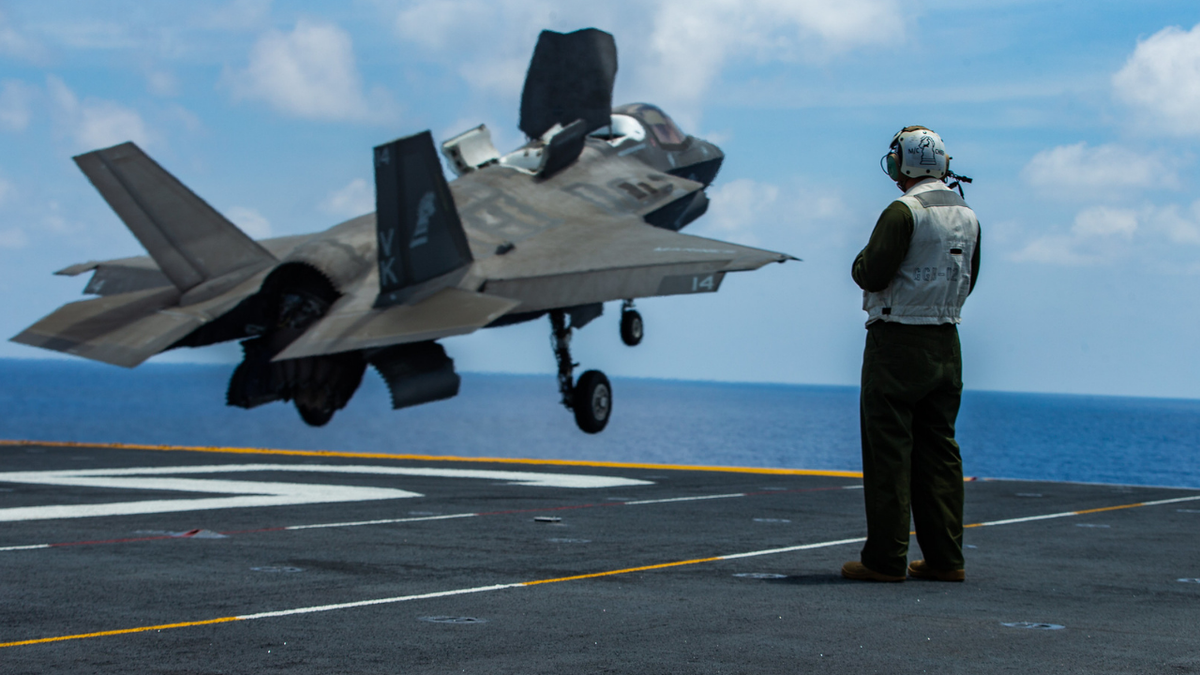
An F-35B takes off from the USS America flight deck. (Cpl. Isaac Cantrell/U.S. Marine Corps)
At the center of the U.S. presence are two aircraft carrier strike groups — the USS Abraham Lincoln and USS Gerald R. Ford — each supported by guided-missile destroyers and cruisers and capable of sustained air and missile operations.
CLICK HERE TO DOWNLOAD THE FOX NEWS APP
More than a dozen additional U.S. warships are also operating in the region in support roles, according to defense officials.
It was not immediately clear how or when Tehran might respond, though Iranian leaders have previously warned of retaliation in the event of direct U.S. military involvement.
Related Article
war with iran,iran,middle east,donald trump,israel,defense
INTERNACIONAL
Iranian ‘top target’ hit in $10M precision strike; US kamikaze drones used to ‘overwhelm’
NEWYou can now listen to Fox News articles!
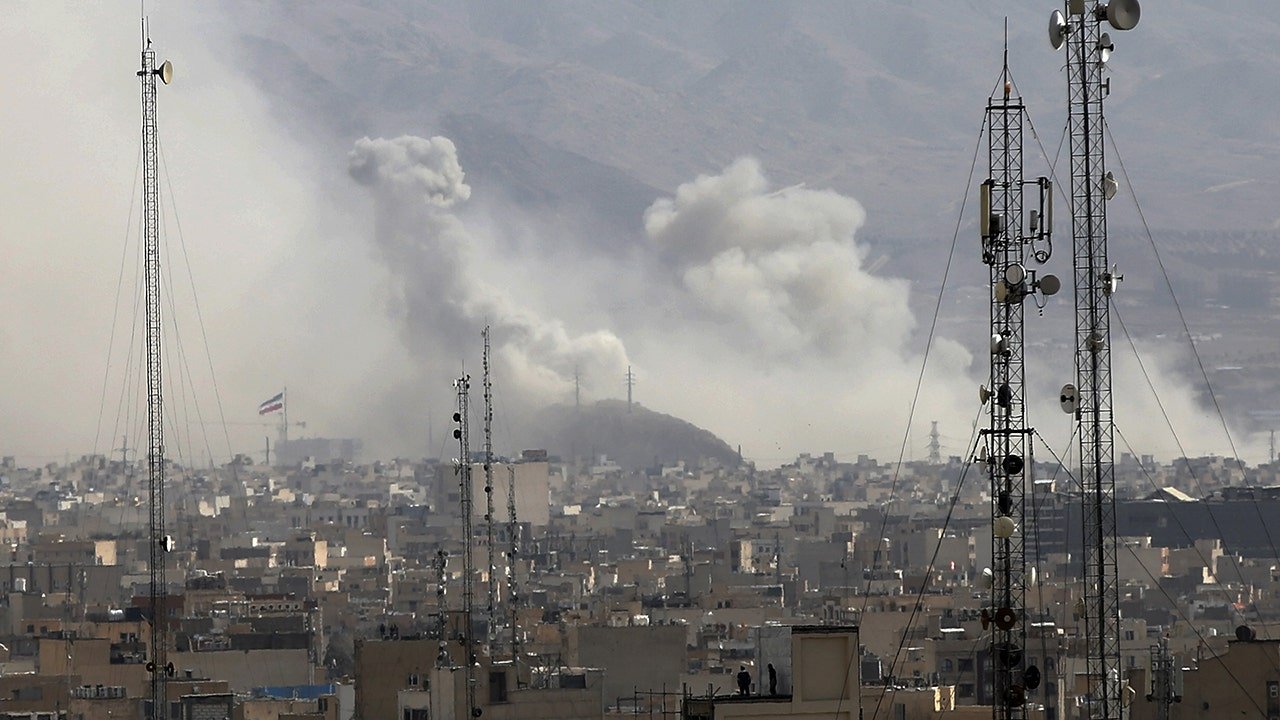
Israel struck its key target in Tehran Saturday in what a defense expert has described as a multimillion-dollar precision-guided attack alongside a broader offensive involving U.S. waves of lower-cost kamikaze drones.
Cameron Chell, CEO of drone manufacturer Draganfly, told Fox News Digital the campaign would have likely paired advanced and costly assets against Supreme Leader Ayatollah Ali Khamenei’s compound, while U.S. forces used cheaper drones to «overwhelm» on land, air and sea.
U.S. Central Command (CENTCOM) also confirmed that the drones were deployed for the first time in history.
«CENTCOM’s Task Force Scorpion Strike — for the first time in history — is using one-way attack drones in combat during Operation Epic Fury,» it said in an X post before adding that the «low-cost drones, modeled after Iran’s Shahed drones, are now delivering American-made retribution.»
«Saturday saw an overwhelming daytime attack with incredible intelligence to target the leadership and a strike on the compound possibly costing tens of millions,» Chell said.
«That would likely have included expensive, precision-strike drones or manned aircraft in highly coordinated attacks to ensure success, not necessarily the lower-cost, one-way version of the suicide drones,» he explained.
«The U.S. has this lower-cost alternative to hit everything at once, but then the very expensive, high-precision assets would likely have gone directly after leadership on Saturday,» Chell added.
A map of Western strikes against Iran (Fox News)
A senior U.S. official confirmed to Fox News that the compound strike was a «wildly bold daytime attack.»
«It caught the senior leadership off guard on a Saturday morning during Ramadan and on Shabbat in the daytime,» the official added.
«We hit the senior leaders right out of the gate,» the source told Fox national security correspondent Jennifer Griffin.
Iran’s military, government and intelligence sites were targeted, an official briefed on the operation also told The Associated Press on condition of anonymity.
A handful of top Iranian leaders were killed, including the commander of the Islamic Revolutionary Guard Corps (IRGC).
AYATOLLAH’S ARSENAL VS. AMERICAN FIREPOWER: IRAN’S TOP 4 THREATS AND HOW WE FIGHT BACK
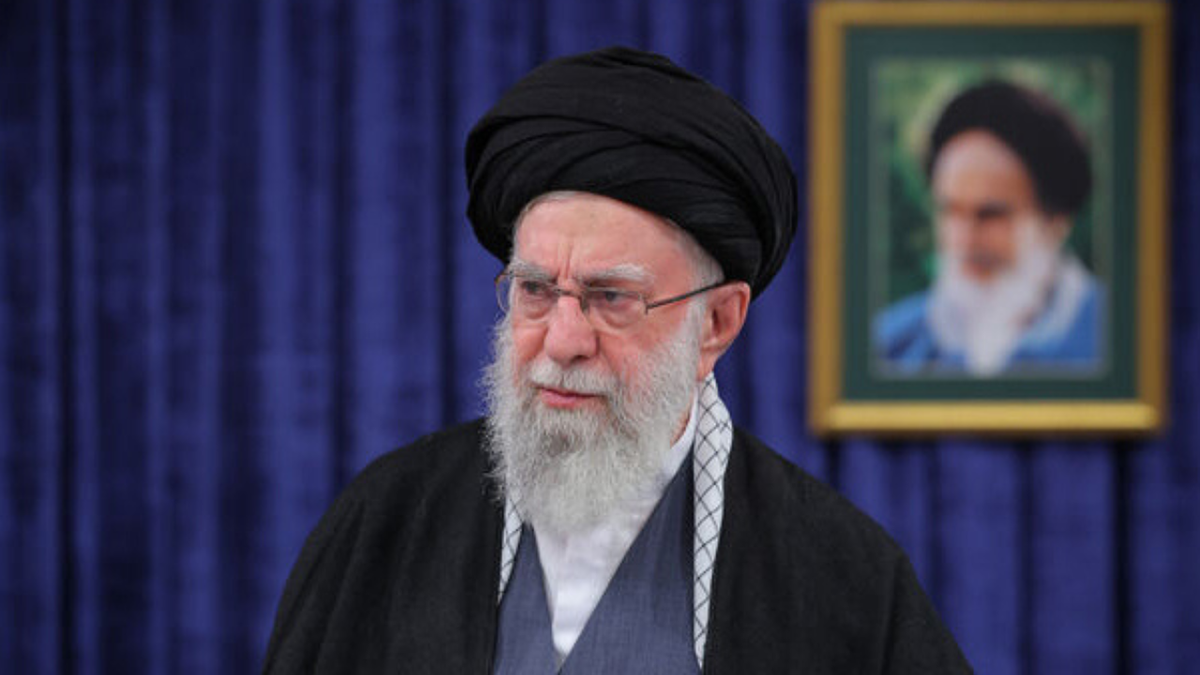
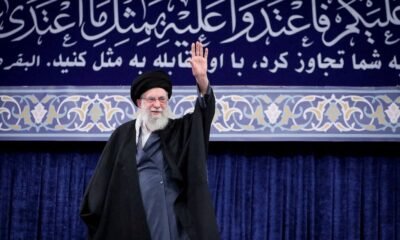
Iranian Supreme Leader Ali Khamenei addresses the public on the 47th anniversary of the Iranian Revolution, according to Iranian state television in Tehran, Iran, Feb. 9, 2026. (Iranian Leader Press Office/Anadolu/Getty Images)
President Donald Trump also announced Saturday that Supreme Leader Ali Khamenei had been killed in the strike.
«If drones were involved in that top target attack, it would have been the very sophisticated MQ-type or Global Hawk-type drones,» Chell said.
Israeli Defense Minister Israel Katz said other attacks across the country were being done «to remove threats.»
As previously reported by Fox News Digital, those targets included Islamic Revolutionary Guard Corps (IRGC) command and control centers, Iranian air defense capabilities, missile and drone launch sites and military airfields.
Chell described how those secondary targets would have been hit by the U.S. with the cheaper one-way «kamikaze» drones before adding that the strikes «seemed to be an excellent example of mass overwhelm at a new level.»
IRAN FIRES MISSILES AT US BASES ACROSS MIDDLE EAST AFTER AMERICAN STRIKES ON NUCLEAR, IRGC SITES
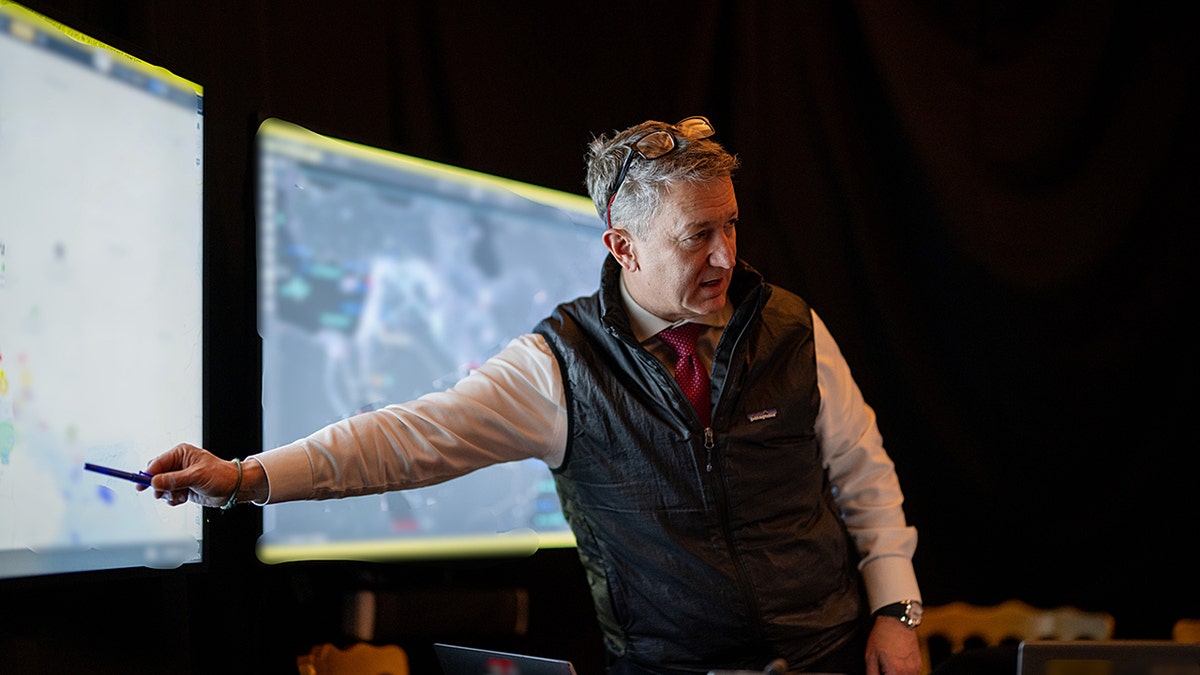
U.S. Chairman of the Joint Chiefs of Staff Dan Caine monitors U.S. military operations in Iran after an Israeli strike in Tehran alongside several Cabinet members Saturday, Feb. 28, 2026. (@WhiteHouse/X)
Chell suggested Iran’s defenses were likely degraded well before the strike began because of the coordination.
«I think likely the defense systems, communication systems, were overwhelmingly compromised,» he added. «And so I think they just overwhelmed them,» he said.
«I’m sure there would have been days, if not even weeks, of work and preparation to take out those defense communication systems.
«They would have compromised those defense communications in some way through electronic warfare or cyberattack.
«The battlefield now is so multidimensional,» Chell emphasized.
CLICK HERE TO DOWNLOAD THE FOX NEWS APP
«It’s about cyber warfare, misinformation and electronic warfare as well.
«This was seemingly so swift because it was incredibly well-planned and coordinated by the U.S. and Israel on a massive level that’s not been seen before.»
Related Article
war with iran,iran,ali khamenei,military,us navy,wars

Cómo ver en vivo el discurso de Javier Milei en el Congreso

Círculo rojo: el día después del 1M, la atención puesta en la gira por Nueva York y las múltiples franquicias del peronismo, LLA y los gobernadores

Anomia contra la reforma laboral

Marco Reus renueva con Los Angeles Galaxy hasta diciembre de 2027

Manifestantes se movilizan hacia la Casa Blanca con críticas a Trump por los ataques a Irán

Sofá naranja y espíritu setentoso: así es la vibrante casa de Flor Jazmín Peña

Catherine Fulop contó el difícil momento que atraviesa su madre en Venezuela: “Está postrada”

Crisis en la industria: otra multinacional se achica y cierra una planta en la Argentina

Ginette Reynal dio una rotunda marcha atrás con una decisión que tomó hace dos meses: “No aguanto más”

Alarma por la salud de Divina Gloria tras salir de Gran Hermano: “La internaron directamente en terapia intensiva”

 CHIMENTOS2 días ago
Ginette Reynal dio una rotunda marcha atrás con una decisión que tomó hace dos meses: “No aguanto más”
- CHIMENTOS2 días ago
Alarma por la salud de Divina Gloria tras salir de Gran Hermano: “La internaron directamente en terapia intensiva”
- CHIMENTOS2 días ago
¡Titi revolucionó Gran Hermano! Cuáles son las 5 cosas que ya extraña: «Accesorios, pilates, bondiola, auriculares y bailar»