INTERNACIONAL
Trump administration works to break China’s rare earth mineral stranglehold on Africa


NEWYou can now listen to Fox News articles!
The State Department has told Fox News Digital it is working to reduce the «national security» threat to the U.S. from China’s domination of the rare earth minerals market, with new signs that Africa can assist Washington in breaking Beijing’s stranglehold on this vital sector.
The 17 rare earth elements (REE) are metals «critical for both human and national security,» the Brookings Institution wrote in 2022, adding, «They are used in electronics (computers, televisions and smartphones), in renewable energy technology (wind turbines, solar panels and electric vehicle batteries), and in national defense (jet engines, missile guidance and defense systems, satellites, GPS equipment and more).»
China is reported by Brookings to be responsible for 60% of global extraction of rare earth minerals and 85% of processing capacity.
TRUMP CALLS XI’S RARE EARTH MOVE A ‘BAD MOMENT’ — WHY IT MATTERS FOR US NATIONAL SECURITY, CHINA TIES
Workers prepare the Rainbow Rare Earths Project site in Phalaborwa, South Africa, for production. (Rainbow Rare Earths)
But although Beijing has secured contracts in African countries such as the Democratic Republic of the Congo (DRC) to ship minerals, including cobalt, east to China, the continent has vast untapped resources. And the African Union’s Minerals Development Center stated recently that new huge specialist rare earth mines are due to come online by 2029 in Tanzania, Angola, Malawi and South Africa, and potentially yield almost 10% of the world’s supply.
This is leading the Trump administration to step forward with new attempts to expand the U.S. presence in Africa’s mining trade. Just this week, a State Department spokesperson told Fox News Digital, «The administration’s approach prioritizes partnerships with African nations to ensure their minerals flow west, not east to China.»
In Africa, China is on Washington’s threat radar, with the spokesperson continuing, «China’s dominance in global mineral supply chains — specifically in processing and refining — is a threat to both U.S. and African interests. Beijing’s state-directed strategies exploit Africa’s natural resources, consolidate control over upstream mining assets, perpetuate opaque governance structures, degrade local environments and create economic dependencies that undermine regional stability.»
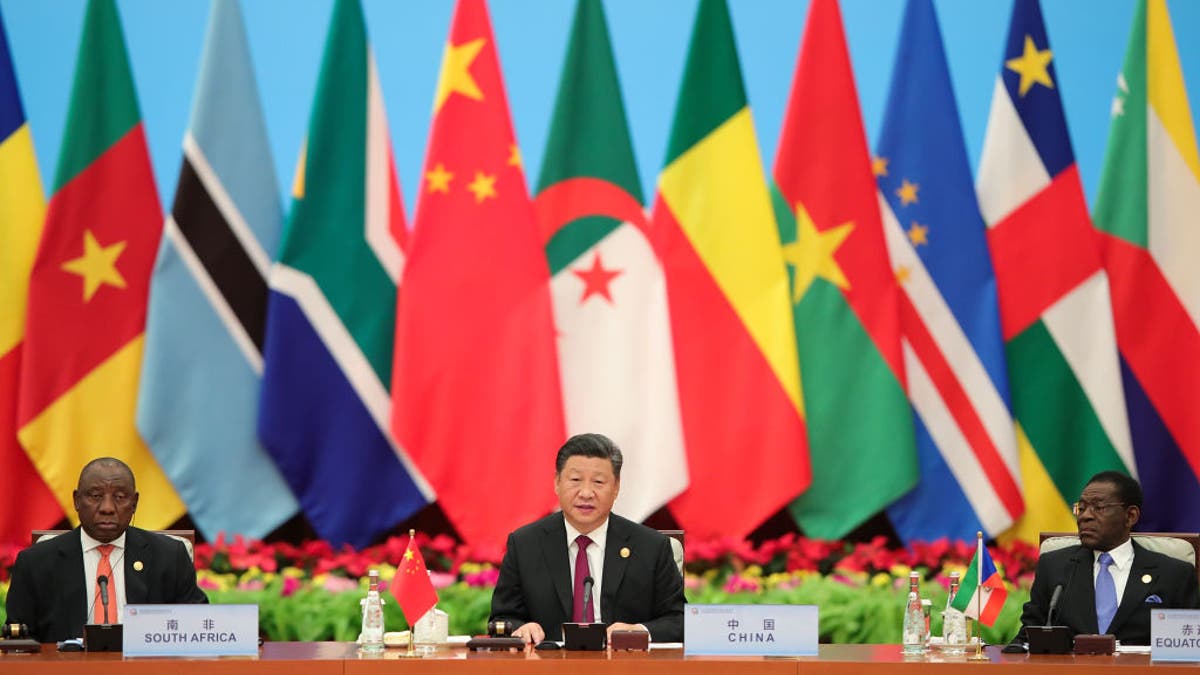
China’s President Xi Jinping speaks as South Africa’s President Cyril Ramaphosa, left, and Equatorial Guinea’s President Teodoro Obiang Nguema Mbasogo, right, listen, during the Forum On China-Africa Cooperation. Sept. 4, 2018. (Lintao Zhang/AFP via Getty Images)
Various sources say the U.S. currently imports some 70% of all the rare earth elements it needs from China.
Sen. Jim Risch, R-Idaho, chairman of the Senate Foreign Relations Committee, told Fox News Digital that Beijing poses a threat on this issue: «Relying on China for critical minerals needed for a modern economy is a top national security risk that President Biden left unaddressed for four years. Under President Trump’s leadership, we can secure new sources in Africa, strengthen our partnerships there, and ensure America’s defense is never dependent on our adversaries.»
CHINA’S RARE EARTH TECH OBSESSION ENSNARES US RESIDENT AS CCP LOOKS TO MAINTAIN STRANGLEHOLD
The administration is trying to move more into Africa, with the State Department spokesperson adding, «The United States is committed to making targeted investments in infrastructure to facilitate the export of minerals from Africa to global markets. A prime example is the Lobito Corridor, which provides an alternative to Chinese-controlled transportation routes for minerals from Africa’s Copperbelt to the Atlantic Ocean.»
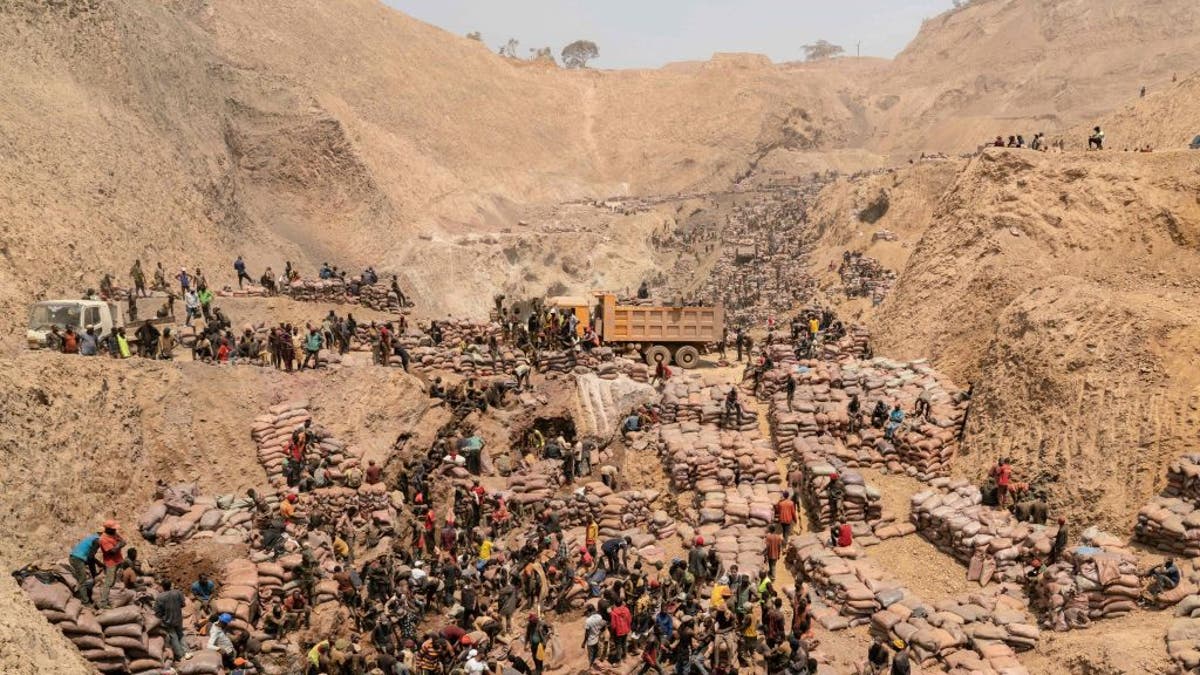
Miners working at a cobalt mine in the DRC on Oct. 12, 2022. (Junior Kannah/AFP via Getty Images)
The administration recently said they would continue to pledge a $550 million loan to the development of the Lobito Corridor, an 800-mile-long rail and infrastructure link to the mineral-rich regions of the DRC and Zambia with Angola’s Atlantic coast and easy shipping access to the U.S.
The State Department spokesperson went on to say that one of the main benefits of the peace deal to end a 30-year war signed between the DRC and Rwanda in the Oval Office in June is better access to minerals, adding, «The bilateral agreement between the U.S. and DRC is designed to open the door for new U.S. and U.S.-aligned investments in strategic mining projects across the DRC.»
It is a new dawn of opportunity for the U.S. in Africa, analysts including Dr. Gracelin Baskaran says. Baskaran, director of the Critical Minerals Security Program at Washington’s Center for Strategic and International Studies, told Fox News Digital, «Africa is the last great frontier of mineral discovery. It has long been undervalued in global mineral exploration, even though it delivers some of the highest returns per dollar invested.»

The Tanzania-Zambia Railway Authority (TAZARA) Memorial Park in Lusaka, Zambia, on Sept. 21, 2023. For over a decade, China poured more than $120 billion of government-backed loans through its Belt and Road Initiative to build hydropower plants, roads and rail lines across the continent as well as unparalleled influence. (Zinyange Auntony/Bloomberg via Getty Images)
IS TRUMP CONSIDERING BOLD AFRICA PLAY TO PUSH BACK ON CHINA, RUSSIA AND ISLAMIC TERRORISTS?
«The [African] continent’s share of worldwide exploration spending has steadily dropped — from 16% in 2004 to only 10.4% in 2024,» added Baskaran. «This decline is particularly striking, given that sub-Saharan Africa is the world’s most cost-efficient region for mineral exploration, with a mineral-value-to-exploration-spending ratio of 0.8 — well ahead of Australia (0.5), Canada (0.6) and Latin America (0.3).»
«Despite its immense geological promise and a landmass triple the size of Australia and Canada combined, those two countries captured 15.9% and 19.8% of global exploration spending in 2024 — far exceeding Africa’s total share.»

A sample of a raw rare earth mineral is examined at the Rainbow Rare Earths Project in Phalaborwa, South Africa, before testing to determine its mineral composition. (Rainbow Rare Earths)
Baskaran says the U.S. can exploit another area in Africa as well, «China rarely engages in mapping or exploration. The Chinese model generally acquires projects once they are under development and/or nearing production. This offers a real opportunity for the United States and its allies. Even countries with long mining legacies — Zambia and the DRC — have barely scratched the surface, with less than half their land mapped. With targeted investments in geological mapping and early-stage project development, the United States and its allies could establish a much stronger presence across the continent.»
CLICK HERE TO GET THE FOX NEWS APP
Where to drop U.S. miners’ boots on the ground? «In terms of heavy rare earth minerals in Africa, Namibia is a country that presents an alternative to China in terms of supply,» analyst C. Géraud Neema from the independent China-Global South Project (CGSP) told Fox News Digital, adding, «Namibia’s Lofdal project is a major one.»
africa,donald trump,south africa,china,conflicts











INTERNACIONAL
DHS shutdown explained: Who works without pay, what happens to airports and disaster response
NEWYou can now listen to Fox News articles!
A partial government shutdown is all but certain after Senate Democrats rejected attempts to fund the Department of Homeland Security (DHS) offered by Republicans on Thursday afternoon.
But it will not look like the record-long 43-day full shutdown that paralyzed Congress last year, nor will it look like the shorter four-day partial shutdown that hit Capitol Hill earlier this month. That’s because Congress has already funded roughly 97% of the government through the end of fiscal year (FY) 2026 on Sept. 30.
When the clock strikes 12:01 a.m. on Saturday, Feb. 14, just DHS will be affected by a lapse in its federal funding. While it’s a vastly smaller scale than other recent fiscal fights, it will still have an impact on a broad range of issues given DHS’s wide jurisdiction.
SCHUMER, DEMS CHOOSE PARTIAL SHUTDOWN AS NEGOTIATIONS HIT IMPASSE
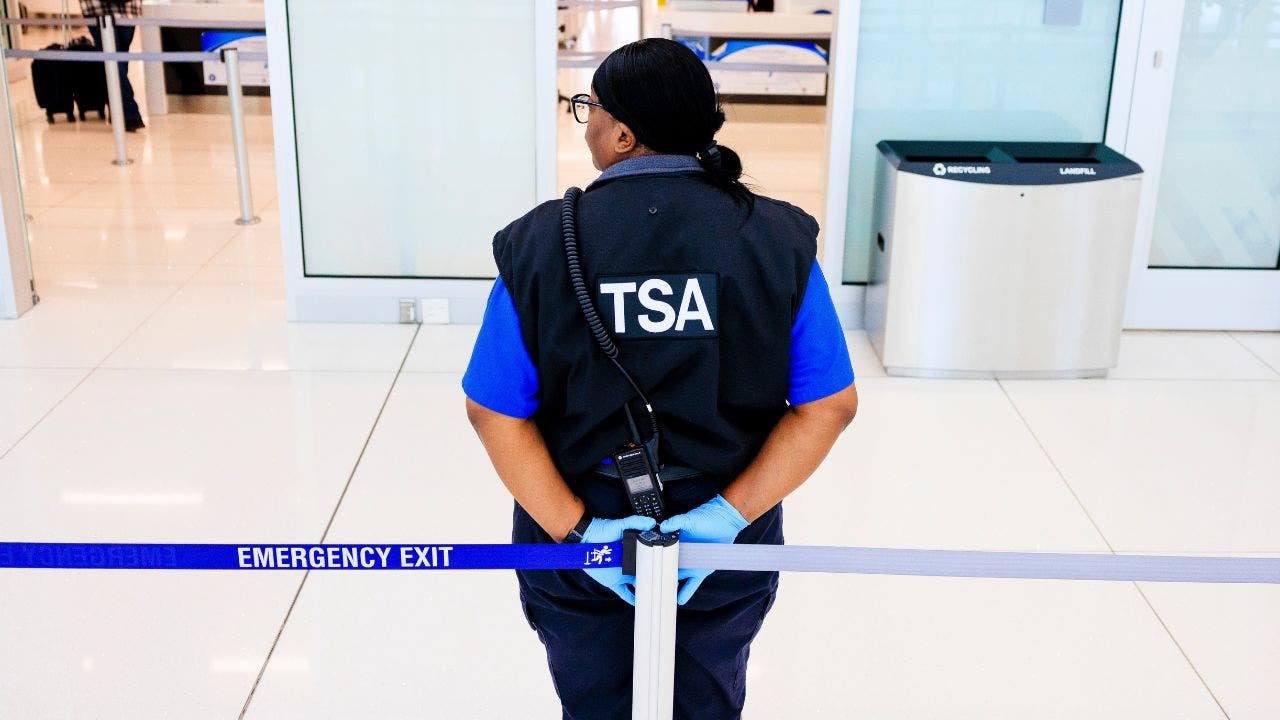
A Transportation Security Administration (TSA) officer stands near a security checkpoint. (Michael Ciaglo / Getty Images)
Transportation Security Administration (TSA)
Disruptions to the TSA, whose agents are responsible for security checks at nearly 440 airports across the country, could perhaps be the most impactful part of the partial shutdown to Americans’ everyday lives.
Acting Administrator Ha Nguyen McNeill told lawmakers at a hearing on Wednesday that around 95% of TSA employees — roughly 61,000 people — are deemed essential and will be forced to work without pay in the event of a shutdown.
McNeill said many TSA agents were still recovering from the effects of the recent 43-day shutdown. «We heard reports of officers sleeping in their cars at airports to save money on gas, selling their blood and plasma, and taking on second jobs to make ends meet,» she said.
TSA paychecks due to be issued on March 3 could see agents getting reduced pay depending on the length of the shutdown. Agents would not be at risk of missing a full paycheck until March 17.
If that happens, however, Americans could see delays or even cancellations at the country’s busiest airports as TSA agents are forced to call out of work and get second jobs to make ends meet.
SHUTDOWN CLOCK TICKS AS SCHUMER, DEMOCRATS DIG IN ON DHS FUNDING DEMANDS
Coast Guard
The U.S. Coast Guard is the only branch of the Armed Forces under DHS rather than the Department of War, and as such would likely see reduced operations during a shutdown.
That includes a pause in training for pilots, air crews, and boat crews until funding is restarted.
Admiral Thomas Allan, Coast Guard Vice Commandant, warned lawmakers that it would have to «suspend all missions, except those for national security or the protection of life and property.»
A lapse in its funding would also result in suspended pay for 56,000 active duty, reserve, and civilian personnel, which Allan warned would negatively affect morale and recruitment efforts.
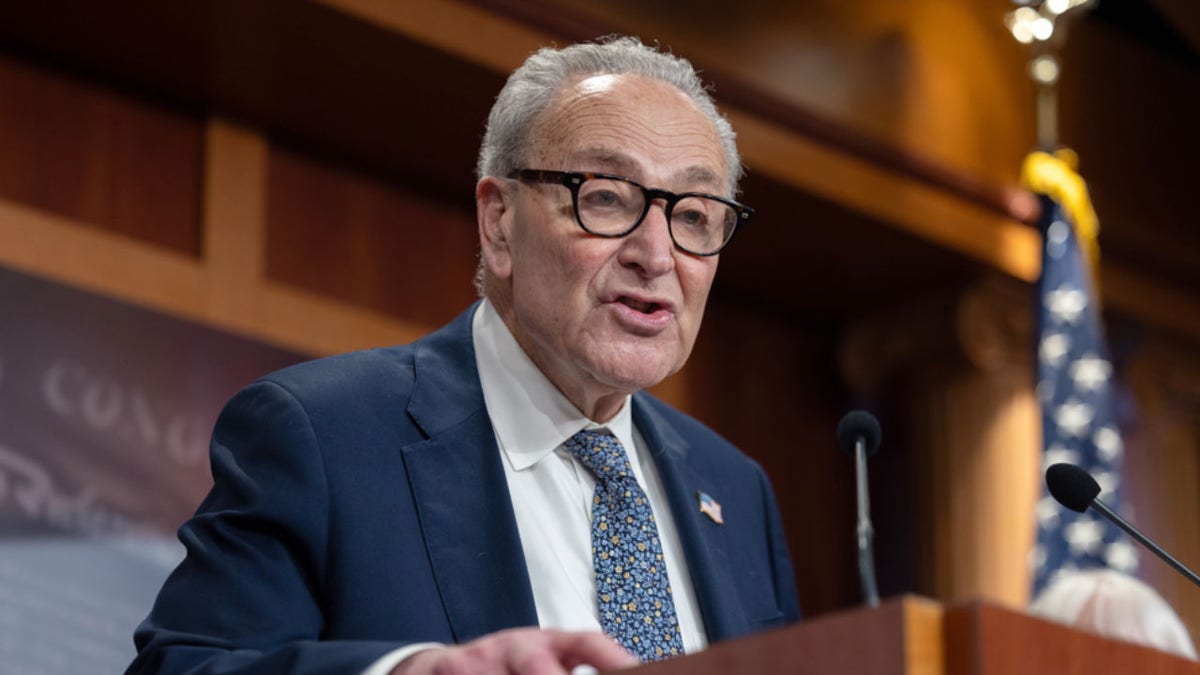
Senate Minority Leader Chuck Schumer, D-N.Y., speaks at a press conference following the passage of government funding bills, at the U.S. Capitol in Washington, D.C., on Jan. 30, 2026. (Nathan Posner/Anadolu via Getty Images)
Secret Service
The U.S. Secret Service (USSS), which is critical to protecting the president and key members of the administration, is also under DHS’s purview.
While its core functions would be largely unaffected by a shutdown, some 94% of the roughly 8,000 people the service employs would be forced to work without pay until the standoff is resolved.
Deputy USSS Director Matthew Quinn also warned that a shutdown could also hurt the progress being made to improve the service in the wake of the July 2024 assassination attempt against President Donald Trump.
«The assassination attempt on President Trump’s life brought forward hard truths for our agency and critical areas for improvement — air, space, security, communications and IT infrastructure, hiring and retention training, overarching technological improvements,» Quinn said. «We are today on the cusp of implementing generational change for our organization. A shutdown halts our reforms and undermines the momentum that we, including all of you, have worked so hard to build together.»
Immigration and Customs Enforcement (ICE)
ICE operations would largely go on unimpeded during a shutdown, despite Democrats’ outrage at the agency being the main driver of the current standoff.
Nearly 20,000 of ICE’s roughly 21,000 employees are deemed «essential» and therefore must work without pay, according to DHS shutdown guidance issued in September 2025.
But even though it’s the center of Democrats’ funding protest, ICE already received an injection of some $75 billion over the course of four years from Trump’s One Big, Beautiful Bill Act (OBBBA). It means many of its core functions retain some level of funding even during a shutdown.
Cybersecurity and Infrastructure Security Agency (CISA)
CISA is responsible for defending critical U.S. sectors like transportation, healthcare, and energy from foreign and domestic threats.
The agency would be forced to reduce operations to an active threat mitigation status and activities «essential to protecting and protecting life and property,» according to Acting CISA Director Madhu Gottumukkala.
That means a shutdown would significantly reduce CISA’s capacity to proactively monitor for potential threats from foreign adversaries.
«We will be on the defensive, reactive as opposed to being proactive, and strategic in terms of how we will be able to combat those adversaries,» Gottumukkala said.
Operations like «cyber response, security assessments, stakeholder engagements, training, exercises, and special event planning» would all be impacted, he said.
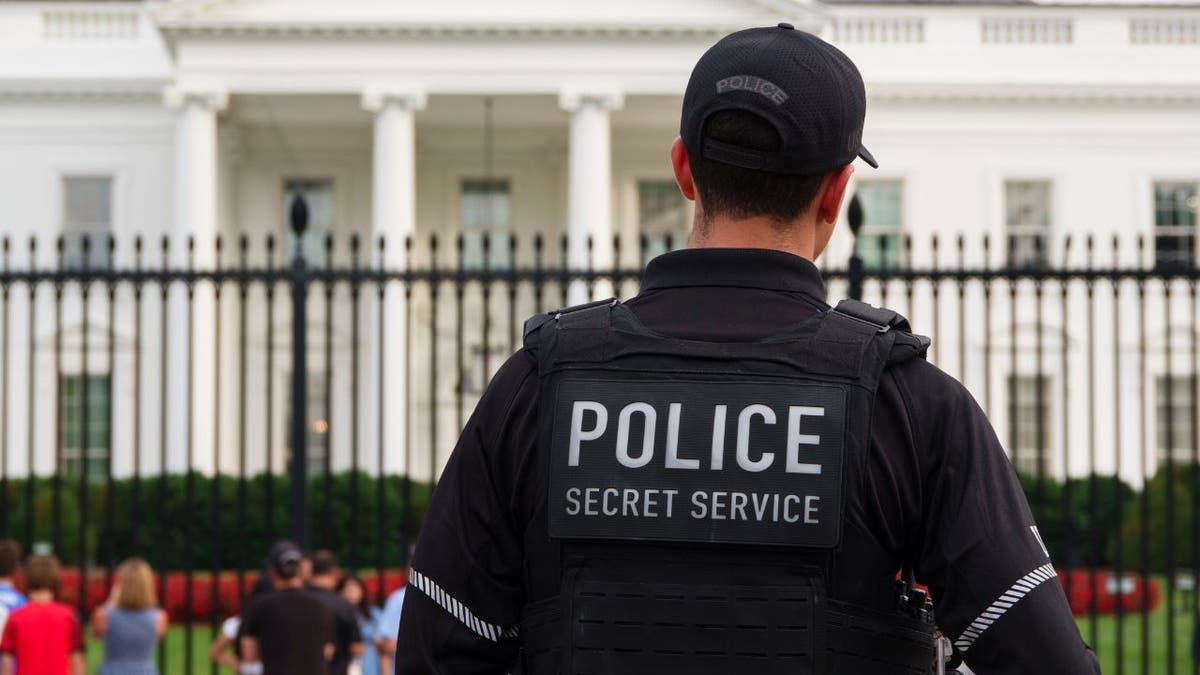
A U.S. Secret Service police officer stands outside the White House the day after President Donald Trump announced U.S. military strikes on nuclear sites in Iran on June 22, 2025, in Washington, D.C. (Kevin Carter/Getty Images)
Federal Emergency Management Agency (FEMA)
FEMA, one of the largest recipients of congressional funding under DHS, would also likely see reduced operations if a shutdown went on for long enough.
The bright spot for the agency is that past congressional appropriations have left its Disaster Relief Fund (DRF), the main coffer used to respond to natural disasters throughout the U.S., with roughly $7 billion.
The DRF could become a serious problem if the DHS shutdown goes on for more than a month, however, or in the event of an unforeseen «catastrophic disaster,» an official warned.
CLICK HERE TO DOWNLOAD THE FOX NEWS APP
FEMA is also currently working through a backlog of responses to past natural disasters, progress that Associate Administrator of the Office of Response and Recovery Gregg Phillips said could be interrupted during a shutdown.
«In the 45 days I’ve been here…we have spent $3 billion in 45 days on 5,000 projects,» Phillips said. «We’re going as fast as we can. We’re committed to reducing the backlog. I can’t go any faster than we actually are. And if this lapses, that’s going to stop.»
politics,congress,government shutdown,homeland security

El éxodo
Los oligarcas

INTERNACIONAL
Walz proposes $10M business relief package as Republicans cry ‘new avenue for fraud’ in Minnesota
NEWYou can now listen to Fox News articles!
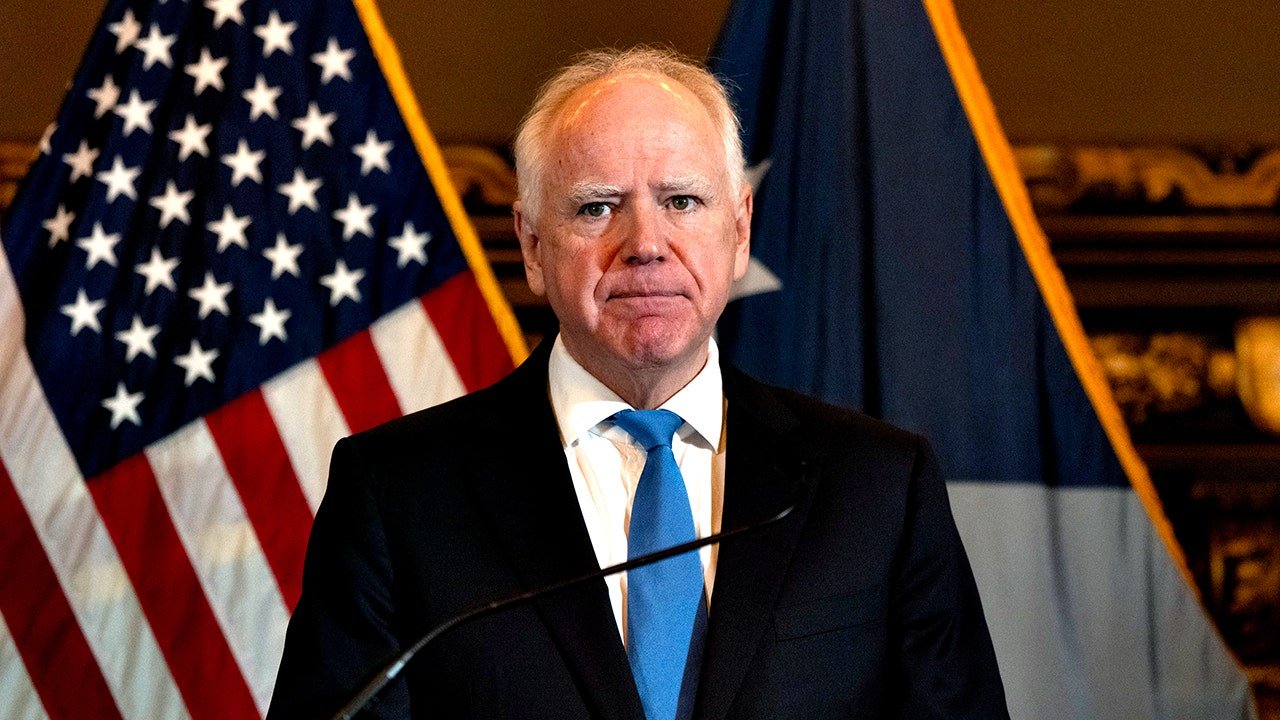
Minnesota Democratic Gov. Tim Walz was slammed online by Republicans after proposing a $10 million emergency relief package for small businesses across the state impacted by the Trump administration’s immigration crackdown.
Walz unveiled the proposal Thursday after Border Czar Tom Homan announced that Operation Metro Surge in Minnesota would be ending. The proposal calls for forgivable loans ranging from $2,500 to $25,000 to be distributed to eligible businesses that are able to demonstrate «substantial revenue loss» during «specified dates» tied to the operation.
«The campaign of retribution by the federal administration has been more than a short-term disruption; it has inflicted long-term damage on Minnesota communities,» Walz said in a statement. «Recovery will not happen overnight. Families, workers, and business owners are feeling the effects, and our responsibility is clear: we will help rebuild, stabilize these businesses, protect jobs, and ensure Minnesota’s economy can recover and thrive.»
Republicans quickly criticized the proposal as Minnesota continues to face extensive fraud allegations.
CONVICTED MINNESOTA FRAUDSTER ALLEGES WALZ, ELLISON WERE AWARE OF WIDESPREAD FRAUD
Minnesota Gov. Tim Walz proposed a $10 million emergency relief package for small businesses impacted by the Trump administration’s immigration crackdown. (Jerry Holt/The Minnesota Star Tribune via Getty Images)
President Donald Trump previously claimed that fraud in Minnesota exceeded $19 billion.
Dozens of people have been prosecuted in Minnesota in recent years for alleged large-scale welfare fraud schemes involving food assistance and autism services. Federal prosecutors have alleged the schemes stole hundreds of millions of dollars from taxpayer-funded programs, with separate investigations also examining alleged fraud in the state’s daycare system.
House Majority Whip Tom Emmer, R-Minn. reacted to the governor’s proposal on X, saying, «BREAKING: Tim Walz opens up a new avenue for fraud in Minnesota.»
NOEM HAMMERS WALZ, FREY FOR IGNORING 1,360 ICE DETAINERS FOR CRIMINAL ILLEGAL ALIENS
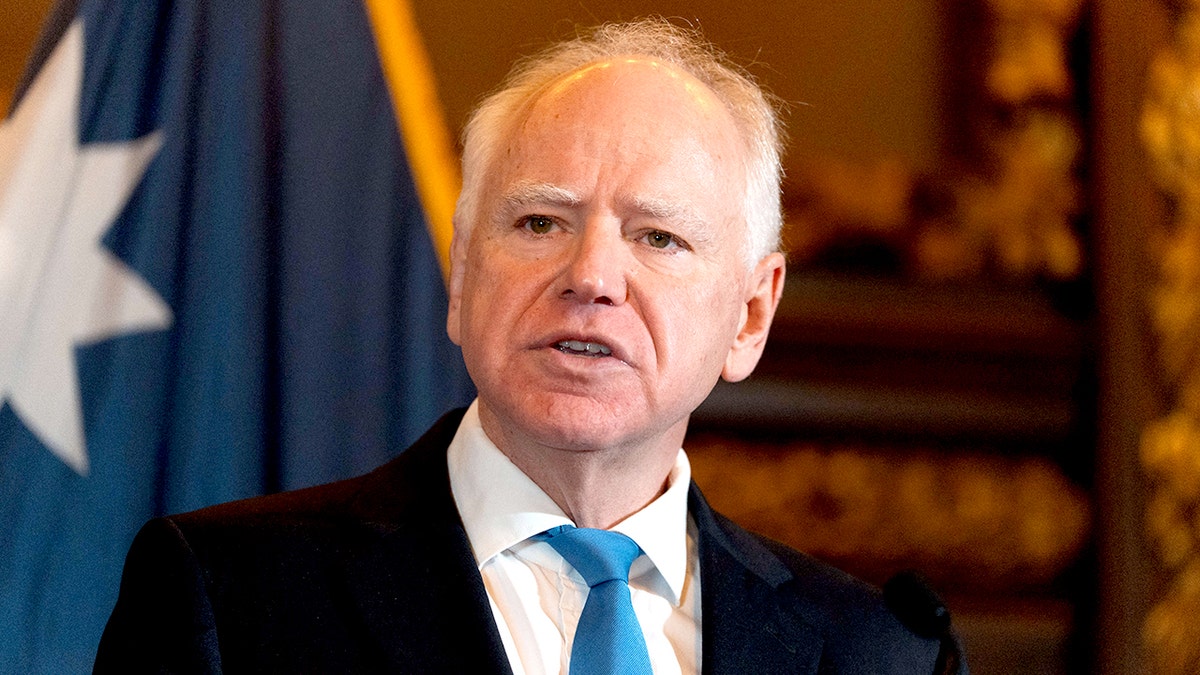
Democratic Minnesota Gov. Tim Walz speaks to reporters after he announced that he would not seek reelection, at the Minnesota State Capitol on Jan. 5, 2026. (Reuters/Tim Evans)
Minnesota Republican state Sen. Michael Holmstrom said on X that the proposal would be an «immediate NO from me,» adding that Minnesota taxpayers «do not deserve to have more money stolen from them.»
Others referenced fraud related to Minnesota’s daycare system, including Rep. Eli Crane, R-Ariz., who responded to the proposal on X, «Does that include learing centers?»
His post referenced a typo that read «Quality Learing Center,» which was eventually corrected. The Quality Learning Center was infamously featured in a video by YouTuber Nick Shirley, who visited multiple daycare centers across Minnesota that allegedly received public funds but were not providing any services.
SCOOP: THOUSANDS OF VIOLENT ILLEGAL IMMIGRANTS ARRESTED IN MINNESOTA AS ADMIN VOWS ‘WE WILL NOT BACK DOWN’
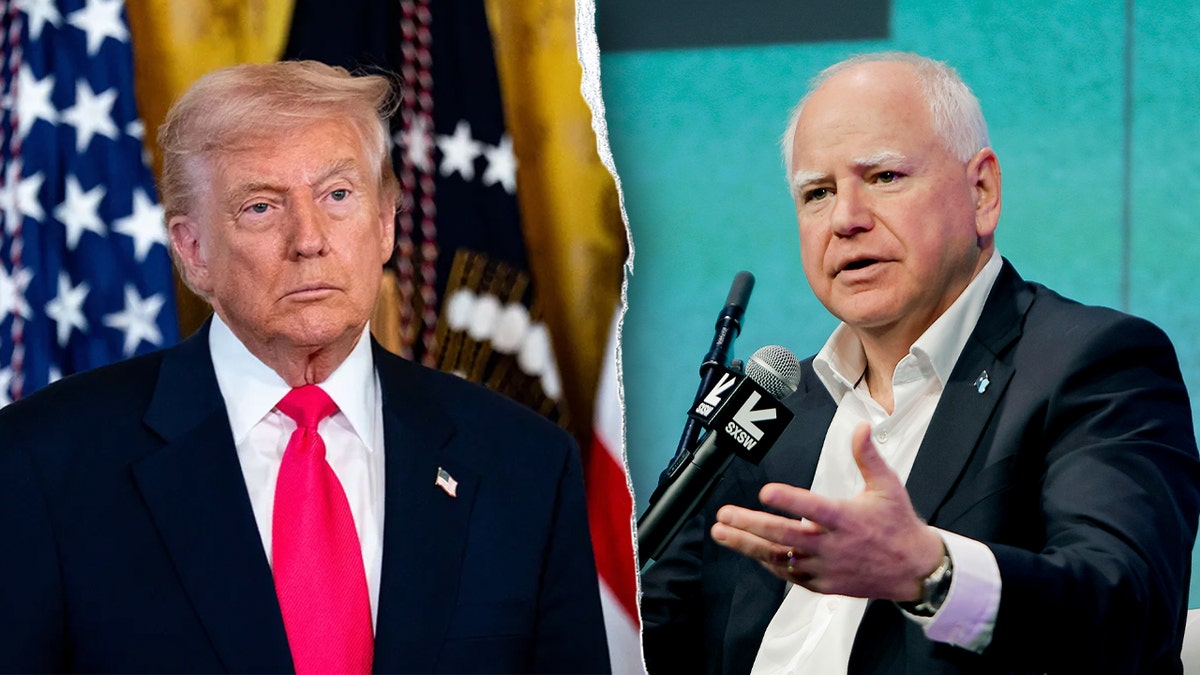
Gov. Tim Walz unveiled an emergency loan plan tied to the economic impact of federal immigration enforcement under President Donald Trump. (Al Drago/Bloomberg via Getty Images and Tibrina Hobson/Getty Images)
The governor’s office included a statement from Henry Garnica, the owner of CentroMex in East St. Paul, who said the past few months during the immigration operation have been «some of the hardest I’ve experienced as a business owner.»
«Sales are down, we have limited hours, and we have had to change how we operate,» he stated. That’s not who we are as a neighborhood store. This proposed forgivable loan package would give businesses like mine breathing room — to keep employees on payroll and keep our doors open. For some of us, it could mean the difference between surviving and closing for good.»
On Thursday, Walz demanded that the federal government «pay for what they broke» after the Trump administration said it would draw down its presence in the Twin Cities.
CLICK HERE TO DOWNLOAD THE FOX NEWS APP
Walz said during a news conference that federal law enforcement’s presence in the state was leaving «deep damage» and «generational trauma.»
Fox News Digital’s Michael Dorgan contributed to this report.
minnesota,tim walz,tom homan,small business under siege

DHS shutdown explained: Who works without pay, what happens to airports and disaster response

El gobierno de Kicillof cuestionó el rumbo económico y alertó por la caída del consumo

Shania Howard, la modelo de OnlyFans que indigna a los aficionados en los campos de fútbol: ‘Este club es una mier**’

Quirno encabeza la delegación argentina en la Conferencia de Seguridad de Múnich: defensa del plan Milei y bilateral con China

Pensábamos que era el nuevo Darksiders, pero es un RPG de fantasía oscura con las cosas claras y juego cooperativo

Polémica por dichos homofóbicos contra un bailarín del Colón en el programa de Beto Casella: la respuesta de Julio Bocca

Acuartelamiento policial en Santa Fe: reclamo salarial y temor a un conflicto nacional de seguridad

La advertencia de ATE a los gobernadores que apoyan la reforma laboral: “Firmarán su sentencia de muerte”

Cuánto le cuesta a la clase media llenar el changuito y cómo varían los precios de los alimentos entre provincias

A quién afecta la Reforma laboral: estos son los puntos clave del proyecto de Milei

 POLITICA3 días ago
La advertencia de ATE a los gobernadores que apoyan la reforma laboral: “Firmarán su sentencia de muerte”
- POLITICA20 horas ago
A quién afecta la Reforma laboral: estos son los puntos clave del proyecto de Milei
- POLITICA2 días ago
Quema de gomas y “sirenazos” en Santa Fe: se agrava el conflicto entre la policía y el Gobinero provincial