INTERNACIONAL
Alucinantemente diversos: así eran los perros hace 10 mil años


Como especie, abarcan animales tan diferentes como el shih tzu, el shar pei y el perro pastor de las islas Shetland. La explosión de variaciones caninas se remonta normalmente a la época victoriana, cuando los aficionados a los perros crearon una amplia gama de razas estandarizadas y empezaron a producir canes que cumplían estándares físicos tan variados. Sin embargo, un estudio reciente parece cambiar la ecuación.
“Hace casi 10.000 años, la mitad de toda la variación que vemos hoy ya estaba presente en las poblaciones caninas”, afirmó Carly Ameen, bioarqueóloga de la Universidad de Exeter y una de las autoras principales del análisis, publicado el jueves en la revista Science. “Esto de verdad ha puesto en entredicho nuestras ideas sobre el origen de la diversidad canina y la narrativa general de que fue realmente una creación victoriana”.
Leé también: Los expertos coinciden: el ejercicio puede ayudar a controlar el dolor que provoca la artritis de rodilla
Perros y lobos
Exactamente cuándo, dónde y cómo los lobos salvajes dieron lugar a los perros domésticos sigue siendo objeto de un intenso debate científico. En el nuevo estudio, un equipo internacional de investigadores –dirigido por Ameen y Allowen Evin, bioarqueóloga de la Universidad de Montpellier– analizó los cráneos de más de 600 cánidos, la familia biológica que incluye tanto a perros como a lobos.
Más de 150 de estos cráneos procedían de perros modernos, incluyendo razas puras, mestizas y perros callejeros, mientras que otros 86 procedían de lobos modernos. El resto de los cráneos eran especímenes arqueológicos, recogidos en yacimientos de todo el mundo, de cánidos que habían vivido en algún momento de los últimos 50.000 años.
Los investigadores dividieron estos especímenes arqueológicos en dos categorías:
- Especímenes más antiguos, recogidos de cánidos que habían vivido hace más de 12.700 años, durante el Pleistoceno tardío
- Especímenes más jóvenes, recogidos de cánidos que habían vivido hace menos de 11.700 años, durante lo que se conoce como la época del Holoceno.
Un cráneo arqueológico de cánido, arriba, y un cráneo de perro moderno, abajo (C. Ameen (Universidad de Exeter) vía The New York Times)
En general, los investigadores descubrieron que los lobos y los cánidos más antiguos tendían a tener cráneos estilizados y delgados, ligeramente más grandes en promedio que los cráneos de los perros modernos y los especímenes arqueológicos más jóvenes.
Los cráneos de los perros y los cánidos más recientes eran más variados tanto en tamaño como en forma, e incluso algunos eran notablemente más cortos y anchos que los de los lobos. “La forma del cráneo es mucho más robusta y achaparrada”, explicó Ameen.
Algunas de las características físicas más extremas, como las caras casi planas de razas modernas como el carlino, solo aparecían en los perros modernos y no en los especímenes arqueológicos, explicó Ameen.
Pero los investigadores también hallaron algunas formas de cráneo entre los ejemplares arqueológicos más jóvenes que no aparecían en los perros modernos. Es difícil saber por qué desaparecieron esas formas, según Ameen, pero una posibilidad es que haya “ciertas funciones de los perros, o tipos de perros, que quizá no valoremos tanto hoy en términos de apariencia como lo hacíamos en el pasado”.
11 mil años
Los investigadores también descubrieron que el cráneo claramente canino más antiguo tenía unos 11.000 años. Los cráneos más antiguos, incluidos los que, según lo habían propuesto algunos científicos, podrían pertenecer a los primeros perros, no tenían los rasgos físicos característicos del perro doméstico, concluyeron.
“Ha habido mucho debate sobre estos caninos realmente antiguos que se han encontrado, sobre todo los que tienen más de 15.000 años”, dijo Melanie Fillios, una arqueóloga antropóloga de la Universidad de Nueva Inglaterra en Australia que no participó en la investigación. “¿Se trata de perros primitivos?”.
Según ella, el nuevo estudio sugiere que “estas muestras intrigantes” se parecen más a los lobos que a los perros.
Aún no está claro qué impulsó la diversidad de los primeros perros, pero es probable que contribuyera una combinación de factores, según los expertos. Los antiguos lobos eran de por sí relativamente diversos, y vivir junto a los humanos podría haber permitido sobrevivir a una mayor variedad de cánidos, animales que habrían sido demasiado pequeños para valerse por sí mismos en la naturaleza, por ejemplo. “Los chihuahuas no serían buenos lobos, ¿verdad?”, comentó Ameen. “Lo que la domesticación permite es que esas formas sobrevivan”.
Es posible que surgieran variaciones adicionales cuando los perros se adaptaron a entornos y dietas diferentes y se trasladaron a nuevas regiones. De hecho, el aumento de la diversidad canina coincidió con un periodo de importantes migraciones humanas.
“Se están produciendo movimientos masivos de personas por todo el planeta”, explicó Fillios. “Y los perros forman parte de esa historia”.
Leé también: Con mal olor, esponjosa y gigante: así es la telaraña más grande del mundo
Otro nuevo estudio, también publicado en Science el jueves, sugiere que los perros antiguos a menudo acompañaban a los humanos en sus migraciones, y que algunas sociedades podrían incluso haber comerciado con perros.
“Los perros en Eurasia vivieron y migraron junto a humanos de diferentes civilizaciones y con diferentes patrones de subsistencia, como cazadores-recolectores, poblaciones agrícolas y pastores”, aseguró en un correo electrónico Guo-Dong Wang, investigador del Instituto de Zoología de Kunming, en China, y autor del segundo estudio. “Estos diferentes pueblos humanos adoptaron estrategias de cría distintas para sus respectivos perros con el fin de satisfacer las demandas de sus actividades de supervivencia y producción”.
(*) Por Emily Anthes
The New York Times











NEWYou can now listen to Fox News articles!
A Democratic candidate in a key Wisconsin battleground is highlighting support from a major environmental group as her Republican opponent warns the endorsement could drive up energy costs and hurt farmers.
Rep. Derrick Van Orden, R-Wis., blasted Democratic challenger Rebecca Cooke’s endorsement by the Natural Resources Defense Council (NRDC) Action Fund, arguing it signals policies that could raise costs for farmers and rural communities.
«Rebecca Cooke is completely out of touch with Wisconsin, touting an endorsement from the radical NRDC,» Van Orden told Fox News Digital. «It’s a clear sign of how quickly she’ll sell out Wisconsin farm families to please Washington Democrats.»
«Farmers and businesses across Wisconsin have time and again rejected the radical Green New Deal because it would increase the price of fertilizer, diesel and cover up more of our black dirt with solar wastelands,» he said.
REPORTER’S NOTEBOOK: GOP TARGETS AFFORDABILITY WITH RECONCILIATION 2.0 PLAN AHEAD OF MIDTERMS
The clash underscores how energy costs and their impact on Wisconsin’s farm economy are emerging as a central fault line in one of the most competitive House races in the country, where control of the chamber could hinge on battleground districts like the 3rd.
Cooke, who is challenging Van Orden in Wisconsin’s 3rd Congressional District, recently touted the NRDC Action Fund endorsement.
«Growing up on a dairy farm I know how important it is to be steward to the land, I want to protect Western Wisconsin’s natural resources and ensure the next generation has clean air and clean water,» Cooke wrote following the endorsement. «Investing in clean energy will create good-paying local jobs and help lower costs for working families. I’ll work with anyone to strengthen our economy and help strengthen our community.»
Jed Ober, managing director of the Natural Resources Defense Council Action Fund, said the group is «proud to support her campaign for Congress,» adding that Cooke «will be a champion for working families who are worried about rising energy costs.»
The Natural Resources Defense Council Action Fund is the political arm of the environmental advocacy group focused on climate and conservation issues.
A Democratic candidate in a key Wisconsin battleground is highlighting support from a major environmental group as her Republican opponent warns the endorsement could drive up energy costs and hurt farmers. (Kayla Wolf/Getty Images)
Van Orden criticized Cooke’s embrace of the endorsement, telling Fox News Digital, «Rebecca Cooke is completely out of touch with Wisconsin, touting an endorsement from the radical NRDC. It’s a clear sign of how quickly she’ll sell out Wisconsin farm families to please Washington Democrats.»
DEMOCRATS NAME CANDIDATES TO ‘RED TO BLUE’ INITIATIVE, AIMING TO FLIP GOP MAJORITY DURING MIDTERMS
«Farmers and businesses across Wisconsin have time and again rejected the radical Green New Deal because it would increase the price of fertilizer, diesel, and cover up more of our black dirt with solar wastelands.»
«Energy prices are out of control in western Wisconsin because of Derrick Van Orden’s failed leadership. He voted to increase electricity costs while handing out tax breaks to the ultra-rich,» Cooke responded in a statement to Fox News Digital. «He’s cheerleading a war of choice in the Middle East that sent the prices of gas and diesel skyrocketing in less than a month. It’s hurting our farmers who have already been hit hard by the tariffs Van Orden has supported every step of the way.»
The Natural Resources Defense Council has backed efforts to curb fossil fuel production, including supporting restrictions on hydraulic fracturing and praising the Biden administration’s pause on new liquefied natural gas (LNG) export approvals.
Republicans and industry groups argue those kinds of policies can raise energy costs in states like Wisconsin, where agriculture and fuel prices are closely linked.
Diesel powers much of the nation’s farm equipment, while fertilizer production is closely tied to natural gas — making energy prices a key concern for farmers.
Democrats argue that investments in clean energy can benefit rural communities through job creation and lower utility costs over time.
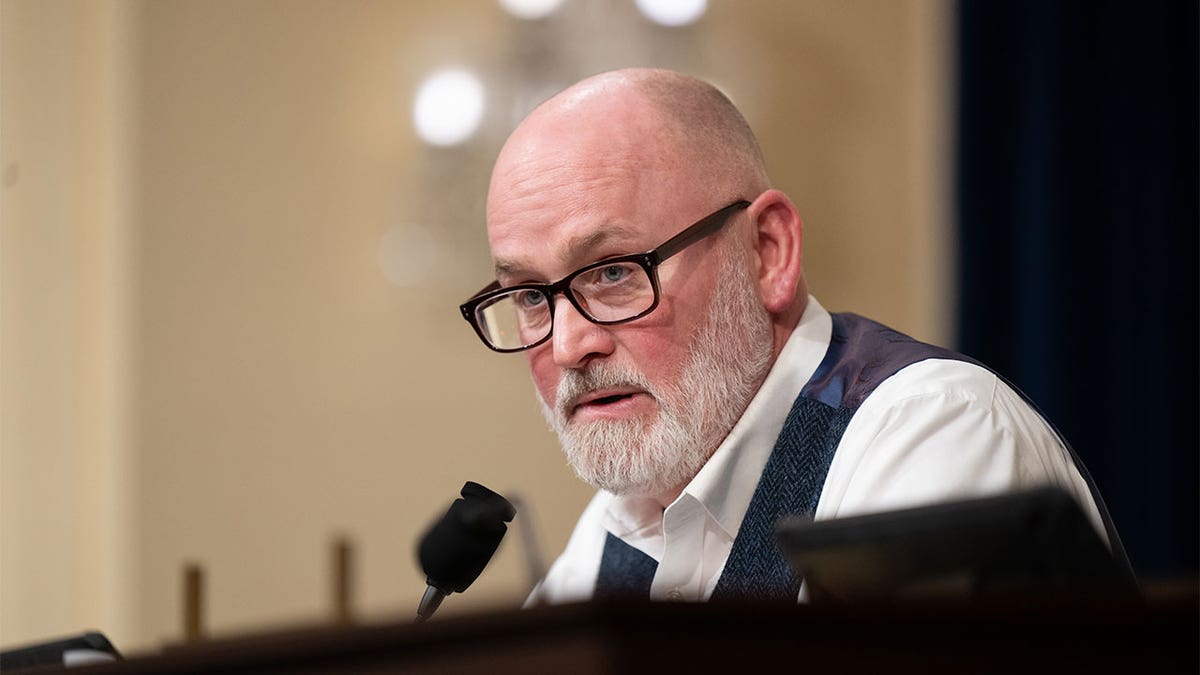
Rebecca Cooke, who is challenging Rep. Derrick Van Orden in Wisconsin’s 3rd Congressional District, recently touted an endorsement from the Natural Resources Defense Council (NRDC) Action Fund. (Provided by the office of Congressman Derrick Van Orden)
While Wisconsin does not have significant hydraulic fracturing operations, it plays a major role in the industry as a leading producer of silica sand used in fracking nationwide, meaning changes in domestic energy production can affect parts of the state’s economy.
The Natural Resources Defense Council also has opposed projects like the Enbridge Line 5 pipeline, which transports oil and natural gas liquids through the Great Lakes region. Supporters, including some industry and labor groups, say the pipeline is critical to maintaining reliable and affordable energy supplies in the Midwest, while environmental groups have raised concerns about environmental risks.
Cooke also received support from prominent Democrats, including Sen. Bernie Sanders and former Transportation Secretary Pete Buttigieg.

Van Orden criticized Cooke’s embrace of the endorsement, telling Fox News Digital, «Rebecca Cooke is completely out of touch with Wisconsin, touting an endorsement from the radical NRDC. It’s a clear sign of how quickly she’ll sell out Wisconsin farm families to please Washington Democrats. (iStock)
CLICK HERE TO DOWNLOAD THE FOX NEWS APP
The race between Cooke and Van Orden is expected to be highly competitive, with both parties viewing Wisconsin’s 3rd District as a key battleground that could help determine control of the House.
With control of the chamber at stake, energy costs and their impact on Wisconsin’s farm economy are poised to be a central fault line in the race.
wisconsin, energy, campaigning, house of representatives politics
INTERNACIONAL
Vulnerable pero vital: el oleoducto saudí que actúa como único pulmón del mercado petrolero


INTERNACIONAL
UK counterterrorism police probe antisemitic arson attack as Iran-linked group claims responsibility
NEWYou can now listen to Fox News articles!
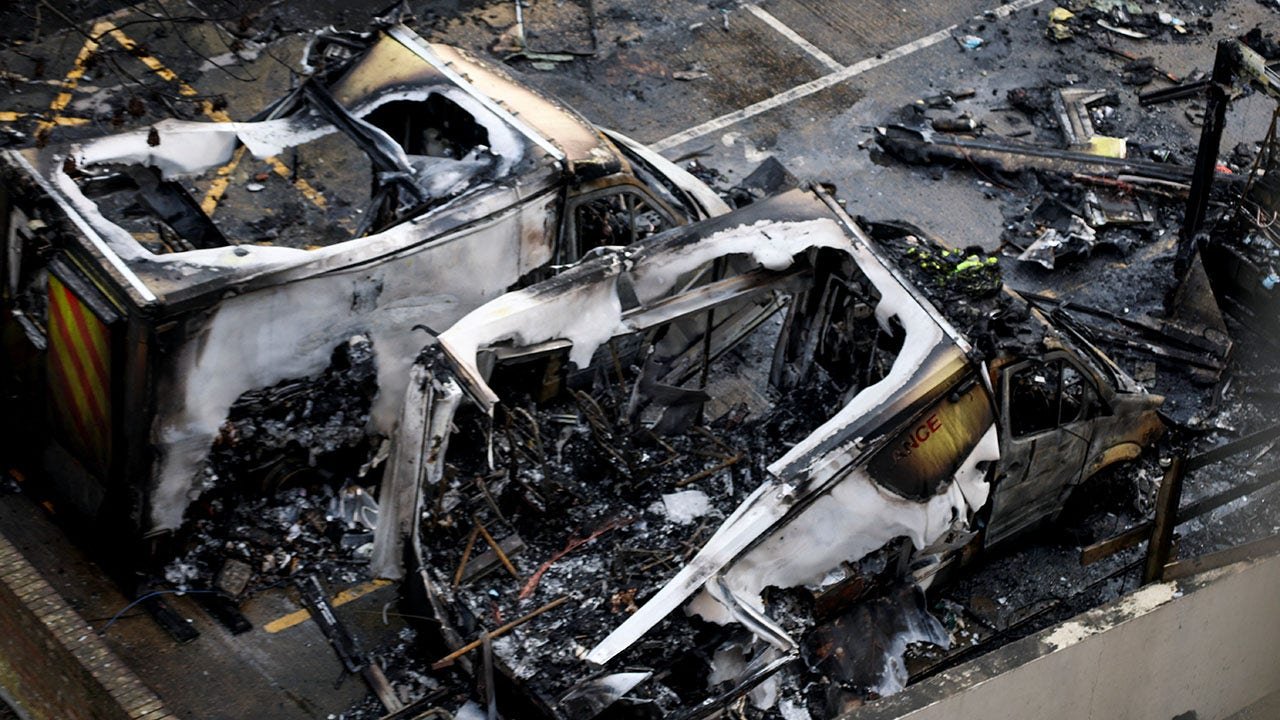
Counterterrorism police are leading an investigation after four Jewish community ambulances were set on fire outside a synagogue in London early Monday in what authorities are treating as an antisemitic hate crime.
The attack took place around 1:45 a.m. in the Golders Green neighborhood, where Hatzola ambulances, a volunteer emergency service run by the Jewish community, were deliberately set ablaze in a synagogue parking lot, according to a statement by Detective Chief Superintendent Luke Williams of the Metropolitan Police.
«This arson attack is being treated as an antisemitic hate crime. This is a devastating incident for our Jewish communities,» Williams said. He added that while the incident has not yet been formally declared terrorism, «the investigation is now being led by Counterterrorism Policing… and all lines of enquiry remain open.»
A video circulating online purports to show Harakat Ashab al-Yamin al-Islamiyya, an Iran-linked group that has claimed responsibility for recent attacks on Jewish sites in Belgium and the Netherlands, taking credit for the London attack, according to the Jewish Chronicle.
WESTERN LEADERS MUST CONFRONT ISLAMIST-INSPIRED ANTISEMITIC VIOLENCE BEFORE IT TARGETS EVERYONE
Charred remains of ambulances belonging to Hatzola, a Jewish community organization, which were set on fire in an incident that the police say is being treated as an antisemitic hate crime, in northwest London, Britain, March 23, 2026. (Hannah McKay/Reuters)
Authorities are examining a potential link to a newly emerged group with suspected ties to Iran. «We are aware of an online claim from a group taking responsibility for this attack,» Williams said. «Establishing the authenticity and accuracy of this claim will be a priority… but it is not something we can confirm at this point.»
Alan Mendoza, executive director of the Henry Jackson Society, told Fox News Digital that the attack reflects years of policy failures in confronting Iranian activity on British soil. «Successive U.K. Governments have completely failed in their primary duty of keeping the home front safe. Iranian terrorist activity has been known about in the U.K. for years yet no significant moves have been made to ban the IRGC or restrict the ability of regime-linked entities to function within British society. We have created the conditions for terrorism to flourish,» he said.
He argued that Britain’s broader approach to the conflict with Iran — attempting to maintain distance while avoiding direct confrontation — has further emboldened Tehran. «The current policy on the war in Iran is delusional. The Government is pretending Britain is not involved. The Iranian regime does not, however, believe in neutrality and has decided its position for us: ripe for targeting.»
Joe Truzman, a senior research analyst at the Foundation for Defense of Democracies, said in a post on X that «My initial assessment is that the attack could potentially be linked to Ashab al-Yamin, an Iran-linked group that has carried out multiple attacks against Jewish institutions across Europe since the war began… Hopefully this is something different, but the possibility that the group is involved should be examined.»
ISRAEL’S NETANYAHU DEMANDS WESTERN GOVERNMENTS ACT TO BATTLE ANTISEMITISM: ‘HEED OUR WARNINGS’
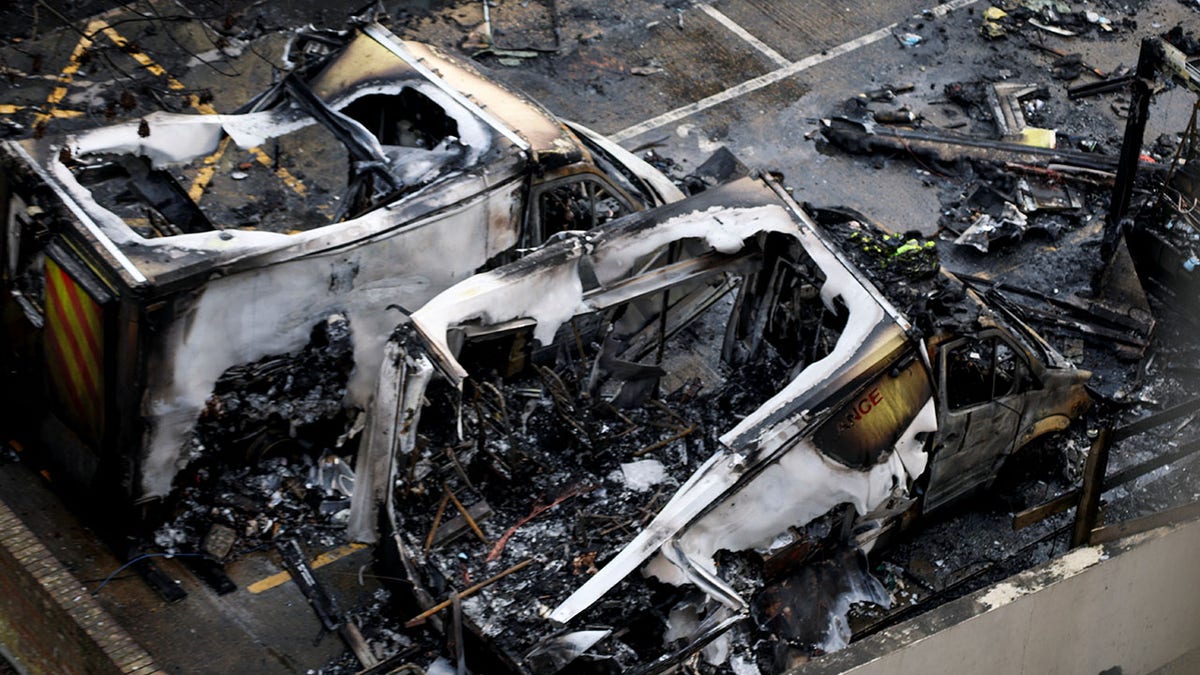
Charred remains of ambulances belonging to Hatzola, a Jewish community organization, which were set on fire in an incident that the police say is being treated as an antisemitic hate crime, in northwest London, Britain, March 23, 2026. (Isabel Infantes/Reuters)
Police said they are searching for three suspects seen on CCTV pouring an accelerant onto the vehicles before igniting them. No injuries were reported, though nearby homes were evacuated as a precaution.
The attack comes amid a broader wave of violence targeting Jewish communities across Europe in recent weeks.
Scott Saunders, CEO of the International March of the Living, said the incident represents a dangerous escalation. «The arson attack in Golders Green… marks a dangerous escalation in the targeting of Jewish communities,» Saunders said. «Emergency vehicles operated by Jewish volunteer first responders were deliberately attacked… in direct proximity to a place of worship — a space that should represent safety.»
CANADA’S CARNEY UNDER PRESSURE TO ACT AFTER SYNAGOGUES SHOT AT IN LATEST ANTISEMITIC INCIDENTS
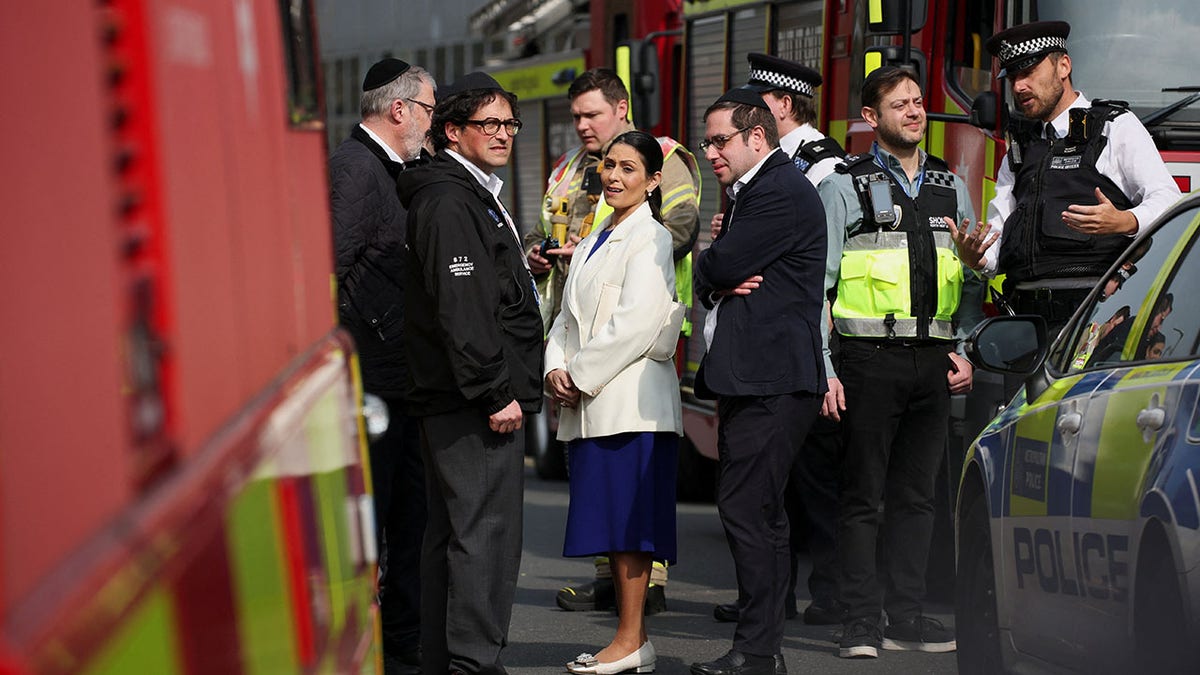
Shadow Foreign Secretary Priti Patel visits the scene after four ambulances belonging to Hatzola, a Jewish community organization, were set on fire in an incident that the police say is being treated as an antisemitic hate crime, in northwest London, Britain, March 23, 2026. (Isabel Infantes/Reuters)
«These ambulances do not only serve Jewish communities… Targeting them is an attack not only on Jewish life, but on the shared fabric of the community they serve,» he added. «Since the war with Iran began, antisemitic attacks have become more frequent, more brazen, and more direct. Jewish institutions are being singled out; synagogues, community spaces, and now even the emergency services that exist to protect Jewish lives, with a growing sense that these are legitimate targets. Following the deadly shooting in and around a synagogue in Manchester last October, where this escalation already resulted in loss of life, the attack in Golders Green makes clear that this trajectory is continuing.»
Dr. Charles Asher Small, founder of the Institute for the Study of Global Antisemitism and Policy, said the attack reflects a broader trend.
«The attack against a visible Jewish target is not an isolated act of vandalism; it is the violent fruition of a climate where Jew-hatred has been normalized and institutionalized,» Small said.
ISRAELI INTEL OFFICIAL SAYS YOUR ‘JAW WOULD DROP’ AT TERROR PLOTS PREVENTED WORLDWIDE

Men hold the flag of Israel and the pre-Iranian Revolution «Lion and Sun» flag near the scene where four ambulances belonging to Hatzola, a Jewish community organization, were set on fire in an incident that the police say is being treated as an antisemitic hate crime, in northwest London, Britain, March 23, 2026. REUTERS/Isabel Infantes (Isabel Infantes/Reuters)
«At the center of this malignancy sits the Iranian regime… which actively funds and directs the networks that view British Jewish institutions as legitimate targets,» he added.
British officials also condemned the attack.
Prime Minister Keir Starmer said, «An attack on our Jewish community is an attack on us all. We will fight the poison that is antisemitism.»
Chief Rabbi Sir Ephraim Mirvis called the incident on X «a particularly sickening assault — not only on the Jewish community, but on the values we share as a society.»
CLICK HERE TO DOWNLOAD THE FOX NEWS APP
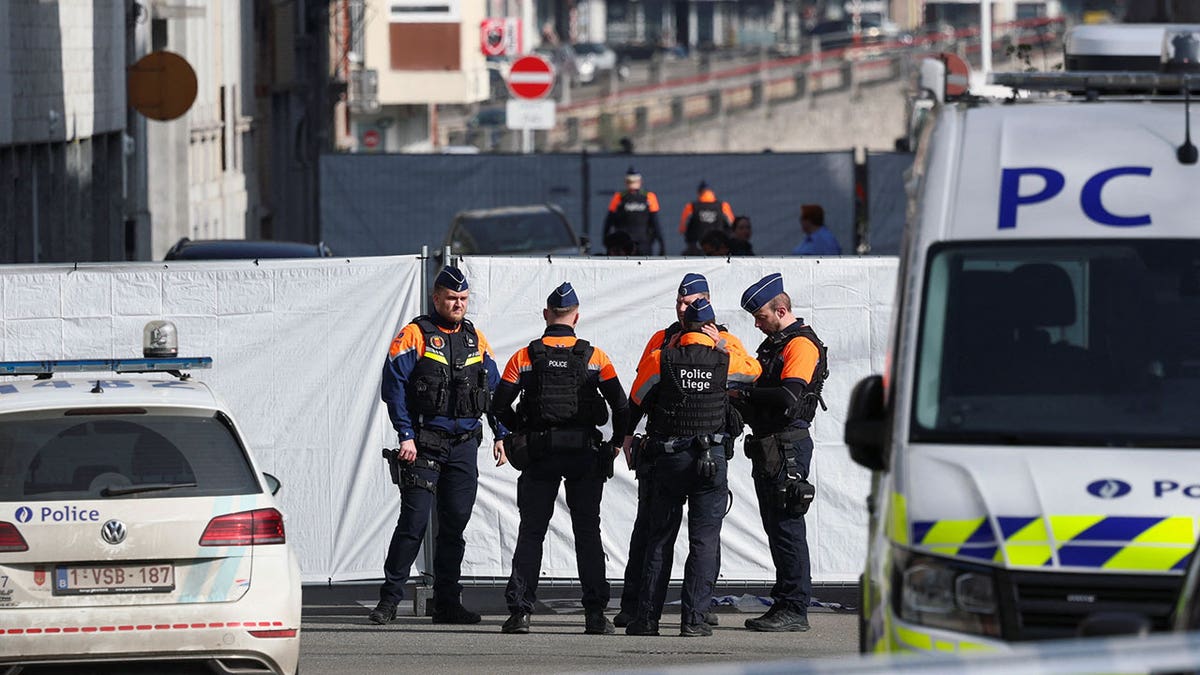
Police secure the site near a synagogue damaged by an explosion early on Monday, in Liege, Belgium, March 9, 2026. (Yves Herman/Reuters)
«The targeting of Hatzola… is a most painful illustration of the ongoing battle between those who sanctify life and those who seek to destroy it,» he added in a statement posted March 23, 2026.
Police said there have been no arrests and urged anyone with information to come forward.
anti semitism, war with iran, terrorism, europe

La justicia porteña citará a indagatoria a 7 agresores del ex delegado golpeado por una patota de Camioneros

El comediante y streamer libertario Martín “Negro” Almeida: “El humor político es clave en la batalla cultural”

Antes de $LIBRA: así fue el plan secreto para hacer negocios y recaudar millones con la imagen presidencial de Milei

Video: una megaestrella de Hollywood protagonizó una escandalosa pelea con un vecino y terminó a las piñas

GOP candidate warns Bernie-backed Dem rival’s green ties could hit farms, energy

Reforma laboral: por qué los reclamos ante la Justicia no tienen fundamentos

Kicillof desembarcó en CABA, lanzó su proyecto 2027 y empezará a ampliar su armado político en todo el país

¿FIN DE CICLO? Escándalo por la mansión no declarada y viajes de lujo empujan a Manuel Adorni fuera del Gobierno: Su salida sería inminente

¿MACRI 2027? El «operativo retorno» que sacude al PRO y los nombres que suenan para la vicepresidencia

“Tiro al facho”: la repudiable “intervención” en Facultad de Medicina en la que había que tirarle dardos a Javier Milei

 POLITICA3 días ago
¿FIN DE CICLO? Escándalo por la mansión no declarada y viajes de lujo empujan a Manuel Adorni fuera del Gobierno: Su salida sería inminente
- POLITICA1 día ago
»¡VAN A FUNDIR A MEDIO PAÍS!»: El lapidario diagnóstico de Roberto Cachanosky sobre el plan de Milei
- POLITICA2 días ago
Apareció otra factura y complica más a Adorni: el vuelo de vuelta también lo pagó su amigo Grandio