INTERNACIONAL
How terror groups shape Somalia’s daily existence as country’s capital drives new economic growth


NEWYou can now listen to Fox News articles!
Somalia, situated on the Horn of Africa, continues to be one of the most dangerous terrorist havens in the world as the Islamic State and al Qaeda terrorist affiliates continue to kill and extort the nation’s population. In the latest figures, Human Rights Watch says hundreds were killed in 2024, either by jihadists or in conflict between the country’s clans and tribes.
Somalis face armed roadblocks in many areas, where terrorists or government troops extort money, and lawlessness and corruption occur on a daily basis.
President Donald Trump lashed out against Somalia again on Wednesday, saying, «It’s just a people walking around killing each other.» He added, «So Somalia is considered by many to be the worst country on Earth? I don’t know, … I haven’t been there. I won’t be there anytime soon. I hope.»
US DRAMATICALLY ESCALATES SOMALIA AIRSTRIKES AS TRUMP ADMIN TARGETS ISIS, AL QAEDA TERRORISTS
Daily life continues at the heart of the Horn of Africa as it draws attention with Africa’s longest coastline and its strategic location in Mogadishu, Somalia on Aug. 20, 2025. (Emirhan Turker/Anadolu via Getty Images)
The Trump administration, through U.S. Africa Command, has increased the number of airstrikes carried out against terrorists in Somalia more than tenfold so far this year, compared to missions carried out under President Biden in 2024. On Nov. 25, ISIS-Somalia terrorists were attacked in the Puntland region by U.S. and Somali forces reportedly using drones and ten MH-60 helicopters. On Nov. 28, U.S. forces struck al Qaeda-linked al-Shabab terrorists in the south of the country near Kismayo.
Somalia’s Ministry of Endowments and Religious Affairs states that more than 99% of the population is Sunni Muslim.
«Al-Shabab continues to hold significant territory in southern and central Somalia,» Bill Roggio told Fox News Digital. Roggio is a senior fellow at the Foundation for Defense of Democracies (FDD) and editor of FDD’s Long War Journal. He added, «While the exact amount has not been disclosed, in 2019 the AFRICOM commander reported that Shabab controlled about 25% of Somalia. Security has worsened since then, and Shabab undoubtedly controls more ground than it did in 2019. In areas Shabab controls, it subjects civilians to taxes and its harsh version of Sharia, or Islamic law, and it recruits, indoctrinates and trains young men to wage jihad.»
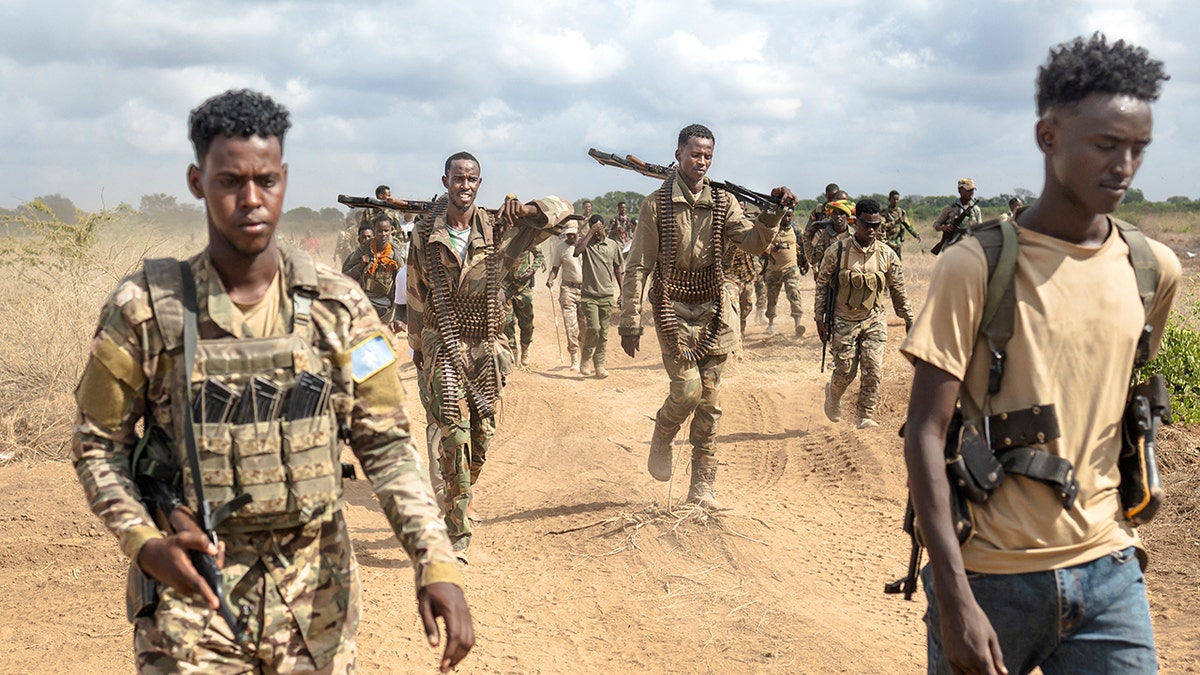
Soldiers of the Somalia National Army (SNA) walk near the frontlines at Sabiid, one of the towns they have liberated from the al Qaeda-linked militants, al-Shabaab, in Somalia’s lower-Shabelle region on Nov. 11, 2025. (Tony Karumba/AFP via Getty Images)
But on the ground, Fox News Digital found life to be complicated. «In Somalia, it all depends on where you are,» Mogadishu resident Samatar Talliye told Fox News Digital. He added, «The country is big, and the experiences are very different. Mogadishu is relatively safe, and it is a big city with millions of people. Business is booming, the housing market is insane, and new projects are started every day.»
MINNESOTA TAXPAYER DOLLARS FUNNELED TO AL-SHABAAB TERROR GROUP, REPORT ALLEGES
Abdisamad Artan Ahmed, who also lives in Mogadishu, recently told Reuters, «We have seen and heard what the U.S. has said about Somalia on social media, but the truth is that Somalia is currently one of the safest countries in East Africa. Whether in Mogadishu or other regions, Somalia is secure and stable. This is the best and safest time for the country.»
But Human Rights Watch (HRW) reported there are still occasional terror attacks in the capital city. In August last year, HRW stated al-Shabab «attacked a beach restaurant, killing 37 civilians and injuring over 200.»
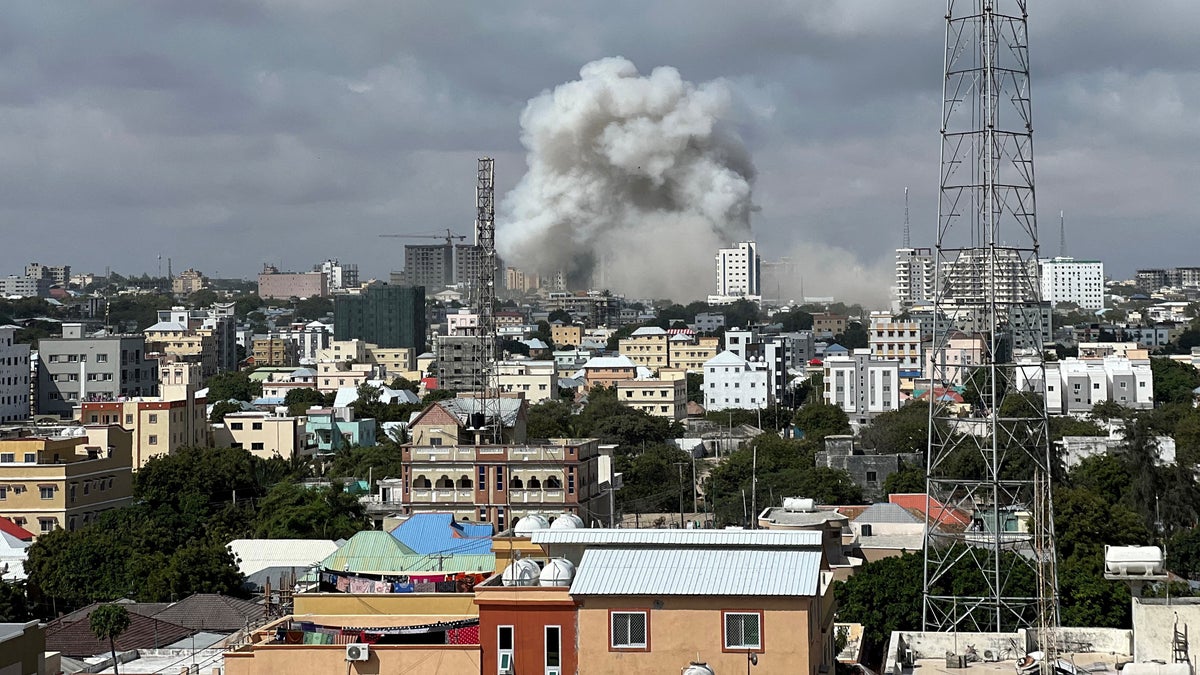
A view shows smoke rising following a car bomb explosion at Somalia’s education ministry in Mogadishu, Somalia October 29, 2022, in this picture obtained from social media. (Abdihalim Bashir/Reuters)
There are «tangible signs of improvement in aspects of daily life in Somalia, particularly in Mogadishu,» Anna Mahjar-Barducci, project director at the Middle East Media Research Institute (MEMRI) told Fox News Digital. «However, progress is uneven: rural and southern regions face ongoing al-Shabab threats.»
COMER TARGETS WALZ IN NEW HOUSE INVESTIGATION, CITING NEARLY $1B IN ALLEGED MINNESOTA FRAUD
«Violence and danger is mostly in places where the government has not reached,» Talliye said, adding there are «pockets in Jubaland, South West State, Hirshabbele and Galmadug. The state governments are weak and mostly only control a couple of the big towns, unlike Puntland and Somaliland that control the majority of their state.»
Mahjar-Barducci emphasized, «Overall safety remains precarious, with persistent al-Shabab attacks, displacement, and weak policing. These insights paint a picture of cautious normalcy in urban hubs contrasted with checkpoint-heavy, militant-influenced routines elsewhere.»
«Corruption is widespread in many government offices, and obtaining services often requires paying extra fees,» Mahjar-Barducci continued. «Bribery is common across various public services. In Somalia, authority is often concentrated in the hands of the governor, mayor or district officers, and, at times, anyone who is armed.»
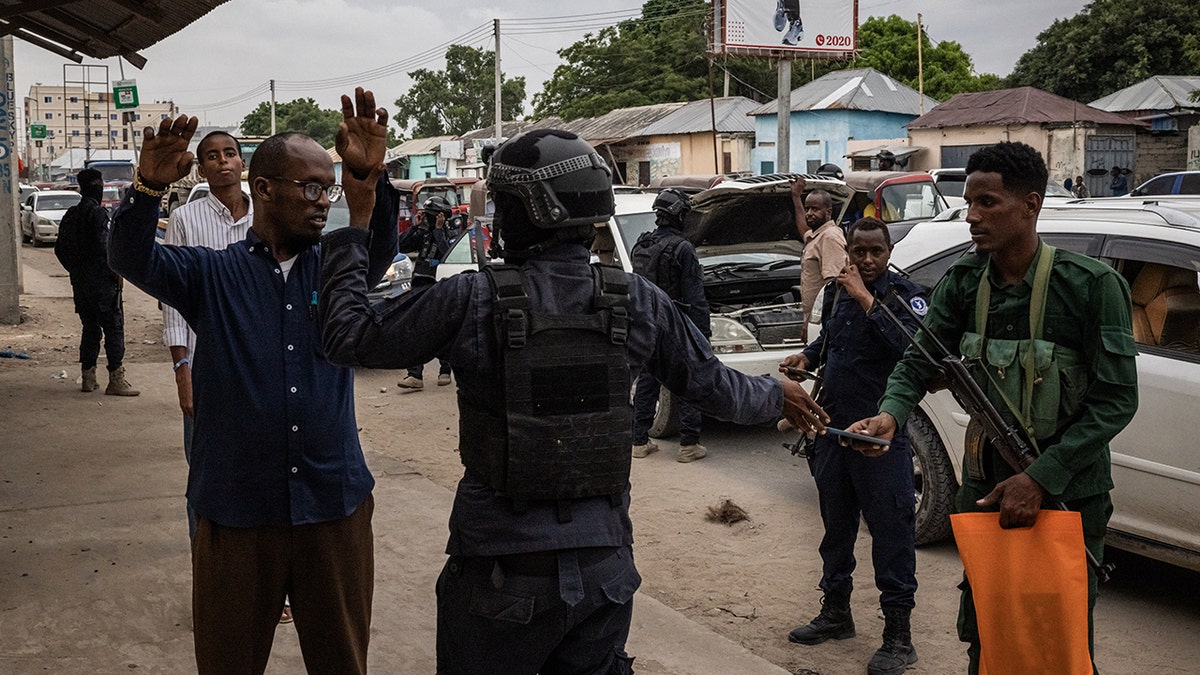
Officers with Somalia’s anti-terror police search vehicles and motorists at a pop-up checkpoint created to find weapons and bomb components on a road on April 21, 2025, in central Mogadishu, Somalia. There are concerns of a jihadist resurgence in Somalia amid growing attacks by the militant group al-Shabab, which has been fighting the government for nearly 20 years and controls swathes of the southern and central parts of the country. (Ed Ram/Getty Images)
Al-Shabab’s fundraising tentacles are a cancer growing in every area of Somali society. The European Union’s Agency for Asylum recently stated, «the U.N. Panel of experts on Somalia, in its latest report from 2024, indicates that al-Shabab’s overall financial income for 2023 exceeded $150 million.»
The report continues, «Among others, al-Shabab relies on the following sources of revenue: checkpoints, forced charitable or alms contributions, direct extortion of business, taxation of imports into ports, kidnappings for ransom, taxation of farm produce, livestock selling, water and irrigation resources, vehicles registration fees, operating licences fee, as well as property and business ventures in Somalia. Everything and anything is potentially a source of income.»
In Somalia, you don’t have to intentionally fund al-Shabab, it just happens. «Nobody has to ‘mean’ to fund al-Shabab,» former State Department counterterrorism analyst Tricia Bacon told Minnesota’s Kare 11 News on Nov. 26. «But that’s sort of the cost of doing business in Somalia, because the government has been so ineffective at protecting people from al-Shabab’s extortion that, you know, you don’t really have a choice of whether or not to pay.»
Talliye admitted, «Government corruption is visible and painful, but people are used to complete chaos.» Chaos that arguably started when civil war broke out in 1991. Fox News correspondent Eric Shawn was on assignment in Mogadishu the following year.
«The country was ruled by warlords,» he told Fox News Digital. «There was mass starvation and no government; it was ruled at the end of an AK-47.»
«There was gunfire and rocket-propelled grenades being launched every night. The country had devolved into anarchy and total uncertainty. There was no electricity, and basic human conditions were barbaric. The result was a horrific spectacle of a human catastrophe that was man-made and totally unnecessary and so unfortunate for the innocent civilians who had to endure a hardship that was beyond comprehension.»
CLICK HERE TO DOWNLOAD THE FOX NEWS APP
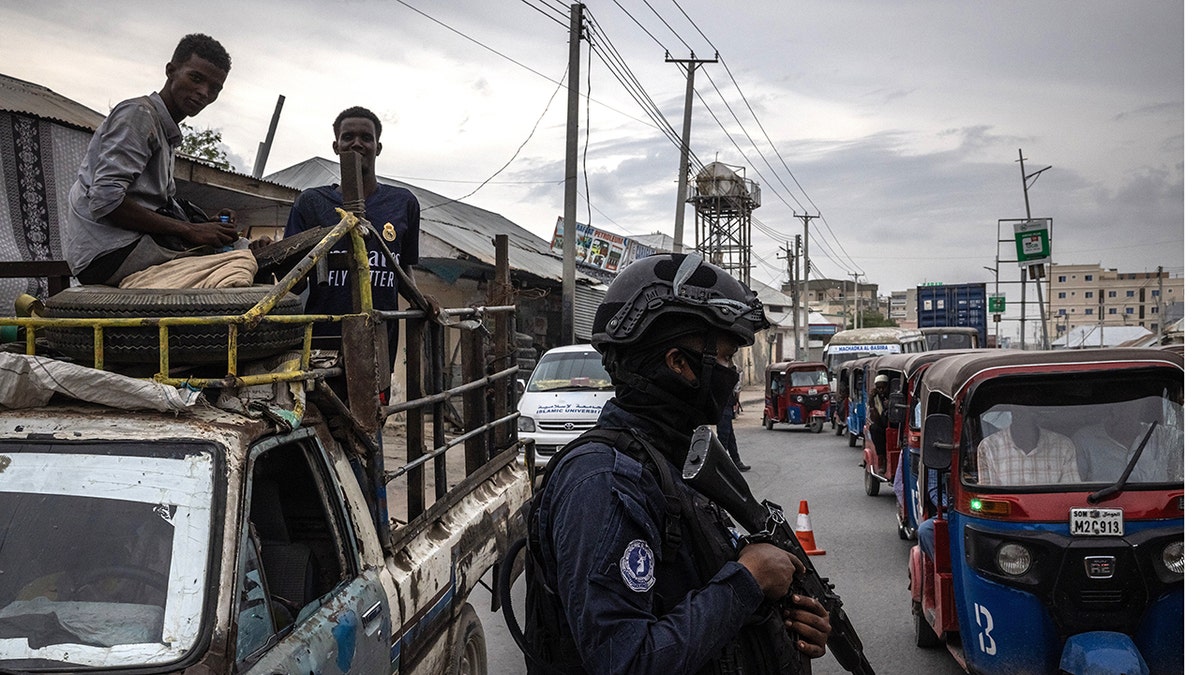
Officers with Somalia’s anti-terror police search vehicles and motorists at a pop-up check point created to find weapons and bomb components on a road on April 21, 2025, in central Mogadishu, Somalia. There are concerns of a jihadist resurgence in Somalia amid growing attacks by the militant group Al-Shabaab, which has been fighting the government for nearly 20 years and controls swathes of the southern and central parts of the country. (Ed Ram/Getty Images)
For many Somalis, more than 30 years on, freedom is still only a dream. It means, Mahjar-Barducci said, «living without fear — being able to move freely, work safely, and care for their families. It includes safety from checkpoints and clan tensions, speaking openly, running a business without intimidation and sending children to school without worry. Western audiences often misunderstand Somalia as being entirely lawless or a failed state, overlooking the resilience of its people, strong community networks, and gradual improvements in security, governance, and business opportunities.»
Talliye reflected, «People are scared of al-Shabab, and the hope is the long and painful journey towards one man, one vote. People only believe things will change when politicians are held responsible by the people.»
africa,donald trump,terrorism,conflicts





INTERNACIONAL
Tensión máxima en Medio Oriente: EE.UU. evacúa a militares de su base en Qatar tras amenazas de Irán

Parte del personal en la base aérea de Al Udeid, el principal enclave militar de Estados Unidos en Qatar, recibió órdenes de evacuar antes del miércoles a la noche. Así lo reveló un funcionario norteamericano, que pidió mantener el anonimato por tratarse de un tema sensible.
La medida, según describió la fuente, es “de precaución” y se tomó luego de que un alto funcionario iraní mencionara el ataque con misiles que Irán lanzó contra esa base en junio, en represalia por bombardeos estadounidenses a instalaciones nucleares iraníes.
Leé también Irán: los escenarios que se abren tras las amenazas de Trump y la sangrienta represión de las protestas
El funcionario evitó dar detalles sobre si la evacuación es obligatoria u opcional, cuántas personas están involucradas o si afecta a militares, civiles o ambos. Argumentó que la seguridad operativa es prioritaria y que no se pueden brindar precisiones en este contexto.
Qatar confirmó la evacuación y habló de “tensiones regionales”
El gobierno de Qatar reconoció que la evacuación se lleva adelante “en respuesta a las tensiones regionales actuales”. En un comunicado oficial, la oficina de prensa aseguró que el país “continúa implementando todas las medidas necesarias para salvaguardar la seguridad y protección de sus ciudadanos y residentes como prioridad principal, incluidas acciones relacionadas con la protección de infraestructura crítica e instalaciones militares”.
Leé también Trump apoyó las protestas en Irán y les pidió a los manifestantes que “tomen el control de las instituciones”
Por su parte, el Pentágono y el Departamento de Estado de EE.UU. evitaron hacer comentarios sobre la situación o sobre posibles alertas de seguridad para diplomáticos y civiles estadounidenses en Qatar. En junio, la embajada norteamericana en Doha solo había emitido un aviso de “refugio en el lugar”, pero no llegó a recomendar la evacuación.
Irán redobla la presión y recuerda el ataque a la base
La tensión escaló después de que Ali Shamkhani, asesor del líder supremo iraní, el ayatolá Alí Jamenei, publicara en la red social X: “El presidente de Estados Unidos, que habla repetidamente sobre la agresión inútil contra las instalaciones nucleares de Irán, haría bien en mencionar también la destrucción de la base estadounidense en Al-Udeid por misiles iraníes. Sin duda ayudaría a crear una comprensión real de la voluntad y capacidad de Irán para responder a cualquier agresión”.
El ataque iraní a la base de Al Udeid en junio, que alberga a miles de militares estadounidenses, marcó un punto de inflexión en la región. Según el Comando Central del ejército de EE.UU., ningún personal estadounidense o qatarí resultó herido, aunque un oficial militar qatarí reconoció que uno de los 19 misiles disparados no fue interceptado y golpeó la base. El entonces presidente Donald Trump minimizó el hecho y aseguró que “apenas se causaron daños”.
Leé también Un manifestante irrumpió en la embajada de Irán en Londres y retiró la bandera oficial durante una protesta
La situación se da mientras continúan las protestas antigubernamentales en Irán y Trump advierte que está dispuesto a tomar acciones militares en apoyo a los manifestantes. En este clima, funcionarios iraníes y qataríes mantuvieron contactos en las últimas horas. El secretario del Consejo Supremo de Seguridad Nacional de Irán, Ali Larijani, habló por teléfono con el primer ministro qatarí, jeque Mohammed bin Abdulrahman Al Thani, quien reafirmó el respaldo de Qatar a “todos los esfuerzos de desescalada y soluciones pacíficas para mejorar la seguridad y estabilidad en la región”.
Qatar también quedó en el centro de otras tensiones regionales, como el ataque israelí en septiembre a la sede del liderazgo político de Hamás en Doha, mientras se discutía una propuesta de alto al fuego para Gaza.
La evacuación en la base de Al Udeid refleja el delicado equilibrio que enfrenta Qatar, atrapado entre las amenazas cruzadas de Irán, Estados Unidos e Israel, y la necesidad de proteger a su población y a las fuerzas extranjeras que operan en su territorio.
Estados Unidos, Irán, Qatar
INTERNACIONAL
House Dem lashes out at ‘racist’ MN fraud probe amid major investigation in his own state
NEWYou can now listen to Fox News articles!
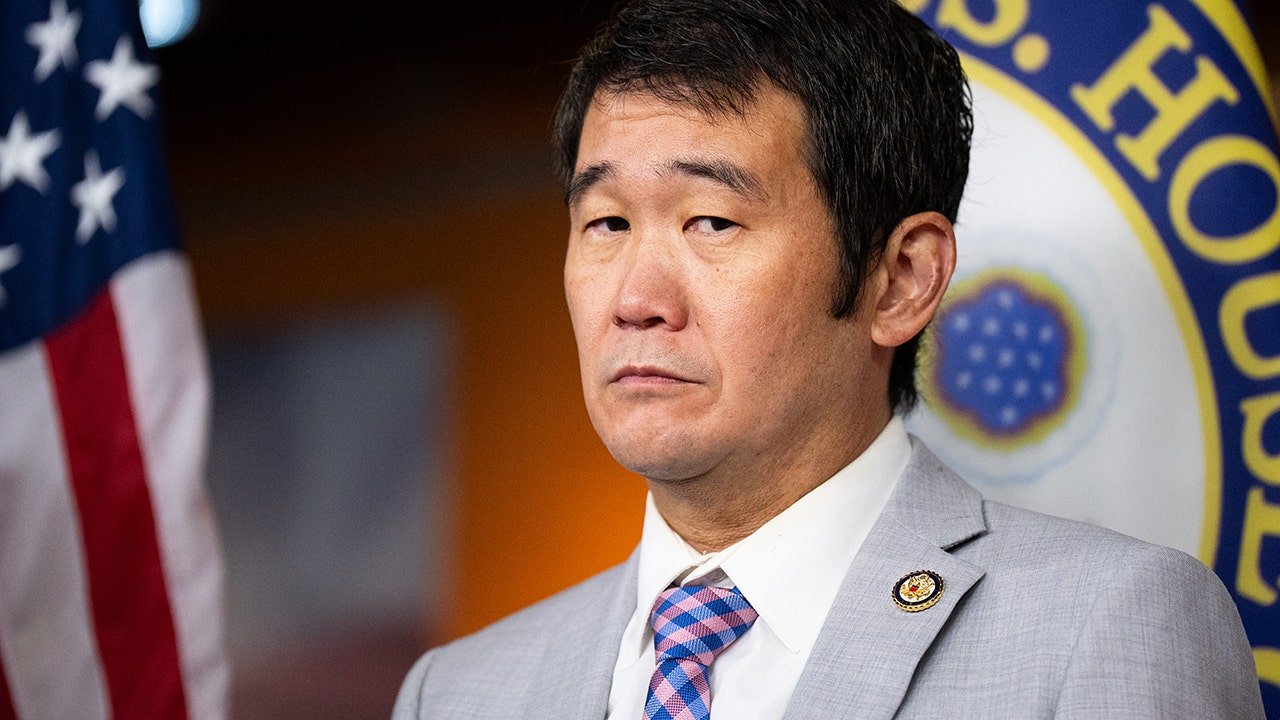
As House Oversight Democrats denounced a hearing on Minnesota’s sprawling fraud scandal as politically motivated, Rep. Dave Min, D-Calif., took it further — calling the investigation «partisan and racist.»
But back in California, state auditors have repeatedly flagged major programs as «high-risk» for waste and improper payments, raising fresh questions about whether Min is dismissing scrutiny he wouldn’t want aimed at his own state.
During a House Oversight Hearing earlier this month on the fraud issues in Minnesota, Min said, «We have not seen evidence of any type of fraud on the scale we’re talking about» in California. Min added during the hearing that he had concerns about the ongoing fraud in Minnesota, which has included a significant portion of Somali immigrant perpetrators, but said he had issues with the probe because it appeared Trump was only targeting Democrat-led states, and not Republican-led states as well.
MINNEAPOLIS MAYOR JACOB FREY ADMITS FRAUD CRISIS IS REAL, SAYS ‘EVERYBODY COULD HAVE DONE MORE’ TO PREVENT IT
Rep. Dave Min, D-Calif., called a federal oversight hearing looking into widespread fraud in Minnesota «partisan and racist,» leading some critics to call him out for turning a blind eye to widespread fraud in his own state. (Bill Clark/CQ-Roll Call, Inc via Getty Images)
«I have concerns about this hearing as well as recent actions by the Trump administration. It’s hard for me not to look at this hearing in the context in which it’s taking place and not see this as a partisan and racist hearing,» Min complained.
Fox News Digital reached out to the White House for comment on these accusations from Min but did not receive a response in time for publication.
«Democrats will do anything to deflect from the fraud that has been allowed to run rampant on their watch, including playing the race card,» House Majority Whip Tom Emmer said. «First, it’s not racist to call out criminal behavior. Second, I wonder what Congressman Min’s constituents have to say about him not taking fraud seriously when California taxpayers are also being robbed blind to the tune of $72 billion.»
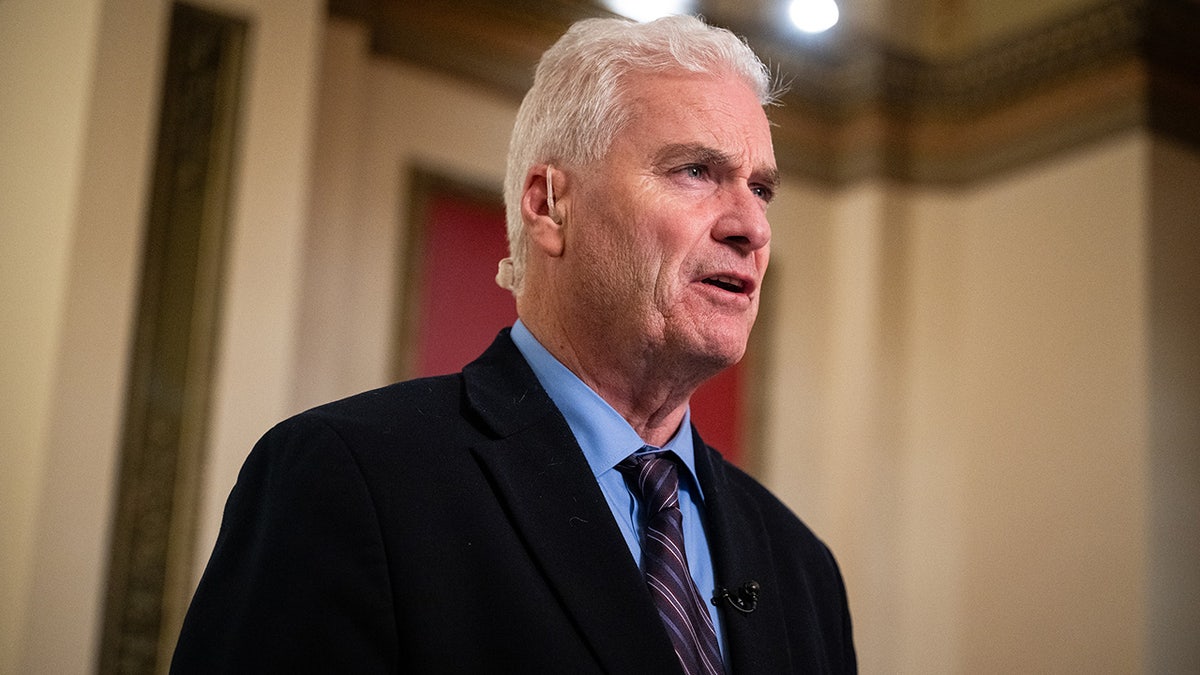
Representative Tom Emmer, a Republican from Minnesota, during a television interview at the US Capitol in Washington, DC, US, on Tuesday, Sept. 30, 2025. (Graeme Sloan/Bloomberg via Getty Images)
A report released by the California State Auditor’s office last month found several state agencies wasted or misused millions, which follows other audits showing many billions being lost to waste, fraud and abuse in the state, according to California GOP gubernatorial candidate Steve Hilton.
MINNESOTA FRAUD SCANDAL SPARKS PUSH TO SCRUTINIZE BILLIONS IN BIDEN-ERA ENERGY GRANTS
«It’s totally ridiculous,» Hilton told Fox News Digital of Min’s comments that there is no evidence of California fraud. «We’ve already seen state auditor reports that have characterized tens-of-billions-of-dollars as being improperly spent, starting from the audit of state homelessness spending.»

California GOP gubernatorial candidate Steve Hilton clapped back at Congressman Dave Min’s (D-Calif.) claim that there is no evidence to suggest widespread fraud in the state. (John Phillips/Getty Images for TechCrunch)
According to Hilton, there are criminal prosecutions ongoing in California pertaining to homelessness spending by officials.
Meanwhile, seven state agencies in California have been denoted as «high-risk» for fraud, waste and abuse by the State Auditor’s office, while an extra agency was also added to the list of vulnerable programs that is regularly kept.
«Vulnerable Democrat Dave Min is more outraged by an oversight hearing than the billions in fraud hurting Americans in Minnesota and California,» said National Republican Congressional Committee spokesperson Christian Martinez. «For Min, accountability isn’t a principle, it’s a problem.»
CLICK HERE TO DOWNLOAD THE FOX NEWS APP
Fox News Digital reached out to Min for comment, but did not receive a response in time for publication.
minnesota fraud exposed,california,state and local,house of representatives politics,politics,hearings house of representatives politics
INTERNACIONAL
Uruguay anuncia medidas de apoyo para productores rurales tras cinco años de sequías intermitentes

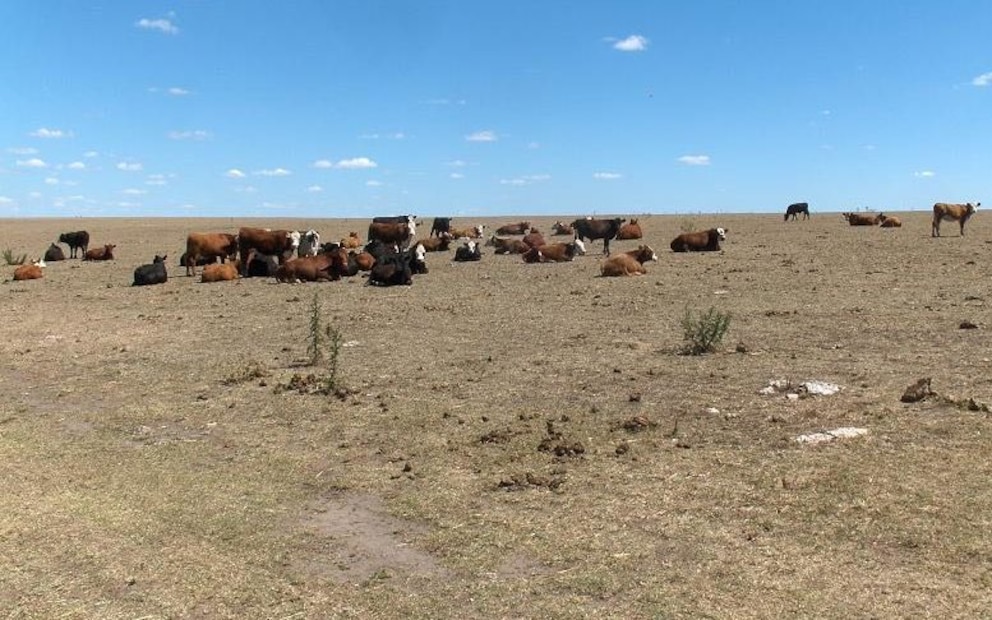
El tambo familiar del productor uruguayo Daniel Suárez sufre sequías, de manera interrumpida, hace cinco años. El déficit hídrico es un asunto que cada tanto vuelve a ser el tema central de sus preocupaciones, como sucedió en las últimas semanas de 2025. La lluvia no llegaba al país y las pasturas destinadas a la alimentación del ganado eran cada vez menos.
Suárez veía cómo los cultivos no lograban desarrollarse y se iban perdiendo, con la consiguiente pérdida económica que eso significaba, según relató este lunes al noticiero Telenoche de Canal 4. Tuvo que utilizar las reservas previstas para el invierno, lo que encarece los costos de producción. La cantidad de leche diaria se redujo un 50%, lo que derivó en una baja de entre el 20% y el 25% de la elaboración de quesos.
Historias como las de Suárez se repiten en el sur de Uruguay, que hasta este fin de semana esperaba con ansias la lluvia. Las precipitaciones llevaron calma a los productores rurales, que sintieron “alivio”, pero en muchos casos no fue suficiente y los reclamos al gobierno para que tomara medidas de apoyo continuaron.

Para este martes, el Ministerio de Ganadería, Agricultura y Pesca (MGAP) convocó una reunión para evaluar la situación provocada por la falta de lluvias. A la salida del encuentro, el ministro de Ganadería, Alfredo Fratti, aseguró que no existen “datos objetivos” que hagan necesario que Uruguay declare la emergencia agropecuaria (el nivel máximo de las decisiones previstas).
Sin embargo, se resolvieron medidas de apoyo para productores agropecuarios de Canelones, Colonia, Florida, Lavalleja, Maldonado, Montevideo, Rocha y San José, los departamentos más afectados por el déficit hídrico.
El Ministerio de Ganadería anunció que solicitará al Banco de Previsión Social (BPS) –el organismo previsional de Uruguay– que postergue los vencimientos del pago de los aportes patronales rurales. Con esto, las obligaciones que vencían en enero pasarán a mayo; al tiempo que los vencimientos del quinto mes, se postergan para julio.

De esta manera, explicó el gobierno, se evitan superposiciones de pagos.
“Es un alivio”, dijo Fratti al anunciar esta medida. Y señaló en una rueda de prensa que de continuar con esta situación hídrica, se deberán tomar medidas puntuales para el sector de la granja y para los pequeños ganaderos.
Otra medida anunciada por el gobierno fue la autorización para el pastoreo del ganado en caminos rurales y en rutas nacionales. “Es imprescindible para este momento”, argumentó Fratti.
Un reclamo del sector productivo era poder acceder a alternativas de financiamiento flexibles en este momento. Una de las respuestas a este pedido es que el banco estatal República presentará “nuevas medidas específicas”, según se señala en la información difundida por Presidencia.
Además, el Instituto Nacional de Colonización –otro organismo estatal– abrió una línea de crédito por USD 2.000 dólares –con una tasa de un 5% de interés anual– para pequeños productores familiares que necesiten dinero para el alumbramiento de agua o la compra de forrajes. Así lo informó el presidente de la institución, Alejandro Henry, en una rueda de prensa.
Henry agregó que el organismo trabaja en medidas de apoyo para proyectos de riego en las colonias. “Nos parece que tenemos que apuntar como país a estas medidas para el mediano y largo plazo”, señaló.
● Postergación del vencimiento de enero del aporte patronal rural al BPS
● Autorización del pastoreo en rutas nacionales y caminos rurales
● Apoyo técnico y divulgación de buenas prácticas para productores ganaderos por parte del Instituto Plan Agropecuario y del programa Procría
● Facilidades en los créditos e inversiones en agua para productores colonos por parte del Instituto Nacional de Colonización
● Facilidades créditos de República Microfinanzas
● Habilitación de una línea específica del Banco República para enfrentar consecuencias del déficit hídrico
● Concretar coordinaciones interinstitucionales para el suministro de agua para consumo humano y producción familiar, con OSE e intendencias.
corresponsal: Desde Montevideo

El Gobierno no pidió extender el mandato de la Defensora General y se agrava la crisis de vacantes en la Justicia

Dólar hoy en vivo: a cuánto se negocian todas las cotizaciones minuto a minuto este miércoles 14 de enero

El gobierno porteño anunció cuándo desalojará la cárcel de Devoto: los presos serán trasladados a un penal en Marcos Paz

Tensión máxima en Medio Oriente: EE.UU. evacúa a militares de su base en Qatar tras amenazas de Irán

Con Mohamed Salah, Egipto se mide ante la Senegal de Sadio Mané por las semifinales de la Copa África

Sabrina Rojas con nuevo novio: quién es el joven 15 años menor que conquistó a la ex de Luciano Castro: «Me cautivan los chicos»

Polémica en redes: Milei y Feinmman se cruzaron con Marcela Feudale por los incendios en Chubut

Murió el cantante colombiano Yeison Jiménez en un accidente de avión: el video del día que predijo la tragedia

La triste despedida de Jorge “Corcho” Rodríguez a Pía, su asistente por 30 años: “Gracias por tu amor”

La AFA giró US$8 millones a cinco empresas en Miami que ya no existen: un argentino disolvió hace seis días una firma clave

 CHIMENTOS2 días ago
La triste despedida de Jorge “Corcho” Rodríguez a Pía, su asistente por 30 años: “Gracias por tu amor”
- POLITICA1 día ago
La AFA giró US$8 millones a cinco empresas en Miami que ya no existen: un argentino disolvió hace seis días una firma clave
- POLITICA2 días ago
Incendios en Chubut: el fiscal general aseguró que el responsable podría recibir hasta 20 años de prisión