INTERNACIONAL
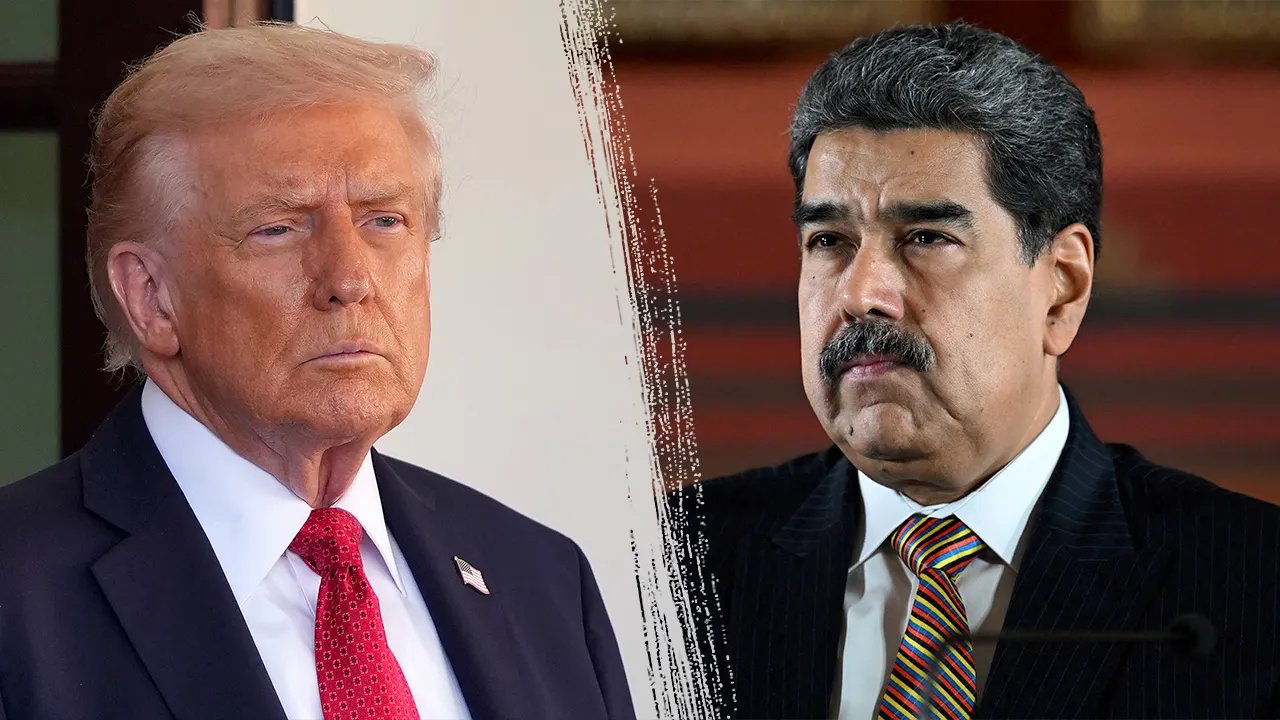
Trump targets Maduro as Western Hemisphere becomes ‘first line of defense’ in new strategy

NEWYou can now listen to Fox News articles!
The Trump administration has moved its hemispheric security doctrine into full force in Venezuela, ordering a sweeping naval blockade on sanctioned oil tankers and labeling Nicolás Maduro’s government a Foreign Terrorist Organization — a dramatic escalation aimed at choking off the regime’s primary source of revenue and confronting what the White House calls a growing threat of cartel-driven «drug terrorism» and foreign influence in the region.
Announcing the move on social media, Trump said Venezuela was now «completely surrounded by the largest Armada ever assembled in the history of South America,» a strike at an oil sector that accounts for roughly 88% of the country’s export earnings.
The administration’s new National Security Strategy (NSS) places the Western Hemisphere at the center of U.S. national security planning, elevating regional instability, mass migration, cartels and foreign influence as direct challenges to American security. While the document does not single out Venezuela by name, its framework positions crises like Venezuela’s collapse as central to protecting what the strategy calls America’s «immediate security perimeter.»
MADURO’S FORCES FACE RENEWED SCRUTINY AS US TENSIONS RISE: ‘A FORTRESS BUILT ON SAND’
According to the NSS, U.S. policy toward the hemisphere now focuses on preventing large-scale migration, countering «narco-terrorists, cartels, and other transnational criminal organizations,» and ensuring the region remains «reasonably stable and well-governed enough to prevent and discourage mass migration.» It also pledges to assert a «Trump Corollary» to the Monroe Doctrine, aimed at blocking «hostile foreign incursion or ownership of key assets» by strategic competitors.
A senior White House official said the Western Hemisphere chapter is designed to «reassert American preeminence in the Western Hemisphere» by strengthening regional security partnerships, curbing drug flows and preventing pressures that fuel mass migration. The official said the strategy situates the hemisphere as a foundational element of U.S. defense and prosperity.
Newly released footage shows U.S. forces securing a Venezuelan oil tanker. (@AGPamBondi via X)
White House spokesperson Anna Kelly said the NSS reflects what the administration sees as a historic realignment of U.S. foreign policy. «President Trump’s National Security Strategy builds upon the historic achievements of his first year back in office, which has seen his Administration move with historic speed to restore American strength at home and abroad and bring peace to the world,» Kelly told Fox News Digital.
«In less than a year, President Trump has ended eight wars, persuaded Europe to take greater responsibility for its own defense, facilitated US-made weapons sales to NATO allies, negotiated fairer trade deals, obliterated Iran’s nuclear facilities, and more.» The strategy, she added, is designed to ensure «America remains the greatest and most successful nation in human history.»
Melissa Ford Maldonado, director of the Western Hemisphere Initiative at the America First Policy Institute, said Venezuela illustrates why the hemisphere is now treated as America’s «first line of defense.»
«The Maduro regime functions as a narco-dictatorship closely tied to criminal cartels, which are now considered foreign terror organizations, and supported by China, Iran, and Russia,» she said. «Confronting this criminal regime is about keeping poison off our streets and chaos off our shores.»
MADURO’S FORCES FACE RENEWED SCRUTINY AS US TENSIONS RISE: ‘A FORTRESS BUILT ON SAND’
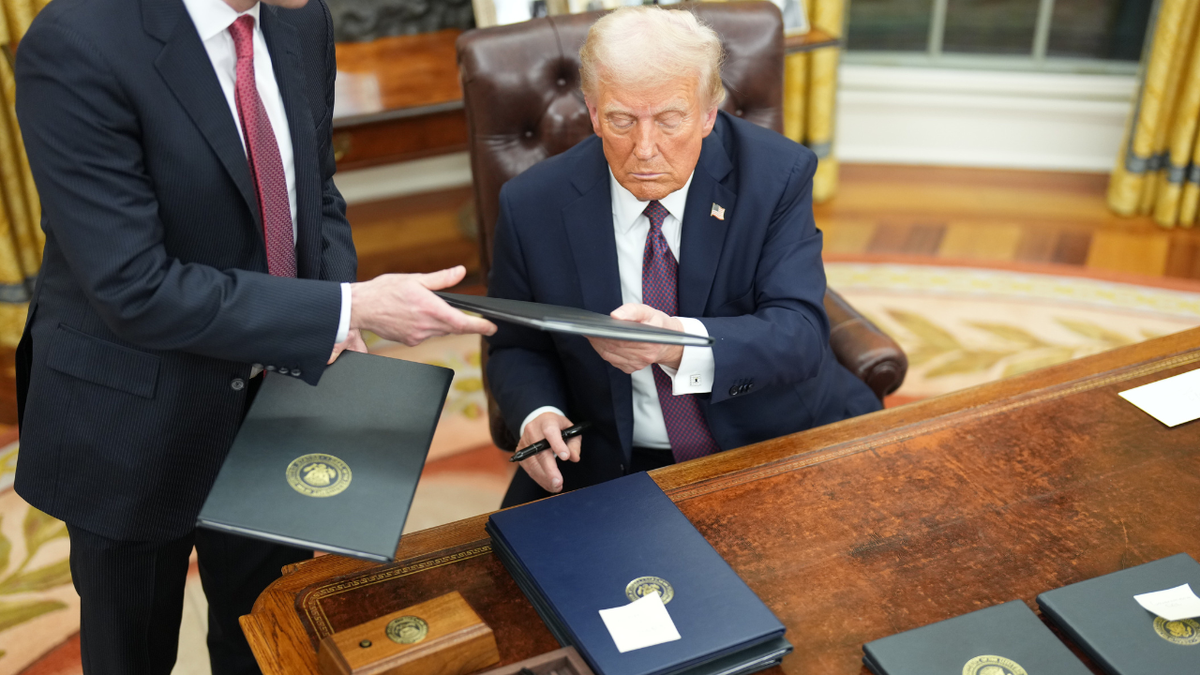
President Donald Trump signs a series of executive orders at the White House on Jan. 20, 2025, in Washington, DC. Trump’s new National Security Strategy puts the Western Hemisphere at the center of U.S. security planning, a senior official said. (Jabin Botsford /The Washington Post via Getty Images)
She called the NSS «the most radical and long-overdue change in U.S. foreign policy in a generation,» arguing that instability in Latin America now reaches the United States «in real time» through migration surges, narcotics trafficking and foreign intelligence networks.
Some analysts caution that the strategy’s sharper posture could become destabilizing if pressure escalates into a confrontation.
Roxanna Vigil, a fellow at the Council on Foreign Relations, said the path ahead depends heavily on how forceful the administration’s approach becomes. «If it goes in the direction of escalation and conflict, that means there’s going to be very little control,» she said. «If there is a power vacuum, who fills it?»
HEGSETH HINTS MAJOR DEFENSE SPENDING INCREASE, REVEALS NEW DETAILS ON TRUMP’S ANTI-NARCOTERRORISM OPERATIONS
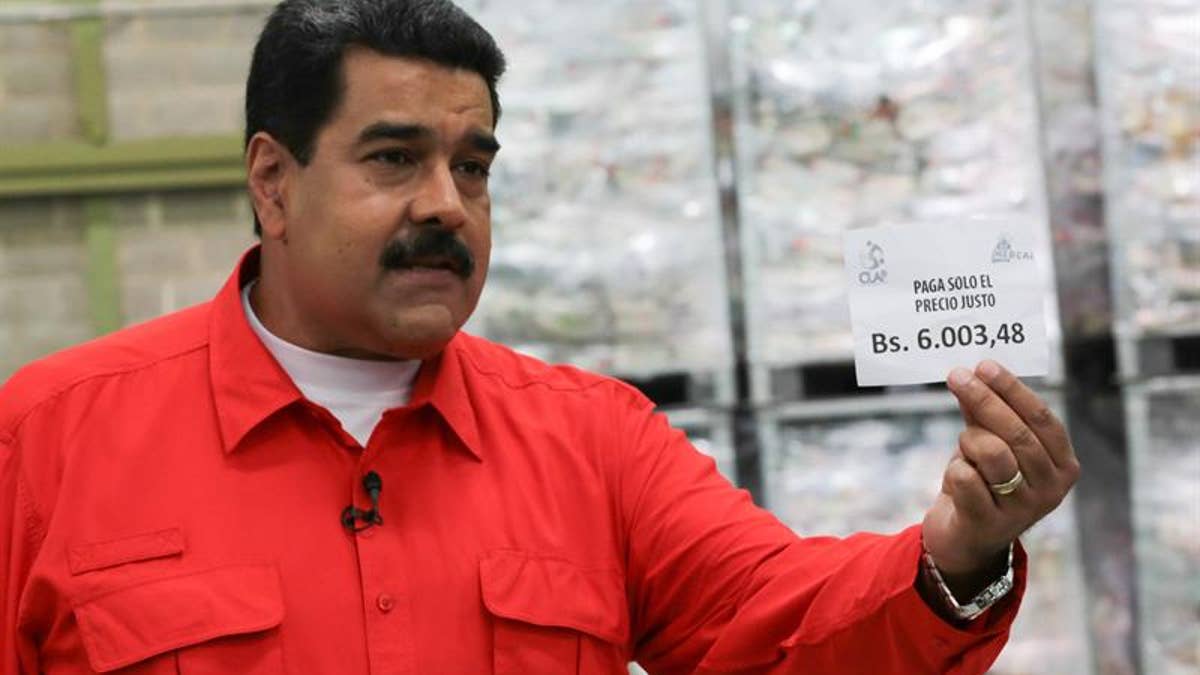
Venezuela’s president, Nicolás Maduro. (AP)
Vigil warned that without a negotiated transition, a sudden collapse could produce outcomes «potentially worse than Maduro.» She said armed groups, hardline regime actors and cartel-linked networks would all compete for power, with potential spillover effects across a region already strained by mass displacement.
Jason Marczak, vice president of the Atlantic Council’s Adrienne Arsht Latin America Center, said the NSS underscores why the administration views Maduro’s continued rule as incompatible with its regional priorities.
«All of those goals cannot be accomplished as long as Nicolás Maduro or anybody close to him remains in power,» he said, pointing to the strategy’s focus on migration, regional security and countering foreign influence. «Venezuela is a conduit for foreign influence in the hemisphere.»
US SET TO SEIZE TENS OF MILLIONS IN VENEZUELAN OIL AFTER TANKER INTERCEPTION, WHITE HOUSE SAYS
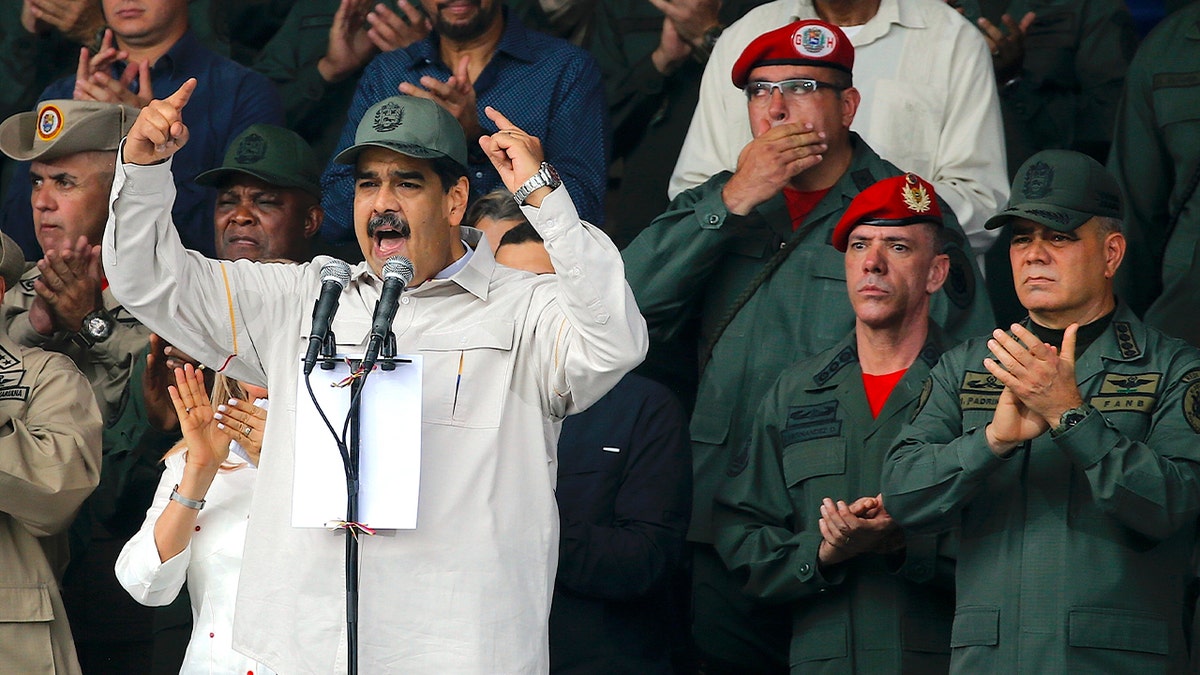
In this April 13, 2019 file photo, Venezuela’s President Nicolas Maduro, speaks flanked by Defense Minister Vladimir Padrino Lopez, right, and Gen. Ivan Hernandez, second from right, head of both the presidential guard and military counterintelligence in Caracas, Venezuela. (Ariana Cubillos/AP Photo)
Marczak said Venezuelans «were ready for change» in the 2024 election, but warned that replacing Maduro with another insider «doesn’t really accomplish anything.» He argued that only a democratic transition would allow Venezuela to re-enter global markets and stabilize the region.
Both Marczak and Vigil noted that the danger extends beyond Maduro to the criminal ecosystem and foreign partnerships that sustain his rule. Without a negotiated transition, Vigil said, the forces most likely to prevail are those already controlling territory: militias, cartel-linked groups and pro-Chavista power brokers.
Ford-Maldonado said that reality is precisely why the administration’s strategy elevates Venezuela’s crisis within its broader Western Hemisphere doctrine.
CLICK HERE TO DOWNLOAD THE FOX NEWS APP
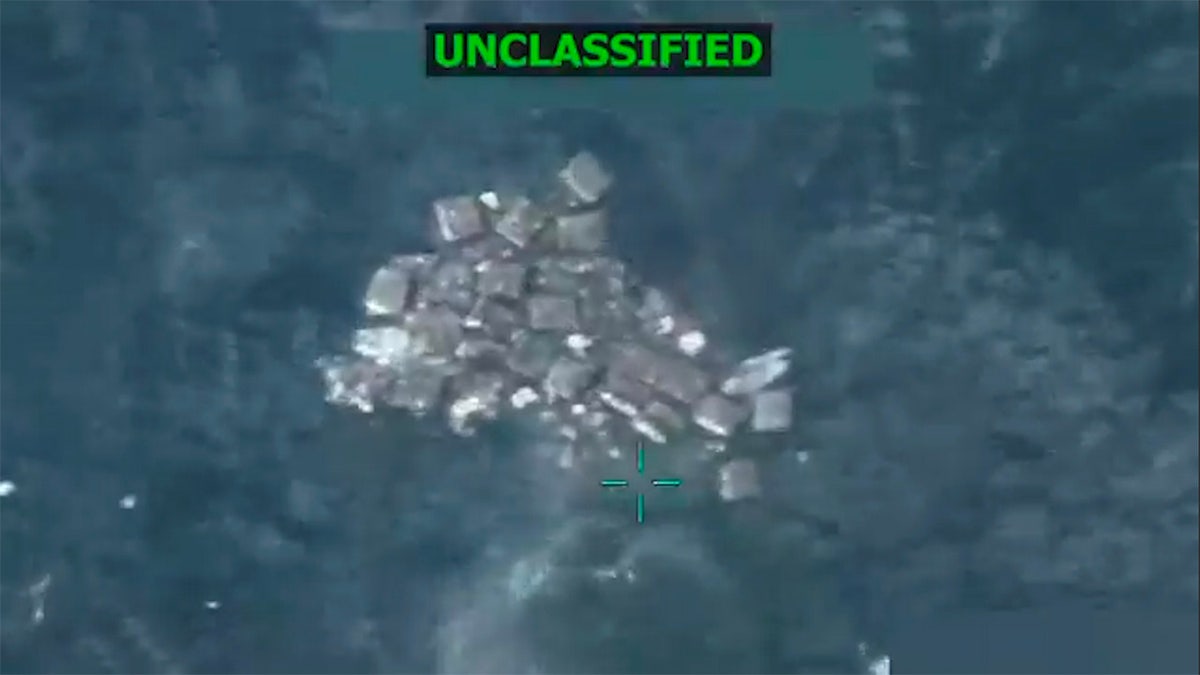
Military strikes on suspected narco-trafficking vessels have killed some 37 people since September. (Department of War)
«Confronting a narco-regime tied to foreign adversaries is not a distraction from America First — it’s the clearest expression of it,» she said. «What’s ultimately being defended are American lives, American children, and American communities.»
The administration’s adoption of a «Trump Corollary» to the Monroe Doctrine indicates a more assertive U.S. stance toward the hemisphere, framing Venezuela not only as a humanitarian or political crisis but as a critical test of the strategy’s core principles: migration control, counter-cartel operations and limiting foreign adversaries’ reach. Within this framework, experts say the consequences of inaction could create security risks that extend well beyond Venezuela’s borders.
venezuelan political crisis,donald trump,national security,narco terror,crime world,immigration










NEWYou can now listen to Fox News articles!
Senate Democrats have panned the GOP’s push for voter ID legislation as akin to segregationist laws from the Deep South, but the architect of the bill in the Senate says their arguments are detached from reality.
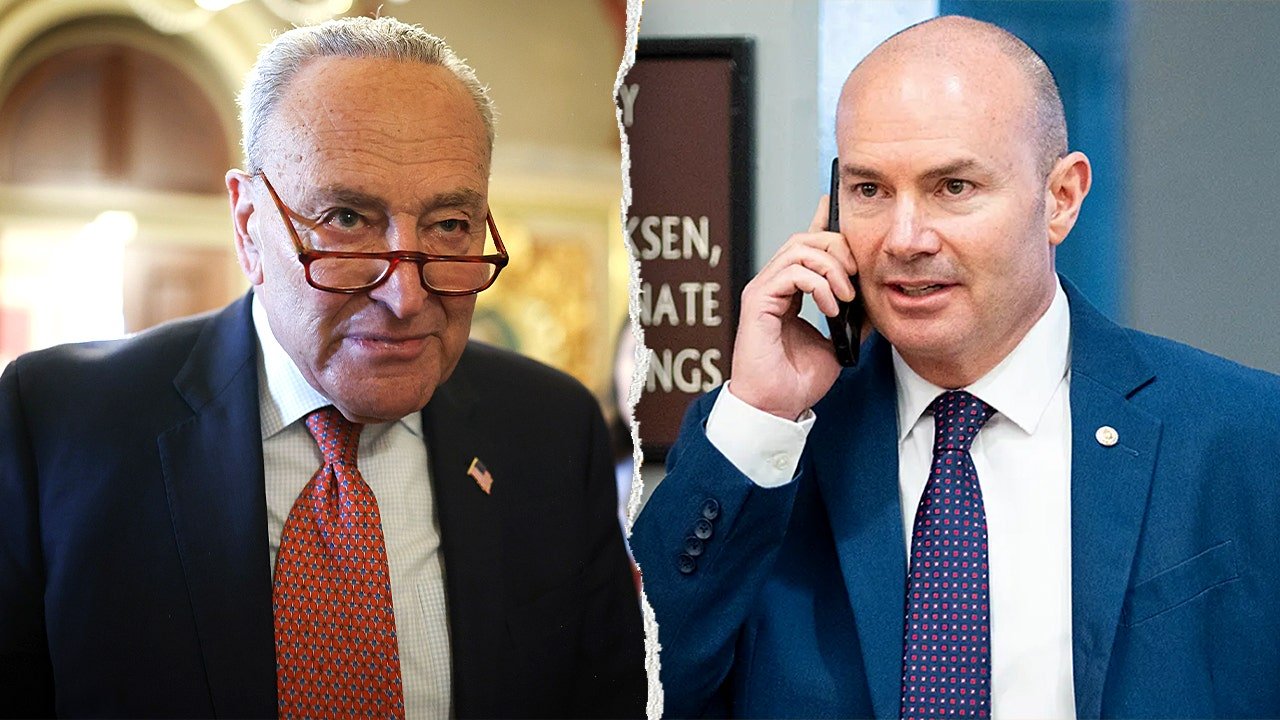
«It’s paranoid fantasy,» Sen. Mike Lee, R-Utah, told Fox News Digital. «These are absurd arguments. They should be ashamed to make them.»
Lee was responding to comments from Senate Minority Leader Chuck Schumer, D-N.Y., who has doubled down on his claim that the Safeguarding American Voter Eligibility (SAVE) America Act is «Jim Crow 2.0.»
THUNE GUARANTEES VOTER ID BILL TO HIT THE SENATE DESPITE SCHUMER, DEM OPPOSITION: ‘WE WILL HAVE A VOTE’
Sen. Mike Lee, R-Utah, called the accusation that his voter ID legislation was «Jim Crow 2.0» by Senate Minority Leader Chuck Schumer, D-N.Y., «paranoid fantasy.» (Kayla Bartkowski/Getty Images; Bill Clark/CQ Roll Call, Inc. via Getty Images)
The bill, which passed the House last week and has been introduced and championed by Lee in the Senate, would require photo ID to vote in federal elections, proof of citizenship to register and would mandate that states keep voter rolls clear of ineligible voters.
Schumer and his caucus plan to block the bill, arguing that it is a tool of voter suppression that would disproportionately harm poorer Americans and minority groups.
But Lee argued that providing identification or proof of citizenship is routine in everyday life — whether undergoing a background check to buy a firearm or filling out tax forms when starting a new job.
COLLINS BOOSTS REPUBLICAN VOTER ID EFFORT, BUT WON’T SCRAP FILIBUSTER

Senate Majority Leader John Thune, R-S.D., told Fox News Digital that the SAVE America Act, voter ID legislation backed by President Donald Trump, would get a vote in the Senate. (Michael M. Santiago/Getty Images)
«By their logic, it’s Jim Crow to require somebody to establish citizenship before taking a job with a new employer, and that’s insane,» Lee said.
«And so then they argue here, well, voting is so fundamental, and we have constitutional protections protecting our right to vote,» he continued. «Well, we’ve got constitutional protections protecting our right to bear arms, and yet that doesn’t cause us to dispense with proving who you are and your eligibility to buy a gun. This has just been insane.»
Without Democratic support, however, the pathway to sending the legislation to President Donald Trump’s desk is complicated.
GOP REACHES KEY 50-VOTE THRESHOLD FOR TRUMP-BACKED VOTER ID BILL AS SENATE FIGHT LOOMS

President Donald Trump listens during a Cabinet meeting at the White House, Jan. 29, 2026, in Washington. (Evan Vucci/AP Photo)
Senate Majority Leader John Thune, R-S.D., has vowed to bring the SAVE America Act to the floor, and Republicans have the votes to move it through its first key procedural hurdle. From there, Democrats can block it with the 60-vote filibuster, which Lee often refers to as the «zombie» filibuster.
Eliminating the filibuster is out of the question for several of Lee’s colleagues, but Republicans are warming to reinstating a talking, or standing, filibuster, which would require Senate Democrats to make their case against the bill on the floor over hours of debate.
CLICK HERE TO DOWNLOAD THE FOX NEWS APP
Trump has already suggested he would issue an executive order if the legislation fails, which Lee declined to speculate on without first knowing what exactly would be done.
But he noted that it was all the more reason to pass the SAVE America Act, given the ever-swinging political pendulum in Washington, D.C.
«It’s still really critically important that we pass this law, because let’s assume that he issued such an order, and that it does most or all of what we needed to do here, that gives us protection for the moment, to whatever degree he’s able to do that through an executive action,» Lee said. «But we need something that can last longer than he’s in office.»
politics,senate,elections,chuck schumer
REUTERS/Raheb Homavandi
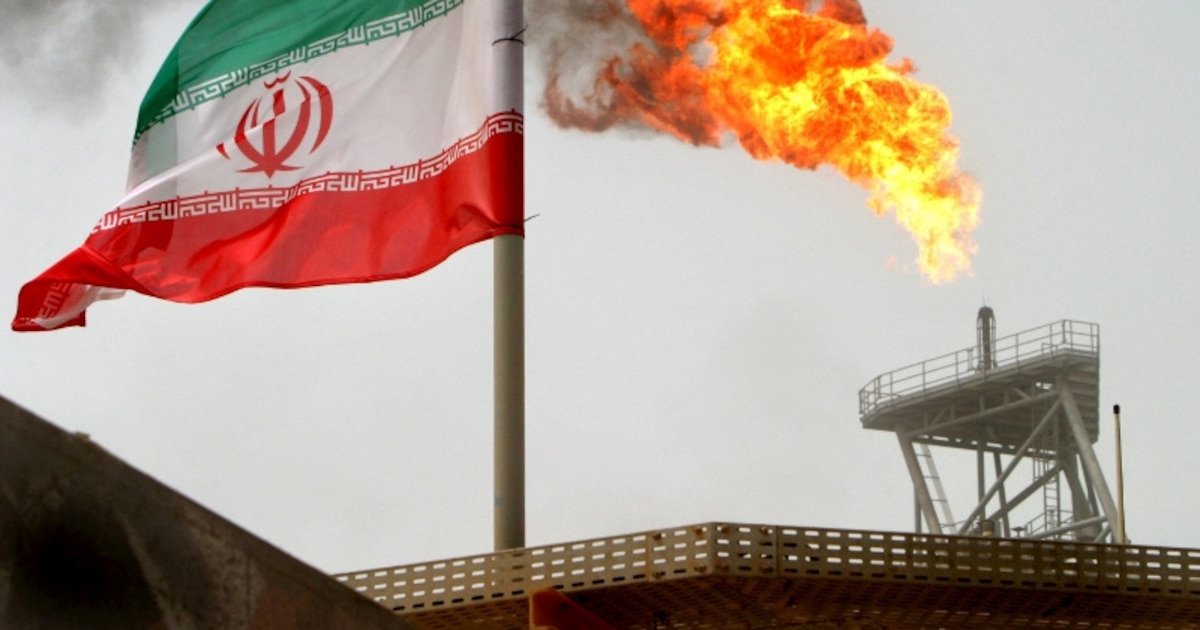
Las negociaciones nucleares entre Irán y Estados Unidos en Ginebra abrieron una fase de mayor optimismo en los mercados, tras jornadas marcadas por declaraciones enfrentadas entre el presidente Donald Trump y las autoridades iraníes. El precio del petróleo, que había subido ante el aumento de la tensión, experimentó una baja luego de que el ministro de Exteriores iraní, Abbas Araghchi, declarara que “se ha abierto una nueva ventana de oportunidad” para alcanzar un acuerdo sostenible, aunque Irán mantiene su disposición a defenderse ante cualquier amenaza.
El barril de West Texas Intermediate cerró con una caída de 0,9% hasta $62,33, tras haber llegado a subir 1,5% durante la jornada. Por su parte, el Brent del Mar del Norte retrocedió 1,8% hasta $67,42. Analistas del sector, como Aarin Chiekrie de Hargreaves Lansdown, indicaron que “hay especulación sobre la posibilidad de que Irán acepte diluir su uranio más enriquecido a cambio del levantamiento total de las sanciones financieras”, aunque persisten dudas sobre si ese gesto será suficiente para lograr un acuerdo definitivo.
Desde Teherán se informó que existe un acuerdo general con Washington sobre los términos básicos de un potencial pacto, mientras que un funcionario estadounidense confirmó que los negociadores iraníes volverán a Ginebra con una nueva propuesta en dos semanas. A pesar de estos avances, ambos países mantienen despliegues militares en la región: Irán anunció el cierre temporal de una parte del Estrecho de Ormuz para ejercicios militares, mientras que Estados Unidos envió un segundo portaviones. Esta situación añade volatilidad a los mercados energéticos, ya que el Estrecho es un punto clave para el tránsito mundial de crudo.
En el ámbito bursátil, Wall Street cerró la sesión con leves alzas, después de una jornada volátil. Chiekrie señaló que “los corredores de seguros, asesores financieros, servicios inmobiliarios y logística estuvieron bajo presión la semana pasada, y los inversores observan con cautela qué segmento del mercado podría ser el próximo en verse afectado por la inteligencia artificial”. Las bolsas europeas finalizaron en terreno positivo, con Londres y Fráncfort subiendo 0,8%, mientras que Tokio retrocedió y los mercados chinos permanecieron cerrados por el Año Nuevo Lunar.

EFE/ Cati Cladera
En el Reino Unido, los datos oficiales mostraron que el desempleo alcanzó un 5,2% en el último trimestre, el nivel más alto en cinco años, lo que aumenta la probabilidad de que el Banco de Inglaterra reduzca su tasa de interés de referencia el mes próximo. En el mercado de divisas, el dólar estadounidense se debilitó frente al yen.
Por otro lado, la Cámara de Industria y Comercio de Alemania advirtió que la mayor economía europea no se recuperará en 2026, debido a la persistente incertidumbre geopolítica, los altos costos y la débil demanda interna. Alemania apenas logró un crecimiento moderado en 2025, tras dos años de recesión.
En el sector corporativo, las acciones del gigante agroquímico Bayer subieron cerca de ocho por ciento luego de que su filial Monsanto propusiera un acuerdo de hasta USD 7.250 millones para resolver demandas colectivas en Estados Unidos, relacionadas con el supuesto vínculo entre el herbicida Roundup y el cáncer en sangre, lo que podría cerrar años de litigios costosos.
Mientras tanto, los inversores siguieron de cerca las negociaciones mediadas por Estados Unidos entre Ucrania y Rusia en Ginebra. Un asistente del equipo negociador de Kiev informó que las conversaciones continuarán el miércoles, y una eventual resolución podría allanar el camino para el levantamiento de sanciones y el incremento de los flujos petroleros hacia los mercados internacionales.
(Con información de AFP y Bloomberg)
Corporate Events,Commodities Markets,Energy Markets

Lara López Calvo presentó el nuevo mapa laboral argentino: cómo cambió el empleo tras la pandemia

Sin Sampaoli, el equipo brasileño que piensa en Gago

La caída de José Jerí en Perú: por qué es tan fácil echar a un presidente

Mike Lee calls Schumer’s ‘Jim Crow 2.0’ attack on voter ID bill ‘paranoid fantasy’

Ludovica Squirru analizó el Año Nuevo Chino 2026 y lanzó una advertencia para todos los signos

Internaron a Alberto Samid en un hospital de Punta del Este por un virus en la sangre

Cristian Ritondo: “Vamos a apoyar la ley de modernización laboral, pero no el régimen de licencias por enfermedad”

Uno de los jefes de la CGT adelantó que convocarán a un paro general por la reforma laboral: “Trabajaremos para que sea una gran huelga”

Chaotic video shows passengers trading midair blows; plane forced to divert: reports

Reforma laboral bomba: menos indemnización, más horas y despidos más fáciles — el cambio que puede sacudir el empleo en Argentina

 POLITICA1 día ago
Cristian Ritondo: “Vamos a apoyar la ley de modernización laboral, pero no el régimen de licencias por enfermedad”
- POLITICA2 días ago
Uno de los jefes de la CGT adelantó que convocarán a un paro general por la reforma laboral: “Trabajaremos para que sea una gran huelga”
- POLITICA5 horas ago
Reforma laboral bomba: menos indemnización, más horas y despidos más fáciles — el cambio que puede sacudir el empleo en Argentina