INTERNACIONAL
From Gaza to Iran: What’s at stake in Trump-Netanyahu Mar-a-Lago talks?

NEWYou can now listen to Fox News articles!
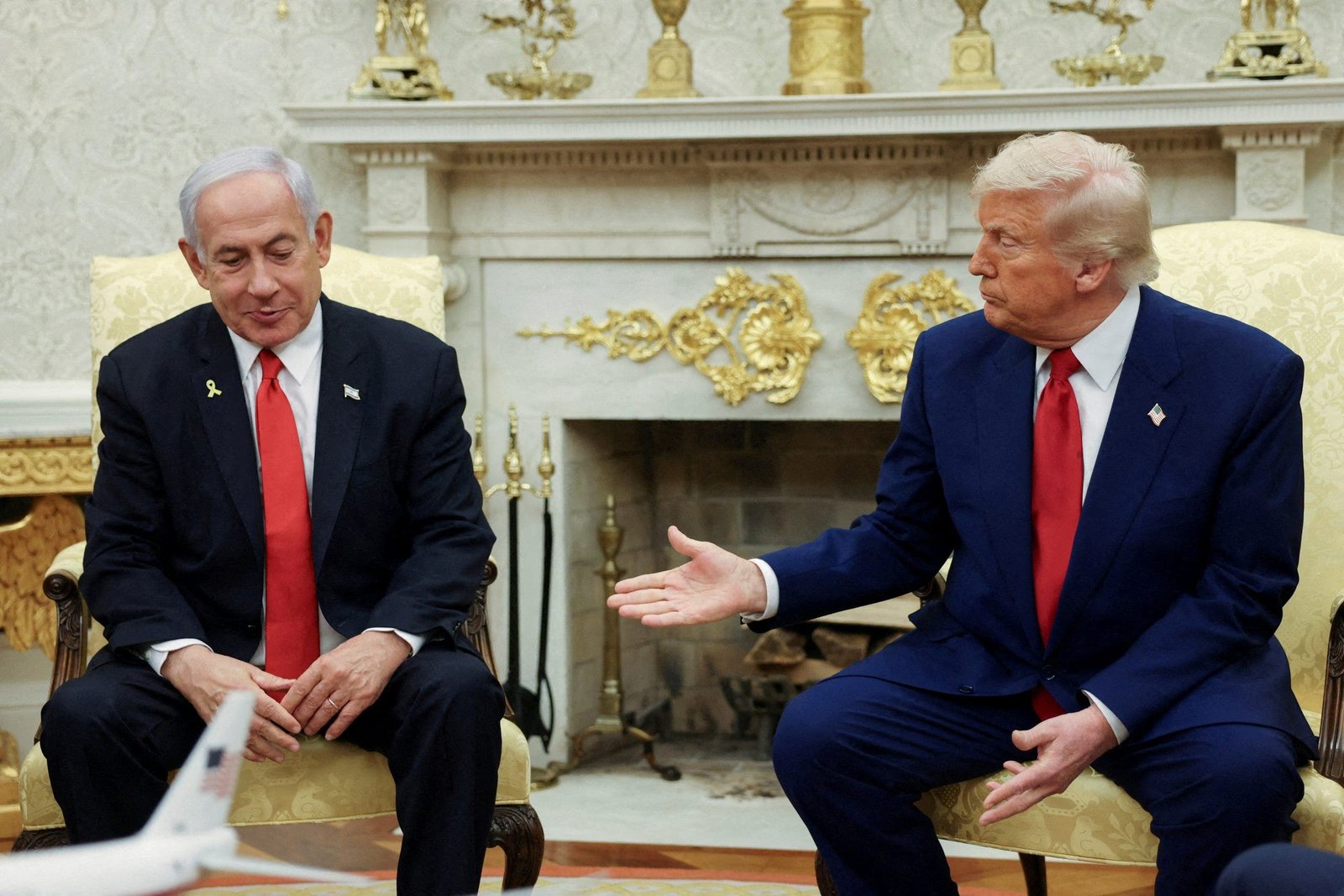
President Donald Trump is scheduled to meet with Israeli Prime Minister Benjamin Netanyahu at Mar-a-Lago on Monday afternoon, with talks expected to focus on renewed tensions with Iran and the possibility of advancing to additional stages of the Gaza peace plan.
Before meeting with the president, Netanyahu is slated to meet with Secretary of State Marco Rubio on Monday morning.
Dr. Dan Diker, president of the Jerusalem Center for Security and Foreign Affairs, told Fox News Digital that President Trump has likely been pressuring Netanyahu since the peace plan’s implementation, noting that the American leader has little patience for Middle Eastern timelines, which he said are far longer than those in the U.S. and the real estate sector.
NETANYAHU CALLS ON NEIGHBORING NATIONS TO JOIN ISRAEL IN ‘EXPELLING HAMAS’ FROM REGION
President Donald Trump speaks to Israeli Prime Minister Benjamin Netanyahu at Ben Gurion International Airport before boarding his plane to Sharm El-Sheikh, on Oct. 13, 2025 in Tel Aviv, Israel. (Chip Somodevilla/Getty Images)
«The problem is that Hamas knows all it has to do is survive and continue controlling the western part of Gaza while attacking Israel, as it has been doing from Gaza’s tunnel network, in order to ratchet up tensions between Israel and the U.S.,» Diker said.
Netanyahu’s mission during the visit, he continued, will be first to lay out Israel’s threat assessment regarding Iran, Hezbollah and Hamas as extremely serious, and to impress upon the president that Tehran is rebuilding its military capabilities. He is also likely to seek to persuade Trump to allow Israel to take the steps it deems necessary to defeat Hamas.
Israeli opposition leader and former Prime Minister Yair Lapid told Fox News Digital that «We [Israel] should be coordinating with President Trump on all the major fronts, but the top priority has to be the management of stage two in Gaza.»
Lapid added, «Israel needs to achieve the disarmament of Hamas and the removal of the threat from Gaza, and that requires the implementation of President Trump’s plan.»
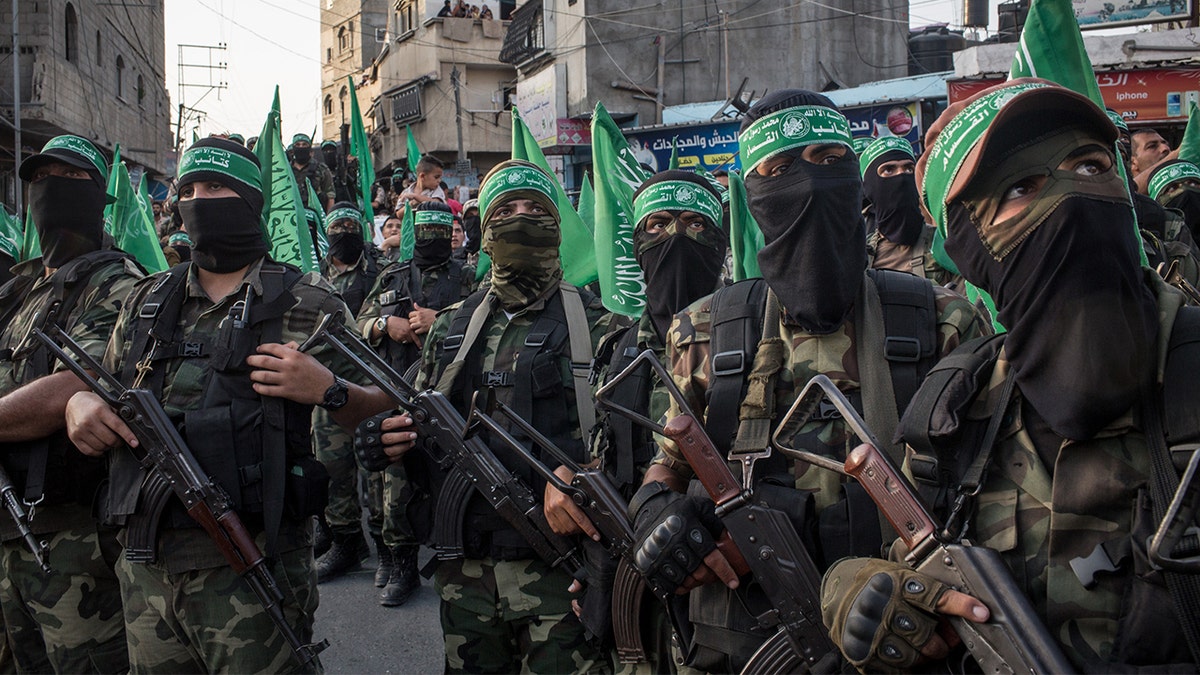
Hamas terrorists marching in Gaza during a parade. (Getty Images)
IRANIAN PRESIDENT SAYS HIS COUNTRY IS AT ‘TOTAL WAR’ WITH THE US, ISRAEL AND EUROPE: REPORTS
During the meeting, Netanyahu will reportedly present Trump with plans for a potential strike on Iran. Israel has warned Washington that a recent Iranian Revolutionary Guard Corps missile drill could be masking preparations for an attack, a concern that IDF Chief of Staff Lt. Gen. Eyal Zamir conveyed to U.S. Central Command chief Adm. Brad Cooper during recent meetings in Tel Aviv.
In a Saturday interview reported by the country’s media, Iranian President Masoud Pezeshkian said his country is engaged in what he described as a «total war» with the U.S., Israel and Europe. The Times of Israel reported him saying, «In my opinion, we are at total war with the United States, Israel and Europe,» Pezeshkian said. «They want to bring our country to its knees.»
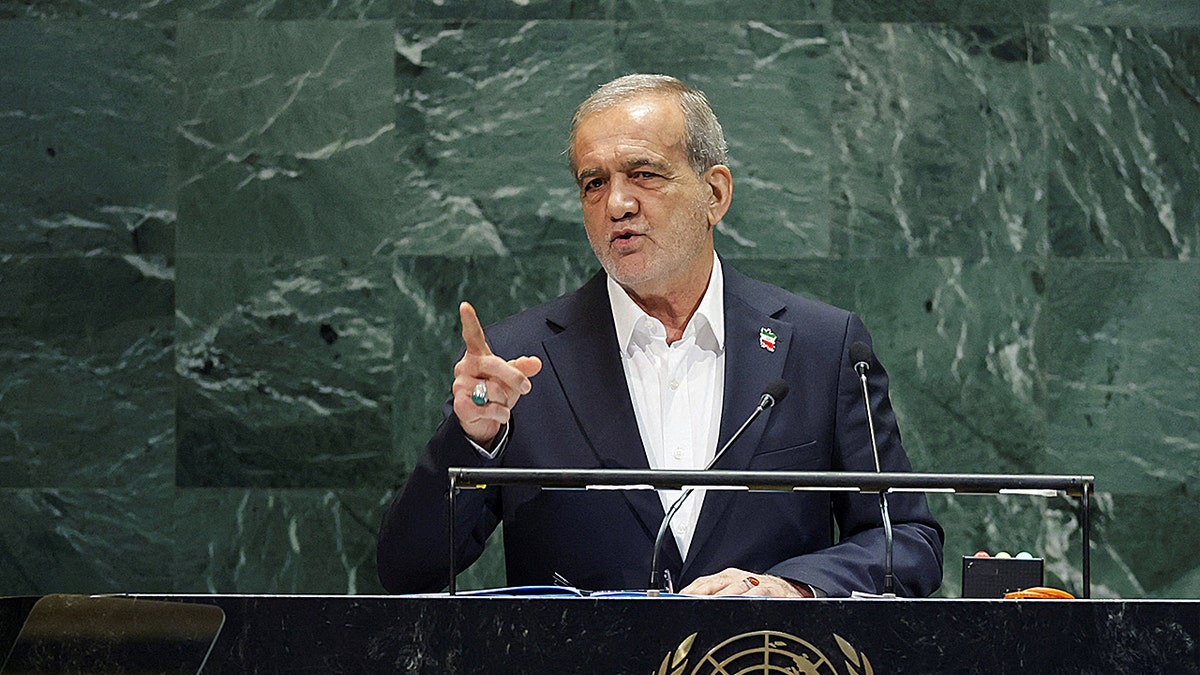
Iranian President Masoud Pezeshkian accused the U.S. of a «grave betrayal» at the United Nations General Assembly on Sept. 24, 2025, in New York City. (Jeenah Moon/Reuters)
Axios reported that U.S. intelligence assesses there is no immediate threat, while Israeli defense officials say forces remain on heightened alert.
According to Dr. Meir Javedanfar, a lecturer on Iran and the Middle East at Reichman University, Netanyahu’s plan is expected to call for strikes on Iran’s missile program.
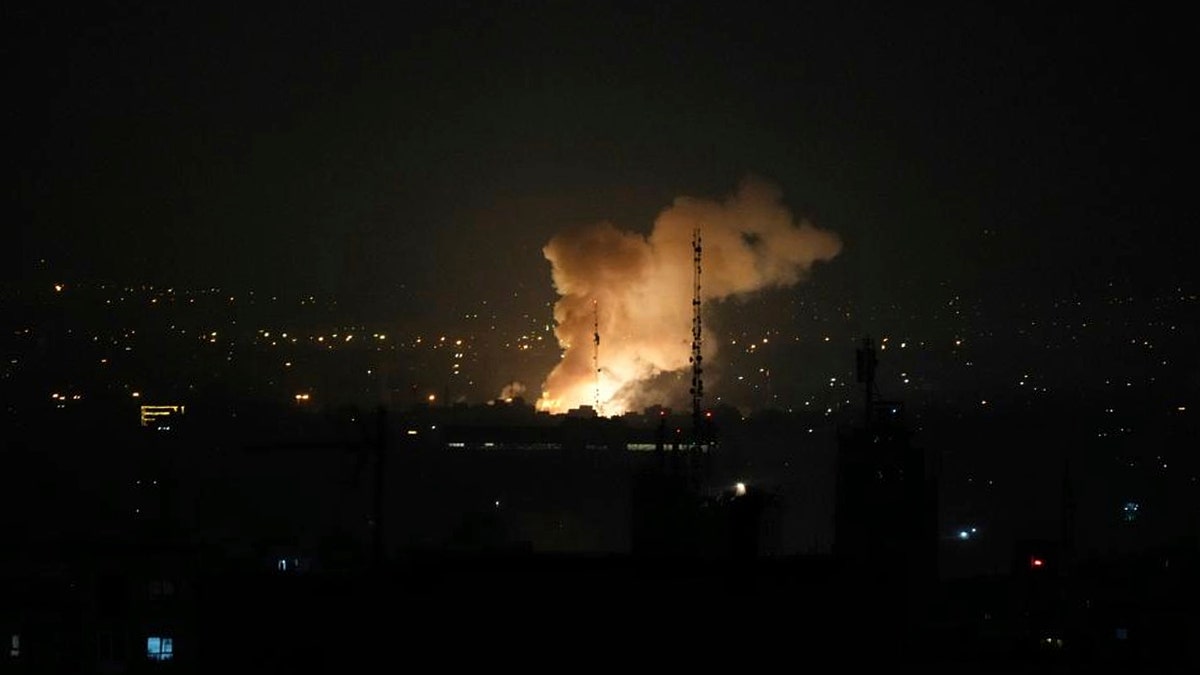
Smoke rises after an explosion in Tehran, Iran, Friday, June 13, 2025. Israel attacked Iran’s capital early Friday, with explosions booming across Tehran. (Getty)
«Israel will probably hope that such a wide-scale attack would further undermine the legitimacy of Iran’s supreme leader, thereby creating greater political instability within the country. This is especially true given that after the recent war with Israel, Iran’s economy has deteriorated significantly, and the regime is not taking the necessary steps to address these problems,» he said.
RUBIO REVEALS SHARED INTELLIGENCE PREVENTED POSSIBLE HAMAS ATTACK, DISCUSSES INTERNATIONAL STABILIZATION FORCE
Israeli Minister for Settlement and National Missions Orit Strook stressed the importance of completing full Gaza demilitarization before moving forward with further stages of the plan.
She referenced Trump’s address to the Israeli Knesset in October, noting that he highlighted his role in building international support for Gaza’s demilitarization and securing a U.N. Security Council resolution calling for the full dismantling of weapons, tunnels and terror infrastructure.
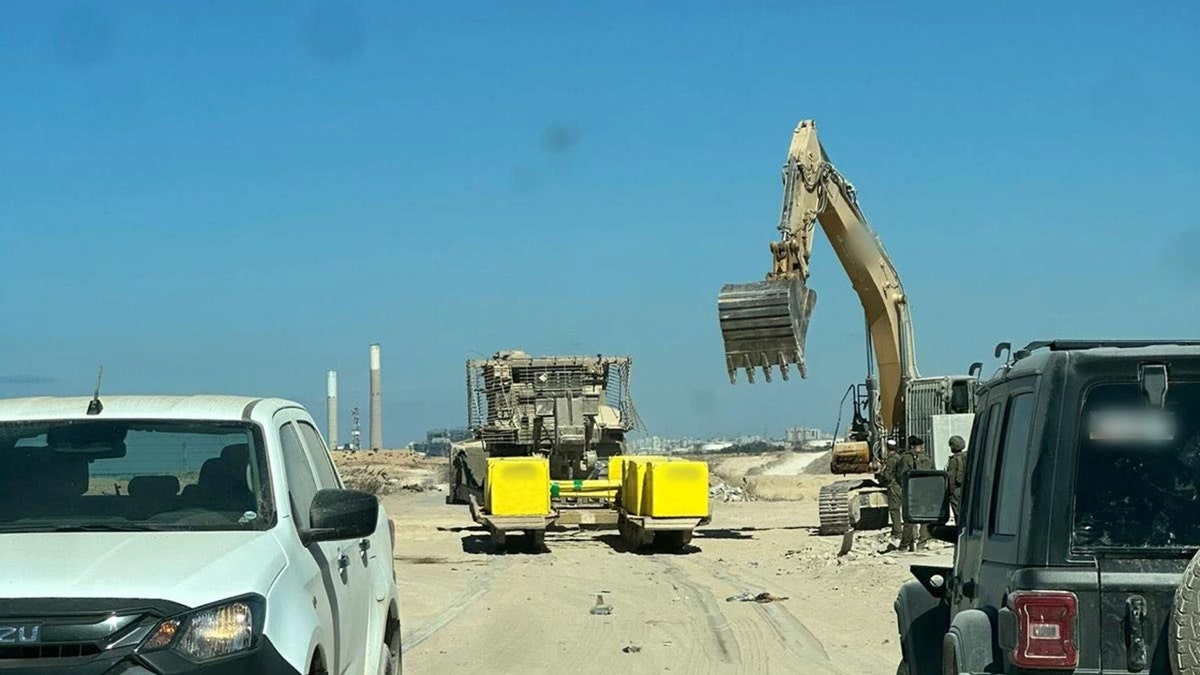
The IDF announced that as part of the ceasefire agreement and in accordance with the directive of the political echelon, IDF troops under the Southern Command have begun marking the Yellow Line in the Gaza Strip to establish tactical clarity on the ground. (IDF)
«Hamas wakes up every day with a mission to hurt us,» Strook told Fox News Digital. «The IDF will not withdraw even one meter, and no rehabilitation framework will be established until full demilitarization is completed.
«If, God forbid, the opposite happens in the meeting, it will be a failure of the peace plan, a failure for Trump himself — who would be settling for fake demilitarization— and a failure for us. We will not be able to say that we won this war if Hamas remains armed,» she added.
CLICK HERE TO DOWNLOAD THE FOX NEWS APP
Trump is nevertheless expected to soon unveil the second stage of his Gaza framework, despite Hamas’s failure to return the remains of Israel Police Master Sgt. Ran Gvili, who was killed during the Oct. 7, 2023 massacre, and whose body was taken to Gaza by Hamas terrorists.
Fox News Digital’s Sophia Compton contributed to this report.
donald trump,benjamin netanyahu,israel,national security,hamas,iran









INTERNACIONAL
Dura amenaza de Donald Trump: “Todo Irán podría ser eliminado en una noche y podría ser la de mañana”

INTERNACIONAL
CENTCOM commander directed strike against an IRGC headquarters in underground facility: sources
NEWYou can now listen to Fox News articles!
High-level sources have informed Fox News that during rescue efforts in Iran after a U.S. fighter jet was shot down, the commander of U.S. Central Command directed an attack against an underground Islamic Revolutionary Guard Corps headquarters.
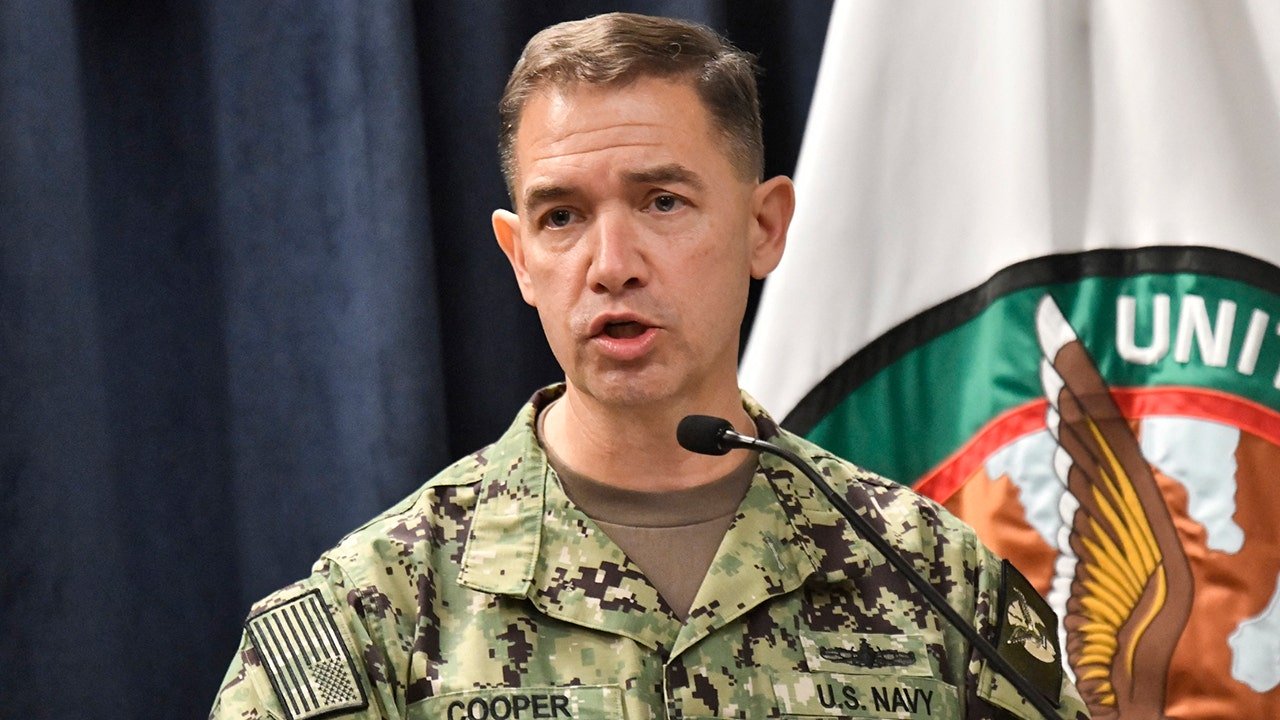
While the airman rescue was going on, CENTCOM Commander Adm. Brad Cooper directed a strike on an IRGC headquarters in an underground facility near Tehran — it was done with B2 bombers, using Massive Ordnance Penetrators, the same weapon used last year in Operation Midnight Hammer, according to the sources. Fox News is told the headquarters was obliterated.
U.S. military B1 bombers (BONES) dropped a hundred 2,000-pound bombs during the rescue operations to keep Iranians away from the rescue area during the operation, according to a senior U.S. defense official.
A senior military source told Fox News, «we delivered the heat» on the IRGC.
RESCUE EXPERT SAYS MOST DANGEROUS MOMENT COMES AFTER ‘JACKPOT’ CALL IN RECOVERY BEHIND ENEMY LINES
Adm. Brad» Cooper, commander of Central Command, speaks during a joint press conference with Secretary of War Pete Hegseth at CENTCOM headquarters at MacDill Air Force Base in Tampa, Florida, on March 5, 2026. (Octavio Jones/AFP via Getty Images)
CENTCOM noted in a press release that U.S. forces had rescued two service members after their F-15E was downed.
Fox News was told that the operation took place between the two rescues: Cooper ordered the B2s to fly round trip from Whiteman Air Force Base in the U.S. because they received time-sensitive intelligence about the location of a large number of IRGC commanders inside this underground bunker in Tehran, and the Massive Ordnance Penetrators, bunker buster bombs, were dropped by the B2 warplanes.
AIRMAN RESCUE SHOWS US CAN PENETRATE ENEMY TERRITORY ‘ANYWHERE’ IN IRAN, FORMER PENTAGON OFFICIAL WARNS
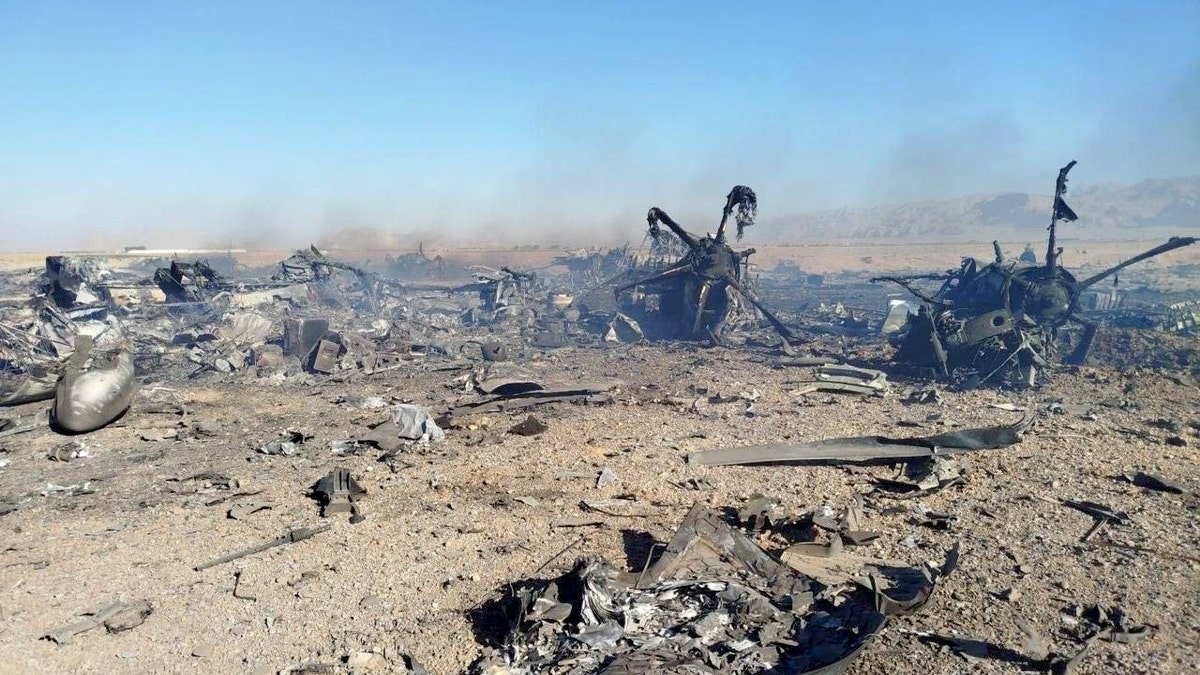
Wreckage is seen from what Iranian authorities say is a U.S. military helicopter that crashed during a mission to rescue the missing American pilot of an F-15E that was downed, in a handout image provided on April 5, 2026, in an unspecified location in Iran. (Iran’s Ministry of Culture and Islamic Guidance/Handout via Getty Images)
Following the rescues, President Donald Trump declared in a Truth Social post, «We have rescued the seriously wounded, and really brave, F-15 Crew Member/Officer, from deep inside the mountains of Iran. The Iranian Military was looking hard, in big numbers, and getting close. He is a highly respected Colonel. This type of raid is seldom attempted because of the danger to ‘man and equipment.’ It just doesn’t happen!»
RETIRED F-16 PILOT SAYS RESCUED US AIRMAN’S SURVIVAL IN IRAN HIGHLIGHTS INTENSE EVASION TRAINING
CLICK HERE TO DOWNLOAD THE FOX NEWS APP
«The second raid came after the first one, where we rescued the pilot in broad daylight, also unusual, spending seven hours over Iran. An AMAZING show of bravery and talent by all!» he said.
war with iran, iran, donald trump, military, world
NEWYou can now listen to Fox News articles!
President Donald Trump touted the «historic» rescue of the downed F-15E airmen behind enemy lines and issued a warning to Iran to make a deal before Tuesday night’s 8 p.m. ET deadline or face being «taken out.»
«This is a rescue that’s very historic,» Trump told the White House press corps in a Monday news conference. «It’ll go down to the books.»
«Late Thursday night, an American F-15 fighter jet went down deep inside enemy territory in Iran while participating in Operation Epic Fury, where we’re doing unbelievably well. Well, at a level that nobody’s ever seen before.»
Trump quickly paused his hailing of the rescue to add a warning for Iran to come to peace.
TRUMP REVEALS IRAN MADE ‘SIGNIFICANT PROPOSAL’ AFTER ULTIMATUM, BUT ‘NOT GOOD ENOUGH’
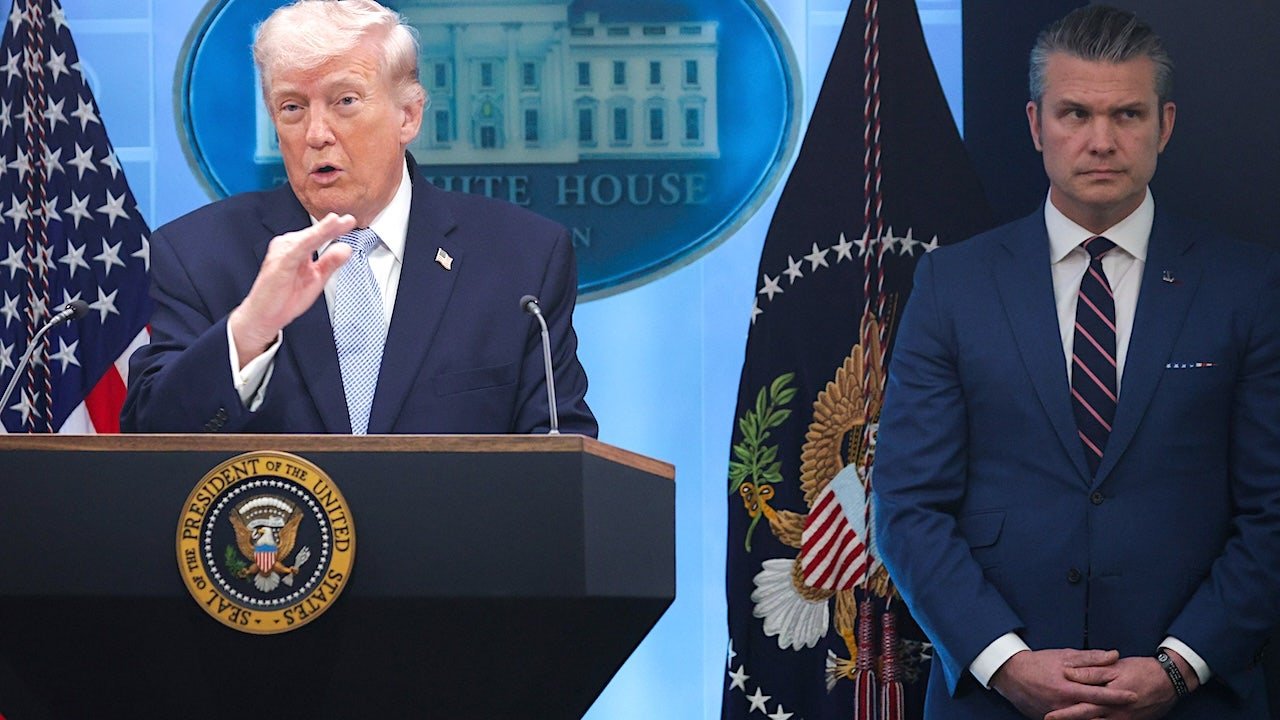
President Donald Trump describes the ‘historic’ mission to rescue two stranded airmen behind enemy lines. (Alex Wong/Getty Images)
«The entire country can be taken out in one night, and that night might be tomorrow night,» Trump said.
Trump continued to press Iran to come to a peace deal, hours after saying the offers thus far are «not enough,» and War Secretary Pete Hegseth vowed the heaviest bombing of Iran to date.
TRUMP SAYS IRAN ‘NO LONGER A THREAT’ AFTER 32 DAYS — OUTLINES NEXT PHASE OF US WAR
«By the way, per the president’s direction, [Monday] will be the largest volume of strikes since day one of this operation,» Hegseth vowed, taking the mic just before Chair of the Joint Chiefs of Staff Gen. Dan «Raizin’» Caine.
«Tomorrow, even more than today. And then Iran has a choice,» Hegseth added. «Choose wisely, because this president does not play around. You can ask Soleimani, you can ask Maduro. You can ask Khamenei.»
Trump, responding to a question from Fox News, noted there were military leaders warning against the dangerous exfiltration of the two airmen, citing the risks to a multitude of troops.
«There were military people, very professional, that preferred not doing it: These two were totally on board, which was very important,» Trump said, noting Hegseth and Gen. Caine.

War Secretary Pete Hegseth warned Iran to ‘choose wisely’ as President Donald Trump has ordered the two heaviest days of bombings on the regime. (Kent Nishimura / AFP)
IDF CONFIRMS IRGC INTEL CHIEF KILLED; QUDS FORCE COMMANDER ALSO ELIMINATED IN STRIKE
«But, no, there were military people that said, ‘You just don’t do this; you don’t go into the heart of a very powerful military.»
Trump noted that «half the people are wearing uniforms» in Iran, exacerbating the challenges of extracting the American airmen.
«I was surprised somebody said it’s the only time it’s ever been done,» Trump continued. «I said, that’s not possible, but it is possible because you’re going into hundreds of thousands of soldiers along the path. I mean, look at some of the helicopters, how they got hit.»
Trump, in a moment that went from serious to lighter, asked Caine «how many» people conducted the rescue.
INSIDE THE DARING RESCUE OF AIRMAN BEHIND ENEMY LINES: HOW CIA ASSISTED WITH ‘DECEPTION CAMPAIGN’
«I’d love to keep that a secret,» Caine shot back.
«I’ll keep it a secret, but it was hundreds and hundreds of these people,» Trump said.
«Hundreds of people went into this journey. Hundreds of people could have been killed. Forget about the equipment. A lot of equipment. Nobody cares of it. Hundreds of people could have been killed,» Trump added.
«So we had people that were within the military that said, ‘This is not a wise move,’» Trump said.
«And I understood that, but I decided to do it.»
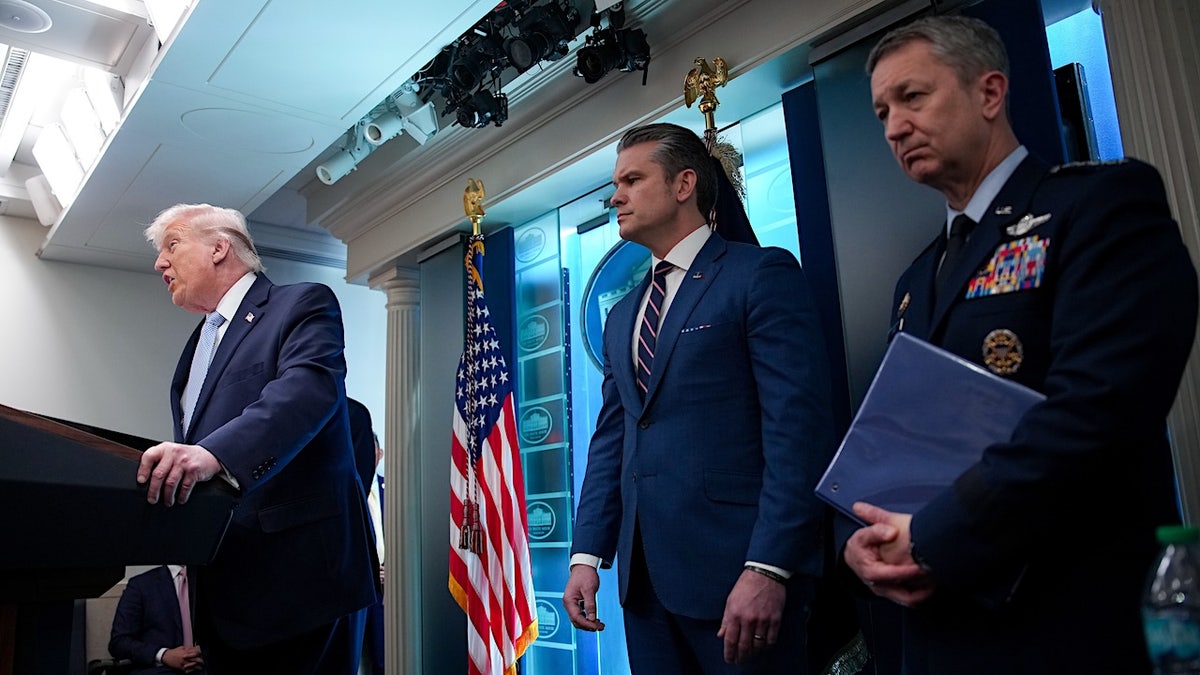
Gen. Dan Caine (right) said he wanted to keep some details of the historic rescue secret to preserve future missions as President Donald Trump (left) and War Secretary Pete Hegseth (center) vowed the two heaviest days of bombing to come in Iran. (Andrew Harnik)
US ‘OBLITERATED’ IRGC HEADQUARTERS WITH BUNKER BUSTER BOMBS DURING RESCUE
For now, Tuesday night’s 8 p.m. ET deadline looms for Iran to make a deal to Trump’s satisfaction.
«I can’t talk about ceasefire, but I can tell you that we have an active, willing participant on the other side,» Trump said, acknowledging Iran has been «excellent negotiators» because they have been able to delay peace for decades. «They would like to be able to make a deal. I can’t say any more than that.»
«I can tell you they’re negotiating, we think, in good faith,» Trump said. «We’re going to find out. We’re getting the help of some incredible countries that want this to be ended, because it affects them.
HEGSETH REVEALS COVERT VISIT TO TROOPS FIGHTING IN OPERATION EPIC FURY
The «plan,» short of an imminent peace deal, Trump expounded, would be devastating for a country that would require a century to rebuild.
«We have a plan, because of the power of our military, where every bridge in Iran will be decimated by 12 tomorrow night, where every power plant in Iran will be out of business, burning, exploding, and never to be used again,» Trump vowed. «I mean, complete demolition by 12, and it’ll happen over a period of four hours if we wanted to. «We don’t want that to happen.»
CLICK HERE TO DOWNLOAD THE FOX NEWS APP
«So do I want to do that? No. Do I want to destroy their infrastructure? No,» Trump concluded. «It will take them 100 years to rebuild. Right now, if we left today, it would take them 20 years to rebuild their country. And it would never be as good as it was. And the only way they’re going to be able to rebuild their country is to utilize the genius of the United States of America.»
heroism, donald trump, us air force, war with iran, iran

Créditos hipotecarios del Nación: los diputados libertarios cierran filas y acuerdan no alimentar la polémica en redes

Dura amenaza de Donald Trump: “Todo Irán podría ser eliminado en una noche y podría ser la de mañana”

CENTCOM commander directed strike against an IRGC headquarters in underground facility: sources

Video: el llamativo entrenamiento con bolígrafos de los jugadores del Arsenal ante la atenta mirada de Heinze

El oficialismo pidió sesionar el miércoles en Diputados para sancionar la reforma de la Ley de Glaciares

Una Pyme del campo debutó en el mercado de capitales: colocó su primera ON por casi u$s4 millones

La Armada sorteará 30 lugares en el buque que escoltará la salida de la Fragata Libertad: cómo anotarse

La nueva advertencia de Donald Trump a Irán: «El tiempo se acaba, quedan 48 horas antes del infierno»

Círculo rojo: intrigas en el gabinete, desgaste por el caso Adorni y movimientos inquietantes en el Poder Judicial

Caputo habló sobre los créditos del Banco Nación que tomaron sus funcionarios: “No hay nada ilegal ni inmoral”

 INTERNACIONAL2 días ago
La nueva advertencia de Donald Trump a Irán: «El tiempo se acaba, quedan 48 horas antes del infierno»
- POLITICA2 días ago
Círculo rojo: intrigas en el gabinete, desgaste por el caso Adorni y movimientos inquietantes en el Poder Judicial
- ECONOMIA9 horas ago
Caputo habló sobre los créditos del Banco Nación que tomaron sus funcionarios: “No hay nada ilegal ni inmoral”