INTERNACIONAL
As Iran weakens, questions grow over Mohammed bin Salman’s regional ambitions

NEWYou can now listen to Fox News articles!
As Iran weakens, a power vacuum is emerging across the Middle East — and Saudi Arabia is moving to fill it by recalibrating relations with former rivals, hedging global partnerships and asserting a more independent foreign policy, according to several experts.
Javed Ali, former senior official at the National Security Council and professor at the University of Michigan, told Fox News Digital that «Since Iran’s 1979 revolution, both Saudi Arabia and Iran have vied for influence across the broader Muslim world. Mohammed bin Salman’s consolidation of power in the kingdom has also introduced a markedly different vision from that of his predecessors.»
Riyadh’s recent moves, from Yemen to Turkey, are fueling debate over whether Crown Prince Mohammed bin Salman’s expanding regional role still aligns with U.S. interests. As part of that recalibration, Bloomberg reported on Jan. 9 that Turkey is seeking entry into the Saudi–Pakistan mutual defense pact signed four months earlier, according to people familiar with the talks.
TRUMP FACES MIDDLE EAST TEST AS NETANYAHU BALKS AT ERDOGAN’S GAZA TROOP HOPES
Saudi Crown Prince Mohammed bin Salman chairs the inaugural session of the Shura Council in Riyadh, Saudi Arabia, September 10, 2025. (Saudi Press Agency/Handout via Reuters)
Michael Rubin, a senior fellow at the American Enterprise Institute, said Saudi Arabia’s current trajectory must be viewed through years of accumulated frustration with U.S. policy.
«To be fair to MBS, previous U.S. administrations did not uphold their end of the bargain either,» Rubin told Fox News Digital, pointing to repeated Houthi attacks on Saudi territory. «The Houthis launched hundreds of drones and rockets that the Obama administration ignored.»
Rubin said tensions deepened as Mohammed bin Salman pursued reforms long urged by U.S. policymakers, only to face sharp criticism from Washington. He cited the Biden administration’s decision to remove the Houthis’ terror designation.

President Donald Trump welcomes Saudi Arabia’s Crown Prince Mohammed bin Salman to the White House, Tuesday, Nov. 18, 2025, in Washington. (Mark Schiefelbein/AP)
«By no objective measure should Secretary of State Antony Blinken have removed the terror designation from the Houthis,» Rubin said, calling the move «pure spite directed at MBS and Donald Trump.»
Rubin said that decision marked a turning point. «MBS calculated that if the United States did not have his back, he would need to embrace a Plan B,» he said, describing outreach to Russia and China as tactical signaling rather than ideological realignment.
Saudi geopolitical researcher Salman Al-Ansari rejects claims that Riyadh is drifting ideologically or embracing Islamist movements, framing Saudi policy as interest-driven.
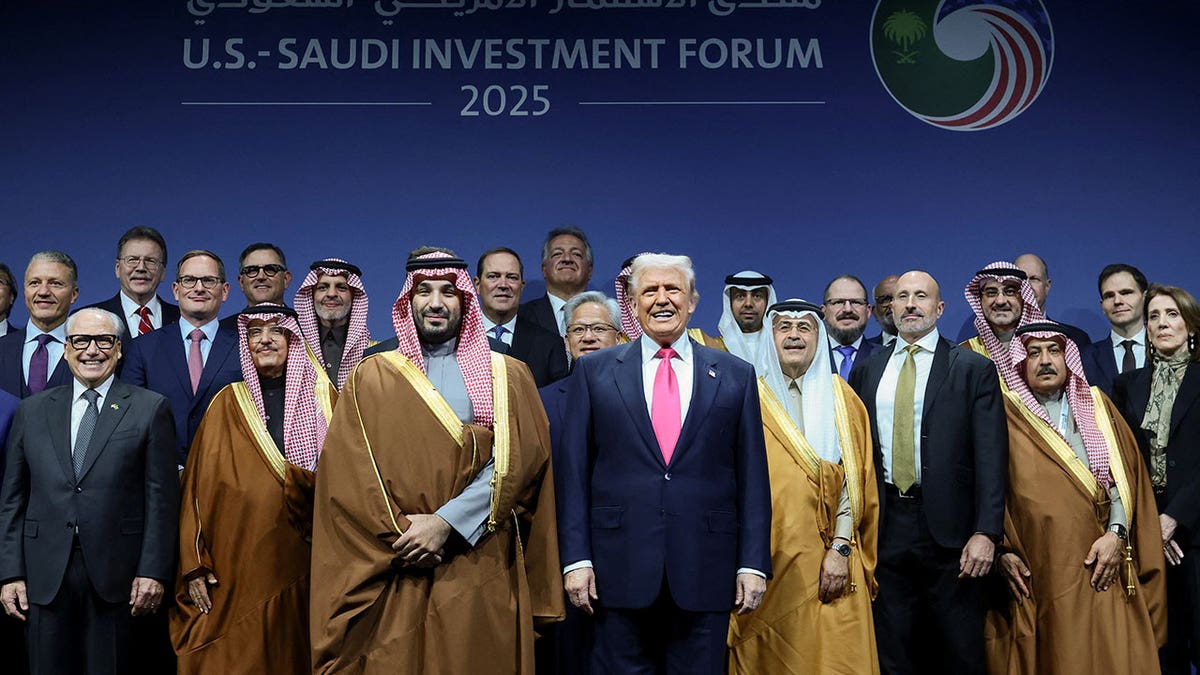
U.S. President Donald Trump poses for a family picture with Saudi Crown Prince and Prime Minister Mohammed bin Salman and other attendees during the U.S.-Saudi Investment Forum in Washington, D.C., U.S., Nov. 19, 2025. (Evelyn Hockstein/Reuters)
«Saudi Arabia does not base its foreign policy on ideological alignment, but on pragmatic considerations aimed at stability and development,» Al-Ansari told Fox News Digital. He said outreach to Turkey reflects an effort to de-escalate rivalries. «The rapprochement with Turkey reflects this diplomatic approach, which seeks to transform the Middle East from a region of chronic conflict into one of greater stability.»
Al-Ansari said the shift has already delivered results. «This shift has given Riyadh increased flexibility in engaging regional powers, a change Ankara quickly recognized and that has translated into expanding economic cooperation.»
He rejected claims of alignment with the Muslim Brotherhood. «Saudi Arabia designated the group as a terrorist organization in 2014, and this position remains unchanged,» he said.
SAUDI DEFENSE MINISTER SECRETLY MEETS WITH TRUMP TO DISCUSS IRAN DE-ESCALATION, ISRAEL: SOURCES
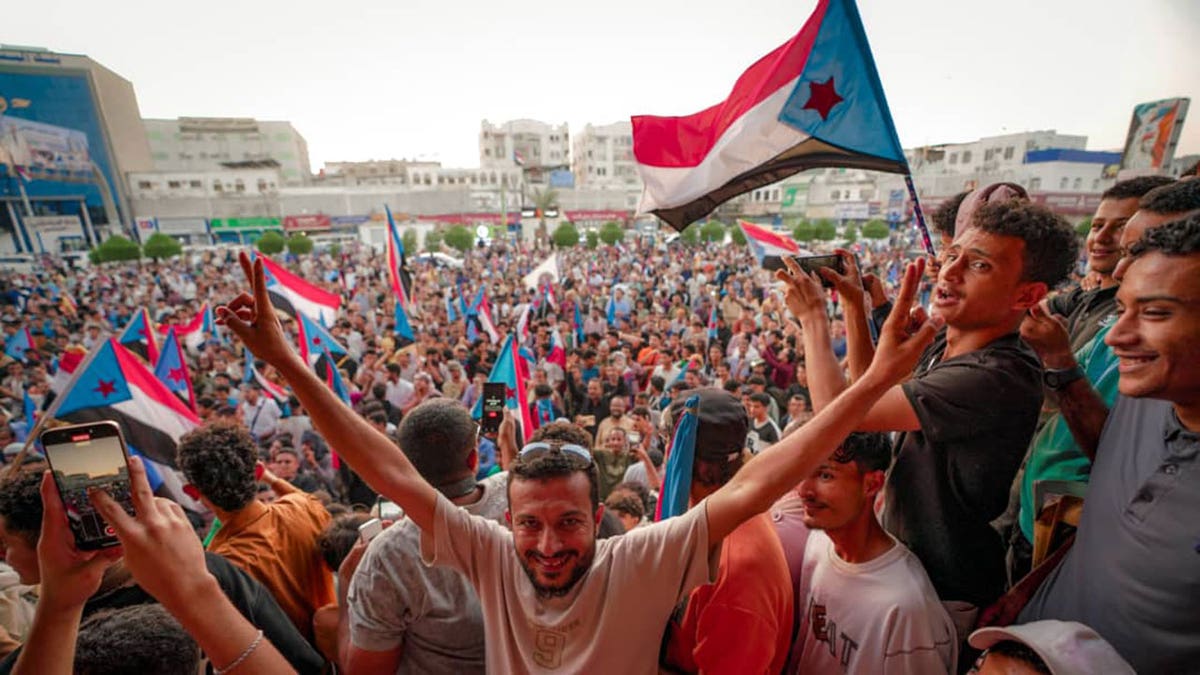
Crowds in southern Yemen are rallying for independence. Dec. 2025. (Ahmed Shehab)
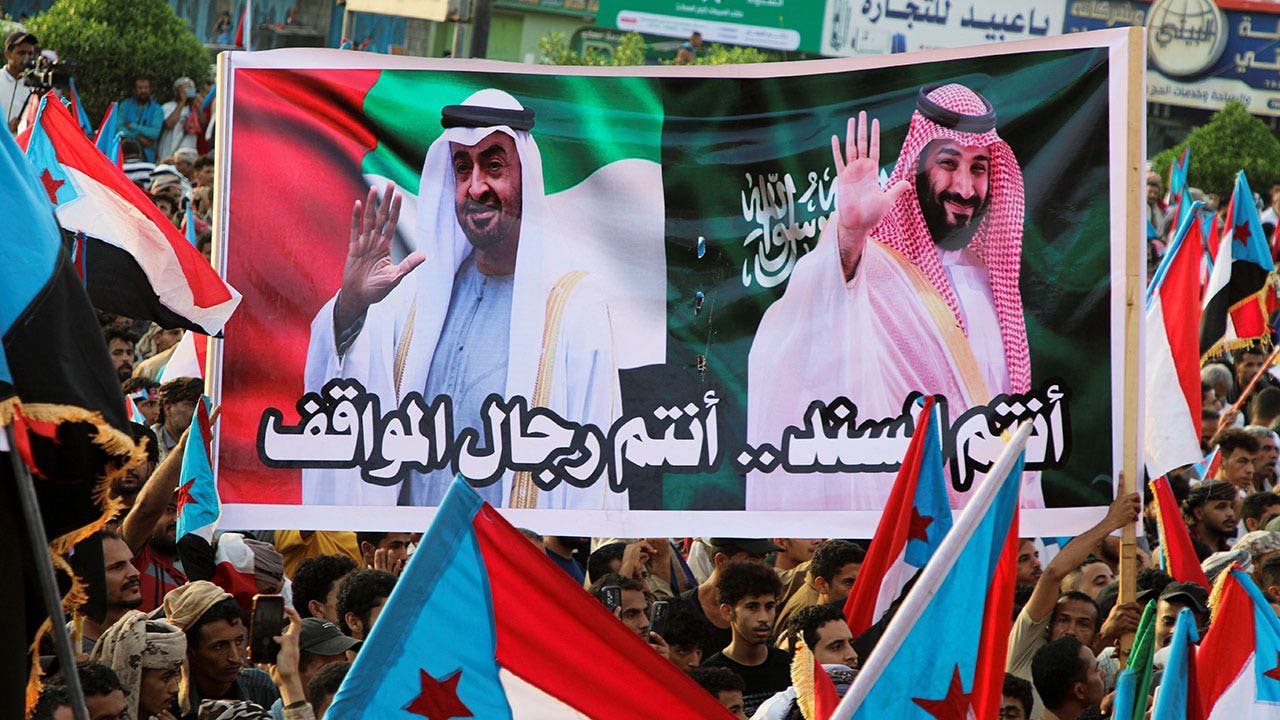
Those competing interpretations of Saudi intent are now colliding most visibly in Yemen, where the Saudi-Emirati alliance originally formed to counter Iran’s Houthi proxy. While both entered the war to roll back Iranian influence, their strategies diverged. Riyadh backs a unified Yemeni state under the internationally recognized government, arguing fragmentation strengthens Iran. The UAE has supported southern separatists, including the Southern Transitional Council, prioritizing control over ports and security corridors.
In the last few days, Saudi and Yemeni government forces have largely recaptured southern and eastern Yemen from the UAE-backed Southern Transitional Council (STC), and the STC’s leader reportedly fled to the UAE amid the group’s reported dissolution, highlighting a sharp rift involving Emirati support for separatists
Rubin called Yemen the clearest warning sign. «This is best seen in Yemen, where he has been supporting the Muslim Brotherhood faction militarily and attacking the more secular Southern Forces in a way that only empowers al Qaeda in the Arabian Peninsula and the Houthis,» he said.
Al-Ansari countered that «differences with the UAE stem from its backing of separatist armed actors in Yemen, which complicates the political process, fragments the anti-Houthi front, and ultimately benefits the Iranian-backed Houthi militia.»
Rubin warned of long-term consequences. «By ‘blowback’ I mean the same Islamists MBS cultivates today will end up targeting Saudi Arabia in the future,» he said.
CLICK HERE TO DOWNLOAD THE FOX NEWS APP
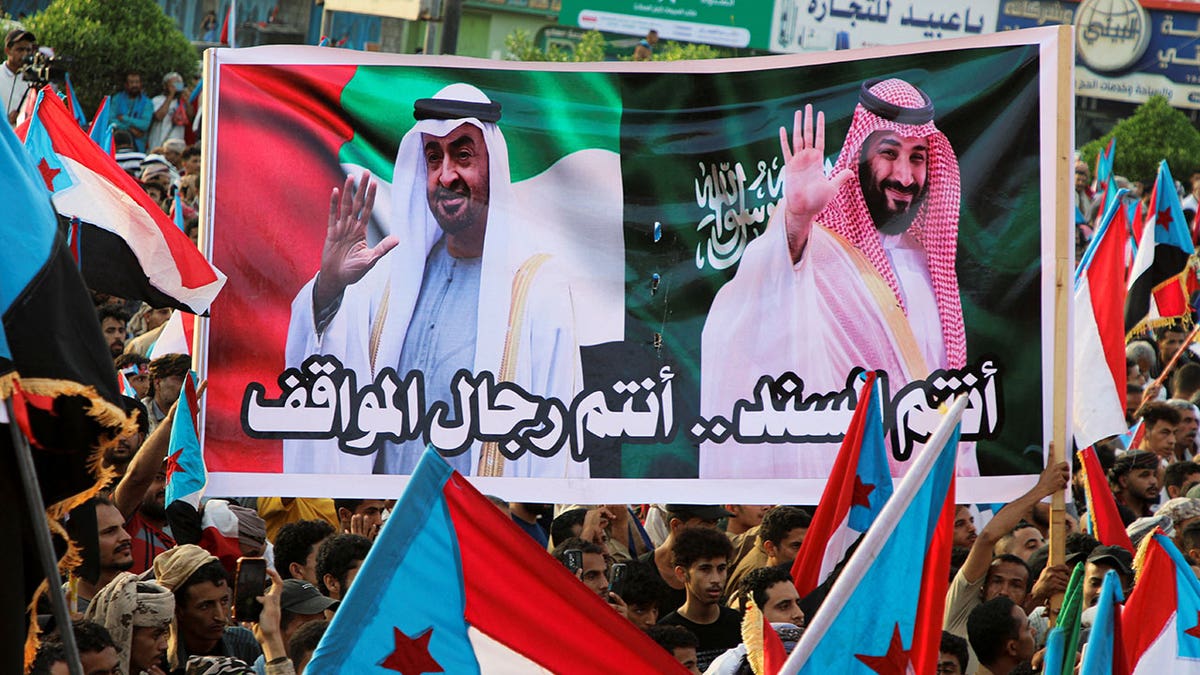
People hold a banner with images of the President of the United Arab Emirates, Sheikh Mohamed bin Zayed Al Nahyan, and Crown Prince and Prime Minister Mohammed bin Salman of Saudi Arabia during a rally organised by Yemen’s main separatist group, the Southern Transitional Council (STC), in Aden, Yemen Dec. 21, 2025. (Fawaz Salman/Reuters)
With Iran weakened and regional power shifting, Washington now faces a central question: whether Saudi Arabia’s expanding role will reinforce U.S.-backed stability, or redefine the balance of power in ways that test the limits of the long-standing partnership.
saudi arabia,middle east foreign policy,middle east,donald trump,national security,terrorism







NEWYou can now listen to Fox News articles!
The Department of Justice has begun investigating nonprofit groups that the Trump administration says are involved in organizing or funding political violence and destructive protests, including those linked to Antifa, sources familiar with the matter told Fox News Digital.
The effort involves the FBI and IRS, the sources said, and stemmed from directives by President Donald Trump and Attorney General Pam Bondi to probe political violence. The Trump administration has contended that the violence is often being perpetrated by self-described Antifa adherents and could be a result of organized and well-funded campaigns by nonprofits.
«These movements portray foundational American principles (e.g., support for law enforcement and border control) as ‘fascist’ to justify and encourage acts of violent revolution,» Trump wrote in his memorandum in September, days after conservative activist Charlie Kirk was assassinated by a man who authorities say wrote antifascist phrases on his bullet casings.
OVERSIGHT DEMANDS DOJ ANSWERS ON FOREIGN FUNDING OF AGITATOR GROUPS AS IRAN, ANTI-ICE PROTESTS CONTINUE
President Donald Trump during a roundtable on Antifa in the State Dining Room of the White House in Washington, D.C., on Oct. 8, 2025. (Francis Chung/Politico/Bloomberg via Getty Images)
Trump’s directive came after a string of harrowing ideologically-inspired shootings that included Kirk’s killing, an attack on a Dallas ICE facility that killed one detainee and the murder of a health insurance CEO. The DOJ also recently secured convictions for nine members of a Texas Antifa cell for their roles in an attack on an ICE facility in Alvarado last year that involved weapons, explosives and a murder attempt.
Bondi, in a memorandum on Dec. 4, directed federal law enforcement to carry out Trump’s memorandum, coined NSPM-7, in part by looking into Antifa’s funding sources and investigating any tax crimes by «extremist groups.»
A spokesperson for the IRS Criminal Investigations unit confirmed to Fox News Digital that the agency was working with the FBI on the matter.
«In accordance with National Security Presidential Memorandum 7 (NSPM-7), IRS Criminal Investigation (IRS-CI) is collaborating with federal law enforcement agencies, including the FBI, to investigate individuals and entities that may be funding domestic terrorism or political violence,» the spokesperson said, calling it a «coordinated effort.»
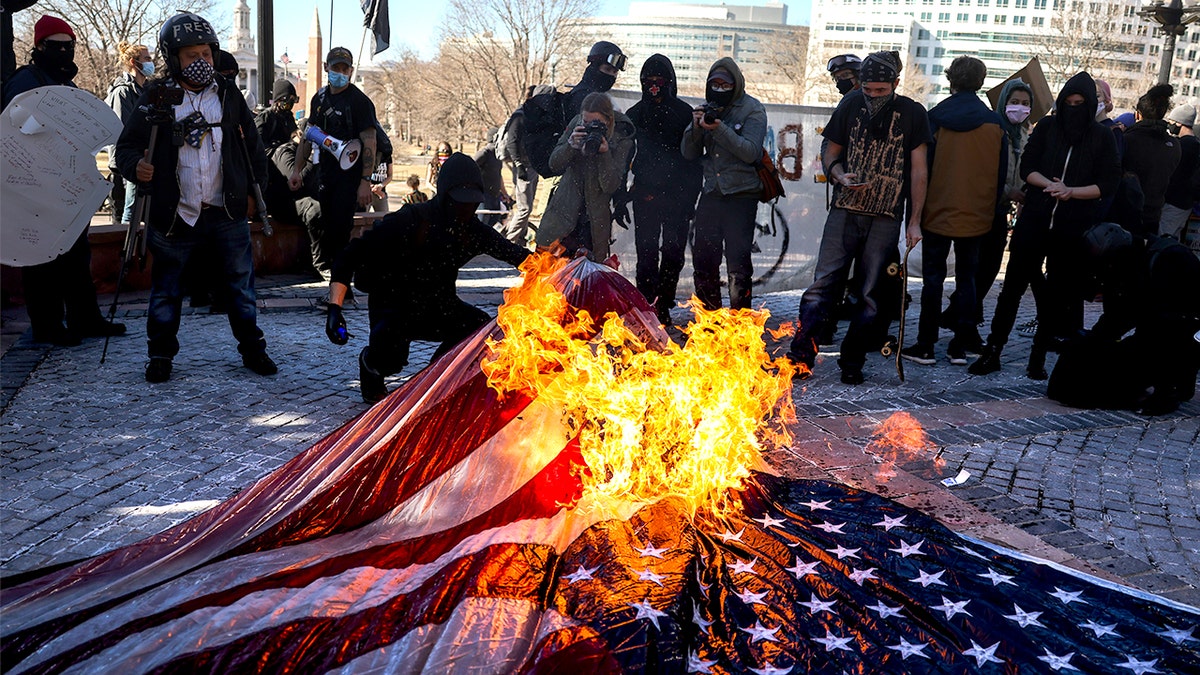
Members of the Communist Party USA and other anti-fascist groups burn an American flag on the steps of the Colorado State Capitol on Jan. 20, 2021, in Denver, Colorado. (Michael Ciaglo/Getty Images)
Antifa, short for antifascist, is a broad term, and its members often promote a range of radical views closely aligned with anarchism, communism or socialism, according to the Congressional Research Center. Trump declared Antifa a «major terrorist organization» last year, drawing criticism from civil rights advocates who said the president was targeting people for their political views. Bondi’s memo carefully noted the DOJ would not investigate «solely for the purpose of monitoring activities protected by the First Amendment.»
One of the sources familiar with the NSPM-7 probe told Fox News Digital that every U.S. attorney across the country was directed by the DOJ to designate a federal prosecutor in their office to serve as a «district coordinator» for the cases.
The DOJ has been urging prosecutors to focus on funding because nonprofits could be funding and coordinating instances of domestic terrorism, the person said.
TRUMP CALLS ANTIFA ‘TERRORIST GROUP,’ FUELING FIGHT OVER FREE SPEECH AND LIMITS OF LAW ENFORCEMENT
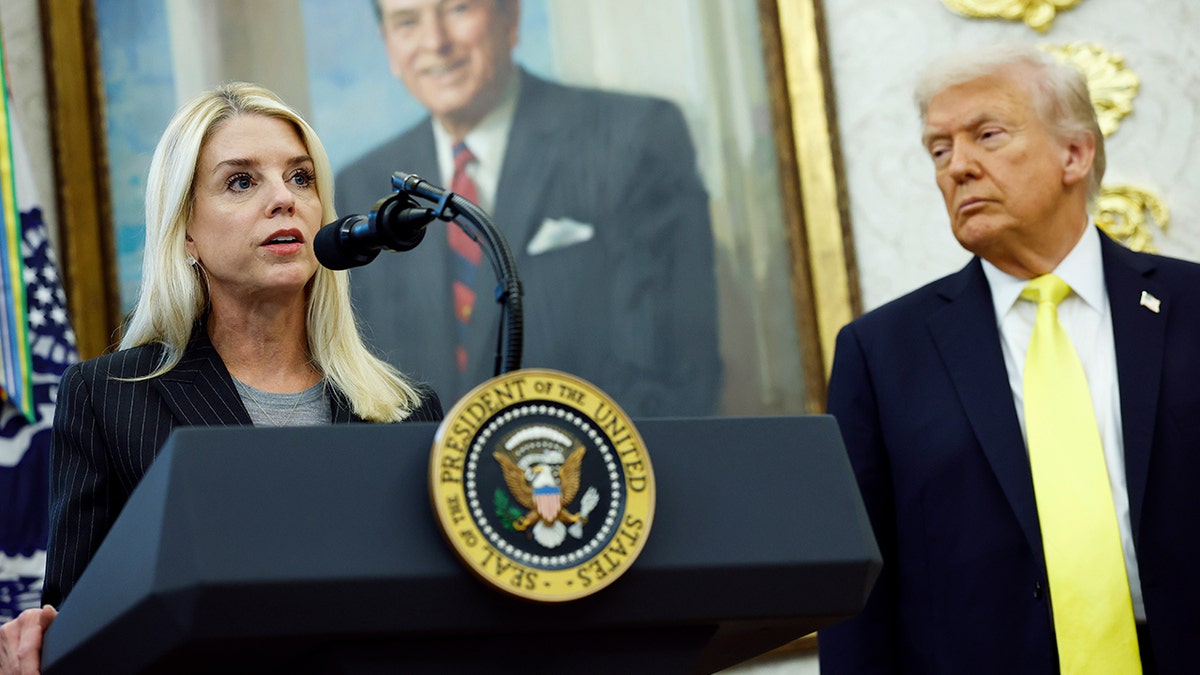
U.S. Attorney General Pam Bondi speaks as President Donald Trump looks on during a press conference in the Oval Office of the White House on Oct. 15, 2025, in Washington, D.C. (Kevin Dietsch/Getty Images)
A DOJ spokesperson said in response to a request for comment on the effort that the department was pursuing a wide range of domestic terrorism crimes.
CLICK HERE TO GET THE FOX NEWS APP
«The Department of Justice is fully committed to preserving the rule of law, protecting law enforcement from coordinated attacks, ensuring everyone has the freedom to speak in the public square, participate freely in the electoral process, and practice their faith without fear of violence or harm, and bringing to justice the full range of criminal actors engaged in criminal conduct matching Congress’s definition of domestic terrorism,» the spokesperson said.
The FBI declined to comment.
justice department,fbi,antifa,politics
INTERNACIONAL
De Stranger Things a los museos: cómo la nostalgia se volvió una fuerza cultural poderosa
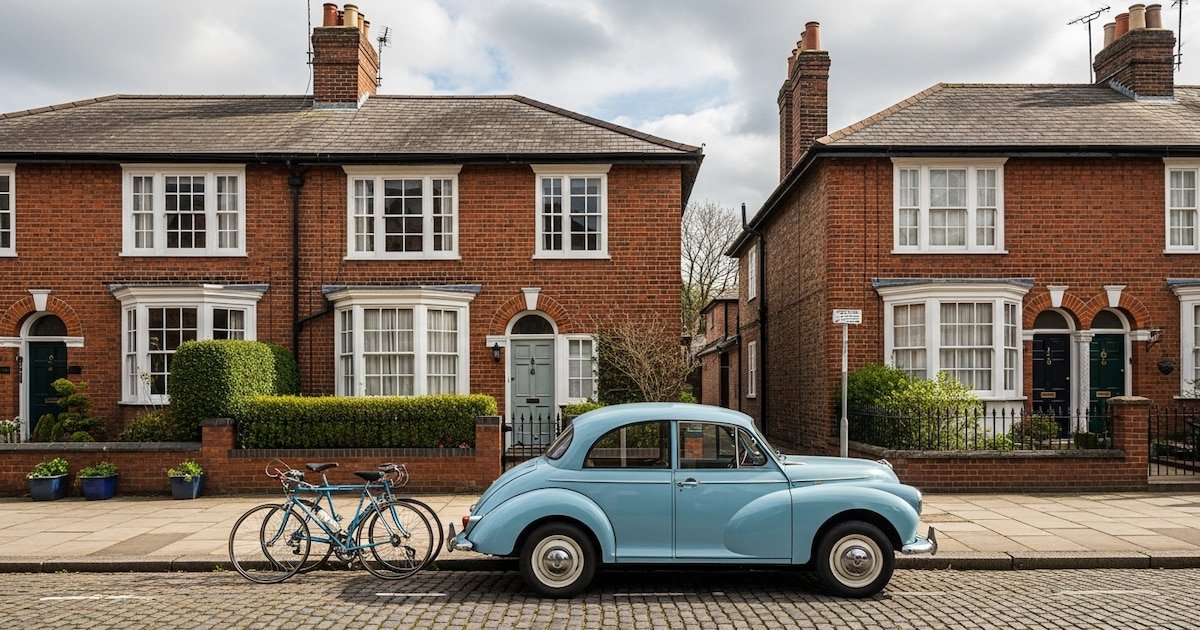
Nuestra percepción del pasado rara vez coincide con los hechos históricos. Está influida por la cultura, los medios y la memoria colectiva, que permiten construir versiones de la historia reconfortantes.
Según Historia Extra, el portal especializado en historia, el cine, la televisión, los videojuegos y la literatura facilitan el acceso a otras épocas, pero lo hacen a través de relatos ajustados a las expectativas y deseos del presente. En este proceso, la nostalgia juega un papel central, conectando emociones intensas con recuerdos o imágenes idealizadas.
La nostalgia es una vía emocional que trasciende la racionalidad y ofrece una forma de conexión con la historia a través del sentimiento. Esta emoción impregna la cultura contemporánea, desde productos mediáticos hasta la manera en que se recuerdan y reinterpretan hechos pasados.
El medio señala que la construcción de la memoria está profundamente marcada por la nostalgia, que actúa como un motor de interés por el pasado y refuerza identidades individuales y colectivas.

La nostalgia, alimentada por la cultura popular, aparece en diversos productos como series, películas y videojuegos que evocan épocas pasadas mediante tropos y clichés más que una reconstrucción fiel. Series como Stranger Things recrean una versión imaginaria de los años 80 para una audiencia que, en muchos casos, no vivió esa década. Según Historia Extra, esta evocación genera una experiencia compartida y comercializada.
Este fenómeno se manifiesta también en el cine, la música y los videojuegos, donde se explora y amplifica la nostalgia por épocas recientes o remotas. Obras como Mad Men ilustran cómo los relatos del pasado pueden utilizarse como herramientas de marketing, mostrando que la nostalgia se transforma en mercancía simbólica.
Al consumir relatos, imágenes y símbolos de otros tiempos, la memoria colectiva se nutre de ficciones y referencias que refuerzan emociones y lazos sociales, integrándose en la vida cotidiana y dotando de sentido al presente a través del pasado.

La nostalgia se presenta en distintas formas, adaptándose al contexto y la experiencia individual. Historia Extra distingue entre la nostalgia personal, ligada a recuerdos propios y vivencias íntimas, y la histórica, orientada a períodos no vividos y conocidos solo por relatos y cultura. La nostalgia personal suele asociarse a la infancia o a momentos significativos, mientras que la histórica surge del contacto con narrativas colectivas, imágenes y productos culturales.
La psicología reconoce que casi todas las personas experimentan nostalgia en algún momento, aunque varía en intensidad. Este sentimiento consolida la identidad, fortalece los vínculos sociales y aborda la incertidumbre en tiempos de cambio. La nostalgia histórica, en cambio, puede propiciar visiones idealizadas que dificultan una comprensión crítica del pasado, reforzando clichés y simplificaciones.
Los historiadores advierten sobre el riesgo de sustituir el análisis objetivo por la emoción, pero también reconocen la relevancia del tema en la motivación por el interés histórico y la creación de museos, documentales y recreaciones de época.

El auge de representaciones nostálgicas en el cine y los medios ha generado debates sobre su alcance y significado. La etiqueta de nostalgia se aplica con frecuencia a cualquier obra de época, independientemente de su género o intención, lo que puede derivar en una visión reduccionista de la relación entre el público y la historia.
Este fenómeno ha motivado estudios empíricos para analizar si la nostalgia refleja una relación auténtica con el pasado o responde principalmente a patrones de consumo y placer cultural. Incluso quienes sienten nostalgia intensa por ciertos tiempos suelen ser conscientes de que el presente ofrece comodidades y derechos que no cambiarían por épocas evocadas.
Además, en los últimos años, se ha producido una ola de historia pública accesible, desde recursos digitalizados hasta innovaciones en la televisión histórica, buscando equilibrar el entretenimiento con la fidelidad a los hechos y a las fuentes primarias.
Programas como ¿Quién te crees que eres? y series basadas en documentos históricos han actuado como contrapeso a las versiones idealizadas, promoviendo una aproximación más crítica al pasado y abriendo espacio para la reflexión colectiva.

La nostalgia es mucho más que un simple anhelo por el pasado; constituye una emoción compleja y cambiante. El término fue acuñado en el siglo XVII por un médico suizo para describir una dolencia: una añoranza patológica por un lugar perdido.
Solo en el siglo XX adquirió su sentido actual, el deseo de regresar a un tiempo pasado, más que a un espacio concreto. En la actualidad, la nostalgia puede verse tanto como un consuelo personal ante la incertidumbre como un motor cultural en la búsqueda de sentido histórico.
La historiadora médica Agnes Arnold-Forster, citada en el texto, advierte que existen “muchas nostalgias” y que este sentimiento puede ser beneficioso al reforzar los vínculos y la pertenencia, pero también riesgoso si idealiza el pasado y dificulta una comprensión crítica de la historia.
En su obra Nostalgia: una historia de una emoción peligrosa, insiste en la importancia de analizar con cuidado la nostalgia para evitar distorsiones o manipulaciones de la memoria colectiva. Así, la nostalgia puede funcionar como consuelo individual y motor cultural, pero siempre exige un análisis atento para no perder de vista la complejidad y las tensiones del pasado.
Morris Minor,automóvil clásico,calle adoquinada,bicicletas,casas de ladrillo,arquitectura,historia,vehículo,transporte

NEWYou can now listen to Fox News articles!
Someone was playing possum — or stuffed animal.
Among plush kangaroos, dingoes and Tasmanian devils ready to be bought by parents of antsy children, a live brushtail possum waited in a gift shop at an Australian airport this week.
The wild animal was first noticed by a shopper in the store on Wednesday, retail manager Liam Bloomfield of Hobart Airport in the state of Tasmania said.
«A passenger reported it to …. one of the staff members on shift who couldn’t quite believe what she was hearing,» Bloomfield told The Associated Press. «She then called the (airport) management and said we’ve got a possum in the store.»
TOURISTS IN LAS VEGAS PAY $1,000 FOR DINNER ON THE STRIP WHILE SHARKS EAT LIKE ROYALTY
A live Australian brushtail possum sits on the display shelf at a terminal shop at Hobart Airport in Hobart, Australia, on Wednesday. (Melissa Oddie via AP)
Staff at the airport were able to remove the animal without harming it.
«I’m imaging it saw some of the plush animals that were for sale on the shelf and it decided to make its home with those,» Bloomfield joked of why the possum was hiding with the stuffed toys. «It wanted to blend in.»
EXPERT SOUNDS ALARM AFTER STUDY FINDS POPULAR TRAVEL ITEM CARRIES FAR MORE BACTERIA THAN EXPECTED

The arrivals area at Hobart Airport in Australia. (Steve Bell/Getty Images)
«Can you spot the imposter?» the airport wrote in a Facebook post Thursday that showed the possum curled up in a cubby with its stuffed counterparts.
«This cheeky lost possum found a clever hiding place among the Aussie plushies in our retail store,» the airport continued. «Luckily it was safely relocated out of the terminal area and the space was cleaned.»
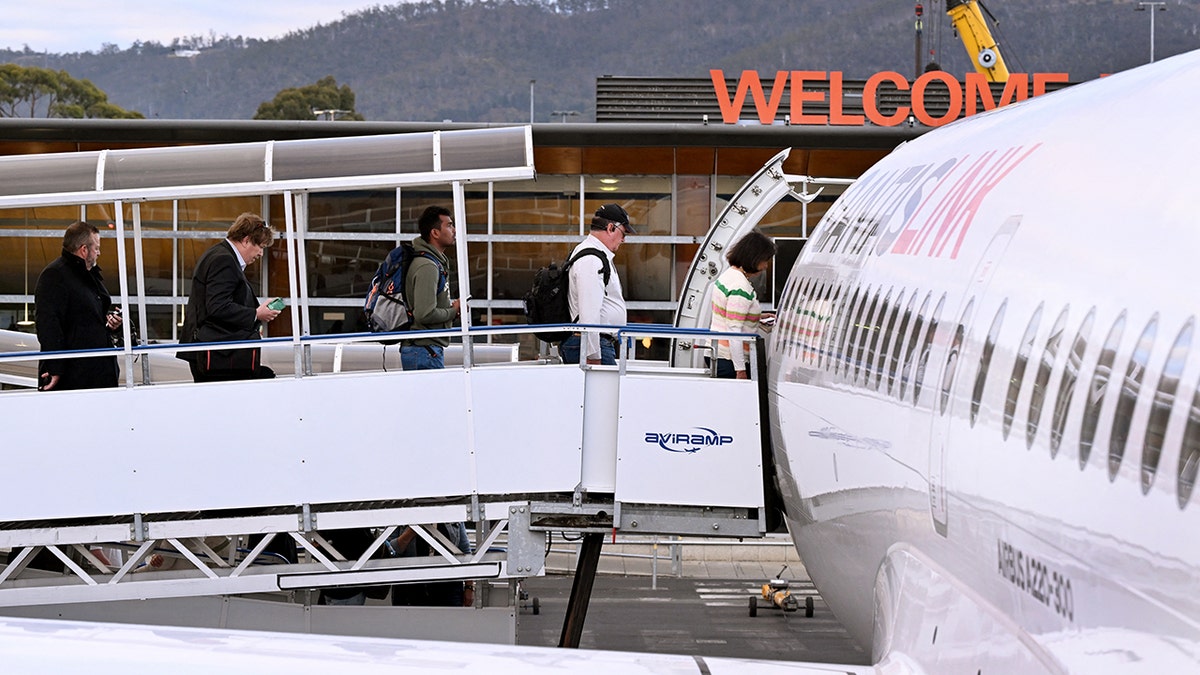
Passengers boarding a plane at Hobart Airport in Australia. (William West/AFP via Getty Images)
CLICK HERE TO DOWNLOAD THE FOX NEWS APP
Bloomfield said the possum not only found a way into the airport but also their hearts.
«We’ll have a little shrine to the possum,» he revealed, according to The Independent. «There will be a nice little photo; once it gets a name, we will put a nice little post in front of the store to make sure it’s remembered.»
world,odd news,wild nature,australia,airports

Nuevo aumento: cuánto gana un encargado de edificio en abril 2026

Con fechas y horarios, el fixture completo de Boca en Copa Libertadores

La tormenta impensada que complica el best seller que imagina Milei

Cristian Ritondo adelantó que el PRO mantendrá la alianza con LLA en la provincia de Buenos Aires en 2027

Bajo la lluvia y en medio del escándalo, Tini Stoessel brilló junto a Ángela Torres en Córdoba

Feds launch probe to unravel alleged nonprofit funding behind Antifa-linked violence

Las chicanas de Cristina Kirchner en el arranque de su indagatoria: “Tengo apodos, pero no me parecen adecuados”

Juicio por YPF: la Justicia de EEUU benefició a Argentina y suspendió todas las demandas hasta que se defina la cuestión de fondo

Senado: la oposición pidió explicaciones por $LIBRA y los vuelos de Adorni y Bullrich defendió al Gobierno

¿DÓNDE ESTÁ ESMERALDA? El grito de una madre que sacude a la Argentina: «Me la arrebataron de la puerta»

 ECONOMIA2 días ago
Juicio por YPF: la Justicia de EEUU benefició a Argentina y suspendió todas las demandas hasta que se defina la cuestión de fondo
- POLITICA2 días ago
Senado: la oposición pidió explicaciones por $LIBRA y los vuelos de Adorni y Bullrich defendió al Gobierno
- POLITICA2 días ago
¿DÓNDE ESTÁ ESMERALDA? El grito de una madre que sacude a la Argentina: «Me la arrebataron de la puerta»