INTERNACIONAL
California’s looming capital flight problem could reshape state in 3 key areas

NEWYou can now listen to Fox News articles!
California’s potential «billionaire tax» is the latest catalyst that is driving a capital exodus that puts the state’s tax base, budget and political power at risk.
The measure would levy a one-time 5% wealth tax on residents with more than $1 billion in assets, including unrealized gains — a proposal California Gov. Gavin Newsom has warned could backfire.
Supporters say the tax would close budget gaps, while economists warn that it could weaken long-term revenue.
TAX FIGHT PUTS CALIFORNIA ON COLLISION COURSE AS BILLIONAIRES LEAVE FOR RED STATES
Economists argue the risks are already materializing. Here are three ways that California’s capital exodus will reshape the state.
1. Forcing out the ultra-wealthy deals a major blow to the tax base
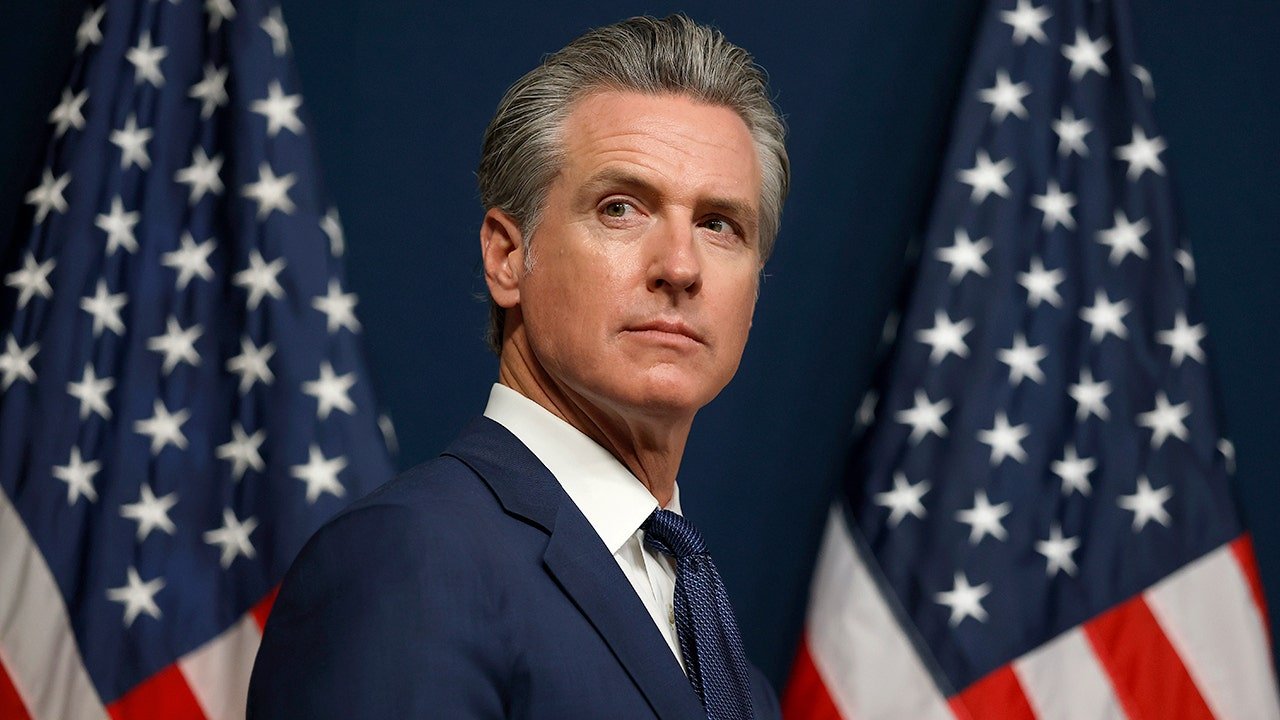
California Gov. Gavin Newsom has previously said that he does not support the «billionaire tax» measure. (Wally Skalij/Los Angeles Times/Getty Images)
Wayne Winegarden, a senior fellow in business and economics at the Pacific Research Institute, warned that the departure of even a few ultra-wealthy taxpayers can have lasting consequences.
«When one of those individuals leaves, that’s a significant and recurring hit to the tax base,» Winegarden told Fox News Digital.
E.J. Antoni, chief economist at the Heritage Foundation, said the proposed wealth tax «has literally never worked anywhere,» warning that capital flight erodes the tax base and shifts the burden onto those who remain.
«The tax base is collapsing, there’s no other way to put it,» Antoni said.
CALIFORNIA WEALTH TAX PROPOSAL HEMORRHAGES $1T AS BILLIONAIRES FLEE
Texas has emerged as a clear winner in the shift toward lower-tax, less-regulated red states, while blue-state leaders grapple with the fiscal and political consequences of capital flight.
Between 2012 and 2022, California recorded a net loss of more than 361,000 residents to Texas, a shift that carried roughly $21 billion in taxable income with it.
Megan Mauro, interim president and CEO of the Texas Association of Business, said the Lone Star State has seen a surge of new residents from California.
«We have a light regulatory touch and no personal or corporate income tax,» Mauro said, citing Texas’ recent $25 billion surplus as evidence of a different fiscal approach.
She warned the billionaire tax could leave California with fewer taxpayers and less revenue over time.
2. Capital flight pushes budgets in the wrong direction

A smaller state budget could limit funding for public services and increase pressure on remaining taxpayers. (Justin Sullivan/Getty Images)
When it comes to California’s budget, the stakes are especially high.
A relatively small group of top earners supplies a disproportionate share of state income tax revenue, meaning departures at the top can quickly translate into budget shortfalls.
«You’re going to have less revenue,» Winegarden said, warning that slower revenue growth makes it increasingly difficult for states to finance their agenda.
As high-income taxpayers leave, spending pressures don’t necessarily ease, he said, warning that the state will have a hard time financing things like Medi-Cal, California’s Medicaid program.
3. Population loss could mean fewer congressional seats
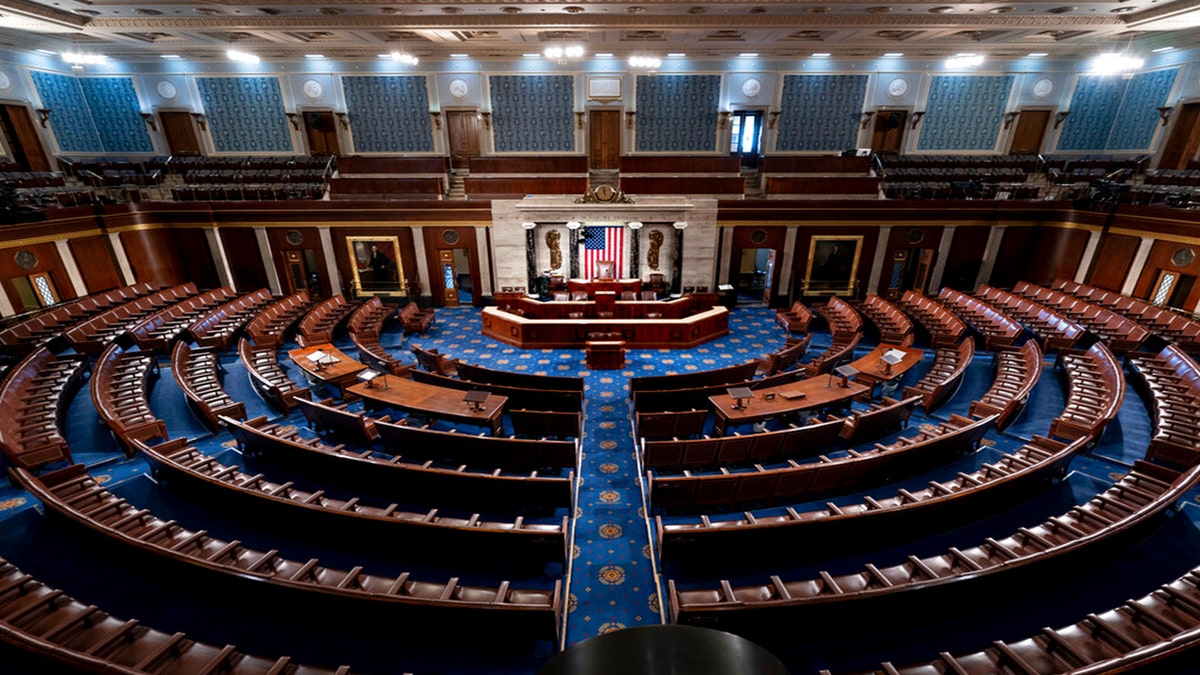
States with shrinking populations risk losing congressional representation, while expanding states gain influence. (J. Scott Applewhite/File/AP Images)
Analysts say the migration could reshape political power, affecting congressional representation and federal funding. States that lose population risk fewer seats in Congress, while faster-growing states can gain seats.
Shifts in population also influence how federal dollars for transportation, health care and education are allocated, since many funding formulas are tied to population size.
CLICK HERE TO DOWNLOAD THE FOX NEWS APP
«I think you absolutely get to a point where people are willing to vote differently,» Winegarden said.
More broadly, Antoni said California could serve as a warning for other states weighing similar policies.
«California’s decline was not written in stone. It did not have to be this way,» he said.
california,texas,florida,taxes,gavin newsom












INTERNACIONAL
Latina House Republican asks Supreme Court to block Dems’ bid to ‘racially gerrymander’ her out of Congress
NEWYou can now listen to Fox News articles!
New York City’s lone Republican lawmaker in the House of Representatives is asking the highest court in the land to stop a Democrat-backed bid to gerrymander her seat in Congress.
Rep. Nicole Malliotakis, R-N.Y., filed a petition with the Supreme Court late last week asking it to halt a state court-ordered redraw of New York’s congressional map ahead of the November midterm elections.
The New York State Supreme Court ruled last month that Malliotakis’ district unfairly dilutes the power of Black and Latino voters, following a lawsuit led by Democrat lawyer Marc Elias’ law firm on behalf of four New York residents.
New York’s 11th congressional district (NY-11), which Malliotakis won in 2020, encompasses all of Staten Island and a sliver of southern Brooklyn. It’s the only district in the Big Apple represented by a Republican after Malliotakis defeated one-term former Rep. Max Rose, D-N.Y.
BATTLEGROUND GOP LAWMAKER MOVES TO BLOCK WHAT HE CALLS DEMOCRATIC REDISTRICTING ‘POWER GRAB’
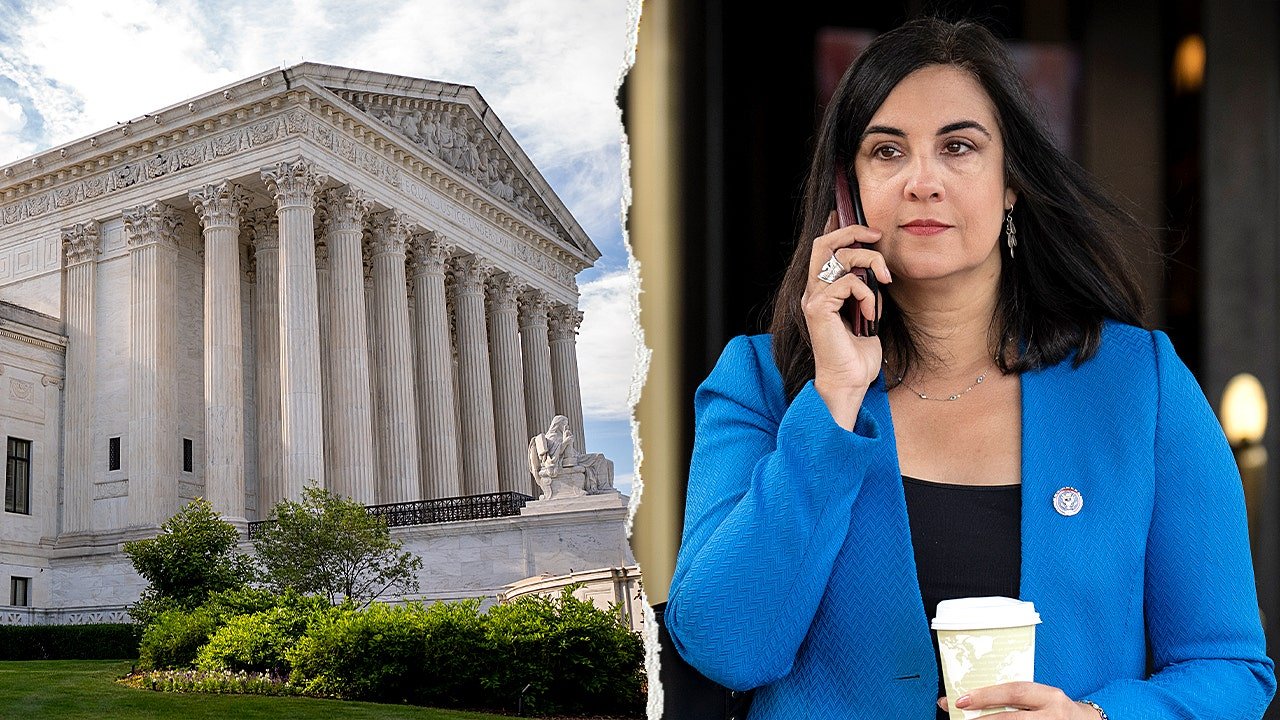
Rep. Nicole Malliotakis is petitioning the Supreme Court to stop New York Democrats’ push to redraw her congressional seat. ( Andrew Harnik/Getty; Drew Angerer/Getty)
Malliotakis’ court petition argued that the Manhattan court «violated the Equal Protection Clause by prohibiting New York from running congressional elections until the state racially gerrymanders» her district.
The GOP congresswoman pointed out in a recent interview with Fox News Digital that she herself is Latino, with a mother who fled Cuba’s communist regime.
«The fact that they’re claiming somehow Hispanics and minorities are disenfranchised when I’m the first Hispanic elected to represent the district makes it even more ridiculous,» Malliotakis said at the time.
DEMOCRATS SAY TRUMP REDISTRICTING PUSH BACKFIRING AS VIRGINIA ADVANCES NEW HOUSE MAPS
The state court decision by Justice Jeffrey Pearlman found that «Black, Latino, and Asian Staten Islanders’ political representation and participation in politics still lags behind White Staten Islanders» in violation of the New York State Constitution.
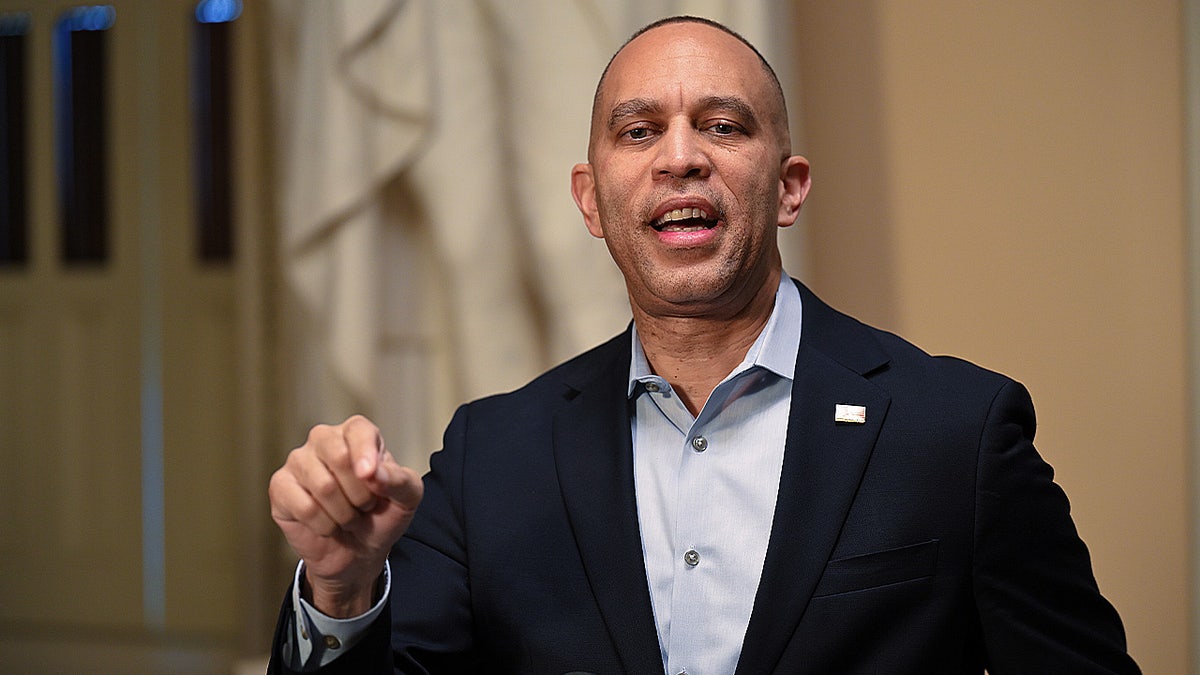
House Minority Leader Hakeem Jeffries speaks during a press conference on Capitol Hill on Nov. 3, 2025, in Washington, D.C. (Roberto Schmidt/Getty Images)
«A demonstration of racially polarized voting shows that the minority groups at issue vote as a bloc, as do White voters, and that the minority preferred candidates ‘usually’ lose,» Pearlman’s decision said. «Petitioners have demonstrated that here.»
Malliotakis’ Supreme Court petition said, «The New York State Legislature adopted CD11’s current boundaries two years ago, with an overwhelming majority of the Legislature’s Black and Latino members voting in favor of it.»
It argued that the lawsuit was brought, however, «less than four months ago under the theory that the votes of CD11’s Black and Latino voters — who comprise about 23% of CD11 — have been unconstitutionally diluted because their candidate of choice wins only 25% of the time.»
The petition said the court’s decision to «racially gerrymander» the district is a «recipe for unconstitutional chaos, with no map in place and uncertainty as to whether nominating petitions can start circulating on February 24, with no end in sight.»
But Democrats have been salivating at the idea of drawing out the deep-blue city’s lone House Republican.
House Democratic Leader Hakeem Jeffries, D-N.Y., said in a statement last month, «This ruling is the first step toward ensuring communities of interest remain intact from Staten Island to Lower Manhattan.»
New York is one of several states plunged into the redistricting battle that has gripped the United States.
CLICK HERE TO DOWNLOAD THE FOX NEWS APP
It began last year in Texas, when the state’s GOP-led legislature redrew its congressional map to give Republicans an advantage of as many as five new House seats.
California soon followed suit, creating a new map giving Democrats the same advantage.
house of representatives politics,elections,politics,new york city
INTERNACIONAL
Con la salida de José Jeri, Perú profundiza su inestabilidad política y tendrá nueve presidentes en una década

Con la destitución de José Jeri, Perú profundizó un ciclo interminable de inestabilidad política que tendrá este miércoles un nuevo capítulo cuando el Congreso elija al octavo presidente en menos de una década.
Pero no será el último de este 2026. El 12 de abril los peruanos elegirán a su noveno mandatario de los últimos 10 años. Será por voto popular. El ganador de las elecciones asumirá el poder el 28 de julio.
Leé también: Nuevo golpe a Cuba: una importante minera suspenderá sus operaciones por la falta de combustible
Es un récord del que los peruanos no se enorgullecen. Si bien está lejos de los cinco presidentes en una semana que tuvo la Argentina a fines de 2001, Perú está inmerso en una interminable crisis institucional que convirtió a la sede de gobierno en arenas movedizas.
Una lista que se agranda cada año
Jeri fue el séptimo presidente del Perú desde 2016. Desde entonces la nómina se engrosa en medio de fuertes internas parlamentarias. Ninguno de ellos logró completar siquiera tres años de mandato. La lista es la siguiente:
- Pedro Pablo Kuczynski. Gobernó entre el 28 de julio de 2016 y el 23 de marzo de 2018. Renunció en medio de una serie de escándalos que sacudieron su gestión. En diciembre, la fiscalía pidió ocho años de cárcel por corrupción.
- Martín Vizcarra. Asumió en reemplazo de Kuczynski, del que era su vicepresidente. Estuvo en el cargo entre el 23 de marzo de 2018 y el 9 de noviembre de 2020. Fue destituido por “incapacidad moral permanente”. En 2025, fue sentenciado a 14 años de cárcel por haber cobrado sobornos cuando era gobernador de Moquegua.
- Manuel Merino. Fue designado por el Congreso. Su gestión comenzó el 10 de noviembre de 2020 y culminó el 15 de noviembre de ese mismo año. Duró apenas cinco días. Renunció en medio de fuertes protestas.
- Francisco Sagasti. También fue nombrado por el Parlamento. El mandato inició el 17 de noviembre de 2020 y se extendió hasta el 28 de julio de 2021. Completó su gestión.
- Pedro Castillo. Asumió el 28 de julio de 2021 por el voto popular y fue destituido el 7 de diciembre de 2022 tras un fallido autogolpe. Tras su remoción se desataron protestas que dejaron decenas de muertos. Finalmente fue condenado a 11 años de prisión.
- Dina Boluarte. La primera presidenta del Perú reemplazó al destituido mandatario de izquierda en su calidad de vice. Comenzó su mandato el 7 de diciembre de 2022 y fue removida del cargo el 10 de octubre de 2025 por “incapacidad moral”. Fue la mandataria que más estuvo en el poder en la última década. Le faltaba menos de un mes para completar tres años. Hoy enfrenta varias causas en la justicia.
- José Jeri. Estuvo a cargo del ejecutivo desde el 10 de octubre de 2025 hasta el 17 de febrero de 2026. Fue removido por “tráfico de influencias”.
Francisco Sagasti, el único de los mandatarios que logró completar su mandato en la última década, responsabilizó a los distintos partidos con representación parlamentaria por las continuas crisis institucionales del país.
“Es un Congreso irresponsable con personajes que no están a la altura de las circunstancias. Los ciudadanos tenemos una enorme responsabilidad de no volver a elegir a candidatos de los partidos que son responsables del desorden total que hemos vivido en los ultimos años”, dijo Sagasti a la emisora RPP.
Cuál es el origen de la crisis institucional que golpea a Perú
La analista peruana Upi Torrado, directora de la encuestadora Datum Perú, dijo a TN que el origen de las crisis que golpean cíclicamente al país se basa en la debilidad parlamentaria de los últimos presidentes.
“En los últimos tiempos el Congreso ha adquirido mucha fuerza frente a la debilidad de los gobiernos. Los distintos mandatarios asumen con bancadas muy pequeñas o no tienen bancada, como le ocurrió a Dina Boluarte”, indicó.
Personas protestan contra el presidente interino peruano José Jeri frente al lugar donde los legisladores debaten su posible destitución en Lima, Perú, el martes 17 de febrero de 2026. (Foto AP/Gerardo Marín)
Además, explicó: “Entonces se desarrolla una dinámica muy fuerte de poder. Asumen el gobierno partidos débiles con bancadas pequeñas. Al no tener ese respaldo legislativo, los presidentes son frágiles”.
En el caso de Jeri, su partido Somos Perú es minoritario. “Todos los partidos con representación parlamentaria están postulando candidatos a presidente y a la reelección legislativa. Jeri estaba envuelto en distintos escándalos y todos quisieron marcar distancia” en plena campaña, señaló Torrado.
Leé también: EE.UU. atacó a tres presuntas narcolanchas y 11 personas murieron en el Pacífico Oriental y el Caribe
En una reciente entrevista con TN, el expremier peruano Pedro Cateriano afirmó que la crisis comenzó cuando el Parlamento forzó la renuncia de Kuczynski en 2016 mediante “el mal uso de la vacancia por incapacidad moral”.
Según dijo, la vacancia presidencial solo puede ser fundamentada con acusaciones graves, como traición a la Patria, disolver el Congreso o impedir el desarrollo de las elecciones. Desde entonces se comenzó a usar el término “incapacidad moral” para remover a los presidentes por motivos diferentes. Se convirtió en un término elástico.
Además, en el caso de los presidentes encargados que asumieron tras la “vacancia” de su predecesor, el Congreso utiliza la “censura” que requiere de una mayoría simple porque en la práctica no se trata de un mandatario electo con el voto popular, sino de un titular del Congreso encargado del gobierno.
La “vacancia” propiamente dicha necesita 2/3 de los votos del Parlamento.
Perú, Jose Jeri

NEWYou can now listen to Fox News articles!
A popular rock structure in Italy known as the «Lovers’ Arch» collapsed on Valentine’s Day following days of poor weather.
The natural formation, which was part of the Sant’Andrea sea stacks along southern Italy’s Adriatic coast, was often used as a backdrop for tourist photos and wedding proposals, according to Reuters.
«This is an unwanted Valentine’s Day gift,» Maurizio Cisternino, the mayor of the nearby town of Melendugno, was quoted as telling a local newspaper.
Cisternino described the collapse as a «very hard blow» for the area after days of heavy rain, strong winds and rough seas.
2 SKIERS KILLED IN AVALANCHE ON POPULAR MONT BLANC SKIING ROUTE NEAR FRENCH-SWISS BORDER
The «Lovers’ Arch» near Melendugno in southern Italy is shown at left in 2018. On Saturday, Feb. 14, 2026, the rock structure collapsed following days of bad weather. (DEA/V. Giannella; Paolo Manzo/NurPhoto via Getty Images)
«Nature has taken back what it created,» Cisternino said.
Photos taken at the scene showed a pile of rubble in an area where the arch used to soar over the water.
RECORD-SETTING WAVE OF MOUNTAIN DEATHS ROCKS ITALY AFTER AVALANCHES STRIKE

The area where the «Lovers’ Arch» was located in Italy is a popular tourist photo site. (Paolo Manzo/NurPhoto via Getty Images)
Officials are now warning that other parts of the rocky coastline are at risk of collapse, with cracks visible along the cliffs, Reuters reported.
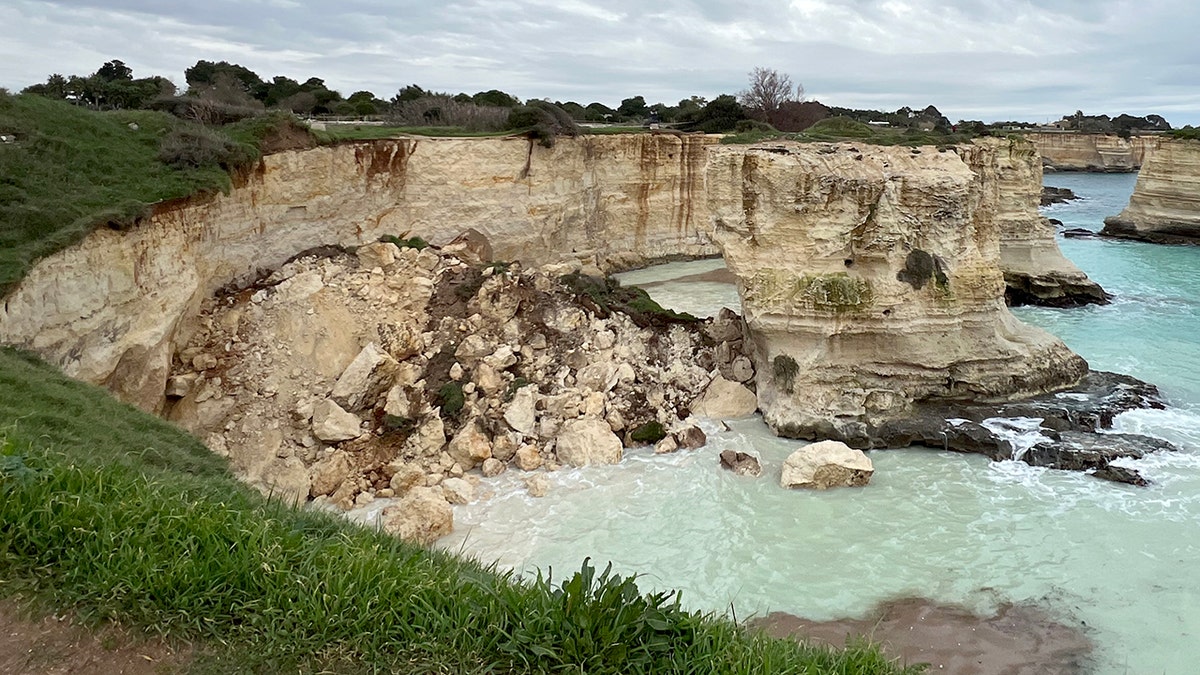
The arch collapsed on Saturday, Feb. 14, following days of poor weather, a local mayor said. (Paolo Manzo/NurPhoto via Getty Images)
CLICK HERE TO DOWNLOAD THE FOX NEWS APP
The news agency also said storms and heavy rains in recent days have damaged other parts of Italy’s coastline along the Ionian Sea, damaging beach structures and causing small cliff falls from Gallipoli to Ugento.
italy,europe,europe,travel,weather,world

El Gobierno no da por muerta la rebaja de Ganancias, pero todavía es incierto cuándo volverá a presentarla

Reforma laboral: cómo se gestó la quita del artículo 44 y qué condiciones puso la oposición para aprobarla

Nico Repetto, abuelo chocho, mostró a su nuevo nieto Timoteo en las redes, pero lo tuvo que borrar: ¿conflicto con Juana?

Qué dijo el presidente de la UIA sobre la eliminación del artículo de licencias médicas de la reforma laboral

Doué mejora a Dembélé y rescata al PSG en Mónaco

Tras la polémica, Samid fue trasladado a la Argentina en un vuelo privado

Uno de los jefes de la CGT adelantó que convocarán a un paro general por la reforma laboral: “Trabajaremos para que sea una gran huelga”

Chaotic video shows passengers trading midair blows; plane forced to divert: reports

Cristian Ritondo: “Vamos a apoyar la ley de modernización laboral, pero no el régimen de licencias por enfermedad”

Efecto Santa Fe: policías y penitenciarios de Río Negro rechazaron un aumento en cuotas y amenazan con acampar por tiempo indeterminado en Viedma

 POLITICA2 días ago
Uno de los jefes de la CGT adelantó que convocarán a un paro general por la reforma laboral: “Trabajaremos para que sea una gran huelga”
- POLITICA24 horas ago
Cristian Ritondo: “Vamos a apoyar la ley de modernización laboral, pero no el régimen de licencias por enfermedad”
- POLITICA2 días ago
Efecto Santa Fe: policías y penitenciarios de Río Negro rechazaron un aumento en cuotas y amenazan con acampar por tiempo indeterminado en Viedma