INTERNACIONAL
Trump admin warns Peru it could lose sovereignty as China tightens grip on nation


NEWYou can now listen to Fox News articles!
The United States is warning Peru that China’s growing control over a major Pacific port could threaten the country’s sovereignty, escalating tensions over Beijing’s expanding footprint in Latin America.
The concern centers on the $1.3 billion deep-water port in Chancay, north of Lima, which has become a flashpoint between Washington and Beijing after a Peruvian court ruling limited government regulatory oversight of the project.
The State Department’s Bureau of Western Hemisphere Affairs said on social media that it was «concerned about latest reports that Peru could be powerless to oversee Chancay, one of its largest ports, which is under the jurisdiction of predatory Chinese owners,» adding: «We support Peru’s sovereign right to oversee critical infrastructure in its own territory. Let this be a cautionary tale for the region and the world: cheap Chinese money costs sovereignty.»
CONGRESSIONAL COMMISSION WARNS CHINA’S PACIFIC INFRASTRUCTURE PROJECTS COULD POSE A MILITARY THREAT
A drone view shows cranes and containers at the new megaport being built by China’s state-owned Cosco Shipping, promising to shorten sea routes to Asia for Peruvian and some Brazilian goods, in Chancay, Peru Oct. 24, 2024. (Angela Ponce/Reuters)
China’s foreign ministry rejected the comments as «rumor-mongering and smearing» and insisted the project remains under Peruvian authority, according to The Associated Press report.
Asia analyst Gordon Chang told Fox News Digital: «Chancay is so central that analysts say it will redirect trade across the South Pacific. We know Beijing considers ports to be dual-use and strategic. China, held up the BlackRock deal to acquire the CK Hutchinson port operations in the Panama Canal Zone even though the ports are nowhere near China itself.»
«In times of war, China will not allow its port operations to load, unload, or service American ships or ships coming from or going to U.S. ports,» he warned.
Jack Burnham, senior analyst in the China program at the Foundation for Defense of Democracies, said the port reflects a broader strategic push by Beijing in the region.
SOUTH AMERICAN LEADER DEFIES TRUMP’S ‘DONROE DOCTRINE’ IN BOLD CHINA PIVOT TOWARD XI
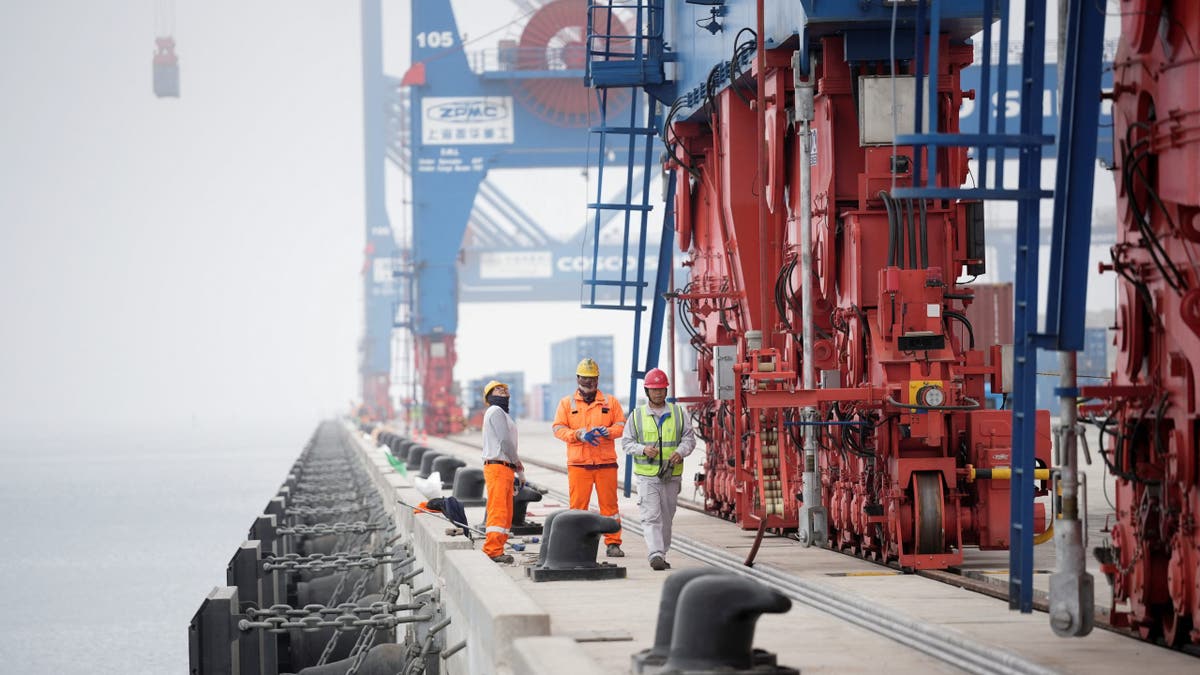
Workers stand next to cranes at the new megaport being built by China’s state-owned Cosco Shipping, in Chancay, Peru. Oct. 24, 2024. (Angela Ponce/Reuters)
«The Chancay port is a keystone in China’s investment in Latin America — its size and proximity provide a bridge across the Pacific and access to another market to fuel Beijing’s export-driven economic engine,» Burnham said.
«China’s investment in Peru is predicated on Beijing grasping the sinews of Lima’s critical infrastructure to gain influence. With effective control over the port cemented for now by a lower Peruvian court ruling, China gains access to one of the largest critical infrastructure projects in the region, a position from which it could exercise significant control.»
The dispute comes as Washington and Beijing compete for influence across Latin America, where China has expanded investment through infrastructure projects and trade, analysts say.
CLICK HERE TO DOWNLOAD THE FOX NEWS APP
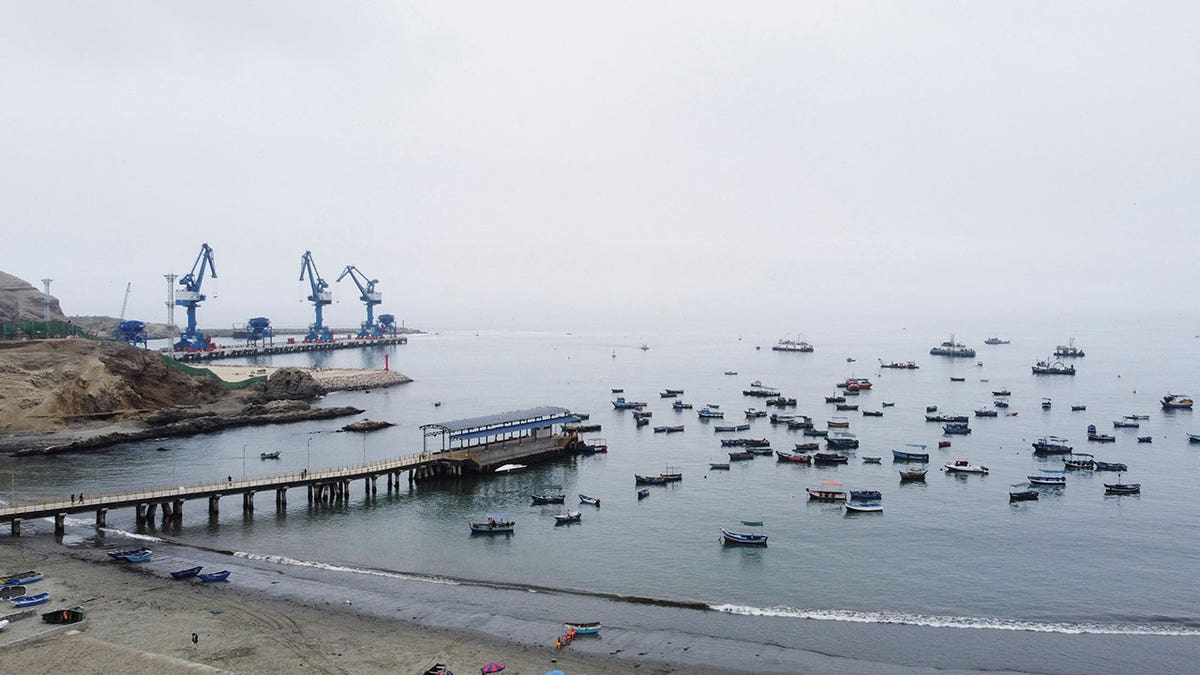
Fishing boats are anchored in the bay near the new megaport being built by China’s state-owned Cosco Shipping, in Chancay, Peru Oct. 24, 2024. (Angela Ponce/Reuters)
China’s state-owned shipping giant Cosco, which holds a majority stake in the project, dismissed U.S. concerns and said the court ruling «in no way involves aspects of sovereignty,» adding that Peruvian authorities still oversee security, environmental compliance and customs, according to The Associated Press.
Peru’s transport infrastructure regulator, Ositran, has said it plans to appeal the ruling, arguing the port should not be exempt from the same oversight applied to other major facilities.
China’s Embassy in Washington, D.C., did not provide a comment in time for publication.
The Associated Press contributed to this report.
china,state department,latin america,trade,national security








INTERNACIONAL
Delcy Rodríguez aseguró que se realizarán elecciones “justas y libres” en Venezuela pero no fijó una fecha
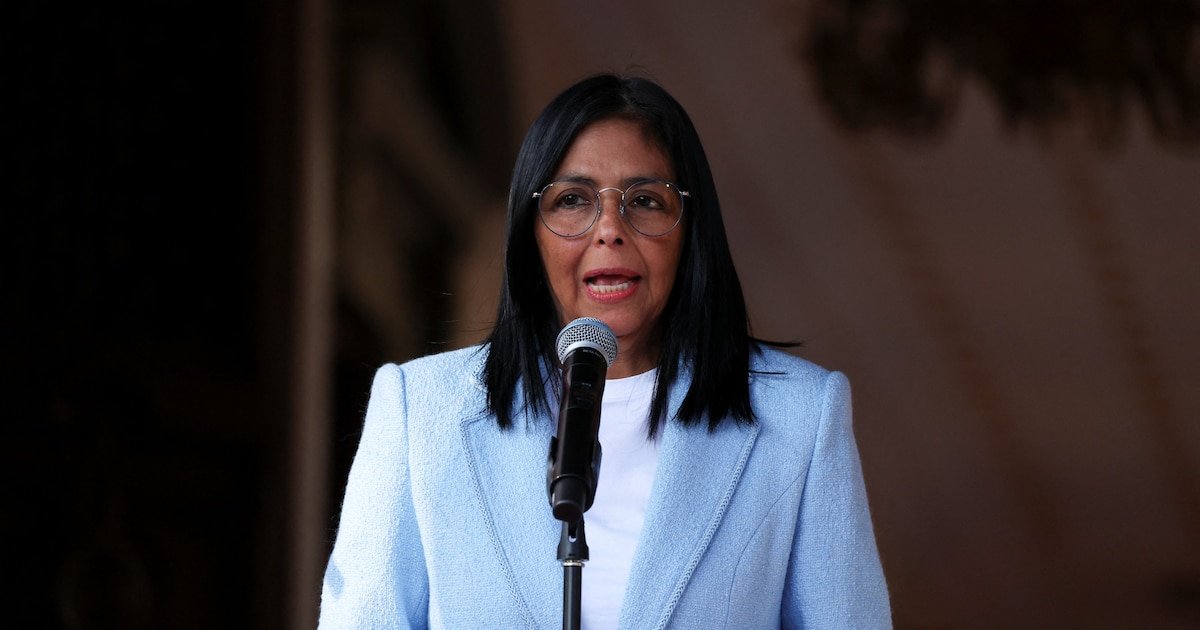
La jefa del régimen de Venezuela, Delcy Rodríguez, aseguró en una entrevista con NBC News que está “absolutamente” comprometida a organizar “elecciones libres y justas” en el país, aunque precisó que la fecha de los comicios dependerá del diálogo político nacional.
En entrevista con la cadena estadounidense, Rodríguez respondió afirmativamente cuando la periodista Kristen Welker le preguntó si está dispuesta a celebrar elecciones.
“Absolutamente, sí”, declaró Rodríguez, según la traducción difundida por NBC News.
“Tendremos elecciones en este país justas y libres, por supuesto, como lo establece la Constitución”, añadió. Sin embargo, aclaró que el calendario electoral será decidido “por el diálogo político en este país”.
En la misma entrevista, Rodríguez confirmó que ha recibido una invitación formal para visitar Washington y que está dispuesta a concretar el viaje “una vez que establezcamos esta cooperación y podamos avanzar con todo”.
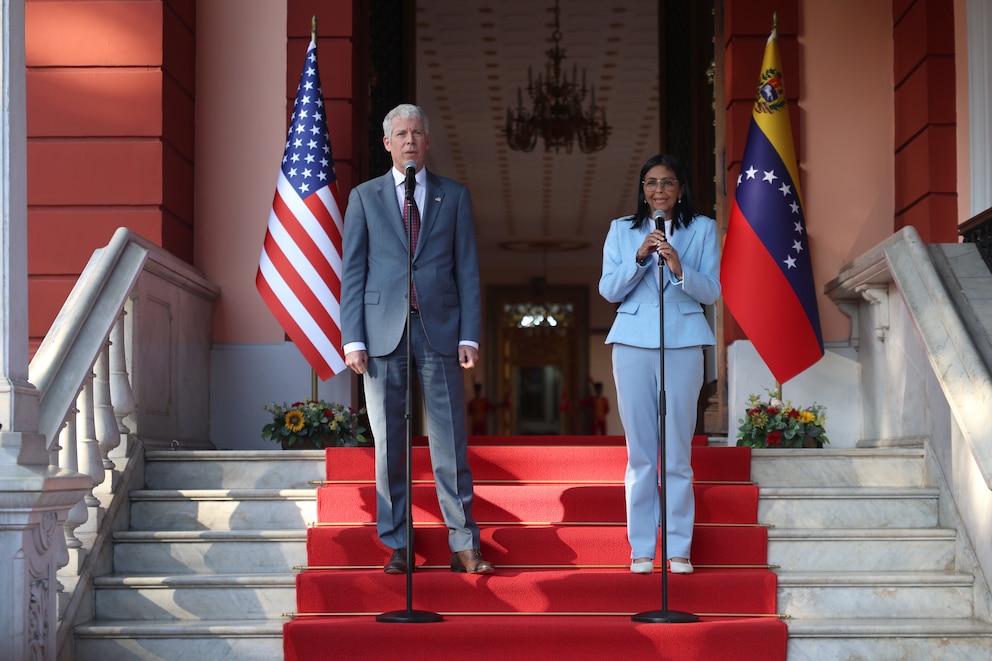
“Me han invitado a Estados Unidos. Estamos considerando ir allí una vez que establezcamos esta cooperación y podamos avanzar con todo”, señaló Rodríguez a NBC News.
La transición política venezolana ha estado marcada por la intervención de Estados Unidos, que ahora tutela la gestión de Rodríguez y exige la apertura del sector petrolero y la normalización institucional. El secretario de Energía de EEUU, Chris Wright, visitó Caracas esta semana y mantuvo una reunión con la líder chavista para abordar los próximos pasos del acuerdo energético y la hoja de ruta hacia la recuperación económica.
En declaraciones recogidas por The Wall Street Journal, Wright enfatizó que Venezuela atraviesa el inicio de una etapa de transición y que Delcy Rodríguez es consciente de que el proceso electoral es una condición necesaria para consolidar la cooperación.
“Estamos en las primeras semanas de un período de transición”, explicó Wright al periódico. Al ser consultado sobre la posibilidad de que Rodríguez acepte elecciones en un plazo de año y medio, Wright dijo: “Creo que sí. Ella es muy consciente de eso… Creo que reconoce que es una condición necesaria. Tenemos un plan. Ella conoce el plan”.

Delcy Rodríguez visitó junto a Chris Wright las instalaciones de una de las plantas que opera Chevron en la Faja Petrolífera del Orinoco, región que concentra las mayores reservas probadas de crudo en el mundo. Desde allí abogó por la eliminación de cualquier obstáculo en el acuerdo petrolero entre Venezuela y Estados Unidos.
“Chevron tiene más de 100 años en Venezuela y estamos haciendo un trabajo extraordinario, como socios que somos, mejorando producción, mejorando las instalaciones, la infraestructura y el mantenimiento y este es el camino de la cooperación”, afirmó.
Durante la entrevista con NBC News, Rodríguez reiteró que Maduro sigue siendo, a su juicio, el “presidente legítimo” de Venezuela. “Tanto el presidente Maduro como Cilia Flores, la primera dama, son inocentes”, afirmó.
La jefa del régimen chavista también respondió sobre la situación de la líder opositora María Corina Machado, premio Nobel de la Paz, quien se encuentra fuera del país.

Rodríguez advirtió que Machado “tendrá que responder ante Venezuela” si regresa y deberá explicar “por qué pidió una intervención militar, por qué pidió sanciones contra Venezuela y por qué celebró las acciones que tuvieron lugar a comienzos de enero”.
Enfatizó que, respecto a la seguridad de la opositora, no entiende “por qué hay tanto revuelo”, pero insistió en que deberá rendir cuentas ante la justicia venezolana.
El proceso de transición política ocurre junto a una serie de reformas económicas y legales. La Asamblea Nacional aprobó recientemente cambios en la Ley Orgánica de Hidrocarburos para facilitar la inversión extranjera y la participación de empresas estadounidenses en el sector energético, en línea con las exigencias de Washington para la recuperación económica del país.
(Con información de EFE y AFP)
Corporate Events,Diplomacy / Foreign Policy,South America / Central America
NEWYou can now listen to Fox News articles!
Alleged members of «foreign terrorist cartel» Tren de Aragua are set to be brought back to the U.S. after their deportations in 2025 — and it could come at taxpayers’ expense.
U.S. District Judge James Boasberg, who has repeatedly butted heads with the Trump administration, ordered the Trump administration on Thursday to facilitate the return of 137 migrants deported to a notorious prison in El Salvador in 2025, called CECOT.
Boasberg stipulated in his ruling that the government pay for the migrants’ airfare back to the U.S., meaning taxpayers are likely footing the bill.
Boasberg argued that it’s «unclear why Plaintiffs should bear the financial cost of their return in such an instance,» noting that, «this situation would never have arisen had the Government simply afforded Plaintiffs their constitutional rights before initially deporting them.»
FEDERAL JUDGE ORDERS DEPORTED VENEZUELANS TO BE RETURNED TO US
Courts rejected a misconduct accusation against Judge James Boasberg. (Associated Press)
The ruling comes as part of a nearly year-long saga, when the federal judge attempted to halt the Trump administration’s deportations of migrants to El Salvador under the Alien Enemies Act in March 2025.
The Supreme Court ultimately allowed the Trump administration to continue using the Alien Enemies Act to carry out deportations in April, but ordered that detainees receive notice and an opportunity to challenge allegations.
Boasberg has since been wading through legal avenues with the men in El Salvador, issuing a ruling in December that the Trump administration denied them their due process.
It is unclear how many of the men will actually take the offer and return to the U.S., with Boasberg noting that the noncitizens «would be detained upon arrival» back to the U.S.
Similar to Boasberg’s ruling, another federal judge this month ordered the Trump administration to pay for the return of three migrant families that the judge ruled ICE unlawfully deported by a 2023 humanitarian-parole settlement.
TRUMP ADMIN ASKS BOASBERG FOR MORE TIME TO DETAIL CECOT PLANS AFTER MADURO OUSTER
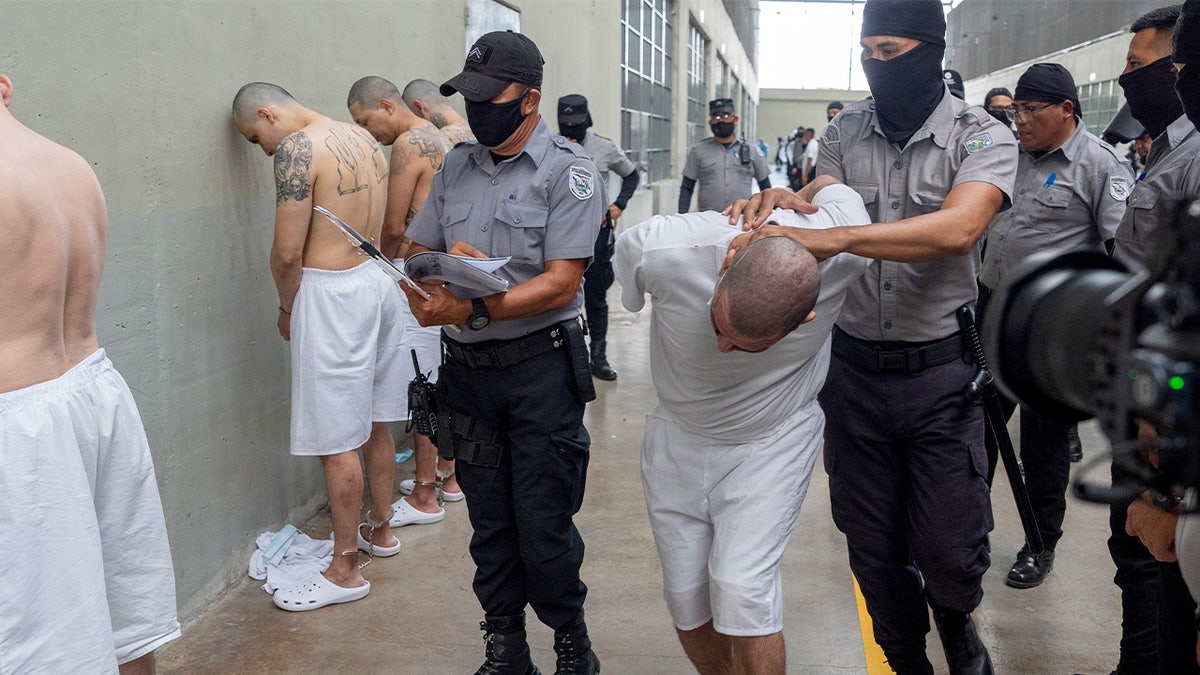
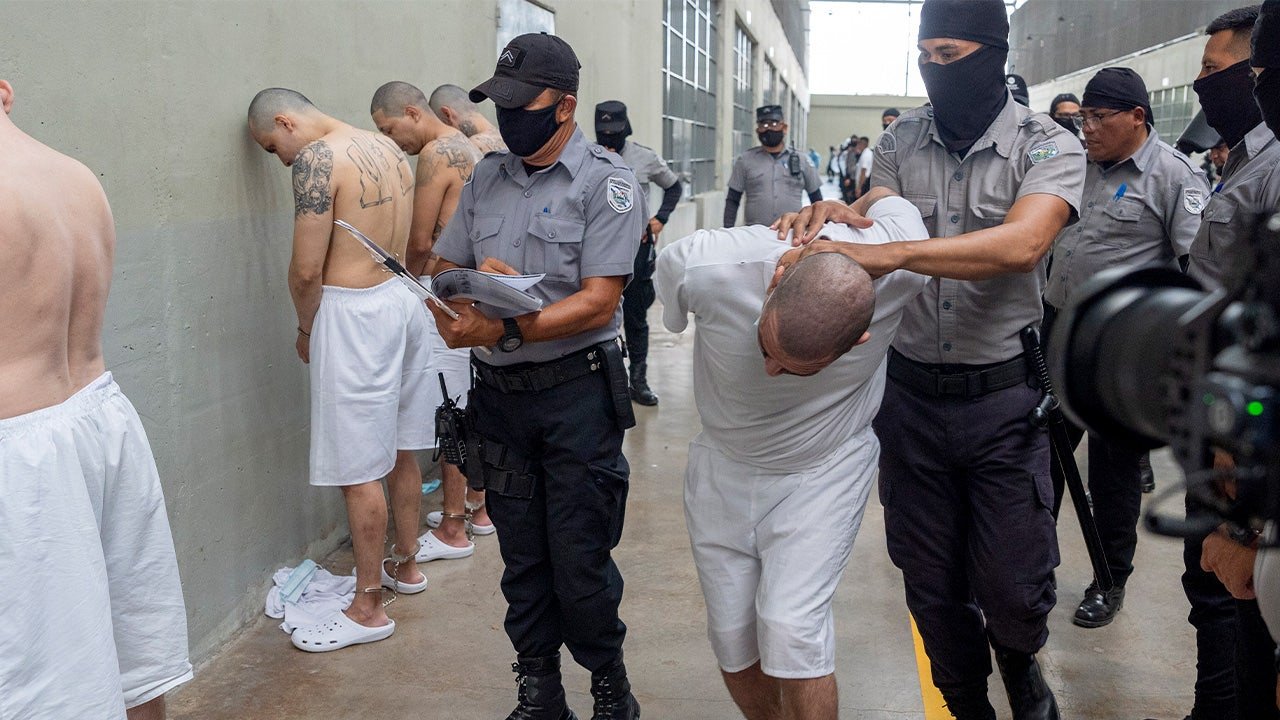
A prisoner is moved as Department of Homeland Security Secretary Kristi Noem tours the Terrorist Confinement Center (CECOT) on March 26, 2025 in Tecoluca, El Salvador. (Alex Brandon-Pool/Getty Images)
DHS Assistant Secretary Tricia McLaughlin told Fox News Digital on Thursday in response to the ruling that the illegal aliens in El Salvador were removed under proper legal authority, before taking a shot as Boasberg.
«Nothing has changed; in addition to being in our country illegally, these aliens are foreign terrorists designated as alien enemies by the President,» DHS Assistant Secretary Tricia McLaughlin told Fox News Digital when asked about the ruling.
TRUMP ADMIN SAYS MADURO CAPTURE REINFORCES ALIEN ENEMIES ACT REMOVALS
«They were removed under the proper legal authorities. This case is no longer about the facts or law, but about Judge Boasberg’s crusade to stop President Trump from doing the will of the American People. He has been shut down by appellate courts again and again on this case,» she continued.
Boasberg has become a prime target for Republicans over a string of rulings tied to Trump-era policies — including the Trump administration backing a potential judicial impeachment of the judge, and other «rogue» judges, in January.
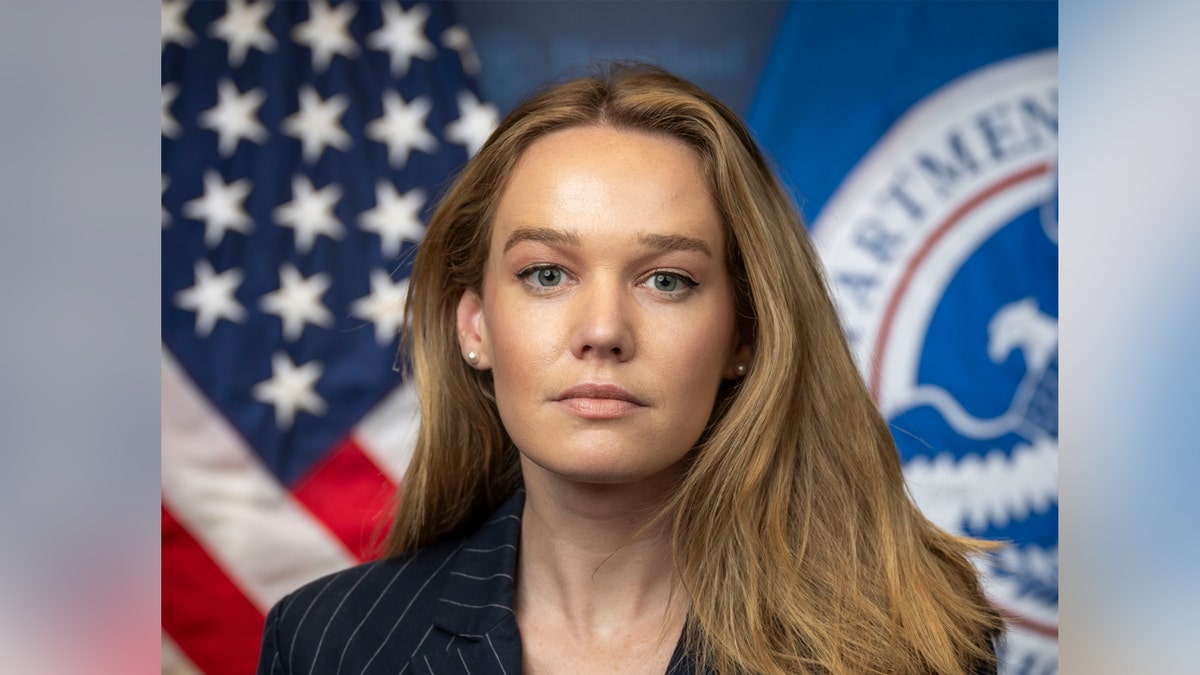
DHS assistant secretary for public affairs Tricia McLaughlin (dhs.gov)
The migrants in El Salvador were removed under The Alien Enemies Act, which is a 1798 wartime immigration law that the Trump administration invoked to deport violent gang members with alleged ties to criminal organizations, such as Tren de Aragua (TdA).
TdA, as well as MS-13, were additionally designated as Foreign Terrorist Organizations by the Trump administration’s State Department in February 2025.
The administration has described those deported to the notoriously secure prison in El Salvador as «violent savages» and terrorists who pose a threat to U.S. security.
A prisoner is moved as Department of Homeland Security Secretary Kristi Noem tours the Terrorist Confinement Center (CECOT) on March 26, 2025 in Tecoluca, El Salvador. (Alex Brandon-Pool/Getty Images)
A previous analysis of 238 migrants deported to El Salvador found six faced attempted murder, assault, armed robbery, gun possession or domestic battery charges in the U.S., the Texas Tribune reported in May 2025, while 32 other deportees had been convicted in the U.S. of crimes, many of which were nonviolent, according to the outlet.
CLICK HERE TO GET THE FOX NEWS APP
DHS has defended that deportees labeled «‘non-criminals» by the media are «terrorists, human rights abusers, gang members and more — they just don’t have a rap sheet in the U.S.»
immigration,illegal immigrants,homeland security,donald trump,politics
INTERNACIONAL
Cumbre de la UE en Bélgica: Europa discute cómo sobrevivir en un mundo de potencias depredadoras
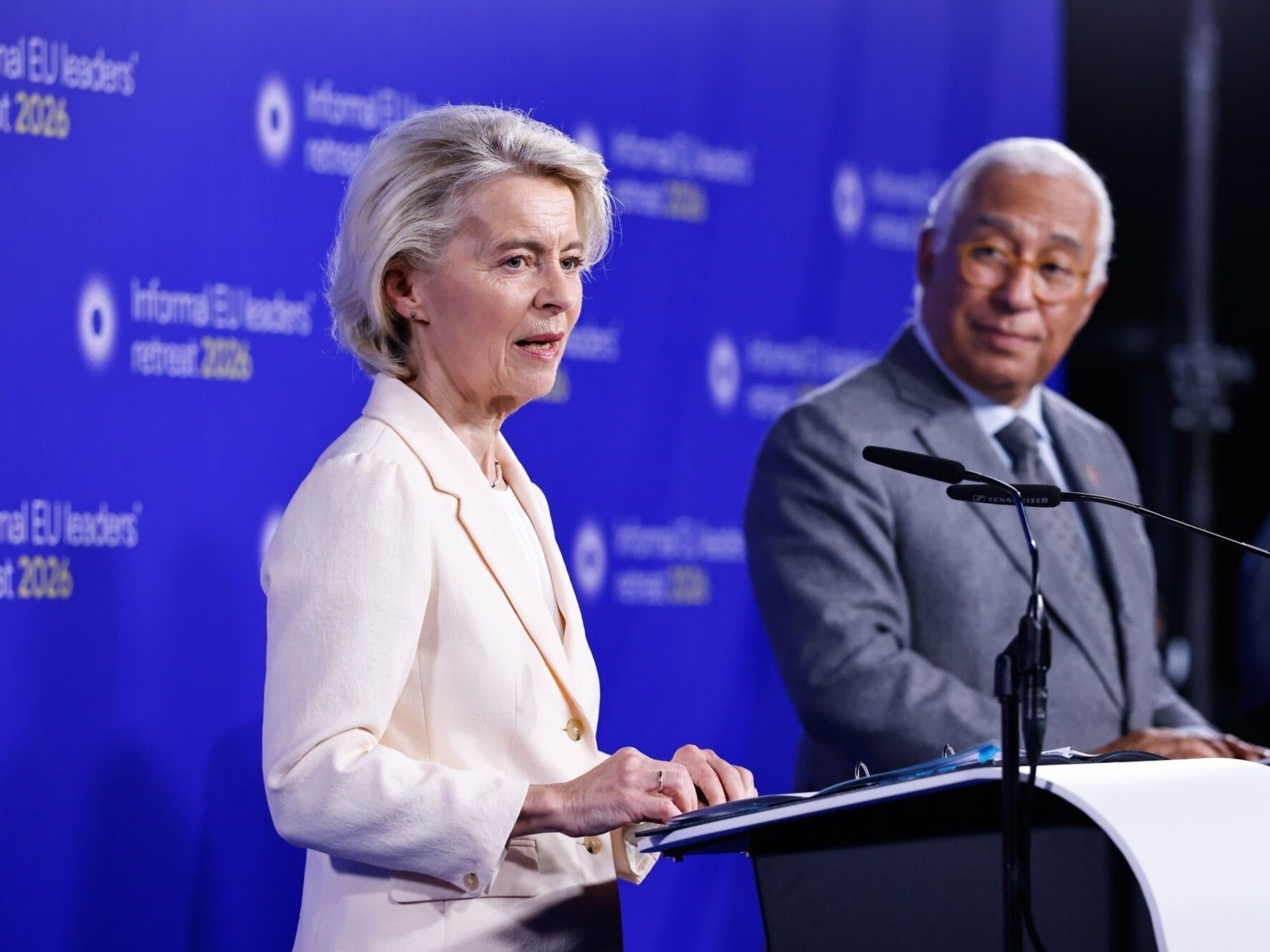
Alden Biesen, un castillo belga del siglo XVI, a tiro de piedra de las fronteras de Alemania y los Países Bajos, sirvió a los dirigentes europeos para celebrar este jueves un “retiro”. Europa vive en un cruce de caminos histórico, después de perder a su gran aliado de los últimos 80 años justo cuando Rusia ataca por el este y China duda entre ser el gran socio o el gran rival comercial.
Los europeos tienen recursos suficientes para sacar la cabeza en este mundo de superpotencias depredadoras: el mercado con mayor poder adquisitivo del planeta con más de 450 millones de personas. Una industria militar que en apenas tres años ha dado un paso delante de gigante y ya arma por sí sola todo el esfuerzo de guerra ucraniano. Una potencia financiera al menos equiparable a la estadounidense. Le faltan recursos energéticos, pero a sus vecinos le sobran. Pero todos esos recursos que tienen no los utilizan eficazmente porque subsisten obstáculos en el mercado interno europeo.
La economía europea va al ralentí, pero ha resistido una grave sucesión de crisis desde la pandemia hasta la guerra arancelaria de Donald Trump pasando por la crisis energética. El desempleo está en mínimos históricos. Y aunque la crisis por la subida del precio de la vivienda es un factor común de preocupación, las expectativas económicas son relativamente optimistas.
Les puede el miedo al cambio. No es sencillo entender que el primo mayor, el que daba seguridad a Europa, puede ser ahora un enemigo que amenace incluso militarmente. Un enemigo que anuncia oficialmente que ayudará a financiar centros de pensamiento y fundaciones que apoyen a los partidos de extrema derecha que quieren destruir la Unión Europea.
La mayoría de los líderes entiende que tiene una amenaza interna, apoyada por Rusia y Estados Unidos, pero responsabilidad europea. Los partidos de extrema derecha en el entorno del 25% de apoyo a nivel continental y amenazando con entrar en gobiernos centrales dentro de un año: en Francia con Marine Le Pen o Jordan Bardella y en España con Santiago Abascal de la mano del Partido Popular.
Nunca desde los años 30 del siglo pasado, en la década que vio la eclosión del fascismo europeo, tuvieron tanto apoyo. Nunca, ni si quiera entonces, el apoyo fue tan general por toda Europa. Portugal, un país vacunado contra el virus del extremismo hasta hace pocos años, vio cómo el candidato ultra alcanzaba el domingo el 35% del voto en el ballotage de las presidenciales.
La otra amenaza es externa, porque por primera vez desde antes de la Segunda Guerra Mundial, en el movimiento de las grandes superpotencias Europa está sola. ¿Cómo se sale de esa trampa? Los europeos creen que es esencial un salto adelante económico que permita reducir dependencias externas y afirmar una política de seguridad, comercial y energética independiente. Todos, desde la derecha radical de la italiana Giorgia Meloni hasta el socialismo del español Pedro Sánchez, coinciden en el diagnóstico. Las diferencias están en las soluciones.
Los dirigentes de la derecha tradicional, como el alemán Friedrichs Merz, o de la derecha radical, como la italiana Giorgia Meloni, abogan por desregular, por eliminar buena parte de la normativa económica europea para dar mucho más margen a las empresas, para ahorrarles costos y permitir actividades que hoy tienen restricciones o están vetadas. Apuestan sobre todo por eliminar restricciones medioambientales y liberalizar los mercados laborales.
Enfrente tienen al francés Emmanuel Macron y al español Pedro Sánchez. Su propuesta es más clásica en el contexto de la Unión Europea y a la vez un salto adelante en la integración del bloque. Ellos abogan por una política europea de reindustrialización y por proyectos comunes en aspectos como energía o defensa que se financien a través de eurobonos, deuda emitida conjuntamente. Defienden la importancia de aprobar ya la normativa que fomentará el “Buy European” e incluso, en el caso del español, dar pasos hacia la creación de unas Fuerzas Armadas europeas.
El retiro sirvió para que el ex primer ministro italiano Mario Draghi, quien presidió el Banco Central Europeo casi una década y el año pasado redactó el gran informe que debe servir de guía a la política económica europea, abroncara a los líderes. Según un funcionario europeo, Draghi les dijo que deben reducir barreras en el mercado interno europeo, movilizar el ahorro europeo para que vaya a inversión productiva dentro de Europa (casi 300.000 millones de euros acaban cada año en Wall Street), reducir el coste de la energía, activar “preferencias europeas” en sectores estratégicos y avanzar en una especie de federalismo pragmático. Que avancen más rápido quienes están dispuestos, como se hizo cuando se creó el euro.

Uno por uno, cómo votaron los Diputados al proyecto bajar la edad de imputabilidad a 14 años

Subastaron un departamento del Cartel de Juárez en la avenida Alvear

Uno por uno, cómo fueron los votos en Diputados para la media sanción de la reforma penal juvenil

El proceso de licitación de la Hidrovía avanza hacia su etapa final

Paliza histórica: Con gol de Julián Álvarez, Atlético Madrid goleó 4-0 a Barcelona por la semis de la Copa del Rey

Delcy Rodríguez aseguró que se realizarán elecciones “justas y libres” en Venezuela pero no fijó una fecha

Acuartelamiento policial en Santa Fe: reclamo salarial y temor a un conflicto nacional de seguridad

La advertencia de ATE a los gobernadores que apoyan la reforma laboral: “Firmarán su sentencia de muerte”

Cuánto le cuesta a la clase media llenar el changuito y cómo varían los precios de los alimentos entre provincias

Pago al FMI: se usaron reservas del BCRA y se redujo a USD 651 millones la acumulación neta de dólares en lo que va del año

 POLITICA3 días ago
Acuartelamiento policial en Santa Fe: reclamo salarial y temor a un conflicto nacional de seguridad
- POLITICA2 días ago
La advertencia de ATE a los gobernadores que apoyan la reforma laboral: “Firmarán su sentencia de muerte”
- ECONOMIA3 días ago
Cuánto le cuesta a la clase media llenar el changuito y cómo varían los precios de los alimentos entre provincias