INTERNACIONAL
Democrat claims SAVE Act would block married women from voting; Republicans say that’s wrong


NEWYou can now listen to Fox News articles!
Rep. Hillary Scholten, D-Mich., is claiming that under Republican-led voter integrity legislation, married women would find themselves unable to vote unless they changed their birth certificate to match other government-issued ID.
«Nearly 70 million married women in this country have changed their last name, but their birth certificates don’t reflect that,» Scholten said at a press event, explaining her opposition to the SAVE America Act.
«In Michigan’s third district alone, 167,000 women could find themselves unable to register simply because when they got married, they didn’t change both their ID and their birth certificate.»
SCHUMER FACES BACKLASH AFTER CALLING SAVE ACT ‘JIM CROW’ DESPITE PREVIOUS ALLEGATION FALLING FLAT
Hillary Scholten, left, pictured alongside an «Only Citizens Vote» sign, right. (Bill Pugliano/Getty Images; Kent Nishimura/Getty Images)
However, under Michigan law, marriage isn’t listed as one of the reasons to correct a birth certificate.
According to the state’s Department of Health and Human Services, citizens may only change their birth certificate to correct a birth record, change a sex designation, correct a place of birth, or amend a parental record.
Scholten, like many Democrats, has voiced opposition to the SAVE America Act — a bill that would require federal voter registrants to present government-issued photo ID to verify their citizenship.
The bill would also require a photo ID to vote.
HAKEEM JEFFRIES PRESSED ON DEMOCRAT OPPOSITION TO VOTER ID
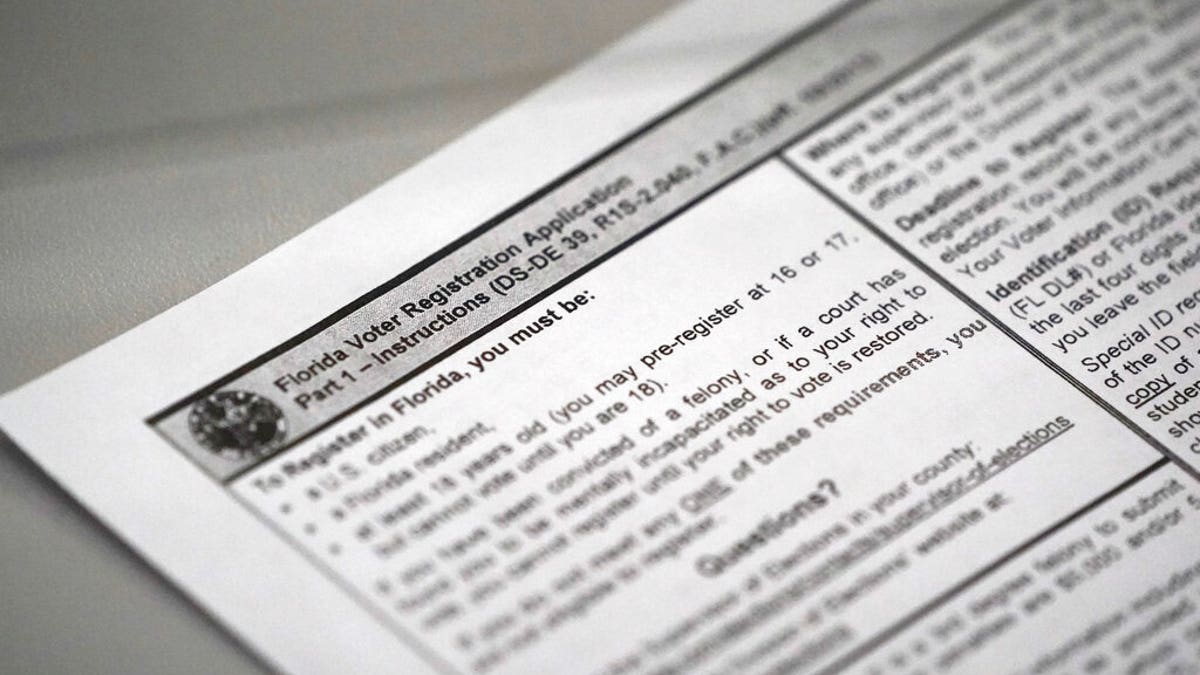
A Florida voter registration application is shown, Tuesday, Oct. 6, 2020. (Wilfredo Lee/AP Photo)
In their view, the bill creates too many obstacles for voters to participate in federal elections.
«Republicans are trying to sell the SAVE Act as a way to stop non-citizens from voting, but we know that’s already illegal. What this bill really does is make it harder for citizens to vote, especially women,» Scholten said when the House considered an earlier version of the legislation last year.
Although the bill lists a birth certificate as one way voters can confirm their identity, it does not specify a last-name match requirement in the manner Scholten described.
Instead, voters can use «a certified birth certificate issued by a state in which the applicant was born … [that] includes the full name, date of birth, and place of birth of the applicant» to supplement other forms of identification.
A senior GOP staffer confirmed that the SAVE Act does not come with the requirements Scholten described.
«That is not right at all and simply another Democrat propaganda talking point,» the staffer said. «Every married woman should have their marriage license.»
The office of Rep. Keith Self, R-Texas, one of the many who has helped champion the SAVE Act, pointed to an analysis of the bill laid out by the Federalist Society, a conservative-leaning legal group.
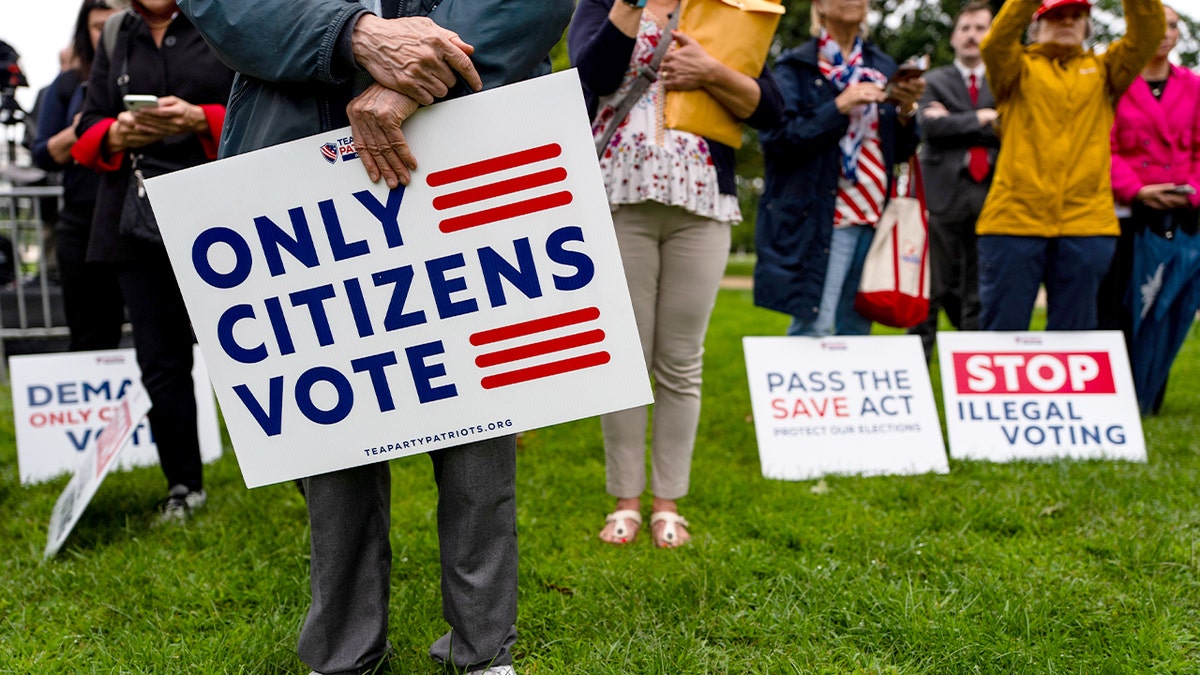
Attendees listen at an «Only Citizens Vote» bus tour rally advocating passage of the SAVE Act at Upper Senate Park outside the U.S. Capitol in Washington, D.C., Sept. 10, 2025. (Kent Nishimura/Getty Images)
«The SAVE Act itself contemplates these name changes and provides protections so that Americans who have changed their names — because of marriage or otherwise — are not prevented from voting,» the group’s page reads.
«The bipartisan federal Election Assistance Commission (EAC) is commanded by the SAVE Act to establish guidelines for states to accept supplementary documents — for instance, a marriage license — to prove citizenship when a voter’s birth certificate and current name do not match. Those on the Left who claim that the SAVE Act will disenfranchise millions of married women are simply wrong; they ought to read the bill’s text and see that it provides mechanisms to ensure that this does not happen.»
CLICK HERE TO DOWNLOAD THE FOX NEWS APP
Among other forms of valid paperwork, voters can also display a passport, a REAL ID, or a military identification card to prove their citizenship.
Scholten’s office did not respond to a request for clarification on her statement.
congress,politics,democratic party,elections








NEWYou can now listen to Fox News articles!
Republican leaders are rallying around President Donald Trump’s new approach to end the 47-day Department of Homeland Security (DHS) funding lapse — a plan that could make the agency shutdown-proof for the rest of Trump’s term.
House Speaker Mike Johnson, R-La., and Senate Majority Leader John Thune, R-S.D., said Wednesday that DHS will be funded along «two parallel tracks,» meaning that the president’s immigration and border security agenda will receive an influx of money through a party-line reconciliation bill. The rest of DHS is funded through the normal appropriations process.
«We operated under a belief that while our country is in the midst of an international armed conflict, Democrats might finally come to their senses and understand that defunding our homeland security agencies is beyond reckless and very dangerous,» Johnson and Thune wrote in a joint statement. «We cannot allow Democrats to any longer put the safety of the American public at risk through their open border policies, so we are taking that off the table.»
The GOP leaders added that a forthcoming budget reconciliation package will include three years of immigration enforcement and border security funding. That move could prevent Democrats from using the appropriations process as leverage over the president’s immigration agenda for the remainder of his term.
Congressional Republicans are eying their own fixes to Obamacare subsidies, but the Senate and House are diverging in their approaches. Ultimately, President Donald Trump will be the deciding factor. (Getty Images)
HOUSE CONSERVATIVES ERUPT OVER SENATE GOP, WHITE HOUSE DEAL AMID SAVE ACT FIGHT
The GOP leaders’ budget reconciliation push comes as Republican efforts to fund Immigration and Customs Enforcement (ICE) and U.S. Customs and Border Protection (CBP) through regular order have stalled in the Senate due to widespread opposition from Democrats.
With the Senate’s 60-vote legislative threshold in place, Senate Minority Leader Chuck Schumer, D-N.Y., effectively has veto power over DHS appropriations if he keeps his caucus in line.
To end the stalemate, Trump asked Republicans Wednesday to draft a budget reconciliation package funding immigration enforcement and border security that could pass both chambers without any Democratic support.
«We are going to work as fast, and as focused, as possible to replenish funding for our Border and ICE Agents, and the Radical Left Democrats won’t be able to stop us,» Trump wrote on Truth Social. «We will not allow them to hurt the families of these Great Patriots by defunding them.»
The president added that he wants the legislation on his desk by June 1.
The budget reconciliation process would allow Republicans to steer around Democratic opposition and pass a DHS funding bill at a simple majority threshold. Republicans narrowly passed Trump’s One Big Beautiful Bill Act using reconciliation in June 2025 after months of intraparty squabbling.
Though ICE and the Border Patrol received an unprecedented infusion of money through Trump’s «big, beautiful» bill, certain support staff employed by both agencies have not been paid during the seven-week shutdown.
The U.S. Coast Guard, the Transportation Security Administration (TSA), the Federal Emergency Management Agency (FEMA) and the U.S. Secret Service have seen a more significant lapse in appropriations, though Trump took executive action to provide back pay to TSA agents reporting to work during the funding lapse.
HOUSE REPUBLICANS PASS RIVAL DHS PLAN, SETTING UP SENATE FIGHT AS SHUTDOWN SET TO BECOME LONGEST IN HISTORY
Sen. John Hoeven, R-N.D., indicated to reporters Monday that Trump would ultimately get behind the Senate’s preferred approach.
«The Democrats can’t create another shutdown like they did this time,» Hoeven said, if the DHS budget reconciliation bill were to be signed into law.
The North Dakota lawmaker also disputed that a reconciliation package would take several months to put together.
«We’ll get it done as quick as you can,» Hoeven said. «I hope it’s certainly not months.»
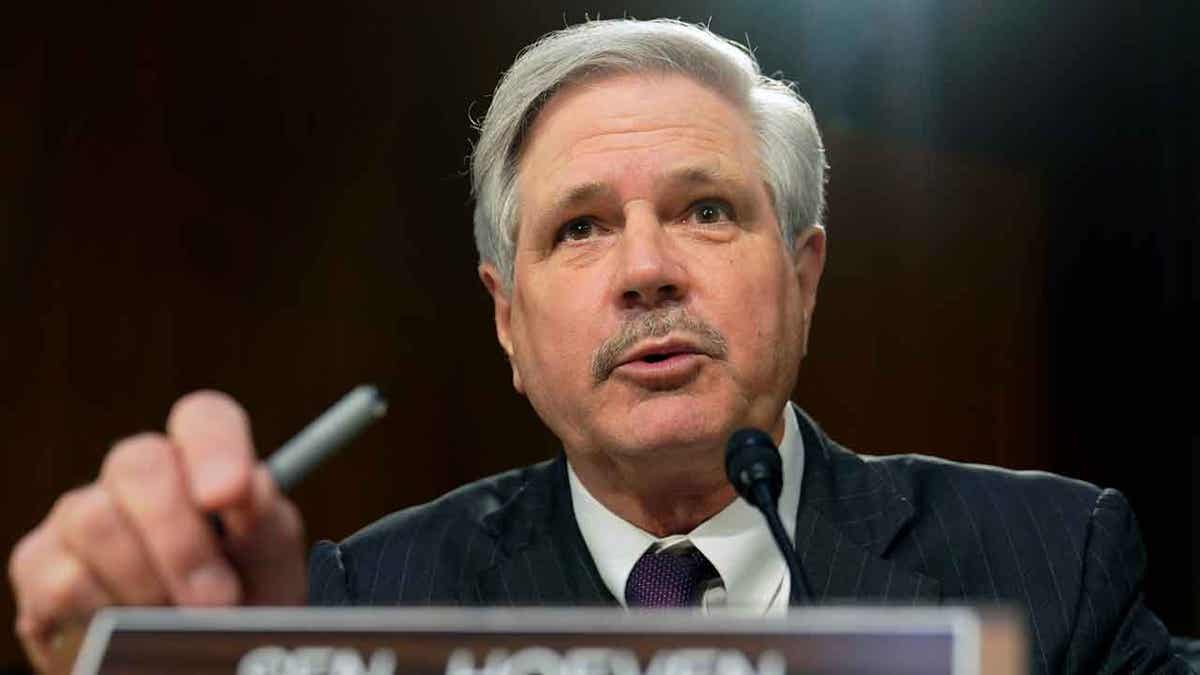
Sen. John Hoeven, R-N.D., a member of the Senate Appropriations Committee, said Republicans are considering a budget reconciliation package making Immigration and Customs Enforcement shutdown-proof. (Mariam Zuhaib/AP Photo)
CLICK HERE TO DOWNLOAD THE FOX NEWS APP
A second reconciliation package could prove more difficult in an election year when lawmakers will have to identify spending cuts to pay for the border security and immigration funding. The strategy could also extend the funding lapse for ICE and the Border Patrol for several more months.
Amid both chambers’ planned two-week recesses, Trump told the New York Post on Tuesday he is considering calling Congress back to Washington to find a solution to the DHS shutdown.
House Majority Whip Tom Emmer, R-Minn., told CNBC’s «Squawk Box» on Wednesday that a «skinny reconciliation bill» funding the department would pass both chambers once Congress resumes session in mid-April if a deal has not been reached.
House GOP leadership has previously voiced skepticism about funding immigration enforcement through a budget reconciliation package. Some conservatives have also complained about the precedent of letting Democrats decide which agencies receive funding through the normal appropriations process.
«The problem is that what they’re doing is they’re placing the burden on the Republican Party entirely to make sure that we have border security funding and Immigration and Customs Enforcement, because they’re going to try to force it into a reconciliation bill,» House Speaker Mike Johnson, R-La., told Fox News’ Brian Kilmeade on Friday. «That’s a very difficult task. It is a high risk gamble for us to assume that we could do that.»
homeland security, donald trump, government shutdown, mike johnson, chuck schumer, politics
INTERNACIONAL
Una universidad en pánico, un tiroteo letal y 32 muertos: el caso de la masacre de Virginia Tech
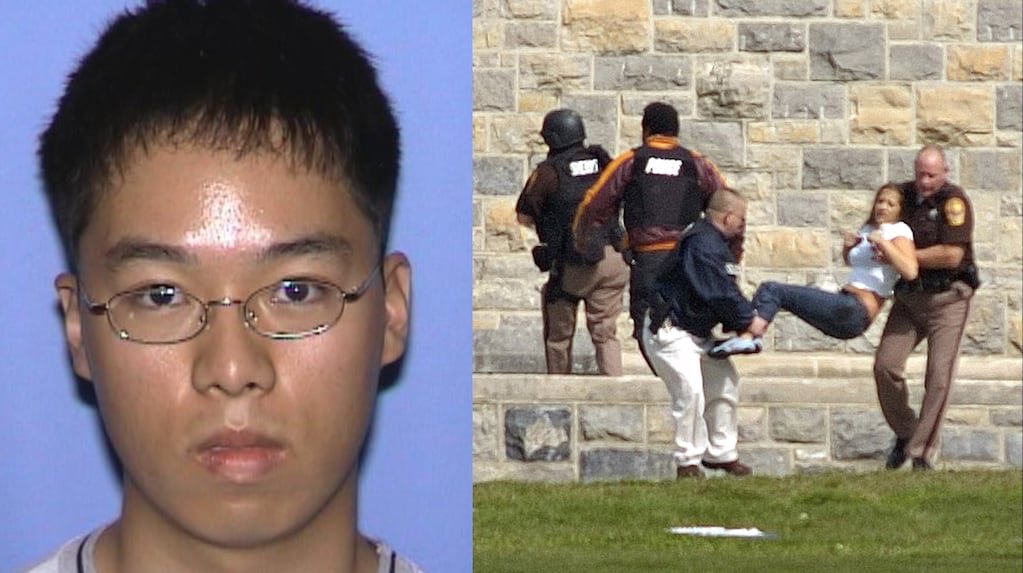
El 16 de abril de 2007 comenzó como cualquier otro día en el campus del Virginia Tech, una universidad ubicada en la ciudad estadounidense de Blacksburg. Por la mañana, los estudiantes se preparaban para irse a clase, repasaban apuntes o salían de sus residencias en camino a las aulas.
Nada hacía parecer que, en cuestión de minutos, ese espacio cotidiano se transformaría en el escenario del peor ataque armado en la historia de una universidad en Estados Unidos.
Las primeras señales de alarma llegaron temprano. A las 7:15 de la mañana, un llamado al 911 alertó sobre disparos dentro de una residencia estudiantil. Dos personas habían sido atacadas en el edificio West Ambler Johnston Hall.
En ese momento, las autoridades creyeron que se trataba de un hecho aislado, posiblemente vinculado a una situación personal, por lo que el campus no fue evacuado y las clases siguieron con normalidad.
Esa decisión, que luego sería duramente cuestionada, marcó el inicio de una tragedia que terminaría dejando 32 víctimas fatales, además del propio atacante.
La masacre
El autor de los disparos fue identificado como Seung-Hui Cho, un estudiante de 23 años que seguía la carrera de literatura inglesa. Había nacido en Corea del Sur, pero vivía desde hacía años en Estados Unidos y vivía dentro del campus universitario.
El primer ataque ocurrió en la residencia estudiantil. Allí fueron asesinados Emily Hilscher, una joven de 19 años, y Ryan Clark, de 22, quien intentó intervenir al escuchar los disparos. Tras ese episodio, el agresor se retiró del lugar sin ser detenido. Así trasladaron a una de las víctimas de la masacre de Virginia Tech. (Foto: AP)
Durante las siguientes dos horas, Cho permaneció en un punto aún no completamente esclarecido por los investigadores. En ese lapso, regresó a su habitación, se cambió de ropa, cargó armas y dejó una nota. Además hizo algo que luego resultaría clave para la investigación: envió un paquete a la cadena NBC News en Nueva York, que contenía un manifesto, fotos y videos en los que expresaba su odio hacia la sociedad.
Cerca de las 9:30 de la mañana, el atacante ingresó al edificio Norris Hall, donde se cursaban carreras de ingeniería. Allí ejecutó la fase más letal del ataque. Antes de comenzar a disparar, encadenó las puertas desde el interior para impedir la huida de estudiantes y profesores.
Armado con una pistola Glock 19 y una Walther P22, recorrió aulas y pasillos disparando de manera sistemática. En apenas nueve minutos, mató a 32 personas y dejó decenas de heridos. En total, 61 personas fueron alcanzadas por disparos durante toda la jornada.

La policía redujo a varios estudiantes en busca del tirador. (Foto: AP)
Algunos estudiantes lograron sobrevivir escondiéndose o improvisando “barricadas” para protegerse. Otros, en un intento desesperado por escapar, se tiraron por las ventanas. También hubo actos de heroísmo: el profesor Liviu Librescu, sobreviviente del Holocausto, bloqueó la puerta de su aula con su propio cuerpo para impedir que las balas impactaran contra sus alumnos.
Cuando la policía logró ingresar al edificio, tras romper las cadenas de las puertas, el silencio ya se había instalado. A las 9:51, los disparos cesaron: Cho se había suicidado de un tiro en la cabeza.
La investigación
La magnitud del ataque obligó a desplegar un operativo sin precedentes. En un primer momento, incluso se consideró la posibilidad de que hubiera más de un tirador, debido a la distancia y el tiempo entre los dos ataques. Sin embargo, rápidamente se confirmó que todo había sido obra de una sola persona.
Los investigadores determinaron que Cho había planificado el ataque con antelación. Había comprado las armas semanas antes y acumulado municiones. Según el FBI, no se trató de un acto impulsivo, sino de un plan cuidadosamente pensado.
El contenido enviado a la NBC resultó clave para comprender su estado mental. En los videos, Cho se mostraba frente a cámara, armado y pronunciaba mensajes cargados de resentimiento. Se presentaba como una víctima de la sociedad y justificaba su accionar como una forma de respuesta a supuestas injusticias. Una de las imágenes que envió el tirador, Seung-Hui Cho, a la cadena NBC News. (Foto: NBC News)
También salieron a la luz antecedentes preocupantes. Compañeros y docentes habían advertido sobre su comportamiento aislado, su dificultad para relacionarse y su escritura, considerada violenta y perturbadora. Incluso había sido derivado a instancias de evaluación psicológica tiempo antes del ataque.
Leé también: Se obsesionó con una serie sobre un asesino, armó un plan para imitarlo y terminó preso por un cuaderno
Un antes y un después
Tras la masacre, los estudiantes del Virginia Tech quedaron paralizados. Las clases fueron suspendidas durante el resto de la semana y el edificio Norris Hall permaneció cerrado por el resto del semestre. Se organizaron vigilias, homenajes y espacios de contención para estudiantes y docentes.
El entonces presidente de Estados Unidos, George W. Bush, participó de actos conmemorativos y expresó el duelo nacional. La Cruz Roja y equipos de salud mental se instalaron en la zona para asistir a los sobrevivientes.

El expresidente George W. Bush en el santuario de las víctimas que murieron en la masacre de Virginia Tech. (Foto: Archivo de la Casa Blanca)
Sin embargo, junto con el dolor, muchos estudiantes cuestionaron por qué no se evacuó el campus tras el primer tiroteo. Las autoridades universitarias admitieron que inicialmente interpretaron ese episodio como un hecho aislado, lo que retrasó la respuesta ante la segunda fase del ataque.
En 2008, el estado de Virginia alcanzó un acuerdo con los familiares de las víctimas, que incluyó indemnizaciones millonarias.
Estados Unidos, Tiroteo, universidad, masacre
NEWYou can now listen to Fox News articles!
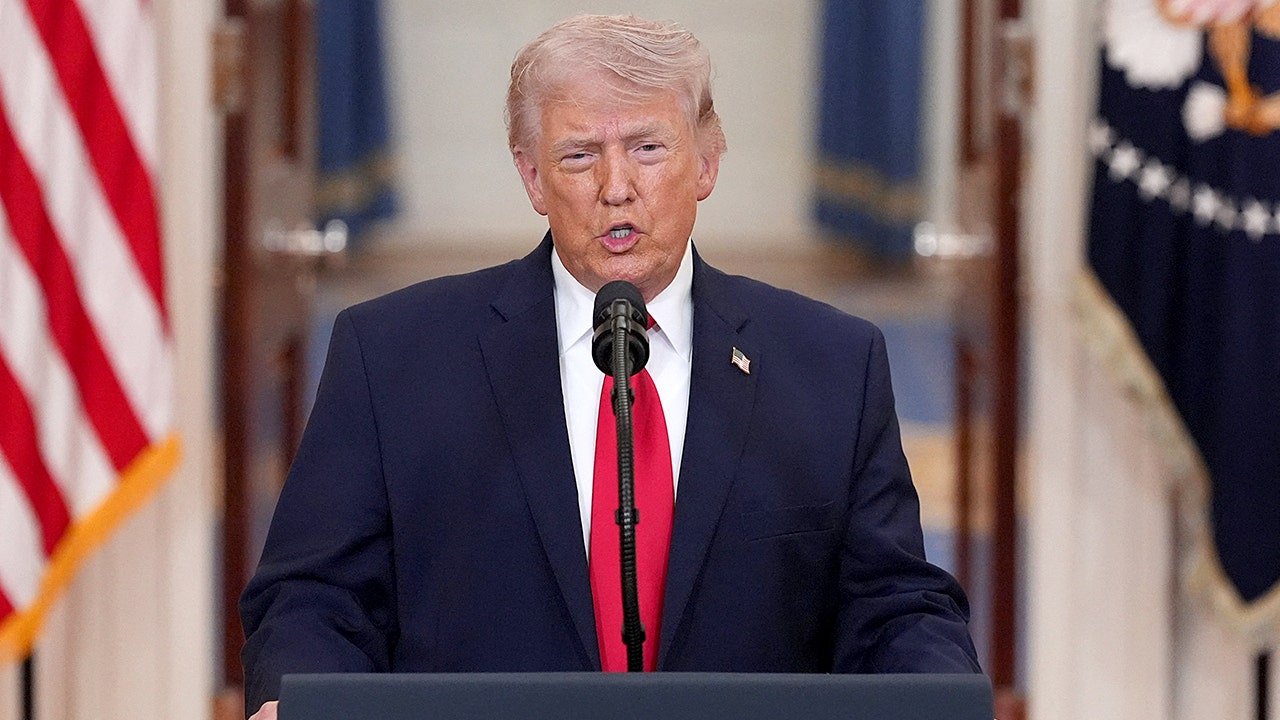
President Donald Trump declared Iran is «essentially really no longer a threat» after a 32-day U.S. military campaign, telling Americans in a primetime address Wednesday that the country has been «eviscerated» following weeks of strikes.
Even so, Trump said the United States is preparing additional attacks in the coming weeks even as diplomatic discussions continue.
«I can say tonight that we are on track to complete all of America’s military objectives shortly. Very shortly, we are going to hit them extremely hard over the next two to three weeks,» Trump said. «We’re going to bring them back to the Stone Ages where they belong. In the meantime, discussions are ongoing.»
INSIDE IRAN’S MILITARY: MISSILES, MILITIAS AND A FORCE BUILT FOR SURVIVAL
«We have all the cards. They have none,» Trump said. «American involvement in World War II lasted for three years, eight months and 25 days,» the president went on, noting that the Vietnam War lasted 19 years and Iraq War lasted eight.
«We are in this military operation … for 32 days,» he said. «And the country has been eviscerated and essentially is really no longer a threat.»
Trump pointed to U.S. attacks on Iran’s nuclear infrastructure, saying sites hit by B-2 bombers were «obliterated» and warning the United States would launch additional strikes if Tehran attempts to recover nuclear material.
Trump gives primetime address on Iran, April 1, 2026. (Alex Brandon/Pool via Reuters)
«The nuclear sites that we obliterated with the B-2 bombers have been hit so hard that it would take months to get near the nuclear dust,» Trump said. «If we see them make a move, even a move for it, we’ll hit them with missiles very hard.»
The remarks come as key questions remain about the fate of Iran’s enriched uranium stockpile, including roughly 900 pounds to 1,000 pounds of uranium enriched to near weapons-grade levels, according to international watchdog estimates.
The conflict has driven volatility in global energy markets and rising fuel costs for Americans.
WHY TRUMP, IRAN SEEM LIGHT-YEARS APART ON ANY POSSIBLE DEAL TO END THE WAR
Addressing those concerns directly, Trump blamed recent increases in gasoline prices on Iranian attacks targeting commercial shipping and regional infrastructure.
«Many Americans have been concerned to see the recent rise in gasoline prices here at home,» Trump said. «The short-term increase has been entirely the result of the Iranian regime launching deranged terror attacks against commercial oil tankers and neighboring countries.»
Trump also suggested Iran’s leadership structure has been fundamentally altered by the strikes, saying senior figures are dead and warning of additional attacks if Tehran does not reach an agreement with the United States.
«We never said regime change, but regime change has occurred because of all of their original leaders’ death. They’re all dead,» Trump said. «If there is no deal, we are going to hit each and every one of their electric generating plants very hard and probably simultaneously.»
He further claimed Iran’s air defenses had been eliminated. «They have no anti-aircraft equipment,» Trump said. «Their radar is 100% annihilated. We are unstoppable.»

CENTCOM shared footage of strikes against airplanes amid Iran war (U.S. Central Command on X)
The mission known as Operation Epic Fury began just more than one month ago, on Feb. 28.
Since then, U.S. forces have struck more than 12,000 targets inside Iran and damaged or destroyed 155 naval ships, according to the Central Command. Thirteen U.S. service members have died in the operations, and 350 have been injured.
«Twice this past month, I have traveled to Dover Air Force Base, and it’s been something I wanted to be with those heroes as they return to American soil. And I was with them and their families, their parents, their wives, their husbands. We salute them,» Trump said in reference to the deceased service members.
«Now we must honor them by completing the mission for which they gave their lives. And every single one of the people, their loved one said, please, sir, please finish the job, every one of them, and we are going to finish the job and we’re going to finish it very fast. We’re getting very close.»
Trump also called on U.S. allies to take a more active role in securing global energy routes, arguing that countries reliant on Middle Eastern oil should be responsible for protecting the Strait of Hormuz, a critical shipping chokepoint.

Trump also called on U.S. allies to take a more active role in securing global energy routes, arguing that countries reliant on Middle Eastern oil should be responsible for protecting the Strait of Hormuz. (Reuters/Stringer/File Photo/File Photo)
«The countries of the world that do receive oil through the Hormuz Strait must take care of that passage. They must cherish it. They must grab it and cherish it,» Trump said. «We will be helpful, but they should take the lead in protecting the oil that they so desperately depend on.»
Trump suggested some nations had failed to support U.S. military efforts against Iran and urged them to step up, both militarily and economically.
«So to those countries that can’t get fuel, many of which refuse to get involved in the decapitation of Iran, we had to do it ourselves,» he said. «Go to the strait and just take it. Protect it. Use it for yourselves.»
CLICK HERE TO DOWNLOAD THE FOX NEWS APP
He added that global energy flows would stabilize once the conflict subsides, predicting the waterway would reopen and markets would recover.
«When this conflict is over, the strait will open up naturally,» Trump said. «It will resume the flowing and the gas prices will rapidly come back down.»
war with iran, white house, iran, donald trump

Cuánto cuesta patentar un auto 0 km en CABA y provincia de Buenos Aires

Quiénes fueron nominados esta semana en Gran Hermano: Generación Dorada

GOP leaders endorse Trump’s shutdown-proof move to end DHS funding lapse

Falsas denuncias: el oficialismo y los dialoguistas avanzan en un nuevo proyecto en el Senado

Pendientes de Harry Kane… con el Madrid en el horizonte

Misión Artemis II: el Gobierno confirmó la recepción de las primeras señales del microsatélite Atenea

Nuevas críticas de Marcela Pagano contra los Milei: “Karina es la que gobierna”, aseguró

Dos jubiladas que le habrían prestado dinero a Manuel Adorni negaron conocerlo

Quiénes son las dos acreedoras del préstamo con el que Adorni compró su departamento en Caballito

El incómodo momento que Wanda Nara y Martín Migueles le habrían hecho pasar a los japoneses en el tren bala: la foto

 POLITICA2 días ago
Dos jubiladas que le habrían prestado dinero a Manuel Adorni negaron conocerlo
- POLITICA2 días ago
Quiénes son las dos acreedoras del préstamo con el que Adorni compró su departamento en Caballito
- POLITICA22 horas ago
El Gobierno reevalúa la estrategia de comunicación por el caso Adorni y mide el impacto en la imagen de Milei