INTERNACIONAL
US kills 2 more suspected drug traffickers in boat strike

NEWYou can now listen to Fox News articles!
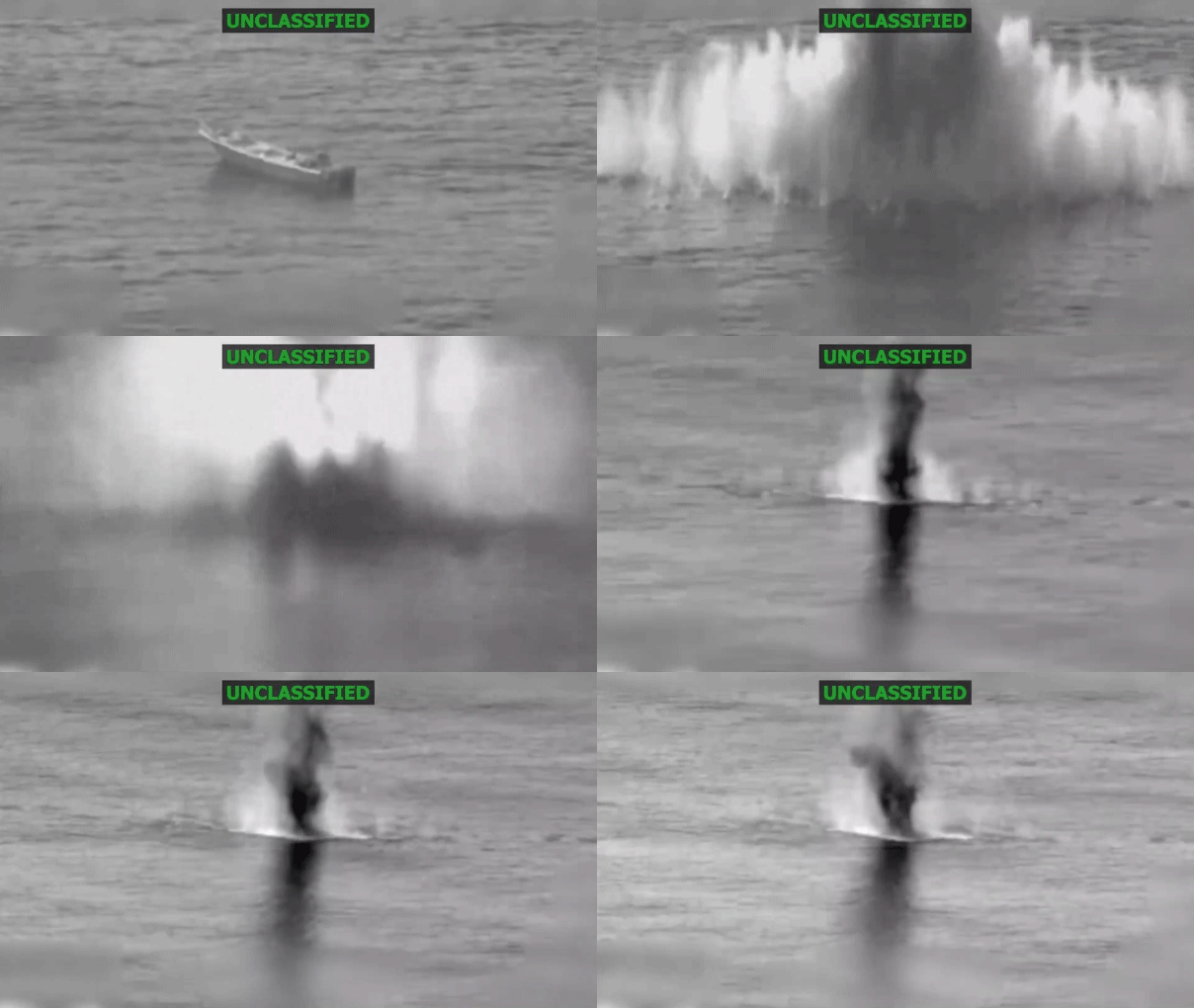
The U.S. military conducted a strike on a vessel in the Caribbean tied to suspected drug trafficking operations, killing two people, U.S. Southern Command said.
In a post on X, U.S. Southern Command (SOUTHCOM) said Joint Task Force Southern Spear carried out a «lethal kinetic strike» on May 4 at the direction of commander Gen. Francis L. Donovan.
CRUISE SHIP PASSENGER DESCRIBES UNCERTAINTY AFTER 3 DEATHS AMID HANTAVIRUS PROBE
A suspected drug-trafficking vessel is struck during a U.S. military operation in the Caribbean on May 4, in this image taken from video released by U.S. Southern Command. Officials said the strike targeted a boat believed to be involved in narcotics trafficking. (U.S. Southern Command)
The command said intelligence assessed the vessel was transiting along known narco-trafficking routes in the Caribbean and allegedly engaged in drug trafficking operations. It added that the vessel was operated by what officials described as designated terrorist organizations.
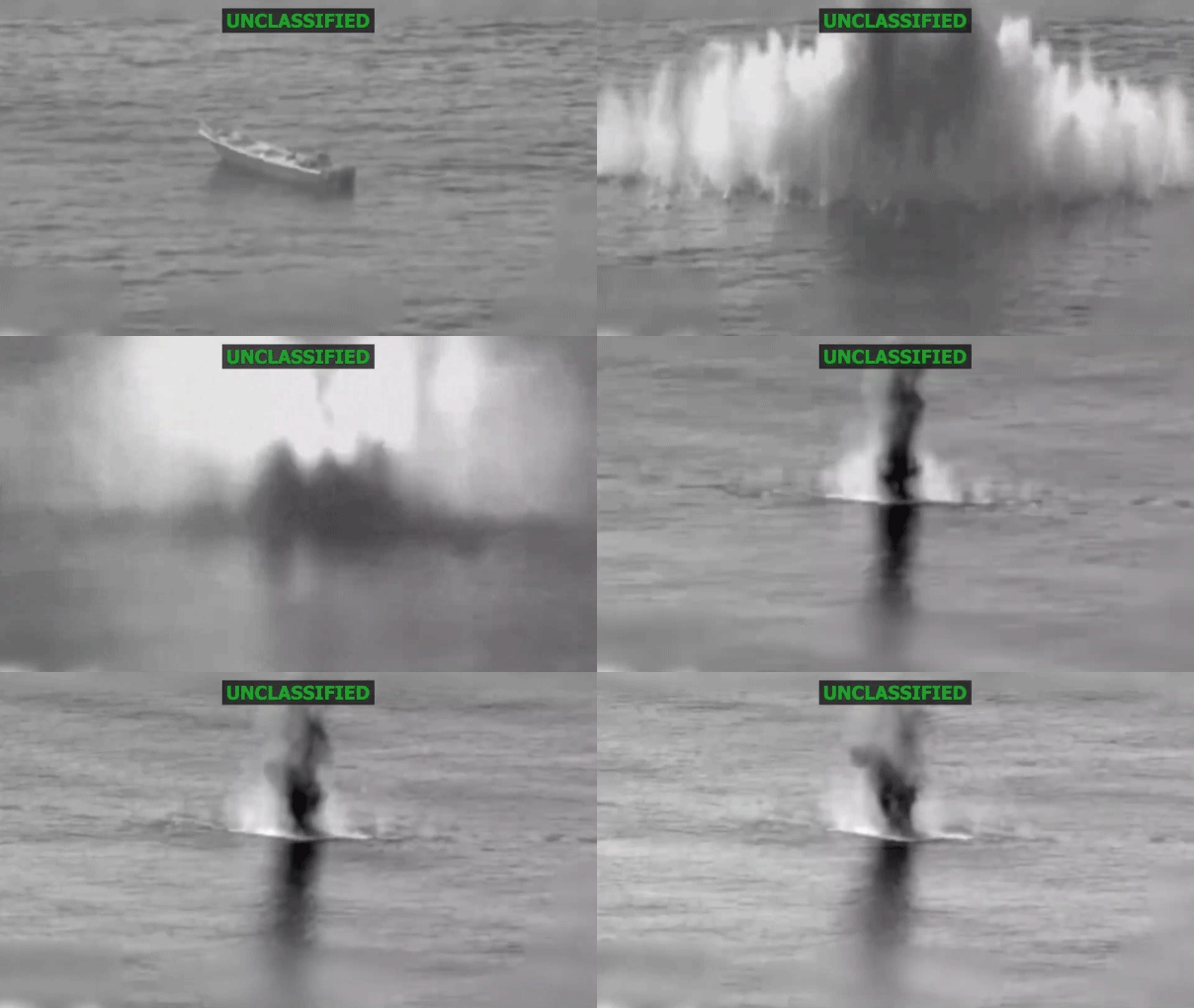
U.S. forces carried out a strike on a suspected drug-trafficking vessel in the Eastern Pacific, killing two individuals, officials said. (U.S. Southern Command)
Two male suspected «narco-terrorists» were killed in the strike, and no U.S. military personnel were harmed, according to the statement.
The strike is part of an ongoing campaign targeting suspected drug-trafficking vessels in Latin American waters that has continued since early September and has killed at least 188 people in total. Other strikes have taken place in the eastern Pacific Ocean.
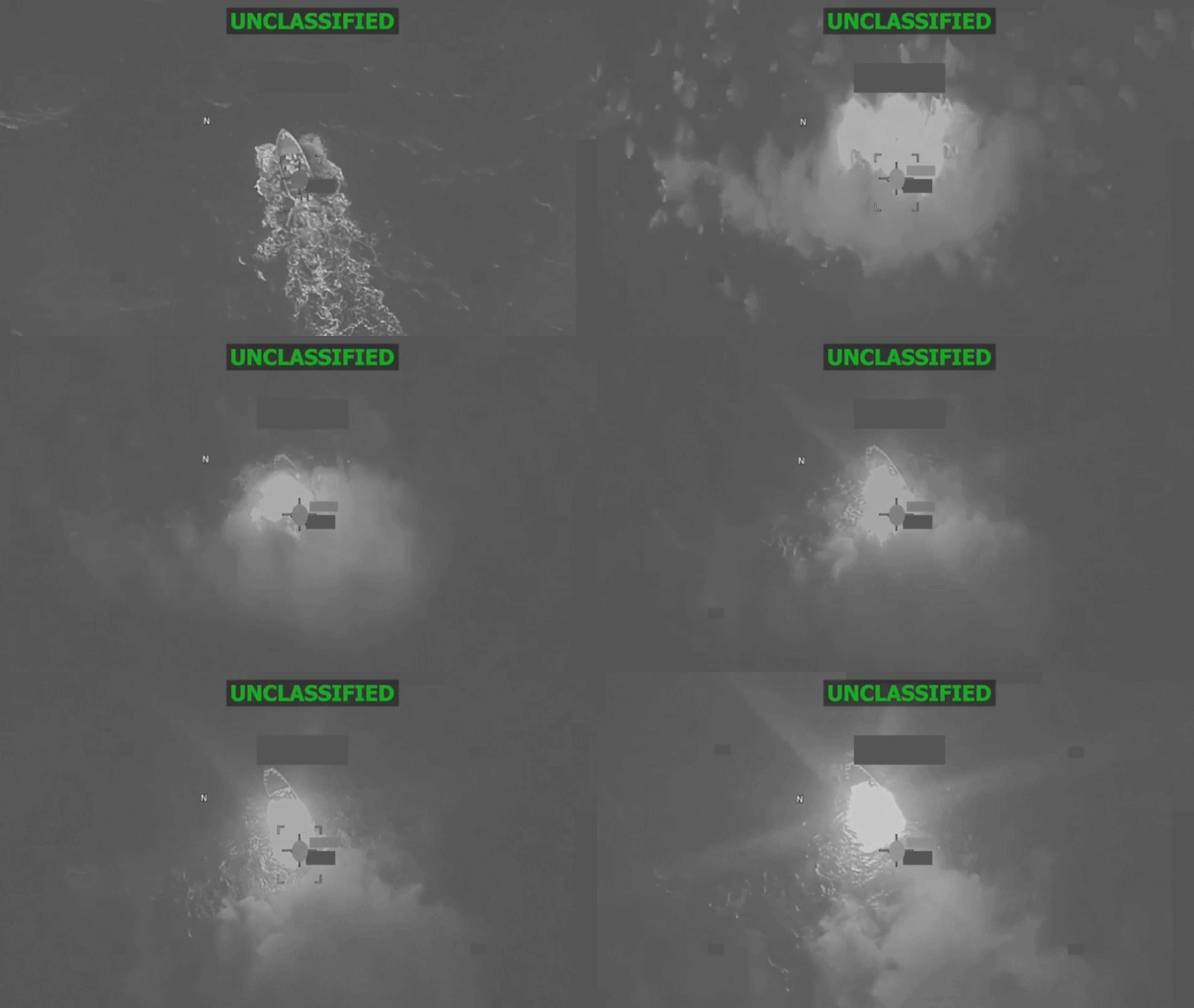
The U.S. conducted a lethal kinetic strike on an alleged drug trafficking vessel in the Eastern Pacific on April 15, 2026, killing three suspected narco-terrorists, U.S. Southern Command said. (U.S. Southern Command)
The operations have ramped up again in recent weeks, even as the U.S. remains engaged in conflict with Iran, according to officials and prior military statements.
CLICK HERE TO DOWNLOAD THE FOX NEWS APP
U.S. officials have described the effort as part of a broader campaign against what the administration calls «narcoterrorism» in the Western Hemisphere.
caribbean, organized crime, narco terror, counter terrorism, military







INTERNACIONAL
White House unloads on violent ‘criminal alien’ nabbed after investigators uncover election offense
DETAILS: Non-citizen BUSTED over voter registration
Federal prosecutors charge a Honduran national with voter fraud in California after he allegedly registered to vote under an alias and cast ballots in multiple elections. Fox News’ Matt Finn reports on the federal indictment details, revealing the suspect received a voter registration card using a gym membership. The case highlights ongoing debates surrounding voter identification laws.
NEWYou can now listen to Fox News articles!
A Bahamian national who arrived in the U.S. during President Gerald Ford’s administration and was living with a green card while racking up a violent rap sheet before investigators found he voted illegally in the 2020 election, sparking the deportation process, officials say.
The case of Anthony Tyrone Higgs is only the latest in a slew of arrests connected to illegal votes cast in recent elections, as the Trump administration engages in a broader crackdown on election integrity-related crimes.
«This alien was a guest in our country who forfeited his right to be in the U.S. when he committed these violent crimes and voted in the 2020 election,» White House spokeswoman Lauren Bis exclusively told Fox News Digital on Friday.
ICE ARRESTS PERUVIAN NATIONAL ACCUSED OF ILLEGALLY VOTING IN 2024 ELECTION AS DHS CITES SIMILAR CASES
ICE agents assemble in Minnesota, left; Anthony Tyrone Higgs, inset right. (Charly Triballeau/Getty Images; DHS)
«Any non-citizens who vote illegally in our elections will be arrested and removed. American elections are only for Americans.»
Homeland Security Investigations (HSI), a division of DHS, confirmed in a statement that Higgs had illegally voted in the 2020 election.
FORMER KANSAS MAYOR WHO PLEADED GUILTY TO ILLEGAL VOTING TURNS HIMSELF IN TO ICE
HSI’s Atlanta office arrested Higgs in Decatur, Georgia on September 3, and he is currently in the custody of ERO, the ICE subdivision that handles migrant removal operations.
Higgs was admitted into the U.S. in October 1976 as a Lawful Permanent Resident – commonly dubbed a Green Card holder. The Trump DHS has since placed him in proceedings to revoke his immigration status due to his lengthy rap sheet.
TRUMP DOJ UNLEASHES LARGEST DENATURALIZATION EFFORT IN DEPARTMENT HISTORY — AND SAYS IT’S ‘ONLY THE BEGINNING’
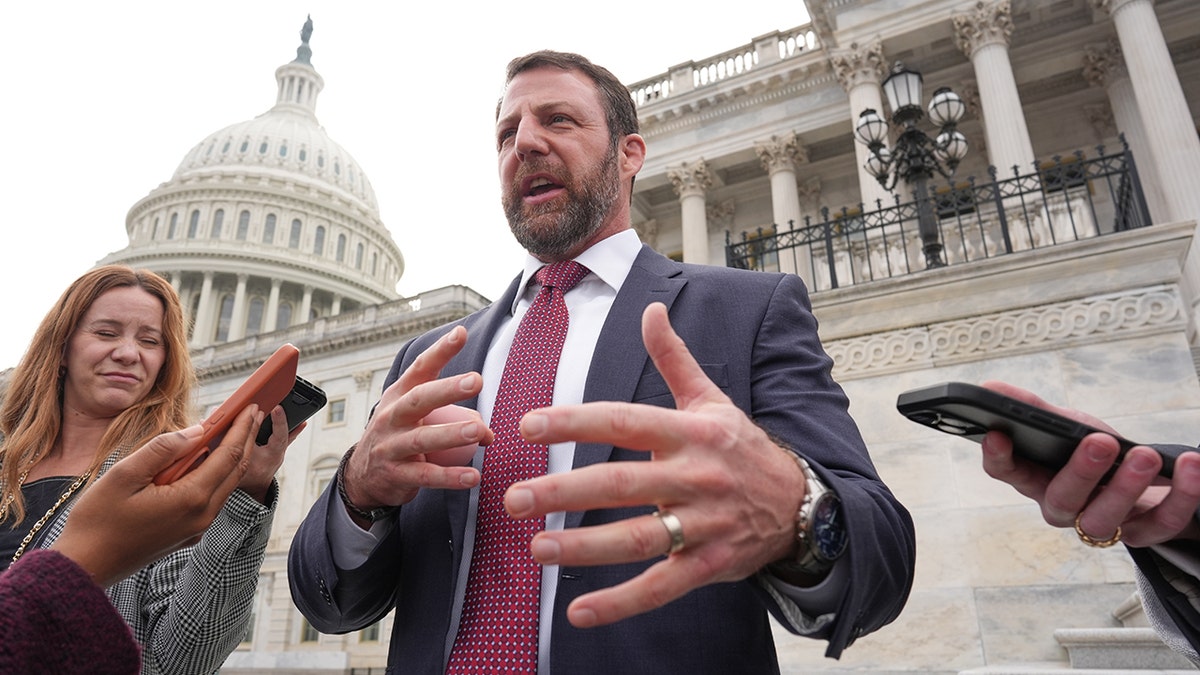
Sen. Markwayne Mullin, R-Okla., speaks to reporters at the Capitol in Washington, Thursday, March 5, 2026. (J. Scott Applewhite/AP Photo)
«This criminal alien from the Bahamas has a rap sheet for multiple violent crimes, including armed robbery, domestic violence, and assault on a police officer,» DHS Secretary Markwayne Mullin said.
«On top of all of that, he illegally voted in the 2020 election,» he added.
MORE THAN A QUARTER-MILLION NONCITIZENS MAY BE REGISTERED TO VOTE IN 4 KEY STATES, DHS ALLEGES
A Homeland Security Investigations logo is displayed ahead of Super Bowl LIX security operations in New Orleans on Feb. 5, 2025. An HSI special agent has since been indicted on multiple felony charges in Alabama. (Aaron M. Sprecher/Getty Images)
Higgs’ record also includes resisting arrest, two counts of grand larceny and two counts of possession of a weapon during a violent crime.
Of the voting-related charge, Mullin said that just one noncitizen casting a ballot is enough to cancel out an American citizen’s vote.
«Thanks to the hard work of the men and women of ICE, this criminal will be removed from our country and can never interfere in our elections again,» he continued.
DHS also provided several other recent cases of illegal immigrants or ineligible voters committing or being charged with election-related crimes.
In August, Colombian illegal immigrant Carlos Jaramillo-Grajales was sentenced to three years in prison following an ICE investigation that led to a guilty plea in a case where he was found to have committed identity theft to illegally vote in elections for more than 20 years, according to the agency.
«Federal immigration laws serve to safeguard our nation’s borders and protect the integrity of our government,» said Gregory Kehoe, U.S. Attorney for the Middle District of Florida.
«Those who seek to circumvent, exploit, or break these laws will be prosecuted fully,» he said in an August statement.
In New Jersey, a Slovakian national was found to have illegally voted in the 2022 midterms, according to HSI – which also cited the case of an Australian national accused of illegally casting ballots in both 2022 and 2024 in Louisiana.
Mauritanian national Mahady Sacko was busted by an ICE and FBI partnership in Democrat-run Philadelphia, and charged with voter fraud.
SIGN UP TO GET THE POLITICS NEWSLETTER
Sacko allegedly voted illegally multiple times going back to 2008. He was already under an order of removal, DHS said in a statement, stating that he «exhausted all appeals» and an immigration board upheld his removal order as of 2002 but he remained in the country.
Returning to the case of Higgs, Mullin added in a statement: «Thanks to the hard work of the men and women of ICE, this criminal will be removed from our country and can never interfere in our elections again.»
voter fraud concerns, deportation, illegal immigrants, migrant crime, politics, voting, immigration, donald trump, white house

NEWYou can now listen to Fox News articles!
Mayor Zohran Mamdani’s presence at Friday’s 9/11 remembrance at Ground Zero drew criticism from some in the city, including one former police officer who said the mayor «probably should have skipped it» and another mourner who called his appearance «disrespectful» and «very offensive.»
Mamdani has faced criticism over his associations with controversial political and online figures, as well as his decision to appoint Ramzi Kassem as his administration’s chief counsel. Kassem previously represented a Guantánamo detainee linked to an al Qaeda terrorist plot.
Former New York Republican Gov. George Pataki, 9/11-era FDNY Commissioner Thomas von Essen and others called on Mamdani to skip the ceremony.
«He showed up anyway. It does bother us,» Walter Matuza, whose father Walter was killed that day, told Fox News Digital.
MAMDANI HEADS TO 9/11 MEMORIAL DESPITE 110,000-SIGNATURE PUSH FROM VICTIMS’ FAMILIES TO STAY AWAY
New York first gentleman William Hochul Jr., New York Mayor Zohran Mamdani and Gov. Mikie Sherrill (Hiroko Masuike/Getty Images)
Matuza said he was part of the group of victims’ families that initiated the petition to keep Mamdani away.
He cited Mamdani’s association with streamer Hasan Piker, who once said America «deserved 9/11,» as well as Mamdani’s appointment of Kassem.
MAMDANI UNDER FIRE AFTER SYMBOLIC 9/11 PEN GOES TO FORMER AL QAEDA DEFENSE LAWYER
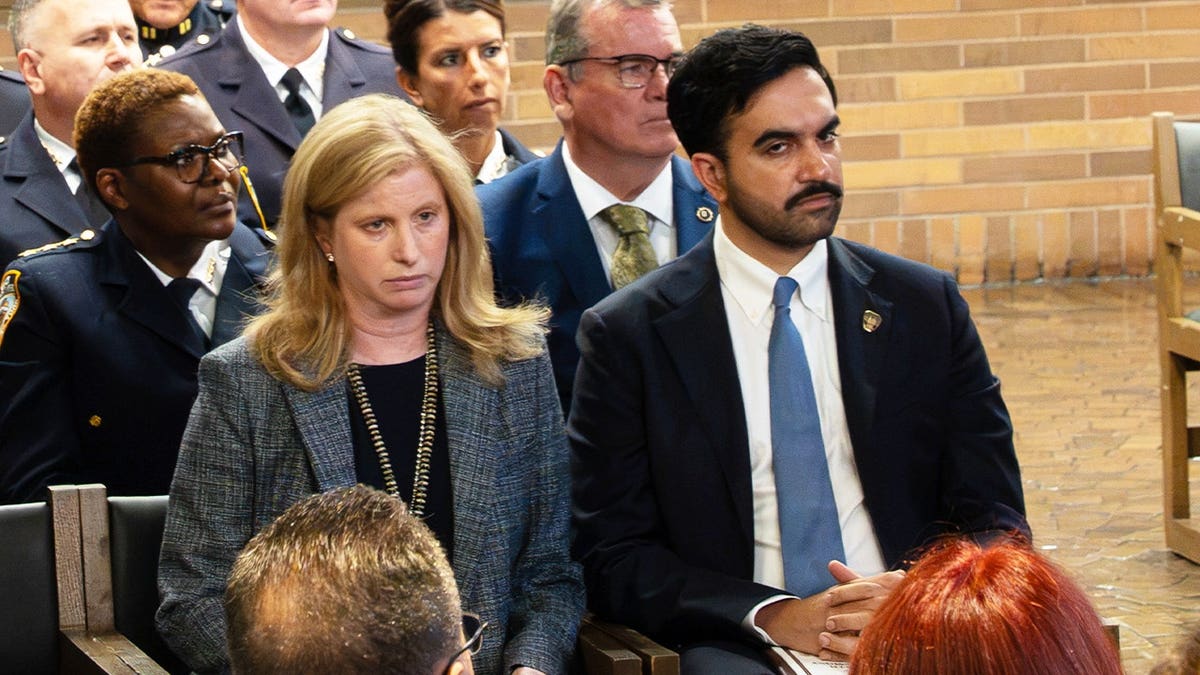
New York City Mayor Zohran Mamdani and Police Commissioner Jessica Tisch announce a new memorial honoring victims of 9/11 inside 1 Police Plaza in New York, N.Y., Sept. 9, 2026. (Cristina Matuozzi/Sipa USA via Reuters Connect)
Matuza, of Staten Island, said his father was one of dozens at Carr Futures brokerage who died after American Airlines Flight 11 struck the north tower just above their 92nd floor offices.
Mike, a former New Jersey police officer, told Fox News Digital he recalled watching the terror unfold on television from across the Hudson – and later came to Manhattan to help relieve exhausted NYPD officers stuck at their posts.
«Based on the rhetoric that he’s used in the past. Yeah, he probably should have skipped it,» Mike said of Mamdani.
He added that Mamdani’s appointment of Kassem also troubled him, saying the mayor could’ve handled the situation in a «whole different way.»
FAMILIES OF 9/11 VICTIMS’ MESSAGE TO MAMDANI: ‘PLEASE DO NOT COME’ TO MEMORIAL CEREMONY
«But, he did it and unfortunately people aren’t going to forget it.»
Another mourner called Mamdani a «communist» when asked about his appearance on Friday, adding that the memorial was «not supposed to be a political event.»
Steven, who traveled all the way to New York from Hobe Sound, Florida, to attend the remembrance, lambasted Mamdani’s presence as «disrespectful» and «offensive.»
ZOHRAN MAMDANI URGED TO SKIP NEW YORK CITY’S 9/11 MEMORIAL: ‘VILE ANTISEMITE’
«I’ve been following that over the past couple weeks and I saw that I think they had upwards of 700,000 New Yorkers requesting him not to be here. I mean, as the mayor, I would assume he has the right to be here…. But who he represents and the people he’s affiliated with… I feel that he should stay away. I don’t feel that his presence here is wanted, and I think he should honor that as a human being.»
The petition had garnered more than 110,000 signatures at the time, according to the petition’s tally.
Steven called Kassem’s appointment «hideous» and added that the youngest generation who does not remember or did not live through 9/11 are suffering from «incorrect information» and do not understand the reality of the terror attack.
He said he will educate his children on 9/11 so that they do not go down the same ideological road.
Attendee John told Fox News Digital that Mamdani does have a right to attend.
John said he lost friends including at now-Commerce Secretary Howard Lutnick’s Cantor-Fitzgerald firm – which lost more than 650 people; the most of any company in the Twin Towers that day – and that as long as Mamdani is respectful to the fallen Americans being remembered, he is «fine» with the Democrat attending.
Fox News Digital reached out to Mamdani for comment.
In a prior statement, the mayor said he is proud of New York and «love[s] this city [and] country.»
«[W]hat I want this week to be a focus on is on the families whose loved ones were stolen from them 25 years ago in the horrific act of terror of September 11, and a focus also on the first responders who gave everything they could to this city and to the people who came together to try and help their fellow New Yorkers.»
During the ceremony, footage captured Mamdani approaching and greeting his 9/11-era predecessor, Republican Rudolph Giuliani.
SIGN UP TO GET THE POLITICS NEWSLETTER
The two could be seen appearing to exchange brief pleasantries before Giuliani turned and sat down and an aide began speaking to the incumbent mayor.
All living former presidents reportedly attended the ceremony, as President Donald Trump instead visited the Pentagon’s remembrance before departing for County Clare, Ireland from nearby Andrews Air Force Base.
zohran mamdani, september 11, new york city, politics, new york, republicans elections, democrats senate

NEWYou can now listen to Fox News articles!
On a cloudy morning at the site where two sprawling towers once stood, the loved ones of New Yorkers killed on 9/11 gathered with a message for President Donald Trump: Release the unredacted files they believe could implicate Saudi Arabia.
Vice President JD Vance attended the ceremony alongside former presidents George W. Bush, Barack Obama, Joe Biden and Bill Clinton, as well as former Secretary of State Hillary Clinton. New York City Mayor Zohran Mamdani and former Gov. Andrew Cuomo were also among those in attendance.
The message was delivered on the main stage by Terry Strada, whose husband, Tom, was killed in the attacks. Speaking from the memorial stage, Strada accused successive administrations of protecting Saudi Arabia instead of supporting the 9/11 families.
Strada called out President Barack Obama, who was at the memorial, for vetoing the Justice Against Sponsors of Terrorism Act, or JASTA, in 2016. Congress later overrode the veto, allowing 9/11 families to sue Saudi Arabia over its alleged role in the attacks.
TRUMP SET TO HONOR 9/11 VICTIMS, FIRST RESPONDERS AT PENTAGON ON 25TH ANNIVERSARY
Dr. Jill Biden, former President Joe Biden, Laura Bush, former President George W. Bush, Michael Bloomberg and Vice President JD Vance attend the ceremony to commemorate the 25th anniversary of the Sept. 11 terrorist attacks on the World Trade Center. (Hiroko Masuike/Pool/Getty Images)
«Administration after administration, including leaders in front of us here today, chose to protect the Saudis instead of standing with the 9/11 families,» Strada said. «They withheld evidence. They vetoed JASTA. They broke promises, both public and private. It has been one betrayal after another.
«President Trump can still change that»
She urged the president to tell Saudi leaders «that if they want to be friends with the USA, they cannot continue to deny all of this, all of the pain, all of the destruction that we have all been suffering through.»
«Please carry that message back,» another speaker said, addressing Vance. «Stand with the families. Stand with the survivors.»
The remarks drew applause from the crowd.
«Administration after administration has not done anything for us. In fact, they’ve blocked, blocked us every step of the way of getting justice,» Dennis McGinley, whose older brother Danny worked on the 89th floor of the South Tower, told Fox News Digital.
«President Trump has a unique, historic opportunity here to be a hero, be our champion, finally close the books on this American nightmare, which is now becoming an American embarrassment. It’s got to start.»
The appeal came as families marked the 25th anniversary of the attacks with a renewed push for accountability from Saudi Arabia, which they accuse of helping two of the hijackers establish themselves in the United States. The kingdom has repeatedly denied involvement.
The families’ claims center on Omar al-Bayoumi, a Saudi national who helped hijackers Nawaf al-Hazmi and Khalid al-Mihdhar obtain an apartment in San Diego, and Fahad al-Thumairy, an accredited Saudi diplomat and imam at the King Fahd Mosque in California who had numerous contacts with al-Bayoumi.
The 9/11 Commission documented the men’s connections but did not conclude that the Saudi government or senior Saudi officials supported the plot. Its report also said investigators found no evidence that another Saudi national, Osama Bassnan, gave money to the hijackers.
Newly released investigative material and evidence presented in a long-running civil case have intensified scrutiny of those connections. In August 2025, U.S. District Judge George Daniels allowed claims against Saudi Arabia to proceed, finding that the families had presented enough evidence to move toward trial. The ruling did not determine that Saudi Arabia was responsible for the attacks.
The families say that legal ruling, along with additional FBI and British intelligence material, gives Trump an opportunity to release more records and help resolve what they view as a 25-year-old betrayal.
SON WHO LOST FATHER IN 9/11 ATTACKS SHARES POWERFUL LESSONS 25 YEARS LATER: ‘I’M STILL HERE’
For Passananti, the demand was inseparable from his own loss. His father, Horace Robert Passananti, was working on the 100th floor of the North Tower. Passananti was 32 when he called his father after hearing that a plane had struck the building.
He never heard from him again.

New York first gentleman William Hochul Jr., New York Mayor Zohran Mamdani and New Jersey Gov. Mikie Sherrill (Hiroko Masuike/Getty Images)
Passananti said he has attended the ceremony every year but one since the attacks.
«I wish I wasn’t here, obviously, but I feel like I have to be here every year,» he told Fox News Digital.
Passananti, who is affiliated with the group 9/11 Justice, said families want those responsible for the attacks held accountable.
«We’ve really been on our own — the families — trying to obtain evidence,» Passananti said. «We’ve gotten really no help from our government. We feel like they’ve put Saudi Arabia ahead of the 9/11 families, and we’re hoping that will change.»
TRUMP CONFIRMS PENTAGON PLANS FOR 25TH ANNIVERSARY OF 9/11 ATTACKS, DISPUTES REPORT ON GROUND ZERO ABSENCE
He described the delays in the case as «a twilight zone.»
«It feels really like a twilight zone and unbelievable that we have to fight for justice for the worst terrorist attack that ever happened on our soil,» Passananti said. «It doesn’t feel real. It’s unexplainable.»
Trump has previously acknowledged that questions remain unanswered about the attacks. In 2022, while defending his decision to host a Saudi-backed LIV Golf tournament at his New Jersey club amid protests from 9/11 families, Trump said, «Nobody has gotten to the bottom of 9/11.»
But Trump has not publicly said whether he supports releasing additional files concerning Saudi Arabia’s alleged ties to the hijackers.
«President Trump is leading the most transparent administration in history, which is why he authorized the declassification and release of hundreds of pages of documents related to the terrorist attacks on September 11, 2001. The President will always pay tribute to the American heroes we lost in the tragic September 11 attacks, their beautiful family members, and to the acts of heroism that defined that fateful day when the unbreakable spirit of the American people prevailed,» White House spokesperson Olivia Wales said in a statement to Fox News Digital.

People stand next to the reflecting pools before a ceremony to commemorate the 25th anniversary of the Sept. 11 terrorist attacks on the World Trade Center at the National 9/11 Memorial & Museum on Sept. 11, 2026, in New York City. (Jeenah Moon/Pool/Getty Images)
McGinley worked across the Hudson River and called his brother after seeing the first plane hit, believing it was a small aircraft. His brother told him it was a passenger jet and described seeing people jumping from the neighboring tower. McGinley asked Danny if he was evacuating, and he said he’d been told to remain in place just before the South Tower was hit.
McGinley never spoke to him again.
«It is like the wound never healed, and every year we get salt poured back into that wound,» McGinley said.
The families’ calls for answers extended beyond those killed on the day of the attacks. Relatives of first responders who later died from cancer and other illnesses linked to toxic exposure also gathered at the memorial to honor their loved ones.
Jen Nilsen, whose husband died in the attacks, said the pain remains as strong as ever 25 years later.
«It doesn’t change at the 25th year,» Nilsen said. «The pain is still there.»
Nilsen said she returns to the memorial because «this is where he is.»
Her message to younger generations was simple.
«Never forget,» she said. «Even though years go on, you never forget. You never get over it. The hurt is always there. The pain is always here.»
september 11, new york city, saudi arabia, andrew cuomo

Las 18 figuras de la delegación argentina a seguir en los Juegos Suramericanos Santa Fe 2026 con la agenda de sus competencias

¡Un fuego! Aseguran que Diego Leuco y Sofi Martínez volvieron a estar juntos: «Hacen el amor desenfrendamente, nunca cortaron»

White House unloads on violent ‘criminal alien’ nabbed after investigators uncover election offense

La expareja de Fernando Cerimedo declarará desde Bolivia en la causa por la corrupción en la ANDIS

Donald Trump advirtió que un conflicto entre Argentina y el Reino Unido por Malvinas sería un “desastre potencial”

River Plate buscará meterse en zona de playoffs en su visita a Atlético Tucumán por el Torneo Clausura: hora, TV y formaciones

El día que Owen Wilson se emocionó por el abrazo que le dio Lionel Messi tras un partido

La desafiante aventura de Carolina Baldini en moto por Europa: desde Edinburgo a Liverpool en dos ruedas

Berni se diferenció de Kicillof en la aplicación de la baja de la edad de imputabilidad

Cuánto cuesta comprar una pick up en la Argentina y cuáles son los modelos más baratos en septiembre

 DEPORTE3 días ago
El día que Owen Wilson se emocionó por el abrazo que le dio Lionel Messi tras un partido
- CHIMENTOS3 días ago
La desafiante aventura de Carolina Baldini en moto por Europa: desde Edinburgo a Liverpool en dos ruedas
- POLITICA3 días ago
Berni se diferenció de Kicillof en la aplicación de la baja de la edad de imputabilidad