INTERNACIONAL
Colapsa el turismo en Cuba, principal fuente de ingreso del régimen castrista


Rutas aéreas suspendidas, hoteles cerrados y cifras de visitantes en caída libre: Cuba tiene en estado de coma al turismo de la isla, un sector económico crucial para el país -y para el régimen castrista-, que ya atravesaba serias dificultades.
La agonía en la que entró la isla golpeó de lleno en la única joya que podía exhibir hasta ahora: entre enero y marzo hubo 48% menos de turistas que en el mismo período del año pasado
El régimen cubano, un actor clave en este ámbito con el control de hoteles, agencias, marinas y transporte, se cita a partir de este jueves con las principales empresas del ramo en la feria del sector FITCuba mientras culpa al bloqueo petrolero de Estados Unidos.
La propia feria, el mayor evento de la industria turística en Cuba, se vio afectada por la falta de combustible: recortó fechas y llevado el tramo para profesionales al campo virtual.
Los organizadores prepararon una plataforma con puestos virtuales para las empresas con posibilidad de interactuar y un sistema de videoconferencias para poder mantener reuniones privadas. Una evidencia de la crisis.
Ante la incertidumbre geopolítica y el derrumbe del mercado internacional, el foco del sector está puesto en el turismo nacional como único revulsivo para la locomotora económica de la isla. «No es una opción, es una necesidad», dijo a la agencia EFE un importante cargo de esta industria que prefiere guardar el anonimato.
Ante la caída, el régimen castrista lanzó paquetes que incluyen transporte, bajado notablemente ciertas tarifas y promovido ofertas para cubanos residentes en el exterior, pero difícilmente pueden compensar la fuerte pérdida de viajeros internacionales.
Entre enero y marzo el número de turistas extranjeros cayó hasta los 298.057, un 48% menos que en el mismo periodo del año anterior, que ya había sido el peor de los últimos ejercicios, según la Oficina Nacional de Estadística e Información (ONEI).
El primer trimestre, que coincide casi completamente con la temporada alta en la isla, se vio amargado desde el principio, cuando la intervención militar estadounidense del 3 de enero en Caracas significó para Cuba el fin del suministro de petróleo venezolano.
Tres semanas más tarde llegaría la amenaza de Washington de imponer aranceles a quien suministrase crudo a la isla. Desde entonces sólo llegó a Cuba un petrolero del exterior, con apenas un 12% de las necesidades mensuales del país.
Las cuatro aerolíneas canadienses que volaban a la isla y las dos que viajaban desde Rusia (responsables en 2025 de transportar en torno a la mitad del turismo internacional a Cuba) suspendieron sus vuelos en febrero de manera temporal pero indefinida por falta de combustible para aviones.
Varias aerolíneas más cancelaron luego sus vuelos, como la turca Turkish Airlines y la francesa Air France; o reducido sus frecuencias, como es el caso de la española Iberia (que dejará la ruta en suspenso en junio) y la panameña Copa, entre otras.
Ante la falta de demanda y la escasez de combustible, el régimen cubano anunció una reorganización de los hoteles por motivos de eficiencia energética que en la práctica es el cierre temporal de la gran mayoría de las instalaciones de la isla, incluidas muchas en Varadero, el principal polo de turismo de sol y playa.
La crisis petrolera llegó a Cuba en un momento en el que el sector turístico se encontraba ya en un estado de gran debilidad por la combinación de múltiples factores internos y externos, según los expertos.
Perjudicaban su desempeño la grave crisis del país, que lastra el servicio y la experiencia; la decisión de EE.UU. de no conceder la visa rápida ESTA a quienes hayan visitado previamente Cuba; el cierre de rutas aéreas; y la competencia de destinos equiparables como Cancún (México) y Punta Cana (República Dominicana).
En 2025 se registraron las peores cifras turísticas desde 2002, sin contar los años de pandemia de covid. Cuba recibió el año pasado poco más de 1,8 millones de visitantes extranjeros, frente al objetivo gubernamental de 2,6 millones. La ocupación hotelera quedó en el 18,9%, según la ONEI.
En comparación, en 2024 habían sido 2,2 millones de visitantes extranjeros y en 2023, unos 2,4 millones, con lo que ya el volumen de turistas se situaba en torno a la mitad de los máximos del sector, registrados en 2018 (4,6 millones) y 2019 (4,2 millones), en los años del deshielo diplomático con Washington.
Desde que Cuba se abrió al turismo en los años 90, esta industria fue una de los principales rubros de la economía y de las principales cajas para el castrismo, tanto por los ingresos y el empleo que genera como por el aporte en divisas, esencial para un país que importa el 80% de lo que consume.

INTERNACIONAL
Rebelión en el laborismo británico: tras la paliza electoral, diputados y sindicalistas piden la renuncia de Keir Starmer


INTERNACIONAL
Newsom’s ‘Golden State Start’ promises 400 free diapers per baby as California grapples with budget woes
NEWYou can now listen to Fox News articles!
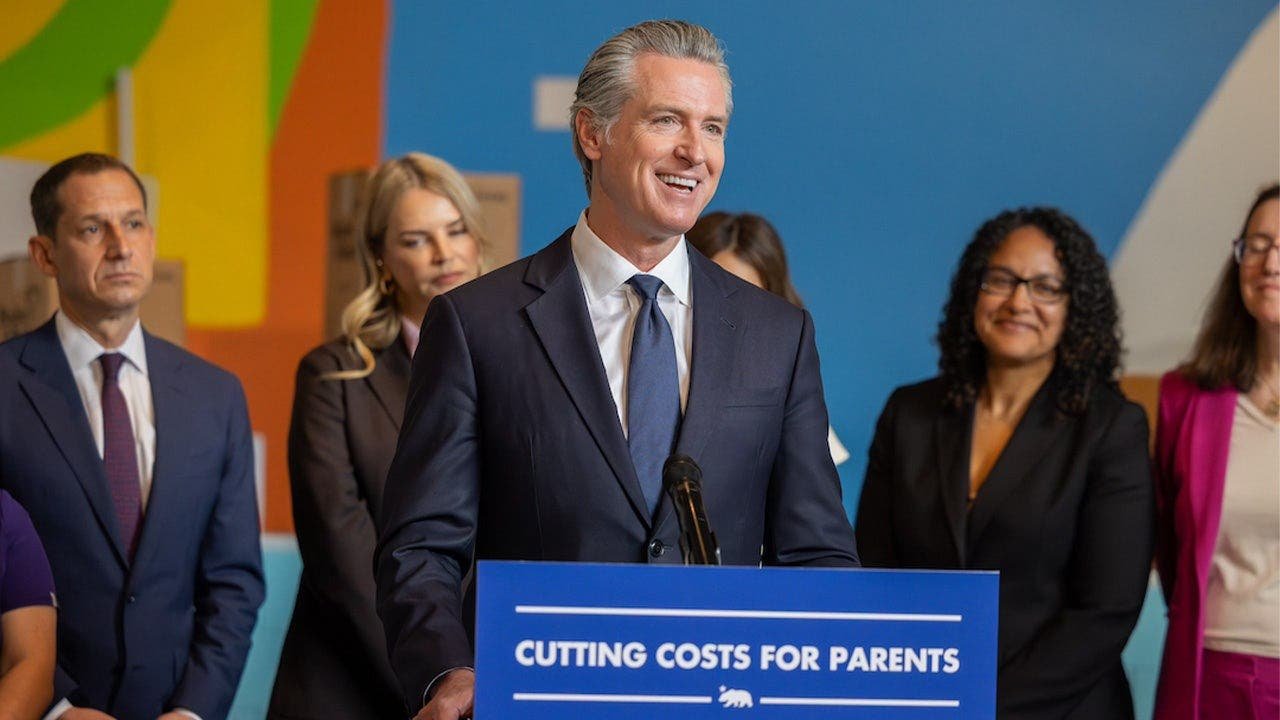
Gov. Gavin Newsom is rolling out a taxpayer-backed freebie for new parents, promising hundreds of diapers for every baby born in California under a new statewide program.
The Democrat announced Friday that the state will partner with nonprofit Baby2Baby to hand out 400 free diapers to families leaving participating hospitals, starting this summer. The initiative, dubbed «Golden State Start,» is being billed as a first-in-the-nation effort to ease the high cost of raising a child.
«Every baby born in California deserves a healthy start in life,» Newsom said in a statement, touting the plan as part of his broader push to tackle affordability.
CALIFORNIA IS BROKE, BUT IT’S NOT TOO LATE FOR THE REST OF US
Calif. Governor Gavin Newsom announced on May 8 that the state is partnering with Baby2Baby, a leading national nonprofit organization headquartered in California, to launch a first-in-the-nation program to provide free diapers to all new babies born in California. (Governor Gavin Newsom)
Under the program, hospitals will distribute the diapers directly to parents upon discharge. Officials said early rollout will prioritize facilities serving low-income patients on Medi-Cal, with plans to expand statewide.
During the program’s first year, it will be offered at about 65 to 75 hospitals that handle about a quarter of births in the state and largely serve low-income patients, Newsom’s office said, according to the Associated Press.
The move is the latest in a string of family-focused spending initiatives from the Newsom administration, which already includes free school meals and universal preschool for 4-year-olds.
Critics are likely to challenge the program’s price tag, particularly as California navigates a tightening fiscal environment. Fox News Digital has reached out to the governor’s office regarding the costs of the program.
According to the Associated Press, the state has allocated $7.4 million in last year’s budget to launch the free diaper initiative, and Governor Newsom’s latest proposal seeks an additional $12.5 million for implementation through the fiscal year ending in June 2027.
However, these spending goals collide with a sobering economic reality.
In its January budget overview, the Legislative Analyst’s Office (LAO) noted that while the administration officially projected a $2.9 billion deficit for 2026-27, the long-term outlook is far more dire. The LAO warned that the state faces structural deficits ranging from $20 billion to $35 billion annually over the coming years
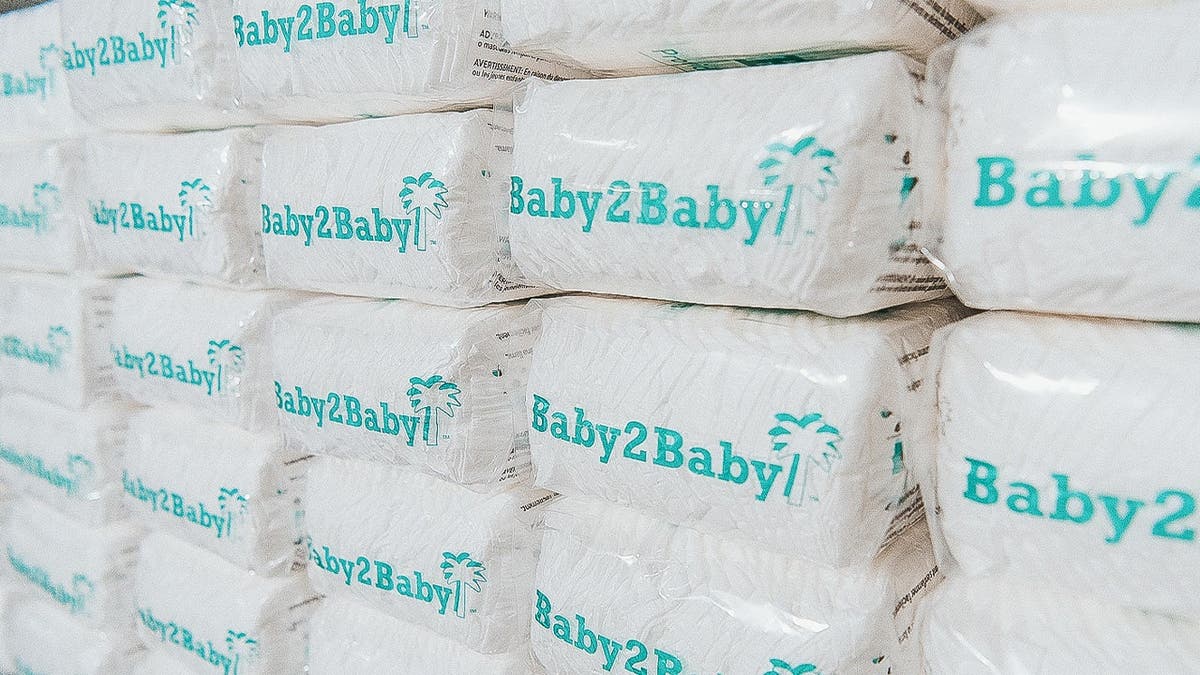
The state has partnered with nonprofit Baby2Baby to manufacture the diapers under the label «Golden State Start.» (Governor Gavin Newsom)
State officials said that they are also looking at ways to take on major diaper brands and drive down prices.
Baby2Baby, a Los Angeles-based nonprofit that distributes supplies to children in need, will handle manufacturing and logistics for the program. The group says diaper need is widespread, with as many as one in two families struggling to afford them.
CALIFORNIA SCHOOL DISTRICT INFORMS PARENTS PERIOD PRODUCTS ARE IN BATHROOMS FOR ‘ANY STUDENT WHO MENSTRUATES’
Co-CEOs Norah Weinstein and Kelly Sawyer Patricof praised the partnership as «historic,» saying it will help families during one of their most financially vulnerable moments.
«We are incredibly grateful to Governor Newsom for his ongoing commitment to combating diaper needs in California and could not be prouder to partner on this historic initiative that will support moms and babies at their most vulnerable time,» Weinstein and Patricof said in a joint statement.
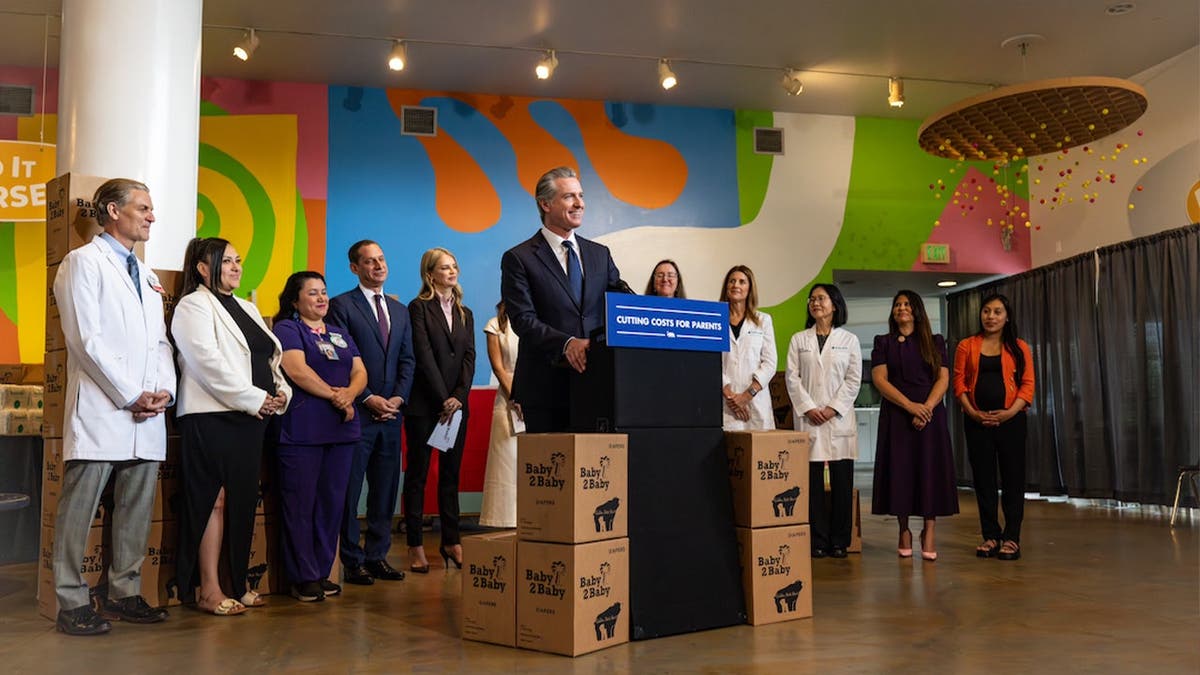
During the program’s first year, it will be offered at about 65 to 75 hospitals that handle about a quarter of births in the state and largely serve low-income patients, Newsom’s office said. (Governor Gavin Newsom)
The announcement comes two years after Tennessee and Delaware became the first U.S. states to offer free diapers to families enrolled in their Medicaid programs, which provide healthcare to low-income families.
CLICK HERE TO DOWNLOAD THE FOX NEWS APP
Tennessee families can go to pharmacies to pick up 100 diapers per month for children under two. The Delaware program, which began as a pilot before the state extended it in 2024, provides individuals with up to 80 diapers and up to one pack of baby wipes per week in the first 12 weeks.
Fox News Digital’s Michael Dorgan contributed to this report.
gavin newsom, baby deals, childrens health, parents, california
INTERNACIONAL
Nahuel Gallo contó por primera vez detalles sobre los 448 días de cautiverio: “Pensé en quitarme la vida”
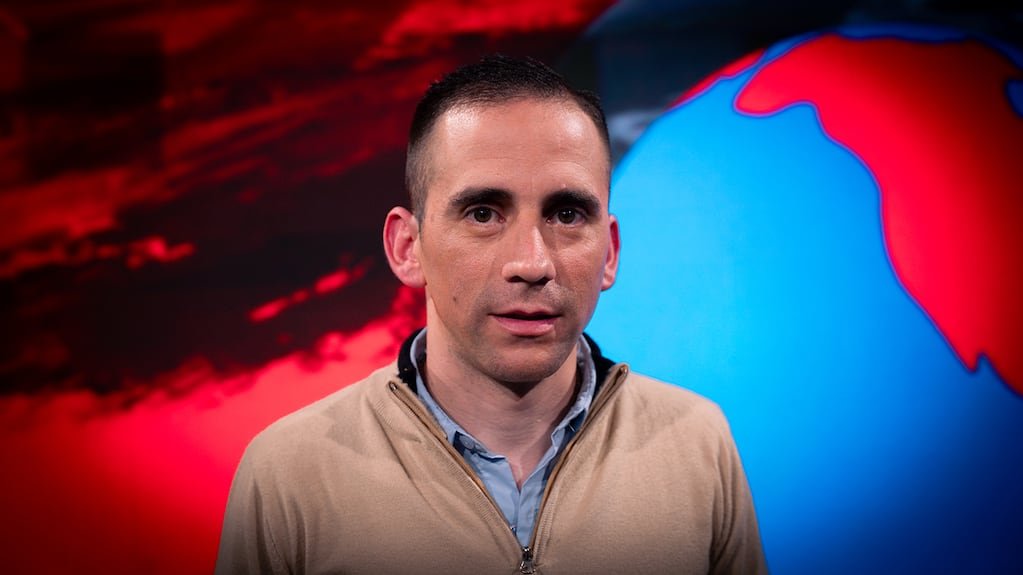
El 8 de diciembre de 2024, Nahuel Gallo tenía previsto cruzar la frontera entre Colombia y Venezuela. Todo parecía en orden, hasta que un agente de la Dirección General de Contrainteligencia Militar (DGCIM) descubrió que era gendarme. “Ahí ya me trataban diferente. Me esposaron los pies, me esposaron las manos», contó en una entrevista exclusiva de TN Internacional que será transmitida este sábado a las 14:00.
Cuatro días después, su nombre empezó a circular en los medios argentinos con la noticia de que había sido detenido por el chavismo. Lo que ocurrió en ese cruce fronterizo, en sus propias palabras, fue una trampa que arrancó con una búsqueda en su celular.
Después de ese tenso intercambio con los agentes de la DGCIM, el gendarme argentino permaneció 448 días en cautiverio en Venezuela, sin la posibilidad de comunicarse con su familia. Ahora, Gallo cuenta su historia por primera vez.
El viaje y la frontera
Según contó en diálogo con la periodista Carolina Amoroso, Gallo salió de la Argentina el 6 de diciembre. Voló de Chile a Bogotá, luego a Cúcuta y desde allí cruzó, vía terrestre, hacia Venezuela. Cuando llegó a Migraciones, alrededor de las 8 de la mañana del 8 de diciembre, le dijeron que antes de sellarle el pasaporte debía pasar por una entrevista.
“Cuando vino el agente a entrevistarme, yo no sabía quién era. No sabía si era el SEBIN (Servicio Bolivariano de Inteligencia), la Policía, no entendía la diferencia entre una fuerza y la otra. Estaban de civil. Tenían arma, pero no tenían placa identificatoria”, relató.
El gendarme argentino habló en exclusiva con TN Internacional. (Foto: captura de TN.)
Él mostró toda la documentación reglamentaria para ingresar. “Tenía dólares en efectivo, pero no le dio mucha importancia. Lo que le importaba era ver mi celular”, agregó.
Gallo no tenía fotos uniformado. “No soy de sacar muchas fotos, ni posando con las armas, nada. Tenía fotos del bebé, de las carreras, paisajes”, aseguró.
Pero el agente no se detuvo en las fotos. “Entró a WhatsApp. Le pregunté qué hacía y me dijo que quería ver si hablaba mal de su presidente. Puso ‘Chávez’, no salió nada. Puso ‘Maduro’ y ese fue el detonante”.
En ese chat con su esposa, María Alexandra Gómez, había una conversación donde hablaban de la realidad del país. En ese momento, el intercambio con el agente se tensó aun más. “Me dijo que yo hablaba mal de su presidente, que quién era yo para decir eso. Le dije que era una conversación vieja, que no tenía nada que ver, que era una conversación privada con mi mujer”. Cuando Gallo salió un momento, los policías que estaban afuera también lo minimizaron: “Me dijeron ‘todo el mundo habla mal de Maduro’. Pero el agente no lo tomó igual”.
En esa primera instancia, Gallo no reveló que era integrante de la Gendarmería Nacional. “Dije que era aduanero, que trabajaba en la Aduana en el área de Seguridad. Nunca dije que era gendarme”.
Leé también: Nahuel Gallo denunció en la Justicia las torturas que sufrió en Venezuela: “Me duele volver a esos momentos”
El integrante de las fuerzas venezolanas revisó con más profundidad el celular y encontraron una foto que lo delataba. “Ahí ya me trataban diferente. Me esposaron los pies, me esposaron las manos. Y también se enojaron porque les había mentido, porque no era aduanero sino personal de una fuerza”. Su delito, aparentemente, fue enviar un mensaje en el que mencionó a Maduro. “Acá en Venezuela nadie habla mal del presidente porque si no la pasa mal”, le dijeron.
Antes de ese momento, ya lo habían golpeado. “Estaban enojados por lo de Maduro. Entonces me taparon la cabeza por primera vez. Yo decía, ¿por qué me tapan la cabeza?”.
“Lo había pensado”
Los 448 días de cautiverio tuvieron momentos oscuros, pero el más terrible fue el instante en el que lo detuvieron. “Para mí lo peor es diciembre. No saber qué iba a pasar conmigo, no saber de María, de mi bebé. Los golpes que te pegan por ser gendarme o por ser argentino. Estar 24 horas los siete días en la celda… uno piensa muchas cosas”, aseguró.
Y luego, confesó: “Siempre me preguntan si quise quitarme la vida. Y la respuesta es que lo había pensado”.
Nahuel Gallo, Venezuela, Argentina, Nicolás Maduro

Patricia Bullrich encabezó una recorrida de La Libertad Avanza por Lugano y ya se mueve como candidata

El impensado apoyo de Berni a Milei por sostener a Adorni en medio de la investigación judicial: «Me saco el sombrero»

Deuda pública en Centroamérica: fuerte exposición a mercados internacionales y contrastes en el manejo local

Hizo su debut profesional con 16 años y tardó 15 segundos en marcar su primer gol: “El chico de la película”

Ensayos de rebelión en la granja libertaria

El caso Adorni desanima a la tropa digital de Milei y profundiza el desconcierto en el sector de Santiago Caputo

“Terminaste imponiendo un corralito”: Milei y Caputo cruzaron a Cavallo por pedir la eliminación del cepo cambiario

Patricia Bullrich le pidió a Manuel Adorni que presente su declaración jurada: «No puede quedar la sensación de que somos iguales a los que venimos a correr»

Marcela Pagano cruzó a Milei por acusarla de “mentirosa compulsiva”: “Confundió rating con grandeza”

Javier Milei adelantó que Manuel Adorni presentará su declaración jurada, tras la presión de Bullrich

 POLITICA2 días ago
Patricia Bullrich le pidió a Manuel Adorni que presente su declaración jurada: «No puede quedar la sensación de que somos iguales a los que venimos a correr»
- POLITICA2 días ago
Marcela Pagano cruzó a Milei por acusarla de “mentirosa compulsiva”: “Confundió rating con grandeza”
- POLITICA2 días ago
Javier Milei adelantó que Manuel Adorni presentará su declaración jurada, tras la presión de Bullrich