INTERNACIONAL
Bipartisan lawmakers want to strip Big Tech’s legal immunity that can shield social media companies

NEWYou can now listen to Fox News articles!
It was the mid-1990s. And the world was online.
No doomscrolling for hours through Instagram and X.
But people were plowing through GeoCities. There were Hotbot searches – before the days of Google and AI. There was even Ask Jeeves, long before Grok.
The U.S. Capitol building is shown in Washington, D.C. A Romanian man admitted to participating in a series of «swatting» calls that targeted members of Congress, as well as other government officials. (Heather Diehl/Getty Images)
Congress was on the precipice of adopting a landmark telecommunications law which would dictate the digital landscape for decades.
When signing the Telecommunications Act of 1996 into law, former President Clinton declared how the measure would plow «a superhighway to serve both the private sector and the public interest.»
RAND PAUL SAYS PERSONAL EXPERIENCE WITH YOUTUBE AND GOOGLE CHANGED HIS MIND ABOUT PLATFORM LIABILITY
Yup. Back then, some still referred to the internet as «The Information Superhighway.»
The 1990s were heady. Full of optimism and possibility. The. U.S. won the Cold War. The economy boomed and was «new.» The internet linked the world.
But there was a serious debate about free speech. Who should regulate what was online? Should the Federal Communications Commission (FCC) address what was proper to post, the same way it oversaw the TV and radio airwaves?
In the early ‘90s, the National Security Agency (NSA) used a cryptographic backdoor to intercept phone calls called the «clipper chip.» That raised questions about government surveillance. Would that carry over to what the government «watched» when people posted content online?

A U.S. National Security Agency logo is displayed on a smartphone screen with stock market percentages in the background in this photo illustration on Jan. 30, 2024, in Poland. (Omar Marques/SOPA Images/LightRocket/Getty Images)
Congress ultimately decided to give the internet a lot of leeway – in the interest of free speech. Telecommunications firms persuaded lawmakers to grant them a legal shelter. «Carriers» weren’t responsible if «customers» posted questionable or offensive material.
«We said that the FCC would not regulate either the content or the character of the internet,» said then- Rep. Chris Cox (R-Calif.) during a 1995 floor debate. «We can’t have the government in the interest of uniformity coming up with standards to regulate this industry.»
Cox was a key player behind shaping policy in that 1996 telecommunications law. So was then-Rep. and now Sen. Ron Wyden (D-Ore.).
«The internet is the shining star of the information age,» proclaimed Wyden in 1996.
RULING AGAINST META AND GOOGLE COULD SET THE STAGE FOR CHANGES IN HANDLING HATE CONTENT
But the Oregon Democrat fretted about some of the filth which was already permeating the internet in its earliest renditions.
«My wife and I have seen our kids find their way into these chat rooms which make their middle age parents cringe,» said Wyden.
But like Cox, Wyden feared that «censorship could really spoil much of its promise.»
So they fought to keep some government regulation out of the telecommunications law. And they inoculated internet providers with something called «Section 230» of that law. Section 230 shielded telecom firms with immunity from lawsuits and criminal charges based on what customers posted on their forums.
Rep. Jay Obernolte (R-Calif.) described the logic behind Section 230 and the role of service providers:
«If you, as a public service, put up a billboard in a hall and someone puts something on the billboard that says, ‘Congressman Obernolte beats his wife,’ the owner of the billboard is not responsible for the content of that message,» said the California Republican.
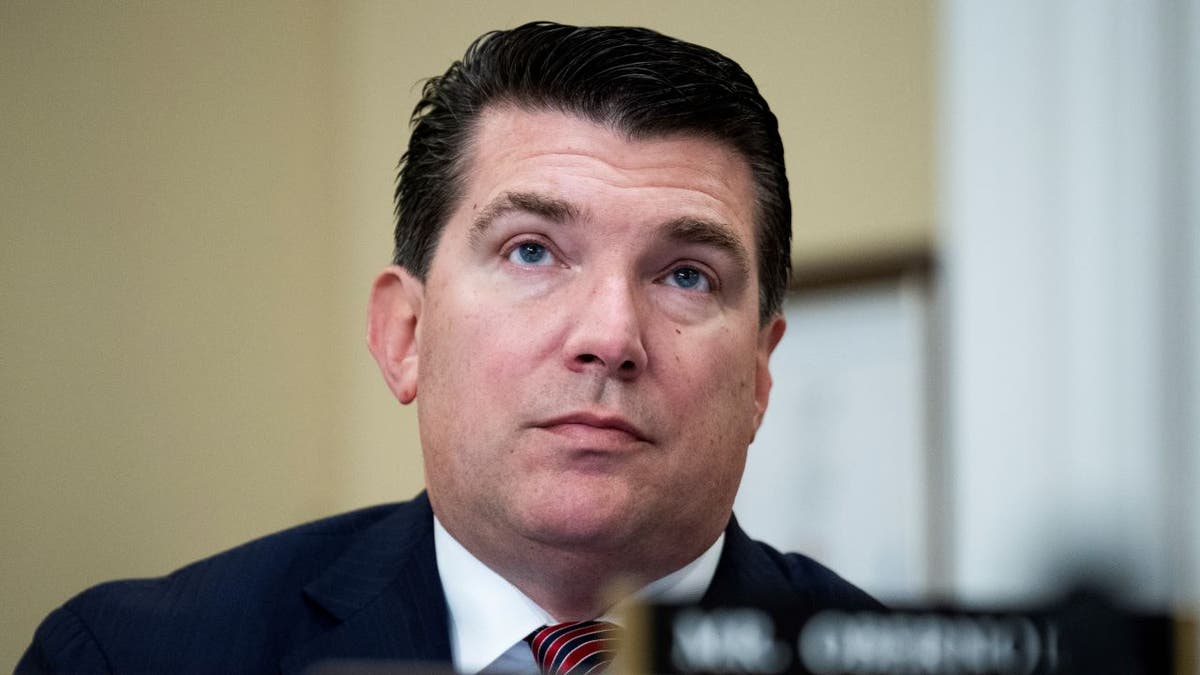
Rep. Jay Obernolte, R-Calif., attends a House Natural Resources Subcommittee on National Parks, Forests, and Public Lands hearing on the 9/11 Memorial and Museum Act and other legislation in the Longworth Building on Dec. 7, 2021. (Tom Williams/CQ-Roll Call, Inc/Getty Images)
But lots of people and entities post all sorts of things on today’s worldwide «billboard.» That’s why some lawmakers want to fundamentally alter social media as we know it by paring back Section 230.
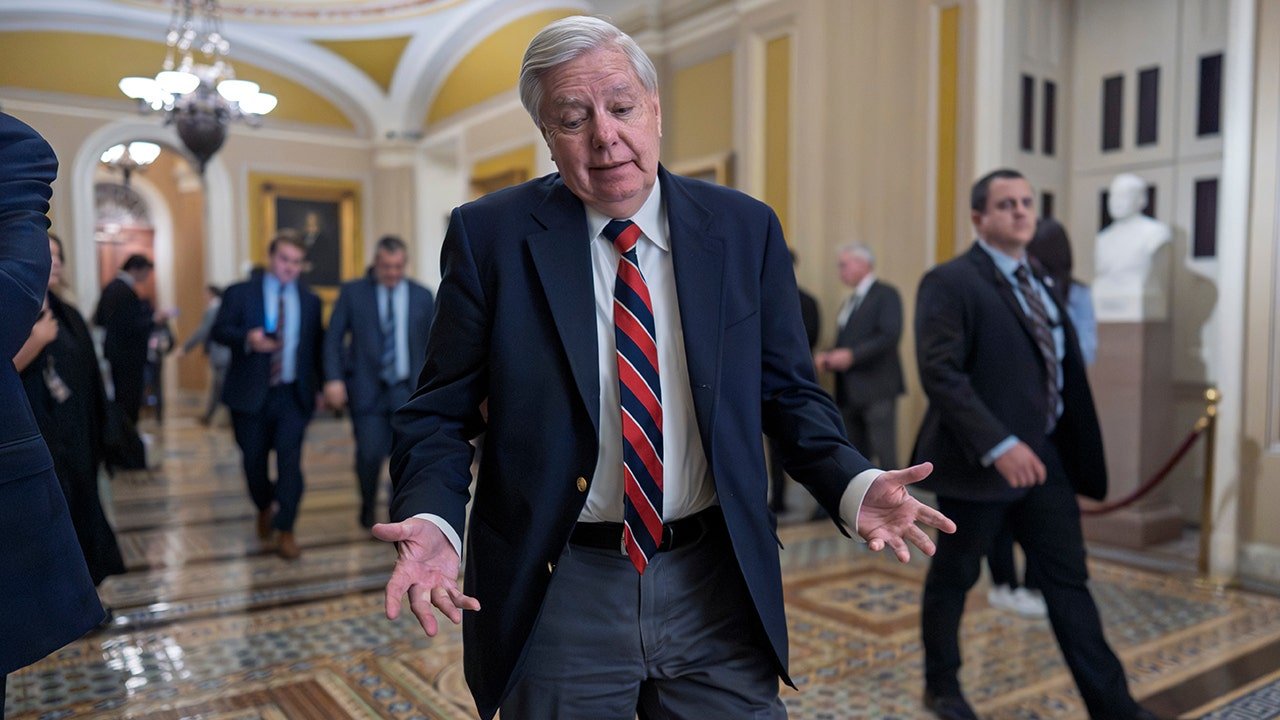
«Section 230 is absolute liability protection, immunity for the largest social media companies in the world. It’s driving people to suicide. It is ruining our society,» said Sen. Lindsey Graham (R-S.C.), one of the most ardent advocates for changing the law. «If you buy a bad car, you can sue. Every product you buy, the company has to stand behind it. This is the only area of the law I know where the largest companies in the world have absolute legal immunity.»
Graham went as far to suggest that what is available online – and how people use social media – is «as dangerous as drinking.»
WHY META AND GOOGLE ARE LOSING COURT BATTLES FOR DAMAGING KIDS BY TRYING TO GET THEM ADDICTED
«It’s putting profits over people,» chimed in Sen. Richard Blumenthal (D-Conn.). «(Social media) should not have this absolute shield when it is destroying the lives of young people by driving toxic content at them through its algorithms.»
Bipartisan lawmakers are boiling about what social media firms allow users to post without legal consequences – even though Congress is partially responsible for creating this problem three decades ago.
«As long as these companies believe they’re immune from liability, they’re going to tell all of us to go to hell,» said Graham.
UNDER OATH, META’S ZUCKERBERG SHOWED WHY BIG TECH CAN’T POLICE ITSELF
Some lawmakers want to strip legal immunity from Big Tech for what winds up on their platforms.
«What we ought to do is start by allowing victims of child porn and other child abuse material and sexual abuse material to sue these companies,» said Sen. Josh Hawley (R-Mo.)
Lawmakers believed that enhanced opportunities for voices and speech would enable the internet to flourish. They argued that the free market would create a rich environment online. So they sidelined their instincts to overregulate.
«Government is going to get out of the way and let parents and individuals control it rather than government doing that job for us,» said Cox in 1995.
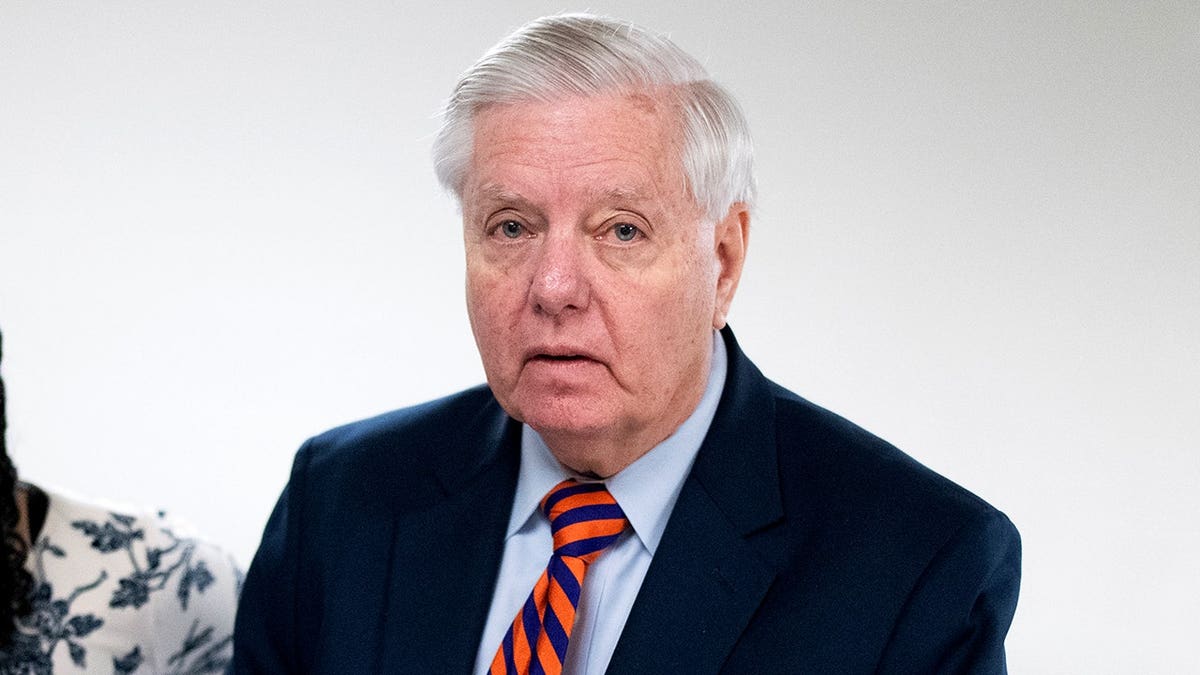
Sen. Lindsey Graham, R-S.C., talks with reporters in the U.S. Capitol during votes on Tuesday, March 10, 2026. (Tom Williams/CQ-Roll Call, Inc via Getty Images)
But lofty hopes for a lush «marketplace of ideas» online are dashed by some of the digital slop – and addictive nature of «phones» today.
«You talk to people and they’re scared to death of social media. They’re scared to death of AI,» said
Sen. Rick Scott (R-Fla.).
That’s why lawmakers demand changes to Section 230.
One lawmaker says free speech safeguards are crucial for the people deciding what users see online. But not the technology behind it. Today, the technology makes many of those decisions about what we see and hear on our phones.
«If you just have an algorithm spewing all this information..» sighed Rep. Ro Khanna (D-Calif.). «The First Amendment doesn’t protect an algorithm.»
In 1996, Ron Wyden told C-SPAN during an interview that «censorship could really spoil much of (the internet’s) promise.»
And in 2026, Wyden is still leery of infringing on free speech through regulation. He says the hands-off approach helped the development of Wikipedia and the social media platform Bluesky. A more aggressive posture could stifle development.
«To get rid of (Section) 230, you’re going to have to roll over me,» said Wyden this year.
CLICK HERE TO DOWNLOAD THE FOX NEWS APP
In 2026, people are struggling to harness the technology. Trying to ween themselves off addiction to phones. Figuring out ways to keep kids from phones in order to build reading and vocabulary skills.
The digital optimism of the mid-1990s is gone. And those who were there are nostalgic for the sound of an old, staticky modem and the delightful proclamation that «you’ve got mail.»
first amendment, big tech backlash, technology, fcc, regulation, politics












INTERNACIONAL
Un fósil del tamaño de un ratón hallado en Mongolia podría cambiar lo que se cree sobre el origen de los mamíferos
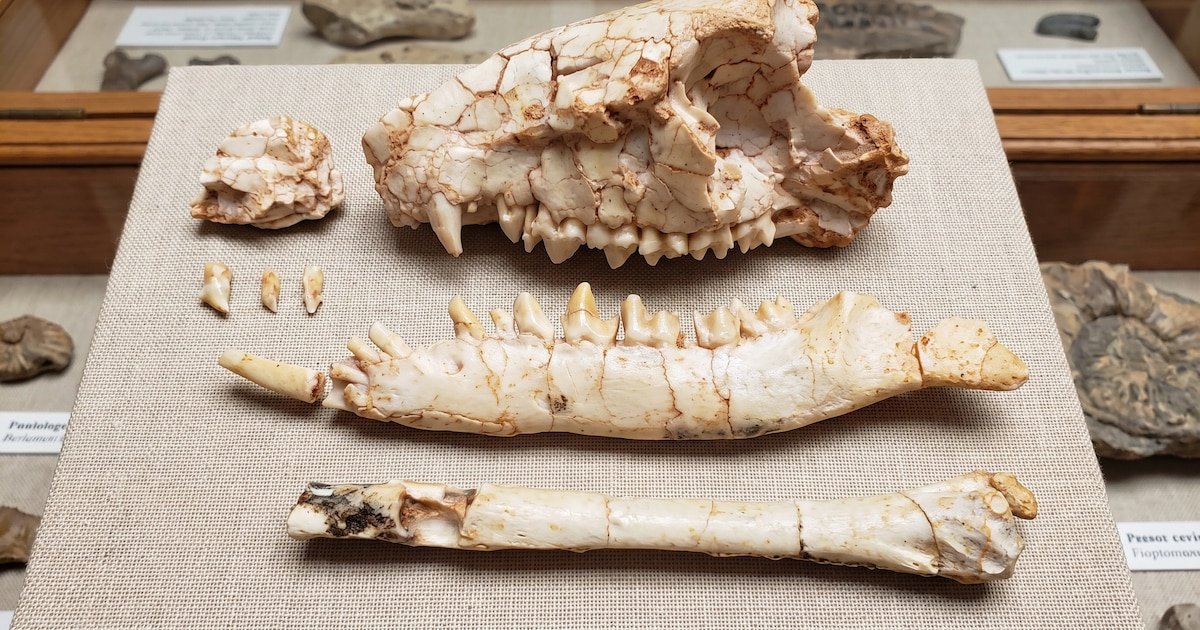
Un fósil hallado en el desierto del Gobi oriental de Mongolia y descrito en Nature identificó a Tamirkhan balcarceli y cambió una idea aceptada durante décadas sobre la evolución de este grupo de vertebrados. El hallazgo mostró que los llamados “Conejos del Cretácico” no pertenecían al linaje de los mamíferos placentarios, sino a los zalambdalestoideos, un grupo distinto de formas tempranas.
Según Phys.org, el espécimen apareció en 2004 durante una expedición patrocinada por el American Museum of Natural History, y su estudio reunió a científicos de esa institución, Stony Brook University, la University of Arizona y Arcadia University.
Andres Giallombardo, autor principal del estudio, dijo a Phys.org que el hallazgo demuestra por qué el trabajo de campo sigue siendo indispensable para reconstruir la historia de la vida. También lo definió como el momento más emocionante de su carrera, porque se trató de una especie nueva conservada de forma tan completa que además resolvió un problema científico de larga data.

Tamirkhan balcarceli, hallado en el Gobi oriental de Mongolia, medía entre 15 y 18 centímetros de la cabeza a la cola. Tenía patas traseras alargadas que le daban un aspecto parecido al de un conejo, una comparación informal que los paleontólogos han usado para referirse a estos animales.
El fósil conservó dientes bajos y redondeados, característicos de los zheléstidos, y también incisivos largos de crecimiento continuo. Sumó además varios rasgos del cráneo propios de los zalambdalestoideos, un grupo de pequeños mamíferos insectívoros parecidos a musarañas.
Shawn Zack, paleontólogo de la University of Arizona, afirmó a Phys.org que las patas traseras y los tobillos de Tamirkhan corresponden de forma inequívoca a los zalambdalestoideos. A partir de ese conjunto anatómico, los autores concluyeron que los zheléstidos no eran mamíferos placentarios ni especialmente parecidos a ellos.

Los zheléstidos se conocían desde hacía casi 40 años por dientes aislados y restos fragmentarios. Esas piezas, más especializadas para comer plantas que los dientes afilados de muchos mamíferos del Cretácico, llevaron a proponer que formaban un grupo desconocido.
Durante años se discutió si eran ejemplos de mamíferos placentarios del Cretácico o una línea separada que había adquirido rasgos parecidos por evolución independiente. La hipótesis de placentarios en ese período contaba con apoyo de modelos de reloj molecular, pero el nuevo fósil aportó pruebas en sentido contrario.
Paul Velazco, biólogo comparativo de Arcadia University, señaló a Phys.org que los modelos moleculares construidos a partir de animales vivos pueden anticipar el pasado, mientras los fósiles permiten comprobar esas predicciones.
Maureen O’Leary, paleontóloga de Stony Brook University e investigadora asociada del museo, subrayó en el mismo medio que un diente sigue siendo un fósil muy informativo, aunque no siempre alcanza para reconstruir al animal entero.

El espécimen también reforzó el valor científico del Gobi, uno de los pocos lugares donde se preservan zheléstidos junto con yacimientos de Kazajistán, Kirguistán y Uzbekistán.
Michael Novacek, curador de la División de Paleontología del museo, dijo a Phys.org que esa región es una de las escasas zonas donde aparecen con regularidad mamíferos del Cretácico tan completos.
Las conclusiones evolutivas del estudio también se apoyaron en MorphoBank, una plataforma filogenética publicada por primera vez en 2013. Esa base de datos se amplió durante más de una década con un número creciente de especies fósiles y sirvió como marco para analizar relaciones entre mamíferos tempranos.
El caso de Tamirkhan dejó una advertencia metodológica. Un diente puede orientar una clasificación, pero no basta por sí solo para fijar el retrato completo de un animal extinguido.
fósil,cráneo,mandíbula,paleontología,museo,exhibición
NEWYou can now listen to Fox News articles!
FIRST ON FOX: As the White House touts «collapsing» violent crime rates in the U.S., the Department of Homeland Security is pointing to the deportation of violent criminal illegal immigrants as the «common sense» reason.
A new analysis by the Council on Criminal Justice (CCJ) released this month reported that homicides will «likely» reach a «new historic low» in the U.S. as most crime rates continue to decline mid-year. CCJ reported that homicides in a sample group of large U.S. cities are down 18% from the previous year, which is on pace for the lowest level since 1900. Additionally, carjackings are down 47%; motor vehicle thefts are down 20%; robberies are down 17% and residential burglaries are down 13%.
The White House touted the report as evidencing «extraordinary progress» in «delivering on one of President Trump’s core promises to restore law and order.»
Assistant DHS Secretary Lauren Bis told Fox News Digital, «It is common sense. When you remove criminals from the country, crime rates fall.»
ICE LODGES DETAINER FOR ILLEGAL IMMIGRANT ACCUSED OF TRYING TO DISARM VIRGINIA POLICE OFFICER
President Donald Trump announces the Freedom Haulers initiative on West Executive Avenue in Washington, D.C., on July 30, 2026. The program will allow military veterans to get expedited commercial driver’s licenses for trucking careers. The nation faces a shortage of truckers after licenses were stripped from immigrants who failed English language tests. (Andrew Harnik/Getty Images)
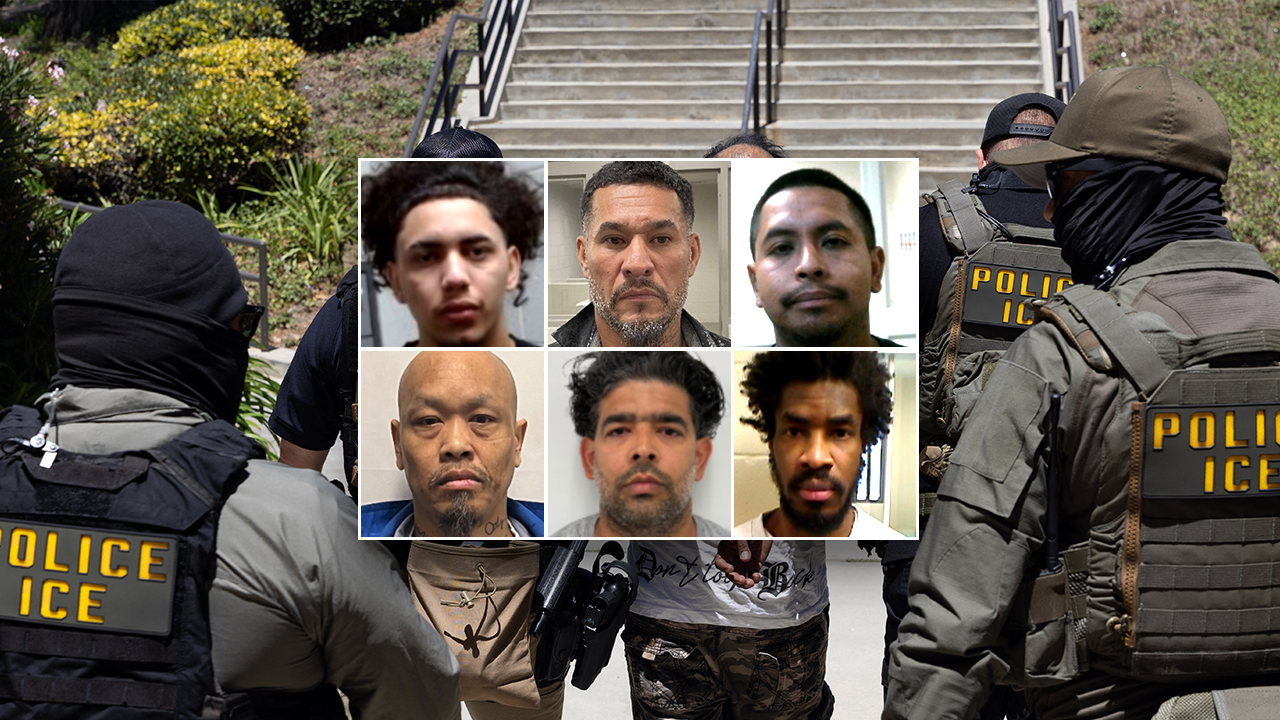
The agency shared exclusively with Fox News Digital some of the «worst of the worst» criminal illegal immigrants who have been deported just in the last few weeks. Recent deportees include foreign nationals convicted of homicide, drug trafficking, aggravated assault, carjacking and other crimes, in addition to multiple with illegal re-entries into the country.
Among those deported was a member of the foreign terrorist organization Tren de Aragua, a Honduran national named Jared Adonay Cruz-Rivera, according to DHS. He was deported on July 18 following a previous conviction for robbery and an arrest on charges of drug possession.
DHS said that one deportee, Olegario Ramirez, a Mexican national and Paisas gang member, has a criminal history including convictions for homicide and illegal re-entry into the U.S. He was deported on July 27.
Another Mexican national deported the same day was Bulmaro Rendon-Ramos, a Surenos gang member, who had convictions for robbery, burglary and four counts of driving under the influence of liquor.
ICE ARRESTS ILLEGAL IMMIGRANT ILLINOIS TEACHER LINKED TO TREN DE ARAGUA MASS SHOOTING

Mugshots, left to right from top: Jared Adonay Cruz-Rivera, Olegario Ramirez, Bulmaro Rendon-Ramos, Nammoun Khampanya, Omar Loaces Gonzalez, Marc James Guerrier Pinard. (Blake Fagan / AFP via Getty Images; DHS)
Nammoun Khampanya, a Crips gang member from Laos, was deported on July 28 following convictions for cocaine possession, possession of a weapon, obstructing police and fraud.
A Cuban national, Omar Loaces Gonzalez, was deported on July 17. His criminal history includes convictions for vehicle theft and wire fraud.
Additionally, Haitian national Marc James Guerrier Pinard was deported on July 16 following his convictions for three counts of armed carjacking and an arrest on charges of burglary.
NEW YORK TIMES TORCHED FOR ‘FALSE’ REPORTING ON ICE INVESTIGATIONS, OUTLET FIRES BACK
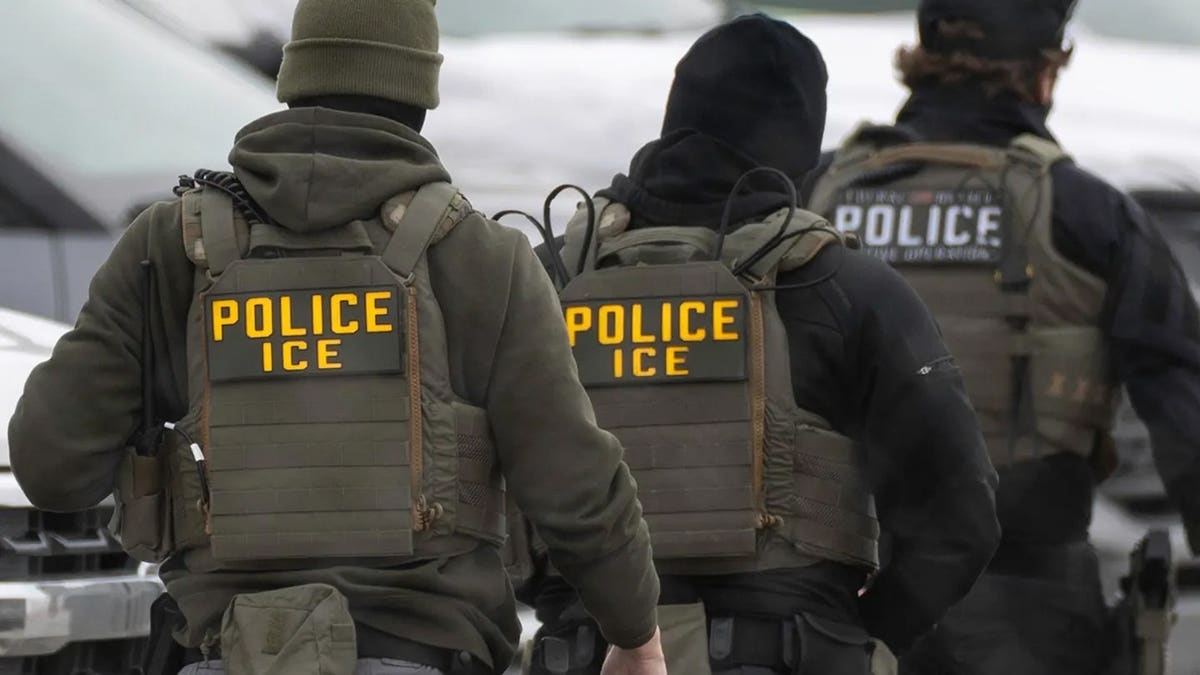
Federal agents are seen walking in uniform. A report from The New York Times said the Trump administration has lost or abandoned hundreds of cases in which it accused anti-ICE protesters and migrants of assaulting federal immigration agents. (John Moore/Getty Images)
Commenting on the deportations, Bis told Fox News Digital that «President Trump promised to make America safe again, and he has done just that.»
«Crime has fallen to record lows under the Trump administration, including murders on pace to drop to the lowest level in 126 years. It’s no surprise that this drop in crime coincides with deportations of dangerous criminal illegal aliens,» she said.
deportation, illegal immigrants, immigration, enforcement, homeland security, donald trump, migrant crime
INTERNACIONAL
Crisis migratoria en España: dudas y un opaco trasfondo político detrás del aluvión de marroquíes en Ceuta



Un fósil del tamaño de un ratón hallado en Mongolia podría cambiar lo que se cree sobre el origen de los mamíferos

Salvaje crimen en Mendoza: un chico de 15 años fue asesinado por vecinos con un machete, cuchillos y una bomba molotov

Julián Domínguez, exministro de Agricultura: “La reforma de la Ley de Tierras pone en riesgo la soberanía nacional”

Thiago Medina respondió a la denuncia por abuso sexual de su prima: “Niego de manera categórica los hechos”

Dos argentinos en semifinales en San Marino y Bonn: Díaz Acosta quedó a un triunfo del Top 100 y Federico Gómez continúa su remontada

El subsecretario de Deportes renunció por sus diferencias con Daniel Scioli

La pelea con Lula y el verdadero desafío que enfrenta Milei

Cómo manejar en el hielo y la nieve: técnicas y precauciones para usar el auto en la montaña en vacaciones de invierno

El BCRA cortó la racha de compra y en el mercado vuelan rumores de maniobras para frenar al dólar

World-famous Catholic shrine torched, ‘Devil in a skirt’ scrawled on Virgin Mary statue

 INTERNACIONAL3 días ago
World-famous Catholic shrine torched, ‘Devil in a skirt’ scrawled on Virgin Mary statue
- ECONOMIA3 días ago
El Banco Central no compró dólares este martes y rompió una racha de 135 días consecutivos en los que había sumado reservas
- ECONOMIA3 días ago
FMI pidió acelerar reformas y dejó en claro que no hay margen para bajar retenciones