Connect with us

INTERNACIONAL

Colapsa el turismo en Cuba, principal fuente de ingreso del régimen castrista

Published

on


Rutas aéreas suspendidas, hoteles cerrados y cifras de visitantes en caída libre: Cuba tiene en estado de coma al turismo de la isla, un sector económico crucial para el país -y para el régimen castrista-, que ya atravesaba serias dificultades.

La agonía en la que entró la isla golpeó de lleno en la única joya que podía exhibir hasta ahora: entre enero y marzo hubo 48% menos de turistas que en el mismo período del año pasado

Advertisement

El régimen cubano, un actor clave en este ámbito con el control de hoteles, agencias, marinas y transporte, se cita a partir de este jueves con las principales empresas del ramo en la feria del sector FITCuba mientras culpa al bloqueo petrolero de Estados Unidos.

La propia feria, el mayor evento de la industria turística en Cuba, se vio afectada por la falta de combustible: recortó fechas y llevado el tramo para profesionales al campo virtual.

Los organizadores prepararon una plataforma con puestos virtuales para las empresas con posibilidad de interactuar y un sistema de videoconferencias para poder mantener reuniones privadas. Una evidencia de la crisis.

Advertisement

Ante la incertidumbre geopolítica y el derrumbe del mercado internacional, el foco del sector está puesto en el turismo nacional como único revulsivo para la locomotora económica de la isla. «No es una opción, es una necesidad», dijo a la agencia EFE un importante cargo de esta industria que prefiere guardar el anonimato.

Ante la caída, el régimen castrista lanzó paquetes que incluyen transporte, bajado notablemente ciertas tarifas y promovido ofertas para cubanos residentes en el exterior, pero difícilmente pueden compensar la fuerte pérdida de viajeros internacionales.

Entre enero y marzo el número de turistas extranjeros cayó hasta los 298.057, un 48% menos que en el mismo periodo del año anterior, que ya había sido el peor de los últimos ejercicios, según la Oficina Nacional de Estadística e Información (ONEI).

Advertisement

El primer trimestre, que coincide casi completamente con la temporada alta en la isla, se vio amargado desde el principio, cuando la intervención militar estadounidense del 3 de enero en Caracas significó para Cuba el fin del suministro de petróleo venezolano.

Tres semanas más tarde llegaría la amenaza de Washington de imponer aranceles a quien suministrase crudo a la isla. Desde entonces sólo llegó a Cuba un petrolero del exterior, con apenas un 12% de las necesidades mensuales del país.

Las cuatro aerolíneas canadienses que volaban a la isla y las dos que viajaban desde Rusia (responsables en 2025 de transportar en torno a la mitad del turismo internacional a Cuba) suspendieron sus vuelos en febrero de manera temporal pero indefinida por falta de combustible para aviones.

Advertisement

Varias aerolíneas más cancelaron luego sus vuelos, como la turca Turkish Airlines y la francesa Air France; o reducido sus frecuencias, como es el caso de la española Iberia (que dejará la ruta en suspenso en junio) y la panameña Copa, entre otras.

Ante la falta de demanda y la escasez de combustible, el régimen cubano anunció una reorganización de los hoteles por motivos de eficiencia energética que en la práctica es el cierre temporal de la gran mayoría de las instalaciones de la isla, incluidas muchas en Varadero, el principal polo de turismo de sol y playa.

La crisis petrolera llegó a Cuba en un momento en el que el sector turístico se encontraba ya en un estado de gran debilidad por la combinación de múltiples factores internos y externos, según los expertos.

Advertisement

Perjudicaban su desempeño la grave crisis del país, que lastra el servicio y la experiencia; la decisión de EE.UU. de no conceder la visa rápida ESTA a quienes hayan visitado previamente Cuba; el cierre de rutas aéreas; y la competencia de destinos equiparables como Cancún (México) y Punta Cana (República Dominicana).

En 2025 se registraron las peores cifras turísticas desde 2002, sin contar los años de pandemia de covid. Cuba recibió el año pasado poco más de 1,8 millones de visitantes extranjeros, frente al objetivo gubernamental de 2,6 millones. La ocupación hotelera quedó en el 18,9%, según la ONEI.

En comparación, en 2024 habían sido 2,2 millones de visitantes extranjeros y en 2023, unos 2,4 millones, con lo que ya el volumen de turistas se situaba en torno a la mitad de los máximos del sector, registrados en 2018 (4,6 millones) y 2019 (4,2 millones), en los años del deshielo diplomático con Washington.

Advertisement

Desde que Cuba se abrió al turismo en los años 90, esta industria fue una de los principales rubros de la economía y de las principales cajas para el castrismo, tanto por los ingresos y el empleo que genera como por el aporte en divisas, esencial para un país que importa el 80% de lo que consume.

Advertisement

INTERNACIONAL

‘Open sore’: Families face agonizing wait as 9/11 mastermind’s trial pushed nearly 27 years after attacks

Published

on


NEWYou can now listen to Fox News articles!

Twenty-five years after nearly 3,000 people were killed on Sept. 11, families waiting to see the accused plotters brought to justice are confronting another extraordinary possibility: They may still never see a verdict.

Advertisement

A military judge has scheduled alleged 9/11 mastermind Khalid Sheikh Mohammed and three co-defendants to go on trial June 5, 2028, nearly 27 years after the attacks. But the date remains tentative, and a recent ruling barring prosecutors from using statements Mohammed made to FBI agents has underscored the legal obstacles still threatening the case.

«It’s like an open sore, and that sore gets even more hurtful when we get to anniversaries,» John Ryan, former chief of department with the Port Authority Police who spent nine months working on the recovery operation at Ground Zero, told Fox News Digital.

JUDGE THROWS OUT KHALID SHEIKH MOHAMMED’S 9/11 CONFESSION IN ALREADY LONG WAIT FOR TRIAL

Advertisement

Ryan is among the victims’ families and first responders who have watched the prosecution drag through years of litigation over evidence obtained after the defendants were subjected to torture in CIA custody, a collapsed plea agreement, repeated changes in military judges and a mountain of unresolved pretrial motions.

«It’s like an open sore, and that sore gets even more hurtful when we get to anniversaries,» John Ryan, former chief of department with the Port Authority Police who spent nine months working on the recovery operation at Ground Zero, told Fox News Digital. (Fox News Digital)

«Here we are 25 years later, and I’m still involved in this aspect of that here because we still have not convicted or taken to justice the five people that are being held at Guantánamo Bay,» Ryan, who later became a commander with the FBI-led Joint Terrorism Task Force, said. «The planners, KSM and the others that are in custody, are awaiting trial.»

Advertisement

Mohammed and three other defendants have been held by the U.S. for years without facing trial for their alleged roles in the plot that killed nearly 3,000 people. A fifth defendant, Ramzi bin al-Shibh, is being handled separately after being found mentally incompetent to stand trial.

Khalid Sheikh Mohammed, accused mastermind of the Sept. 11 terror attacks, in a file photo

Khalid Sheikh Mohammed, the accused mastermind of the Sept. 11, 2001, terror attacks, has been held at Guantánamo Bay since 2003. (AP)

A military judge recently barred prosecutors from using statements Mohammed made to FBI agents in 2007, finding that the statements were tainted by the coercive treatment he had experienced in U.S. custody. The government chose not to appeal the ruling, saying an appeal could jeopardize the June 5, 2028, trial date.

The judge set the trial 18 months after the prosecution’s proposed January 2027 start to give the defense and government time to work through a long list of unresolved legal disputes. He is the fifth military judge to oversee the case since the defendants were arraigned in 2012.

Advertisement

For families who lost loved ones on Sept. 11, the years of delay have become another part of the trauma.

I LOST MY WIFE ON 9/11; PLEASE LET THIS 25TH ANNIVERSARY BELONG TO THE FAMILIES

Sean Passananti, whose father was killed on the 100th floor of the North Tower, said the passage of time has made the case feel increasingly detached from the scale of the crime.

Advertisement

«It feels really like a twilight zone and unbelievable that we have to fight for justice for the worst terrorist attack that ever happened on our soil,» Passananti said. «It doesn’t feel real. It’s unexplainable.»

SON WHO LOST FATHER IN 9/11 ATTACKS SHARES POWERFUL LESSONS 25 YEARS LATER: ‘I’M STILL HERE’

Passananti said he has attended the memorial ceremony every year but one since the attacks.

Advertisement

«I wish I wasn’t here, obviously, but I feel like I have to be here every year,» he said.

Sean Passananti

Sean Passananti, whose father was killed on the 100th floor of the North Tower, said the passage of time has made the case feel increasingly detached from the scale of the crime. (Fox News Digital)

Dennis McGinley, whose older brother Danny worked on the 89th floor of the South Tower, said the delays have kept his family from closing a painful chapter.

«President Trump has a unique, historic opportunity here to be a hero, be our champion, finally close the books on this American nightmare, which is now becoming an American embarrassment,» McGinley said.

Advertisement

McGinley described the families’ grief as an injury that keeps reopening.

«It is like the wound never healed, and every year we get salt poured back into that wound,» he said.

Ryan said he lost 37 police officers he had worked with during his career, along with civilian colleagues at the Port Authority. After the recovery operation, he moved into counterterrorism work. He said he expected the 9/11 case to remain part of his professional life, but not for this long.

Advertisement

«The fact is that they’ve all admitted their involvement. It’s not a question of guilt. It’s just a question of the process and the fact that the process has taken 25 years,» Ryan said.

The case has been moving through the military commissions since the defendants were arraigned in 2012. By then, Mohammed had already spent nearly a decade in U.S. custody.

He was captured in Pakistan in 2003 and held for years at CIA «black sites,» where he was subjected to harsh interrogation techniques, including repeated waterboarding.

Advertisement

Mohammed and the other defendants were transferred to Guantánamo in 2006.

The treatment of the defendants in CIA custody has become one of the central obstacles in the prosecution.

Defense attorneys have argued that statements obtained after the defendants were tortured cannot be considered voluntary. Prosecutors have argued that later statements made to FBI agents by a «clean team» should be admissible.

Advertisement

The recent ruling excluding Mohammed’s 2007 FBI statements dealt another blow to that effort and highlighted a problem that has followed the case for years: whether prosecutors can separate evidence gathered later from the coercive interrogations that came before it.

The case has also been disrupted by changes in judges, the coronavirus pandemic and a failed plea agreement.

In 2024, the defendants reached plea agreements that would have required them to plead guilty in exchange for life sentences rather than face the death penalty. Then-Defense Secretary Lloyd Austin withdrew the agreements, prompting another round of litigation. A federal appeals court later blocked the defendants from entering guilty pleas under the withdrawn deals.

Advertisement

Years earlier, the Obama administration had tried another route.

In 2009, the administration announced that Mohammed and four other defendants would be prosecuted in federal court in Manhattan. That plan was abandoned after fierce opposition from New York officials and lawmakers who raised security and logistical concerns.

The case was moved back to the military commissions at Guantánamo, where it has remained.

Advertisement

The delays have left the accused plotters aging at a detention complex that has cost taxpayers hundreds of millions of dollars while producing no verdict in the 9/11 case.

Dennis McGinley

Dennis McGinley, whose older brother Danny worked on the 89th floor of the South Tower, said the delays have kept his family from closing a painful chapter. (Fox News Digital)

The criminal prosecution is separate from the civil lawsuit that 9/11 families have brought against Saudi Arabia, although the two proceedings intersect in the families’ broader search for a full accounting of the attacks.

The military commission is focused on whether Mohammed and the other defendants planned and carried out the terrorist operation. The civil case examines whether Saudi government employees or agents helped two hijackers establish themselves in the United States.

Advertisement

A trial in the civil case could force testimony and the release of evidence that families believe may clarify how the plot was supported before the attacks. The Saudi-related allegations, however, are not the charges at issue in the Guantánamo prosecution.

Ryan said the passage of time means the case now spans two generations of victims’ families: people who were children when the attacks happened and are now adults and older parents and grandparents who fear they may never live to see a verdict.

If the current schedule holds, the proceedings would begin June 5, 2028, almost 27 years after the attacks and 16 years after the defendants were arraigned.

Advertisement

«Our justice system isn’t designed to work that late,» Ryan said. «It’s designed to produce justice in a fair time. And the emphasis needs to be on the victims as opposed to the five enemy combatants.»

september 11, military trials, guantanamo, politics, in court, terrorism

Advertisement
Continue Reading

INTERNACIONAL

AOC, Mamdani interaction caught on cam at 9/11 memorial sparks online fury

Published

on


NEWYou can now listen to Fox News articles!

New York City Mayor Zohran Mamdani and Rep. Alexandria Ocasio-Cortez, D-N.Y., were lambasted Friday for appearing to share a moment of levity at the 9/11 Memorial in lower Manhattan during the solemn reading-of-the-names of victims.

Advertisement

Mamdani was already facing criticism from some 9/11 victims’ families over his attendance when a television feed showing the reading of victims’ names cut from a young man sobbing at the memorial to the mayor and congresswoman appearing to grin and laugh as they spoke, though their conversation was inaudible.

«Disgraceful,» said Steve Guest, a former top staffer for Sen. Ted Cruz, R-Texas. «AOC and Mamdani look happy.»

MAMDANI HEADS TO 9/11 MEMORIAL DESPITE 110,000-SIGNATURE PUSH FROM VICTIMS’ FAMILIES TO STAY AWAY

Advertisement

Rep. Alexandria Ocasio-Cortez, D-N.Y., left, and Mayor Zohran Mamdani, right, laugh during the reading of names at the 9/11 Memorial. (Screenshot/Fox News)

«They always show us who they really are,» another critic on X said.

Others critics were more direct. 

Advertisement

«Why the f— are these two laughing?» Meghan McCain, daughter of the late Sen. John McCain, R-Ariz., asked. 

FAMILIES OF 9/11 VICTIMS’ MESSAGE TO MAMDANI: ‘PLEASE DO NOT COME’ TO MEMORIAL CEREMONY

New York City mayoral candidate Zohran Mamdani

Democratic nominee for mayor Zohran Mamdani speaks to reporters outside the Federal Jacob Javits Building in New York Aug. 7, 2025. (Lev Radin/Pacific Press/LightRocket via Getty Images)

However, a top member of former Mayor Rudolph Giuliani’s entourage claimed that the video was taken out of context.

Advertisement

«The videos of [them] laughing are not true. I was standing next to them the whole time,» tweeted Michael Ragusa, reportedly head of Giuliani’s security as of 2025, according to WPIX-11.

«The camera just caught her greeting him hello. Multiple other politicians were laughing and joking behind me. Republicans and Democrats.»

The Pittsburgh Republican Committee suggested on X that the sight was one of the reasons 9/11 victims families didn’t want the mayor there, while former Los Angeles mayoral candidate Spencer Pratt also sounded off.

Advertisement

ZOHRAN MAMDANI URGED TO SKIP NEW YORK CITY’S 9/11 MEMORIAL: ‘VILE ANTISEMITE’

«While normal Americans cry, commie Mamdani and AOC laugh it up at the 9/11 memorial in New York,» Pratt said.

«They hate you. They hate your country. They enjoy your misery. We cannot allow these people to have power.»

Advertisement

A New York City lawmaker added that she was outraged to see Mamdani and Ocasio-Cortez acting that way.

«After thousands of families of victims of terror beg Mamdani not to show up, he stands there and laughs while families weep,» said Councilwoman Inna Vernikov, R-Brighton Beach. «This is NYC’s Mayor.»

RETIRED PORT AUTHORITY OFFICERS TELL MAMDANI, HOCHUL TO STAY AWAY FROM GROUND ZERO ON 9/11

Advertisement
New York City mayoral candidate Zohran Mamdani and U.S. Rep. Alexandria Ocasio-Cortez

New York City mayoral candidate Zohran Mamdani, center, holds hands with Sen. Bernie Sanders, I-Vt., and Rep. Alexandria Ocasio-Cortez, D-N.Y., at the end of a campaign rally at Forest Hills Stadium in the Queens borough of New York City Oct. 26, 2025 (Angela Weiss/AFP via Getty Images)

Richard Sementa, better known as «Mr. Producer» for Mark Levin’s national radio show, tweeted, «Un-freaking believable.»

Juanita Broaddrick called Mamdani and AOC «two disgusting degenerates» on X.

Rep. Randy Fine, R-Fla., who continues to criticize democratic socialists and opponents of Israel, called the mayor «Jihad Mamdani» and said he and the congresswoman should not be anywhere near Ground Zero.

Advertisement

«They do not mourn this country, they mock it,» he tweeted. «Have some damn respect.»

«As the names of Americans murdered on September 11th are read aloud at Ground Zero, AOC and Mamdani are laughing and smiling together,» said Rep. Wesley Hunt, R-Texas.

«There is a time and a place for politics. This isn’t it. Ground Zero is sacred ground.»

Advertisement

«September 11 is not a photo op, it is not a networking event,» said Hunt.

Separately, Mamdani was seen at other points standing somberly between New Jersey Gov. Mikie Sherrill and New York first gentleman William Hochul Jr.

But critics continued pointing out what one called the «jarring split-screen» of the mayor joking around with Ocasio-Cortez a split-second after the mourner was seen sobbing over the shadow «fountain» at the footprint of the Twin Towers.

Advertisement

«What exactly is funny?» former Trump White House spokeswoman Abigail Jackson asked.

Former NYPD cop and Fox News contributor Paul Mauro tweeted what he envisioned the two discussing.

«Zo[hran]: You’re not buying into this ‘never again’ bull— are you? AOC: ‘No, not me,’ Hilarity ensues.»

Advertisement

SIGN UP TO GET THE POLITICS NEWSLETTER

It was not immediately clear what the two politicians were chatting about at that moment.

Fox News Digital reached out to Mamdani and Ocasio-Cortez for comment.

Advertisement

alexandria ocasio cortez, politics, new york city, zohran mamdani, new york, counter terrorism

Advertisement
Continue Reading

INTERNACIONAL

America built a fortress after 9/11. Then the threat started hiding in plain sight

Published

on


NEWYou can now listen to Fox News articles!

On the morning of Sept. 11, 2001, Javed Ali drove past the Pentagon on his way to work in northern Virginia.

Advertisement

Roughly half an hour later, American Airlines Flight 77 slammed into the building.

From his office in Falls Church, Ali could see smoke rising from the Pentagon. A year later, in a turn that captured how dramatically the country had changed, he was walking into the still-damaged building himself — now working in the Defense Intelligence Agency’s counterterrorism office.

TRUMP CONFIRMS PENTAGON PLANS FOR 25TH ANNIVERSARY OF 9/11 ATTACKS, DISPUTES REPORT ON GROUND ZERO ABSENCE

Advertisement

Thousands of brave Americans still dying from 9/11 toxic exposure effects decades later. (iStock)

«It was a very eerie and odd and surreal moment in my career,» Ali told Fox News Digital.

Ali’s career would eventually take him from the DIA to the newly created Department of Homeland Security and later the FBI, giving him a front-row seat to the enormous national security architecture America constructed after the deadliest foreign attack on U.S. soil.

Advertisement

Twenty-five years later, that architecture presents something of a paradox.

By one of its clearest measures, the post-9/11 system appears to have made another attack on the scale of 9/11 far harder. The United States has not suffered another terrorist attack remotely approaching the scale and complexity of 9/11, which killed 2,977 people. U.S. intelligence and military operations dismantled much of the al Qaeda network that planned it, while new agencies, surveillance authorities, watchlists and intelligence-sharing systems were designed to ensure that another group could not exploit the same seams in American defenses. The 2026 U.S. intelligence community assessment said counterterrorism operations have degraded al Qaeda and ISIS’s ability to quickly rebuild their leadership and plan large-scale attacks against the U.S. homeland.

But success against the threat of 2001 did not eliminate terrorism. It helped change it.

Advertisement

AMERICAN YOUTH RADICALIZED ONLINE, BUSTED IN SUSPECTED TERROR PLOTS AFTER HATING COUNTRY ON SOCIAL MEDIA

9/11 Museum

A boy points towards the center of the reflecting pool at the National September 11 Memorial Museum in New York on Sunday, Sept. 11, 2022. (Bonnie Cash/UPI/Bloomberg via Getty Images)

Today’s most difficult threats increasingly involve individuals radicalized online, small cells with little warning signature, foreign terrorist organizations seeking to inspire attacks from afar, and an expanding layer of cyber and state-sponsored threats capable of reaching deep inside the United States without hijacking an airplane.

The question 25 years after 9/11, therefore, is not simply whether Americans are safer.

Advertisement

They are safer from one kind of attack — while increasingly exposed to others.

AN AI CYBERATTACK COULD TURN OFF AMERICA’S LIGHTS BEFORE WASHINGTON EVEN UNDERSTANDS WHY

Pentagon building

Aerial view of the Pentagon building in Arlington, Va., on Wednesday, Oct. 22, 2025. (Bill Clark/CQ-Roll Call, Inc. via Getty Images)

Building a security state after 9/11

The scale of the American response was extraordinary.

Advertisement

Just over two months after the attacks, President George W. Bush signed legislation creating the Transportation Security Administration. TSA says its creation amounted to the largest civilian undertaking in U.S. government history at the time, with the federal government rapidly assuming responsibility for airport passenger and baggage screening.

The following year, Congress created the Department of Homeland Security, combining all or part of 22 federal agencies and offices. DHS began operating in March 2003 and today employs more than 260,000 people across missions ranging from border and aviation security to cybersecurity, intelligence and emergency response.

The changes went far beyond new agencies.

Advertisement
DHS

President George W. Bush discusses creating the Department of Homeland Security following 9/11. (Getty Images)

The 9/11 Commission found that the pre-attack breakdown was deeper than the familiar failure to «connect the dots.» Responsibility had been scattered across agencies, information was not consistently shared, and no single entity was empowered to integrate intelligence and drive joint action across the foreign-domestic divide. The commission concluded that «responsibility and accountability were diffuse.»

Washington spent the next two decades trying to close those gaps.

Brown University’s Costs of War project estimates that post-9/11 wars and related obligations have cost roughly $8 trillion. It estimates that more than $1.1 trillion has been spent on homeland security efforts to prevent and counterterrorism inside the United States since DHS was created.

Advertisement

Al Qaeda didn’t disappear overnight

Ali said it can be easy, with 25 years of hindsight, to forget how persistent the original threat remained.

Even after the United States invaded Afghanistan, killed or captured senior al Qaeda figures and put the organization under extraordinary pressure, the group continued attempting to find ways back into the homeland.

During Ali’s years at DHS, he said officials repeatedly confronted plots involving al Qaeda and its affiliates, including a 2006 plot originating in Britain to bomb transatlantic airliners traveling to North America.

Advertisement

The threat then evolved again.

Usama bin Laden was killed by U.S. forces in Pakistan in May 2011. But rather than marking the end of the era of jihadist terrorism, the following years produced a new and in some ways more difficult challenge.

ISIS grew out of al Qaeda in Iraq, expanded rapidly amid the wars in Iraq and Syria and declared a self-described caliphate in June 2014. At its height, the group controlled vast territory and millions of people in Iraq and Syria while encouraging or directing attacks far beyond its borders. The State Department reported that ISIS had emerged from al Qaeda in Iraq and expanded dramatically during 2013 and 2014.

Advertisement

For U.S. counterterrorism officials, Ali said, the center of gravity increasingly shifted from identifying trained operatives sent by an organized group to finding individuals who might be radicalizing inside Western countries.

Then came another shift: attacks by lone offenders across different ideologies, often with no direct operational relationship to an organization overseas.

«Mostly lone actors, lone offenders, not tied to groups overseas, not traveling overseas, and not being directed by people overseas,» said Ali, now an associate professor of practice at the University of Michigan’s Ford School of Public Policy.

Advertisement

DHS CHIEF ANNOUNCES CHANGES TO ITS SEAL TO REFLECT THAT DEPARTMENT IS ‘AT WAR EVERY SINGLE DAY’

U.S. Navy Seal member providing cover for teammates in a desert environment

A U.S. Navy SEAL provides cover for teammates advancing on a suspected al Qaeda and Taliban location during missions in Afghanistan supporting Operation Enduring Freedom. (Mai/Getty Images)

The terrorist organization became a phone screen

The transformation is now reflected in the government’s own threat assessments.

The 2026 Annual Threat Assessment from the Office of the Director of National Intelligence said setbacks to the ability of Islamist terrorist groups to conduct «large-scale complex attacks» have pushed them toward information operations and propaganda designed to inspire or enable people in or with access to Western countries.

Advertisement

The assessment said there were at least three Islamist terrorist attacks in the United States in 2025 and that law enforcement disrupted at least 15 U.S.-based Islamist terrorist plotters that year. Roughly half of those disrupted plotters had some online contact with Islamist terrorists or were inspired by foreign terrorist organizations, according to the assessment.

The vulnerability was demonstrated on New Year’s Day 2025, when Shamsud-Din Jabbar, a U.S. citizen from Texas, drove a pickup truck into a crowd on Bourbon Street in New Orleans, killing 14 people. The FBI described the attack as an act of terrorism and said Jabbar had become increasingly isolated before adopting extremist views.

In the days after that attack, the FBI said lone actors and small cells who radicalize online had posed the greatest terrorism threat to the homeland in recent years precisely because they can be so difficult to detect and disrupt.

Advertisement

That presents almost the inverse of the 9/11 problem.

The 9/11 plot required 19 hijackers, overseas leadership, financing, international travel, flight training and years of planning. The challenge for investigators was collecting pieces of information held across different agencies and assembling them quickly enough.

A lone actor may offer far fewer pieces to collect in the first place.

Advertisement

Ali said many recent attackers or alleged plotters had not previously come onto the radar of the FBI or local law enforcement, leaving authorities with the extraordinarily difficult task of identifying people who may not commit an obvious crime until they move toward violence.

«So yes, we are safer from a certain type of threat,» Ali said, «but again, we are not immune from terrorism, and other types of threats are much more difficult to identify or stop.»

KASH PATEL REVEALS THE CHILLING HOLIDAY TERROR PLOTS FBI FEDERAL AGENTS QUIETLY STOPPED

Advertisement
Al Shabab in Somalia

A handout released to Reuters by IntelCenter shows members of Somalia’s Islamist rebel group al Shabaab in Mogadishu Jan. 1. (IntelCenter Handout/Reuters)

A security system built for yesterday?

That changing threat has also fueled a broader debate over whether the institutions created after 9/11 became too large, too expensive or too focused on the dangers of the previous era.

Morgan Murphy, who served as press secretary to the secretary of Defense during the first Trump administration and later worked in the Trump White House, argues that Washington built too much bureaucracy around the 9/11 threat while other vulnerabilities grew.

«TSA agents still pat down grandma and gum up travel while Beijing wires our living rooms with cheap TVs and selfie sticks through the supply chain handed to them by Clinton, Bush, Obama and Biden,» Murphy said. «We spent two decades frisking American passengers while our adversaries plugged themselves into our homes and businesses.»

Advertisement

«The genius of America after Pearl Harbor was that we built to fight. After 9/11, we built to process,» Murphy told Fox News Digital, «Real security means sovereignty at home and lethality abroad — a sealed border, an untangled supply chain, and enemies who fear us.»

Theo Wold, who served as acting assistant attorney general in the Justice Department’s Office of Legal Policy and as deputy assistant to the president for domestic policy during the first Trump administration, offered a similar critique, arguing that post-9/11 Washington relied too heavily on large bureaucracies, expansive government authorities and wars in the Middle East.

«George W. Bush and the D.C. governing elite responded to 9/11 the way their politics demanded: create large, unwieldy bureaucracy, push for special legal authorities with limited oversight and activate ground wars in the Middle East,» Wold told Fox News Digital.

Advertisement

«Those wars didn’t make us safer, the legal authorities were wielded against Americans, and the bureaucracy is full of waste and has proven nearly unworkable,» he said.

Wold argued that the lesson from the past quarter-century should be a more narrowly targeted national-security model.

«Now we know better. Americans are safest when we are nimble and focus ruthlessly on targeting real enemies,» he said.

Advertisement

The next threat may not look like 9/11

 The challenge now extends beyond terrorism.

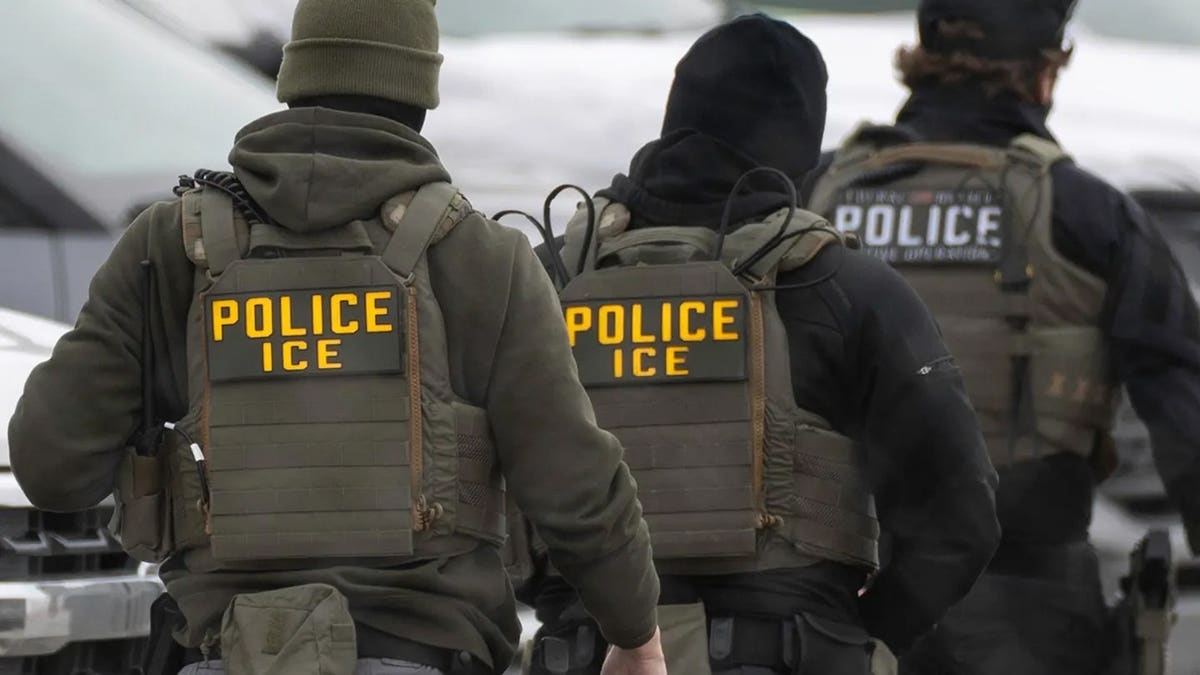
ICE arrests suspected Al Qaeda member released into U.S. by Biden admin.

ICE arrests a suspected al Qaeda member released into the U.S. by the Biden administration. (ICE)

The 2026 intelligence assessment warns that China, Russia, Iran, North Korea and non-state ransomware groups continue seeking access to U.S. government networks and private critical infrastructure for espionage, financial gain and possible future disruption. It also warns that artificial intelligence is accelerating cyber capabilities and that several state adversaries are developing missile systems capable of threatening the homeland.

The security landscape that began with al Qaeda operatives training to fly passenger jets has therefore expanded into something far less geographically defined: terrorist propaganda transmitted to an individual’s phone, malicious code inserted into a computer network, attacks on critical infrastructure and state adversaries capable of reaching Americans from thousands of miles away.

Advertisement

For Ali, however, the evolution of the threat should not lead Washington to conclude that the original threat has vanished.

One of the central lessons of the years before Sept. 11, he said, was that emerging terrorist organizations have to be confronted before they have the time and space to develop operational capability.

«When these terrorist threats start to emerge, whether it’s overseas or here, you have to put pressure on them before they gather momentum to carry out operations,» Ali said.

Advertisement

The danger, he argued, would be allowing counterterrorism to fall so far down Washington’s list of priorities that the country begins recreating the complacency that existed before 9/11.

«Terrorism as a tactic is probably never going to be defeated,» Ali said.

Twenty-five years after he watched smoke rise from the Pentagon, Ali’s answer to whether America is safer reflects the contradiction at the heart of the post-9/11 era.

Advertisement

The United States built a massive system to prevent the next 9/11.

It appears to have made another 9/11 far harder to execute.

NYC World Trade Center

Two flags flutter on a fence in front of Lower Manhattan and One World Trade Center at the Tear Drop 9/11 Memorial at sunset on June 13, 2026, in Bayonne, New Jersey. (Gary Hershorn/Getty Images)

The harder question now is whether that system can recognize the attack that doesn’t look anything like it.

Advertisement


september 11, counter terrorism, homeland security, fbi, national security, tunnel to towers steel across america

Continue Reading

Tendencias