INTERNACIONAL
Drago, el perro policía uruguayo que encontró 118 kilos de droga y se volvió clave en la lucha contra el narcotráfico

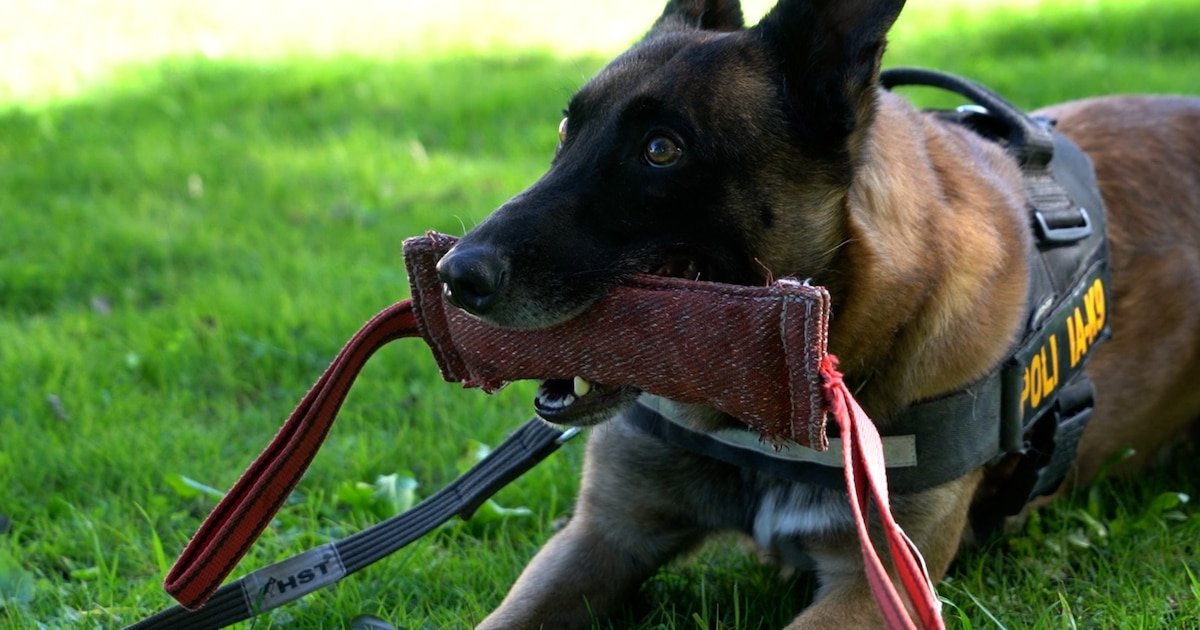
Drago, un pastor belga malinois, tiene apenas cuatro años y es integrante de la cuarta generación de perros detectores de la Dirección General de Represión al Tráfico Ilícito de Drogas en Uruguay. Su imagen fue difundida recientemente por el Ministerio del Interior del país, luego de que fuera clave para localizar un cargamento de unos 180 kilos de pasta base, que estaban ocultos en una camioneta que se dirigía a Paraguay.
Con 45 días de nacido, Drago comenzó a ser adiestrado y cumplió su fase preoperativa antes de cumplir el año y medio, de acuerdo a la información difundida por el Ministerio del Interior. El perro está adiestrado para la búsqueda de distintos tipos de sustancias.
El proceso de formación tuvo en su etapa inicial una “habituación”, que la que se lo expone a diferentes escenarios operativos, como controles de rutas, requisas en cárceles, allanamientos, inspecciones en terminales de pasajeros, aeropuertos y búsqueda de encomiendas.
¿Qué característica tienen que tener estos animales para ser parte? La principal es tener una “obsesión por el juego y el juguete”, explicó uno de los investigadores de la Policía uruguaya, que no fue identificado en la publicación para preservar su identidad. Además, debe tener un “temperamento adecuado, intensidad para búsqueda y resistencia física”, entre otras cualidades.
Drago tiene un entrenamiento continuo. Para enseñarle a detectar drogas, se utilizaron “pseudo sustancias sintéticas”, que simulan el olor a la original. Tienen el olor de sustancias como la marihuana, cocaína, pasta base y éxtasis.
Este aprendizaje fue el que le permitió al perro dar con esta cantidad de kilos de pasta base, que lo llevaron a ser un perro reconocido hasta en la televisión uruguaya.

El procedimiento se realizó en la ruta 1 y Camino General Escuela Basilio Múñoz, en la periferia de Montevideo. Durante una inspección a los vehículos, policías detectaron una anomalía en el piso de una camioneta y solicitaron que Drago interviniera.
Fue en ese momento que el perro detectó el olor característico de la droga y efectuó una “indicación pasiva”, según informó el Ministerio del Interior. ¿Qué fue lo que hizo? Se sentó en el lugar exacto donde se encontraba oculto el cargamento. El foco del olor estaba debajo del asiento del conductor.
Luego, los efectivos incautaron 111 ladrillos de pasta base de cocaína. Equivalen a 790.000 dosis, valuadas en aproximadamente un millón de dólares en el mercado local.

“Drago, ha tenido múltiples actuaciones positivas e incautaciones en lo que va de su servicio destacando su valentía y profesionalismo, convirtiéndose en una pieza clave en la lucha contra el narcotráfico”, destacó el Ministerio del Interior.
El encargado del K9 de narcóticos dio una entrevista a Puesta a Punto, de Canal 12, aunque de espaldas para no revelar la identidad, y contó que hay un “mito social” referido a que los perros son drogados cuando se los entrena.
“Eso no es así. Ellos se entrenan desde los 45 días de nacido, por aproximadamente un año, un año y medio, diariamente, y se asocia el olor de la sustancia a un juguete. O sea, cuando realiza la búsqueda lo que él recibe a cambio es el juguete. En realidad, él busca el juguete”. Contó.

Una de las características de esta raza es que los perros tienen una “obsesión por el juego”.
La mamá de Drago también fue integrante del plantel. El perro conformó una camada de 10 cachorros y él fue seleccionado. Ac
El perro vive en una residencia policial en el barrio Prado de Montevideo, junto a otros hermanos. Los guías los entrenan y los alimentan, y tienen servicio veterinario durante 24 horas. Duermen en caniles acondicionados.
corresponsal: Desde Montevideo








NEWYou can now listen to Fox News articles!
As smoke from Canadian wildfires continues to drift across parts of the United States, forestry experts say Canada could reduce the severity of some fires through more aggressive forest management.
The issue reached the White House Friday, with President Donald Trump accusing Canada of failing to properly manage its forests and threatening to factor the economic cost of the smoke into tariffs on Canadian imports.
«We are holding Canada responsible for the fact that they are not properly maintaining their Forests, and Brush therein, and the United States is being unnecessarily invaded by filthy, polluted, and unhealthy air,» Trump wrote on Truth Social. He said he planned to call Canadian Prime Minister Mark Carney and accused Canada of refusing to engage in «basic Forest Management and Debris Removal,» calling it «Willful Negligence.»
TRUMP SHOULD EXPAND HIS BORDER CRACKDOWN. TIMING IS PERFECT TO REIN IN CANADA AND MEXICO
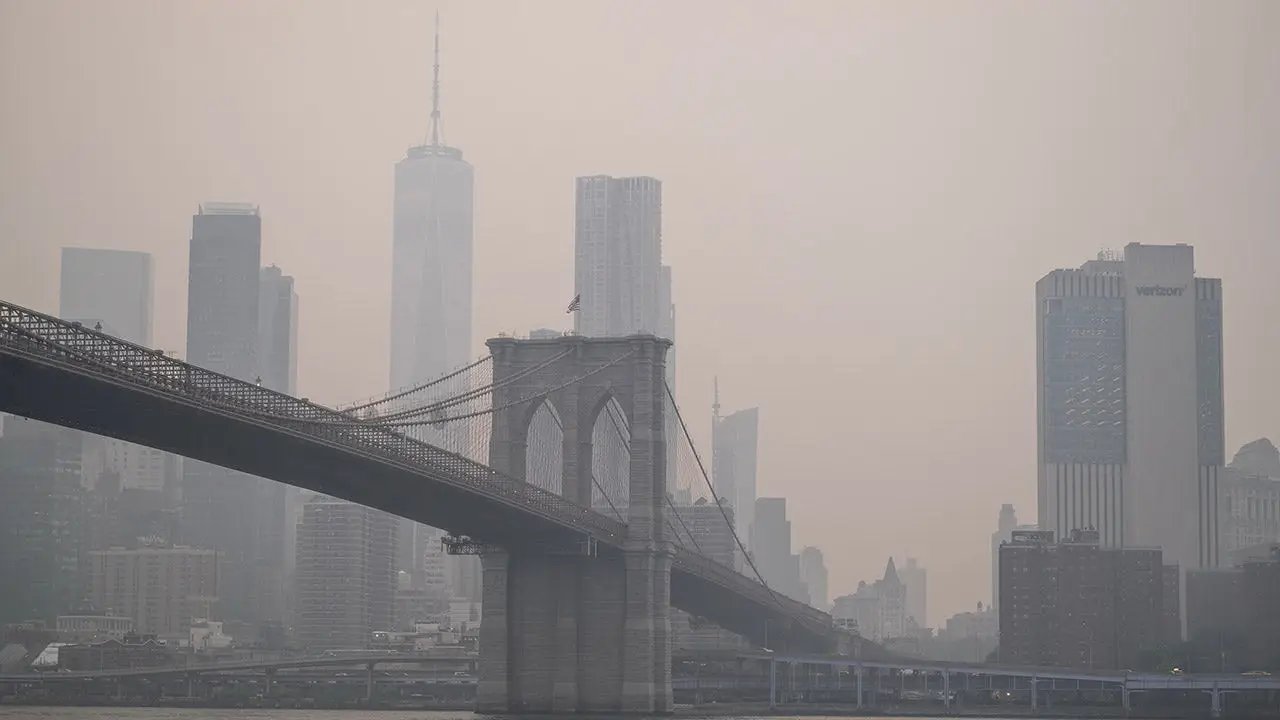
NEW YORK CITY, UNITED STATES – JULY 16: Smoke from massive wildfires in Canada engulfed the New York City skyline, reducing visibility and casting an orange haze over the New York City, United States on July 16, 2026. The smoky conditions reduced visibility across the skyline, while authorities continued monitoring air quality as the wildfire smoke spread across the northeastern United States. (Photo by Selcuk Acar/Anadolu via Getty Images) (Getty Images)
Andrew Hale, a Canadian fellow at Advancing American Freedom, argued that Canada’s wildfire policies have failed to prioritize forest management.
«Canada has a policy of not keeping reservoirs. They also will not cut firebreaks and will not thin their forests,» Hale told Fox News Digital. «This is the result of the undue influence of environmental groups who are firmly politically motivated and have divorced themselves from science and good stewardship. Canada and the rest of North America is suffering as a result,» he said.
Earlier this week, four Republican members of Michigan’s congressional delegation — Reps. Jack Bergman, John James, Lisa McClain and John Moolenaar — sent a letter to Carney saying residents in their state were once again experiencing unhealthy air because of smoke drifting south from Canadian wildfires.
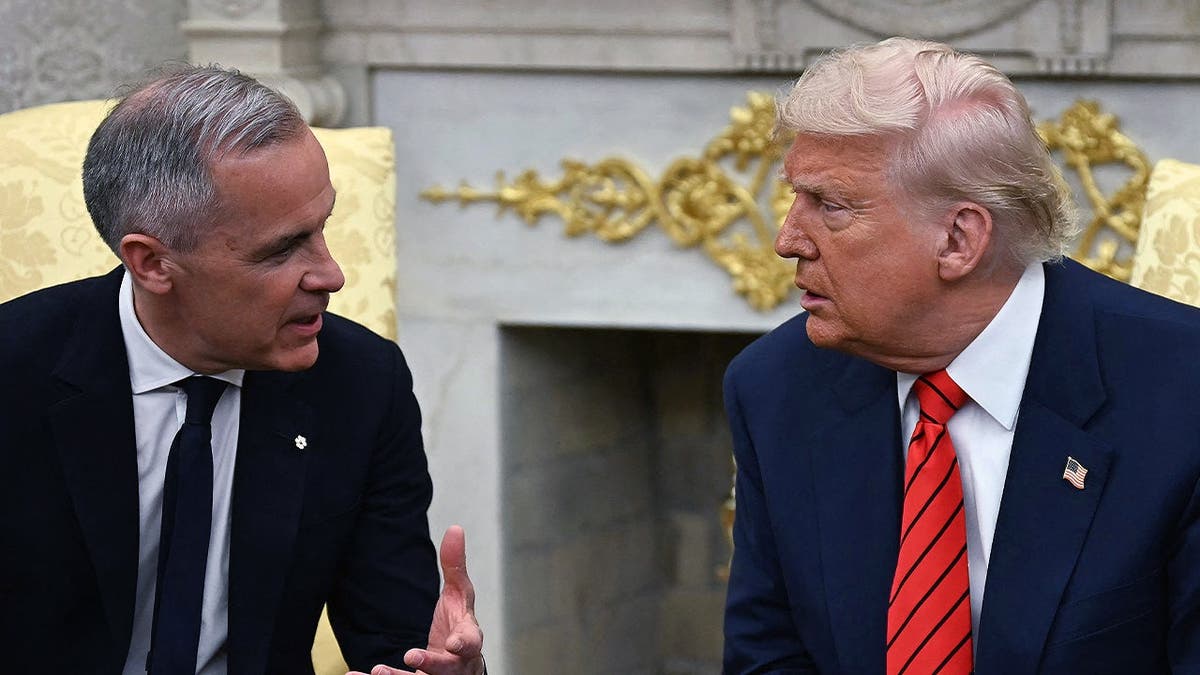
During a speech at the Toronto International Film Festival, Canadian Prime Minister Mark Carney hinted at President Donald Trump threatening Canadian sovereignty in recent months. (Jim Watson/Getty Images)
«We are done accepting apologies in place of action,» the lawmakers wrote, accusing Canada of underinvesting in forest thinning, fuel reduction and prescribed burns while calling for measurable plans to reduce future wildfire smoke crossing the border.
The criticism comes as Canada’s own Senate has reached a similar conclusion on one point: while it says climate change is making wildfire seasons longer and more severe, the country also needs to do substantially more to prepare its forests before fires ignite.
FOX WEATHER CORRESPONDENT BOB VAN DILLEN WEIGHS IN ON EFFECT OF CANADIAN WILDFIRES ON
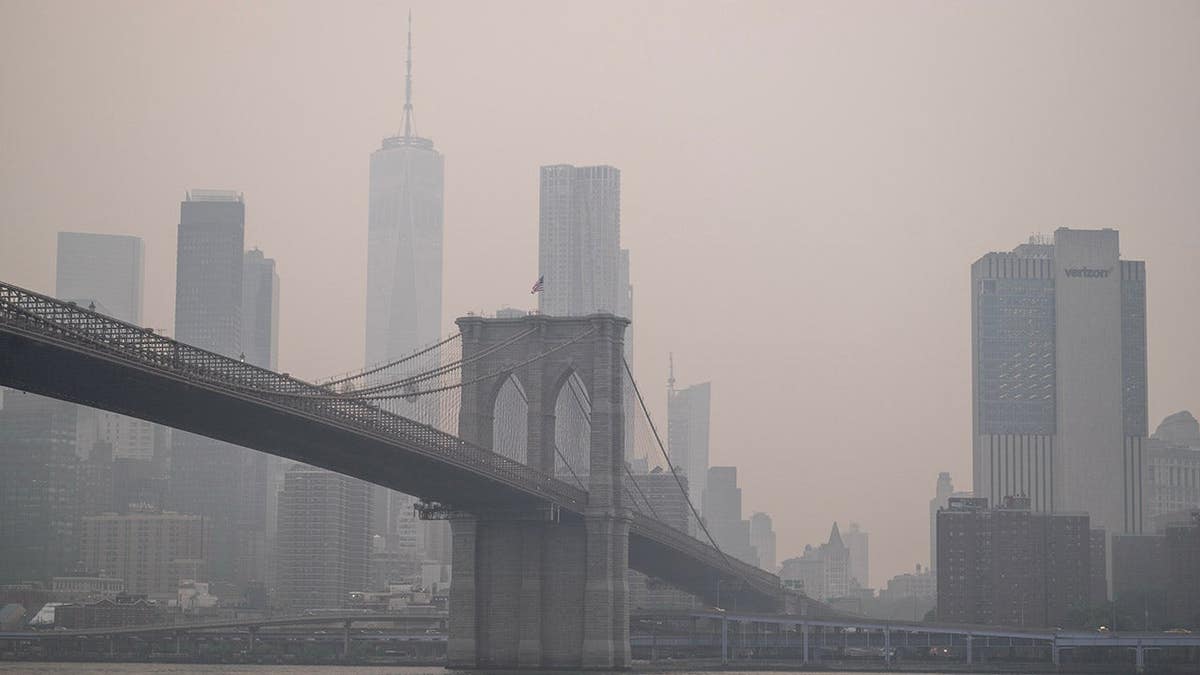
Smoke from wildfires in Canada shrouds the Manhattan skyline in Brooklyn, New York, on Thursday, July 16, 2026. (Victor J. Blue/Bloomberg via Getty Images)
The Senate Committee on Agriculture and Forestry released a report in June titled Canada on Fire: The Catastrophic and Escalating Effects of Wildfires on Lives and Communities after holding 17 meetings, hearing testimony from 79 witnesses and receiving 23 written briefs from scientists, government officials, Indigenous leaders and industry experts.
The committee concluded that Canada’s three most recent wildfire seasons demonstrated that climate change was accelerating fire behavior «beyond the capacity of existing systems.» At the same time, it found that prevention efforts have not kept pace with the growing threat.
Much of the report focuses on what experts call «fuel management» — reducing the amount of dry grass, dead trees, fallen branches and other vegetation that allows small fires to become large, destructive wildfires.
«Several witnesses agreed that prescribed fire is the most important risk-reduction tool for helping to manage or slow wildfire on the landscape and restoring ecological integrity,» the report said.
METS AND PHILLIES STARS SHOW CONCERNS ABOUT PLAYING IN UNHEALTHY AIR QUALITY: ‘NOT THE GREATEST IDEA’
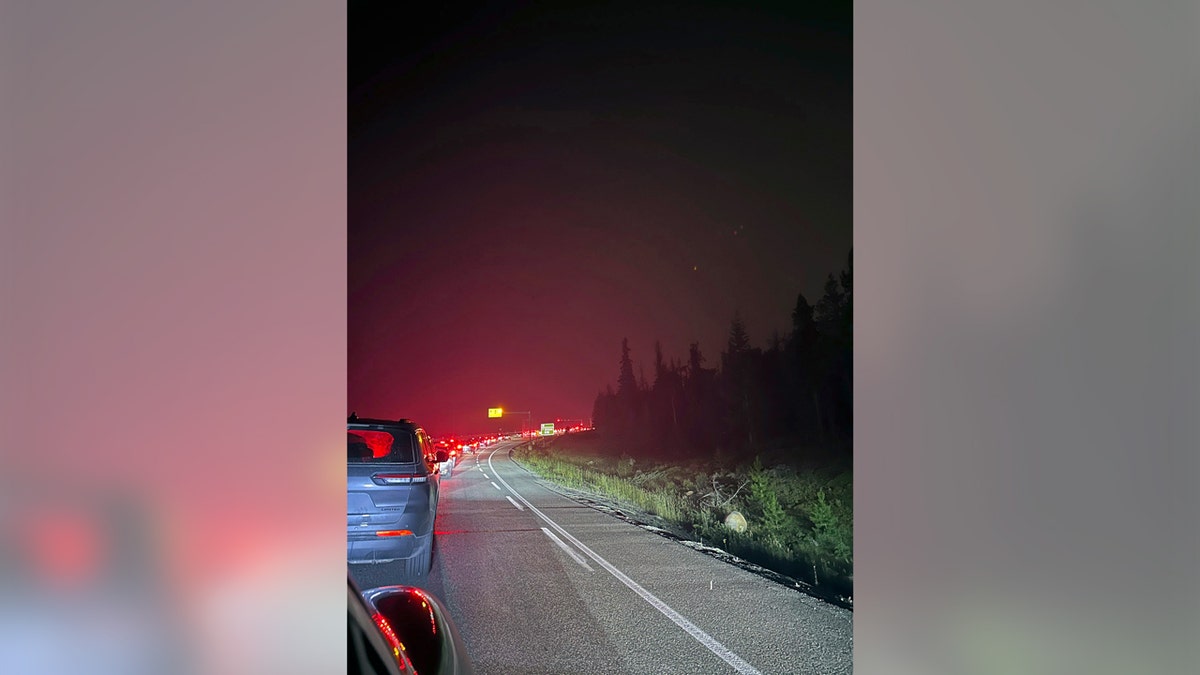
Cars sit in intense traffic as people evacuate because of wildfires early on July 23, 2024, in Jasper, Alberta. Multiple wildfires in Canada’s Jasper National Park have flared up, forcing all park visitors along with the 4,700 residents of Jasper to flee. (Carolyn Campbell/The Canadian Press via AP))
One witness, Paul Hessburg, a professor at the University of Washington’s School of Environmental and Forest Sciences, said that climate change is making wildfire conditions worse but does not eliminate the value of proactive forest management.
«The punchline is, with climate change, these conditions will intensify with less snowpack, more fires, bigger fires, hotter fires,» Hessburg told the committee. «The question is: Can we restore resilience? We can. We can bring back these elements and put the governors back into the landscape that historically regulated the flow of fire.»
Jason Hayes, a senior research fellow in energy and environmental policy at the Heritage Foundation, said the practical solution is to spend more time managing forests before fires begin rather than relying primarily on emergency response after they start.
«The best thing to do is get out, space and thin, do prescribed burns and recognize that these are renewable resources,» Hayes told Fox News Digital. «If we did that, then we would have much less intense wildfires.»
Hayes acknowledged that carrying out those recommendations across Canada would be far more difficult than simply identifying them. He said many fires burn in remote areas of northern Ontario and other parts of Canada that are difficult to reach because they are far from roads and population centers.
«You have to fly in, and it’s just difficult to do,» Hayes said.
CLICK HERE TO DOWNLOAD THE FOX NEWS APP
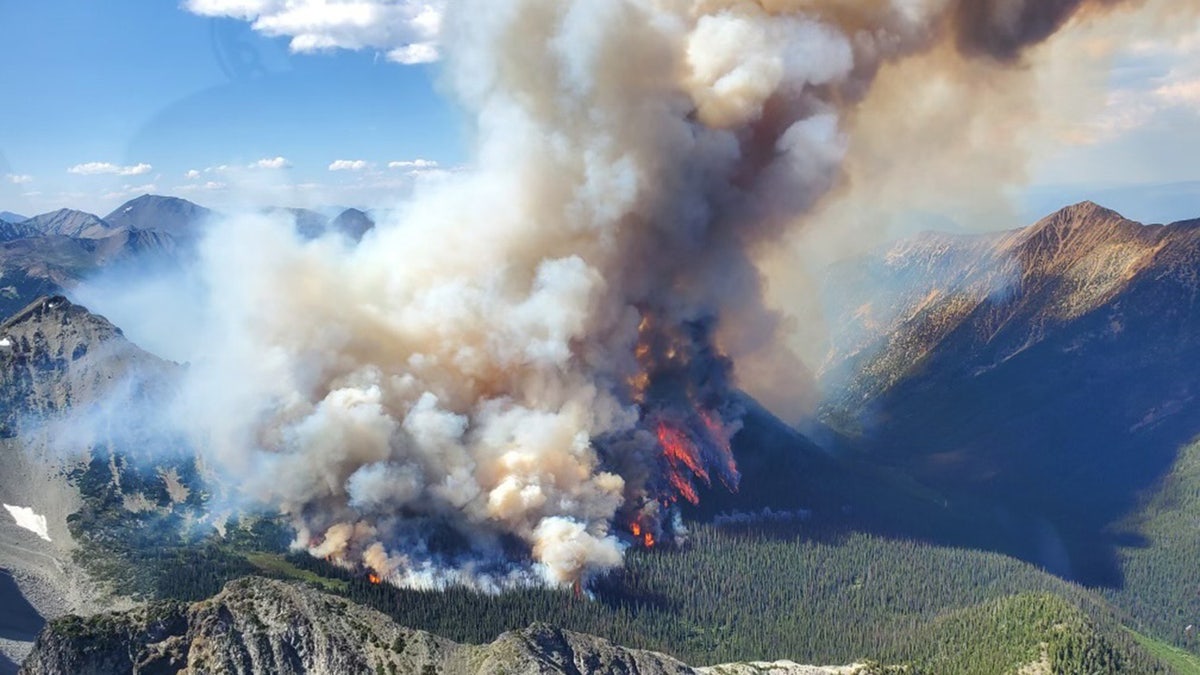
BRITISH COLUMBIA, CANADA – JULY 10: (—-EDITORIAL USE ONLY «MANDATORY CREDIT – BC WILDFIRE SERVICE» – NO MARKETING NO ADVERTISING CAMPAIGNS – DISTRIBUTED AS A SERVICE TO CLIENTS—-) An aerial view of wildfire of Tatkin Lake in British Columbia, Canada on July 10, 2023. (BC Wildfire Service/Anadolu Agency via Getty Images)
Witnesses to the Canadian Senate committee also warned that Canada faces practical challenges beyond forest management, including shortages of wildfire-management expertise and an aging fleet of firefighting aircraft. The report cited testimony that provincial fleets still include 22 older CL-215 aircraft and that at least 20 aircraft require immediate replacement.
Fox News Digital has reached out to the Office of Prime Minister Mark Carney but did not receive a comment in time for publication.
wildfire, environmental disasters, canada, mark carney, donald trump
INTERNACIONAL
Grave escalada de la guerra: mueren dos militares estadounidenses en ataques de Irán en Jordania


INTERNACIONAL
Fraud expert warns AI is helping criminals outpace the government: ‘Don’t have the right tools’

NEWYou can now listen to Fox News articles!
A fraud expert who testified before the House Oversight Committee Wednesday warned the federal government lacks the tools and policies needed to prevent criminals from using artificial intelligence against taxpayers.
«What’s happening right now is the fact that we simply don’t have the right tools to deal with fraud,» David Maimon, head of Fraud Insights at SentiLink, told Fox News Digital.
«We don’t have the right policies to deal with fraud. We don’t have enough deterrence. We have no close collaboration between the government and the [private] sector to try and find the right solution to this issue.»
The hearing, titled «Emerging Fraud Threats and the Evolving Fraud Landscape,» was held by the Government Operations Subcommittee as the Trump administration wages a nationwide «War on Fraud,» led by Vice President JD Vance, and focused on how the federal government can better detect and prevent emerging fraud threats through stronger digital identity verification.
ALLEGED FEEDING OUR FUTURE FRAUD RINGLEADER TRANSFERRED FROM SOMALIA TO FACE US CHARGES
David Maimon, head of Fraud Insights at SentiLink, told Fox News Digital that criminals are using artificial intelligence to outpace the federal government’s fraud prevention efforts. (Fox News Digital/Oliver Berg/picture alliance via Getty Images)
«Fraud against government programs is no longer a series of isolated schemes,» Maimon told lawmakers during the hearing. «It is a durable, specialized criminal infrastructure.»
He also told lawmakers that «criminals exploit the seams between agencies precisely because our defenses are built program by program, while their infrastructure is built to move across all of them.»
Maimon highlighted how his company has collected intelligence to «understand how the criminals work, what they do, and how they do what they do,» while uncovering networks where fraudsters share stolen information and tactics.
«We were able to infiltrate thousands of markets where fraudsters are operating, where you can find identities and stolen checks, you can find tutorials of how to engage in fraud against the government or target financial institutions across the country,» he said.
One of the biggest challenges, he said, is keeping pace with rapidly evolving fraud tactics.
«The most important thing is to make sure that the government is aware of some of the fraud trends we’re seeing out there that fraudsters are engaging in, essentially stealing taxpayers’ money,» Maimon said.
Maimon said the government’s slow deployment of fraud-fighting tools allows criminals to «take advantage of these opportunities» and «continue to exploit» resources.
«The bad guys are moving faster than the government,» he said. «While the government is still trying to catch up and roll out better tools, criminals keep finding new ways to steal money.»
Criminals are now using AI to create fake documents, videos, and phishing emails that steal passwords and personal information or bypass identity verification, according to Maimon.
«It’s difficult to prove that you’re not essentially using AI while verifying your identity with documents and liveness tests and selfie images,» he said.
TRUMP ADMIN INVESTIGATING 75 TRUCK DRIVER SCHOOLS FOR FRAUD, HELPING NON-CITIZENS GET LICENSES

Vice President JD Vance speaks next to Administrator for the Centers for Medicare and Medicaid Services Mehmet Oz about combating fraud at the Eisenhower Executive Office Building in Washington, D.C., Feb. 25, 2026. (REUTERS)
During the hearing, Maimon said that fraudsters are already using «AI-generated faces and deepfake video to defeat liveness checks at digital banks and tax preparers.»
Pointing to his earlier investigation of Medicaid fraud, Maimon said his team discovered providers that had billed the government about $2 million and claimed to have staff and caregivers, but when investigators visited the addresses in person, many of the employees and operations didn’t exist.
«Sometimes you need to take a look at signals that appear in the database, but also at the physical location,» he said.
Instead of relying on a picture or video, Maimon said the government should verify identities using trusted historical data that is harder for AI to fake.
I’M OHIO’S STATE AUDITOR — MEDICAID FRAUD IS NOT JUST A WASHINGTON PROBLEM
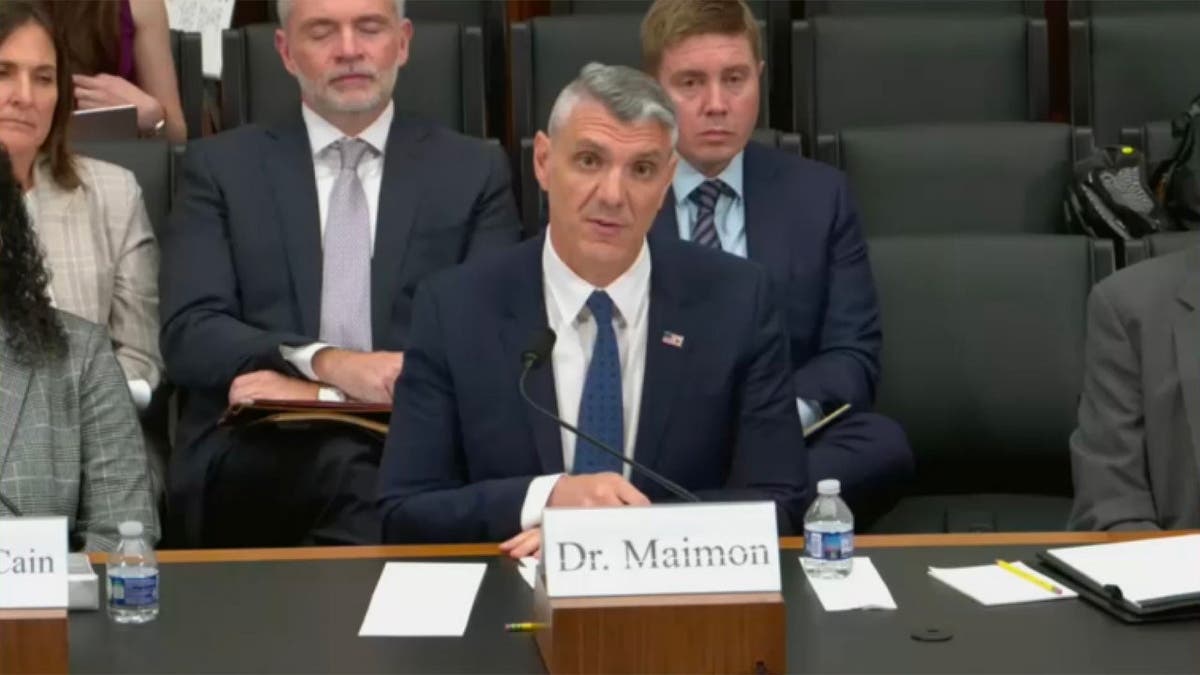
David Maimon, head of Fraud Insights at SentiLink, testifies before the House Oversight Committee’s Government Operations Subcommittee during a hearing on emerging fraud threats on July 15, 2026, in Washington, D.C. (House Oversight Subcommittee)
«In order to make sure that we address this issue, and it really depends on the type of fraud that you’re dealing with, but to address this issue in a more effective way, maybe we need to have some historical signals around identities we’re trying to verify, rather than just looking at images that could be created easily by AI tools,» he said.
CLICK HERE TO DOWNLOAD THE FOX NEWS APP
Maimon told lawmakers the fraud affects more than the government’s finances, ultimately hurting the people these programs are designed to serve, saying «Every dollar we protect from organized fraud is a dollar that stays available for the people Congress intended to help.
But after years of studying dark web and Telegram marketplaces, Maimon said law enforcement has uncovered only a fraction of organized fraud.
«I think they’re just scratching the surface.»
politics, security, cybercrime, investigations, artificial intelligence

Canadian wildfire smoke ignites cross-border feud over Ottawa’s ‘willful negligence’

Jugó con el Dibu, quedó eliminado con Argentina en el Mundial y ahora el Chelsea lo comprará en ¡138 millones de euros!

Milei esperará la final en la tranquilidad de Olivos: el mameluco de YPF y la decisión pospartido

eFootball Kick-Off! y Tomodachi Life: Una vida de ensueño lideran los top ventas del momento en las eShop de Nintendo Switch 2 y Nintendo Switch (18/7/26) – Nintenderos

Grave escalada de la guerra: mueren dos militares estadounidenses en ataques de Irán en Jordania

Declaraciones juradas: prorrogan la presentación de Ganancias hasta fines de agosto, pero mantienen la fecha de pago

El machete del arquero inglés en una botella que sorprendió a Messi tras el triunfo: el dardo de un ayudante de Scaloni a Inglaterra

El fuerte cruce público entre Victoria Villarruel y Patricia Bullrich tras los chats filtrados antes de la sesión del Senado

Vaca Muerta promete renta anual del 15% y desata una fiebre inmobiliaria sin precedentes

Adrián Ravier, vocero de Milei: “No coincidimos en el Gobierno con esto de que la gente no llega a fin de mes”

 DEPORTE3 días ago
El machete del arquero inglés en una botella que sorprendió a Messi tras el triunfo: el dardo de un ayudante de Scaloni a Inglaterra
- POLITICA2 días ago
El fuerte cruce público entre Victoria Villarruel y Patricia Bullrich tras los chats filtrados antes de la sesión del Senado
- POLITICA2 días ago
Adrián Ravier, vocero de Milei: “No coincidimos en el Gobierno con esto de que la gente no llega a fin de mes”