INTERNACIONAL
African growth boom follows Trump push to replace aid with trade


NEWYou can now listen to Fox News articles!
FIRST ON FOX: Many African economies are accelerating – booming – since the Trump Administration shifted policy focus from aid to trade, a senior State Department official told Fox News Digital.
In some African countries, doom was forecast when the Trump administration severely cut back USAID funding, but instead there’s been unprecedented economic growth, credited to the Commercial Diplomacy Strategy, introduced at the beginning of President Trump’s second term.
Now, «nine of the 20 fastest-growing economies (in the world) are in Africa,» Assistant Secretary for the Bureau of African Affairs Frank Garcia told Fox News Digital.
IRAN AND HOUTHI TERROR PROXY FACING RED SEA THREAT FROM PRO-US AFRICAN NATION
South African shoppers in Pretoria’s Central Business District. (Leon Sadiki/Bloomberg via Getty Images)
Garcia added, «African economies are responding positively to the shift from aid to trade. In 2025, U.S. exports to sub-Saharan Africa increased by 23% to $22.6 billion. And continue to grow this year.»
When the Administration cut USAID by 83% early last year, «The predictions were catastrophic: economies heavily dependent on foreign donors—from Ethiopia to South Sudan and Malawi — were expected to collapse. Instead, something quite different happened,» Anna Mahjar-Barducci, Project Director at the Middle East Media Research Institute (MEMRI), told Fox News Digital.
«The African continent proved far more resilient than expected, citing Ethiopia, which revised its 2026 growth forecasts upward despite the funding cuts,» Mahjar-Barducci continued. «According to projections by the International Monetary Fund (IMF), Sub-Saharan Africa is expected to grow between 4.3% and 4.6% in 2026, outpacing Asia as a whole, whose growth is forecast at around 4.1%. Growth is propelled by massive hydroelectric investments, construction, mining and expanding coffee exports.»
TRUMP GETS MAJOR WIN AGAINST CHINA IN AFRICAN RARE EARTH MINERALS RACE

Oil refinery in Ibeju Lekki district, Nigeria (Toyin Adedokun/AFP via Getty Images)
«This is no minor detail,» she continued. «For decades, we were told that without international aid Africa would collapse. Now that aid is genuinely drying up, much of the continent is not only avoiding collapse —i t is accelerating. This is precisely the argument that a long-standing school of African economic thought, now more relevant than ever, has advanced for years: aid is not the solution. In many cases, it is part of the problem.»
Assistant Secretary Garcia explained how the strategy works:» We see this economic acceleration in Africa. In order to best capitalize on it, the United States is focused on driving private investment, sustainable growth in terms of partnership and treating African nations not as aid recipients, but as capable commercial partners.»
He added «Our embassies (in Africa) work directly with the private sector to identify the policies, laws, and regulations constraining U.S. trade and investment. We then work with partner governments to develop practical reforms, identify the officials responsible for implementing them and determine where technical assistance may support implementation.»
CHRISTIAN FARMING COMMUNITIES UNDER SIEGE AS US REPORT NAMES FULANI MILITANTS NIGERIA’S DEADLIEST THREAT
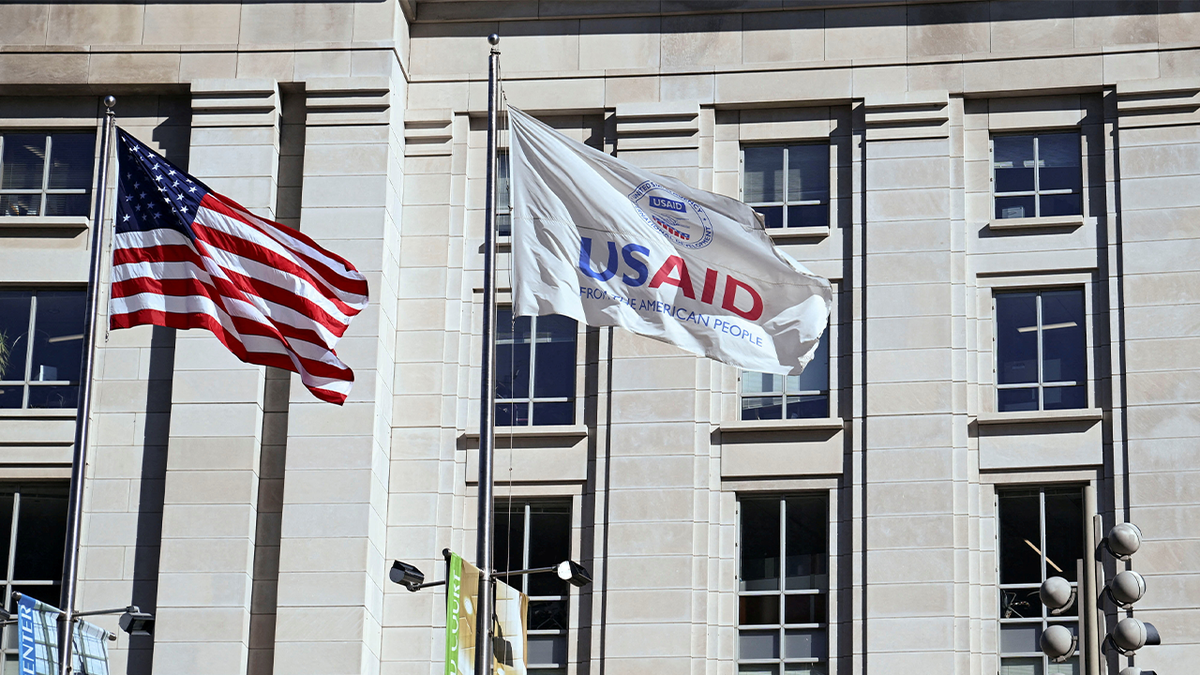
An American flag and USAID flag fly outside the USAID building in Washington, D.C., U.S., February 1, 2025. (REUTERS/Annabelle Gordon)
It’s a strategy that appears to be working, with Garcia adding, «The Bureau of African Affairs has worked on 37 commercial transactions that have closed since the beginning of the (current) Trump Administration, representing $25.67 billion in total value, with more still being reported. Embassies across the continent are actively working to close hundreds more. Top sectors include Energy 24%, ICT 19%, Critical Minerals and Mining 11%, Aerospace 8%, Agriculture 8%, Infrastructure 8%.»
Mahjar-Barducci criticized the way USAID worked, telling Fox News Digital,» When aid flows to governments rather than markets, it tends to finance projects designed in Brussels, Rome, or Washington which are not responding to the actual needs of local economies. Poverty cannot be overcome by treating people as permanent recipients of charity. Poverty can be reduced by recognizing people as entrepreneurs, workers and economic partners capable of building their own prosperity.»

The Bishoftu International Airport is expected to become Africa’s largest aviation hub upon completion. (Geng Xinning/Xinhua via Getty Images)
AFRICAN UNION CHIEF DENIES GENOCIDE CLAIMS AGAINST CHRISTIANS AS CRUZ WARNS NIGERIAN OFFICIALS
Trade, rather than aid works, Mahjar-Barducci claimed. «The Trump administration’s more transactional approach to aid — access to critical minerals, or to citizens’ health data, in exchange for funding — should not be dismissed as merely cynical. Unconditional transfers have long been the deeper flaw in the traditional aid model: money with no strings attached removes any incentive for a recipient government to reform and often entrenches the same officials responsible for the underlying poverty.»
Enter the America First Global Health Strategy. A senior State Department official told Fox News Digital this week that the administration «has signed 34 bilateral global health Memoranda of Understanding(MOU) representing more than $24 billion in new health funding, including more than $14.3 billion in U.S. assistance, alongside more than $9.6 billion in co-investment from recipient countries.»
«24 of these MOUs were signed with sub-Saharan African countries,» the official continued. «These new bilateral MOUs are designed to continue life-saving care, build resilient healthcare systems, reduce dependency on American taxpayers and strengthen country ownership.»

MEKELE, ETHIOPIA – JUNE 16: Aid workers move bags of yellow lentils that are part of athree-piece «Full Package» to be distributed to residents of Geha subcity at an aid operation run by USAID, Catholic Relief Services and the Relief Society of Tigray on June 16, 2021 in Mekele, Ethiopia. (emal Countess/Getty Images)
The administration has also decided to cut funding for a U.S. anti-AIDS program known as PEPFAR. Africa has been hit hard by the HIV/AIDS pandemic. UNAIDS, the United Nations program that deals with the virus, reports that South Africa has the highest infection rate in the world.
But the State Department official Fox News Digital spoke with says South Africa must take some of the blame for cutting help to its own people. «The United States has decided to initiate a phased drawdown of PEPFAR programming in South Africa, following South Africa’s failure to make demonstrable progress on policy requests by the administration. The United States communicated to [the] South African government multiple times at many levels that PEPFAR funding would be terminated if they failed to address President Trump’s concerns.»
CLICK HERE TO DOWNLOAD THE FOX NEWS APP
«PEPFAR was never intended to be permanent,» the official added. «Its success is measured by countries’ ability to sustain and build upon these gains. South Africa is a middle-income country and is more than capable of supporting its own health programs.»
Fox News Digital reached out to the South African government, but received no response.
africa, national security, state department, aid, donald trump, south africa











INTERNACIONAL
En un audaz ataque con cientos de drones, Ucrania golpeó dos enormes locales de venta on line en Rusia: al menos 8 muertos y decenas de heridos

Moscú denuncia un «atentado terrorista»

El «Amazon» ruso
«Respuesta simétrica», según Volodimir Zelenski
The high court’s very big year
Paul Gigot and John Yoo break down the Supreme Court’s consequential term, which ended with major decisions on birthright citizenship and executive power. Yoo argues the court’s conservative majority is focused on containing the administrative state and restoring constitutional originalism, including the Bill of Rights and federalism, despite criticism from the left.
NEWYou can now listen to Fox News articles!
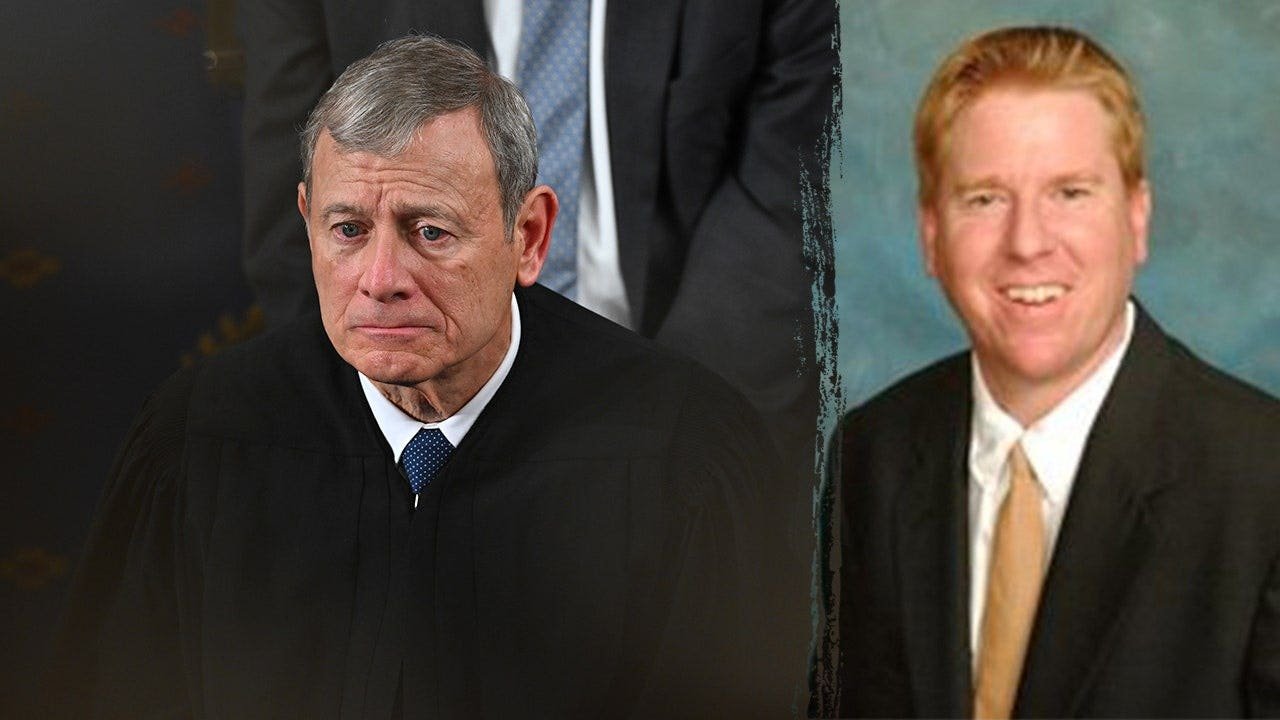
A Hawaii Supreme Court justice used a ruling overturning a decades-old criminal conviction to deliver a blistering rebuke of Chief Justice John Roberts’ Supreme Court, accusing the nation’s highest court of weakening constitutional rights, damaging democracy and advancing a political agenda.
Justice Todd Eddins authored the 91-page majority opinion Wednesday in State v. Granillo , a case involving a man convicted in 1990 of kidnapping and sexually assaulting a woman on Maui. The court ordered a new trial after concluding that hair and fiber evidence presented by an FBI expert relied on forensic science that has since been discredited.
But in roughly eight pages of the opinion, Eddins argued Hawaii’s courts should not look to the Roberts Court when interpreting the state constitution, using the case to deliver an unusually sharp critique of the nation’s highest court.
LAWYER WHO BEAT HAWAII GUN LAW CALLS STATE’S RELIANCE ON BLACK CODE ‘DISGRACEFUL’
«When six justices walk away from those they are supposed to protect, state constitutions hold the line,» Eddins wrote, referring to the court’s six conservative justices. «That is not defiance. That is the design.»
Eddins argued that Hawaii’s Constitution provides stronger protections than the federal Constitution as currently interpreted by the U.S. Supreme Court, and said the Court has abandoned landmark civil rights principles.
Hawaii Supreme Court Justice issued a scathing review of the Supreme Court’s most recent rulings, arguing that the High Court has weakened constitutional protections for citizens. (Graeme Sloan/Bloomberg via Getty Images/ Ballotpedia)
«The Court that now defines federal due process does not honor the work of 1954,» Eddins wrote. «It revives the work of 1857. The work of 1896.»
Eddins was referring to Brown v. Board of Education, ruled in 1954, which ended racial segregation in public schools, as well as Dred Scott v. Sandford, the infamous 1857 decision denying citizenship to Black Americans and Plessy v. Ferguson, the 1896 ruling that upheld racial segregation.
Eddins argued that the Roberts Court no longer reflects the constitutional principles established in Brown v. Board of Education, but instead, he argued the Court’s originalist approach relies on the same type of constitutional interpretation in the discredited Dred Scott and Plessy decisions.
«Today’s hubristic originalists use the same method to control modern life,» Eddins wrote.
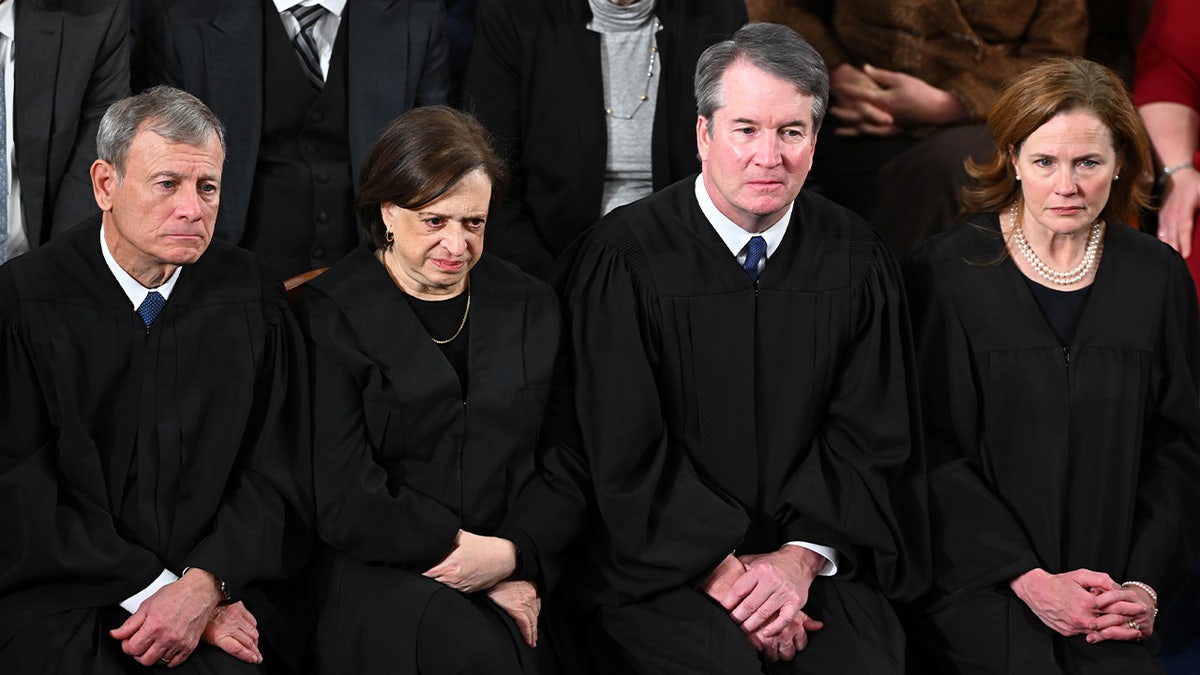
John Roberts, chief justice of the US Supreme Court, from left, Elena Kagan, associate justice of the US Supreme Court, Brett Kavanaugh, associate justice of the US Supreme Court, and Amy Coney Barrett, associate justice of the US Supreme Court, during a State of the Union address in the House Chamber of the US Capitol in Washington, DC, US, on Tuesday, Feb. 24, 2026. (Graeme Sloan/Bloomberg via Getty Images)
SUPREME COURT STRIKES DOWN LIMIT ON PARTY CAMPAIGN SPENDING IN COORDINATION WITH CANDIDATES
«The Court overrides what Congress passed,» Eddins continued. «It overrides what the people chose. All to serve its own ends. What this Court has done to constitutional rights, democratic institutions, and the rule of law explains why Hawaiʻi’s Constitution takes no instruction from it.»
Throughout the opinion, Eddins pointed to many of the Roberts Court’s most consequential decisions as evidence that constitutional protections have been weakened, including Dobbs v. Jackson Women’s Health Organization, which overturned the federal constitutional right to abortion; Citizens United v. FEC on campaign finance; Rucho v. Common Cause on partisan gerrymandering; Trump v. United States on presidential immunity; and New York State Rifle & Pistol Association v. Bruen, which expanded Second Amendment protections.
Eddins accused the Roberts Court of adopting a «colorblind» approach to the Equal Protection Clause that, in his view, ignores the amendment’s original purpose of protecting formerly enslaved Black Americans.
«The Roberts Court sees only white,» he wrote. «It refuses to acknowledge who the Equal Protection Clause was written to protect.»
He also suggested that recent Supreme Court decisions have repeatedly expanded the power of government officials and wealthy interests while reducing protections for individual rights.
«A court that systematically dismantles democratic safeguards, steamrolls constitutional liberties, and tramples human dignity does not chart the course for the Hawaiʻi Constitution,» he wrote.
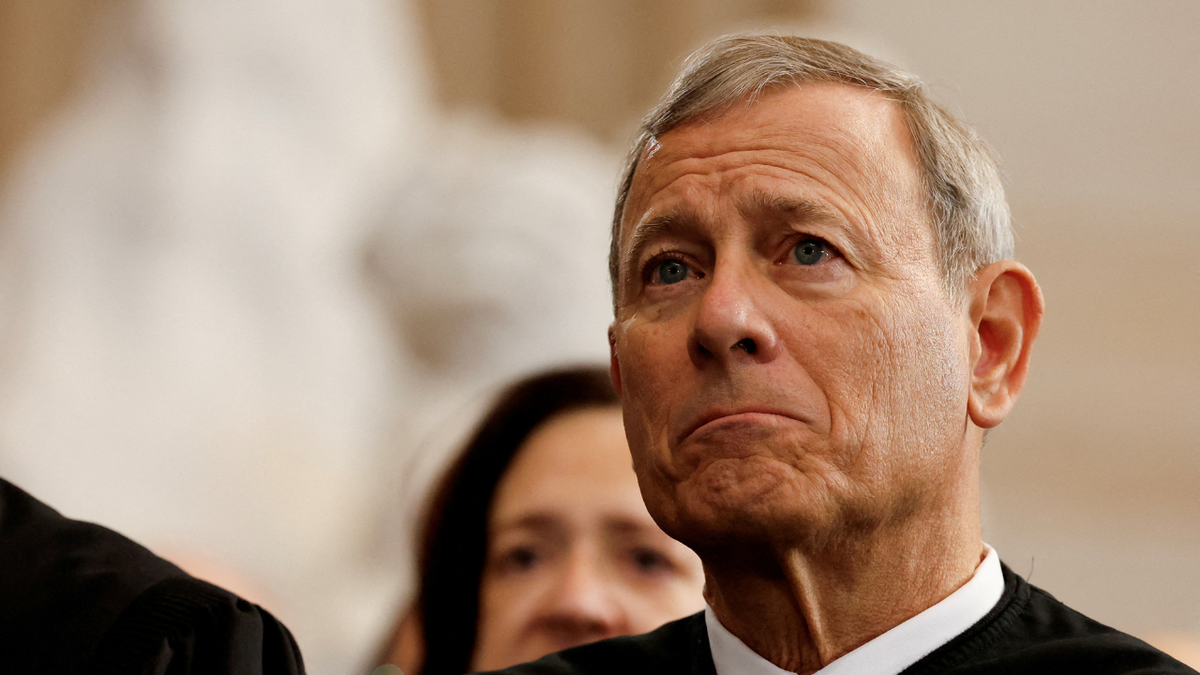
U.S. Supreme Court Chief Justice John Roberts attends inauguration ceremonies in the Rotunda of the U.S. Capitol on January 20, 2025 in Washington, DC. Chip Somodevilla/Pool via REUTERS/File Photo (Reuters)
THOMAS LEAVES NOTHING LEFT UNSAID ON RACIAL GERRYMANDERING DECISION: ‘GO FURTHER’
The opinion quickly drew criticism from legal observers, who said it was highly unusual for a state supreme court opinion to devote so much space to criticizing the U.S. Supreme Court.
«The Court issues an unhinged attack on the legitimacy of the Supreme Court,» Iowa Solicitor General Eric Wessan wrote on X. «I haven’t ever seen something like this. And it’s not good.»
George Washington University law professor Jonathan Turley similarly described the opinion as «devoid of judicial restraint and decorum.»
«The Hawaii Supreme Court just issued a truly shocking opinion that unleashed a torrent of rage and recrimination against the majority of the United States Supreme Court, including suggesting that they are de facto racists,» Turley wrote on X.
CLICK HERE TO DOWNLOAD THE FOX NEWS APP
The opinion comes just weeks after the U.S. Supreme Court handed Hawaii a major loss in Wolford v. Lopez, striking down the state’s so-called «vampire rule.» In a 6-3 decision, the court ruled Hawaii could not require gun owners to get a property owner’s permission before carrying a firearm into businesses and other private property open to the public.
Eddins has served on the Hawaii Supreme Court since 2020 after being appointed by then-Democratic Gov. David Ige.
hawaii, judiciary, supreme court, opinion, law
INTERNACIONAL
Diputado oficialista solicita investigar uso de los recursos en universidades públicas de Costa Rica
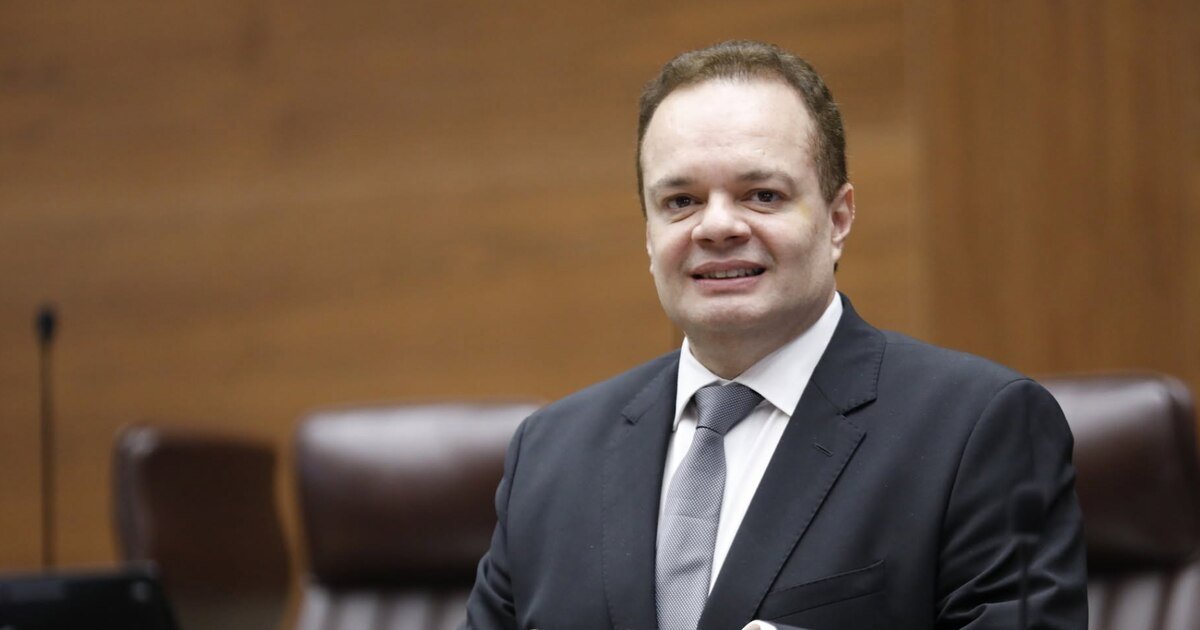
La posibilidad de que la Asamblea Legislativa investigue el uso de los recursos del Fondo Especial para la Educación Superior (FEES) abrió un nuevo capítulo en el debate sobre el financiamiento de las universidades públicas. El presidente de la Comisión de Control de Ingreso y Gasto Público, Gonzalo Ramírez Zamora, presentó una moción para que ese órgano legislativo analice durante un plazo de hasta dos años la administración de los fondos que reciben las cinco casas de enseñanza superior estatales, con especial énfasis en los recursos provenientes del FEES.
La iniciativa fue respaldada por los diputados del Partido Pueblo Soberano (PPSO), Kathia Calvo Cruz y Stephan Brunner Neibig, y podría ser discutida en una de las próximas sesiones de la comisión. Según el legislador, la investigación busca responder a las dudas que surgieron tras la publicación de diversos reportajes sobre gastos realizados por autoridades universitarias en alimentación, restaurantes y actividades de representación financiadas con recursos públicos.
Al presentar la moción, Ramírez sostuvo que el objetivo no es cuestionar la importancia de la educación superior pública, sino garantizar que el dinero aportado por los contribuyentes sea utilizado de manera eficiente y transparente. “Los recursos públicos no pueden ser usados como una piñata y menos en nuestras universidades”, afirmó el congresista, quien insistió en que la ciudadanía tiene derecho a conocer cómo se administran los fondos destinados al sistema universitario estatal.
De aprobarse la propuesta, la investigación abarcaría aspectos como la composición del gasto administrativo y del gasto sustantivo de cada universidad, la ejecución de los recursos provenientes del FEES, los mecanismos de control interno para autorizar y supervisar el uso de los fondos públicos, así como la razonabilidad y necesidad de gastos relacionados con representación, alimentación, actividades protocolarias, viáticos, viajes oficiales, cooperación internacional y capacitaciones.

Además, la comisión pretende determinar si la normativa interna que regula este tipo de gastos resulta suficiente para garantizar el cumplimiento de principios como la legalidad, la eficiencia, la economía, la austeridad, la transparencia y la rendición de cuentas. El objetivo final sería establecer si existe la necesidad de impulsar reformas legales, reglamentarias o administrativas que fortalezcan el uso responsable de los recursos públicos destinados a la educación superior.
Como parte del proceso, la moción contempla convocar a comparecer a las cinco personas rectoras de las universidades estatales, así como a representantes de las auditorías internas, direcciones financieras y a la contralora general de la República, Marta Acosta Zúñiga, con el fin de conocer de primera mano los mecanismos de fiscalización y administración de los recursos.
Tras conocerse la iniciativa, el Consejo Nacional de Rectores (Conare) reaccionó mediante un comunicado en el que manifestó su respeto por las competencias constitucionales de la Asamblea Legislativa y por el ejercicio del control político. No obstante, recordó que dicho control debe desarrollarse respetando plenamente la autonomía universitaria consagrada en la Constitución Política.
El presidente de Conare y rector de la Universidad Nacional (UNA), Jorge Herrera Murillo, aseguró que las universidades públicas mantienen un compromiso permanente con la legalidad, la transparencia, la eficiencia en el uso de los recursos públicos y la rendición de cuentas. Asimismo, destacó que las instituciones son objeto de fiscalización constante por parte de la Contraloría General de la República y de sus respectivas auditorías internas.

En su pronunciamiento, el Consejo de Rectores también hizo un llamado para que el debate sobre el FEES se desarrolle con base en evidencia técnica y no únicamente en percepciones. Según Conare, el ordenamiento jurídico costarricense ya contempla mecanismos robustos de control y supervisión sobre la ejecución de los recursos públicos administrados por las universidades.
La discusión ocurre en un contexto en el que el financiamiento de la educación superior se encuentra bajo revisión por parte del Gobierno. La administración de la presidenta Laura Fernández ha reiterado que la disciplina fiscal será uno de los pilares de su gestión, por lo que ha advertido que los incrementos al FEES dependerán de una eventual redistribución de los recursos hacia carreras con mayor demanda en el mercado laboral.
corresponsal:Desde San José, Costa Rica

Uno por uno, todos los titulos de la selección de España a lo largo de la historia

Tapia vuelve fortalecido del Mundial para enfrentar las causas judiciales y pone en marcha el operativo “venganza”

Quién es la figura internacional que apostó 1,5 millones USD a favor de Argentina antes de la final: ¿maldición o presagio?

Una diputada pidió que la Selección sea recibida en el Congreso tras el Mundial y ya elevó el pedido a Villarruel

El aire que puede ganar Milei si la Selección argentina se consagra en el Mundial 2026

Con un polémico final, Los Pumas cayeron 31-24 ante Inglaterra por el Nations Championship

El machete del arquero inglés en una botella que sorprendió a Messi tras el triunfo: el dardo de un ayudante de Scaloni a Inglaterra

El fuerte cruce público entre Victoria Villarruel y Patricia Bullrich tras los chats filtrados antes de la sesión del Senado

Adrián Ravier, vocero de Milei: “No coincidimos en el Gobierno con esto de que la gente no llega a fin de mes”

🇦🇷La Victoria Legendaria – El llanto interminable de Lautaro Martínez tras el pase a la final del Mundial: “Soñé que iba a hacer este gol”

 DEPORTE3 días ago
El machete del arquero inglés en una botella que sorprendió a Messi tras el triunfo: el dardo de un ayudante de Scaloni a Inglaterra
- POLITICA2 días ago
El fuerte cruce público entre Victoria Villarruel y Patricia Bullrich tras los chats filtrados antes de la sesión del Senado
- POLITICA2 días ago
Adrián Ravier, vocero de Milei: “No coincidimos en el Gobierno con esto de que la gente no llega a fin de mes”