
INTERNACIONAL
Billions in taxpayer income are leaving two iconic states — as a new economic map emerges


NEWYou can now listen to Fox News articles!
As Americans continue relocating across state lines, California and New York remain at the center of the nation’s migration story.
The latest IRS data show the top 10 counties with the largest net losses of taxpayers to other states were all located in California and New York. Compiled from federal tax returns, the figures offer one of the clearest snapshots of where Americans are relocating — and where their income is moving with them. Economists say those migration patterns help explain broader shifts in state economies, tax bases and housing markets as families weigh affordability, taxes and job opportunities when considering where they want to put down roots.
The movement of taxpayers and their income can also affect state and local tax collections, which help fund schools, public safety and infrastructure.
Los Angeles County, home to Hollywood and one of the nation’s largest economic engines, led the nation with a net loss of 17,496 tax filers. Those departing taxpayers took nearly $1.9 billion in income with them as they moved to other states.
THE RED STATES RACING AHEAD IN AMERICA’S POWERFUL WEALTH BOOM — AND THE STATES FALLING BEHIND
Other major counties in California and New York saw similar outflows. The next-largest taxpayer losses were recorded in Queens County, New York (-17,109), the Bronx (-16,319), Orange County, California (-11,618) and Suffolk County, New York (-10,434).
One New York county stood out for a different reason.
Manhattan gained more interstate tax filers than any other county in the nation while simultaneously losing nearly $1 billion in adjusted gross income, suggesting many of the newcomers earned less than those who left.
The latest data continue to point to a shift away from many of the nation’s largest coastal counties toward fast-growing destinations in the Sun Belt and Mountain West.
«It’s very, very clear that people ultimately vote with their feet and when they feel like they’re getting taxed too much, they go somewhere else where they will be taxed less,» Heritage Foundation chief economist E.J. Antoni told Fox News Digital.
«If you look at where these people are going, they’re not going to Massachusetts or Illinois or California,» Antoni said. «They’re going to Texas. They’re going to Tennessee. They’re going to Florida — places with low or no income taxes and low overall levels of taxation.»
AMERICANS KEEP MOVING TO TEXAS AND FLORIDA — BUT ONE OTHER RED STATE IS GROWING EVEN FASTER
Americans continue moving across state lines as migration patterns reshape local economies. (Lindsey Nicholson/UCG/Universal Images Group via Getty Images)
The remaining counties rounding out the top 10 for taxpayer losses were San Diego County, California (-9,401); Nassau County, New York (-9,130); Riverside County, California (-8,968); San Bernardino County, California (-8,462); and Kings County, New York (-6,924).
While those two states dominated the counties with the largest taxpayer losses, other parts of the country continued attracting new residents. The counties with the largest net gains in interstate tax filers were Maricopa County, Arizona (+9,353); Harris County, Texas (+8,955); King County, Washington (+8,297); and Clark County, Nevada (+7,524).
«The ‘vote with your feet’ movement, is real,» Paul Teller, a conservative strategist who previously served in the Trump-Pence White House, told Fox News Digital.
THESE STATES ARE ‘AHEAD OF THE GAME’ IN BRINGING DOWN HOME PRICES, TRUMP’S HOUSING CHIEF SAYS
Teller said Americans continue leaving high-tax, highly regulated states for places where they can keep more of what they earn and face lower costs of living, arguing the migration patterns should serve as a warning for policymakers in states that continue losing residents.
«What baffles me, especially as a former New Yorker, is that there doesn’t seem to be a lot of concern in the states that are losing people,» Teller told Fox News Digital.
CLICK HERE TO DOWNLOAD THE FOX NEWS APP

Manhattan attracted the nation’s most new tax filers between 2022 and 2023, yet still saw a sharp decline in reported income as wealthy residents left. (Spencer Platt/Getty Images)
Teller argued the trend could carry long-term fiscal consequences if affluent taxpayers continue leaving. He said the debate has taken on renewed attention as New York City Mayor Zohran Mamdani advances an agenda that includes higher taxes on top earners, rent freezes for stabilized apartments, free city buses and city-owned grocery stores.
California has likewise remained at the center of debates over taxes on high-income earners, maintaining one of the nation’s highest top marginal income tax rates.
«Let’s see what happens when the wealthy keep moving out of big blue states like California and New York,» Teller said. «We’ll see what happens to tax revenue. We’re already seeing it. It’s going down significantly.»
economy, taxes, politics, new york, california, texas













INTERNACIONAL
William Kemmler, el primer hombre en ser ejecutado en la silla eléctrica: «Creo que voy a un buen lugar y estoy listo para partir»
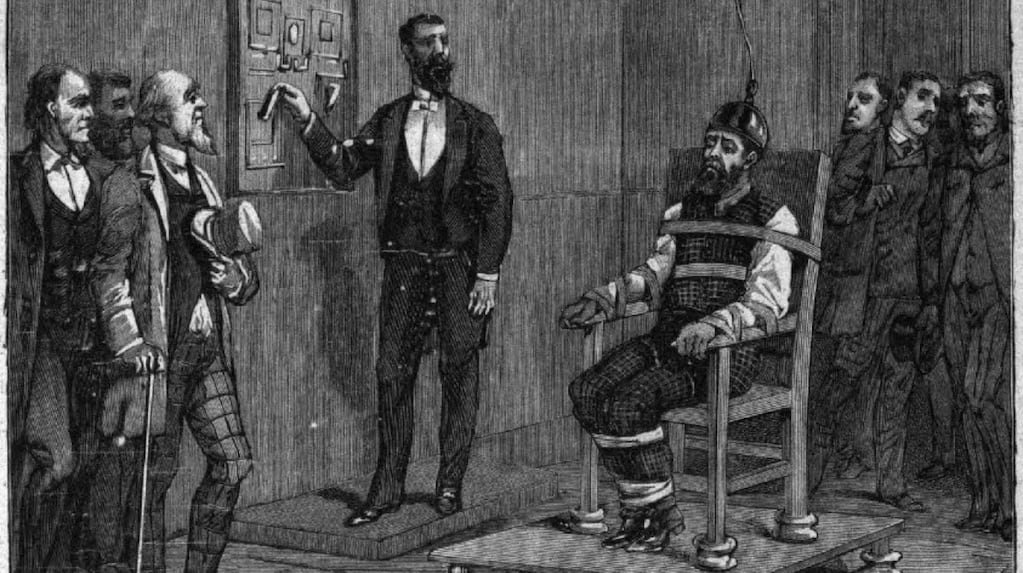
Todo el mundo estaba tan nervioso, que el tipo que iba a morir intentó tranquilizar a sus verdugos. “Tranquilos, todo va bien”, les dijo. Nada iba bien. Temblaban el director de la prisión, los guardias, los dos médicos y el capellán; quienes debían preparar al condenado para morir, también temblaban. Eran las 6.38 de la mañana del 6 de agosto de 1890, hace 136 años, en la prisión de Auburn, Buffalo, en el estado de New York. Con esa misma aparente tranquilidad, William Kemmler, de 40 años, había mirado a los 17 testigos y a sus verdugos y les había dicho: “Caballeros, les deseo buena suerte. Creo que voy a un buen lugar y estoy listo para partir.” Y a su verdugo: “Tranquilo, no tengo apuro”.
Con manos temblorosas, uno de los guardias, de apellido Durston, le cortó el pantalón a la altura de las rodillas y fijó un electrodo sobre su pierna derecha. Luego le ajustó otro hilo eléctrico a lo largo de la columna vertebral. Kemmler se acomodó en la silla para asegurarse que su espalda quedara bien apoyada sobre el cable y después anunció: “Estoy dispuesto”. No lo estaba: cambió de idea e hizo señas de que quería hablar. Pidió que comprobaran si los electrodos estaban bien colocados y si las correas que lo ataban a aquella máquina de la muerte estaban ajustadas porque él las notaba un poco flojas. Minutos después, Kemmler se había convertido en el primer ser humano ejecutado en la silla eléctrica.
La utopía es estúpida, pero persigue al hombre desde los tiempos bíblicos: hallar la manera de matar a un ser humano sin dolor, sin sufrimiento o, en todo caso, con la velocidad y la precisión del rayo. La pena de muerte lleva unos cuantos siglos de hipocresía, de espanto y, con perdón, de progreso que a veces también viste el ropaje del horror. La hoguera era terrible, pero se suponía que mataba rápido; el hacha parecía más efectiva según fuesen la habilidad e intenciones del verdugo, pero no lo era; la guillotina mecanizó la decapitación, pero no evitó ni el dolor ni el sufrimiento; la horca pareció un sistema de ejecución más “humano” a fines del siglo XIX porque intentaba matar por rotura de cuello, que a menudo derivaba en una larga y dolorosa asfixia; el garrote presumía de velocidad y ausencia de dolor; el fusilamiento, ceñido en general al ámbito militar y al de las guerras, requería de un tiro de gracia para acabar con la agonía del condenado o de la víctima; después de la silla eléctrica, la cámara de gas surgió como otro método “científico” y tal vez indoloro de matar al prójimo: fue un fracaso; y tampoco dio resultado en el siglo XXI, heredada del siglo anterior, la inyección letal. Los ensayos de matar sin dolor, sin sufrimiento y rápido pueden que hayan sido más “piadosos” para verdugos y testigos: los condenados siempre lo pasaron terrible.
Kemmler también la pasó espantoso. Como diría Gilbert Chesterton, ni con la mejor de las voluntades podría decirse de él que era un gran hombre. Era un vendedor de fruta en los suburbios de Buffalo y un alcohólico violento y peligroso. El 29 de mayo de 1888, alcoholizado, discutió con su mujer, Matilda, “Tillie” Ziegler y la acusó de querer robarle sus pocos centavos para huir con un amigo de ambos. Tan calmado como cuando enfrentó la silla eléctrica, aquella noche Kemmler mató a Matilda de veintisiete hachazos. Después fue a la casa de un vecino y confesó su crimen. Lo juzgaron cuarenta días después y l condenaron a muerte.
Una ilustración de 1890 de Kemmler esperando su muerte en la silla eléctrica. (Foto: Dominio público)
Un relato de la ejecución de Kemmler llegó hasta hoy en las palabras de Albert Naud, escritor, abogado, miembro de la resistencia francesa durante la Segunda Guerra, autor de: No matarás. Y también a través del gran ensayo del español Daniel Sueiro: “La pena de muerte – Ceremonial, historia, procedimientos”: “En una habitación vecina, Edwin F. Dawis, el ‘electricista’ aguardaba, con las manos puestas sobre la palanca de contacto, a que el director de la prisión le diera la orden convenida.”
Cuando eso sucedió y el “electricista” bajó el interruptor: “(…) De pronto, los asistentes vieron palidecer el rostro de Kemmler. Su cuerpo pareció hincharse y las correas estuvieron a punto de romperse. Un olor a carne quemada llenó la habitación. Los médicos hicieron una seña a Edwin Davis, que cortó la corriente. ‘Kemmler ha muerto’ declararon. El doctor Morrer –sigue el testimonio– se inclinó sobre Kemmler y no pudo retener un grito de espanto: ‘¡Está vivo! ¡La corriente, pronto!’. Durston, el ayudante del verdugo, había empezado ya a soltar los electrodos. Recobró su sangre fría, rehízo las ataduras y le hizo la señal fatal a Dawis. El cuerpo de Kemmler se estiró, una llama azulada corrió a lo largo de su columna vertebral y le brotó sangre en la nariz y la boca. Durante setenta segundos, una corriente de mil setecientos voltios pasó a través de su cuerpo, quemando todos sus vasos, que estallaron. La ejecución había terminado. El doctor Morrer certificó la muerte por electrocución”.
Otra versión de la ejecución, publicada días después y reproducida por el jurista sueco Knut Olivecrona en su libro “De la peine de mort – De la pena de muerte”, es más rigurosa. Especifica que “la primera descarga eléctrica sólo aturdió a Kemmler durante algunos segundos; luego abrió los ojos lanzando gritos de dolor que partían el alma. La segunda descarga ya no le hizo efecto. Fue solamente después de la tercera cuando pareció perder el conocimiento, pero la respiración continuó durante un cuarto de hora, acompañada por convulsiones de todas las partes del cuerpo que mostraban que la vida no había desaparecido inmediatamente. La espalda del condenado se encontró completamente quemada por la corriente eléctrica, y un fuerte olor a carne quemada se expandió por los alrededores del lugar de ejecución”.

La silla eléctrica expuesta en el museo de prisión de Texas, Estados Unidos. (Foto: AFP)
Uno de los testigos de la ejecución sintetizó todo en una frase: “Habría sido mejor que hubiesen usado un hacha”. Era algo más que una frase, era una ironía porque detrás de la silla eléctrica vibraba una feroz batalla comercial y una disputa que mezclaba la ambición y la vanidad. El hombre que hubiese preferido el hacha era George Westinghouse, que en esos días peleaba con Tomás Alva Edison por implantar un sistema de suministro eléctrico en Estados Unidos. Había en juego millones de dólares y no sólo la búsqueda de una forma piadosa de matar al prójimo.
Sumario, pena de muerte, silla eléctrica

Mexico questions FBI role in Sinaloa Cartel abduction
Mexican President Claudia Sheinbaum strongly criticizes the U.S. government for its alleged involvement in the 2024 abduction of former Sinaloa Cartel boss ‘El Mayo’ Zambada. Sheinbaum explicitly states the U.S. lied about its participation, claiming a violation of Mexican sovereignty. This incident raises serious questions about diplomatic relations between the two nations and American intervention in Mexico.
NEWYou can now listen to Fox News articles!
The U.S. State Department said a «threat against American interests» forced the United States to suspend all of its government activities in a Mexican state where visitors face a risk of violence «from terrorist groups, cartels, gangs and criminal organizations.»
The warning from the U.S. Embassy & Consulates in Mexico about the state of Michoacan, which is located west of Mexico City, includes a halt to the inspections of avocados required for their export, according to The Associated Press.
«Due to a threat against American interests, U.S. government activities in Michoacan State have been suspended as of August 5,» the message read. «Reminder that the U.S. travel advisory designates Michoacan as a Level 4 ‘Do Not Travel’ area.»
While the U.S. embassy did not specify the nature of the threat in its security alert, Michoacan Gov. Alfredo Ramírez Bedolla said on social media that a temporary halt to avocado inspections was intended to safeguard workers following recent arrests linked to alleged extortion, the AP reported.
5 MEXICAN CARTEL BOSSES CHARGED IN WEAPONS, DRUG TRAFFICKING, TIMESHARE FRAUD SCHEMES, DOJ SAYS
Members of the Civil Guard of Michoacan patrol a highway with armored vehicles after a wave of violence in Aguililla, Mexico, on Feb. 24, 2026. (AFP via Getty Images)
The western state of Michoacan is the leading exporter of avocados to the U.S. and has a high level of organized crime activity with at least four cartels — designated as terrorist organizations by the Trump administration — operating in the region. Besides trafficking drugs, cartels also make money through extortion, including of the avocado industry.
The State Department warns Americans to «exercise increased caution» throughout Mexico due to «terrorism, crime, and kidnapping.»
For Michoacan state, it said, «There is a risk of violence in the state from terrorist groups, cartels, gangs and criminal organizations.»
Michoacan State Security Secretary Antonio Cruz told the AP that one of the arrests mentioned by the governor was of «El Poncho,» the alias of Alfonso Fernández Magallón, leader of a local cartel operating in the avocado-growing region around Los Reyes.
SINALOA CARTEL BOSS ‘EL MAYO’ SENTENCED TO LIFE, ORDERED TO PAY $15B IN DRUG TRAFFICKING PROFITS
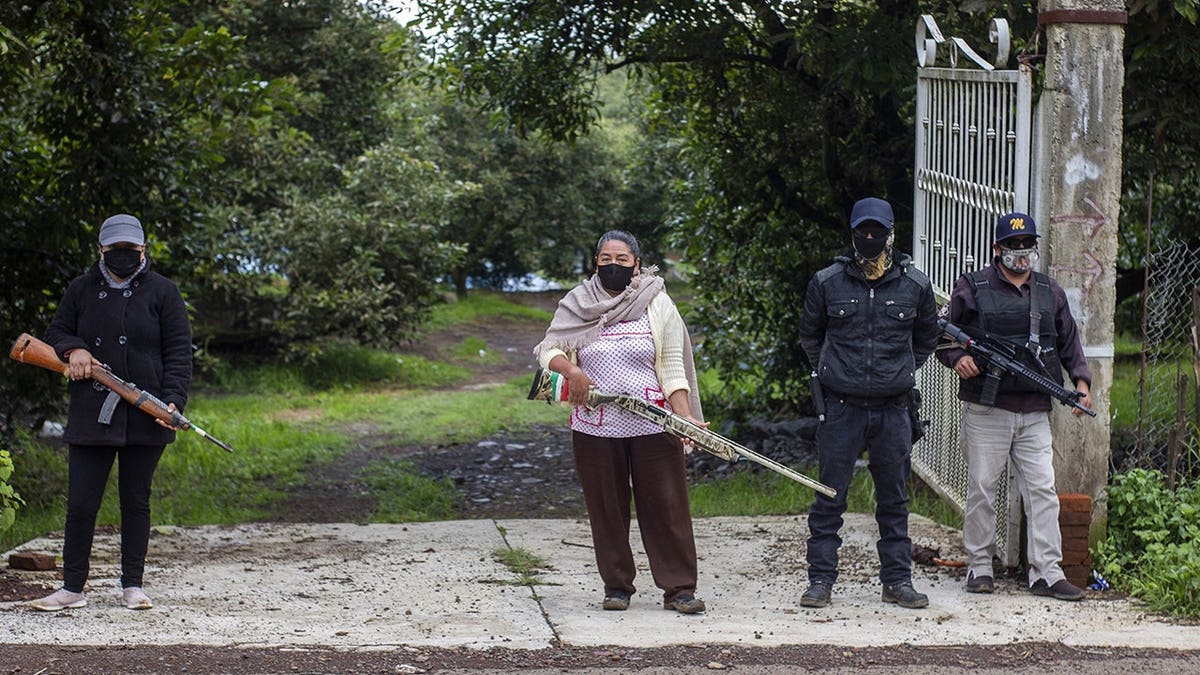
Members of the self-defense group Pueblos Unidos carry out guard duties to protect avocado plantations from drug cartels in Ario de Rosales, Michoacan, Mexico, on July 8, 2021. (AFP via Getty Images)
U.S. ambassador to Mexico Ronald Johnson welcomed the arrest, which came over the weekend. The U.S. government had offered a $5 million reward.
Cruz said his department was unaware of any direct incidents involving the avocado inspectors. However, 300 security personnel were deployed to the Los Reyes area as a preventive measure.
The governor said the priority was to «ensure the security conditions necessary for these operations to resume normally,» as has happened in the past.
In 2025, Mexico sold $3.65 billion worth of avocados to the United States, and in the first four months of this year, those exports rose by 35% compared to the same period in the previous year.

Members of the Civil Guard of Michoacan patrol a highway in armored vehicles after a wave of violence in Aguililla, Mexico, on Feb. 24, 2026. (AFP via Getty Images)
The U.S. Department of Agriculture sends inspectors in Mexico to monitor plantations and packing houses to ensure that exported produce is free of pests. Threats and violence against the inspectors have caused the U.S. to suspend inspections in the past.
The Associated Press contributed to this report.
mexican cartel violence, state department, location mexico, national security, world
INTERNACIONAL
Ministerio de Gobernación de Guatemala lanza la estrategia nacional de datos abiertos y abre una consulta ciudadana

Guatemala lanzó la Estrategia Nacional de Datos Abiertos con el liderazgo del Ministerio de Gobernación para modernizar la gestión pública y ampliar la transparencia, en un proceso que además abre una consulta ciudadana para definir cómo las instituciones producirán, administrarán y compartirán información oficial.
La participación pública se canalizará a través del portal participacionciudadana.gob.gt, donde podrán integrarse aportes de organizaciones de sociedad civil, academia, medios de comunicación y ciudadanía en general.
El instrumento busca reunir información clara, precisa y accesible sobre la gestión gubernamental, proyectos y otras acciones impulsadas por el Organismo Ejecutivo.
Durante el lanzamiento, el ministro de Gobernación Marco Antonio Villeda sostuvo que la herramienta debe construirse con criterios técnicos, participación y estándares internacionales que garanticen calidad, seguridad y utilidad de los datos.
En esa línea, planteó que el objetivo es modificar la forma en que el Estado maneja la información pública.
Villeda definió el alcance de la iniciativa en estos términos: “Queremos una estrategia que cambie la manera en que las instituciones producen, administran y comparten la información pública”.

El ministro agregó que los datos abiertos permiten a las personas acceder a información pública, utilizarla, analizarla y compartirla. También afirmó: “Un gobierno que utiliza bien sus datos puede planificar mejor, responder mejor y rendir cuentas con mayor claridad. La modernización del Estado acerca las instituciones a la ciudadanía”.
La estrategia fue presentada como un paso para fortalecer la transparencia y la rendición de cuentas en la administración pública. El proceso también fue descrito como una vía para ampliar la supervisión social, el análisis de asuntos públicos y la participación de distintos sectores en la construcción de políticas de acceso a la información.
La viceministra de Tecnologías de la Información y las Comunicaciones Karen Ortiz explicó que cuando la información pública es accesible, reutilizable y está disponible en formatos abiertos, aumentan la rendición de cuentas, la participación ciudadana y las oportunidades para la innovación, la investigación y el desarrollo económico.
Ortiz añadió que los datos abiertos son una herramienta para construir gobiernos transparentes, eficientes y cercanos a la ciudadanía. También señaló que la hoja de ruta trazada tiene como meta la participación activa de todos los sectores sociales en la elaboración de la estrategia.
Rose Diegues, representante residente adjunta del Programa de las Naciones Unidas para el Desarrollo (PNUD), destacó el liderazgo del Ministerio de Gobernación en la preparación y futura implementación de la estrategia. Según explicó, el organismo acompaña a las instituciones del grupo motor en actividades de transformación digital, inteligencia artificial y elaboración de la política de datos abiertos.
Diegues describió ese respaldo con una referencia directa al programa en marcha: “Estamos apoyando a las instituciones del grupo motor para que desarrollen las actividades de transformación digital, de inteligencia artificial y de la elaboración de la estrategia de datos abiertos”.
De acuerdo con información difundida por PNUD Guatemala, este proceso forma parte del Programa Conjunto “Habilitando la transformación digital y mejorando la prestación de servicios públicos a gran escala en Guatemala”, implementado por ONU Guatemala a través del PNUD y financiado por la Unión Europea mediante el Joint SDG Fund. La publicación indicó además que la estrategia busca fortalecer la transparencia, impulsar la innovación y mejorar el aprovechamiento de los datos públicos para responder a necesidades de la ciudadanía.
En la actividad participaron el secretario de Planificación y Programación de la Presidencia Carlos Mendoza, el titular de la Secretaría Nacional de Ciencia y Tecnología Adolfo Monterroso, la coordinadora de la Comisión Presidencial de Gobierno Abierto y Electrónico Wendy Miranda y la subsecretaria privada de la Presidencia Julissa Cifuentes. También asistieron integrantes de la Mesa de Transformación Digital, miembros de organismos internacionales y representantes de instituciones del Grupo Motor de la Estrategia Nacional de Datos Abiertos.
Entre esas entidades figuran la Comisión Presidencial de Gobierno Abierto y Electrónico, la Secretaría de Planificación y Programación de la Presidencia, la Secretaría Privada de la Presidencia, la Secretaría Nacional de Ciencia y Tecnología, la Comisión Nacional contra la Corrupción y el Ministerio de Comunicaciones, Infraestructura y Vivienda. La actividad se realizó en la sede del Ministerio de Gobernación.
Guatemala,Gobernación,Gobierno,Reunión,Funcionarios

Cuadernos de las coimas: un testigo dio detalles de un auto clave para el presunto circuito de recaudación

A qué hora deja de llover hoy, jueves 6 de agosto

Acaba de hacer su mejor película como Spider-Man, pero Tom Holland ya habla de su sucesor y tiene hasta un plan maestro

Extranjerización de tierras: un historiador explicó cómo nació el debate y cuáles son las zonas bajo mayor presión

La AUF anunció oficialmente a Forlán como entrenador de la selección de Uruguay

Dólar hoy en vivo: a cuánto se negocian todas las cotizaciones minuto a minuto este jueves 6 de agosto

Javier Milei cruzó a Victoria Villarruel y elevó la tensión: “Es una opositora, replica los argumentos kirchneristas”

Reelecciones indefinidas: el oficialismo bonaerense niega que busque ampliar la Legislatura como parte de una reforma política para beneficiar a los intendentes

Un muerto y tres heridos al chocar un colectivo de turismo y un auto en Mendoza

Zaira Nara realizó un topless en Formentera y un comentario de un seguidor generó debate: “¿Nunca vestida?»
-
 POLITICA3 días ago
Javier Milei cruzó a Victoria Villarruel y elevó la tensión: “Es una opositora, replica los argumentos kirchneristas”
-

 ECONOMIA1 día ago
Dólar hoy en vivo: a cuánto se negocian todas las cotizaciones minuto a minuto este miércoles 5 de agosto
-

 INTERNACIONAL3 días ago
Trump’s AG pick off life support after key Republican rebels relent