INTERNACIONAL
Reporter’s Notebook: Senate Republicans scrap early exit from Washington as midterm stakes soar

It’s a calculation by Republicans to keep the Senate in session this week.
Yes. The Senate was scheduled to meet anyway over the next few days. But the general consensus early last week was that the Senate would be done then and those facing competitive races would be back home campaigning.
Then Wednesday hit.
Republicans wanted to stay in Washington. For a very specific reason. And many of them told Senate Majority Leader John Thune, R-S.D., as much at their weekly luncheon.
«Odds are we plan on being here next week,» said Thune.
REPORTER’S NOTEBOOK: CONGRESS STRUGGLES TO FIND A MESSAGE THAT RESONATES WITH VOTERS AHEAD OF MIDTERMS
One Senate aide compared the Senate’s schedule to a cat chasing a beam of light from a laser pointer.
But the Senate is in fact meeting. There are reasons. Most of them are political.
The Senate wasn’t quite done with the bill to regulate money in intercollegiate athletics last week. And with the affordability question vexing Republicans, they really didn’t want to pass the college sports bill and promptly vacate Washington. That would be an awkward punctuation point at the end of the legislative sentence before the midterms. GOPers wanted something more substantive. Democrats might have presented that opportunity to Republicans on a platter.
Before the House left for the midterms the week before last, it accentuated its session by passing the Ratepayer Protection Act, 417-3. Let me tell you, not much passes around here with 417 votes. Like their Senate colleagues, House Republicans also worry about voters doubting they’re addressing affordability. So this bill hit the mark for them.
The legislation defrays the costs ratepayers fork out for their utility bills if they’re driven up by data centers. This forces the tech companies which run the data centers to foot the bill.
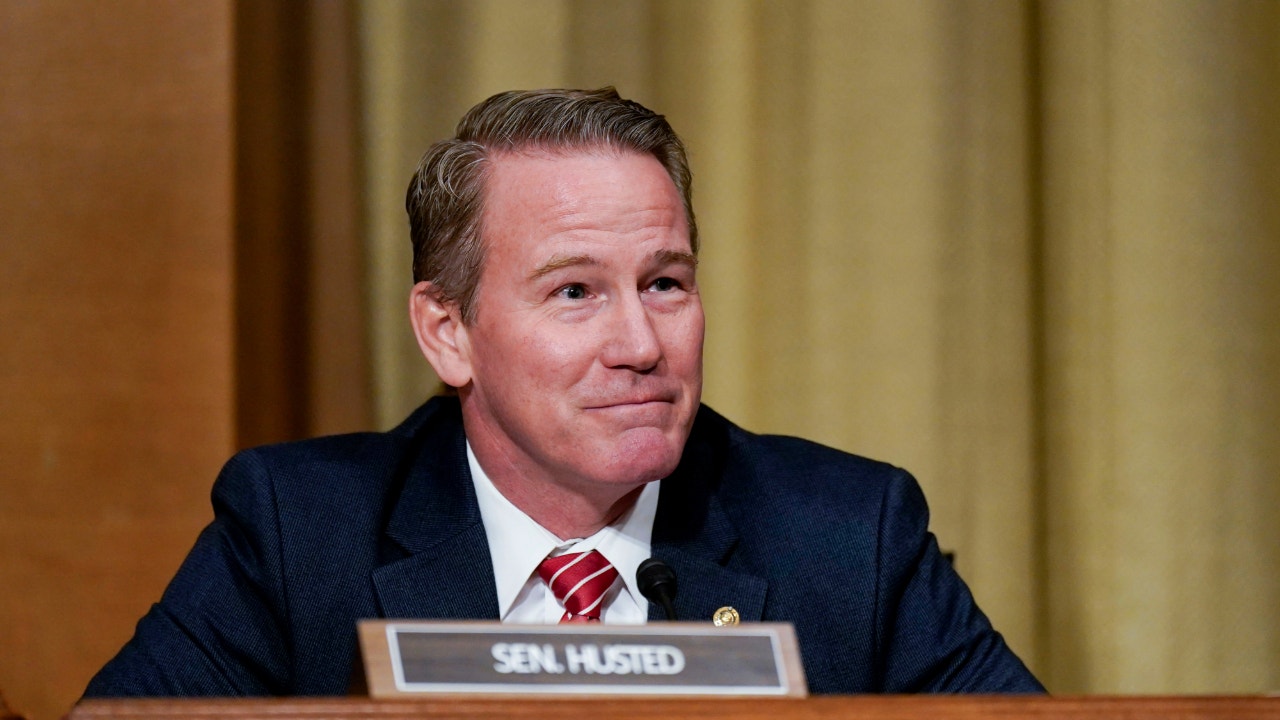
Sen. Jon Husted, R-Ohio, is one of the most vulnerable Republicans on the ballot this fall. Husted’s longtime support for data centers is also dragging him down in the eyes of some voters. Husted tried to fix that. He went to the floor and asked for the Senate to pass on the spot the House bill. However, Sen. Martin Heinrich, D-N.M., objected, blocking the effort.
POLL: ECONOMIC ANXIETY AND CANDIDATE CONCERNS DEFINE OHIO SENATE RACE
Republicans viewed that as an opening. Democrats stood in the way of passing a bill on affordability which 417 bipartisan House Members supported without blinking. Senate GOPers immediately seized this opportunity as a wedge against their adversaries. And, they interpreted this as a chance to assist their Ohio colleague.
«Tell the data centers we’re happy to have you. But you’ve got to pay your own electricity. People are not going to pay for it,» said Sen. John Kennedy, R-La.
Republicans were already leery about the uneven political footing when it comes to AI. Even more so with data centers. Voters are not enamored with the results of the Big, Beautiful Bill, passed last summer. But dealing with data centers is more immediate and might resonate with those who soured on the Republican brand.
«In Missouri, people are absolutely scared to death that these data centers are going to take all the prime farm ground of the state. And then they’re going to raise electricity bills so high, no one will be able to afford them,» said Sen. Josh Hawley, R-Mo.
The official schedule intended for the Senate to meet this week. But once September hit and no government shutdown loomed, senators from both sides – especially those facing challenging elections – wanted to skip Washington and campaign back home. Yours truly asked Senate Minority Leader Chuck Schumer, D-N.Y., why his party stood in the way of the Senate aligning with the House on that data center/utilities measure.
«Was this blocked in the Senate last week by Democrats as an effort to prevent Sen. Husted from having a win in this competitive race?» I asked.
«Sen. Husted’s bill is a fraud. It’s voluntary. No company has to do it. The bill we have is mandatory. It is much stronger and is what is needed,» replied Schumer.
There is something to Schumer’s argument about how muscular the bill is. The legislation says public utility regulators must only consider a standard for ratepayers. Nothing is required. Thus, there’s wiggle room for tech firms.
HAWLEY TAKES AIM AT ‘CORPORATE WELFARE’ AFTER GOP-BACKED TAX BREAK BOOSTED CONTROVERSIAL INDUSTRY
«What we’re saying is that we can do much better,» said Sen. Chris Van Hollen, D-Md. «Is it a little step forward? Yes. But it’s not meeting the moment. So our view is we should expand it to make sure that ratepayers aren’t having to subsidize the richest corporations on the planet.»
But a lot of Republicans aren’t buying what Schumer and Van Hollen are saying. The Democratic objections are all about three things: Politics. An endangered GOP senator in the most expensive Senate contest in the country. And, Democrats hoping to flip the seat in their favor.
«Sen. Schumer, what he cares about is the midterm election and politics. And I don’t think he cares about the substance of this,» said Sen. John Cornyn, R-Texas. «Obviously there’s a hot and heavy Senate race going on in Ohio and he doesn’t want to let Sen. Husted have something he can talk about when he goes home.»
Republicans view the opportunity to turn the affordability issue against Democrats – capitalizing on Schumer’s remark and forcing Democrats to take a stand. Either you’re for affordability (especially as it pertains to the toxic issue of data centers) or you’re not. Moreover, this could boost Husted in his competitive contest with former Sen. Sherrod Brown, D-Ohio. In fact, it was the Senate GOP’s campaign arm which specifically flagged vulnerabilities for Republicans generally and Husted in particular over the summer.
Thune tees up a test vote on Wednesday to dare Democrats to either start debate on the bill or block it again. That vote requires 60 yeas. So Democratic cooperation is required. Although there’s skepticism anything happens, some Democrats may vote for it. That means the Senate is on the bill. And it’s open to debate and amendments. Thune would have to forge a bipartisan time agreement to finish the measure quickly.
Otherwise – by the book – this would drag into the weekend. And no one wants that. Especially Republicans with competitive races.
12 RACES SCRAMBLE SENATE BATTLEFIELD AS DEMOCRATS EYE COMEBACK
Thune and Schumer want senators back home campaigning. If Democrats impede the legislation Wednesday, the Senate might hang around Thursday or that’s it until after the midterms. Regardless, Republicans will have engineered a vote which they can boomerang against Democrats. Or, at least help Husted and send him back to the Buckeye State with a win.
While it’s not the best optic for Democrats to oppose this bill, their resistance might not directly wound anyone this fall. The reason: Democrats have a lot of chances to pick up seats. But vulnerable Democrats aren’t on the ballot. None of the Democratic Senate nominees in competitive seats like Maine, Florida, North Carolina, Ohio, Michigan, Iowa, Texas, Nebraska, Kansas and Alaska currently hold office. The only sitting Democrat in cycle who has a mild race is Sen. Mark Warner, D-Va.
So for the Democrats, this is about playing defense. For Republicans, this is about playing offense. And the GOP is on offense primarily for Husted.
But the willingness of Senate GOPers to spend an extra week in Washington speaks volumes. It underscores how worried they are about the affordability issue. And in particular, their concern about elevating the work of Husted.
politics, senate, republicans elections, chuck schumer, midterm elections









NEWYou can now listen to Fox News articles!
Just days after left-wing British Foreign Secretary Ed Miliband shook hands with the Islamic Republic of Iran’s top diplomat at the U.N., U.K. authorities arrested five men with possible links to Tehran who allegedly sought to bomb a military base in Fairford used by American forces.
Armed officers arrested the five suspected terrorists who were traveling in three vans reportedly packed with explosive material. The authorities seized the five British nationals and the vans a mere 350 yards from the military base, which is used by the U.S. army to launch air strikes against military targets in the Islamic Republic of Iran.
Speaking from London on Monday, Nile Gardiner, the Director of the Margaret Thatcher Center for Freedom at the Heritage Foundation, told Fox News Digital that «I think it is highly likely it was an Iranian orchestrated attack. It is stunning that they have released terrorist suspects on bail. It strikes me as entirely insane. The suspects appear to be Muslim Islamists, judging by the picture.»
BRITAIN INTRODUCES SWEEPING NEW POWERS TO TARGET FOREIGN STATE-LINKED GROUPS INCLUDING IRAN’S IRGC
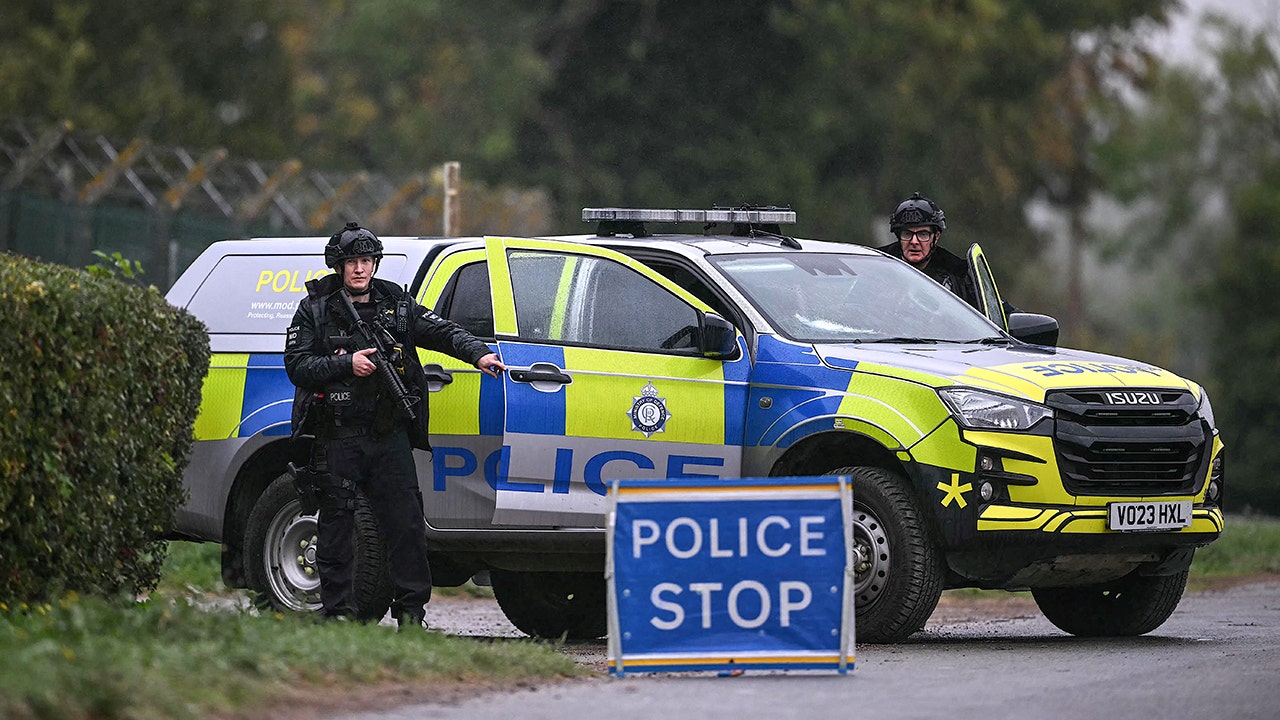
Police at a road block on the road to RAF Fairford after major incident has been declared, with armed police manning a cordon near the village of Whelford in Gloucestershire, near RAF Fairford which is used by the United States Air Force (USAF). Picture date: Sunday September 27, 2026. (Photo by Ben Birchall/PA Images via Getty Images)
Gardiner said, «The British government is on a full appeasement drive toward Tehran. We saw that with Ed Miliband meeting with Iranian Foreign Minister at the U.N. General Assembly. The U.K. does not want to get involved in the U.S.-led war against Tehran.»
He said the current government is a «Socialist appeasement-minded British administration that is incredibly weak on defense and national security.»
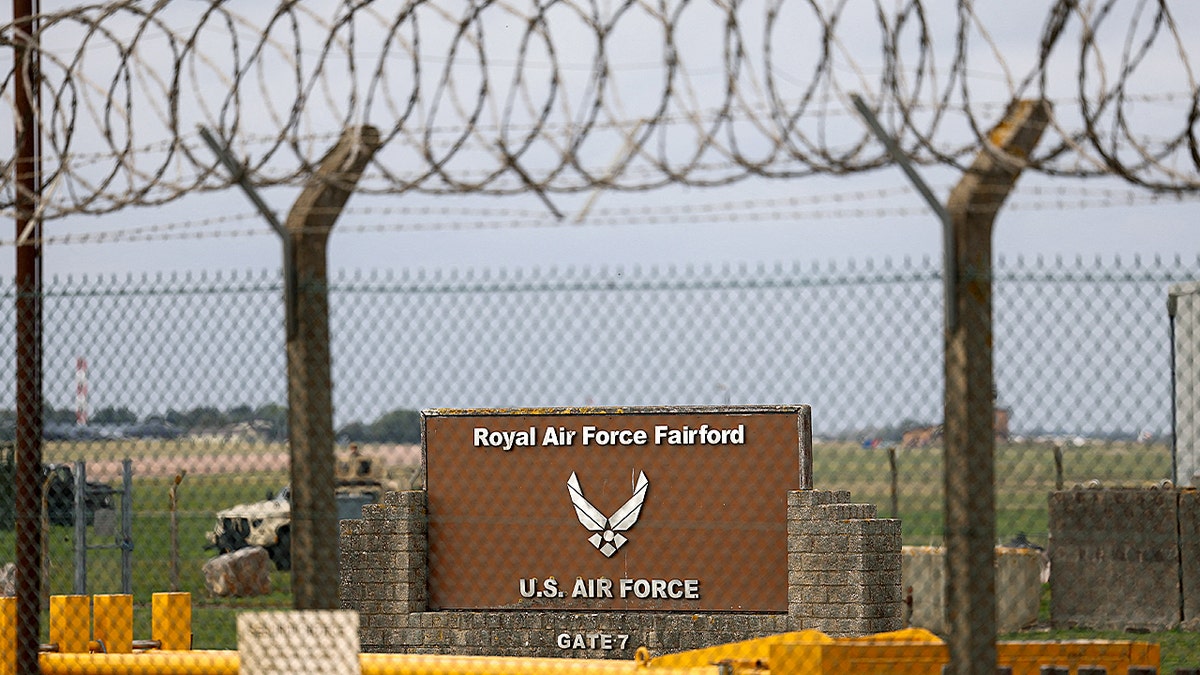
RAF Fairford is in the spotlight after five men were arrested near the key U.S. bomber base in the U.K. on Sunday. (Reuters)
The United States and Israel launched a joint military campaign on Feb. 28 to knock out the Islamic Republic’s nuclear weapons and missile systems.
A source familiar with the investigation had previously told Reuters that an Iranian-linked motive was considered the most likely, although a Russian sabotage operation or an Islamist plot were also being looked at as possibilities.

An armed member of the Islamic Revolutionary Guard Corps (IRGC) monitors the area while mourners participate in the funeral for the late Supreme Leader Ayatollah Ali Khamenei and his family in Tehran, Iran, on July 6, 2026. (Morteza Nikoubazl/NurPhoto via Getty Images)
On Sunday, President Donald Trump said the suspects were «looking to do big damage.» He added, «We had them under view for a long time, and we got them.»
A spokesperson for Prime Minister Andy Burnham said that «when asked whether President Trump’s comments were accurate, the Prime Minister’s official spokesperson said the Defence Secretary had been asked about them on the morning round and referred journalists to his words. He said the investigation was ongoing, and it would not be appropriate to comment further.»
EUROPE WILL ONE DAY THANK TRUMP FOR ‘SHAKING’ IT OUT OF ITS ‘COMPLACENCY’: UK DEFENSE CHIEF

British Prime Minister Andy Burnham had also visited Ukraine Aug. 24 for Independence Day, when he announced that a defense contractor could release classified information about British components used in the long-range cruise missiles. (Getty)
The U.S. and U.K.-designated terrorist movement, Iran’s Revolutionary Guard Corps (IRGC), put the British government on notice in July that military installations used to attack Iran are legitimate targets for retaliation.
Jason Brodsky, policy director at United Against Nuclear Iran (UANI), which tracks Iran’s terrorist and spycraft activities in the United Kingdom, told Fox News Digital, «I believe Iran would have a motive for such a plot. This is because in July, authorities in Cyprus arrested a man accused of spying for Iran at RAF [Royal Air Force] Akrotiri. Iranian officials and media have also pointed to RAF Fairford specifically, dubbing it ‘an important matter for our self-defense’ amid Operation Epic Fury.»
IRAN EXPERT BRANDS ISLAMIC CENTER OF ENGLAND IRAN’S ‘UK OFFICE,’ URGES IMMEDIATE CLOSURE

Police officers stand guard outside RAF Akrotiri base on Jan. 14, 2024 near Limassol, Cyprus. An Iranian-made drone hit the base Monday, March 3, 2026, causing minimal damage and no injuries amid heightened tensions in the Iran conflict. (Iakovos Hatzistavrou/AFP via Getty Images)
Brodsky added that «Iran has a long history of launching terror plots in the U.K., via its Intelligence Ministry and the IRGC. It has long used criminal gangs as proxies to mask its involvement. So I suspect U.K. authorities are probing these angles as part of the investigation.»
The U.K.’s Counterterrorism Policing Office said that the five suspects were detained on suspicion of offenses under the Explosives Act and preparation of a terrorist act contrary to Section 5 of the Terrorism Act.
Counterterrorism Policing Senior National Coordinator, Deputy Assistant Commissioner Vicki Evans said, «This is a hugely complex and large-scale operation, involving local and national policing, the MOD, and local agencies, who are working together to progress the investigation and support for the community.»

A protester waves a flag of the Islamic Republic of Iran during the demonstration in Millbank. Thousands of people marched to the U.S. embassy in protest against the U.S. and Israel’s war against Iran. (Vuk Valcic/SOPA Images/LightRocket via Getty Images)
Evans added, «I am very aware of the levels of speculation about the motivation behind this incident, and the geopolitical questions that are being raised.»
According to an X post by the Iranian regime’s Embassy in London, «The Embassy of the Islamic Republic of Iran in London categorically rejects and strongly condemns the recent unfounded and malicious speculations published by some British individuals and media outlets attempting to link Iran to arrest of five suspects in the vicinity of RAF Fairford base.»
The Iranian Embassy added «The Circulation of such fabricated speculations, particularly in the aftermath of the criminal acts of aggression committed by the United States and the Israeli regime against the Iranian people, will serve no purpose other than to fuel Iranophobia propaganda in the UK. The Islamic Republic of Iran reserves the right to take appropriate legal measures, as necessary, to safeguard the rights and interests of the country and its people in response to misleading and damaging media narratives.»
Barak Seener, senior fellow at the London-based Henry Jackson Society, told Fox News Digital that «The British government has no sense of how to prioritize its national security interests. While British Foreign Secretary Ed Miliband told Iranian Foreign Minister Abbas Araghchi at the U.N. that the United Kingdom will not tolerate intimidation, threats, or hostile activity on British soil, he was sure to take a friendly picture with him, while purposely avoiding meeting any Israeli representative.»
He added that» Similarly, at the Labour Party conference, Ed Miliband spent 15 seconds on Iran, and close to 4 mins on Israel. This has led to an environment in which a suspected terror plot at RAF Fairford could take place.»
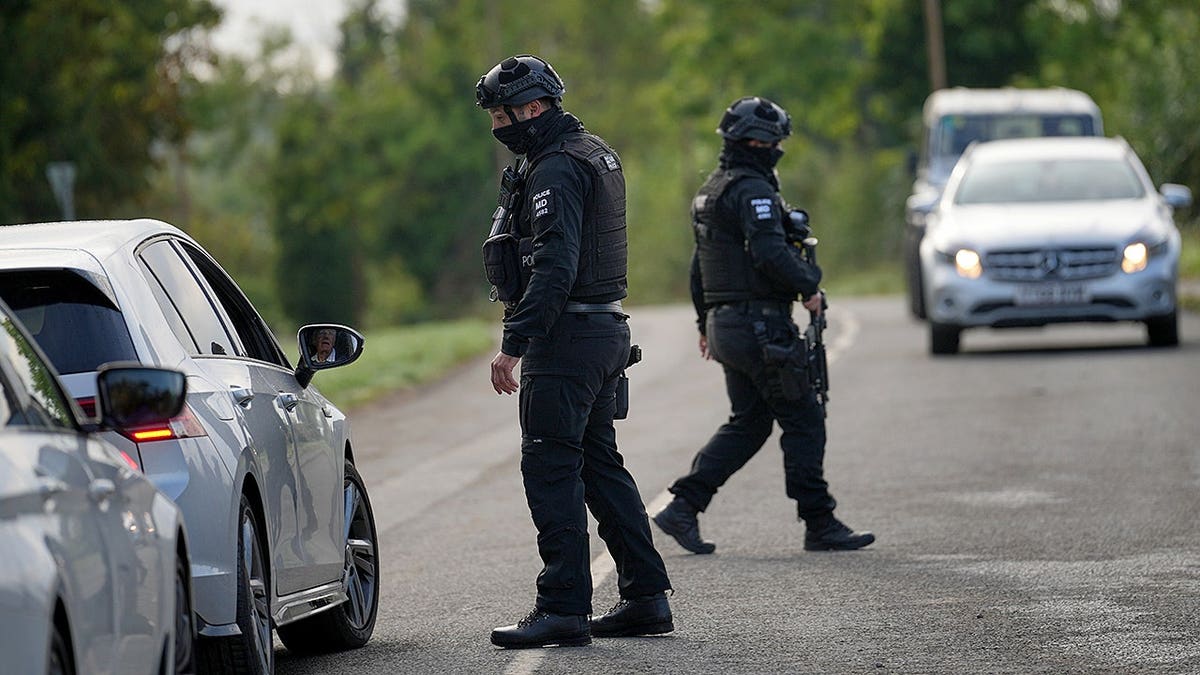
Police guard a road leading to RAF Fairford in Fairford, England, on Monday, Sept. 28, 2026. (AP Photo/Alastair Grant)
A spokesperson for the British government told Fox News Digital, «The police have issued a statement this afternoon from the head of CTP. We don’t have any further comment at this early stage.»
With respect to the Fox News Digital press query about Miliband’s meeting with Iranian Foreign Minister Abbas Araghchi at the U.N., the British government spokesperson sent Fox News Digital a readout of the meeting, «The Foreign Secretary told Araghchi that Iran should choose de-escalation and diplomacy instead of prolonging the war. He underlined the importance of restoring freedom of navigation and the full reopening of the Strait of Hormuz, stressing the impact continued disruption has on global security and economic stability.
«The Foreign Secretary reiterated the UK’s unwavering resolve to combat threats from Iranian-linked groups in UK soil, including attacks on the British Jewish community. The Foreign Secretary made clear that Britain will not tolerate intimidation, threats or hostile activity on UK soil and set out the measures the Government has taken in response. He also raised the ongoing detention of Craig and Lindsay Foreman, repeating the UK’s call for their immediate release and stressing that their welfare remains a priority for the Government.»
Reuters contributed to this report.
united kingdom, war with iran, terrorism, national security, iran
INTERNACIONAL
Republicans zero in on key player accused of helping Democrat fundraising giant hide foreign cash
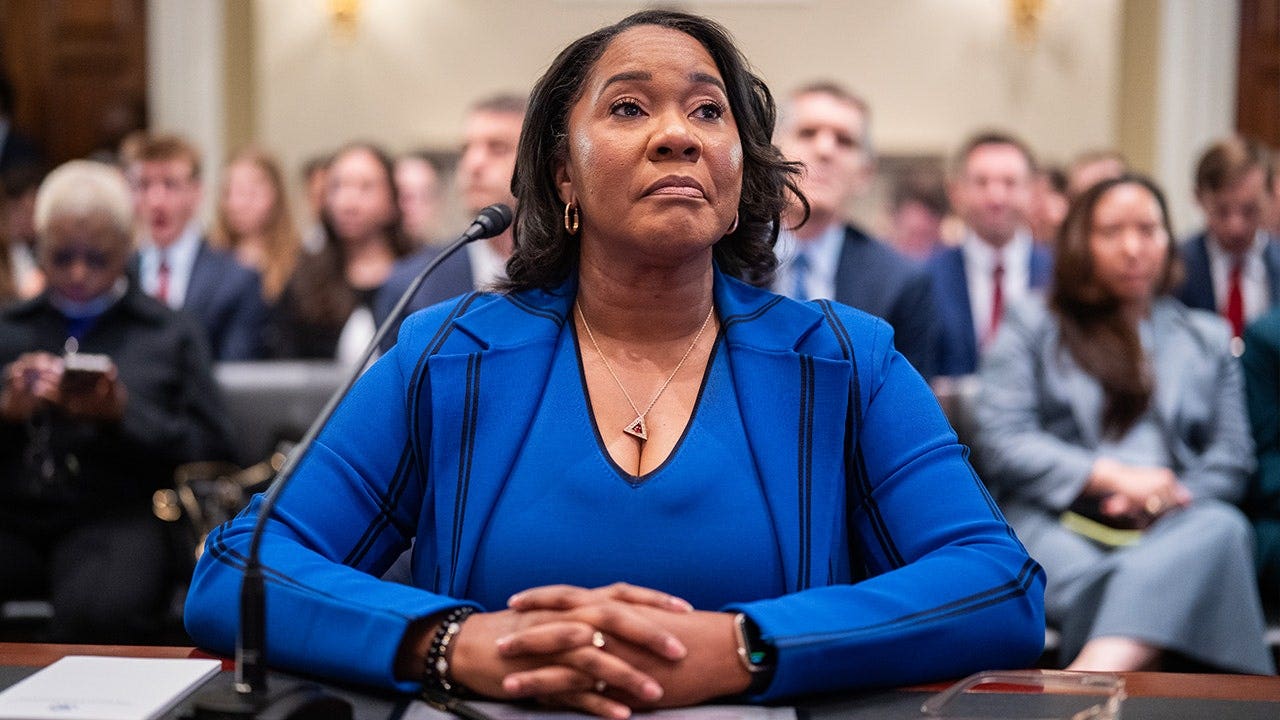
FIRST ON FOX: House Republicans’ investigation into Democrats’ main fundraising platform is heating up on the heels of an explosive report that raised questions about whether left-wing candidates’ campaigns were raking in foreign cash.
Top House GOP committee chairs are summoning ActBlue attorney Ronald Machen for a closed-door interview sometime before Oct. 9, Digital has learned. A letter sent to Machen Monday morning stated that information he previously disclosed to investigators appears to contradict other data that has been collected, specifically on ActBlue’s verification standards for making sure a donor is a U.S. citizen.
«On September 11, 2026, you provided a briefing to the House Administration, Judiciary, and Oversight and Government Reform Committees regarding the accuracy of ActBlue CEO Regina Wallace-Jones’s prior statements to Congress about ActBlue’s donor and passport collection processes,» the letter said.
«Your review appears to be nothing more than an after-the-fact sugarcoating of ActBlue’s misconduct and Ms. Wallace-Jones’s misrepresentations to the House Administration Committee.»
ANOTHER ACTBLUE LEADER PLEADS FIFTH AS HOUSE INVESTIGATES ALLEGED FOREIGN DONATIONS
The letter was sent by House Judiciary Committee Chairman Jim Jordan, R-Ohio, Committee on House Administration Chairman Bryan Steil, R-Wis., and House Oversight Committee Chairman James Comer, R-Ky., who lead the panels probing ActBlue.
ACTBLUE CO-FOUNDER PLEADS FIFTH AMENDMENT IN CLOSED-DOOR HOUSE GOP GRILLING
ActBlue is a massive platform for campaigns to raise money that’s used by Rep. Alexandria Ocasio-Cortez, D-N.Y., Michigan Senate candidate Abdul El-Sayed and the Democratic leaders of the House and Senate, among others.
Republican lawmakers have long accused the company of having lax verification standards for donors, something ActBlue has said it actively improved since the start of the GOP’s probe. But a new report released earlier this month, first reported by Digital, appears to show employees green-lighting donations despite some questions about where they came from.
FAR-LEFT POLITICIANS STILL USING ACTBLUE AS 88-YEAR-OLD DISPUTES DONATING NEARLY $150,000 TO FUNDRAISING GIANT
Chief among the GOP’s concerns is ActBlue’s passport number verification. According to the report, the field only requires the correct number of characters for a U.S. passport number rather than a valid code for a donation to be accepted.
The Monday letter also points to a 2024 «contemporaneous review by ActBlue’s then-outside counsel, former Biden White House Counsel Dana Remus» which allegedly found «‘a substantial risk that some of the funds’ raised for Democrat campaigns and causes by ActBlue ‘were impermissible contributions from foreign nationals.’»
Remus’ review further found that «passport checks did not always happen» and were «never conducted» when donations were made using third-party fiscal platforms like Apple Pay or PayPal, the letter said.
The Republican chairs said Machen’s prior comments to Congress «conceded that your ‘forensic’ review found that ActBlue processed and accepted donations with foreign indicators even though ActBlue failed to identify a ‘passport number’ or ‘other indicia of eligibility’ for the donor.
HOUSE DEM LASHES OUT AT GOP EFFORTS TO PROBE FOREIGN DONATIONS WITH STUNNING CLAIM ON MOTIVE
«Nonetheless, you defended Ms. Wallace-Jones’s representations to Congress by arguing that ActBlue’s compliance and vetting policy was ‘as close to 100 percent as it could be,’» the letter said.
«Documents produced to the Committees undercut your assertion. These documents demonstrate that if a donor did not have a U.S. passport or a U.S. address, an ActBlue employee retained the ability to determine an ‘alternative method of verifying the [donor’s] citizenship.’ This means an ActBlue employee could put ‘a placeholder,’ including ‘ACTBLUEXX,’ ‘in the passport number field of [the donor’s] ActBlue account.’ The placeholder allows ActBlue to accept all subsequent contributions from the donor without requiring a U.S. passport number.»
ACTBLUE SCRUTINY FUELS NEW GOP BILLS TO TIGHTEN ELECTION DONATION RULES
The letter said Machen’s review was also limited to 2023, arguing it left out potentially valuable information about 2024.
«As such, the review did not accurately represent the totality of ActBlue’s foreign donation vetting and donor outreach practices during the 2024 election cycle. In fact, documents produced to the Committees show that ActBlue relaxed its vetting practices twice in 2024—data that your narrow ‘forensic’ review did not capture,» the letter said.
ACTBLUE SUES TEXAS AG KEN PAXTON, ALLEGING POLITICAL RETALIATION OVER DEMOCRATS’ FUNDRAISING
It also charged that he disputed Remus’ analysis without going into detail on how he established his own findings.
ActBlue has consistently denied any wrongdoing and dismissed Republicans’ most recent findings in a statement to Digital.
«There’s nothing to see here. After we released findings of a third-party forensic analysis that completely undermined a central claim that they have made against ActBlue, Republicans are refusing to move on,» ActBlue said. «Instead, they are orchestrating another political stunt before rushing out of town weeks early to go campaign. This coordinated campaign against ActBlue isn’t about the facts, or legislating, it’s about Republicans’ efforts to silence organizations they believe threaten their agenda.»
A closed-door interview summons is not the same as a subpoena, which is a legally binding order.
politics, investigations, house of representatives, controversies state and local
INTERNACIONAL
La deuda con los fondos de pensiones superaría USD 12 mil millones en 2026 en El Salvador, advierte economista

La deuda del Estado con los fondos de pensiones administrados por las Administradoras de Fondos de Pensiones (AFP) podrían superar los USD 12 mil millones al finalizar 2026, según la proyección del economista César Villalona. Durante una entrevista en YSUCA, sostuvo que esa obligación ejercerá una presión financiera sobre el presupuesto estatal de 2027.
Villalona estimó en USD 3,576 millones los intereses acumulados sobre la deuda estatal con los fondos previsionales entre 2022 y 2026. El economista presentó ese monto a partir de los saldos anuales de la obligación y de una tasa de interés de 7% que, según expuso, el Gobierno debió pagar.
El economista indicó que la deuda previsional cerró 2022 en USD 8,197 millones y que los intereses de ese año ascendieron a USD 574 millones. Para 2023, situó la deuda en USD 9,495 millones, con intereses de USD 665 millones.
Según su exposición, la deuda con los fondos de pensiones alcanzó USD 10,526 millones en 2024 y generó intereses por USD 737 millones. Para 2025, afirmó que el saldo llegó a USD 11,241 millones y que el 7% de intereses representó USD 787 millones.

Villalona proyectó que la deuda superará los USD 12 mil millones al cierre de 2026 y estimó intereses cercanos a USD 840 millones para ese año. Al enumerar los montos que atribuyó a cada período, afirmó: “Los intereses acumulados son USD 574 millones, USD 665 millones, USD 737 millones, USD 787 millones y USD 840 millones. Eso da USD 3,576 millones”.
El presupuesto de 2027 y el costo previsional
Villalona sostuvo que el Gobierno no podría incorporar el pago completo de esos intereses acumulados en el presupuesto de 2027. Según dijo, los USD 3,576 millones equivaldrían a más de 30% del presupuesto estatal de 2026, por lo que dudó de que el Ejecutivo pueda asumir esa obligación de una sola vez.
“Es imposible que el año que viene, sencillamente es imposible, el Gobierno diga: ‘Voy a pagar todos estos intereses acumulados’”, afirmó el economista en la entrevista con YSUCA.
El analista explicó que el presupuesto estatal antes incluía una partida denominada costo previsional. Ese rubro reunía las obligaciones derivadas de los préstamos otorgados al Estado por los fondos de pensiones desde 2007, durante la administración de Antonio Saca.
Según Villalona, el costo previsional dejó de aparecer en los presupuestos desde 2023. Afirmó que tampoco figura en las cuentas de 2024, 2025 y 2026, aunque la deuda con los fondos administrados por las AFP ha seguido aumentando.
El economista consideró que incluso un pago parcial de USD 600 millones o USD 700 millones generaría un problema financiero para el Estado. Mencionó que el Gobierno tendría que buscar recursos mediante recortes en subsidios, empleo público, educación o salud, o a través de un aumento de impuestos.

Las reformas que podrían afectar a trabajadores
Villalona planteó que la futura reforma de pensiones podría modificar parámetros como la edad de jubilación, el número de años requeridos para cotizar y el porcentaje de aporte mensual de trabajadores y empleadores.
El economista señaló que, de acuerdo con las reglas vigentes que mencionó, en El Salvador, los hombres se jubilan a los 60 años y las mujeres a los 55. También indicó que se requieren 25 años de cotización, equivalentes a 300 meses, para acceder a una pensión.
Entre las posibilidades que expuso, mencionó elevar la edad de retiro, ampliar el período de cotización a 30 años o aumentar el descuento aplicado a los salarios. Sin embargo, cuestionó que esas medidas permitan resolver la deuda estatal con los fondos de pensiones.
“No se va a resolver el problema financiero golpeando los parámetros”, sostuvo Villalona. Como ejemplo, calculó que si 3,500 personas dejaran de jubilarse durante un año por una elevación de la edad de retiro, el efecto financiero sería de poco más de USD 20 millones anuales.
A juicio del economista, ese monto sería limitado frente a una deuda que superaría los USD 12 mil millones. También afirmó que una mayor cotización reduciría el dinero disponible para los trabajadores, sin solucionar por sí misma las obligaciones que el Estado mantiene con las AFP.

Villalona recordó que la reforma previsional anterior elevó el aporte patronal y las comisiones cobradas por las AFP. Según las cifras que presentó, las ganancias de las administradoras pasaron de USD 17 millones en 2022 a casi USD 40 millones en 2025.
Para 2026, proyectó que esas utilidades podrían acercarse a USD 55 millones. Dijo que las AFP ya acumulaban cerca de USD 30 millones durante los primeros siete meses del año.
La deuda frente a los ingresos del Estado
Villalona cuestionó que la deuda pública se mida principalmente en relación con el Producto Interno Bruto (PIB). Explicó que el PIB representa el valor de los bienes y servicios generados en un país, pero no equivale a recursos que el Estado pueda utilizar directamente para cubrir sus compromisos.
El economista propuso comparar la deuda con los ingresos corrientes del Gobierno. “¿Con qué tú compararías tu deuda? Yo creo que la compararía con sus ingresos”, planteó durante la entrevista.
Según los datos que citó, la deuda del Gobierno central era de USD 19,054 millones en 2018, mientras los ingresos corrientes fueron de USD 4,953 millones. Con esa relación, sostuvo que el Estado podía cubrir el 26% de su deuda con los ingresos de ese año.
Para 2024, Villalona situó la deuda del Gobierno central en USD 30,345 millones y los ingresos corrientes en USD 7,733 millones. De acuerdo con su cálculo, esos ingresos equivalían a cerca de 25% de la obligación.

Hasta julio de 2026, afirmó que la recaudación estatal llegaba a USD 5,860 millones y que la deuda del Gobierno central sumaba USD 33,112 millones. Con esa proporción, los ingresos solo permitirían cubrir 17.7% de la deuda. “La deuda está más pesada”, afirmó.
Préstamos para pagar deuda e intereses
Villalona afirmó que entre enero y julio de 2026 el Gobierno recibió desembolsos de préstamos por USD 1,460 millones. En ese mismo período, indicó, pagó USD 1,345 millones por obligaciones de deuda, por lo que la diferencia contable entre ambos movimientos fue de USD 115 millones.
El economista sostuvo que 92% de los recursos obtenidos a través de nuevos préstamos se destinó al pago de obligaciones previas. Pese a esos pagos, afirmó que la deuda creció USD 1,211 millones hasta julio de 2026.
Según Villalona, 82% de los pagos realizados durante ese período correspondió a intereses. Explicó que esos desembolsos no reducen el capital adeudado, por lo que el Estado sigue adquiriendo deuda mientras destina la mayor parte de los fondos recibidos a atender vencimientos anteriores.

“Más del 90% del endeudamiento es para pagar deuda”, afirmó. El economista describió esa dinámica como un círculo de deuda para pagar deuda, debido a que el Estado obtiene financiamiento, paga obligaciones e intereses y termina con un saldo mayor.
Déficit fiscal, comercio exterior e inversión
De acuerdo a los datos presentados por el economista, el déficit fiscal del país fue de 3.2% del PIB en 2024, aumentó a 3.5% en 2025 y rondaría 3.1% en 2026.
A su juicio, la cifra prevista para 2026 se mantiene cercana a la registrada en 2024. Añadió que el problema financiero del Estado se agrava porque la deuda sigue creciendo, incluso cuando el déficit fiscal se mantiene o muestra variaciones menores.
Sobre el sector externo, señaló que el déficit de cuenta corriente pasó de 2.7% del PIB en 2024 a 3.5% en 2025. Explicó que esa cuenta reúne los ingresos y salidas vinculados con exportaciones, importaciones, servicios y remesas.
Villalona indicó que el déficit de cuenta corriente creció 27% durante el primer trimestre de 2026. Cuando las salidas superan a los ingresos por comercio, servicios y remesas, explicó, el país necesita cubrir la diferencia mediante endeudamiento o inversión extranjera.
El economista afirmó que el déficit comercial de bienes se duplicó entre 2019 y 2025. Hasta agosto de 2026, cifró la diferencia entre importaciones y exportaciones en USD 8,260 millones, un aumento de 13.4% frente al período anterior.

Villalona proyectó que el déficit comercial podría cerrar 2026 cerca de USD 12 mil millones. Como comparación, recordó que ese saldo negativo era de USD 5,699 millones en 2019.
Sobre la inversión extranjera directa, Villalona afirmó que alcanzó USD 826 millones en 2018 y que no volvió a llegar a ese nivel desde 2019. Según dijo, fue de USD 475 millones en 2025 y cayó 40% durante los primeros tres meses de 2026.
El economista reconoció el crecimiento económico de El Salvador y lo atribuyó a los rubros de construcción, transporte y finanzas. En contraste, afirmó que la actividad de enseñanza cayó 0.3% en 2025; agua y alcantarillado, 0.7%; salud humana y asistencia social, 2.5%; y los planes de seguridad social, 3.7%
el salvador,centro histórico de san salvador,palacio nacional,adultos mayores,población el salvador

Iran under scrutiny after plot foiled near UK base used by US military

Republicans zero in on key player accused of helping Democrat fundraising giant hide foreign cash

Visita del Papa León XIV a la Argentina: qué se sabe de los feriados y toda la agenda oficial

El Gobierno descarta elevar una protesta ante Chile luego de que su ministro de Defensa defendiera la autodeterminación de los isleños

Dólar hoy: a cuánto operan todas las cotizaciones minuto a minuto este lunes 28 de septiembre

Mica Lapegüe mostró la reacción que tuvo al amamantar por primera vez a su hija: “No creía la fuerza que tiene”

La pobreza subió al 32,3% en el primer semestre del año y afectó a 15,5 millones de personas

El kirchnerismo muestra encuestas que dan a CFK competitiva para condicionar a Kicillof en el armado del PJ

Soros-linked prosecutor faces primary challenge as fellow Democrat targets his record

Qué leer esta semana: Harwicz, los mitos de la alquimia y la precariedad argentina sin fondo

 INTERNACIONAL2 días ago
Trump’s Greenland deal shadows Xi visit after years of Beijing eyeing Arctic influence
- CHIMENTOS2 días ago
Mauro Icardi confirmó su infidelidad con la China Suárez a Wanda Nara, mientras estaban casados y recordó detalles muy íntimos: «Qué hijo de p…»
- INTERNACIONAL2 días ago
El secretario de Defensa británico dijo que el Reino Unido está preparado para defender militarmente las Malvinas