INTERNACIONAL
Sin reservas, sin protocolos y con Nicaragua sin poder abastecer a sus vecinos: la fractura del modelo agrícola centroamericano

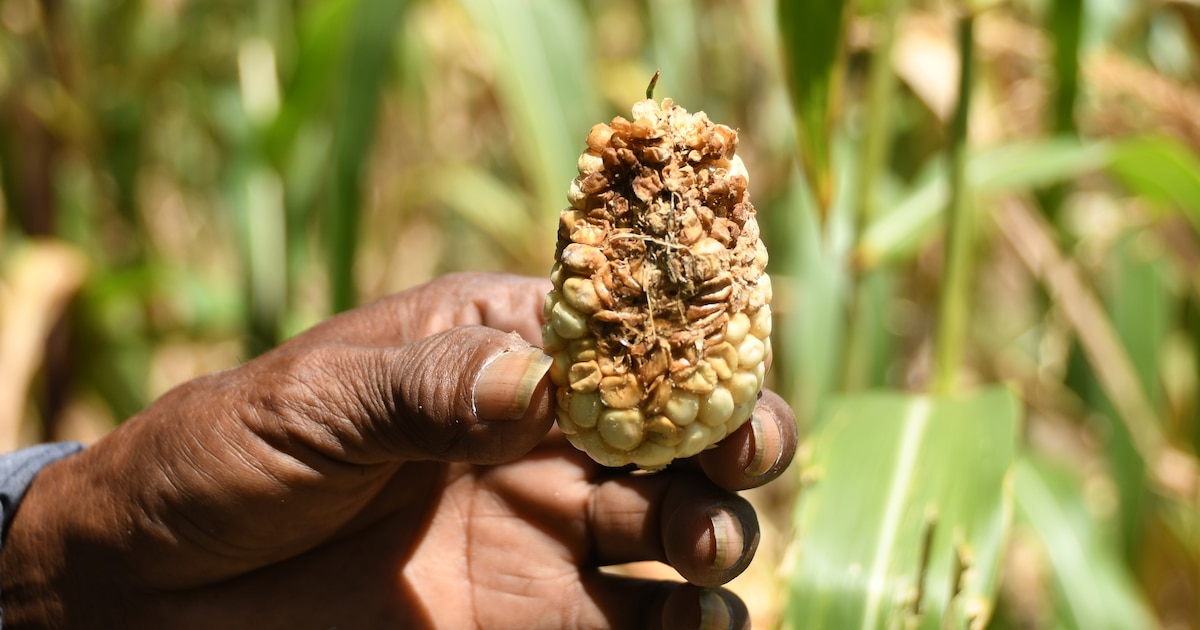
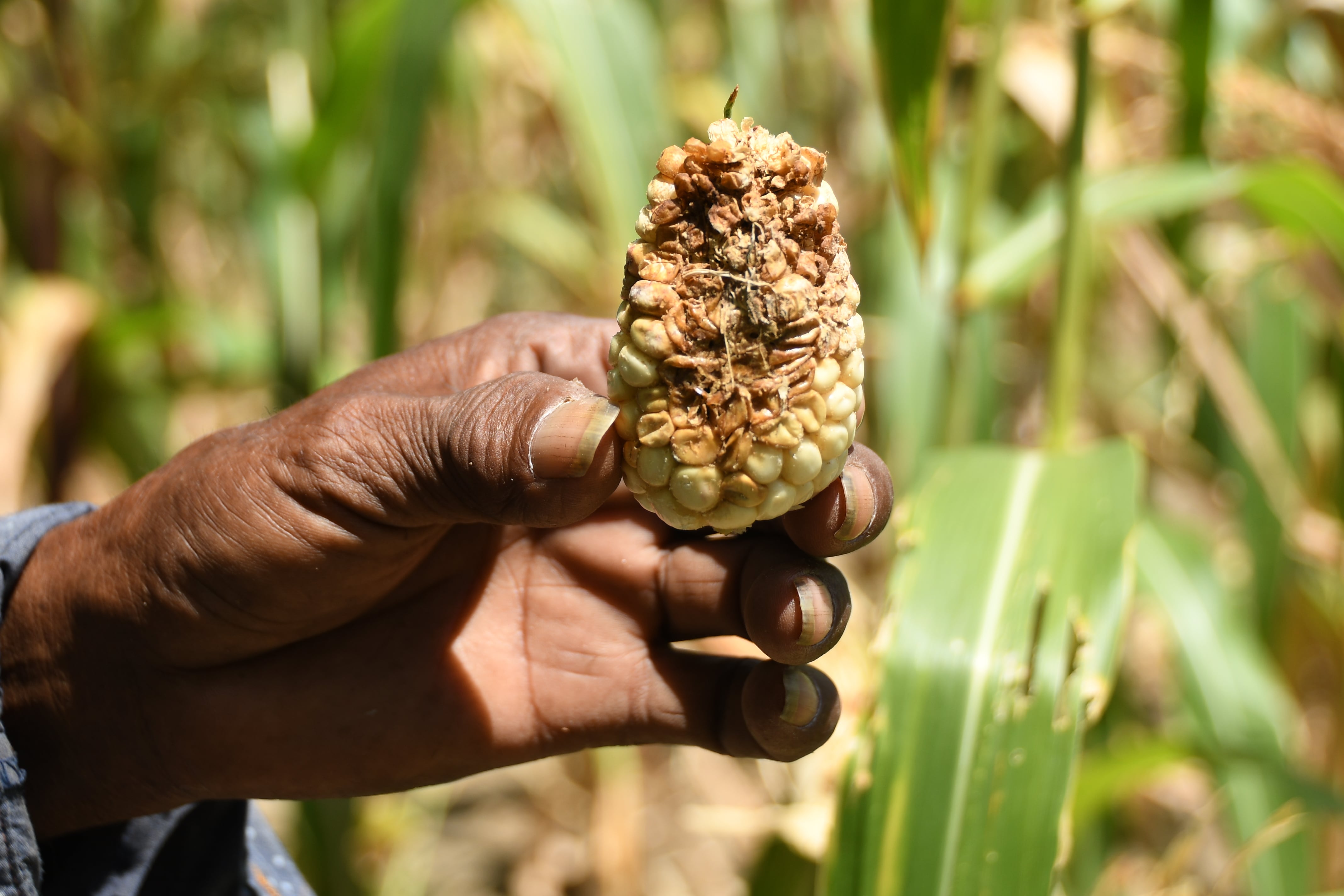
El frijol nicaragüense que llega a los mercados salvadoreños ilustra el problema de fondo: Centroamérica integró sus mercados agrícolas, pero no construyó los mecanismos para proteger esa integración cuando la crisis golpea a todos los proveedores al mismo tiempo. Así lo plantea un análisis publicado por Divergentes, medio centroamericano de periodismo.
El actual episodio de El Niño funciona como prueba de estrés para todo el modelo regional. La sequía deja al descubierto una contradicción que hasta ahora permanecía oculta: los seis países comercian como un solo bloque, pero responden a las crisis como si fueran economías aisladas.
El comercio regional pasó del 7% al 30% en seis décadas
El intercambio intrarregional representaba apenas el 7% de las exportaciones de la zona en 1960. Hoy esa proporción ronda el 30%, según el análisis de Divergentes.
La cifra convirtió al propio mercado regional en uno de los principales destinos de las exportaciones centroamericanas. Ningún país produce ya de forma aislada: la disponibilidad de frijol en Costa Rica depende de lo que ocurra en Nicaragua, y los precios del maíz en Honduras no responden solo a la cosecha hondureña.
¿Por qué El Niño afecta más a Centroamérica que sequías anteriores? Porque los países que tradicionalmente compensaban las pérdidas de sus vecinos también están golpeados esta vez.

El mecanismo de respaldo regional se debilita justo cuando más se necesita, y eso convierte una sequía localizada en un problema de toda la cadena de suministro.
Nicaragua, el proveedor que ya no puede sostener a la región
El caso del frijol resume la fragilidad del sistema. Nicaragua ha ejercido durante años el papel de principal proveedor regional del grano y compensaba los déficits que aparecían en otros mercados.
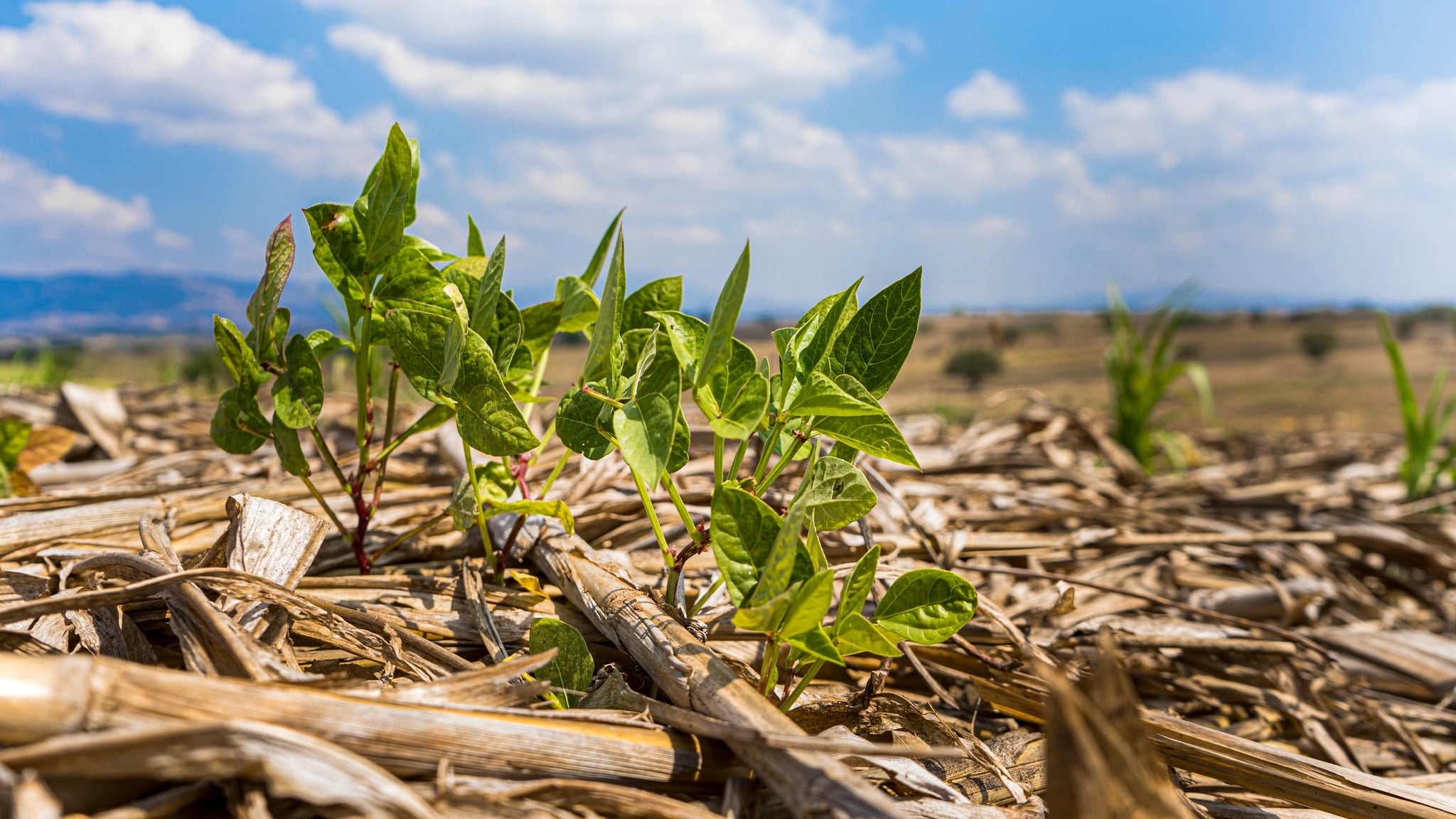
Ese respaldo ya no puede darse por seguro. Cuando el país que suele cubrir la escasez enfrenta las mismas limitaciones que sus compradores, la interdependencia deja de operar como ventaja y se transforma en vulnerabilidad compartida, señala Divergentes.
El fenómeno no se limita al frijol. La presión alcanza también a los granos básicos, el café, el ganado y los lácteos, con efectos que llegan hasta las cadenas de procesamiento, los exportadores y los consumidores finales.
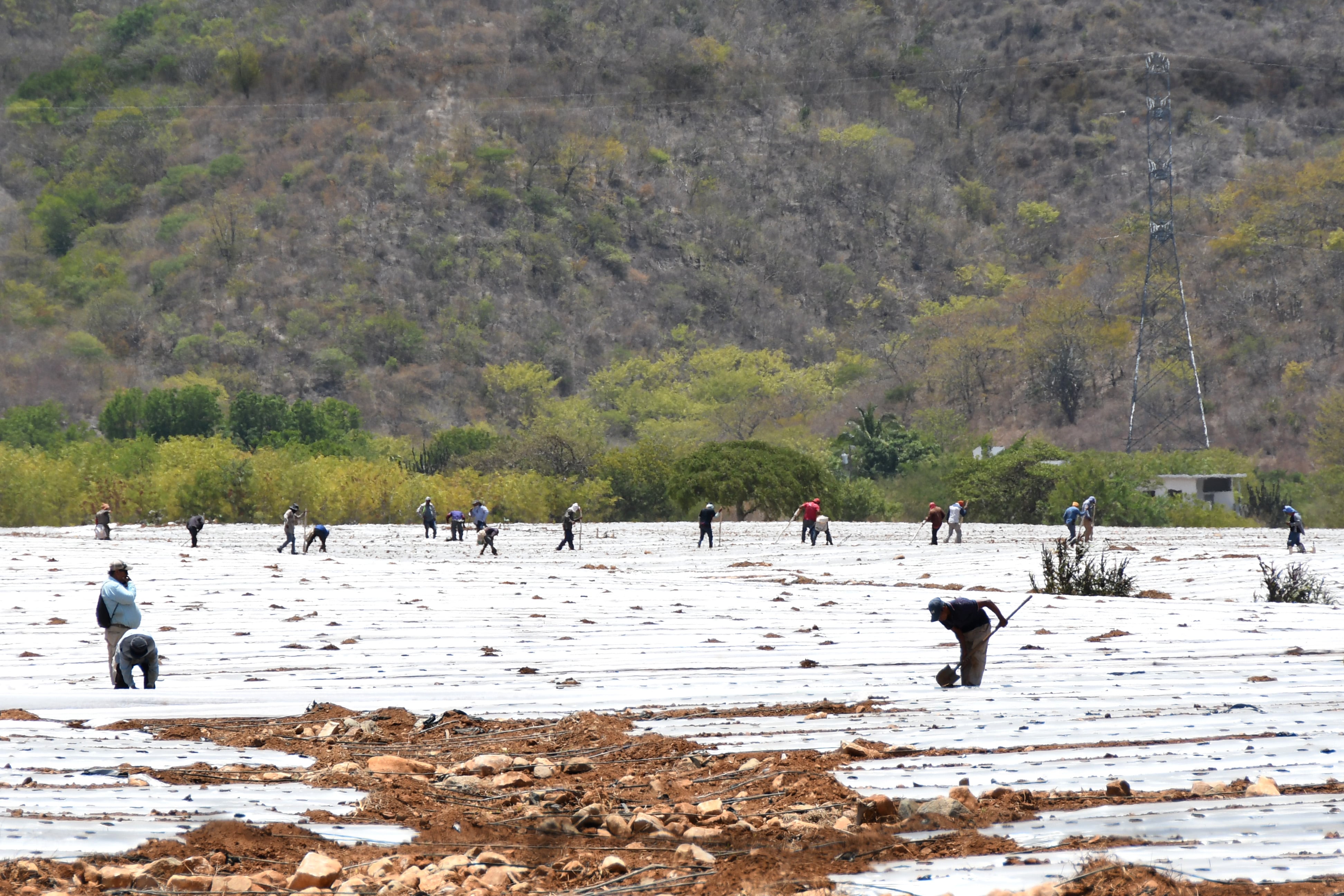
Instituciones para comerciar, no para enfrentar la escasez
El diagnóstico central del análisis es directo: la región construyó instituciones para mover mercancías, pero no para administrar crisis alimentarias compartidas. No existe una reserva estratégica regional de alimentos ni protocolos para coordinar políticas de emergencia entre gobiernos.
Ante ese vacío institucional, los incentivos políticos empujan en sentido contrario a la cooperación. Cada gobierno enfrenta la presión de proteger primero a sus propios consumidores y productores, lo que abre la puerta a restricciones de exportación, trabas administrativas o medidas sanitarias con fines proteccionistas.
Estas decisiones no responden necesariamente a una intención de perjudicar a los países vecinos. Surgen de gobiernos que actúan según incentivos nacionales mientras el problema opera a escala regional, según describe el medio.

El riesgo climático se convierte en riesgo empresarial
Para las compañías que operan en la región, la crisis agrícola trasciende la pérdida de cosechas. Implica mayores costos de materias primas, interrupciones logísticas, volatilidad de precios y cambios regulatorios difíciles de anticipar.
Divergentes plantea una batería de medidas pendientes: un sistema regional de alerta temprana que combine datos climáticos, productivos y comerciales, reservas coordinadas de maíz y frijol, protocolos que limiten las restricciones comerciales unilaterales en emergencias y mecanismos de financiamiento que actúen antes de que la pérdida agrícola derive en inflación y conflictividad social.
Nada de esto requiere una integración política profunda ni una nueva burocracia regional. Exige, según el planteamiento, reconocer que la realidad económica ya se integró y que las instituciones deben ponerse a la altura de esa realidad.
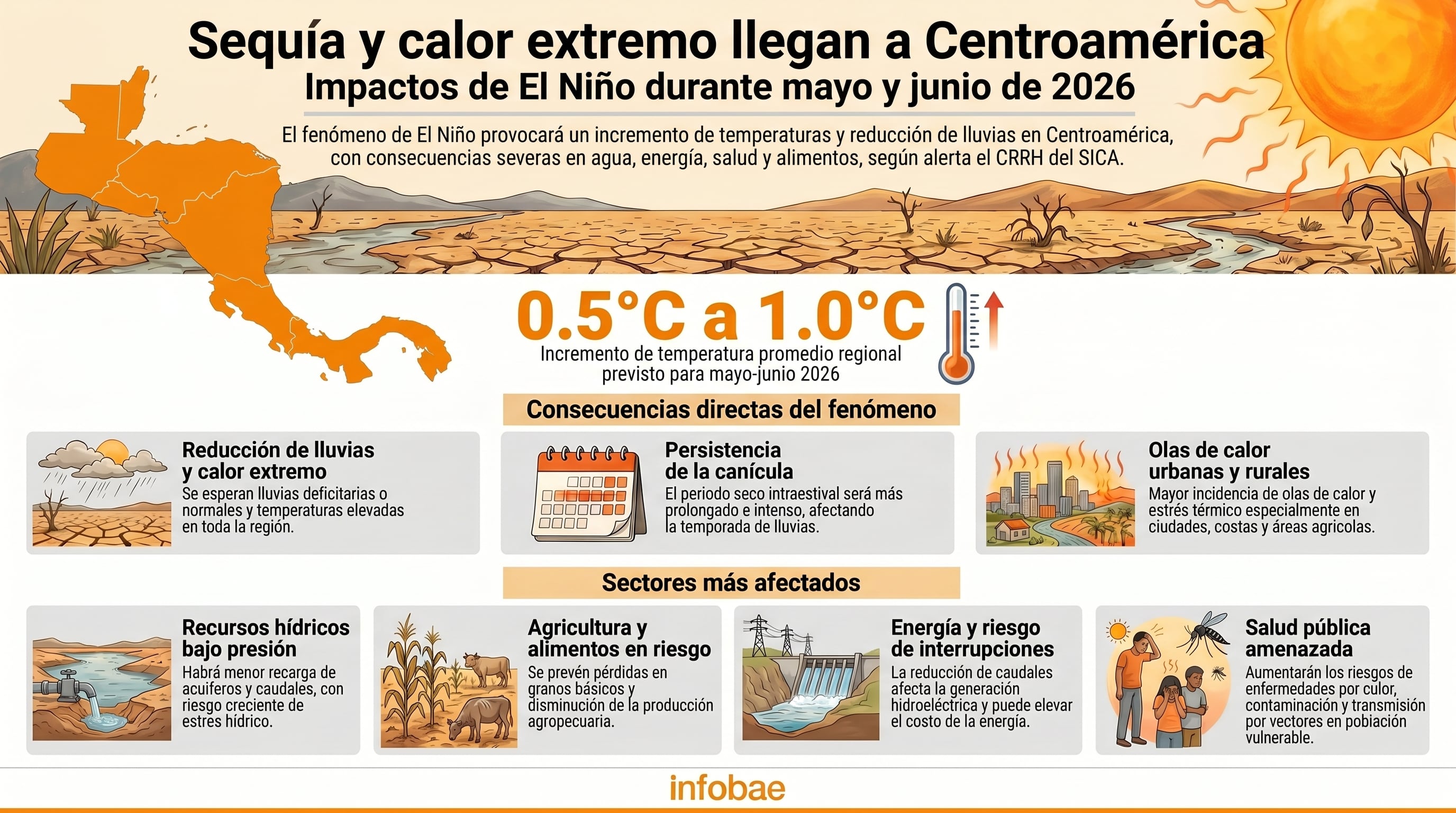
Una pregunta que va más allá de los alimentos
La misma tensión que hoy aparece en el sector agrícola se repetirá, advierte el análisis, en la gestión del agua, la energía, las telecomunicaciones y la infraestructura logística. Los riesgos contemporáneos no respetan fronteras, pero las herramientas para administrarlos siguen atadas a ellas.
La sequía actual terminará, como terminaron las anteriores. Pero los fenómenos climáticos extremos seguirán siendo más frecuentes y la volatilidad internacional seguirá presionando la seguridad alimentaria de la región.
La pregunta de fondo, plantea Divergentes, no es cómo responder a este episodio puntual de El Niño. Es si Centroamérica está dispuesta a construir mecanismos permanentes para gestionar vulnerabilidades que ya comparte, o si seguirá funcionando como mercado común solo cuando conviene y como seis economías separadas cuando llegan los riesgos.
La integración económica de la región ya es un hecho consumado. Lo que queda pendiente, según el medio, es decidir si esa integración tendrá una gobernanza a la altura o si Centroamérica esperará a la próxima crisis para recordar, una vez más, que el mercado llegó antes que las instituciones.
sequia,guatemala,campesinos







INTERNACIONAL
Inside Arab nation’s battle against radicalism as top official warns of threat brewing on Europe’s streets

NEWYou can now listen to Fox News articles!
ABU DHABI, United Arab Emirates — A senior Emirati official is warning that demonstrations in Europe have crossed a line from political expression into a national security threat, arguing that extremism must be confronted before it turns violent.
«You can go demonstrate, talk, give a speech, but what [we] saw in the street in 11 cities in Europe is not freedom of speech. It is a threat to national security,» Dr. Ali Rashid Al Nuaimi, chairman of the Defense, Interior and Foreign Affairs Committee of the UAE’s Federal National Council, told Fox News Digital in an exclusive interview.
The remarks come against a wider European debate over radicalization. On Nov. 3, Europol reported that authorities from 16 countries had referred more than 9,000 links to extremist and terrorist material appearing across 47 social media and gaming platforms. The operation targeted online role-playing content promoting jihadist, far-right, far-left and anarchist violence, including material that could draw minors toward extremist networks.
AN IRANIAN REFUGEE’S WARNING TO AMERICAN UNIVERSITIES EMBRACING FOREIGN FUNDING AND RADICALISM
A car burns as demonstrators look on during a nationwide day of strikes and protests over wages, the cost of living and public services, called by French labor unions and joined by high school and university students calling for better education conditions, in Lyon, France, on Nov. 5, 2026. (Reuters)
What makes the UAE’s response distinctive, officials and experts argue, is its belief that the struggle against extremism begins long before police make an arrest — in classrooms, families and the way people of different backgrounds learn to live together.
«The root is extremism, not violent extremism. … In our school system, we promote coexistence. We promote the values that bring us together, regardless of our religion, our nationality, our ethnic [background], our color. … We have to learn how to live with our differences and to accept everyone as they are,» Al Nuaimi said.
Preventing extremism before violence
At Hedayah, the Abu Dhabi-based International Center of Excellence for Countering Extremism and Violent Extremism, Fox News Digital spoke with Maqsoud Kruse, chairman of the center’s International Steering Board and the UAE foreign minister’s envoy for countering extremism and terrorism.
Kruse, an organizational psychologist who helped establish Hedayah in 2012, described radicalization as a process that can begin with ideas, develop through emotional responses and, in some cases, lead to violent behavior. Understanding that progression, he argued, creates opportunities to intervene long before violence occurs.
«When we talk about countering extremism and terrorism, we understand and realize that no one country, no one institution, no one individual can deal with this on their own,» Kruse told Fox News Digital. «We need that international collaboration, that networking, that bridging, where everyone is part of the solution.»
INSIDE HOLOCAUST MEMORIAL IN HEART OF ARAB WORLD AS FOUNDER REVEALS WHAT CHANGED EVERYTHING

Maqsoud Kruse, chairman of Hedayah’s International Steering Board and the UAE foreign minister’s envoy for countering extremism and terrorism, speaks with Fox News Digital in Abu Dhabi about preventing radicalization through education, psychology and international cooperation. (Efrat Lachter/Fox News Digital)
Within the UAE, he explained, the emphasis is on an integrated approach that brings together psychology, sociology, education and economics rather than treating extremism solely as a security problem.
«That integrated approach means we need to shift from a problem-focused approach to a solution based approach where we create patterns of hope,» he said.
The distinction is central to the UAE’s tolerance strategy: rather than waiting until extremist beliefs turn into violence, Kruse argues that societies must invest in education, community engagement and other preventive measures that address the underlying drivers of radicalization.
He also challenged the assumption that poverty alone drives extremism. Wealthy, educated individuals can embrace extremist ideologies, while millions of people living in hardship never do. Kruse pointed to the experiences of former extremists who abandoned radical movements, arguing that their stories demonstrate the possibilities for rehabilitation and reintegration.
The institution he leads works with governments, researchers and civil society on prevention programs. Kruse’s argument is not that education replaces counterterrorism operations, but that security alone cannot address the ideas and human vulnerabilities that recruiters exploit, and a holistic approach is needed.
RESCUE EXPERT WARNS FLYDUBAI HIJACKING ATTEMPT SHOWS US, ALLIES ARE ‘PLAYING CHECKERS’ AGAINST TERROR THREAT

U.S. President Donald Trump shakes hands with Yousif Al Obaidli, director of Sheikh Zayed Grand Mosque, as he tours the mosque grounds in Abu Dhabi, United Arab Emirates, May 15, 2025. (Brian Snyder/ Reuters)
Messages of coexistence at the Grand Mosque
That philosophy becomes visible in a very different setting across Abu Dhabi: the Sheikh Zayed Grand Mosque.
During a visit to the sprawling white-marble landmark, Fox News Digital passed displays on the approach to the prayer halls emphasizing tolerance, mutual respect and the legacy of the UAE’s founding president, Sheikh Zayed bin Sultan Al Nahyan. The messages are difficult to separate from the architecture: bright courtyards, floral inlays and rows of colonnades that draw visitors toward one of the country’s most recognizable religious sites.
The mosque, with its 82 domes and architectural influences from across the Islamic world, functions as a place of worship and a destination for visitors interested in the country’s religious and cultural traditions.
ARCHBISHOP OF CANTERBURY WITHDRAWS AWARD FROM MUSLIM CLERIC AFTER PAST OSAMA BIN LADEN PRAISE SURFACES

A sign marking the Multifaith Gallery at the Crossroads of Civilizations Museum in Dubai, United Arab Emirates, where exhibits explore the shared history and heritage of different religious communities. (Efrat Lachter/Fox News Digital)
The vision behind the displays predates the UAE’s opening to Israel. Sheikh Zayed helped establish the federation in 1971, and the leadership has long presented tolerance as a central part of national identity. The Sheikh Zayed Grand Mosque Centre points to religious accommodation and the importance of welcoming people from different cultures as elements of his legacy.
The policy became more formal over time. In 2015, the UAE adopted legislation against discrimination and religious hatred. In 2016, it appointed a minister of state for tolerance and launched a national tolerance program. The government updated its legal framework in 2023 to address discrimination, hatred and extremism.
Today, the UAE government says the country is home to more than 200 nationalities, a scale of diversity that creates an everyday test of how different cultures and faiths share public space.
ITALY’S SCHOOL VEIL BAN EXPOSES EUROPE’S ASSIMILATION FIGHT AS EXPERT WARNS US COULD BE NEXT
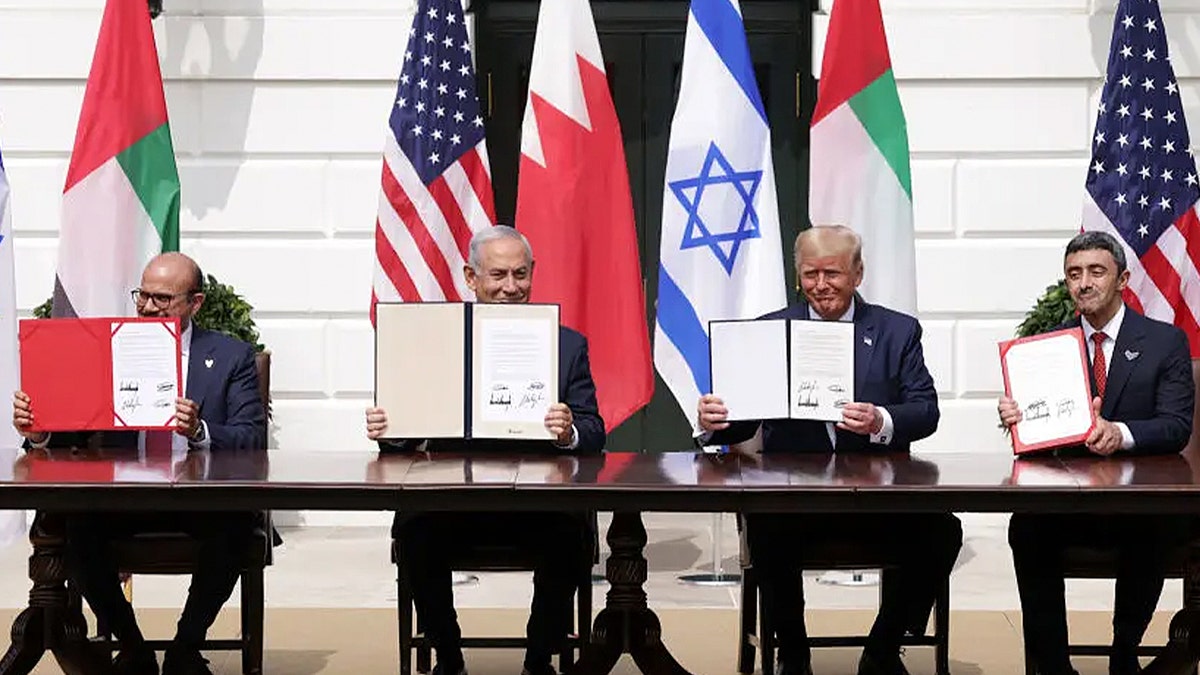
Israeli Prime Minister Benjamin Netanyahu, Bahrain’s Foreign Affairs Minister Abdullatif bin Rashid Al Zayani, and United Arab Emirates Foreign Affairs Minister Abdullah bin Zayed Al Nahyan join President Trump for the Abraham Accords signing ceremony on the South Lawn of the White House on Sept. 15, 2020, in Washington. (Alex Wong/Getty Images)
From interfaith dialogue to the Abraham Accords
The UAE has also tried to extend that vision beyond its borders. In February 2019, Pope Francis and Ahmed Al-Tayeb, the Grand Imam of Al-Azhar, signed the Document on Human Fraternity in Abu Dhabi, calling for dialogue and peaceful coexistence.
Four years later, the country inaugurated the Abrahamic Family House on Saadiyat Island. Its mosque, church and synagogue occupy separate but equally prominent buildings linked by common spaces intended for learning and conversation.
During Fox News Digital’s visit to the UAE, the Abrahamic Family House was temporarily closed. Emirati officials told Fox News Digital that the closure followed an Iranian attempt to target the interfaith complex during the war.
In Dubai, Mohammed Baharoon, director general of the B’huth research center, argued that the Emirates’ commitment to tolerance cannot simply be credited to oil wealth.
«So it is will, not wealth. It’s vision, views, and respect to people,» Baharoon told Fox News Digital, describing what he sees as a deliberate policy decision to attract people from different countries and give them a stake in the UAE’s development.
EUROPEAN PARLIAMENT VOTES TO CONFRONT MUSLIM BROTHERHOOD, ‘ISLAMIST ENTRYISM’ IN OVERWHELMING VOTE

Ahmed Obaid Al Mansoori (right), founder of Dubai’s Crossroads of Civilizations Museum, pictured with a rabbi. Al Mansoori established one of the Arab world’s first permanent Holocaust memorial exhibitions, promoting interfaith understanding and coexistence. (Fox News Digital)
For Baharoon, the Abraham Accords, brokered during President Donald Trump’s first term in 2020, reflected the same thinking on a regional scale. The agreement normalized relations between the UAE and Israel, but he said its ambition went beyond opening embassies.
«The Abrahamic Accords are not just normalization,» he explained, in his view, the aim was to challenge a pattern in which the Israeli-Palestinian dispute had increasingly been framed as a confrontation between entire religions and peoples. Diplomatic recognition, he argued, matters only if it creates opportunities for relationships that survive disagreements between governments.
Al Nuaimi similarly described the accords as an investment in people rather than a bet on any particular Israeli leadership.
«We believe in people-to-people diplomacy. We believe that we have to work on the people, build bridges with the people. … Regardless of the government that will be in charge in Israel, … the only solution is to start working on a permanent solution for both sides, where the Israelis and the Palestinians will accept to live as neighbors, will respect each other, [and] will care about the future of each other.»
He argued that maintaining trust with Israel has also helped the UAE provide humanitarian assistance to Palestinians in Gaza.
«Through that trust, we were able to go and help the Palestinians in Gaza. … We have three hospitals, eight bakeries, and we did the infrastructure for the water, and many facilities. … It’s because of this relationship with the Israelis.»
TOP GULF OFFICIAL OFFERS GLIMMER OF HOPE ON TRUMP-IRAN NUCLEAR TALKS AS THREAT OF WAR HANGS OVER REGION

A sign marking the «Tolerance Path» at Sheikh Zayed Grand Mosque in Abu Dhabi, United Arab Emirates. The visitor experience highlights the country’s founding president’s vision of religious tolerance, mutual respect and peaceful coexistence. (Efrat Lachter/Fox News Digital)
The limits — and the test — of tolerance
There is a tension in the Emirati model. Cultural and religious coexistence does not mean the same freedom to challenge the government. Freedom House’s 2026 assessment describes a political system in which parties are banned and freedom of expression and assembly are sharply restricted. Its civil liberties record complicates any suggestion that the UAE’s system can be transplanted wholesale into European democracies.
Still, during reporting in Abu Dhabi and Dubai, the emphasis on coexistence appeared in settings as varied as the Grand Mosque’s visitor displays, discussions with counter-extremism specialists and the country’s effort to sustain ties with Israel while supporting Palestinians.
On Saadiyat Island, the temporarily closed Abrahamic Family House offers a stark image of the challenge. Three places of worship were built to stand beside one another, yet the wider regional conflict has disrupted the setting in which they were intended to bring people together.
For Kruse, the answer begins with preventing radicalization at its earliest stages. For Baharoon, it requires political will rather than wealth alone. And for Al Nuaimi, whose warning to Europe opened the debate, it means teaching coexistence at home while seeking a diplomatic future in the region.
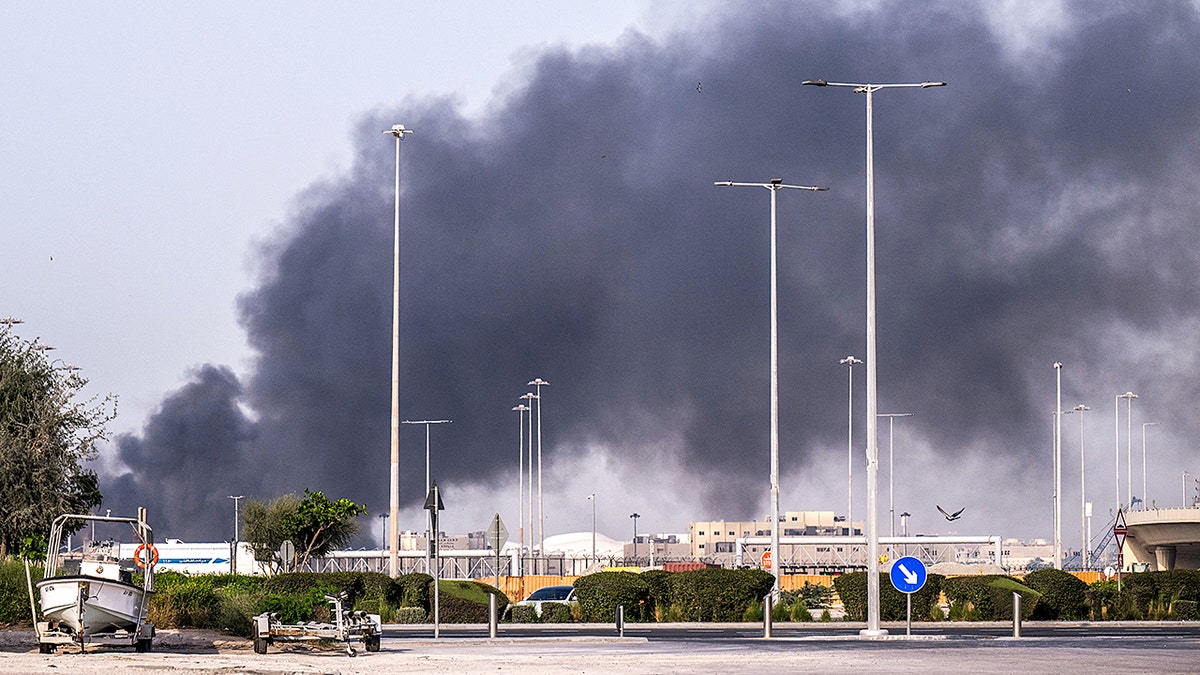
A plume of smoke rises from the Zayed Port following a reported Iranian strike in Abu Dhabi on March 1, 2026. Iran’s retaliatory missile and drone campaign in the Gulf has killed three people and wounded 58 in the United Arab Emirates since it began, Emirati authorities said on March 1, the day after the US and Israel launched a nationwaide attack on Iran killing its supreme leader. (Ryan Lim / AFP via Getty Images)
Whether those ambitions can outlast the pressures of war — or travel beyond the UAE — remains the question.
counter terrorism, middle east, world, world protests
INTERNACIONAL
Inside the House GOP strategy to capitalize on Democrats’ warring factions in the new Congress

EXCLUSIVE: House Republicans are heading into the next Congress ready to brawl.
Rep. Tom Emmer, R-Minn., who is set to go from the No. 3 most powerful House Republican to No. 2 next year, told Digital that the GOP will hold the new Democrat majority «accountable» for their far-left faction’s ideas over the next two years, even if they cannot control what bills get a vote.
Emmer, who has served as House majority whip for the past four years, was elected Tuesday to serve as minority whip alongside incoming House Minority Leader Jim Jordan, R-Ohio. The Speaker of the House position turns over to Democrats, and will likely be won by current minority leader Hakeem Jeffries, D-N.Y.
And despite Jeffries poised to take control of what legislation gets to the House floor, Emmer signaled House Republicans would find ways to push their agenda as well.
JIM JORDAN BECOMES NEW HOUSE GOP LEADER AFTER CLOSED-DOOR VOTE, DEFEATING STEVE SCALISE
«What’s their answer to dealing with costs and wages? We’re going to investigate Trump,» Emmer said in reference to Democrats. «That’s not going to solve the problems that they created. So that’s going to be the job of the whip, is to make sure that we have a coordinated process — committee hearings, floor votes — to expose and define exactly who these people really are.»
PROGRESSIVE GROUP’S 182-PAGE BLUEPRINT MAPS OUT POTENTIAL DEM INVESTIGATIONS INTO TRUMP, CORPORATE ALLIES
Emmer, in his first print interview since winning the House minority whip job, would not go into detail about how Republicans would utilize floor votes, however.
«There’s a toolbox with a bunch of different tools, and you’re going to have to build that strategy as you go from week to week,» he said.
The Minnesota Republican also signaled there would be little appetite for bipartisanship over the next two years, a sentiment he suggested would come from the other side of the aisle.
«Well look, they’re not going to work with us, that’s pretty clear, and I don’t even know if they’re going to be able to work with each other,» Emmer said.
HAKEEM JEFFRIES FACES PROGRESSIVE HOLDOUTS BUT NO RIVAL AS HOUSE SPEAKER RACE TAKES SHAPE
He repeated a short time later, «I see nowhere where they’re going to work with Republicans. And Republicans who think they are should think again, because they will tell you nice things, and then they will just go do what they do.»
Meanwhile other House Republicans are already coming up with ideas on how to put Democrats on the spot on the House floor in the new Congress.
«We’ll file amendments,» said Rep. Randy Fine, R-Fla. «And I think that’ll be where having good debaters and communicators would be important.»
Holding amendment votes is commonplace before large pieces of legislation like the National Defense Authorization Act (NDAA), which Congress has enacted annually for decades to update and reauthorize critical national security policies.
Rep. Nick LaLota, R-N.Y., suggested an emphasis on a parliamentary procedure called the «motion to recommit,» which allows the minority party to get a vote on altering or even killing a bill in its tracks.
«I expect we’ll use that smartly,» LaLota said. «But as well, a Speaker Hakeem Jeffries will be wise to work these problems backwards, to know that anything he puts on the floor that he wants to become law or budget needs President Trump’s signature and probably 60 votes in the Senate.»
Rep. Mark Harris, R-N.C., said «there’s been a lot of conversation about going on offense.»
«We want to make sure that they know when they come to the floor, they’re gonna dread it, I hope,» Harris said.
DEMOCRATS RALLY BEHIND GOP LAWMAKER’S HEGSETH IMPEACHMENT PUSH, SIGNAL MORE TO COME IN JANUARY
But there’s another mechanism for forcing a House vote that’s been used more and more often in recent years — often by their fellow Republicans.
Privileged resolutions allow lawmakers on either side to get a vote on a given bill within two days of its introduction. It generally begins with a procedural vote on whether to «table» the bill or refer it to committee in order to stop it, before a vote on the measure itself.
Rep. Thomas Massie, R-Ky., most recently invoked it to force the House to consider impeaching Secretary of War Pete Hegseth. But that was defeated when the rest of the House GOP banded together to refer the bill to committee.
The GOP lawmakers who spoke with Digital, however, signaled little appetite for using it.
«I think either party would be wise to build consensus around things that help actually deliver for the American people,» LaLota said. «The privileged resolutions have been abused in my time here, and there’s a better way to do business.»
And Emmer said his main goal for the next two years would be winning back the House majority in 2028 — which he insisted was a realistic goal.
He said at least 38 seats flipped by Democrats would be «ready to return to Republican hands,» and could see some old faces return.
Asked whether he wanted to see some of those losing GOP incumbents run for their seats again, Emmer said, «I absolutely hope so, I’ve talked to several already.»
politics, house of representatives politics, congress, house of representatives
Un Súper El Niño ya alcanzó su máxima categoría y amenaza con convertirse en el más intenso desde que existen registros, en 1950. El Centro de Predicciones Climáticas (CPC) de la Administración Nacional Oceánica y Atmosférica de Estados Unidos (NOAA) confirmó el fenómeno el jueves.
El organismo fijó en más del 79% la probabilidad de que el evento se mantenga en categoría fuerte a muy fuerte hasta el trimestre de enero a marzo de 2027.
Las temperaturas del Pacífico marcan récords
Los datos técnicos del CPC confirman que las anomalías térmicas superaron los 4 °C y se expandieron hacia el oeste del Pacífico ecuatorial. Cada zona de monitoreo arrojó cifras que superan ampliamente los promedios históricos.

La región Niño-3.4, el punto de referencia principal para clasificar el fenómeno, subió a +2,5 °C. El sector Niño-3 llegó a +3,6 °C y el área costera Niño-1+2 marcó un extremo de +4,4 °C.
La NOAA sostiene que el fenómeno seguirá fortaleciéndose antes de iniciar un declive paulatino a comienzos de 2027. La probabilidad de que supere en magnitud a todos los eventos registrados desde 1950 se ubica en 60% para los trimestres de octubre a diciembre de 2026 y de noviembre de 2026 a enero de 2027.
Bajo la superficie del océano, el calentamiento también se intensifica. Las anomalías subsuperficiales superan los +10 °C en las profundidades del Pacífico, dato que sostiene una termoclina considerablemente más profunda de lo habitual y refuerza los vientos del oeste en los niveles bajos de la atmósfera.
El Salvador cerró el invierno con casi tres semanas de anticipación
El fortalecimiento del fenómeno llegó en simultáneo con el fin de la temporada lluviosa en territorio salvadoreño. El Ministerio de Medio Ambiente y Recursos Naturales (MARN) informó esta semana que el país ingresó oficialmente a la época seca el lunes 9 de noviembre.
La cartera ambiental constató una disminución sostenida de las precipitaciones que comenzó a manifestarse desde el 18 de octubre. Durante la nueva temporada predominarán jornadas con menor nubosidad, lluvias más escasas y mayor presencia de vientos nortes, con temperaturas frescas en las madrugadas.
El MARN aclaró que no se descartan precipitaciones aisladas si se acercan frentes fríos a la región centroamericana.
El inicio de la época seca se adelantó respecto de lo proyectado apenas semanas antes. La Subunidad Ambiental de la Universidad de El Salvador (UES) había fijado el arranque de la estación para el 14 de noviembre, en un informe sustentado en los 27 modelos internacionales del Instituto de Investigaciones del Clima y la Sociedad (IRI) de la Universidad de Columbia. La totalidad de esos modelos coincide en calificar al fenómeno como “extraordinariamente intenso”.
Pérdidas millonarias en granos básicos
El meteorólogo Danilo Ramírez, coordinador de la Subunidad Ambiental de la UES, advirtió a medios locales que la persistencia de El Niño hasta abril dificultará la transición estacional y anticipó un establecimiento irregular del invierno de 2027 como consecuencia directa del fenómeno.
La Dirección General de Protección Civil ubicó la fase crítica de mayor impacto en el llamado “segundo año de incidencia” del evento, concentrado entre enero y abril de 2027.
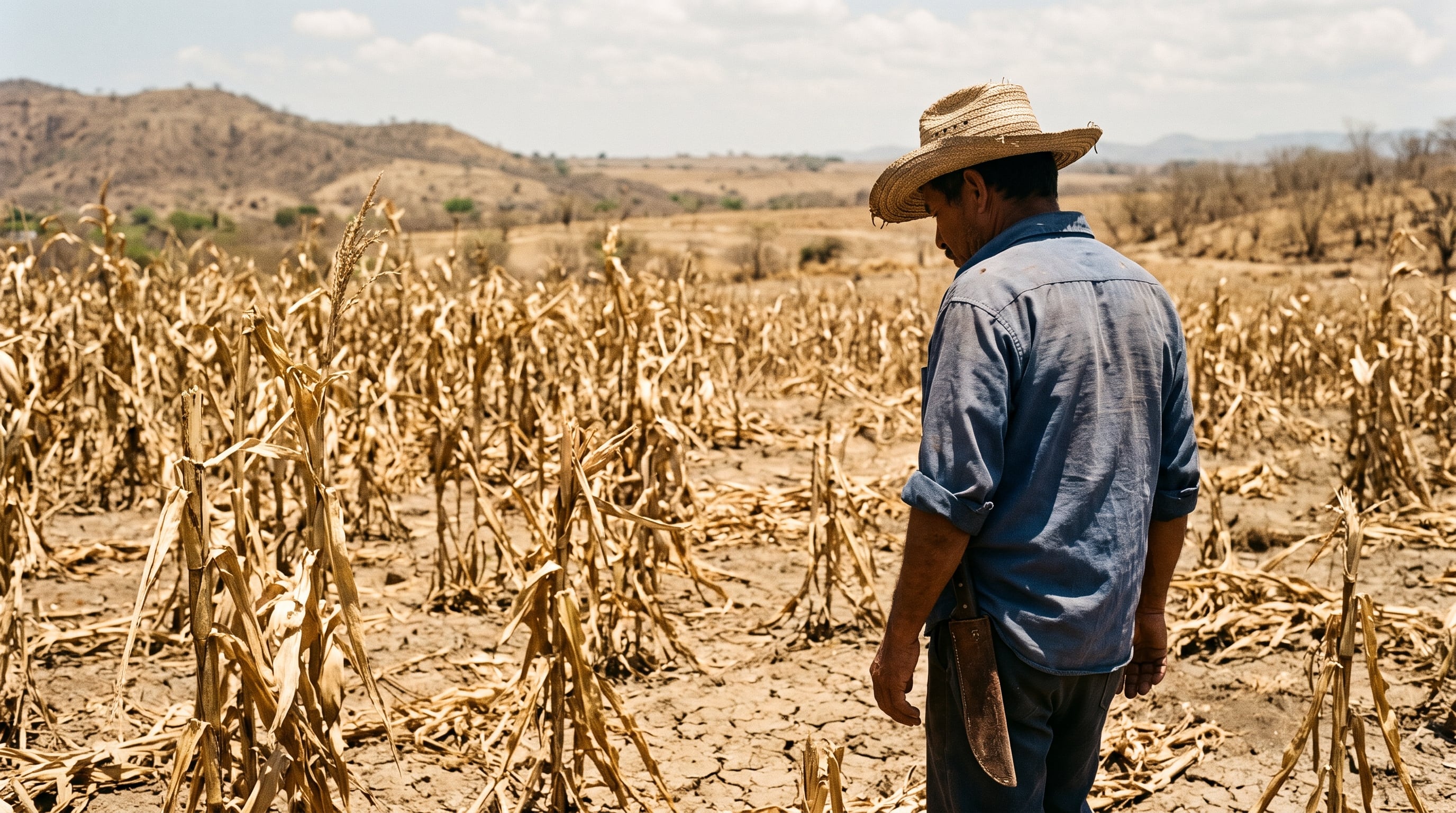
El país permanece bajo alerta roja por sequía, decretada a finales de agosto. La medida responde al riesgo que representa el déficit de lluvias para la producción de aproximadamente 6.9 millones de quintales de granos básicos en las cosechas nacionales.
El impacto ya golpea a las familias agricultoras del Corredor Seco
El fenómeno no es una amenaza futura: ya devastó parte de la cosecha de primera en 2026. Según informó Focos TV, canal salvadoreño, la Cámara Salvadoreña de Pequeños y Medianos Productores Agropecuarios (CAMPO) reportó la pérdida de 2,394,000 quintales de maíz y 78,000 quintales de frijol a nivel nacional en esa siembra.
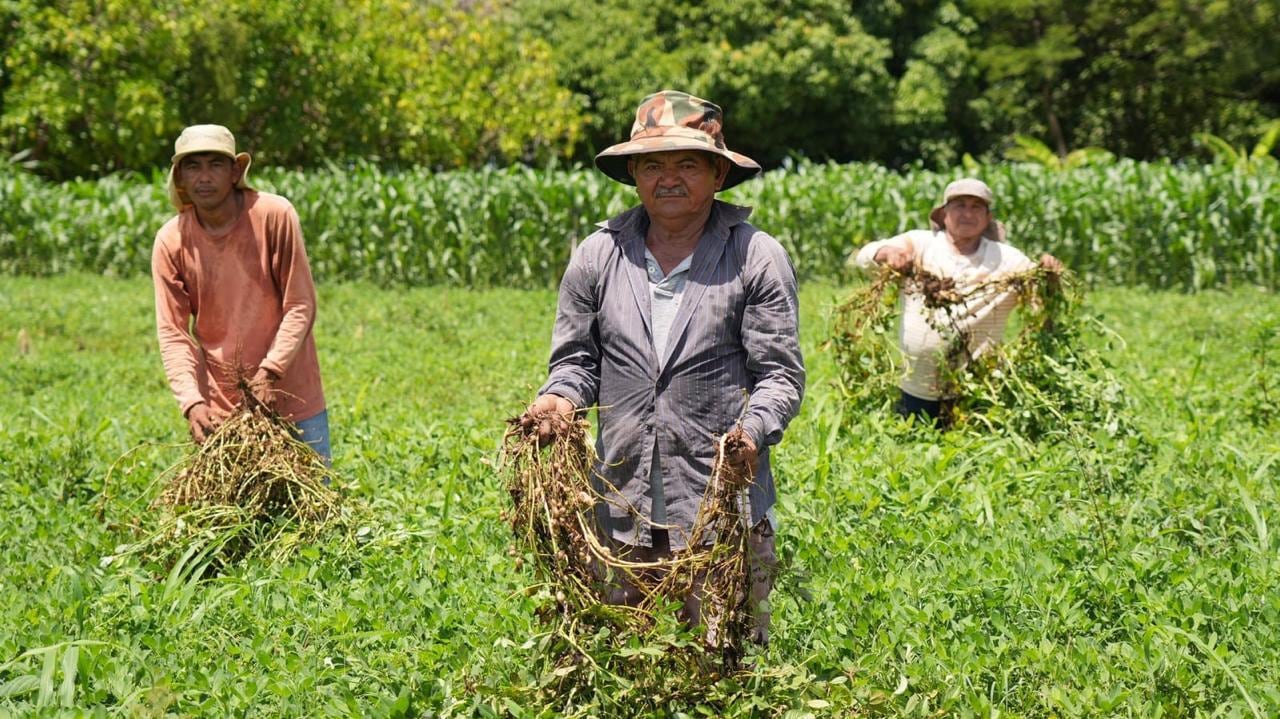
El presidente de CAMPO advirtió sobre la cosecha de postrera, sembrada entre agosto y septiembre: “Esa parte que se sembró, toditita, el 100% está en riesgo”, afirmó al canal.
El Comité Internacional de Rescate (IRC) alertó en septiembre que Centroamérica enfrenta un “Súper El Niño” que alcanzará su punto más crítico entre noviembre de 2026 y enero de 2027. Según las proyecciones del organismo, las lluvias insuficientes podrían empujar a 700 mil personas más al hambre solo en el oriente salvadoreño.
Un relevamiento de Oxfam, organización humanitaria internacional, entre 354 comunidades del Corredor Seco centroamericano, realizado entre julio y agosto, encontró que el 89% señaló a la sequía como causa principal de la pérdida de la cosecha de maíz. El Salvador cuenta con 114 distritos dentro de ese corredor, una de las zonas más afectadas de la región por el fenómeno climático.
sequia,guatemala,campesinos

Inside Arab nation’s battle against radicalism as top official warns of threat brewing on Europe’s streets

Inside the House GOP strategy to capitalize on Democrats’ warring factions in the new Congress

Los bonos en dólares prometen rentabilidad de más del 40% medidos en pesos

Gimnasia de Jujuy vs Almirante Brown: formaciones, hora y dónde ver por tv

El trasfondo de la fuerte discusión entre Pettovello y Barrionuevo antes del discurso del Papa en la UCA

Grego Rossello entre el humor, la televisión y el desafío de MasterChef: “Es difícil no estar enamorado de Wanda”

PILIPOM: UNA NUEVA HERRAMIENTA EDUCATIVA PARA QUE LOS MÁS CHICOS APRENDAN JUGANDO

El Gobierno toma distancia de los mensajes del papa León XIV, mientras el peronismo intenta capitalizarlos

Es millonario, tiene apenas 22 años, heredó una fortuna enorme, se quedó afuera del VIP del Papa León XIV y la gente ovacionó su actitud

Harry Kane, el gran olvidado

 DEPORTE3 días ago
La dolorosa despedida al aire de Horacio Pagani a su amigo Carlos Babington: “Fue una noticia fulminante que la recibí en el auto”
- INTERNACIONAL3 días ago
La plataforma Doctor SV triplicó su red médica y acumuló 5.4 millones de consultas en su primer año en El Salvador
- DEPORTE3 días ago
Fútbol sudamericano: por qué es importante seguir el calendario de partidos