INTERNACIONAL
El Congreso de Brasil aprobó el recorte de la semana laboral a cinco días

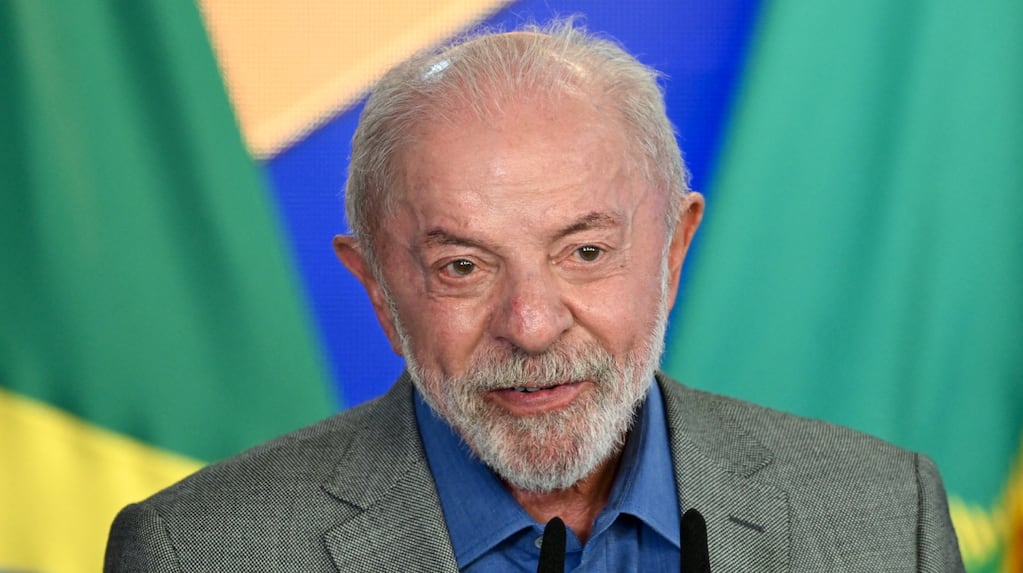
El Congreso de Brasil sancionó este miércoles una reforma clave para los trabajadores: la reducción de la semana laboral de 44 a 40 horas y la incorporación de un segundo día de descanso remunerado.
La medida, impulsada por el presidente Luiz Inácio Lula da Silva, apunta a fortalecer su campaña días antes del balotaje del 25 de octubre frente al ultraderechista Flávio Bolsonaro.
La iniciativa, que el gobierno venía promoviendo desde hace meses, recibió el visto bueno del Senado con 75 votos a favor y solo uno en contra, completando así su trámite legislativo tras la aprobación previa en la Cámara de Diputados en mayo.
Lula celebró la reforma y apuntó a su rival
El relator del proyecto en el Senado, Omar Aziz, calificó la reforma como “la mayor conquista de los trabajadores brasileños” desde la Constitución de 1988.
Tras la votación, varios senadores corearon consignas en apoyo a Lula, mientras el presidente celebró el logro en sus redes sociales: “Estoy seguro de que un logro como este jamás será revocado, porque no fue una victoria burocrática, sino que surgió de las calles y del anhelo histórico de los trabajadores”, afirmó el exlíder sindical.
La aprobación de la reforma se convirtió en una de las banderas de las recientes movilizaciones masivas en respaldo a la reelección de Lula, que busca revertir la desventaja frente a Flávio Bolsonaro, hijo del expresidente Jair Bolsonaro.
El presidente del Senado, Davi Alcolumbre, destacó el impacto positivo de la medida para “millones de personas de diferentes realidades del país”.
Según los sindicatos, unos veintidós millones de trabajadores verán reducida su jornada laboral, al atender a una reivindicación histórica de los sectores populares.
Varios sectores patronales se opusieron a la reducción de la jornada, entre ellos la Federación de Comercio de San Pabloo, que prevé un incremento de un 22 % en el costo de la hora trabajada y advierte de la posible destrucción de hasta 1,2 millones de puestos de trabajo.
Flávio Bolsonaro cambió su voto tras las protestas
Durante la campaña, Flávio Bolsonaro propuso un plan de recortes inspirado en las políticas de Javier Milei y la bancada conservadora defendía la negociación individual de las horas semanales. Aunque en un principio había calificado la propuesta de “oportunista”, Flávio Bolsonaro terminó votando a favor de la reforma.
“Estoy recorriendo Brasil, la mayoría de los trabajadores quieren el fin del 6×1, así que voy a votar a favor del fin del 6×1”, declaró el martes tras las movilizaciones en varias ciudades.

Lula aprovechó el giro para devolverle la crítica: “Nuestros adversarios decidieron ayer que van a votar a favor. Quieren votar por oportunismo electoral”, lanzó el mandatario en un video previo a la aprobación.
En la primera vuelta del 4 de octubre, Lula obtuvo el 45% de los votos frente al 47% de Bolsonaro. Según su entorno, el presidente confía en que la sanción de la reforma laboral impulse su remontada en la recta final.
Una encuesta de Quaest publicada este miércoles mostró un escenario de empate técnico: 46% para Bolsonaro y 44% para Lula, con un margen de error de dos puntos.
La aplicación será gradual y apunta a los sectores populares
La reforma beneficiará especialmente a los sectores populares, tradicional base electoral de Lula, donde millones de brasileños trabajan bajo el régimen “6×1” (seis días de trabajo por uno de descanso).
El cambio se implementará de manera gradual sin que ello suponga una disminución del salario. Durante el primer año de transición, el límite será de 42 horas semanales. Transcurrido este periodo, la jornada máxima será de 40 horas.
Durante la campaña, Flávio Bolsonaro propuso un plan de recortes inspirado en las políticas de Javier Milei y la bancada conservadora defendía la negociación individual de las horas semanales.
Brasil, elecciones en Brasil, semana laboral, Lula Da Silva, Flavio Bolsonaro













El 12 de octubre, el Gobierno de la República Popular China anunció sanciones en mi contra: no puedo ingresar a China, Hong Kong ni Macao, cualquier bien que tenga allí queda congelado y ninguna organización o persona en China puede hacer transacciones ni cooperar conmigo. Su vocera fue franca sobre el propósito. Dijo que son “medidas de advertencia y disuasión”.
No tengo bienes en China, así que el efecto práctico es limitado, y no lo tomo de forma personal. Pero el mensaje merece una lectura atenta, porque habla más de las decisiones que tomó mi país que de mí. Bajo la Ley contra Sanciones Extranjeras de China, a un funcionario de otro país se le pueden congelar o incautar bienes por las opiniones que sostiene en su propio país, mediante una decisión que la misma ley declara definitiva, sin tribunal y sin defensa. En una democracia, la propiedad privada y la libertad de opinión están protegidas justamente frente a ese tipo de poder. Esa es la diferencia de fondo entre nuestros sistemas de gobierno.
Beijing me acusa de difundir “desinformación” sobre ciberataques. Lo que hizo el Mitic (Ministerio de Tecnologías de la Información y la Comunicación) fue publicar, junto con el Gobierno de los Estados Unidos, una declaración conjunta sobre operaciones cibernéticas maliciosas vinculadas a la República Popular China y dirigidas contra instituciones del Estado paraguayo. Beijing también me acusa de haber visitado Taiwán y de recibir a sus autoridades. El Paraguay tiene relaciones diplomáticas ininterrumpidas con Taiwán hace 69 años, y cooperar con un país amigo no es una provocación, es política exterior soberana. Llamar “peones” a los ministros de dos naciones democráticas dice más de quien sanciona que de quienes son sancionados.

Detrás de esta presión hay decisiones técnicas, no políticas, que cualquier otro país consideraría parte de sus derechos soberanos. En la licitación 5G del Paraguay pedimos garantías de que ningún gobierno extranjero tuviera una influencia indebida sobre las empresas que construyen nuestras redes. Aplicamos el mismo criterio al data center nacional que financia el Banco Interamericano de Desarrollo, porque la seguridad de la cadena de suministro es seguridad nacional. Y ahora aplicamos ese enfoque al software, en especial a la inteligencia artificial. La IA es como un niño: aprende lo que uno le muestra, y un modelo entrenado bajo un sistema autoritario carga con esos sesgos.
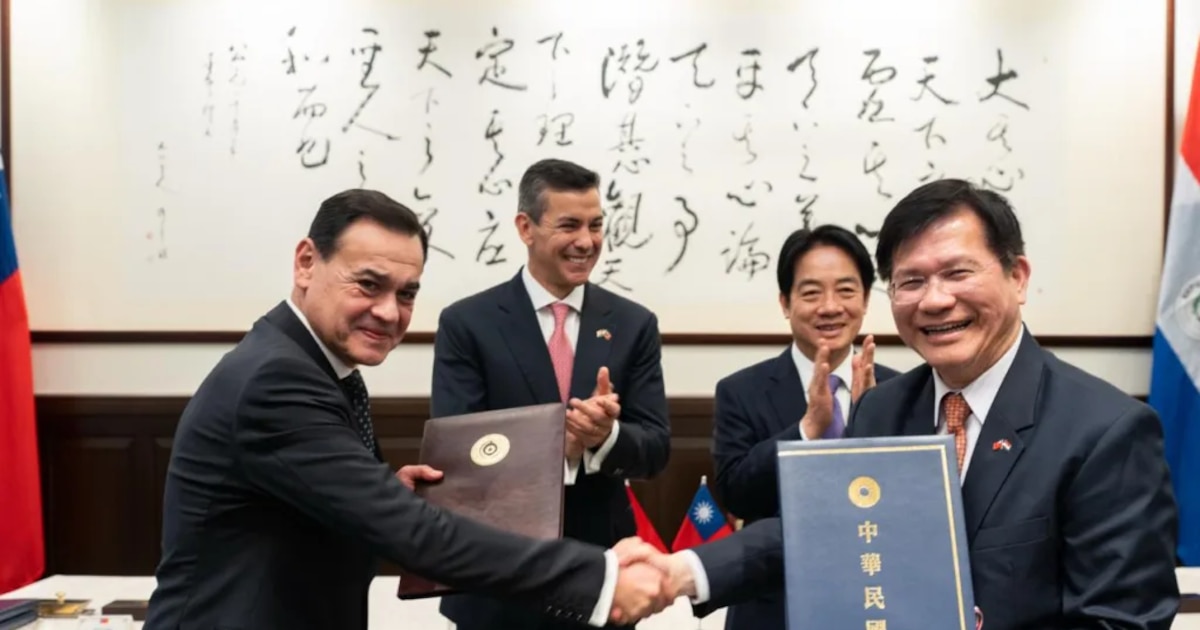
Después vino Yguazú Digital, una iniciativa binacional de cómputo soberano de IA con Taiwán, anunciada con un acuerdo que firmaron en Taipéi, en mayo, ambos cancilleres, con los dos presidentes como testigos. En mi opinión, puede llegar a ser más grande de lo que fue Itaipú en su momento.
Elegimos trabajar con empresas con sede en países donde el poder del Estado y el gobierno corporativo son cosas distintas, y donde la ley obliga a los dos. Y queda una pregunta: si los proveedores que quedaron fuera por nuestros estándares técnicos, transparentes e imparciales, fueran de verdad actores privados independientes, ¿por qué un gobierno extranjero respondería sancionando a un funcionario paraguayo?
No estamos solos. Taiwán y Belice, cuyo canciller también fue sancionado, rechazaron la medida, y el Departamento de Estado de los Estados Unidos advirtió que se opone a la coerción de China contra los países de nuestro hemisferio por ejercer sus derechos soberanos.
En estos tres años aprendí que el servicio público exige decisiones cuyo impacto se mide en décadas. Esta sanción es, en el fondo, una certificación de que lo que venimos haciendo desde 2023 es el camino correcto. Por eso mi respuesta es seguir trabajando, y con más fuerza. Vamos a acelerar cada proyecto con Taiwán: Yguazú Digital, el Parque Tecnológico, la Universidad Politécnica Taiwán-Paraguay y el sistema nacional de información en salud, que ya funciona en 1.000 establecimientos públicos.
Las naciones soberanas no necesitan coincidir en todo para tener relaciones constructivas, pero la reciprocidad y el respeto a la independencia no se negocian. O se respeta nuestro derecho a definir nuestra política exterior, o no se respeta. El año próximo, Paraguay y Taiwán cumplirán 70 años de relaciones ininterrumpidas, y esa relación nunca va a estar sobre la mesa de negociación.
La libertad no se negocia, ni se congela, ni se sanciona. El Paraguay es una democracia que decide por sí misma, y vamos a seguir construyendo nuestro futuro junto a quienes comparten esos valores.
* Ministro de de Tecnologías de la Información y la Comunicación del Paraguay.
Lai Ching-te,diplomacia,reunión oficial,relaciones internacionales
INTERNACIONAL
Collins insists socialist rival won’t beat her as Maine’s money machine: ‘You’ll lose big time’
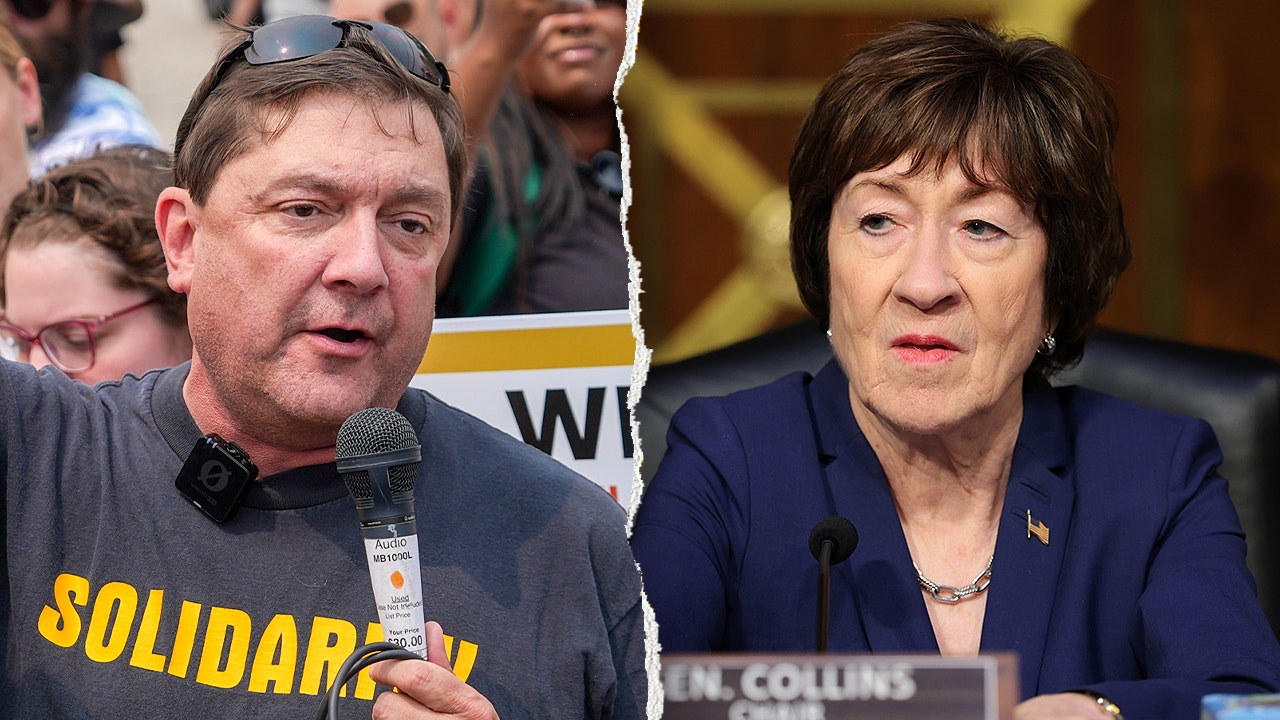
BANGOR, Maine — Republican Sen. Susan Collins is warning that Maine could lose crucial federal funding if voters replace her with Democrat Troy Jackson, as a new poll shows the candidates statistically tied ahead of their final debate Thursday.
Jackson, a one-time logger and former Maine Senate president, edged Collins 49%-47% in a Suffolk University poll conducted Oct. 8-11 and released on the eve of the final debate. Jackson’s two-point edge over Collins among likely voters was well within the survey’s margin of error, and the poll was the latest to indicate an extremely close contest.
The face-off between Collins and Jackson in the blue-leaning Northern New England state is a top flip opportunity for the Democrats as they try to win back the Senate majority from the Republicans in the midterm elections.
The Power Rankings rate the race in Maine as a toss up, as do leading nonpartisan political handicappers the Cook Political Report, Inside Elections, and Sabato’s Crystal Ball.
CAN A FORMER NFL SIDELINE REPORTER HELP REPUBLICANS FLIP A SENATE SEAT IN BLUE-LEANING MINNESOTA?
«Maine voters lose out big time if Troy Jackson were to be elected,» Collins said in an exclusive Digital interview on Wednesday.
Collins, who is running for a sixth six-year term in the Senate, has showcased her nearly three decades of Senate experience and her leadership role as Senate Appropriations Committee chair as integral to her ability «to get so much done for the people of Maine.» She warned that if Jackson replaced her, «he’ll be 100 in seniority, and all of that essential federal funding targeted for the state of Maine, virtually all of it will go away.»
Jackson has argued that Collins has not used her Senate power to protect Maine families from soaring energy, food, and housing costs. «Sen. Collins has told us how powerful she is,» Jackson said during their first debate. «But power means nothing if you won’t use it when the people may need it.»
Jackson and Democrats have also repeatedly aimed to anchor Collins to President Donald Trump, whose approval ratings in Maine and across the country are cratering ahead of the midterms.
«That’s the choice on this stage — a senator who helps Donald Trump hurt Maine then tells us how concerned she is, or somebody who will stand up against him before another family in Maine has to pay the price,» Jackson said during Tuesday’s third debate.
DEMS SEE NEW CHANCES TO FLIP SENATE SEATS BUT GOP’S MASSIVE CASH ADVANTAGE AN OBSTACLE
Collins is known as a moderate Republican who at times has voted against the president. But Jackson and Democrats are targeting the senator over her comments that she didn’t regret her 2018 vote to confirm Supreme Court Justice Brett Kavanaugh, whose crucial vote four years later helped overturn the landmark Roe v. Wade abortion ruling.
And following the fatal shooting in Maine this summer involving Immigration and Customs Enforcement (ICE) agents, Democrats heavily criticized Collins for her support for ICE funding.
But Collins has broken with Trump numerous times in recent months, criticizing his tariff war with neighboring Canada and voting against Attorney General Todd Blanche’s confirmation.
«Troy and Chuck Schumer and their allies run ads saying that I’m somehow a puppet of the president. Believe me, that would come as a huge surprise to President Trump,» Collins told Digital.
Collins noted, «I opposed the deal that he made with Vladimir Putin to get a small amount of diesel, and in return lift the sanctions that we just passed into law, and the president is not following the law. I signed a bipartisan letter that urges the president to reconsider that. I opposed the president’s signature legislative accomplishment, the One Big Beautiful Bill, because it contained cuts in Medicaid that… I know would be harmful to Maine.»
DEMOCRATS THINK A BLUE WAVE IS BUILDING – HERE ARE THREE FACTORS THAT COULD STOP IT
The senator was interviewed in Bangor after landing the endorsement of the Maine chapter of the Fraternal Order of Police.
«I’ve secured funding for projects throughout Maine, $46 million to help our police and sheriff’s departments upgrade their equipment, facilities, and communications,» Collins told Digital.
And she took aim at Jackson, who won a special nominating convention in late July to fill the party’s Senate nomination, which was left vacant after primary winner Graham Platner ended his campaign following an explosive report containing an allegation of rape from a woman he previously dated. Platner denied the report but dropped out.
Jackson, who earlier this year unsuccessfully ran for the Democratic gubernatorial nomination, had campaigned alongside Platner during the primary campaign.
«Troy was Graham Platner’s biggest supporter and stayed with him to the very end of Graham’s campaign, and Graham repeatedly denigrated law enforcement,» Collins said. «I never heard Troy publicly condemn those disrespectful and horrible comments.»
Collins added, «During his gubernatorial campaign, Troy was endorsed and welcomed the endorsement of the Democratic Socialists of America. One of the key parts of the DSA platform is to defund the police.»
The Jackson campaign, responding, pointed out that «Jackson is not a Democratic Socialist» and has repeatedly said he does not support defunding the police. The campaign added that Jackson called on Platner to drop out and «has been clear he will not accept a Platner endorsement.»
«Susan Collins is lying about Troy’s record because she knows that Mainers are ready to retire her after she’s voted with Donald Trump 96% of the time to cut their healthcare, confirmed Brett Kavanaugh who overturned Roe v. Wade, enabled Trump’s war in Iran that’s raising energy costs, and failed to stop his reckless tariffs that are causing costs to skyrocket,» the Jackson campaign told Digital.
SIGN UP TO GET THE POLITICS NEWSLETTER
But Collins disputed the 96% figure, saying that it came from a study that only covered a third of her Senate votes.
«A study that looked at 90% of the votes showed that I supported the president 72% of the time,» she added. «The bottom line is, I support him when I think he’s right. I don’t when I think he’s wrong.»
Collins, who is the only GOP senator seeking re-election in a state Trump lost in the 2024 election, has a history of surviving Democratic efforts to unseat her.
Six years ago, she trailed Democratic challenger Sara Gideon, the then-Maine House speaker, but the senator ended up winning re-election by nearly nine points while former President Joe Biden carried the state by a similar margin.
senate, power rankings, politics, midterm elections, maine, donald trump

NEWYou can now listen to Fox News articles!
Clashes between police and protesters who are against Albania’s Socialist government erupted in the country’s capital for the third consecutive day Thursday as Prime Minister Edi Rama vowed he will not resign.
Rioters in Tirana were seen throwing rocks at a police cordon outside Albania’s Education Ministry, prompting law enforcement to respond with tear gas and water cannons, according to The Associated Press.
The clashes followed riots on Wednesday when protesters attacked government buildings, banks and businesses, leaving 89 people injured, including 61 police officers.
«As for calls for my resignation, governments are changed through democratic elections. We had elections last year, not a revolution,» Albanian Prime Minister Edi Rama told Reuters on Thursday.
ALBANIAN PROTESTERS FLOOD STREETS DEMANDING PRIME MINISTER’S RESIGNATION AMID CORRUPTION ACCUSATIONS
Riot police officers detain a hooded protester during clashes near the Ministry of Education in Tirana, Albania, on Tuesday, Oct. 13, 2026. (Hameraldi Agolli/AP)
«My responsibility is to listen, address legitimate concerns and keep Albania moving forward,» he added. «The alternative would be a betrayal of the Albanians who gave me a strong mandate to complete negotiations on European Union membership.»
Thursday’s protests included student groups seeking education reforms, as well as others staging a broader anti-government movement opposed to a major development project linked to President Donald Trump’s son-in-law, Jared Kushner, the AP reported.

A protester pushes a riot police officer’s shield during an anti-government demonstration in Tirana, Albania, on Thursday, Oct. 15, 2026. (Hameraldi Agolli/AP)
The so-called flamingo movement is calling for the resignation of Rama over allegations of widespread corruption. The movement earned the name after protesters used signs depicting the pink bird.
«The message from the streets is clear: Albanians have had enough. Public patience with Edi Rama’s socialist government has come to an end,» Agim Nesho, former Albanian ambassador to the United States, told Fox News Digital on Thursday.
«The wheels are coming off Edi Rama’s socialist government. After 13 years in power, his administration faces mounting accusations of corruption, misuse of public funds, and political favoritism,» Nesho said. «Meanwhile, poverty, unemployment, inadequate public services, and the mass exodus of young Albanians seeking better opportunities in Europe have fueled widespread anger. Critics argue that, as with other failed socialist governments, the political elite has benefited while ordinary citizens have been left struggling to make ends meet.»
An EU delegation in Albania called late Wednesday for a proportionate response from authorities, expressing concern at «the violent escalation at the protest in Tirana.»
JARED KUSHNER’S OVERSEAS LUXURY RESORT PROJECT FACES ANTI-CORRUPTION INVESTIGATION DURING VIOLENT PROTESTS
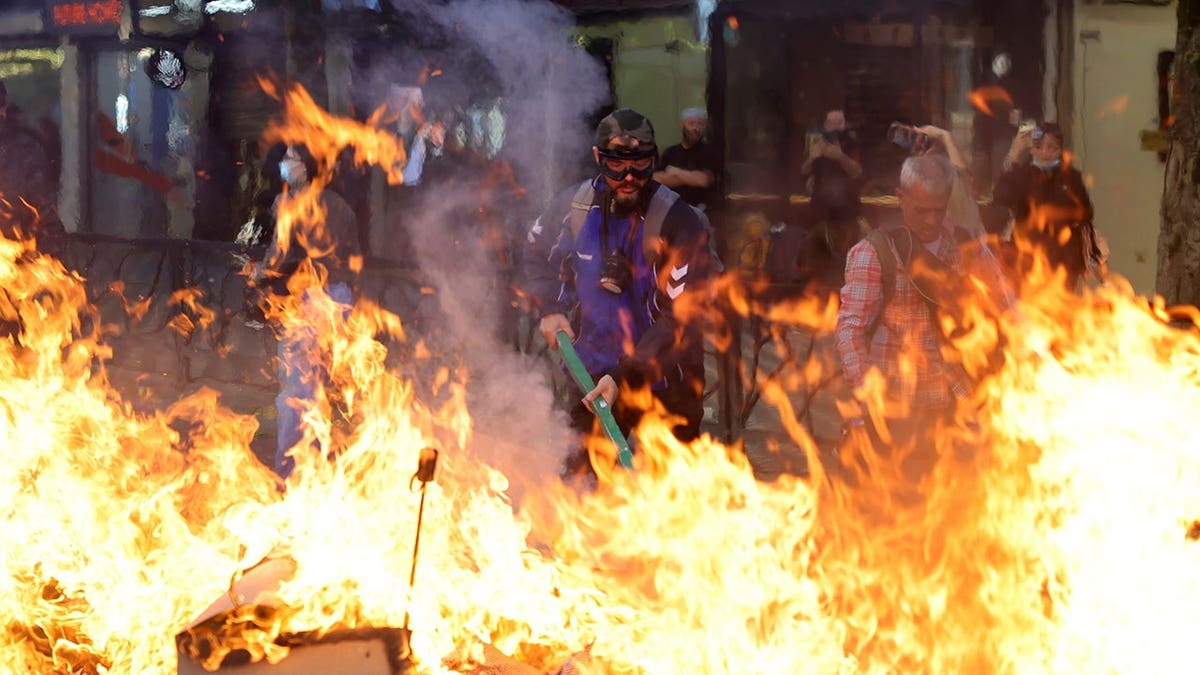
Protesters set fire to a barricade during clashes near the Education Ministry in Tirana, Albania, on Tuesday, Oct. 13, 2026. (Hameraldi Agolli/AP)
Rama won his fourth term as prime minister last year, running on a platform centered around Albania joining the EU, which it hopes to achieve as early as 2028, according to Reuters.
Student organizers told Reuters that the protests are over higher education costs, a lack of financial support, conditions at universities and job prospects after graduating.
The prime minister said to the news agency that he is ready to discuss the cost of education, but added, «Attacking institutions, destroying public property and threatening public safety have nothing to do with the legitimate demands of students.»
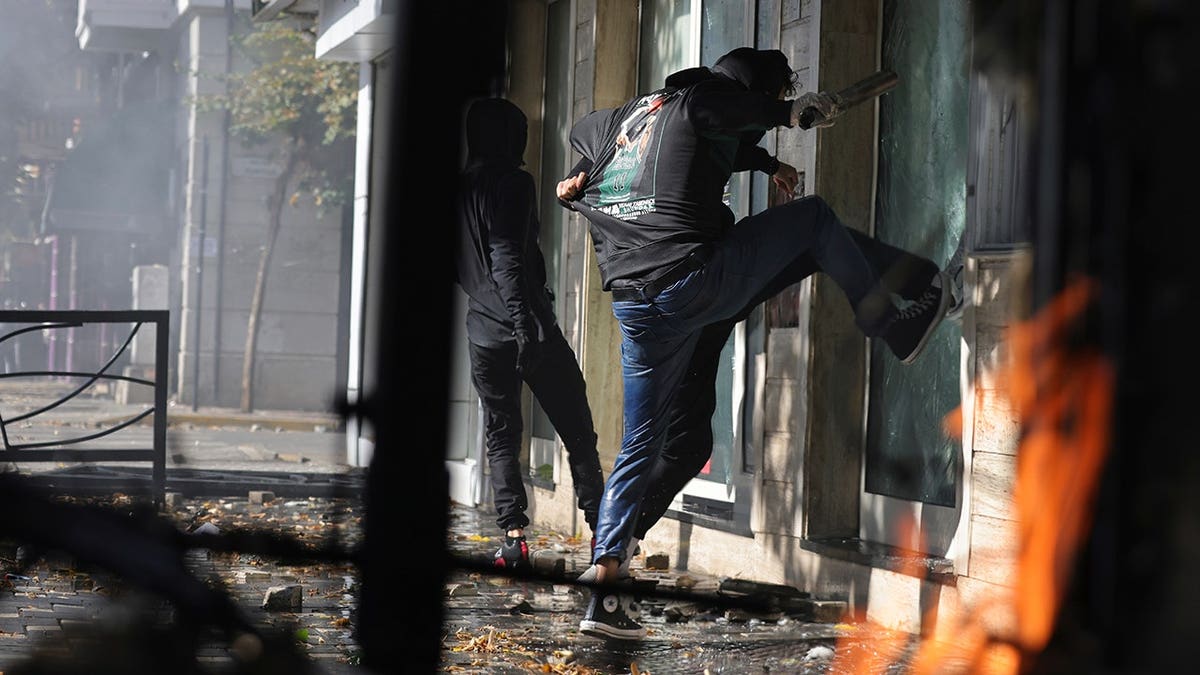
Hooded protesters smash a storefront window during clashes in Tirana, Albania, on Wednesday, Oct. 14, 2026. (Hameraldi Agolli/AP)
«Corruption must be confronted and, as the EU itself has recently reaffirmed, Albania is tackling it as never before,» Rama also said. «Perhaps some forces, at home and abroad, do not want Albania to succeed as a forerunner for EU membership. But I will not allow violence to derail Albania’s European future.»
The Associated Press contributed to this report.
the balkans, world protests, europe, world

Juan Grabois se mostró junto a Axel Kicillof durante una recorrida en La Cava y agitó la interna del PJ

Fuete defensa de Javier Milei al rumbo económico ante empresarios en Estados Unidos: qué dijo sobre la inflación y el empleo

Amagó una rabona, pero acomodó la pelota y dio una asistencia que recorre el mundo: el gesto técnico de Lamine Yamal que sorprendió a Thierry Henry

Mercados: caen las acciones argentinas y el riesgo país vuelve a subir

Una sanción que confirma el camino

Quiénes son y cómo piensan los principales referentes de la Iglesia argentina

Corinthians presentó a un técnico europeo para salvarse del descenso

Andrea Rincón recordó el quiebre de su amistad con Julieta Ortega: «No se remontó»

Del barrio a TikTok: así reclutan las bandas criminales a niños y adolescentes en Ecuador

El Episcopado pidió rezar por la salud de León XIV: “Que el Señor le conceda fortaleza y paz”

 INTERNACIONAL2 días ago
Más de 2.000 islas sin hospitales: así funciona la red de clínicas flotantes de India
- CHIMENTOS2 días ago
La angelita de LAM que reveló la peor infidelidad que sufrió en un matrimonio: «Encontré mensajes con otras mujeres y…»
- POLITICA3 días ago
El Niño golpea el litoral: abrieron las compuertas de la represa de Itaipú y preocupa su impacto en el río Paraná