INTERNACIONAL
Ilhan Omar’s daughters show up at scene of DC raid as rumors swirl about embattled rep’s whereabouts

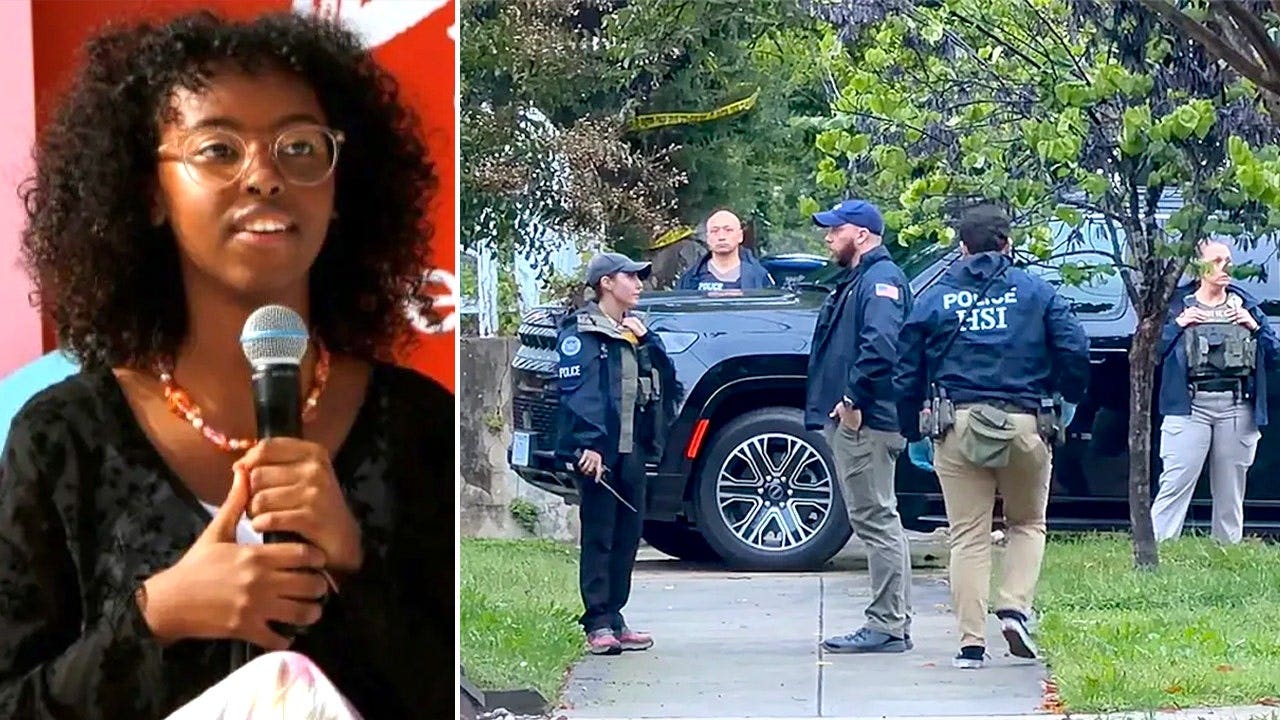
Rep. Ilhan Omar, D-Minn. has not been seen in public since a pre-dawn raid of her Washington, D.C. residence last week — but Digital spotted her daughters descending on the home in recent days.
Isra Hirsi pulled black sedan into the driveway of the home under the cover of darkness Saturday night and stepped out of the vehicle carrying a bag with both hands. She walked directly into the front door of the same home that was swarmed by Homeland Security Investigations (HSI) agents a week prior.
«What’s your problem?» Hirsi said to Digital after getting out of her car.
Just two days later, a young teenage girl believed to be Omar’s second daughter also was seen entering the home with a woman that appeared to be her caretaker.
ILHAN OMAR’S EMBATTLED HUSBAND APPEARS AT SCENE OF HSI RAID IN MIDST OF CRIMINAL FRAUD INVESTIGATION
The daughters arrived on the scene roughly a week after the house was raided by federal agents. Omar also has a son who is the only immediate family member of Omar’s that Digital has not seen arrive at their home in D.C., since the federal search where her phone and passport were reportedly seized.
The same night Omar’s eldest daughter was captured entering the home, U.S. Capitol Police (USCP) — whose jurisdiction is typically limited to U.S. Capitol building and grounds, but extends to protecting members of Congress and their families — showed up on the congresswoman’s street.
Omar shares her three children with Ahmed Hirsi, who she ceremonially married in 2002 and legally married in 2018. During the time before her legal marriage to Hirsi, she was legally married to Ahmed Nur Said Elmi, who is allegedly her brother, from 2009 until 2017 — during which time Omar’s youngest daughter was born. She married political consultant Tim Mynett in 2020.
Throughout the week after the raid, Mynett has emerged from the home intermittently, mostly to walk the family’s Golden Labrador Retriever dog, Teddy. He has defended his wife to Digital, saying he has «no concerns» about the investigation.
He also snapped when asked about unsubstantiated rumors that the congresswoman had fled the country. «You guys are annoying the hell out of the neighbors around here, man,» said Mynett.
Omar’s eldest daughter, Isra Hirsi, is controversial in her own right.
The 23-year-old activist and graduate of Barnard College — a Columbia University affiliate — was arrested at Columbia and later suspended from the school in 2024 after participating in the school’s now-infamous anti-Israel tent encampment, which lasted for two weeks until it was dispersed by NYPD.
ILHAN OMAR’S HUSBAND SNAPS OVER RUMORS SHE FLED US AFTER FEDERAL IMMIGRATION FRAUD RAID
She also co-founded the U.S. Climate Strike in 2019, part of a global movement that organized student walkouts of class as they demanded the passage of the far-left Green New Deal and a switch to 100% renewable energy.
Despite its name, the group didn’t stop at advocating for «green» energy policies. It also demanded universal healthcare, student debt relief, stronger union organization and advocated for giving land back to Native Americans.
Hirsi has also railed against capitalism publicly on social media.
Omar’s sister, Sahra Noor, did not show up for a scheduled stop on her book tour in Minnesota last week due to a «family emergency,» according to the book store hosting the event.
Three sources confirmed to Digital that Noor voluntarily spoke with federal investigators last week.
Omar’s home was raided by HSI, the chief investigatory body of the Department of Homeland Security (DHS), at around 6:00 a.m., last Monday.
Sources confirmed to Digital that the agency executed a search warrant in relation to an immigration fraud probe. Specifically, investigators are probing whether the congresswoman and/or her father falsified information when filling out her citizenship paperwork.
Border Czar Tom Homan revealed over the weekend that if the allegations are proven, they could lead to Omar’s denaturalization.
The New York Times reported that about a dozen people, including Omar’s relatives, have been subpoenaed in the case.
Omar has not responded to repeated requests for comment from Digital, but she has reacted publicly to the raid on social media.
REP ILHAN OMAR’S IMMIGRATION HISTORY FACES NEW SCRUTINY AS FEDERAL INVESTIGATORS SUBPOENA RELATIVES
«This raid by Trump’s DHS is an outrageous abuse of power and an unprecedented escalation in the weaponization of federal law enforcement to target political enemies,» she said in a statement posted to X hours after the raid. For a decade, Donald Trump has relentlessly targeted Congresswoman Ilhan Omar with inflammatory rhetoric, repeatedly putting a target on her back. Now, those attacks have escalated to a pointless federal raid. The Congresswoman has done nothing wrong. No president should be able to use the power of the federal government to intimidate his political enemies.»
In an exclusive interview with Digital last Tuesday, Vice President JD Vance said the investigation is not politically motivated.
«We don’t want to be like the Biden administration. We never want to be like that — where they would allow the law to go after their political opponents,» he said.
«We really want to let the law, the facts drive this,» he continued. «And if justice requires something else be done, then, of course, we’ll take a step when we have to.»
ilhan omar, politics, homeland security, tom homan, house of representatives politics











INTERNACIONAL
Could France’s riots happen here? Experts see parallels in socialism, immigration — and key differences
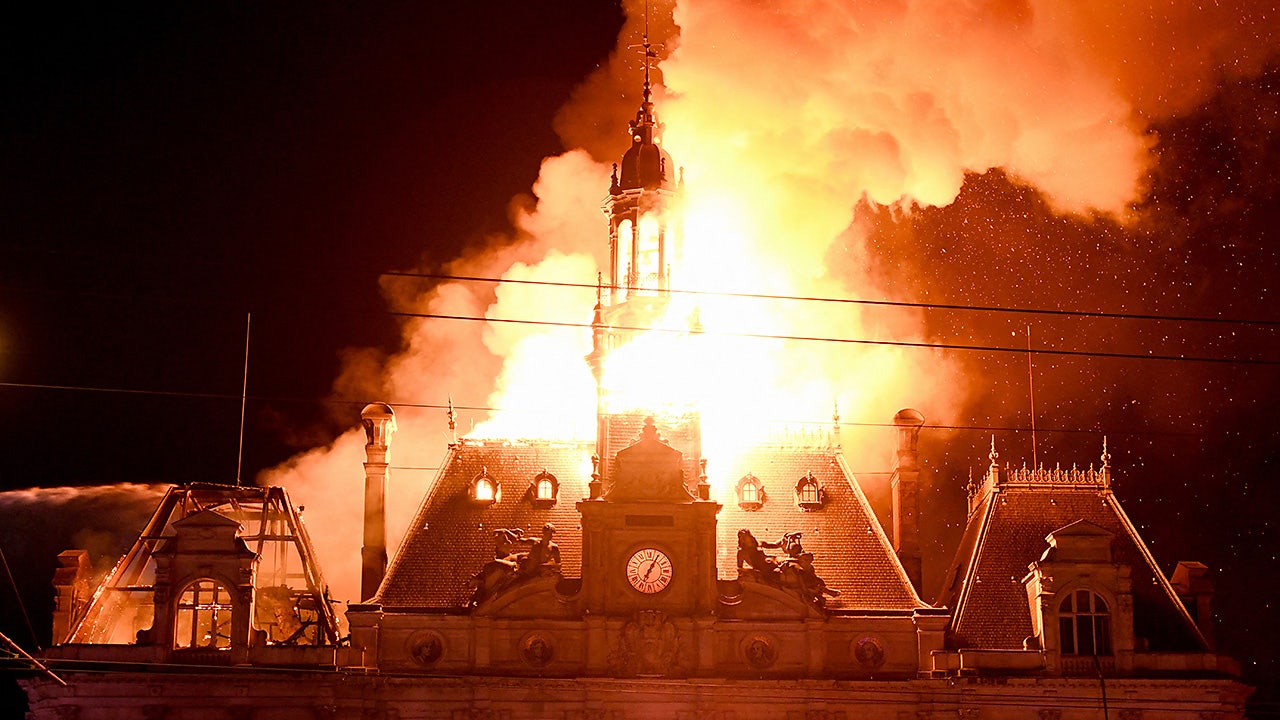
Violent riots sweeping France have exposed a far-left network of communist groups, labor unions and political activists mobilizing around student grievances, raising questions about whether similar political and immigration tensions could ignite unrest on American streets.
A Digital investigation identified 50 organizations involved in France’s student protest movement and its broader network of supporters and international amplifiers, including communist and socialist groups, labor unions and political parties.
The American parallels extend beyond political rhetoric. Digital previously reported that agitators at Delaney Hall in Newark used encrypted Signal chats to coordinate transportation, supplies and demonstrations before clashes with federal agents.
Santiago Vidal Calvo, a researcher at the Manhattan Institute, singled out New York City Mayor Zohran Mamdani, Rep. Alexandria Ocasio-Cortez, D-N.Y., and Michigan Democratic Senate candidate Abdul El-Sayed, arguing that their approaches to immigration enforcement could move the United States closer to conditions he associates with France’s crisis.
RO KHANNA SPARKS BACKLASH OVER FRANCE RIOT COMMENTS AS CRITIC SAYS HE WANTS TO ‘RIDE THE RAGE WAVE’
«I have absolutely no doubts that if we had Mamdanis or El-Sayeds or AOCs in charge of immigration policy, our immigration landscape would be very different today than what it currently is,» Calvo told Digital.
House Speaker Mike Johnson, R-La., has made a similar argument, explicitly tying France’s violence to the stakes of the 2026 midterms.
«France is descending into chaos because they wanted OPEN BORDERS — just like the socialist Democrats in America,» Johnson wrote on X. «What we are witnessing is a chilling warning for all Americans of what happens if the radical Marxist insurgent left gets their way.»
Johnson argued that a Democratic victory in November would lead to more permissive immigration policies, casting the election as a choice between the Trump administration’s immigration crackdown and the approach favored by Democrats. President Donald Trump similarly posted on Truth Social that «migrants have taken over France,» urging the country to «CLOSE THE BORDERS, FAST!»
The immigration debate is also playing out directly in the 2026 midterms. In Michigan’s closely watched Senate race, Democratic nominee Abdul El-Sayed has made abolishing ICE a campaign position, arguing that the agency cannot be reformed. His Republican opponent, Mike Rogers, has sought to portray El-Sayed as an ideological extremist as the two compete for a seat that could help determine control of the Senate.
In New York City, Mamdani signed a February executive order reinforcing sanctuary protections and restricting federal immigration enforcement on city property without a judicial warrant. Both Mamdani and El-Sayed frame their policies as safeguards against abusive enforcement, while critics warn they could weaken immigration controls.
The unrest began with students protesting conditions in France’s education system before labor unions, political activists and groups with separate grievances joined the movement. Digital’s investigation found that 15 of the 50 organizations identified in the broader network were student or youth groups.
Andrew Arthur, a former immigration judge and fellow at the Center for Immigration Studies, described a convergence of frustrations over school funding, rising costs, France’s stagnant economy and longstanding tensions surrounding immigration and assimilation.
FRANCE IS DEVOURING ITSELF AS SCHOOL RIOTS REVEAL A CRISIS FAR BIGGER THAN BROKEN CLASSROOMS
«You’ve got the simple educational one which is partially economic, you’ve got the larger economic one and on top of that you have the assimilation issue,» Arthur said.
But Arthur expressed skepticism that the United States would experience nationwide riots on the same scale, pointing to differences in immigration patterns and assimilation.
«Now can we see mass protests like this in the United States? I don’t think so,» Arthur said, noting that protests over urban ICE operations have not escalated into a comparable nationwide movement.
Nathalie Szerman, a Europe-based researcher with the Middle East Media Research Institute (MEMRI), pointed to another potential factor: The demonstrations intensified around the 65th anniversary of the Oct. 17, 1961, massacre of Algerian demonstrators by Paris police.
«October 17 is a very symbolic date for the Algerian-ethnic groups,» Szerman told Digital, describing demonstrators memorializing a deadly 1961 crackdown by Paris police on Algerian demonstrators.
«The first protest groups were not ideologically aligned with ‘political Islam’ but were students from immigrant suburbs, driven by education concerns. Agenda-driven, organized ‘Political Muslim’ groups used the momentum of the protests for their own ends,» Szerman said.
«It’s a lot of things together, the resentment towards France and the political agenda,» she said.
Alan Mendoza, executive director of the U.K.’s Henry Jackson Society — named for the late Washington Sen. Scoop Jackson — argued that the far-left movement led by Jean-Luc Mélenchon helped encourage broader mobilization ahead of France’s next presidential election.
Prime Minister Sébastien Lecornu blamed Mélenchon and his party for the unrest, according to Le Monde, while Mélenchon fired back after Lecornu demanded that LFI «choose a side» between France and the rioters — calling the either-or «detestable.»
Mendoza warned that similar political tensions could surface in America, citing backlash against socialist New York Mayor Zohran Mamdani from anti-Israel activists who had previously supported him.
«What was interesting was the sight of him being turned on by the pro-Palestinian protesters the other day, when he was acknowledging October the 7th, the loss of human life on his radio site, he was turned on by the very hard left people who had helped propel him to power,» Mendoza said.
«What that shows you is that it is very real a possibility at the hard left who are never satisfied and actually want chaos more than anything else,» Mendoza added.
Arthur said France’s far left can openly champion expansive immigration policies, while American Democrats face a different political reality: They cannot publicly embrace open borders without risking backlash, he argued, pointing to the Biden administration’s tendency to portray illegal immigration as a problem it could not control rather than a policy it actively supported.
«Riot is to France what football is to the United States,» said Arthur.
Szerman, however, said comparable unrest was possible despite differences between the two countries.
«I definitely think that what’s happening in France could happen in the United States,» she said, while noting that the more accommodating U.S. education system and different approach to immigrant integration could reduce the severity of any such violence, making a French-style nationwide crisis less likely.
Calvo, meanwhile, warned that adopting more expansive immigration policies without adequate screening and integration safeguards could create pressures similar to those he believes contributed to France’s unrest.
SIGN UP TO GET THE POLITICS NEWSLETTER
«France is in this mess because of the horrible policies they had in immigration over the last years,» he said, warning that importing similar approaches could bring unrest to American communities.
Digital reached out to Mamdani, El-Sayed and Ocasio-Cortez for comment.
Digital’s Ashely DiMella contributed to this report.
france, world protests, algeria, demographics, politics, immigration, illegal immigrants
INTERNACIONAL
Economía de Panamá crece 7.36% en agosto, pero el avance no se refleja por igual en el empleo
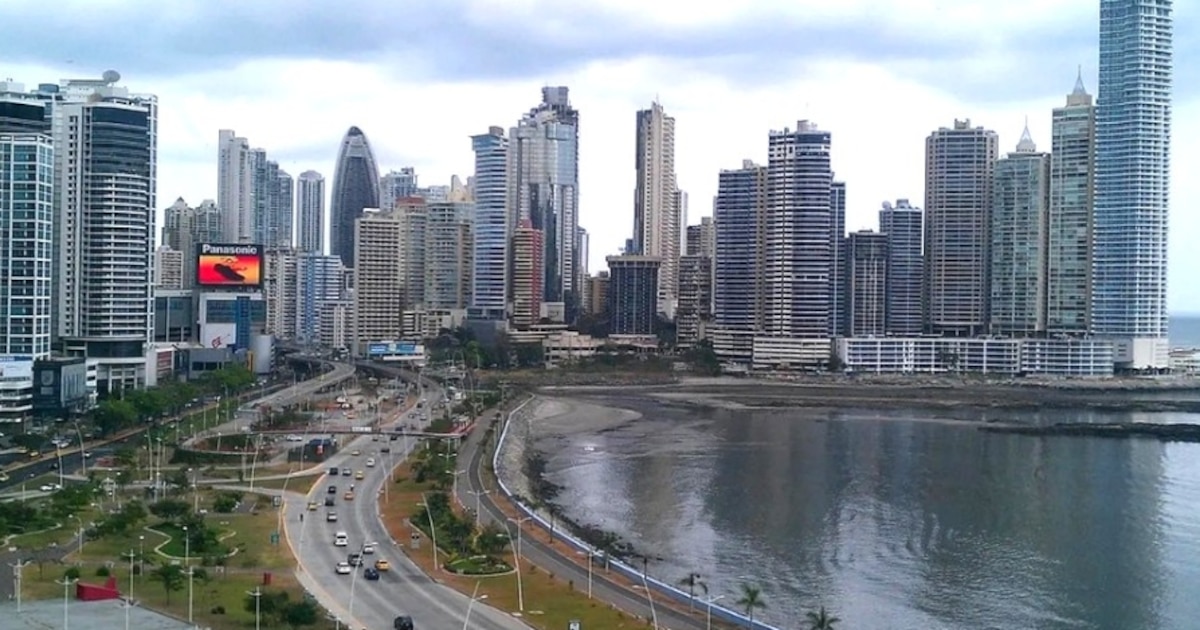
La economía panameña creció 7.36% en agosto de 2026, una aceleración frente al 1.61% registrado en el mismo mes del año anterior. El resultado refleja un mayor dinamismo del comercio, el transporte y los servicios, aunque la construcción continuó mostrando señales de debilidad, según las cifras del Instituto Nacional de Estadística y Censo (INEC).
El Índice Mensual de Actividad Económica (IMAE) acumuló un crecimiento de 6.07% entre enero y agosto, frente al 4.24% del mismo período de 2025. La tendencia ciclo, que permite observar la evolución económica con menos fluctuaciones mensuales, registró una expansión interanual de 7.11%, confirmando la aceleración observada durante los últimos meses.
El IMAE es un indicador que permite medir mensualmente la evolución de la producción de bienes y servicios en distintas actividades económicas. Se utiliza para identificar cambios en el ritmo de crecimiento antes de conocer las cifras trimestrales del producto interno bruto (PIB), aunque no mide directamente la generación de puestos de trabajo.
La aceleración se hizo más evidente durante el segundo trimestre. En junio, el indicador creció 8.23% y en julio alcanzó 8.49%, antes de moderarse a 7.36% en agosto. Estas variaciones contrastan con los primeros meses del año, cuando los aumentos oscilaron entre 4.13% y 5.96%, mostrando una recuperación de la actividad económica respecto a 2025.

El comercio figuró entre los principales motores del crecimiento, impulsado por las ventas mayoristas y minoristas. También aumentaron las reexportaciones desde la Zona Libre de Colón y las ventas de combustible nacional, actividades que contribuyeron al desempeño positivo del sector y reflejaron un mayor movimiento de mercancías dentro y fuera del país.
En transporte y logística, el Canal de Panamá registró resultados favorables en ingresos por peajes y toneladas netas transportadas. A ese comportamiento se sumaron el transporte aéreo y el movimiento de contenedores del sistema portuario nacional, sectores vinculados con la conectividad internacional y los servicios de comercio exterior.
La industria manufacturera también avanzó, apoyada en el procesamiento de ganado porcino y vacuno, productos lácteos y cerveza. Los hoteles y restaurantes registraron mayor actividad por la llegada de visitantes, que favoreció la ocupación hotelera y el consumo gastronómico, mientras los servicios turísticos contribuyeron al crecimiento de agosto.
El sector agropecuario mostró resultados positivos en la cría de ganado y el cultivo de frutas, particularmente banano para exportación. También aumentaron las actividades financieras, respaldadas por depósitos, crédito y primas de seguros, junto con los servicios de entretenimiento y el consumo de electricidad y agua.

No todas las actividades compartieron esa evolución. La construcción registró una contracción asociada con menores permisos para edificaciones, ampliaciones y reparaciones, además de una reducción en la producción de concreto premezclado y cemento gris.
Estos indicadores muestran una debilidad persistente en uno de los sectores tradicionalmente importantes para el empleo.
También retrocedieron la pesca destinada a exportación, particularmente pescado, filetes y camarones refrigerados o congelados. El informe identificó disminuciones en la generación hidroeléctrica, las ventas de gasolina de 95 octanos y el procesamiento de carne de pollo, pese al resultado positivo de la actividad económica en su conjunto.
La comparación con el mercado laboral muestra una diferencia importante entre el crecimiento económico y la calidad del empleo. Según la Encuesta de Mercado Laboral de agosto de 2026, la población ocupada llegó a aproximadamente 2.05 millones de personas, 77,231 más que en septiembre de 2025, mientras la tasa de desempleo disminuyó de 10.4% a 8.5%.

Sin embargo, el avance de actividades como comercio, hoteles, restaurantes e industria no garantiza mejores condiciones laborales. La encuesta muestra que la proporción de ocupados plenos disminuyó de 55.4% a 46.2%, mientras aumentó el subempleo por insuficiencia de ingresos.
Esto significa que una economía puede producir más sin mejorar proporcionalmente la remuneración de sus trabajadores.
En comercio, por ejemplo, las personas que trabajaban al menos 40 horas semanales por ingresos inferiores al salario mínimo aumentaron de 43,287 a 102,265. En hoteles y restaurantes pasaron de 10,184 a 35,812, mientras en manufactura subieron de 14,821 a 31,781. Estas cifras muestran que varias actividades dinámicas también enfrentan problemas de calidad del empleo.
La construcción presenta una situación distinta, porque sus indicadores productivos retrocedieron durante agosto, pese a que continúa figurando entre las actividades con mayor cantidad de trabajadores.
Esta diferencia confirma que el tamaño de una rama económica no necesariamente determina su crecimiento reciente, mientras la evolución de la producción y la contratación puede responder a períodos diferentes.
En conjunto, los resultados del IMAE muestran una aceleración de la actividad económica panameña, impulsada principalmente por el comercio, la logística y los servicios. Sin embargo, la comparación laboral evidencia que el crecimiento todavía convive con problemas de remuneración, subempleo y debilidad en la construcción, factores que condicionan sus beneficios para la población.
hombre , trabajando,wage and pension
INTERNACIONAL
En un siglo, la mayoría de las especies de abejas silvestres perdió terreno en Europa y preocupa a los expertos
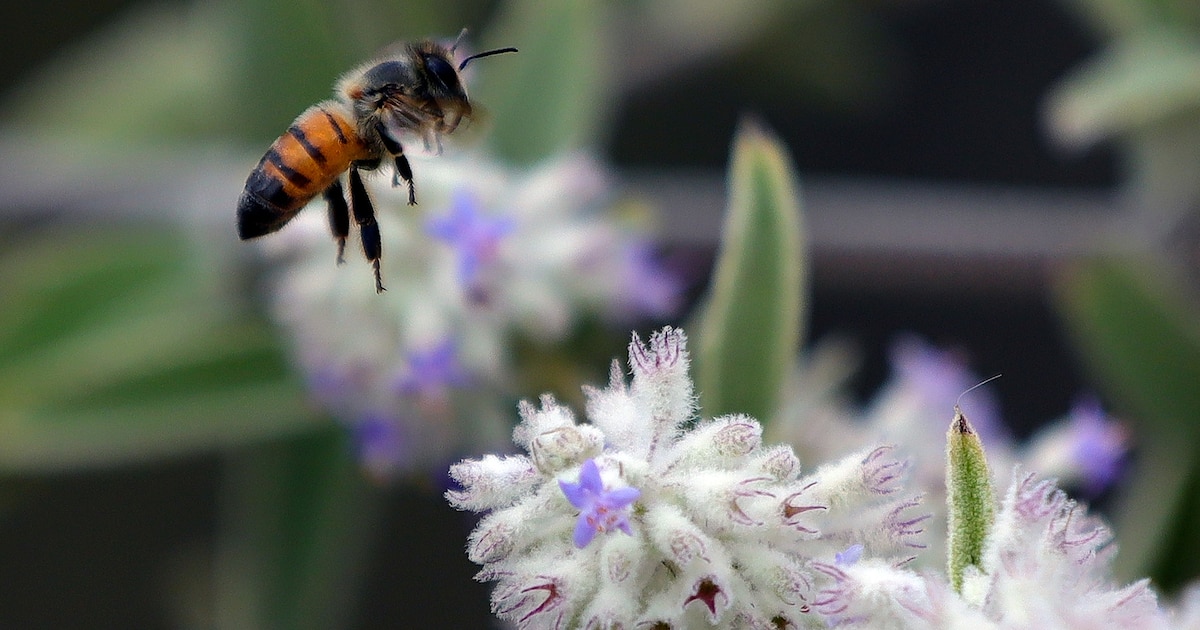
Las abejas silvestres atraviesan un retroceso sostenido en Europa. Un análisis de registros reunidos durante un siglo detectó que la mayoría de las especies perdió presencia en sus áreas de distribución, una tendencia que también alcanza a cerca de la mitad de los sírfidos, insectos conocidos como moscas de las flores. Aunque no se observa una extinción masiva, los investigadores advierten que la reducción de poblaciones anticipa riesgos para la biodiversidad, los ecosistemas y el medio ambiente.
Estos insectos cumplen una función central en la polinización, el proceso por el cual transportan polen entre flores y permiten la reproducción de muchas plantas. Su actividad resulta necesaria para gran parte de la flora silvestre y para numerosos cultivos que integran la alimentación humana, como frutas, hortalizas, semillas y frutos secos.
Además de favorecer la producción agrícola, sostienen redes ecológicas de las que dependen otras especies. La disminución de las abejas, por eso, no implica solo una amenaza para la apicultura o la producción de miel: también afecta la diversidad vegetal, la disponibilidad de alimentos y la capacidad de los ambientes naturales para resistir cambios climáticos y presiones ambientales.

Las abejas silvestre muestran un declive en Europa
La mayoría de las especies de abejas silvestres en Europa redujo su presencia en las últimas décadas, según un estudio publicado el 19 de octubre en la revista Proceedings of the National Academy of Sciences (PNAS). El trabajo reunió más de cuatro millones de registros realizados entre 1921 y 2020 y abarcó al 88% de las 3.051 especies europeas de abejas y sírfidos, dos grupos centrales entre los insectos polinizadores.
La investigación, encabezada por Carlos Martínez-Núñez, de la Estación Biológica de Doñana del Consejo Superior de Investigaciones Científicas (CSIC), detectó que los insectos disminuyeron más de lo que aumentaron en todas las regiones europeas, con la excepción de la zona alpina. Aproximadamente la mitad de las especies de sírfidos también perdió ocupación, es decir, la probabilidad de aparecer en un sitio determinado.

El análisis no plantea una desaparición masiva de especies. El 87% de las abejas y el 89% de los sírfidos registrados durante el siglo pasado volvieron a ser detectados entre 2001 y 2020. Aun así, los datos muestran que muchas especies persisten en el continente, aunque en una proporción menor de sus áreas históricas de distribución.
Las pérdidas no fueron uniformes. La riqueza de especies bajó de manera persistente en las regiones atlántica y continental, mientras que en los Alpes aumentó la cantidad de especies de abejas. Según el estudio de PNAS, las especies adaptadas al frío mostraron una leve tendencia a retrocesos más marcados que las adaptadas a temperaturas cálidas. También aparecieron entre los grupos más afectados especies parásitas y aquellas que dependen de dietas especializadas.
El investigador Martínez-Núñez señaló a EFE que los resultados muestran que “la mayoría de especies siguen presentes en Europa, aunque estén perdiendo terreno”. El científico atribuyó parte de esa reducción a la pérdida y fragmentación de hábitats, la intensificación agrícola, el uso de plaguicidas y otros contaminantes ambientales. El aumento de las temperaturas también redujo el área disponible para insectos vinculados a climas fríos.

La situación de la abeja melífera occidental (Apis mellifera) en libertad presenta un problema específico. Una evaluación de investigadores de la Universidad de Hohenheim y Agroscope, recogida por Phys.org, estimó que las poblaciones silvestres de esta especie dentro de la Unión Europea se reducirían un 56% en 10 años si dejaran de recibir enjambres procedentes de colmenas manejadas por apicultores.
Ese cálculo llevó a la Unión Internacional para la Conservación de la Naturaleza (UICN) a clasificar a las poblaciones silvestres de Apis mellifera como “en peligro” dentro de la Unión Europea. Los investigadores vincularon el deterioro con la desaparición de árboles viejos y cavidades para anidar, la menor disponibilidad de néctar y polen, la exposición a pesticidas, los patógenos y el ácaro Varroa. También señalaron que el movimiento comercial de colonias y la cría intensiva pueden afectar la diversidad genética de las poblaciones que viven fuera de las colmenas.
Cómo impacta la reducción y qué podría suceder
La reducción de las abejas silvestres puede afectar la polinización de plantas silvestres y cultivos. Cerca del 90% de las plantas con flores y más de tres cuartas partes de los principales cultivos alimentarios dependen, al menos en parte, de animales que trasladan polen entre flores. Estos insectos, junto con los sírfidos, intervienen en funciones ecológicas como el control de plagas, según el estudio publicado en Proceedings of the National Academy of Sciences (PNAS).

La pérdida de presencia de determinadas especies modifica la composición de las comunidades de polinizadores. Los investigadores observaron un descenso gradual de especies más sensibles y un aumento de unas pocas con mayor tolerancia a las alteraciones ambientales. El equipo advirtió que este proceso puede derivar en “perturbaciones funcionales más profundas” si continúan las tendencias registradas durante el último siglo.
La reducción tampoco afecta de la misma manera a todas las abejas. Las especies que dependen de un tipo específico de alimento, las que parasitan a otros insectos y las adaptadas al frío figuran entre las que mostraron mayores descensos. De acuerdo con Carlos Martínez-Núñez, que algunas especies aumenten en la actualidad “no significa que vayan a seguir siendo las vencedoras” ante la intensificación del cambio climático y la pérdida de hábitat.
Los autores del estudio de PNAS sostienen que todavía no existe una extinción generalizada de polinizadores en Europa, ya que la mayoría de las especies cuenta con registros recientes. Sin embargo, esperan que la presión sobre las poblaciones se mantenga si persisten la fragmentación de los hábitats, la agricultura intensiva, la contaminación y el aumento de las temperaturas.
biodiversidad

Milei versus el Estado de Bienestar

Patricia Bullrich pidió un acuerdo político para fortalecer al Gobierno y advirtió: “La unanimidad te aísla”
Arruabarrena, tras el pase a la final de Boca: «Si no ganamos nada me tendré que ir a la mierda» :: Olé

Could France’s riots happen here? Experts see parallels in socialism, immigration — and key differences

Inteligencia Artificial: la prudencia no es de izquierda ni de derecha

7 frases de Arruabarrena tras el pase de Boca a la final de la Sudamericana: de la decisión sobre Paredes al firme pedido al plantel

Alerta roja en Sudamérica por el Súper Niño: cambio climático, inundaciones extremas y el hallazgo de microplásticos y metales en el granizo

Juan Minujín contó como llegó a trabajar con Angelina Jolie y Salma Hayek: «Al principio dije que no»

El Gobierno pone en marcha un nuevo plan de retiros voluntarios y busca que haya 20.000 empleados menos en el Estado

Trump’s new press secretary out of the job just days after rocky debut

 CLIMA1 día ago
Alerta roja en Sudamérica por el Súper Niño: cambio climático, inundaciones extremas y el hallazgo de microplásticos y metales en el granizo
- POLITICA1 día ago
El Gobierno pone en marcha un nuevo plan de retiros voluntarios y busca que haya 20.000 empleados menos en el Estado
- CHIMENTOS3 días ago
“Feliz día a la mejor mamá del mundo”: el doble gesto del Chato Prada con Lourdes Sánchez y la reacción de ella