INTERNACIONAL
Israelis vote in record numbers in first national election since the Oct 7 Hamas massacre


NEWYou can now listen to Fox News articles!
TEL AVIV, Israel — Israelis turned out in exceptionally high numbers Tuesday for the country’s first national election since the Oct. 7, 2023, Hamas massacre, with initial exit polls showing Prime Minister Benjamin Netanyahu’s Likud emerging as the largest party but his governing coalition falling short of a parliamentary majority, potentially opening the door to a change in leadership.
The projections released by Israel’s three major television networks after polls closed at 10 p.m. local time (4 p.m. ET) showed Likud winning 25 seats in the 120-seat Knesset, compared with 23 seats for former Israeli military chief Gadi Eisenkot’s Yashar party in Channels 12 and 13 exit polls, and 21 seats according to Kan 11.
The projected parliamentary balance showed 50 seats for Netanyahu’s right-wing and religious bloc, 53 for the main opposition parties and 17 for Arab parties, leaving neither major bloc with the 61 seats generally needed to form a government.
Although Netanyahu’s party is projected to remain the largest in parliament, his political future is far from secure. The opposition parties, together with the Arab factions, would hold a combined 70 seats, although that does not mean they would necessarily agree to form a government together.
FORMER ISRAELI ARMY CHIEF GADI EISENKOT EMERGES AS NETANYAHU’S LEADING ELECTION CHALLENGER
A polling station in Herzliya, Israel, on Oct. 27, 2026, as Israelis head to the polls in the country’s first national election since the Oct. 7, 2023, Hamas massacre. (Efrat Lachter for Fox News Digital.)
The results set the stage for potentially weeks of coalition negotiations, with the possibility that Netanyahu could lose power despite Likud finishing first.
Netanyahu fights for political future as Israel heads to polls with Iran threat looming
The results are preliminary projections, not an official vote count, and could change as ballots are tallied in the coming days.
The election followed an extraordinary day at polling stations across Israel, with long lines and voter participation reaching levels not seen in decades.
Israeli voter turnout surged to a historic high, with 55.7% of eligible voters casting their ballots by 4 p.m. local time (10 a.m. ET), according to Israel’s Central Elections Committee. The figure marked the highest turnout recorded at that hour since measurements began in 1973, underscoring the intensity of the country’s national election.
The unusually high participation prompted election officials to streamline voting procedures and assure voters that anyone arriving at a polling station before the 10 p.m. deadline would be allowed to cast a ballot.
The vote was widely seen as a referendum on Netanyahu’s leadership following three years of war and continuing questions about responsibility for the security failures that allowed Hamas terrorists to kill approximately 1,200 people and abduct 251 others on Oct. 7, 2023.
JD VANCE DECLINES TO ENDORSE NETANYAHU DESPITE TRUMP’S STRONG BACKING

Residents of Jerusalem cast their votes on Oct. 27, 2026. (Yoav Dudkevitch/TPS-IL)
Netanyahu, Israel’s longest-serving prime minister, campaigned on his record of confronting Iran and its regional proxies, highlighting Israel’s military achievements and his relationship with President Donald Trump. His opponents accused him of failing to accept responsibility for the October 7 security failures and opposed his government’s approach to investigating the failures that preceded the massacre.
A last-minute battle for every vote
Throughout the final hours of the campaign, Netanyahu, Eisenkot, former Prime Minister Naftali Bennett and other party leaders mounted an intensive effort to mobilize supporters and win over undecided voters.
Netanyahu’s Likud party prepared hundreds of targeted campaign videos and social media messages, making digital outreach a central part of its last-minute election strategy.
Eisenkot’s campaign pushed supporters to rally behind Yashar as the leading alternative to Likud, while Bennett traveled between cities and engaged voters directly and through WhatsApp conversations.
The key question now is which candidate can secure the support of at least 61 lawmakers when President Isaac Herzog consults with the newly elected parliamentary factions. If Eisenkot can obtain those recommendations, including from Arab parties, he would have a strong claim to receive the first opportunity to form a government, even though Netanyahu’s Likud is projected to remain the largest individual party. Crucially, Arab parties could recommend Eisenkot without formally joining his governing coalition. However, the final decision rests with Herzog, who is tasked with selecting the lawmaker he believes has the best chance of forming a government. Securing the first mandate would not guarantee Eisenkot could assemble a governing majority, leaving the possibility of another political deadlock.
NETANYAHU FIGHTS FOR POLITICAL FUTURE AS ISRAEL HEADS TO POLLS WITH IRAN THREAT LOOMING
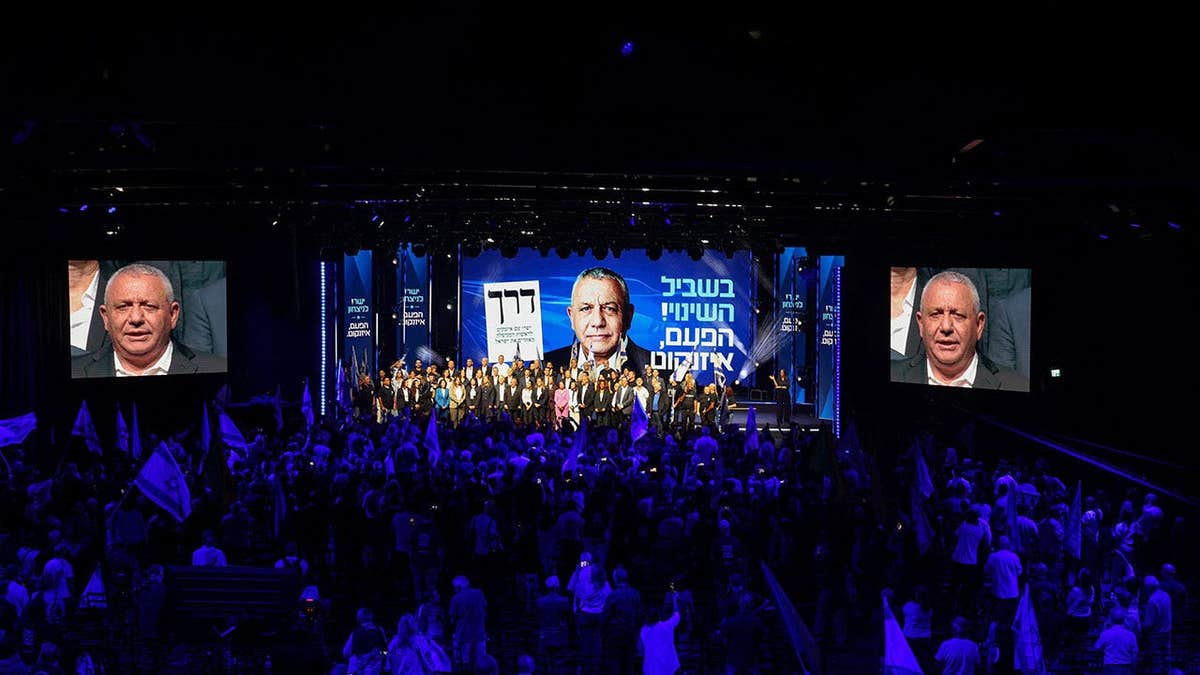
Former Israeli military chief Gadi Eisenkot attends an event for his Yashar party, ahead of Israel’s national election in Tel Aviv, Israel, October 25, 2026. (Ronen Zvulun/Reuters)
The campaign’s closing hours also featured personal appeals, phone calls to undecided voters and aggressive turnout operations across the political spectrum.
The final days were particularly important because a relatively small share of voters remained undecided about which party to support.
A Times of Israel poll published five days before the election found that 87% of respondents had already made their final choice, while 2.4% remained undecided between the pro and anti-Netanyahu political blocs.
Other surveys suggested a larger pool of undecided voters, although many were choosing between parties within the same political camp rather than switching sides.
That distinction could prove decisive in Israel’s parliamentary system, where political parties need at least 3.25% of valid votes to enter the 120-seat Knesset.
Even a slight change in the vote share of smaller parties could shift several parliamentary seats and determine whether either camp has a realistic path to power.
TRUMP SAYS NETANYAHU NEEDS TO BE RE-ELECTED, OR ELSE US WILL HAVE TO ‘FINISH THE JOB’ AGAINST IRAN ALONE

Israel’s Prime Minister Benjamin Netanyahu reacts after filling out his ballot before voting at a polling station in Jerusalem on Oct. 27, 2026, on the day of Israel’s legislative election. (Yonatan Sindel/Pool via Reuters)
What happens next?
Despite the exit poll projections, the identity of Israel’s next prime minister may remain uncertain for weeks.
Unlike in the United States, Israelis vote for political parties rather than directly electing their head of government.
The 120 seats in parliament are allocated proportionally, and parties must secure at least 3.25% of valid votes to win representation.
Once the final results are certified, Israeli President Isaac Herzog will consult with the newly elected political factions and select the lawmaker he believes has the strongest chance of forming a government.

A supporter of former military chief Gadi Eisenkot, leader of the Yashar party, reacts to the exit poll at his party headquarters, on the evening of Israel’s national election, in Tel Aviv, Israel Oct. 27, 2026. (Shir Torem/Reuters)
That candidate will have 28 days to negotiate a governing coalition, with the possibility of a 14-day extension.
Official results are scheduled to be published by Nov. 4. Until a new government takes office, Netanyahu’s outgoing government will remain in power.
israel, elections, benjamin netanyahu, world, politics









INTERNACIONAL
Serbia’s student movement topples Vucic’s party after 14 years, but political agenda remains unclear

NEWYou can now listen to Fox News articles!
Serbia’s longtime leader, President Aleksandar Vucic, conceded defeat Sunday to the student-led opposition in an election that sent shock waves throughout Europe and the Western Balkans.
«We do not have the final results yet, and many people will be surprised. Based on a stratified sample, it is clear that we have lost these elections. The student-led protest list has won,» Vucic said in an address to the nation Sunday night.
The Student List victory brings an end to 14 years of Vucic and his Serbian Progressive Party rule, in what many are saying is the biggest political shake-up in the Balkans since the toppling of Yugoslav dictator Slobodan Milosevic in 2000.
Observers say the Student List party’s policies remain vague, which has some worried about Serbia’s future.
Ana Brnabic, vice president of the main Board of the Serbian Progressive Party, told Fox News Digital that, «The election victory of the Student List recalls similar electoral triumphs in other countries. The Student List represents a classical anti-establishment movement: it had neither a program nor a coherent political ideology. In an essentially anarchic fashion, it opposed everything, claiming to fight for justice and against corruption.»
ANTI‑CORRUPTION PROTESTS HIT EUROPEAN NATION AS CALLS FOR NEW ELECTIONS GROW
Serbia’s former President and the ruling Serbian Progressive Party (SNS) candidate for Prime Minister Aleksandar Vucic gestures during a pre-election rally at King Milan Square in Nis, Serbia, Oct. 21, 2026. (Djordje Kojadinovic/Reuters)
She added, «After 14 years of Serbian Progressive Party (SNS) rule, people may have wanted change. That is understandable and logical. But the grim consequences of this movement in power will soon become apparent.»
Turnout reached 69 %, the highest this century, with more than 4.4 million people casting their ballots, according to Rasa Nedeljkov, head of the CRTA Election Observation Mission.
«This is by all means a historic victory and indeed a surprise to many. While it was clear from the beginning that the students will have an impressive result, very few expected a landslide,» Helena Ivanov, associate fellow at the Henry Jackson Society, told Fox News Digital.
The Election Observation Mission reported that the Student List won 52.45 % of the vote and is projected to hold 138 of 250 seats in the National Assembly, an absolute majority, allowing it to form a government on its own.
Vucic won 39.2 % and is projected to hold 103 seats.
Supporters celebrated throughout Belgrade and across Serbia as it became clear the Student List won by a larger margin that caught many experts and observers by surprise.
Many claimed they were concerned about the possibility of violence escalating as polls began to close. Almost two hours after polling stations closed, Vucic addressed the nation, confirming his defeat and announcing the peaceful transfer of power.
FRANCE ROCKED BY STUDENT RIOTS AS HUNDREDS ARRESTED, VIOLENCE SPREADS NATIONWIDE

Students walk on the road towards the northern city of Novi Sad, where they will participate in a 24 hour block of three bridges to protest the deaths of 15 people killed in the November collapse of a train station canopy, near the Belgrade suburb of Batajnica, Serbia, Thursday, Jan. 30, 2025. (AP Photo/Darko Vojinovic)
«The path to an electoral victory with such a decisive margin will undoubtedly earn its own chapter in the handbooks on how to topple an autocrat. Two years of unprecedented grassroots mobilization, creative organization and impeccable campaigning kept the student list two steps ahead of the regime. Vučić was left playing catch-up, and all his attempts to co-opt, demoralize and fragment the movement failed,» Sinisa Vukovic, director of the Global Policy Program at the School of Advanced International Studies at Johns Hopkins University, told Fox News Digital.
The CRTA Election Observation Mission reported that the campaign was marked by the abuse of state resources, pressure on candidates and voters, attempts to bring the media under total government control, and attacks on independent election observers.
Tens of thousands of Serbians volunteered to run and monitor polling stations across the country, and the vote was mostly peaceful.

US Secretary of State Marco Rubio (R) meets with Serbian President Aleksandar Vucic on the sidelines of the United Nations General Assembly in New York City on September 23, 2025. (Photo by CHARLY TRIBALLEAU / POOL / AFP) (Photo by CHARLY TRIBALLEAU/POOL/AFP via Getty Images) ((Photo by CHARLY TRIBALLEAU/POOL/AFP via Getty Images))
SERBIA, CAUGHT BETWEEN EUROPE AND RUSSIA, COULD MOVE ONE STEP CLOSER TO NORMALIZING RELATIONS WITH KOSOVO
Student led protests marched in the streets for two years after the deaths of 16 people following the collapse of a railway station in the town of Novi Sad in November 2024. People had taken to the streets, demanding justice for those killed and accountability for anyone responsible for the disaster.
The momentum of nearly two years of street demonstrations culminated in a nationwide movement ready for change. The political novices were able to rally the nation behind a simple message against corruption and state capture.
Serbs across the country embraced the Student List, who are viewed as fresh faces in politics and are not tied to Serbia’s traditional political opposition, which is perceived as ineffective and corrupt by a lot of the voters.

Ilija Srdanovic, first on the electoral list «Student List – Students Win» waves to citizens as they welcome students who walked to the capital from different parts of the country a day before their final campaign rally in Belgrade, Serbia, Oct. 21, 2026. (Marko Djurica/Reuters)
EXCLUSIVE: SERBIAN PRESIDENT VUČIĆ SAYS SUPPORT FOR US ‘SURGED’ UNDER TRUMP, INVITES HIM TO VISIT BELGRADE
Milos Jevtic, a 48-year-old professor with the Faculty of Organizational Sciences at the University of Belgrade, was among the many Student List candidates who won a seat in parliament.
Jevtic told Fox News Digital that their victory came from the values that the students have stood for from the very beginning: expertise, professionalism, responsibility, solidarity and unity.
«What is particularly important is that the students have never compromised on these values and principles. Of course, widespread public dissatisfaction also played a major role, along with a lack of trust in both the current regime and the opposition parties,» Jevtic explained.
Jevtic said he believes the priorities for the new Student List-run government should be economic stability, fighting corruption, establishing the rule of law and strengthening institutions, much of what carried the student-led protests since 2024.

People walk on a bridge with a huge poster of Serbia’s former President and the ruling Serbian Progressive Party (SNS) candidate for prime minister Aleksandar Vucic on it, in Nis, Serbia, Oct. 10, 2026. (Marko Djurica/Reuters)
«The ultimate goal is to build a system in which institutions function in the interests of all citizens,» Jevtic said.
On foreign policy, there is an expectation that there will be a certain degree of continuity with the Vucic administration in international relations, including maintaining good relations with neighboring European countries and all major international partners.
But Brnabic warned that «Serbia has lost meaningful political pluralism. After 35 years of a multiparty system, the country is effectively left with one established political party, SNS, while the rest of the political scene is dominated by largely unknown movements without a clear ideology. This is catastrophic for any parliamentary democracy.»
She added, «Secondly, nobody in Serbia knows where the country is heading. Are we firmly pro-EU? Will we maintain our ties with Russia? What about China? Will we continue to enhance our relations with the United States — which was a priority of Aleksandar Vucic? Will economic policy be more left-liberal or conservative? Are we heading towards a woke liberal society, or will we preserve our traditional Orthodox Christian values? There are no clear answers to any of these questions.»
She concluded by noting, «We have also called for Parliament and all state institutions to be constituted as soon as possible, so that the country has functioning institutions on which people can rely. We will be a strong but constructive opposition. We call on the Student List’s representatives to end the intimidation and assume the responsibility entrusted to them by the voters.»
the balkans, world elections, world protests, the european union
INTERNACIONAL
Russian diesel tankers close in on US ports as Trump, Putin deal triggers legal showdown
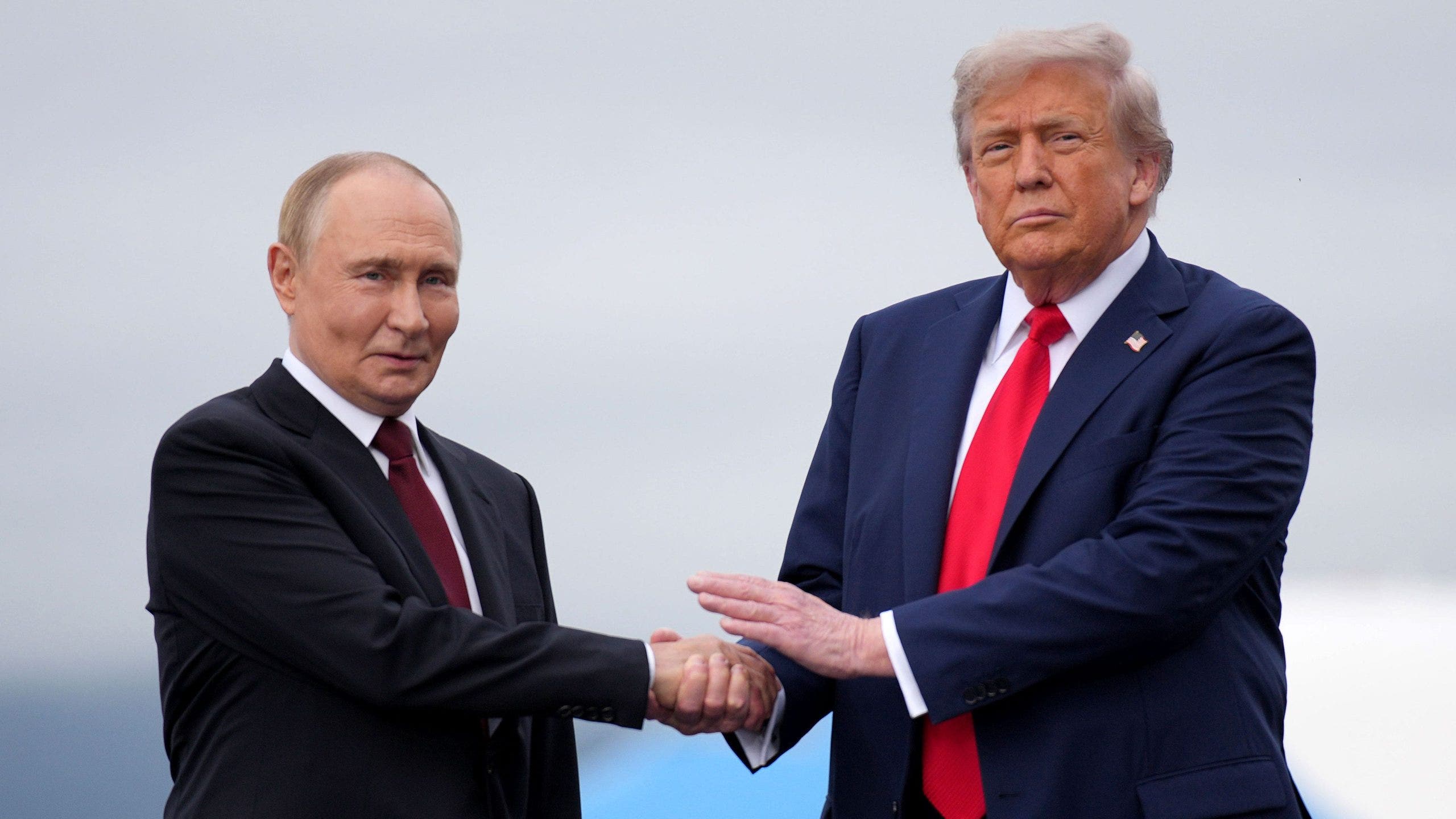
As three tankers carrying Russian diesel are crossing the Atlantic toward U.S. ports, with a fourth set to depart soon, President Donald Trump’s fuel deal with Moscow is drawing opposition in Congress and threats to investigate companies involved in the shipments.
A former Treasury Department sanction official confirmed to Digital that Trump has the legal authority to allow the imports despite a 2022 law banning Russian energy products, arguing that Washington’s authorization does not eliminate the underlying prohibition.
«The concern that the president has violated a law from 2022 that prohibits the importation is actually not founded in law, so the president certainly has the authority in this case to provide the authorization,» Jeremy Paner, a partner at Hughes Hubbard & Reed, told Digital.
TRUMP TRIES DIFFERENT APPROACH WITH RUSSIA TO BRING AMERICANS RELIEF AMID ONGOING WAR WITH UKRAINE
Russian Deputy Prime Minister Alexander Novak also confirmed the tanker movements Tuesday on the sidelines of the Gas Exporting Countries Forum (GEC) summit, saying a fourth vessel was expected to depart Russia Oct. 28.
«There are three ships at the moment. The fourth has not yet departed,» Novak said, according to TASS.
The shipments, totaling around 140,000 metric tons, is the first authorized cargo under an Oct. 9 agreement between Trump and Russian President Vladimir Putin temporarily permitting imports of Russian diesel.
The administration followed the process to ease diesel prices amid supply disruptions linked to the war with Iran and Ukrainian strikes on Russian refineries.
The deal triggered opposition on Capitol Hill, where lawmakers argue the administration lacks the authority to bypass the Ending Importation of Russian Oil Act of 2022 without congressional approval.
Sen. Richard Blumenthal, D-Conn., also escalated opposition Tuesday, demanding that two shipping companies recall tankers carrying Russian diesel bound for U.S. ports.
REPUBLICAN LAWMAKERS BREAK WITH TRUMP ON DIESEL DEAL WITH RUSSIA
In letters to Eastern Mediterranean Maritime Limited and PetroVietnam, Blumenthal argued that the Treasury Department’s General License No. 135 cannot override the 2022 import ban and warned that the deliveries would violate federal law.
He also demanded details about the companies involved in the shipments and any federal guidance they received by Oct. 31.
Paner, however, drew a distinction between removing sanctions and authorizing specific transactions.
«Trump’s action did not lift or remove or waive the underlying prohibition on the importation of Russian diesel into the United States,» Paner said.
«What it did was authorize it, and, as a matter of law, that’s different. A license does not get rid of a prohibition. It’s simply allowed,» the expert added.
The incoming tankers have drawn scrutiny because at least two are subject to Western sanctions, according to reports.
The first tanker, the Malta-flagged Agioi Fanendes, is carrying about 40,000 metric tons of diesel and signaling New York as its destination, with an estimated arrival date of Nov. 7.
A second vessel, the 20-year-old Talisman, is expected to reach the East Coast on Nov. 9 and is sanctioned by the U.S., United Kingdom and the EU.
DRONE OFFENSIVE HITS RUSSIAN OIL TANKERS AND REFINERIES AT ‘INDUSTRIAL SCALE’ AS MOSCOW BANS DIESEL EXPORTS
The third tanker, the Sierra Leone-flagged, Hong Kong-owned Leruo, is signaling an East Coast arrival around Nov. 11.
The Leruo was sanctioned in 2025 by the European Union, United Kingdom and Canada over alleged deceptive shipping practices involving Russian oil and petroleum products and conducting ship-to-ship transfers at sea.
Paner said the U.S. authorization would allow the shipments to proceed under American sanctions rules, even if a vessel is separately designated under U.S. sanctions.
«From a U.S. legal perspective, U.S. sanctions do not get in the way of importing Russian diesel from these three ships, even though one of the ships is sanctioned by the United States and even though the importation of Russian diesel is prohibited by U.S. law,» Paner explained.
«Because of the breadth of the authorization that OFAC issued, it would cover anything that would touch upon Russian sanctions,» Paner said, referring to the Treasury Department’s Office of Foreign Assets Control.
«From a U.S. perspective, it’s not relevant that one of these three vessels is sanctioned by the U.S.,» he added.
But Paner warned that American authorization would not automatically protect foreign companies operating under other countries’ sanctions regimes.
REPUBLICAN LAWMAKERS BREAK WITH TRUMP ON DIESEL DEAL WITH RUSSIA
«Where it gets complicated is the EU, U.K. and Canadian sanctions on some of the vessels, and that is because there are so many different players in the maritime industry, including shippers, insurers, re-insurers and banks,» Paner said.
«There could be European operators involved, and the U.S. authorization would not authorize those European, U.K. or Canadian companies to have any involvement in these shipments.»
The complications could explain why sanctioned vessels are being used for the deliveries, according to Paner.
«Sanctioned vessels would be used because of the reputational and legal risk exposure from moving Russian diesel,» he said.
«Even if it’s blessed by the U.S., there are other sanctions out there that these big global logistics companies and shipping companies have to keep in mind as well.»
He also cautioned that vessel ownership could complicate efforts to determine which sanctions apply.
«I don’t know who owns them currently. I don’t know if the same entity identified by the various sanctioning authorities owns them now.»
The shipments underscore a shift in Washington’s approach to Russian energy restrictions imposed after Moscow’s 2022 invasion of Ukraine, when the United States banned Russian petroleum imports and imposed price caps on Russian oil and refined products.
TRUMP SAYS RUSSIA HAS AGREED TO DELIVER MILLIONS IN DIESEL FUEL AFTER ‘HIGHLY SUCCESSFUL DISCUSSION’
Under the deal, Washington authorized certain Russian diesel imports in exchange for Moscow releasing 300,000 metric tons to global markets, rising to 500,000 in November and potentially 1 million per month after.
Novak also criticized lawmakers opposing the arrangement, accusing them of acting against the interests of American consumers.
«Overall, it is certainly surprising to see the stance taken by Democrats, who speak out — or even take action — in a way that is not in the best interests of the residents of the United States of America,» Novak said.
In an October letter to commercial banks, fuel distributors and port authorities in New York, New Jersey and along the Texas Gulf Coast, lawmakers also warned that companies involved in the diesel shipments could face investigations.
They also demanded that companies preserve transaction records, port reservations and communications, giving recipients until Oct. 28 to confirm they had taken steps to retain the documents.
«I’m confident that Congress is going to investigate on the U.S. side, and then from investigating the U.S. involvement, they’ll be able to understand the non-U.S. companies that are involved as well,» Paner concluded.
politics, donald trump, russia, vladimir putin, foreign affairs, foreign policy, sanctions, international law

En medio de las versiones sobre una posible fuga de Flávio Bolsonaro de Brasil hacia la Argentina, surgió el nombre de Leonardo Rodrigues de Jesus, más conocido como Léo Índio, sobrino político del expresidente Jair Bolsonaro y primo del senador brasileño.
Léo Índio está refugiado en Puerto Iguazú, Misiones, donde también viven más de 100 simpatizantes del exmandatario que abandonaron Brasil por causas judiciales vinculadas con el intento de golpe de Estado de enero de 2023.
El concejal de Puerto Iguazú Alejandro Verón planteó que la presencia de Léo Índio en la ciudad podría haber generado una confusión con Flávio Bolsonaro, sobre quien circulan versiones de que habría intentado cruzar la frontera para abordar un avión privado rumbo a Estados Unidos.
“Puede ser una confusión. Hay un familiar de Bolsonaro alojado en Iguazú”, explicó Verón durante una entrevista en Radio Rivadavia. El funcionario precisó que se trata del sobrino del exmandatario, que permanece en una hostería de la ciudad misionera.
Brasil

Cómo serán los aumentos de sueldo para empleados de comercio en los próximos meses

En su cumpleaños, Lula criticó a Flávio Bolsonaro por su partida a Estados Unidos y agradeció a Cristina Kirchner – Nexofin

Es hijo de un ex campeón con River Plate, deslumbra en el Atlético de Madrid y marcó un golazo en la Messi Cup

Serbia’s student movement topples Vucic’s party after 14 years, but political agenda remains unclear

Russian diesel tankers close in on US ports as Trump, Putin deal triggers legal showdown

¡Un cuarta se carga al Arsenal de la Carabao Cup!

CFK, Axel Kicillof, Sergio Massa y otros referentes del PJ celebraron el triunfo electoral de Lula da Silva

El riesgo país volvió a superar los 700 puntos y la volatilidad internacional golpeó a los bonos argentinos

Julián Álvarez le dio el triunfo al Atlético Madrid y terminó con otra extensa racha negativa: el gesto de los fanáticos

Javier Milei ratificó su intención de buscar la reelección en 2027: “No veo a los argentinos votando para atrás”

 POLITICA2 días ago
CFK, Axel Kicillof, Sergio Massa y otros referentes del PJ celebraron el triunfo electoral de Lula da Silva
- SOCIEDAD2 días ago
Edgerunners 2 ha vuelto a poner a David Martinez en el centro de la conversación. Su showrunner tiene algo que aclarar sobre su destino
- ECONOMIA2 días ago
El boom de Vaca Muerta no para: aporta más del 70% del crudo y empuja a la Argentina hacia el millón de barriles diarios