INTERNACIONAL
Judge who apologized to accused would-be Trump assassin lights up DOJ in Hunter Biden FBI case

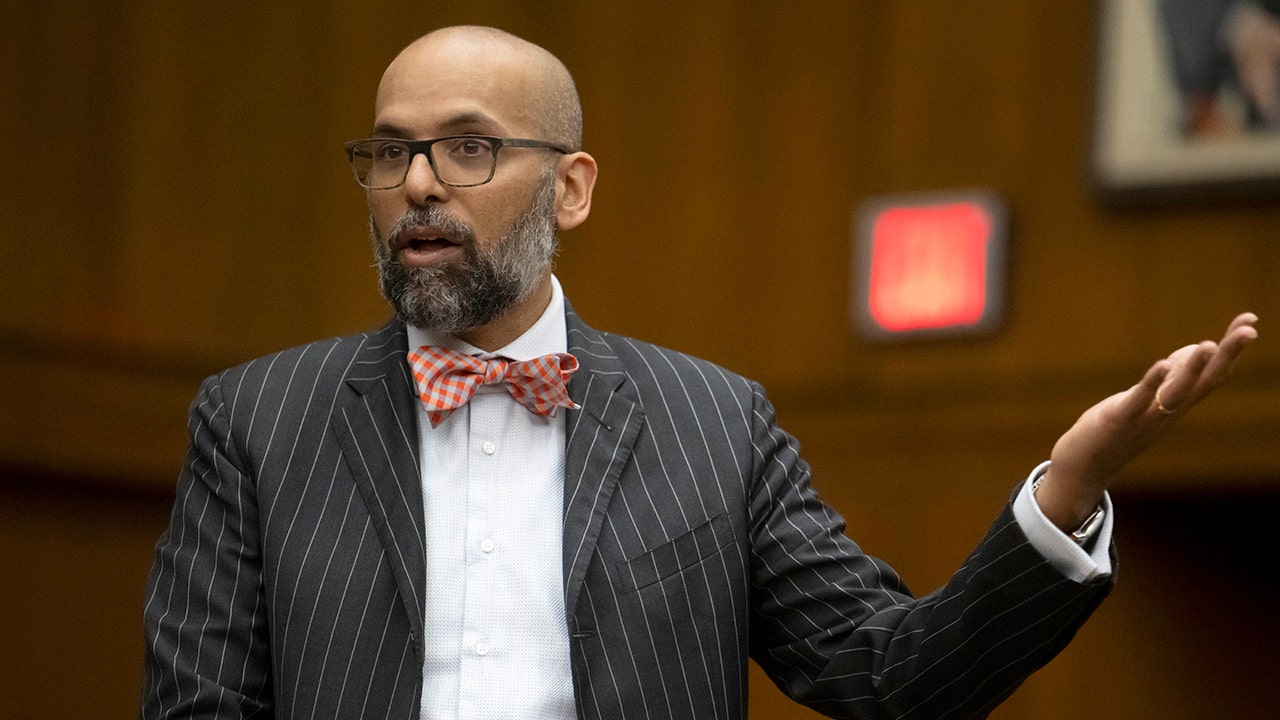
U.S. Magistrate Judge Zia M. Faruqui, who previously apologized to a man accused of attempting to assassinate President Donald Trump, rebuked the Justice Department on Tuesday over its attempt to bring new obstruction charges against two former FBI officials without first securing judicial approval.
Former FBI officials Nikki Floris and Bradley Benavides were arrested last week after the Department of Justice accused the duo of misrepresenting their involvement in investigations concerning former President Joe Biden’s son, Hunter Biden, in statements to Congress.
Hours before prosecutors were scheduled to defend their original allegations at a preliminary hearing, where the government must establish probable cause, the DOJ filed a superseding criminal complaint seeking to add new charges against the former officials. The new complaint sought to add felony obstruction allegations against the former officials while softening some of the language prosecutors had used to describe their involvement in the Hunter Biden investigations.
Faruqui sharply criticized the DOJ for filing an unsigned and unsworn criminal complaint in the middle of the night without first obtaining judicial approval.
WHO IS JUDGE ZIA FARUQUI? WHAT WE KNOW ABOUT THE FEDERAL MAGISTRATE WHO APOLOGIZED TO COLE ALLEN
«I think they should have filed nothing,» Faruqui said, according to reports from inside the courtroom. «They never had complaints filed on their record that are unsigned, waiting for a judge to make a probable cause finding. I think that it is inappropriate and harms the defendant. I’m frustrated that I got it in the middle of the night, but I’m much more concerned that it’s filed on the public record.»
«Why today on this one case have you changed the entire history of how you charge cases?» Faruqui asked the DOJ. «What is it? It appears that – it makes it look like the United States is afraid of me trying to find probable cause.»
John Borchert, a prosecutor from the U.S. Attorney’s Office in Washington, D.C., said it was the first time he had filed new charges against someone without going through judicial review.
Faruqui rejected the superseding complaint because prosecutors had not secured the required judicial authorization, allowing the preliminary hearing to proceed on the original allegations that Floris and Benavides lied to Congress. Floris’ lawyers argued that the changes in language between the two documents calls into question the factual basis of the DOJ’s case.
JUDGE WHO APOLOGIZED TO WHCA SHOOTING SUSPECT WAS APPOINTED BY COURT FULL OF ANTI-TRUMP JUDGES
In the superseding complaint, prosecutors described Benavides and Floris as having been «involved in» the Foreign Influence Task Force’s work concerning Hunter Biden, a softer characterization than the original complaint’s suggestion that they had been at the «center» of those activities. Floris, who was previously said to have been involved in «scores of conversations» related to Biden’s son, is now only accused of participating in «conversations.»
In what may have been a reference to the recently unsealed charges against former FBI Director James Comey, Faruqui said that moving on a superseding complaint without a probable cause finding «would be like charging someone by information… but in a complaint context.»
«If you want a superseding complaint, like every other case that’s happened in this district, we will have a judge make a probable cause finding,» the judge said. «Not send me something in the middle of the night and expect that it gets done.»
Faruqui has previously faced criticism from conservatives over his support for diversity, equity and inclusion (DEI) initiatives, criticism of Immigration and Customs Enforcement (ICE) and positions on pretrial detention. He also drew backlash after apologizing to Cole Allen, the man accused of attempting to assassinate President Donald Trump at the 2026 White House Correspondents’ Association Dinner, and criticizing the government’s use of five-point restraints against him.
«To me, it’s extremely disturbing that he was put in five-point restraints, a person with no criminal history,» the judge said about Allen at a hearing earlier this year. «It’s troubling. I never heard of one Jan. 6 defendant who was put in five-point restraints or in a safe cell. If the only way to keep him safe is the most punitive thing, that’s a problem.»
The DOJ has also been questioned for charging via complaint rather than through a grand jury, a procedural shortcut usually reserved for imminent threats to public safety.
DEMOCRATS HAVE ‘DIRTY HANDS’ OVER COMPLAINTS ABOUT OMAR RAID WEEKS BEFORE ELECTION, EX-PROSECUTOR SAYS
Critics have questioned the timing of the charges, with midterm elections being just days away when news of the two former officials’ arrests broke.
Floris’ lawyers have similarly argued that the timing and content of the charges are meant to engineer publicity.
«What is going on at the D.C. U.S. Attorney’s Office? In the middle of the night, the government filed an unsigned and unsworn complaint attempting to fix the issues with their original charge against Ms. Floris and adding a new charge just as meritless as the first one,» said Floris’ legal team in a statement provided to CBS News.
«In our combined decades of DOJ service, we have never seen or even heard of something like this being filed,» they went on. «That’s because the public lodging of criminal charges must be authorized by the grand jury, a judge, or the defendant herself. Here, the government has taken that power for itself in a desperate attempt to delay our client’s right to challenge the charges in court and litigate this case in the media, rather than the courtroom. We have asked to address this outrageous government conduct against a decorated public servant at today’s court hearing.»
Legal teams for Floris and Benavides, as well as the DOJ, did not respond to requests for comment when reached by Digital on Tuesday.
politics, justice department, fbi, federal courts, hunter biden investigation explained, judiciary









A las puertas de la venta por el Día de los Fieles Difuntos, la familia García Ruiz prepara sus flores en Catarina, Masaya, con la expectativa de que la cosecha permita compensar un ciclo afectado por la falta de lluvia. Parte de la producción llegará al mercado Ernesto Fernández, en Masaya, mientras otra se venderá en el propio campo de Los Tachos.
José Anastasio García Hernández, conocido como don Tacho, confía en el movimiento comercial de la fecha. Su esposa, Brígida Cecilia Ruiz Sáenz, será quien traslade una parte de los ramos al centro de compras de Masaya, según contó el floricultor a La Prensa.
La familia todavía no fijó los precios de esta temporada. El aumento de los fertilizantes y de otros productos para cuidar las plantaciones podría modificar el valor final, aunque el productor no confirmó si aplicará un ajuste.
El año pasado, los ramos se ofrecían desde C$25.00 (USD 0.68), mientras que en algunos puntos se conseguían por C$20.00 (USD 0.54). Don Tacho espera que la demanda acompañe la preparación de los últimos meses.
La sequía dejó plantas sin crecer en los surcos de Catarina
El agua faltó en una etapa sensible para el cultivo. Algunos surcos quedaron menos profundos que en temporadas anteriores y parte de las plantas no alcanzó el desarrollo esperado.
“La sequía afectó bastante”, dijo José Anastasio García Hernández a La Prensa. El productor indicó que sí había flores plantadas, aunque algunas no tendrían la misma cosecha que otras.
El floricultor explicó que ciertas plantas no crecieron y otras se marchitaron o se secaron después de la siembra. A pesar de esas pérdidas, la familia mantuvo la preparación para las semanas de mayor movimiento comercial en el municipio.
El trabajo se intensifica desde mayo, cuando comienza la etapa de siembra destinada a la demanda vinculada al 2 de noviembre. Durante la semana, unas ocho personas limpian la maleza y el monte antes de las labores de arado y plantación.
Cuando llega esa fase, el número de colaboradores asciende a cerca de 12 trabajadores. La mano de obra acompaña una tarea que se sostiene durante todo el año y que exige cuidados constantes en el terreno.
Un terreno con 40 plantas se convirtió en Floricultura Los Tachos
La actual extensión de tres cuartos de manzana tuvo un comienzo reducido. Diez años atrás, el proyecto retomó fuerza en un espacio de unas 20 varas cuadradas que tenía apenas 40 plantas.
La historia de don Tacho con las flores, de todos modos, había empezado mucho antes. Él tenía 13 años cuando sembró margaritas y crisantemos en una parcela de su padre.
Después de cada cosecha, llevaba los ramos al mercado. La venta le permitía aportar a la economía de su casa y consolidó una inclinación que más tarde se transformaría en el oficio de toda la familia.
“Mi mamá, cuando cultivé las primeras veces, venía muy alegre y contenta porque decía ella: ‘Mi Tachito me sembró una flor y me fue bien, bien. Traigo comida, traigo todo y todavía traigo 300 córdobas’”, recordó el floricultor ante el diario.

Aquella suma equivale a USD 8.10 con el tipo de cambio indicado. Para su madre, ese ingreso representaba una prueba de que el esfuerzo del adolescente ya rendía frutos.
Con el paso del tiempo, don Tacho involucró a sus hijos en las tareas del campo. Los menores lo acompañaban con azadón, pioche o rastrillo mientras aprendían a trabajar la tierra y atender los cultivos.
Los vecinos comenzaron a identificarlos con una expresión que se volvió habitual: “Allá van los Tachitos, allá va Tacho con los Tachitos”. Cuando el proyecto abrió sus puertas al público, esa denominación quedó como el nombre del emprendimiento.
Las flores también atrajeron visitantes y celebraciones familiares
La familia decidió hace dos años convertir el cultivo en un lugar de recorridos para visitantes. El cambio sumó una actividad de turismo rural a la producción agrícola que ya sostenía al hogar.
El acceso para realizar el tour de las flores cuesta C$50.00 (USD 1.35). El recorrido permite caminar por senderos entre más de once especies y observar las plantaciones de cerca.
El campo reúne dalias, girasoles, margaritas, rosas, gladiolas holandesas y criollas, botones, San Diego, disciplina y lirios, entre otras variedades. La diversidad de colores se convirtió en una de las características del lugar.

Los senderos de Los Tachos recibieron sesiones fotográficas, celebraciones familiares y compromisos de pareja. El predio también fue el escenario elegido el 22 de octubre para el lanzamiento del Segundo Festival de las Flores.
Don Tacho explicó que el nombre resume una forma de trabajo que su familia mantiene desde hace años. “Trabajamos juntos desde chiquitos”, afirmó.
La cosecha y la venta de noviembre pondrán a prueba el resultado de ese trabajo compartido. Para los García Ruiz, cada ramo concentra una tradición que comenzó en una pequeña parcela y que hoy recibe visitantes en Catarina.
INTERNACIONAL
Israelis vote in record numbers in first national election since the Oct 7 Hamas massacre

NEWYou can now listen to Fox News articles!
TEL AVIV, Israel — Israelis turned out in exceptionally high numbers Tuesday for the country’s first national election since the Oct. 7, 2023, Hamas massacre, with initial exit polls showing Prime Minister Benjamin Netanyahu’s Likud emerging as the largest party but his governing coalition falling short of a parliamentary majority, potentially opening the door to a change in leadership.
The projections released by Israel’s three major television networks after polls closed at 10 p.m. local time (4 p.m. ET) showed Likud winning 25 seats in the 120-seat Knesset, compared with 23 seats for former Israeli military chief Gadi Eisenkot’s Yashar party in Channels 12 and 13 exit polls, and 21 seats according to Kan 11.
The projected parliamentary balance showed 50 seats for Netanyahu’s right-wing and religious bloc, 53 for the main opposition parties and 17 for Arab parties, leaving neither major bloc with the 61 seats generally needed to form a government.
Although Netanyahu’s party is projected to remain the largest in parliament, his political future is far from secure. The opposition parties, together with the Arab factions, would hold a combined 70 seats, although that does not mean they would necessarily agree to form a government together.
FORMER ISRAELI ARMY CHIEF GADI EISENKOT EMERGES AS NETANYAHU’S LEADING ELECTION CHALLENGER
A polling station in Herzliya, Israel, on Oct. 27, 2026, as Israelis head to the polls in the country’s first national election since the Oct. 7, 2023, Hamas massacre. (Efrat Lachter for Fox News Digital.)
The results set the stage for potentially weeks of coalition negotiations, with the possibility that Netanyahu could lose power despite Likud finishing first.
Netanyahu fights for political future as Israel heads to polls with Iran threat looming
The results are preliminary projections, not an official vote count, and could change as ballots are tallied in the coming days.
The election followed an extraordinary day at polling stations across Israel, with long lines and voter participation reaching levels not seen in decades.
Israeli voter turnout surged to a historic high, with 55.7% of eligible voters casting their ballots by 4 p.m. local time (10 a.m. ET), according to Israel’s Central Elections Committee. The figure marked the highest turnout recorded at that hour since measurements began in 1973, underscoring the intensity of the country’s national election.
The unusually high participation prompted election officials to streamline voting procedures and assure voters that anyone arriving at a polling station before the 10 p.m. deadline would be allowed to cast a ballot.
The vote was widely seen as a referendum on Netanyahu’s leadership following three years of war and continuing questions about responsibility for the security failures that allowed Hamas terrorists to kill approximately 1,200 people and abduct 251 others on Oct. 7, 2023.
JD VANCE DECLINES TO ENDORSE NETANYAHU DESPITE TRUMP’S STRONG BACKING
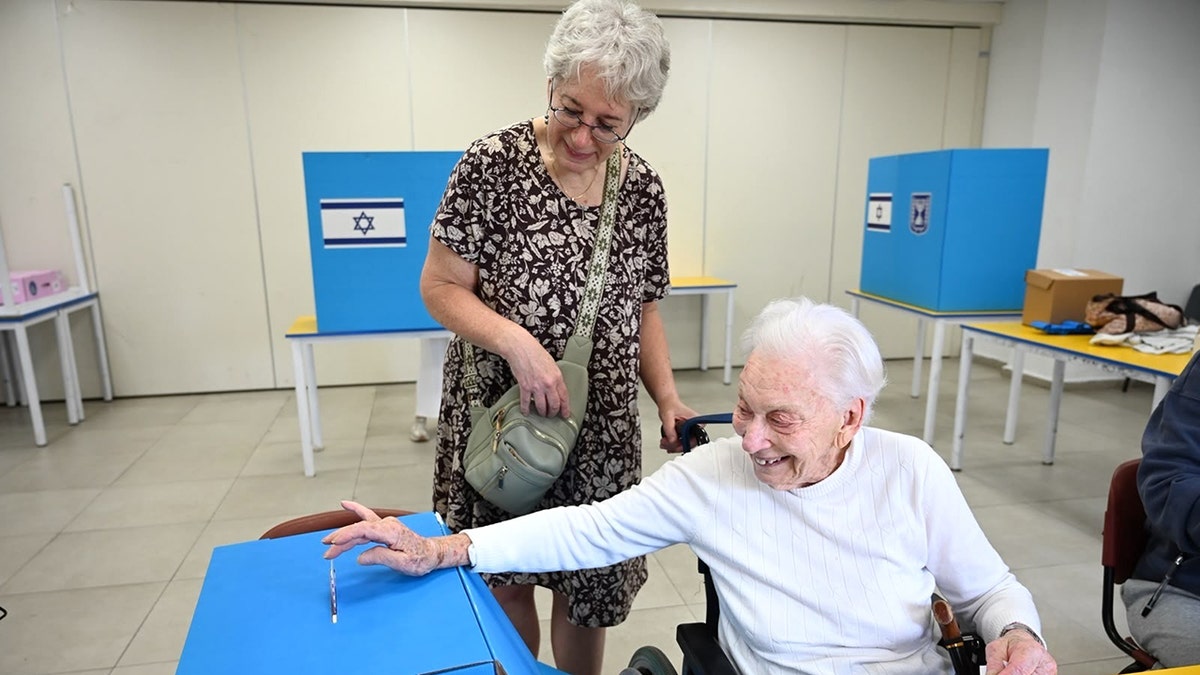
Residents of Jerusalem cast their votes on Oct. 27, 2026. (Yoav Dudkevitch/TPS-IL)
Netanyahu, Israel’s longest-serving prime minister, campaigned on his record of confronting Iran and its regional proxies, highlighting Israel’s military achievements and his relationship with President Donald Trump. His opponents accused him of failing to accept responsibility for the October 7 security failures and opposed his government’s approach to investigating the failures that preceded the massacre.
A last-minute battle for every vote
Throughout the final hours of the campaign, Netanyahu, Eisenkot, former Prime Minister Naftali Bennett and other party leaders mounted an intensive effort to mobilize supporters and win over undecided voters.
Netanyahu’s Likud party prepared hundreds of targeted campaign videos and social media messages, making digital outreach a central part of its last-minute election strategy.
Eisenkot’s campaign pushed supporters to rally behind Yashar as the leading alternative to Likud, while Bennett traveled between cities and engaged voters directly and through WhatsApp conversations.
The key question now is which candidate can secure the support of at least 61 lawmakers when President Isaac Herzog consults with the newly elected parliamentary factions. If Eisenkot can obtain those recommendations, including from Arab parties, he would have a strong claim to receive the first opportunity to form a government, even though Netanyahu’s Likud is projected to remain the largest individual party. Crucially, Arab parties could recommend Eisenkot without formally joining his governing coalition. However, the final decision rests with Herzog, who is tasked with selecting the lawmaker he believes has the best chance of forming a government. Securing the first mandate would not guarantee Eisenkot could assemble a governing majority, leaving the possibility of another political deadlock.
NETANYAHU FIGHTS FOR POLITICAL FUTURE AS ISRAEL HEADS TO POLLS WITH IRAN THREAT LOOMING
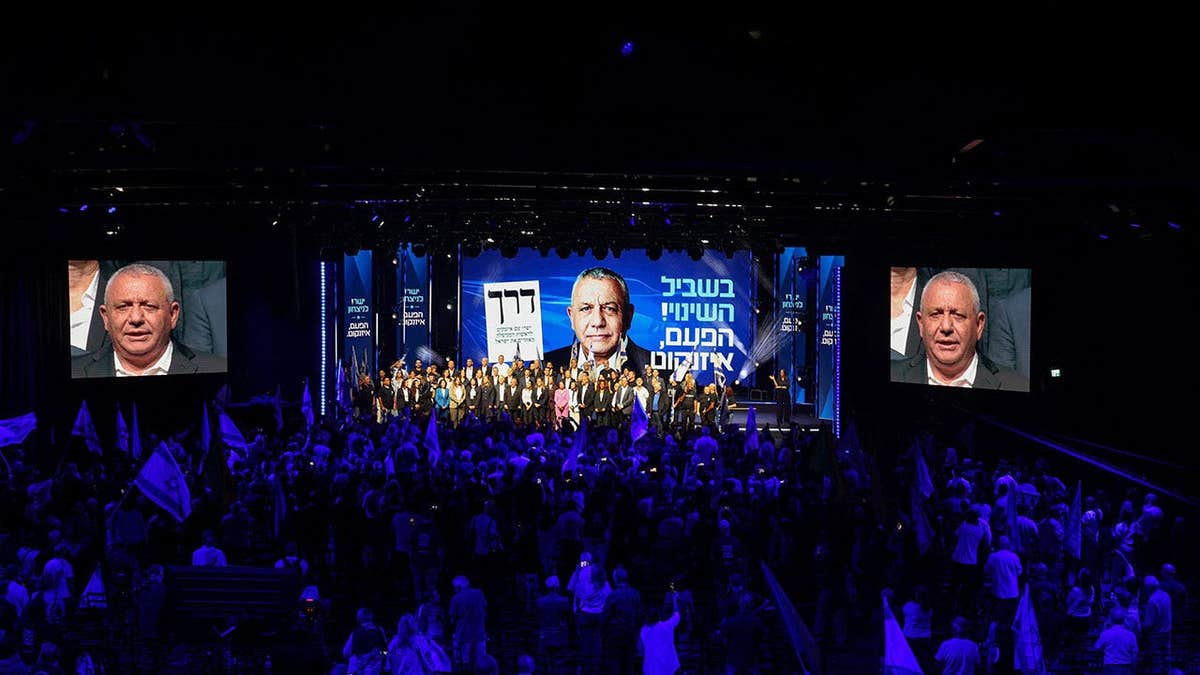
Former Israeli military chief Gadi Eisenkot attends an event for his Yashar party, ahead of Israel’s national election in Tel Aviv, Israel, October 25, 2026. (Ronen Zvulun/Reuters)
The campaign’s closing hours also featured personal appeals, phone calls to undecided voters and aggressive turnout operations across the political spectrum.
The final days were particularly important because a relatively small share of voters remained undecided about which party to support.
A Times of Israel poll published five days before the election found that 87% of respondents had already made their final choice, while 2.4% remained undecided between the pro and anti-Netanyahu political blocs.
Other surveys suggested a larger pool of undecided voters, although many were choosing between parties within the same political camp rather than switching sides.
That distinction could prove decisive in Israel’s parliamentary system, where political parties need at least 3.25% of valid votes to enter the 120-seat Knesset.
Even a slight change in the vote share of smaller parties could shift several parliamentary seats and determine whether either camp has a realistic path to power.
TRUMP SAYS NETANYAHU NEEDS TO BE RE-ELECTED, OR ELSE US WILL HAVE TO ‘FINISH THE JOB’ AGAINST IRAN ALONE

Israel’s Prime Minister Benjamin Netanyahu reacts after filling out his ballot before voting at a polling station in Jerusalem on Oct. 27, 2026, on the day of Israel’s legislative election. (Yonatan Sindel/Pool via Reuters)
What happens next?
Despite the exit poll projections, the identity of Israel’s next prime minister may remain uncertain for weeks.
Unlike in the United States, Israelis vote for political parties rather than directly electing their head of government.
The 120 seats in parliament are allocated proportionally, and parties must secure at least 3.25% of valid votes to win representation.
Once the final results are certified, Israeli President Isaac Herzog will consult with the newly elected political factions and select the lawmaker he believes has the strongest chance of forming a government.

A supporter of former military chief Gadi Eisenkot, leader of the Yashar party, reacts to the exit poll at his party headquarters, on the evening of Israel’s national election, in Tel Aviv, Israel Oct. 27, 2026. (Shir Torem/Reuters)
That candidate will have 28 days to negotiate a governing coalition, with the possibility of a 14-day extension.
Official results are scheduled to be published by Nov. 4. Until a new government takes office, Netanyahu’s outgoing government will remain in power.
israel, elections, benjamin netanyahu, world, politics
INTERNACIONAL
De lavado de dinero a evasión fiscal: las causas judiciales que enfrenta Flávio Bolsonaro en Brasil

Flávio Bolsonaro, cuya salida hacia Estados Unidos encendió todas las alarmas en Brasil, enfrenta tres causas penales abiertas en la justicia por blanqueo de capitales, corrupción y difamación.
Su situación judicial tras perder el balotaje del domingo frente al reelecto presidente Luiz Lula da Silva, quien hoy cumple 81 años, se agravó después que la Corte Suprema ordenó este martes investigar a su campaña electoral.
La justicia sospecha una posible injerencia extranjera en las elecciones presidenciales a través de una financiación irregular, una manipulación en plataformas digitales y un favorecimiento futuro a cambio de beneficios en el país.
El juez Flávio Dino cree que detrás está la organización Rockbridge Network, fundada entre otros por el vicepresidente de Estados Unidos, J.D. Vance.
Flávio Bolsonaro, según la agencia Reuters, huyó a Miami a bordo de un avión junto a su familia y solictará asilo político al presidente estadounidense, Donald Trump.
Las dos causas abiertas por corrupción y lavado
Flávio Bolsonaro perderá su inmunidad parlamentaria como senador en febrero cuando asuma el nuevo Congreso.
El lunes, el juez Alexandre de Moraes le ordenó entregar su pasaporte y le prohibió salir del país, mientras el primogénito de Jair Bolsonaro denunciaba una campaña de persecución.
En su contra hay tres causas abiertas en la justicia.
La primera está vinculada al banquero Daniel Vorcaro, dueño del Banco Master e involucrado en un caso de corrupción, evasión y fraude. Vorcaro se encuentra actualmente en prisión.
La justicia investiga al excandidato presidencial por su pedido de fondos al cuestionado banquero brasileño para financiar la película “Dark Horse” sobre su padre, que cumple arresto domiciliario por una condena a 27 años de prisión por golpismo.
Silva

Lourdes Sánchez reveló el desesperado y secreto pedido del Chato Prada antes que lo dejé por un joven de 28 años: “Ya era tarde”

Lula agradeció los saludos de Cristina Kirchner y de otros dirigentes políticos tras su victoria

Independiente podrá llevar visitantes a Varela después de casi cuatro años: cuántas entradas tendría

Batacazo: Arsenal fue eliminado por un equipo de Cuarta División en los penales y quedó afuera de la Copa de la Liga

Javier Milei llegó a Catamarca para celebrar un encuentro con militantes y recorrer un proyecto minero

Qué falta para que el FMI le gire u$s900 millones a la Argentina y cuándo se aprobaría

CFK, Axel Kicillof, Sergio Massa y otros referentes del PJ celebraron el triunfo electoral de Lula da Silva

El riesgo país volvió a superar los 700 puntos y la volatilidad internacional golpeó a los bonos argentinos

Julián Álvarez le dio el triunfo al Atlético Madrid y terminó con otra extensa racha negativa: el gesto de los fanáticos

Javier Milei ratificó su intención de buscar la reelección en 2027: “No veo a los argentinos votando para atrás”

 POLITICA2 días ago
CFK, Axel Kicillof, Sergio Massa y otros referentes del PJ celebraron el triunfo electoral de Lula da Silva
- SOCIEDAD2 días ago
Edgerunners 2 ha vuelto a poner a David Martinez en el centro de la conversación. Su showrunner tiene algo que aclarar sobre su destino
- ECONOMIA2 días ago
El boom de Vaca Muerta no para: aporta más del 70% del crudo y empuja a la Argentina hacia el millón de barriles diarios