INTERNACIONAL
Israelis vote in record numbers in first national election since the Oct 7 Hamas massacre


NEWYou can now listen to Fox News articles!
TEL AVIV, Israel — Israelis turned out in exceptionally high numbers Tuesday for the country’s first national election since the Oct. 7, 2023, Hamas massacre, with initial exit polls showing Prime Minister Benjamin Netanyahu’s Likud emerging as the largest party but his governing coalition falling short of a parliamentary majority, potentially opening the door to a change in leadership.
The projections released by Israel’s three major television networks after polls closed at 10 p.m. local time (4 p.m. ET) showed Likud winning 25 seats in the 120-seat Knesset, compared with 23 seats for former Israeli military chief Gadi Eisenkot’s Yashar party in Channels 12 and 13 exit polls, and 21 seats according to Kan 11.
The projected parliamentary balance showed 50 seats for Netanyahu’s right-wing and religious bloc, 53 for the main opposition parties and 17 for Arab parties, leaving neither major bloc with the 61 seats generally needed to form a government.
Although Netanyahu’s party is projected to remain the largest in parliament, his political future is far from secure. The opposition parties, together with the Arab factions, would hold a combined 70 seats, although that does not mean they would necessarily agree to form a government together.
FORMER ISRAELI ARMY CHIEF GADI EISENKOT EMERGES AS NETANYAHU’S LEADING ELECTION CHALLENGER
A polling station in Herzliya, Israel, on Oct. 27, 2026, as Israelis head to the polls in the country’s first national election since the Oct. 7, 2023, Hamas massacre. (Efrat Lachter for Fox News Digital.)
The results set the stage for potentially weeks of coalition negotiations, with the possibility that Netanyahu could lose power despite Likud finishing first.
Netanyahu fights for political future as Israel heads to polls with Iran threat looming
The results are preliminary projections, not an official vote count, and could change as ballots are tallied in the coming days.
The election followed an extraordinary day at polling stations across Israel, with long lines and voter participation reaching levels not seen in decades.
Israeli voter turnout surged to a historic high, with 55.7% of eligible voters casting their ballots by 4 p.m. local time (10 a.m. ET), according to Israel’s Central Elections Committee. The figure marked the highest turnout recorded at that hour since measurements began in 1973, underscoring the intensity of the country’s national election.
The unusually high participation prompted election officials to streamline voting procedures and assure voters that anyone arriving at a polling station before the 10 p.m. deadline would be allowed to cast a ballot.
The vote was widely seen as a referendum on Netanyahu’s leadership following three years of war and continuing questions about responsibility for the security failures that allowed Hamas terrorists to kill approximately 1,200 people and abduct 251 others on Oct. 7, 2023.
JD VANCE DECLINES TO ENDORSE NETANYAHU DESPITE TRUMP’S STRONG BACKING
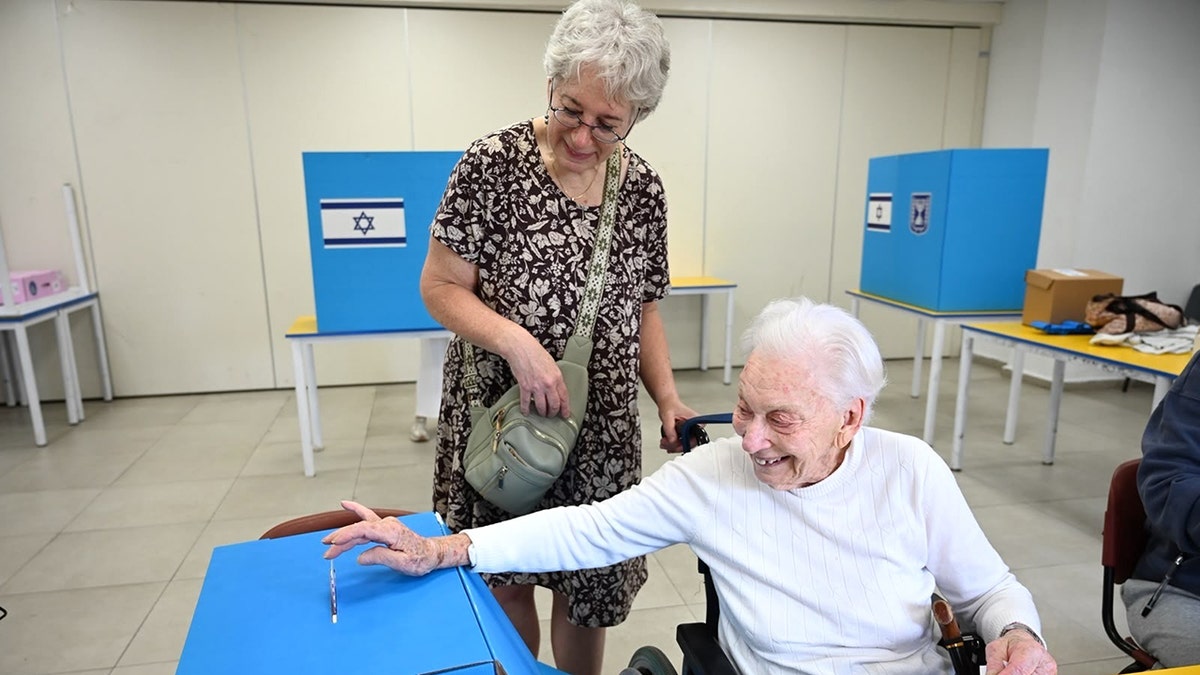
Residents of Jerusalem cast their votes on Oct. 27, 2026. (Yoav Dudkevitch/TPS-IL)
Netanyahu, Israel’s longest-serving prime minister, campaigned on his record of confronting Iran and its regional proxies, highlighting Israel’s military achievements and his relationship with President Donald Trump. His opponents accused him of failing to accept responsibility for the October 7 security failures and opposed his government’s approach to investigating the failures that preceded the massacre.
A last-minute battle for every vote
Throughout the final hours of the campaign, Netanyahu, Eisenkot, former Prime Minister Naftali Bennett and other party leaders mounted an intensive effort to mobilize supporters and win over undecided voters.
Netanyahu’s Likud party prepared hundreds of targeted campaign videos and social media messages, making digital outreach a central part of its last-minute election strategy.
Eisenkot’s campaign pushed supporters to rally behind Yashar as the leading alternative to Likud, while Bennett traveled between cities and engaged voters directly and through WhatsApp conversations.
The key question now is which candidate can secure the support of at least 61 lawmakers when President Isaac Herzog consults with the newly elected parliamentary factions. If Eisenkot can obtain those recommendations, including from Arab parties, he would have a strong claim to receive the first opportunity to form a government, even though Netanyahu’s Likud is projected to remain the largest individual party. Crucially, Arab parties could recommend Eisenkot without formally joining his governing coalition. However, the final decision rests with Herzog, who is tasked with selecting the lawmaker he believes has the best chance of forming a government. Securing the first mandate would not guarantee Eisenkot could assemble a governing majority, leaving the possibility of another political deadlock.
NETANYAHU FIGHTS FOR POLITICAL FUTURE AS ISRAEL HEADS TO POLLS WITH IRAN THREAT LOOMING
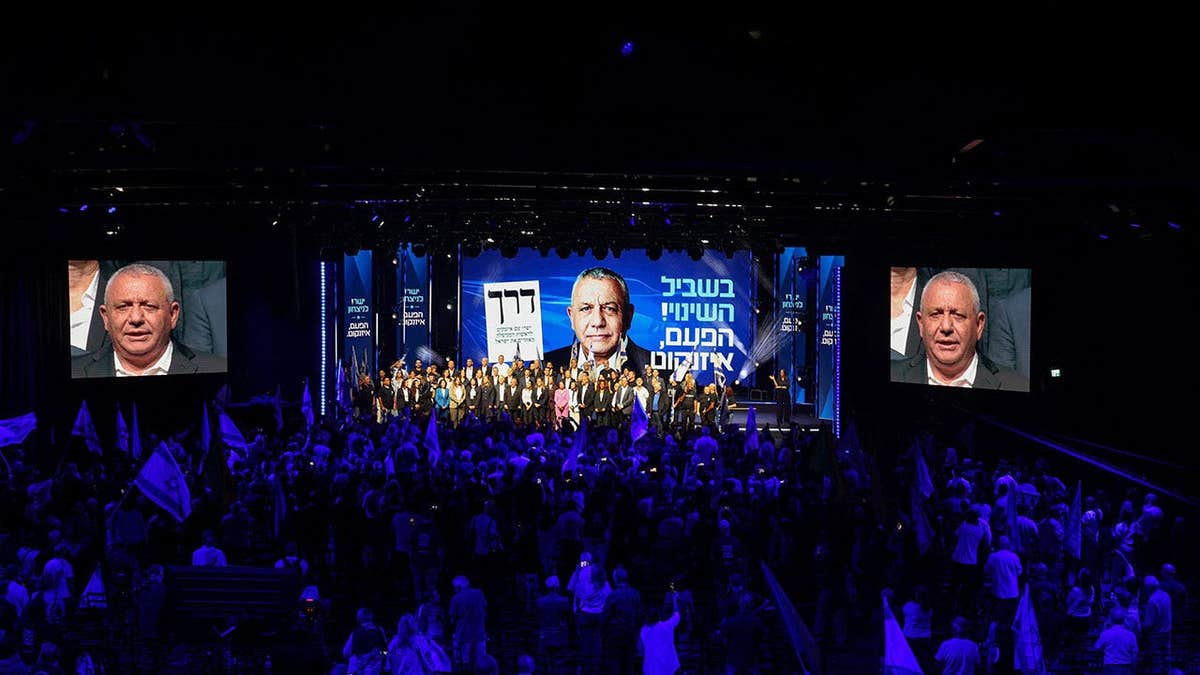
Former Israeli military chief Gadi Eisenkot attends an event for his Yashar party, ahead of Israel’s national election in Tel Aviv, Israel, October 25, 2026. (Ronen Zvulun/Reuters)
The campaign’s closing hours also featured personal appeals, phone calls to undecided voters and aggressive turnout operations across the political spectrum.
The final days were particularly important because a relatively small share of voters remained undecided about which party to support.
A Times of Israel poll published five days before the election found that 87% of respondents had already made their final choice, while 2.4% remained undecided between the pro and anti-Netanyahu political blocs.
Other surveys suggested a larger pool of undecided voters, although many were choosing between parties within the same political camp rather than switching sides.
That distinction could prove decisive in Israel’s parliamentary system, where political parties need at least 3.25% of valid votes to enter the 120-seat Knesset.
Even a slight change in the vote share of smaller parties could shift several parliamentary seats and determine whether either camp has a realistic path to power.
TRUMP SAYS NETANYAHU NEEDS TO BE RE-ELECTED, OR ELSE US WILL HAVE TO ‘FINISH THE JOB’ AGAINST IRAN ALONE

Israel’s Prime Minister Benjamin Netanyahu reacts after filling out his ballot before voting at a polling station in Jerusalem on Oct. 27, 2026, on the day of Israel’s legislative election. (Yonatan Sindel/Pool via Reuters)
What happens next?
Despite the exit poll projections, the identity of Israel’s next prime minister may remain uncertain for weeks.
Unlike in the United States, Israelis vote for political parties rather than directly electing their head of government.
The 120 seats in parliament are allocated proportionally, and parties must secure at least 3.25% of valid votes to win representation.
Once the final results are certified, Israeli President Isaac Herzog will consult with the newly elected political factions and select the lawmaker he believes has the strongest chance of forming a government.
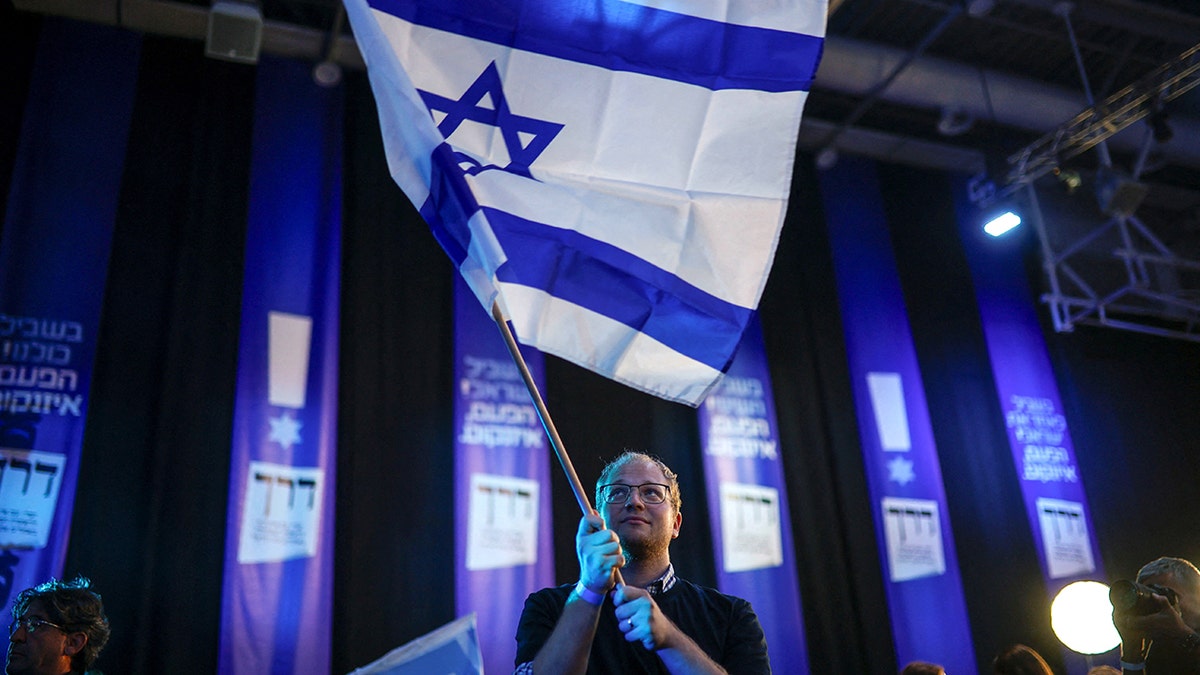
A supporter of former military chief Gadi Eisenkot, leader of the Yashar party, reacts to the exit poll at his party headquarters, on the evening of Israel’s national election, in Tel Aviv, Israel Oct. 27, 2026. (Shir Torem/Reuters)
That candidate will have 28 days to negotiate a governing coalition, with the possibility of a 14-day extension.
Official results are scheduled to be published by Nov. 4. Until a new government takes office, Netanyahu’s outgoing government will remain in power.
israel, elections, benjamin netanyahu, world, politics








INTERNACIONAL
Brasil: el expresidente Jair Bolsonaro volvió a ser internado de urgencia por dolores abdominales
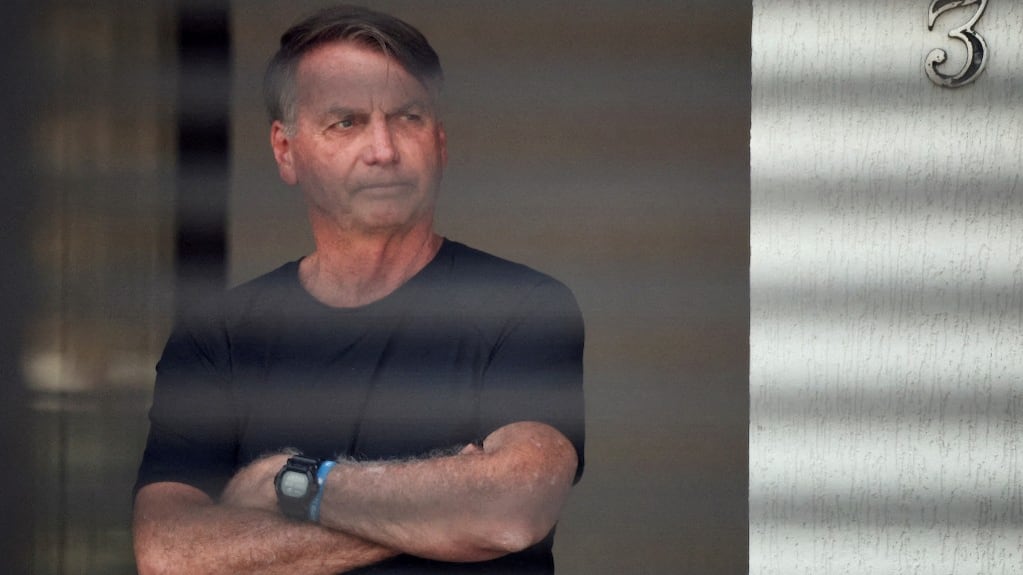
Jair Bolsonaro fue internado este viernes en un hospital de Brasilia tras sufrir fuertes dolores abdominales provocados por una obstrucción intestinal, informaron sus médicos. El expresidente brasileño, de 71 años, cumple prisión domiciliaria humanitaria con una condena de 27 años y tres meses de cárcel por intento de golpe de Estado.
El exmandatario fue trasladado desde su residencia al hospital DF Star, bajo escolta de la Policía Militar del Distrito Federal. Allí permanecerá internado por tiempo indeterminado para someterse a distintos estudios que permitan determinar el origen del problema y establecer el tratamiento.
Su médico, Brasil Caiado, explicó que una primera tomografía detectó una obstrucción “casi total” del intestino delgado, con adherencias en la pared abdominal. Por ese motivo, no descartó que Bolsonaro deba someterse a una nueva intervención quirúrgica. La decisión dependerá de cómo evolucione durante las próximas 24 horas.
En un comunicado, el hospital informó que el expresidente ingresó con un cuadro de “dolor y distensión abdominal” y que permanece internado para la realización de pruebas y la investigación diagnóstica. Por el momento, no hay una fecha prevista para su alta médica.
Bolsonaro
INTERNACIONAL
Usan gotas de helio y vapor de oro para revelar un misterio de más de 120 años: así huyen las cargas entre sí

Comprender cómo interactúan las partículas elementales constituye uno de los desafíos más antiguos de la ciencia contemporánea. Cuando diversos cuerpos provistos de una misma carga eléctrica conviven en un espacio cerrado, el rechazo mutuo los impulsa a alejarse lo máximo posible para minimizar su energía total. Esta sencilla dinámica de repulsión electrostática adquiere una complejidad extrema al distribuirse sobre una esfera, un reto de más de un siglo de antigüedad que acaba de cambiar gracias a un equipo internacional que logró obtener las primeras imágenes reales de cargas eléctricas ordenadas sobre una superficie esférica.
El dilema conceptual nació en 1904, cuando el científico británico Joseph John Thomson propuso su conocido modelo del átomo, en el que imaginaba a los electrones distribuidos dentro de una esfera de carga positiva. Aunque la mecánica cuántica sustituyó aquella concepción atómica, la incógnita puramente geométrica permaneció vigente durante más de doce décadas.
La dificultad radica en que, a medida que aumenta el número de elementos, calcular la posición de menor energía se vuelve casi imposible con herramientas analíticas, motivo por el cual el investigador Stephen Smale situó este desafío en 1998 entre los grandes retos teóricos del siglo veintiuno. La respuesta a esta pregunta interesa además a la virología, que analiza la coraza protectora de los virus esféricos, y al estudio de los fullerenos, moléculas de carbono con estructura de jaula.
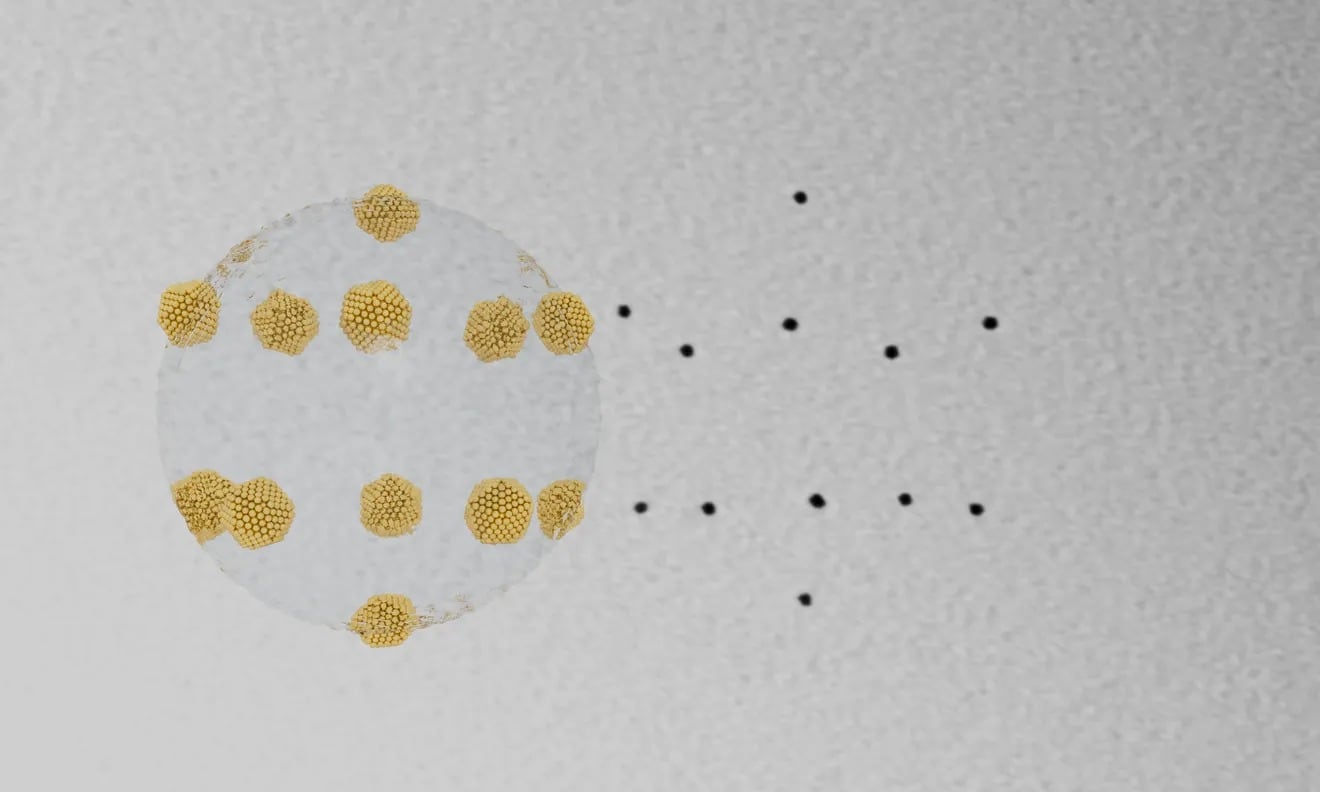
Frente a décadas de simulaciones por computadora sin pruebas de laboratorio, un estudio publicado en la revista Physical Review Letters demostró que es posible recrear físicamente este problema abstracto. La investigación, encabezada por especialistas de la Universidad de Innsbruck, en Austria, en colaboración con colegas de la Universidad de Leicester, en el Reino Unido, utilizó gotas microscópicas de helio como esferas experimentales para examinar la ordenación de las cargas. El hallazgo confirma que la naturaleza adopta de manera espontánea las soluciones de mínima energía calculadas por los teóricos y proporciona un método inédito para observar la materia a escala atómica.
Las gotas de helio superfluido actúan como laboratorios esféricos diminutos
Para recrear la superficie de una esfera perfecta sin distorsiones, los investigadores emplearon helio superfluido, una fase particular que este elemento adopta a temperaturas extremadamente bajas, apenas unas décimas de grado por encima del cero absoluto, y que carece de viscosidad.
Esta propiedad singular significa que el fluido se desplaza sin ningún tipo de rozamiento interno, es decir, un medio libre de fricción que permite a las cargas moverse con total soltura. Mediante el disparo de un haz de electrones, los científicos depositaron múltiples cargas positivas en estas nanogotas, las cuales migraron de inmediato hacia la superficie líquida para distribuirse con una interferencia externa mínima.

La estabilidad térmica y la ausencia de impurezas en estas gotículas crearon un escenario propicio para el desarrollo de la prueba. “Las nanogotas de helio superfluido nos brindan un entorno excepcionalmente limpio y frío en el que hasta varios miles de cargas pueden organizarse en una superficie curva con muy poca perturbación externa”, afirmó Paul Scheier, profesor del Departamento de Física de Iones y Física Aplicada de la Universidad de Innsbruck, según el comunicado de prensa institucional. En tales condiciones, el rechazo mutuo guió a los centros eléctricos hacia su punto de equilibrio energético más bajo.
El vapor de oro fija la posición de cada carga eléctrica
El obstáculo principal del ensayo consistía en registrar la distribución de estas partículas diminutas antes de que desaparecieran. Con ese propósito, el equipo hizo circular las gotas electrificadas por una corriente de vapor de oro.
Los átomos metálicos se concentraron alrededor de cada centro positivo hasta formar cúmulos de unos 700 átomos, conocidos como nanopartículas, cuya estructura consiste en diminutas acumulaciones de materia provistas de un único signo eléctrico. Este agrupamiento metálico proporcionó el contraste indispensable para la observación microscópica.

Posteriormente, las gotas impactaron contra una rejilla especial diseñada para la microscopía electrónica de transmisión. En ese instante, el helio se evaporó con rapidez y dejó intacta sobre la lámina la distribución original de los granos dorados.
“Al marcar los centros de carga con nanopartículas de oro, podemos preservar y fotografiar estas disposiciones después de que el helio se haya evaporado”, explicó Scheier según el comunicado de prensa de la universidad austríaca. Este procedimiento hizo posible la obtención de una huella nítida en dos dimensiones de la configuración tridimensional previa.
Los experimentos coinciden con la teoría y revelan defectos geométricos
Los autores examinaron 25 huellas experimentales que contenían entre 5 y 36 cargas por nanogota. En todas las muestras de pequeño tamaño, las posiciones registradas coincidieron de forma exacta con las estructuras de menor energía predichas por el cálculo teórico, tales como tetraedros para cuatro partículas, octaedros para seis o icosaedros para doce.

En cambio, en las gotas más grandes, de hasta dos micrómetros de diámetro, las nanopartículas formaron un enrejado hexagonal interrumpido por defectos pentagonales aislados, esto es, puntos donde cada partícula se rodea de solo cinco vecinas en lugar de seis. Dicha disposición resulta forzosa, dado que ninguna malla hexagonal plana puede recubrir una superficie esférica continua sin cerrarse con pentágonos, de modo similar a lo que ocurre en los gajos de un balón deportivo.
La concordancia entre los patrones abre nuevas perspectivas para analizar cómo interactúan numerosos cuerpos en superficies curvas. Según se detalla en el estudio, las nanogotas de helio proporcionan una “plataforma directamente visualizable para la organización de cargas en superficies esféricas”.
“Lo que más me entusiasma es que esto invierte la relación habitual entre la teoría y el experimento”, afirmó Shengfu Yang, profesor de la Escuela de Ciencias Químicas, de la Tierra y Ambientales de la Universidad de Leicester, según el comunicado de prensa de la universidad británica. Además, añadió que, en lugar de que la matemática prediga el resultado, ahora la naturaleza genera configuraciones reales para que la ciencia las interprete.
helio superfluido,nanogota,nanopartículas de oro,física experimental,fullereno
INTERNACIONAL
Somali community leaders bristle at broad blame even as youth gang violence surges from Minnesota to Maine

Somali community members in Minnesota pushed back Thursday against blaming the broader Somali American population as law enforcement officials warned of a surge in youth gang violence.
Members of the Somali community and law enforcement leaders met to discuss gang-related crimes in the Twin Cities, KSTP 5 Eyewitness News reported Thursday.
Ramsey County Sheriff Bob Fletcher estimates there are about a dozen Somali gangs involving roughly 300 young people in the metro area out of an estimated 1,000 to 2,000 total gang members across the region.
Fletcher said many gang members who do get arrested ultimately continue participating in «the gang life.»
CULTURE CLASH LAID BARE AS VIOLENT SOMALI GANGS GRIP SUBURBAN COMMUNITIES: ‘THESE KIDS ARE DIFFERENT’
«Well, many of them are [arrested]. I mean, we’ve arrested probably 100 of those 300,» Fletcher told KSTP 5 Eyewitness News. «Many of them cycle out. Just because you arrest them doesn’t mean they’re not going to continue to participate in the gang life.»
The Ramsey County Sheriff’s Office did not respond to Digital’s request for comment Friday.
However, some people at the community meeting said the Somali community in the Twin Cities metro area is being singled out unfairly.
Abdirizak Bihi, a Somali American social activist, said Thursday that «we cannot arrest our way» into fixing youth crime, KSTP 5 Eyewitness News reported.
«I’m concerned. I’m a father,» Bihi said. «We cannot arrest our way into solving this problem for any youth.
«Of course, anyone who commits a crime, we have laws.»
MINNESOTA HOMECOMING SHOOTING SUSPECT OUT ON BOND AFTER GUNFIRE SENDS FOOTBALL FANS FLEEING; 3 OTHERS ARRESTED
Minnesota Bureau of Criminal Apprehension Superintendent Drew Evans suggested that preventing gang violence can be «difficult to measure,» CBS News reported Thursday.
«What a meeting like this does is it brings (the) community together in a way to really understand what the drivers of violence are to begin with,» Evans said. «Prevention is always going to be difficult to measure. You’re not going to be able to prove the negative if something didn’t occur.»
The tensions in the Twin Cities mirror similar struggles in other U.S. cities with large Somali American populations, where local officials and community leaders are also grappling with spikes in youth gun violence and debates over how to confront it.
In Lewiston, Maine, police reported 35 gun-related incidents this year, including 22 that involved juveniles, previously reported in October. The city houses a large population of Somali refugees and refugees from other African nations.
«I don’t feel safe. I fear for my life,» Mohamed Muhumed, a Lewiston teenager, previously told Digital. «I saw someone get punched in the middle of the sidewalk over there. It’s crazy.»
Maine Immigrant and Refugee Services Executive Director Rilwan Osman and his team unveiled a Voices Against Gun Violence program in June, which included daily workshops and community discussions throughout the month as part of a broader effort to address youth gun violence in the city, WGME reported June 1.
«We are asking people to pledge that they can talk about gun violence at home in their communities, at school, outside their school,» Osman said, according to WGME.
The Minnesota BCA announced in an Oct. 19 news release that more than 40 law enforcement agencies agreed to «use an existing investigative model to coordinate efforts and strengthen collaboration in addressing gang and group violence.» The plan also «employs county-based quick reaction teams for specialized and rapid uniformed patrol and investigative response when criminal activity occurs,» according to the agency.
When reached for comment about its efforts to address gang-related crime in Minnesota, the BCA referred Digital to its Oct. 19 news release.
SOMALIS IN MINNESOTA UNLEASH FURY ON TRUMP AFTER FEDS RAID ILHAN OMAR’S DC HOME
Former state Trooper John Nagel told Digital in October that some Minnesota Democrats have their «heads in the sand» and hindered law enforcement from stopping Somali American gang-linked violence in the state before it escalated.
«They’re being restrained by politicians, people that are trying soft on crime, people that are trying to send somebody other than a police officer to take care of issues, and it’s not working,» Nagel said at the time.
Police in Eden Prairie, Minnesota, previously said an Oct. 2 shooting outside Aerie Stadium at Eden Prairie High School’s homecoming was connected to Somali gang activity.
About 84,000 Somali individuals live in the Minneapolis-St. Paul area, PBS News reported in December 2025.
SIGN UP TO GET THE POLITICS NEWSLETTER
Rep. Tom Emmer, R-Minn., sent a letter to U.S. Attorney Daniel Rosen July 23 flagging concerns about the «alarming rise» of Somali gang violence in the North Star State.
«I’ve said it before, and I’ll say it again. If you won’t assimilate, then get the hell out of here. First it was an estimated $9 billion in fraud. Now it’s out-of-control violence,» Emmer said in a statement. «These Somali gangs have shot up high school graduations and assaulted players on opposing basketball teams with tire irons. It’s absolute madness, and something must be done.»
In Columbus, Ohio, police announced the arrests, indictments or convictions of 21 BL-800 gang members in February 2024, WOSU 89.7 NPR News reported.
Det. Eric Clouse said that the «BL» in the gang’s name initially stood for «Bantu Life» or «Bantu Love» in reference to Somalia’s Bantu ethnic community, according to the outlet.
Fox News’ Paul Steinhauser contributed to this report.
politics, minneapolis st paul, somali immigrant community, police and law enforcement, crime world

Brasil: el expresidente Jair Bolsonaro volvió a ser internado de urgencia por dolores abdominales

Gimnasia de Jujuy vs Deportivo Madryn: formaciones, hora y dónde ver por tv

Detuvieron a cuatro nuevos sospechosos por la fuga del ex terrorista italiano Leonardo Bertulazzi

Arruabarrena y Paredes hablaron antes de la final que jugará Boca: la peculiar frase que utilizó el técnico para definir al plantel

Tesla se presentó en el país: los elogios de Javier Milei y el confuso mensaje de Elon Musk desde un avión

Chubut desdobló su elección a gobernador y ya son cinco las provincias que no votarán con las nacionales – Nexofin

Javier Milei y sus medidas, en vivo: “Hoy discutimos si crecemos un punto más o menos”, dijo el Presidente

De la Patagonia a San Pablo: empieza a tomar forma el proyecto de exportar gas de Vaca Muerta a Brasil

¿Dónde ver EN VIVO y ONLINE el Boca Juniors vs Banfield por la Copa Argentina?

Alejandra Monteoliva será operada de la columna y permanecerá internada varios días – Nexofin

 POLITICA2 días ago
Javier Milei y sus medidas, en vivo: “Hoy discutimos si crecemos un punto más o menos”, dijo el Presidente
- POLITICA3 días ago
El Gobierno rechazó las actividades de la princesa Ana, hermana del rey Carlos III, en las Islas Malvinas
- INTERNACIONAL1 día ago
El brote de ébola está fuera de control en la República Democrática del Congo y crece el temor a una epidemia continental