INTERNACIONAL
Dems, GOP rebels fail to rein in Trump’s Iran war in Senate, but bigger battle looms


Senate Democrats failed to peel off enough Republicans to rebuke President Donald Trump and his war against Iran as another battle looms on the horizon.
In the first attempt after the midterm elections, Democrats and the squadron of rebel Republicans, including Sens. Susan Collins, R-Maine, Lisa Murkowski, R-Alaska, and Rand Paul, R-Ky., were not enough to pass a non-binding resolution that originally passed the House, pushed by Rep. Seth Moulton, D-Mass., in September.
Like the previous war powers resolutions, this effort would have required the removal of troops engaged in hostilities not authorized by Congress in the region. Even if it had passed, it was a more symbolic move given that it was non-binding and would not have been sent to Trump’s desk.
DEMOCRATS COULD ENTER CONGRESSIONAL MAJORITY IN A GOVERNMENT SHUTDOWN
But in the background, Senate Democrats are eyeing another battleground to be more forceful with their desire to rein in the war: government funding.
The deadline to either fully fund or extend current funding is Dec. 11. Senate Republicans have warned that their counterparts intend to use the process as a cudgel to stymie tax dollars meant for the war and are willing to shut down the government to do so.
«I’m increasingly concerned that the Democrats may try to initiate another, a third government shutdown this year,» Senate Majority Leader John Thune, R-S.D., said. «And that would be a terrible outcome for the American people and something I hope that they will think better of.»
CHRIS VAN HOLLEN FLOATS USING GOVERNMENT SHUTDOWN THREAT TO FORCE TRUMP TO END IRAN WAR
Sen. Tim Kaine, D-Va., countered to Digital that Senate Republicans were the ones who wanted to «shut the government down to maintain an illegal war that has just been massively repudiated by the American public.»
«We’re gonna fund government in a robust way. We’re gonna fund the defense in a robust way, but if they say, ‘Yeah, that’s not enough, we have to be able to continue a war that’s illegal, and the American public hates,’ that’ll be on them, not on us,» Kaine said. «We’re not gonna shut government down.»
Thune’s comments came as Republicans were, until Wednesday afternoon, considering taking defense funding off the table and ramming a $350 billion request from the administration through with the budget reconciliation process.
But after a marathon closed-door meeting with Deputy Secretary of Defense Steve Feinberg, Republicans opted to give a shot at bipartisanship.
SENATE REPUBLICANS PLAN 54-DAY BLITZ TO PUSH TRUMP’S AGENDA BEFORE DEMOCRATS SEIZE POWER
«I think the consensus of the conference is, you know, there are downsides to reconciliation,» Sen. Ron Johnson, R-Wis., said. «We’re not giving up by any means, but we would like to give Democrats a chance to work through an appropriations process, defense supplemental, that kind of stuff.»
Senate Democrats acknowledged that they’re in a hard spot when it comes to the funding back and forth, with some recognizing that they need to agree to funding the Pentagon and restocking munitions while struggling to find the balancing act on guardrails against taxpayer dollars flowing to the war effort.
«We’re in a really tough place,» Sen. Chris Coons, D-Del., said. «I’ve been saying for months that the war with Iran has no support in my caucus. We are searching for responsible ways to bring it to an end, and a supplemental is a nonstarter, a reconciliation bill is a nonstarter, but I recognize we also need to find ways to invest in and support our troops and our security.»
Republicans are also cautiously optimistic that Democrats will play ball, given the recent history with two record-shattering government shutdowns.
Sen. Kevin Cramer, R-N.D., was more optimistic than some of his colleagues, and told Digital that «I’ve got a lot of Democrat friends, both on the Armed Services Committee, who are, who are very supportive of our military. [They] understand the threat in the world.»
«You know, they may have to, they may have to swallow their ‘I hate Trump pride’ a little bit, but, at the end of the day, there are a lot of people that are convincible,» Cramer said. «But it does require talking to them. You know?»
politics, senate, war with iran, government shutdown, spending











INTERNACIONAL
Guerra de Ucrania: las negociaciones avanzan, pero ni Kiev ni Moscú aceptan ceder para lograr un alto el fuego
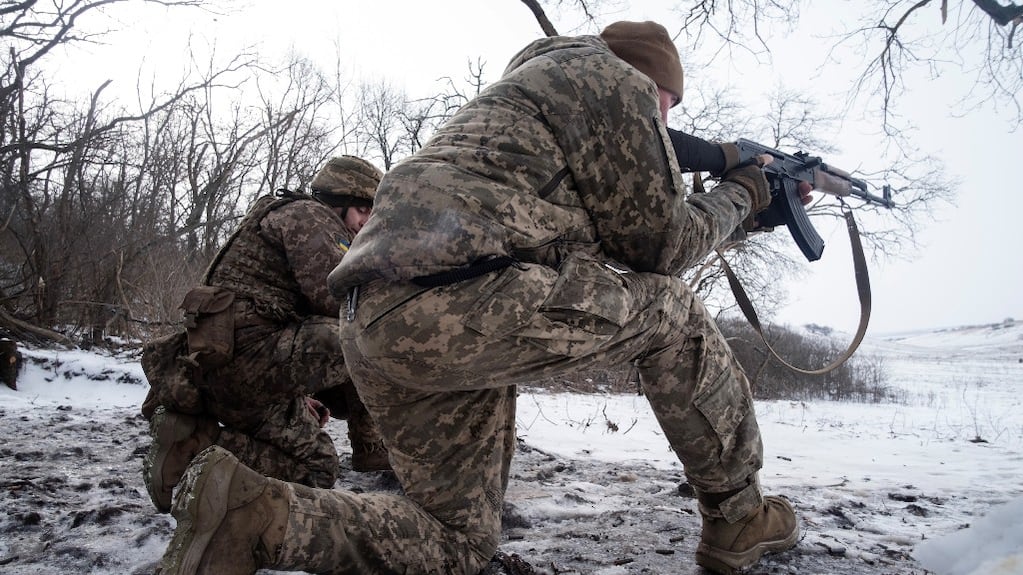
Después de cuatro años y nueve meses de guerra, Rusia y Ucrania siguen enfocados en el frente de batalla, más allá de algunos avances diplomáticos y el llamado a la paz de la reciente cumbre tripartida entre Vladimir Putin, Donald Trump y Xi Jinping en China.
Las conversaciones se vienen sucediendo en distintas capitales con la mediación de Washington, pero las bombas siguen cayendo en varios puntos calientes en ambos lados de la frontera.
“Ha habido algunos avances, pero sigo pensando que ambas partes están aún lejos de alcanzar un compromiso”, dijo a TN el analista Oleg Ignatov, especialista en temas rusos de Crisis Group, una ONG internacional encargada de la resolución de conflictos.
Las recientes negociaciones celebradas en Abu Dhabi, en los Emiratos Árabes Unidos, bajo mediación de enviados de la Casa Blanca, lograron avances sobre seguridad y el intercambio de prisioneros, pero el fin del conflicto está aún lejos de concretarse.
Ahora, se espera que se avance con cualquier punto acordado sobre o bajo la mesa en la reunión que Putin, Xi y Trump mantuvieron el jueves en la ciudad china de Shenzhen, al margen de la cumbre del Foro de Cooperación Económica Asia-Pacífico (APEC).
Desde China, Putin mostró tanto el garrote como la zanahoria. Por un lado se mostró dispuesto a poner fin a la guerra, pero al mismo tiempo advirtió que la respuesta rusa a los ataques del ejército ucraniano de esta semana contra el puente de Crimea será “mucho más dolorosa” que los daños que causó Ucrania a esa infraestructura estratégica.
Por qué Ucrania y Rusia están lejos de poner fin a la guerra
La guerra sigue su curso. Todos los días llegan reportes de ataques, bombardeos y víctimas militares y civiles. Pero el frente de batalla apenas se mueve.
Europa presiona por formar parte de las negociaciones, mientras el gobierno ucraniano de Volodimir Zelenski clama por más ayuda militar de sus aliados e intenta mantener el equilibrio ante la fuerte presión de Trump para poner fin a la guerra con duras condiciones hacia Kiev.
Putin dio esta semana un paso muy esperado en Bruselas. El presidente ruso invitó a los representantes de la Unión Europea (UE) a Moscú para que detallen la agenda con la que participarían en futuras negociaciones de paz.
Es un paso clave que vienen reclamando Europa y Zelenski.
“Tenemos que entender con qué Europa va a participar en esas negociaciones. Por lo tanto, por los canales diplomáticos hemos propuesto a los europeos venir a Moscú para que nosotros entendamos su postura”, dijo el jefe del Kremlin desde la ciudad china de Shenzhen.
El frente de guerra sigue abierto
Mientras tanto, los gobiernos ruso y ucraniano siguen con su presión militar.
“Tanto Rusia como Ucrania continúan buscando la paz bajo sus propias condiciones, mientras que los países europeos sostienen que es Rusia quien debe hacer concesiones primero, y no Ucrania ni Europa”, dijo Ignatov.
Rusia

FIRST ON FOX: A bipartisan group of lawmakers is eyeing adding a tax to internet usage throughout the country to help subsidize telecommunications services in rural areas.
Sens. Deb Fischer, R-Neb., and Ben Ray Luján, D-N.M., have quietly been working on draft legislation that would add up to $100 extra on Americans’ internet bills to bolster the Universal Service Fund (USF), a decades-old program meant to subsidize broadband access, a source shared with Digital.
Fischer and Luján formed a bipartisan and bicameral working group for USF reform last year with Reps. Doris Matsui, D-Calif., and Richard Hudson, R-N.C. to find fixes for the program, which was first launched in 1996.
FCC LAUNCHES SWEEPING REVIEW OF $3B SCHOOL INTERNET SUBSIDY PROGRAM OVER SCREEN TIME CONCERNS
The draft legislation, which has yet to be officially filed in the Senate and is still subject to change, included proposals to create a USF tax on households and businesses with broadband connections. The draft legislation, which was reviewed by Digital, would also increase the current USF tax on cell phone lines and impose no cap on USF spending — meaning there’s wiggle room to raise the tax down the line.
«I’m not commenting on gossip intended to undermine USF reform, particularly when a bill hasn’t even been filed,» Fischer said in a statement to Digital.
Another source familiar with the negotiations around the yet-to-be revealed legislation told Digital that they had «no reason to believe» that the fee had been removed from the draft bill.
«My understanding is it just adds a tax on broadband,» they said.
Luján’s office told Digital that discussions were still ongoing, that the «bipartisan working group continues to evaluate options to modernize the Universal Service Fund, ensure its long-term sustainability, and keep internet and communications services affordable for all Americans.»
«No proposal has been finalized, and any claims otherwise are premature,» they said.
Congress does not directly fund the program, which instead relies on user fees from telecommunications and broadband companies to stay afloat in order to subsidize broadband services in rural areas.
FCC CHAIRMAN CARR SAYS SPECTRUM AUCTION WILL MAKE WIRELESS FASTER, CHEAPER WHILE RAISING BILLIONS FOR TREASURY
Last year, according to data from the Congressional Research Service, the USF doled out over $8 billion in subsidies.
Part of the problem with the program is that the stream of funding that props USF up is shrinking, according to a report from the Computer & Communications Industry Association.
The report found that «the current contribution base for USF fell 41% between the first quarter of 2018 and the first quarter of 2026, from $12.9 billion to $7.6 billion.» That is spurred by shifts in the industry and contribution base, like more communications happening over the internet through WhatsApp, FaceTime and Zoom instead of phone calls, for example.
And tacking on a new tax to bolster the program is a touchy subject, particularly for outside groups.
TOP SENATE DEM’S NEW TAX IDEA GETS TORCHED AS CRITICS WARN NEARLY EVERY AMERICAN COULD PAY
Over two dozen outside groups led by Grover Norquist’s Americans for Tax Reform demanded in a letter to Congress sent in August that lawmakers «oppose any attempts to impose new taxes on broadband service, including by assessing broadband for contributions» to the USF.
«Rather than impose new taxes on broadband providers, raising costs yet further for consumers, Congress should reform eligibility for the program and retire the broadband subsidies, if not the entire program,» they wrote. «USF is outdated and ill-suited for its purpose. Passing off its ballooning costs is not a solution.»
Congress did enact a new infrastructure-expansion focused internet program under former President Joe Biden in 2021 as part of his Infrastructure Investment and Jobs Act.
That program, called the Broadband Equity, Access, and Deployment (BEAD), included a one-time pot of just over $42 billion to spread internet access across the country.
The Trump administration overhauled the program, removing hurdles and adding new guidelines for states and territories to gain access to the funding.
politics, congress, taxes, domestic policy, economic policy
INTERNACIONAL
German chancellor warns Islamic immigrants, others to honor nation’s Holocaust legacy or leave

NEWYou can now listen to Fox News articles!
Eight decades after the Holocaust, Germany’s conservative Chancellor Friedrich Merz warned that accepting the nation’s responsibility for the Nazi genocide is an obligation that extends fully to immigrants arriving from Islamic countries.
During an official reception for Germany’s Maccabiah Jewish sports delegation in Berlin on Nov. 6, Merz said the «historical responsibility of our country applies just as much to those who come here to Germany from Islamic countries, and anyone who fails to abide by this must leave our country.»
His response came after a basketball coach told him athletes feared being attacked if they wore their red Maccabi training jackets bearing the Star of David on German streets.
The German Press Agency, dpa, reported that Merz quoted former German President Richard von Weizsäcker, who in 1985 told the Bundestag that «young people are not responsible» for the crimes of the Nazis, «but they are responsible for what becomes of it in history.» Merz said the principle was «set in stone,» and that, «given the current circumstances,» von Weizsäcker’s words «also apply to immigrants who come to Germany,» referring to recent antisemitic offenses committed by Muslim immigrants.
GERMAN OFFICIALS WARN ISLAMIST, FAR-LEFT RHETORIC DRIVING SPIKE IN ANTISEMITIC ATTACKS
German Chancellor Friedrich Merz sparked backlash while remarking about the country’s migration policies. (Thomas Traasdahl/Ritzau Scanpix via AP)
The chancellor’s office released his prepared remarks from the event, but did not include comments made in a question-and-answer session with the athletes. When asked by Fox News Digital about his statement, a German government spokesperson said, «The chancellor’s words speak for themselves.»
«Chancellor Merz is not only right to make these remarks,» said Sweden-based political scientist Daniel Schatz, «he is fulfilling Germany’s historical responsibility.» Schatz, who holds a doctorate from Berlin’s Humboldt University, says Merz’s statement reflects the German concept of «Staatsräson,» or reason of state, «which places Germany’s historical responsibility for the Holocaust and its commitment to Israel’s security at the heart of German national and foreign policy.»
Schatz said Merz’s remarks point to a broader challenge for Germany. «When Jewish athletes in Germany and other parts of Europe are afraid to wear clothing displaying the Star of David, we are confronting something far more serious than a failure of integration,» he said. «We are witnessing a failure of the state to guarantee that Jewish citizens can live openly and securely.»
«A country that has made ‘Never Again’ a cornerstone of its national identity cannot accept a situation in which Jewish identity must be concealed for reasons of personal safety.»
ITALY’S SCHOOL VEIL BAN EXPOSES EUROPE’S ASSIMILATION FIGHT AS EXPERT WARNS US COULD BE NEXT

Protesters attend a pro-Palestinian demonstration in Leipzig, Germany, Jan. 17, 2026. (Christian Mang/Reuters)
Simone Rodan‑Benzaquen, senior envoy to Europe at the Foundation for Defense of Democracies, told Fox News Digital, «Merz is right: everyone who makes Germany their home must accept the responsibility to protect Jewish life. You do not have to inherit Germany’s guilt to share that responsibility.»
«This is a fundamental question of integration,» she added. «Learning German and finding a job matter, but integration also means accepting that your Jewish neighbor has the same right to live openly and safely as you do. That requires transparent foreign funding, scrutiny of what publicly supported organizations teach, enforcement against threats and violence, and support for Muslims challenging antisemitism within their own communities.»
SIGN UP FOR ANTISEMITISM EXPOSED NEWSLETTER

A timeline of World War II and historical documents detailing the Holocaust are displayed at the Crossroads of Civilizations Museum in Dubai, United Arab Emirates. The exhibition commemorates the 6 million Jews murdered by Nazi Germany and its collaborators. (Efrat Lachter/Fox News Digital)
Since the Oct. 7, 2023, terrorist attack by Hamas, Janek Treiber, a Dresden University of Technology research fellow, said Germany «has seen a sort of culture war between those who argue for solidarity with Palestinians and view Israel as an oppressive state, and those who stand firmly with Israel. In Germany, this debate is naturally conducted with even greater intensity due to the country’s history.»
Despite the strength of Merz’s remarks, Treiber said the comments have not generated the kind of reaction that has accompanied some of Merz’s previous comments on migration. «Most people would likely agree that anyone moving to Germany… must respect the constitutional order and come to terms with Germany’s historical legacy,» Treiber said.
«Merz’s words should not be a surprise to anyone,» Rodan-Benzaquen said. «The measure of success will be whether those athletes can wear their team jackets on German streets without fear.»
Germany’s 2026 Maccabiah Games delegation was the most successful European team at the competition in Israel — a sporting event akin to the Olympics for Jewish athletes worldwide.
anti semitism, germany, holocaust, israel

La MLS desvela todos sus salarios: tres exBarça en el podio y Luis Suárez fuera del TOP-5… ¡del Inter Miami!

Antes de la clasificación, Franco Colapinto afrontará la última práctica del Gran Premio de Las Vegas de Fórmula 1: hora, TV y todo lo que hay que saber

Dems, GOP rebels fail to rein in Trump’s Iran war in Senate, but bigger battle looms

Vacaciones 2027: 10 lugares para visitar en Córdoba

Los tres nuevos datos que confirman el vínculo de la AFA de Chiqui Tapia con la mansión de Pilar

El fallo de la Corte terminó de desarmar la estrategia judicial de Tapia y Toviggino y volvió todo a fojas cero

Javier Milei y sus medidas, en vivo: “Hoy discutimos si crecemos un punto más o menos”, dijo el Presidente

Encontraron muerto a un trabajador en el Observatorio de La Plata

Milei dijo que el riesgo país sube por el miedo a "Orcolandia" y afirmó: "Los argentinos no van a votar hacia el pasado"

¡Bomba! Sofía Jujuy Jiménez confirmó su primer embarazo a los 35 años: tras pasar una escandalosa infidelidad, conoció a su nuevo novio y será mamá

 POLITICA1 día ago
Javier Milei y sus medidas, en vivo: “Hoy discutimos si crecemos un punto más o menos”, dijo el Presidente
- DEPORTE3 días ago
¿Dónde ver EN VIVO y ONLINE el Boca Juniors vs Banfield por la Copa Argentina?
- INTERNACIONAL3 días ago
Fallas en los sistemas de Estados Unidos: cuando las actualizaciones tecnológicas salen mal