INTERNACIONAL
Bitter Fetterman-El-Sayed feud threatens to complicate Schumer’s Senate unity push

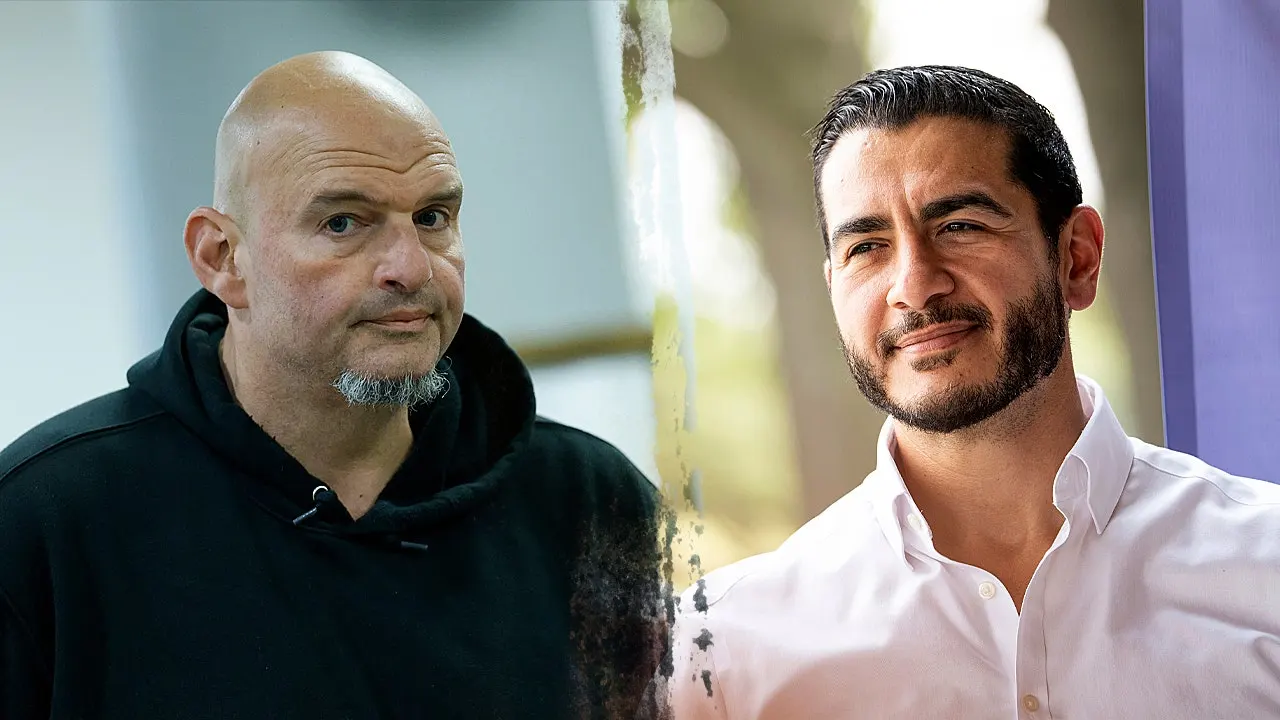
Senate Minority Leader Chuck Schumer called for Democratic Party unity Wednesday following the midterm elections, but a bitter feud between Sen. John Fetterman and Sen.-elect Abdul El-Sayed could complicate efforts to unite the caucus in the 120th Congress.
The two Democrats traded personal insults throughout the 2026 election cycle, clashing over U.S. military assistance to Israel, Medicare for All and the ideological direction of the Democratic Party.
«You put one ogre on a pike, and then everyone else gets the message,» El-Sayed, D-Mich., reportedly told progressive donors during a private Zoom call, arguing that challenging moderate Democrats in primary elections would send a message to the party’s establishment.
CHUCK SCHUMER AFTER SWEEPING DEMOCRATIC MIDTERM VICTORIES: ‘I’LL BE RE-ELECTED AS MAJORITY LEADER’
Fetterman, D-Pa., has been an outspoken supporter of U.S. military assistance to Israel, including funding for its Iron Dome missile defense system, and he has backed military action against Hezbollah and Iran. El-Sayed, meanwhile, campaigned against the war in Iran and opposed taxpayer-funded military operations and U.S. aid to Israel.
A longtime Democratic Senate staffer told Digital that they would «not be surprised» if tensions emerged between the two lawmakers but expressed confidence that their loyalty to the Democratic Party would outweigh their personal disagreements.
FETTERMAN CLAIMS DEMOCRATIC ‘BIG TENT’ HAS MORE ROOM FOR ‘AMERICA DESERVED 9/11’ THAN ISRAEL SUPPORT
The staffer added that Fetterman has faced criticism from other members of the Senate Democratic caucus, though those disagreements have not necessarily prevented lawmakers from working together.
During a televised primary debate, El-Sayed confirmed that his «ogre on a pike» remark was directed at Fetterman, accusing the Pennsylvania senator of having «abandoned his elected values» through his support for U.S. military assistance to Israel.
DEMS CLASH OVER AIPAC MONEY, ‘OGRE’ ATTACK AND ELECTABILITY DURING CRUCIAL SENATE DEBATE
El-Sayed later doubled down on his criticism, arguing against funding foreign defense systems such as Israel’s Iron Dome while American schools struggle with limited resources.
Fetterman fired back, referring to El-Sayed as the «Pontiac Platner» in an apparent jab at the Maine Democrat Graham Platner, who dropped out of his Senate race this election season under the weight of multiple scandals.
FETTERMAN ‘DARES’ EL-SAYED TO STICK WITH PIKER, CLAIMS MICHIGAN NOMINEE HAS ‘LITTLE MAN SYNDROME ENERGY’
The Pennsylvania senator also accused El-Sayed of seeking to become the «head of our emerging pro-Hamas wing here in the party,» criticizing his positions on Israel.
El-Sayed’s campaign appearances with left-wing streamer Hasan Piker, who previously said «America deserved 9/11,» further fueled the dispute, prompting Fetterman to publicly condemn Piker’s remarks.
The tensions escalated after El-Sayed narrowly defeated Rep. Haley Stevens, D-Mich., in the Democratic primary by less than one percentage point.
Days before the general election, reports emerged that El-Sayed’s campaign had barred Stevens from attending its final campaign events, drawing another sharp rebuke from Fetterman.
MICHIGAN DEMOCRAT HALEY STEVENS BACKS EL-SAYED AFTER NARROW PRIMARY DEFEAT, CALLS SOCIALISM ‘DANGEROUS’
«Rep. Haley Stevens simply held Abdul El-Sayed accountable for his views on Israel and fixation with Jewish money. El-Sayed is going after a woman and banning her from campaign events for having an opinion,» Fetterman told Jewish Insider.
«He has the worst case of little man syndrome I’ve ever seen,» Fetterman added.
DEM INSURGENT TURNS ON THE CHARM WITH PARTY ESTABLISHMENT AS SCHUMER LEAVES BITTER FEUD HANGING
Despite the public hostility, the Democratic Senate staffer’s assessment suggests the two lawmakers could ultimately set aside their differences to advance their party’s legislative priorities.
The feud could nevertheless present an early test for Schumer, D-N.Y., as he seeks to maintain unity among Senate Democrats, particularly on divisive issues such as U.S. foreign policy and the party’s progressive agenda.
El-Sayed and Fetterman did not respond to Digital’s requests for comment.
politics, chuck schumer, john fetterman, abdul el sayed, senate











INTERNACIONAL
‘Money out of politics’ ballot measure sparks First Amendment fight in battleground state

Michigan voters approved a ballot initiative called Proposal 2, pitched to them as a way to curb pay-to-play donations and get money out of politics. But the measure has also triggered a federal First Amendment lawsuit alleging its separate speech and disclosure provisions could ensnare journalists, nonprofits and policy researchers who discuss elected officials.
Michiganders for Money Out of Politics, also known as MOP UP Michigan, said the lawsuit was expected after voters approved Proposal 2. Campaign manager Maura Cowley said the group is «confident Proposal 2 will withstand legal scrutiny» after organizers said they submitted more than 560,000 signatures to place the measure on the ballot.
The Mackinac Center for Public Policy, which filed the lawsuit, says it is not challenging the initiative’s central pay-to-play restrictions on political contributions from utility companies and government contractors. Its lawsuit instead targets provisions imposing reporting and disclosure requirements on certain communications that refer to candidates or «promote, support, attack or oppose» candidates or ballot questions, even without expressly urging voters to support or oppose them.
«Michigan voters deserve the freedom to research, debate, and report on the policies that shape their lives. But Proposal 2 is a Trojan horse: while it claims to target corruption, it would expose the Mackinac Center, its supporters, and ordinary Michiganders to criminal penalties and harassment simply for discussing public policy,» Patrick Wright, the Mackinac Center’s vice president of legal affairs, said in a statement provided to Digital.
SURVEY REVEALS COLLEGE STUDENTS’ GROWING INTOLERANCE FOR FREE SPEECH
Under Proposal 2, any person — not just a campaign or political committee — who makes «electioneering communications» aggregating at least $5,000 in a calendar year would have to file a report within 10 days. Additional reports would be required after each additional $5,000 in covered communications. The reports would include the dates and costs of the communications, candidates mentioned, vendors paid and information about donors who contributed more than $100 for the purpose of making the communications.
Proposal 2 defines «electioneering communications» as public messages — including broadcasts, print publications, mailings, telephone calls, internet communications and other forms of general public communication — that reference a clearly identifiable candidate, regardless of whether they contain express advocacy, within 100 days of a general election or 30 days before a primary or special election. The communication must also be targeted to the relevant electorate where the candidate appears on the ballot, according to the provision.
Mackinac argues the measure leaves important questions unanswered, including which expenses count toward the $5,000 threshold, what it means for a donor to contribute «for making electioneering communications,» and how the state will determine whether a communication is targeted to the relevant electorate.
SUPREME COURT STRIKES DOWN LIMIT ON PARTY CAMPAIGN SPENDING IN COORDINATION WITH CANDIDATES
The Mackinac Center’s lawsuit also challenges Proposal 2’s expansion of the definition of an election-related «expenditure.» The amended definition includes public communications that «promote, support, attack, or oppose» a candidate or ballot question, regardless of whether they expressly advocate for or against the outcome. Under the proposal’s revised committee definition, an organization that spends at least $500 on such expenditures could be treated as a political committee if the state determines the spending was intended to influence voters.
Brett Nolan, an Institute for Free Speech attorney representing Mackinac, told Digital that the new electioneering-communications reporting provision contains no express exception for neutral reporting, legislative voting records or policy research. Proposal 2 does retain an existing exemption for certain news stories, commentary and editorials from being treated as campaign spending, but Mackinac argues that exemption does not resolve the reporting requirements for electioneering communications.
Mackinac’s complaint points specifically to its MichiganVotes project, policy scorecards, a neutral policy brief about Proposal 2, magazines, radio programs, podcasts and public-policy events as examples of speech that could be swept up in the new requirements because those materials sometimes discuss elected officials or candidates.
GOP LAWMAKERS URGE SUPREME COURT TO STRENGTHEN FIRST AMENDMENT PROTECTIONS FOR STREET PREACHERS
«The Supreme Court has said several times in recent years that disclosure mandates like this create an ‘inevitable’ chilling effect on free speech because the risk of political harassment (or worse) is so significant. The more costs we impose on those who want to exchange ideas and discuss public policy, the fewer of those people we will have,» Nolan said.
«This law goes much further than addressing any interest the state may have in transparency about those who are funding campaigns and election advocacy,» he continued. «The notion that the government has an interest in monitoring people who talk about public policy if they dare mention an elected official is antithetical to the First Amendment.»
The lawsuit against Proposal 2 seeks to block the electioneering-communications reporting requirement and the political-committee rules as applied to Mackinac — not to overturn Proposal 2 in its entirety. The measure is set to take effect 10 days after the official declaration of the vote, and no later than Dec. 3, according to the lawsuit.
«This lawsuit is no surprise,» Cowley said in a statement to Digital. «The corporations bankrolling our opposition have been gearing up for this lawsuit since Proposal 2 first qualified for the ballot, if not before.»
SIGN UP TO GET THE POLITICS NEWSLETTER
According to MOP UP Michigan, besides curbing pay-to-play political donations, Proposal 2 is designed to close what the group calls an «issue-ad loophole» — the ability to discuss candidates or ballot questions without expressly urging voters to support or oppose them in order to avoid certain disclosure rules.
«Last night, Michiganders spoke loud and clear, voting to pass Proposal 2 with an overwhelming majority and delivering a resounding mandate to end pay-to-play politics and put power back where it belongs – with the people,» Cowley continued. «The bottom line is that we are confident Proposal 2 will withstand legal scrutiny, and we were fully expecting and are prepared to take on this challenge.»
first amendment, first amendment elections, banking finance, michigan, politics, regulation, political rights
INTERNACIONAL
“No pudimos sacar nada”: fundadora del Teatro Justo Rufino Garay cuenta cómo el régimen nicaragüense tomó la histórica sala

El Teatro Justo Rufino Garay, una sala histórica de Managua, fue tomado por el régimen de Daniel Ortega y Rosario Murillo en marzo de 2026, según denunció su fundadora, Lucero Millán, afirmando que se apoderaron del inmueble sin orden judicial ni aviso previo. La directora, actriz y dramaturga nicaragüense-mexicana reconstruye ahora el proyecto desde la Ciudad de México.
Millán dedicó más de cuatro décadas al teatro en Nicaragua. Fundó junto a Enrique Polo el Teatro Justo Rufino Garay en noviembre de 1979 tras llegar al país. Desde entonces, la sala se convirtió en un espacio de formación artística, producción escénica y debate sobre la realidad política y social nicaragüense.
La institución mantuvo una programación de fin de semana desde 1986 hasta marzo de 2026. Según la información publicada por el medio nicaragüense confidencial.digital, el teatro cerró de manera abrupta el 13 de marzo de ese año, después de que la dictadura tomó el edificio ubicado junto al parque Las Palmas, en Managua.
El cierre interrumpió cuatro décadas de actividad escénica
La dramaturga relató en una entrevista con Casa Centroamérica que el grupo no pudo retirar equipos, archivos ni materiales de trabajo antes de perder el acceso a la sala.
“El espacio físico nos lo confiscaron sin ninguna orden judicial, sin ningún previo aviso. No pudimos sacar absolutamente nada y se quedaron con él”, afirmó Millán.
La directora explicó que el teatro había montado más de 55 obras a lo largo de su trayectoria. Cada producción respondió al momento político y social que atravesaba Nicaragua, con la intención de aportar a una sociedad “más justa, más democrática y equitativa”.
El caso se inscribe en una ofensiva más amplia contra organizaciones independientes en Nicaragua. El Teatro Justo Rufino Garay había perdido su personalidad jurídica en agosto de 2022, cuando la Asamblea Nacional aprobó su cancelación a petición del entonces Ministerio de Gobernación. Pese a esa decisión, la sala y la escuela de actuación que funcionaba en el mismo inmueble mantuvieron sus actividades hasta 2026.
El medio confidencial.digital informó que, meses después del cierre, autoridades vinculadas a la Cinemateca Nacional presentaron el lugar como un espacio bajo control estatal. El edificio fue repintado y las instalaciones, que incluían una sala con 126 butacas, quedaron incorporadas a la programación cultural oficial.

Para Millán, la pérdida de la sede no supone el fin del proyecto. “También se apoderaron de nuestro nombre, pero el Teatro Justo Rufino Garay somos nosotros”, dijo.
Desde México, donde nació, la directora busca reactivar el trabajo artístico sin el equipo técnico y humano con el que trabajó durante 46 años en Nicaragua. Su primera experiencia en esta etapa fue la presentación de “Francisca” en Casa Centroamérica, una obra centrada en una mujer mexicano-nicaragüense que, durante el Día de Muertos, evoca a sus antepasados y sus vínculos con ambos países.
La pieza recoge una experiencia personal. Millán vivió durante décadas entre dos pertenencias: en Nicaragua era vista como mexicana y, al regresar a México, sentía que parte de su vida había quedado del otro lado de la frontera. “Asumí que soy de los dos lados”, expresó.
“Un pueblo sin teatro es un pueblo que no tiene alma”
Millán sostiene que el valor del teatro excede la función de una sala o la propiedad de un edificio. Lo considera un arte vivo, capaz de mostrar aspectos que suelen permanecer fuera de la discusión pública y de abrir preguntas sobre experiencias íntimas y políticas.
“Un pueblo sin teatro es un pueblo que no tiene alma”, afirmó durante la citada entrevista. “El teatro es una ventana que nos permite ver aquello que es invisible”.

También aseguró que mantiene su vínculo con Nicaragua pese a la confiscación de la sede. “Tengo el paisaje de Nicaragua en mi mirada, la comida nicaragüense, la cultura nicaragüense. Amo a los nicaragüenses, amo ese país”, dijo.
El Teatro Justo Rufino Garay continuará su actividad desde Ciudad de México, con la intención de preservar una labor iniciada en 1979 y sostenida durante más de cuatro décadas en Managua.
INTERNACIONAL
Artemis IV: los detalles de cómo será la misión de la NASA que busca llevar astronautas a la superficie lunar en 2028

El camino de regreso de astronautas a la superficie lunar tiene una nueva meta: la NASA prevé un alunizaje tripulado en 2028 con la misión Artemis IV.
Antes, Artemis III pondrá a prueba en 2027 los sistemas y maniobras necesarios para ese objetivo durante una misión en órbita terrestre.
La Administración Nacional de Aeronáutica y el Espacio (NASA) anunció cambios en el calendario y en la arquitectura del programa Artemis, que incluye pruebas con vehículos de SpaceX y Blue Origin, alternativas para el cohete de lanzamiento y un traje espacial más liviano destinado a las primeras caminatas en la Luna.
“Esta es una NASA con mucha energía, y estas actualizaciones son solo una pequeña parte de esa historia. Estamos poniendo un foco extremo en la misión para garantizar resultados que cambien el mundo tan rápida, segura, asequible y exitosamente como sea posible”, afirmó el administrador de la NASA, Jared Isaacman.
El funcionario agregó: “La NASA está impulsando resultados para hacer realidad las misiones a la Luna, y no estamos esperando que otros nos presenten sus planes: la campaña debe avanzar con urgencia mientras competidores estratégicos buscan una presencia permanente más allá de la Tierra”.

Artemis III probará en órbita terrestre las maniobras necesarias para futuras misiones lunares
La misión Artemis III, prevista para 2027, no llevará astronautas hasta la superficie lunar. Su propósito será validar operaciones que la NASA considera necesarias antes de un descenso tripulado, entre ellas los encuentros y acoplamientos entre vehículos espaciales.
Cuatro astronautas viajarán a bordo de la cápsula Orion, que despegará mediante el cohete Space Launch System (SLS). La misión tendrá una duración estimada de 14 días en órbita terrestre.
La agencia prevé una secuencia con varios lanzamientos. En primer término, Blue Origin enviará a la órbita terrestre un prototipo de su módulo de aterrizaje Blue Moon. Después despegarán el SLS y Orion con la tripulación. La cápsula se acoplará con el vehículo de prueba de Blue Origin.
Más tarde, SpaceX lanzará un prototipo de la versión 3 de su nave Starship. Orion se separará del vehículo de Blue Origin para conectarse con Starship.

La misión Artemis III reunirá en órbita terrestre a Orion, Blue Moon y Starship. Un acoplamiento implica la unión controlada de dos naves en el espacio, lo que permite el traslado de personas, equipos o recursos entre vehículos.
La NASA señaló que estas pruebas permitirán reducir riesgos antes de que una tripulación intente descender en la Luna. El programa contempla que los sistemas de transporte y aterrizaje funcionen de forma coordinada antes del vuelo que buscará concretar el regreso a la superficie lunar.
Artemis IV apunta a llevar astronautas a la Luna en 2028
Para Artemis IV, la NASA proyecta el lanzamiento de astronautas a bordo de Orion y del SLS desde el Centro Espacial Kennedy, en Florida. La agencia trabaja con SpaceX y Blue Origin en el desarrollo de módulos lunares para trasladar a la tripulación desde la órbita hasta la superficie.
En el plan de SpaceX, Starship recibirá combustible en la órbita terrestre y luego se encontrará con Orion para iniciar el viaje hacia la Luna. El repostaje orbital consiste en transferir propulsante entre naves que ya se encuentran fuera de la Tierra. Este método permite que un vehículo lleve una mayor cantidad de combustible sin depender de un único despegue.

Blue Origin plantea un método distinto. La compañía usará etapas de transferencia en órbita terrestre para impulsar el módulo Blue Moon Mark 2 hacia la Luna. La nave se reunirá con Orion en una órbita lunar más cercana antes de descender hacia la superficie.
Las dos empresas buscan estar listas para respaldar un alunizaje tripulado en 2028, según el cronograma que difundió la NASA. Ambas modificaron sus diseños para simplificar las misiones y dotarlas de mayor flexibilidad frente a los planes anteriores.
La agencia informó que el hardware de Artemis III se encuentra dentro del calendario previsto. También indicó que redujo aproximadamente a la mitad los tiempos de procesamiento.
Entre las tareas realizadas, la NASA rediseñó, construyó y probó en cinco meses un componente crítico de una línea de combustible. El costo fue cercano a una décima parte de la estimación inicial realizada por un proveedor externo.

El gerente del programa Artemis, Jeremy Parsons, vinculó ese resultado con el refuerzo de las capacidades técnicas propias de la institución. “Se debe esperar que la NASA haga este tipo de trabajo, y contamos con algunos de los mejores conocimientos técnicos del mundo sobre hardware y operaciones de cohetes para hacerlo”, afirmó.
Parsons añadió: “Es un ejemplo de cómo estamos reconstruyendo nuestras capacidades centrales y desarrollando centros de excelencia en funciones técnicas, en lugar de seguir tercerizando el conocimiento especializado”.
Para Artemis IV, la NASA evaluará dos opciones para la etapa superior del SLS. Una corresponde a la etapa criogénica provisional que integra la configuración actual del cohete. La otra es una versión alargada del Centaur V, de United Launch Alliance, capaz de transportar más propulsante.
La agencia busca evitar una dependencia de una única opción técnica. Si una de las alternativas enfrenta inconvenientes o demoras, el programa contará con otra vía para sostener el calendario previsto.
La NASA también anunció un trabajo conjunto con Axiom Space para crear un segundo modelo de traje espacial, denominado Sortie suit. El equipo estará destinado a las primeras caminatas de los astronautas sobre la superficie lunar.
El Sortie suit no sustituirá al traje principal de Axiom, pensado para misiones futuras de mayor duración y exigencia. El nuevo modelo tendrá cerca de la mitad del peso del traje más grande, una diferencia que, de acuerdo con la NASA, permitirá avanzar con mayor rapidez en las misiones iniciales.
El programa Artemis prevé operaciones cada vez más complejas en el polo sur de la Luna. La agencia plantea que esas misiones ampliarán la exploración de esa región y contribuirán a preparar el terreno para una futura misión tripulada a Marte.
Artemis III tiene prevista una prueba en 2027 y Artemis IV mantiene como objetivo el regreso de astronautas a la superficie lunar en 2028.
Tierra,espacio exterior,luminiscencia atmosférica,Artemis II,Apollo 17

La visita de Juan Pablo II que quedó en la historia: estuvo 33 horas en el país y 2 millones de personas fueron a verlo

‘Money out of politics’ ballot measure sparks First Amendment fight in battleground state

Bitcoins vendidos a escondidas y ahorros en negro: la explicación de Adorni que el fiscal Pollicita aceptó

El riesgo país argentino cae debajo de los 900 puntos, mientras que Wall Street insinúa un rebote

¡Felicidades! El anuncio lleno de amor de Lautaro Martínez y Agustina Gandolfo, que dejaron a todos sin palabras: «“No puedo pedir más»

Kompany, cerca de la «recuperación total» tras su colapso en una práctica del Bayern Munich :: Olé

La oposición cuestionó la suspensión de embargos a las pymes y criticó el plan económico: “Llegaron tarde”

Milei parte nuevamente a España y en el gobierno dicen que no bajará el tono de sus críticas a Pedro Sánchez

Sindicatos del transporte y de la industria se diferencian de la estrategia de la CGT y deciden acciones propias

El embajador de EEUU ratificó el apoyo de Trump a la Argentina tras la derrota republicana: “Nuestro compromiso es firme”

 POLITICA2 días ago
La oposición cuestionó la suspensión de embargos a las pymes y criticó el plan económico: “Llegaron tarde”
- POLITICA3 días ago
Milei parte nuevamente a España y en el gobierno dicen que no bajará el tono de sus críticas a Pedro Sánchez
- POLITICA2 días ago
Sindicatos del transporte y de la industria se diferencian de la estrategia de la CGT y deciden acciones propias