INTERNACIONAL
Panamá busca digitalizar un millón de planos de agrimensura para modernizar sus registros de tierras


La Autoridad Nacional de Administración de Tierras (ANATI) prepara una contratación para digitalizar aproximadamente un millón de planos de agrimensura que actualmente forman parte de sus archivos físicos, mediante la creación de un Sistema Nacional de Mapoteca Digital que permitirá organizar, preservar y consultar información territorial utilizada en los procesos de administración y regularización de propiedades en Panamá.
El proyecto contempla la digitalización, indexación y generación de información geoespacial, con el propósito de transformar documentos acumulados durante varias décadas en registros electrónicos accesibles.
La iniciativa busca reducir la dependencia de los archivos en papel y facilitar la localización de planos necesarios para consultas técnicas, verificaciones catastrales y procedimientos administrativos relacionados con la tenencia de tierras.
Según la documentación del proceso, la ANATI enfrenta limitaciones para acceder simultáneamente a los expedientes, dificultades para integrar sus registros con otros sistemas institucionales y riesgos de deterioro de documentos históricos.

Estas condiciones pueden afectar los tiempos de respuesta y la eficiencia administrativa, especialmente cuando se requiere recuperar información conservada en distintas dependencias del país.
La importancia del proyecto radica en que los planos de agrimensura contienen información fundamental sobre la delimitación de terrenos, indispensable para la gestión catastral y territorial. Su transformación digital permitiría mejorar la trazabilidad documental y la disponibilidad de los registros, además de fortalecer los procesos vinculados con la seguridad jurídica de la propiedad.
La contratación no se limitará al escaneo. El alcance incluye inventariar, clasificar y organizar los documentos originales, establecer controles de calidad y asociar cada archivo digital con datos que faciliten su identificación.
También contempla la generación de capas geográficas y la georreferenciación de planos, de manera que puedan vincularse con herramientas de análisis territorial.
Otro componente será el desarrollo de una plataforma tecnológica para administrar la mapoteca, con funciones de búsqueda avanzada, visualización de documentos, control de usuarios y registro de modificaciones.

El sistema deberá permitir consultas seguras y futuras integraciones institucionales, utilizando mecanismos que garanticen la conservación de la información y el seguimiento de cada expediente.
Antes de estructurar la licitación, la ANATI elaboró un estudio de mercado dirigido a identificar proveedores especializados, conocer sus capacidades técnicas y obtener información sobre los precios de servicios similares.
La consulta también buscó determinar condiciones competitivas para la contratación, considerando la experiencia de las empresas y las tecnologías disponibles para desarrollar el proyecto.
El documento de mercado contempló preguntas sobre experiencia empresarial, logística, capacidad financiera y soporte técnico, además de requerimientos asociados con digitalización masiva, automatización y sistemas de información geográfica.

Posteriormente, el Consejo Nacional de Tierras aprobó la Resolución C.N.T. No. 03 del 17 de agosto de 2026, mediante la cual autorizó al administrador general de la ANATI a tramitar el proyecto.
La decisión consideró la modernización de la gestión documental y territorial como parte del fortalecimiento institucional y permitió avanzar hacia el procedimiento de contratación pública.
El organismo señaló que la transformación del archivo permitirá mejorar la organización, consulta y aprovechamiento de información estratégica, así como optimizar los procedimientos técnicos y administrativos de la institución.
Para participar en la licitación, los interesados deberán acreditar experiencia en proyectos tecnológicos de características similares, incluyendo al menos cinco implementaciones de sistemas institucionales durante los últimos diez años.
También se exige experiencia en el sector público, automatización de procesos e integración de plataformas, además de capacidad operativa y personal especializado.

Los proponentes deberán presentar documentación legal, certificaciones y paz y salvos correspondientes, junto con una fianza equivalente al 10% de su oferta. La evaluación contempla 40 puntos para aspectos técnicos, 40 para la propuesta económica, 15 para experiencia administrativa y cinco para capacidad financiera, bajo la modalidad de licitación por mejor valor.
El acto público, identificado como 2026-1-07-01-08-LV-000003, tiene programada una reunión de homologación para el 24 de noviembre y la presentación de ofertas el 15 de diciembre de 2026. La ANATI estableció un precio de referencia de USD 1,750,000.
inspección técnica,vivienda,construcción,prevención de riesgos











INTERNACIONAL
Reporter’s Notebook: A user’s manual to upcoming leadership elections in the House and Senate
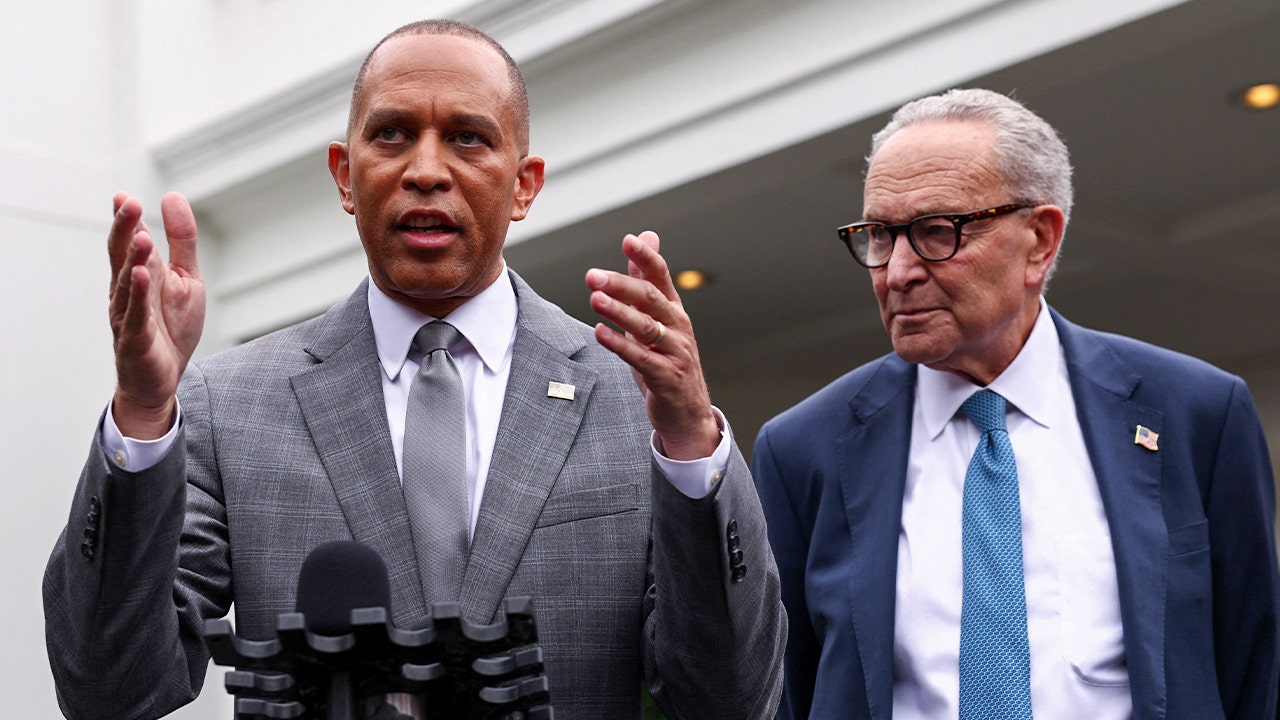
Internal party House and Senate leadership elections are some of the most fascinating exercises that unfold on Capitol Hill.
Both House and Senate Democrats and House and Senate Republicans will choose their leaders in the coming days. And the changes are going to be seismic.
But not everyone is on board with heir apparent leaders. That’s what makes this process so intriguing.
However, there are only two rules in leadership elections: You can’t beat someone with no one. And, perhaps more importantly, it’s about the math.
PROGRESSIVES FUME AT HAKEEM JEFFRIES FOR SAYING DEMOCRATS WON’T ‘GET EVEN’ WITH TRUMP
There are some progressives and DSA-affiliated Democrats who will be House Members next year who want someone other than House Minority Leader Hakeem Jeffries, D-N.Y. Who? Well, no one has said. Again, you can’t beat someone with no one. And, frankly, it’s hard to believe that Democrats would not elect the first Black speaker of the House.
But drill down on the math.
For the sake of argument, let’s say Democrats have 260 House seats in the new Congress. First, Democrats must tap a nominee for speaker in their caucus. That needs a simple majority. So, surely Jeffries will score at least 131 votes in a private ballot for speaker.
The speaker of the House is the constitutional officer for the legislative branch of government, much like the president is for the executive branch and the chief justice of the United States for the judicial branch. Thus, the ENTIRE House votes for speaker when it convenes the new Congress at noon on Jan. 3.
There are 435 members. If all members cast ballots, Jeffries simply needs 218. Jeffries could lose 40 votes or so and still prevail. So, that is not going to happen. It might not even lose more than a couple votes, frankly.
Now let’s look at the GOP and their case for minority leader. House Majority Leader Steve Scalise, R-La., is running against Rep. Jim Jordan, R-Ohio.
If Democrats have 260 seats, Republicans would have 175. All INCOMING House Republicans (including non-voting delegates from U.S. territories) are allowed to vote in CONFERENCE. The selection of minority leader does NOT go before the entire House like speaker. So, the winning candidate only needs a simple majority. That would be 88.
The same for the race between House Majority Whip Tom Emmer, R-Minn., and Rep. August Pfluger, R-Texas, for minority whip.
MIKE JOHNSON’S NO 2 LAUNCHES GOP TAKEOVER BID AS HOUSE FALLS TO DEMOCRATS
The Senate Democratic Caucus and Republican Conference work much the same way as the House. A simple majority wins for majority leader in the Democratic Caucus and minority leader in the Republican Conference.
However, the selection of Senate majority leader is not a vote that plays out on the floor. The concept of «Senate majority leader» has only been around since the early 20th century and is not mentioned in the Constitution. Remember what we said about the House speaker being the head of this branch of government.
It would be hard to envision a scenario where Senate Minority Leader Chuck Schumer, D-N.Y., would not become majority leader after Democrats flipped the Senate in a beatdown.
First, who else is running? Well, Sen. Brian Schatz, D-Hawaii, is popular among Senate Democrats. But he’s running for majority whip to succeed retiring Senate Minority Whip Dick Durbin, D-Ill. One could see Democrats defaulting to Schatz if something happens with Schumer.
Sen.-elect Abdul El-Sayed, D-Mich., has said he wants to look at his options and has endorsed Sen. Chris Van Hollen, D-Md., for majority leader.
But Van Hollen isn’t running. Sen.-elect Annie Andrews, D-S.C., told colleague Bret Baier she wants a «generational change» in leadership. Sen.-elect Troy Jackson, D-Maine, and Sen.-elect Adam Hamilton, D-Kan., both said they would oppose Schumer.
FIRST MUSLIM SENATOR, FIRST BLACK FEMALE GOVERNOR: 2026 MIDTERM ELECTION RESULTS MAKE HISTORY
But again, you can’t beat someone with no one.
Here’s the math: Let’s say Democrats do win Mississippi and Alaska, giving them 56 senators who caucus with the Democrats. All Schumer needs is 29 Democrats to support him in the Caucus, and he’s the next majority leader.
There has not been as much rumbling about the future of Senate Majority Leader John Thune, R-S.D. Heretofore, President Trump has not called for new leadership in the Senate.
But Senate Republicans would choose Thune or anyone else on a secret ballot in the Senate GOP Conference. A simple majority would win. If Republicans are down to 44 seats, the winner would just need 23 votes.
politics, leadership, congress, senate, house of representatives
Several prominent Democrats who ran on an «affordability» message were largely silent when pressed by Digital on their sudden pivot to foreshadowing investigations into the Trump administration, including in many cases its immigration enforcement efforts.
Rep. Robert Garcia, D-Calif., who is poised to lead the House Oversight Committee, responded to Democrats’ win Tuesday with a statement: «Lawyer Up», despite having pledged to prioritize household costs alongside government accountability.
Garcia told CNN before the election that «Democratic priorities» would be lowering the cost of «gas, groceries, the mortgage, the rent,» alongside combating government corruption.
PROGRESSIVES FUME AT HAKEEM JEFFRIES FOR SAYING DEMOCRATS WON’T ‘GET EVEN’ WITH TRUMP
In response to a request for comment, a representative for Garcia shared a tweet he posted Wednesday, after his Tuesday «lawyer up» warning, that referenced affordability:
«People can’t afford gas, groceries, and rent because Donald Trump and his family are ripping off the American people and enriching themselves. Taking on corruption is about making life more affordable for working families,» Garcia said in the tweet.
Before the election, «Squad» Rep. Delia Ramirez, D-Ill., wrote in a PBS-Chicago voters guide that there is «no question that the rising cost of living is the number one issue» for a «working people’s agenda.»
After the election, however, her tone appeared to change:
«Noem, Markwayne, Miller, Homan, Bovino, what’s up? Clear your schedule,» Ramirez said.
Several respondents pushed back, including one of her stated targets, former Border Patrol Cmdr. Gregory Bovino.
«Honey, slow your totalitarian roll,» Bovino responded on X. «Citizens don’t answer to communists in this country as much as you seem to believe that.»
Bovino went on to suggest Ramirez instead relax with a bottle of whiskey from a brand the former immigration official launched upon retirement.
Other respondents also pointed out that Ramirez’ post-election missive didn’t mention her affordability priority:
SCHUMER PREACHES AFFORDABILITY IN DEM MIDTERM PITCH WHILE SABOTAGING GOP FIXES FOR SOARING COSTS
«Notice nothing about how she is going to help her constituents but ‘get Trump’,» said one.
«So, you guys never really gave a s— about affordability,» added former Energy Department staffer Matt van Swol.
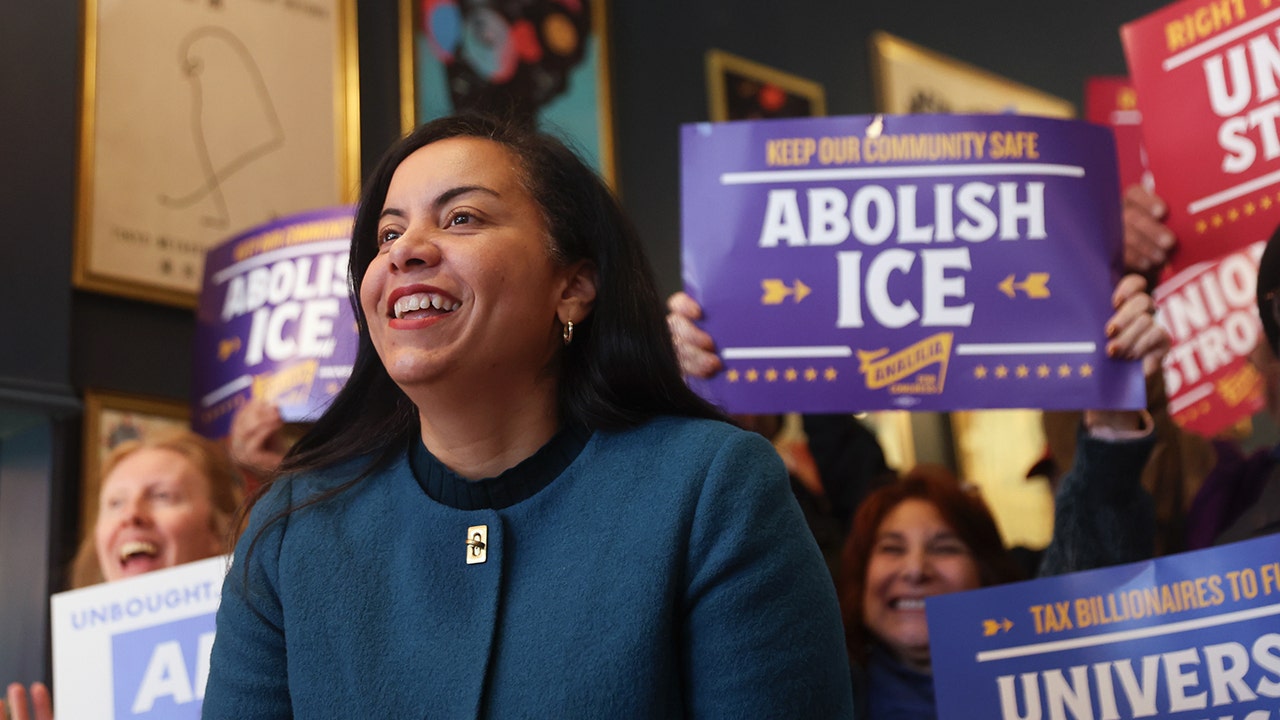
Rep. Analilia Mejia, D-N.J., who now represents the longtime Republican-held seat of former Rep. Rodney Frelinghuysen, made both affordability and immigration policy part of her campaign message.
«We’re going to toss out subpoenas like Mardi Gras beads,» Mejia’s first X post Wednesday read.
Rep. Tony Wied, R-Wis., responded it showed Democrats «have no plans to make life better for you,» eliciting a response from Mejia in which she dubbed him «Mr. Weird» and only then mentioned an «economy that works for» Americans.
In April, Rep. Yassamin Ansari, D-Ariz., released a lengthy statement announcing a «New Affordability Agenda» and highlighting her role on the Congressional Progressive Caucus’ «Lowering Costs Task Force.»
On Election Night, Ansari posted: «Thank you Mr. President. Our thank-you will come in January with subpoenas.» An ensuing tweet called for the impeachment of War Secretary Pete Hegseth.
On Wednesday, Ansari ultimately posted a policy-related pledge to curtail AI.
Sen. Edward Markey, D-Mass., stated during the midterms that his priorities were «groceries, gas prices energy costs» and the like.
However, his post-election missive remarking on how many «new forests» will need planting for «all of the subpoenas we’ll be printing,» instead signaled a priority to investigate tech executives like Elon Musk.
«Affordability,» quipped former Virginia Del. Nick Freitas, R-Culpeper, in a reply.
Ramirez, Mejia, Markey and Ansari did not respond to requests for comment on their apparent pivots. Garcia’s representative responded by providing his subsequent post on affordability. Both Garcia and Ramirez had previously identified government accountability and immigration oversight, respectively, as priorities, but their immediate post-election statements emphasized investigations rather than the affordability measures they had highlighted on the campaign trail.
DHS appeared to take the newfound priority in stride in comments to Digital.
«It is unfortunate that Democrats are more interested in political shenanigans than in governing,» said DHS’ top attorney James Percival.
«Rest assured, however, that we are well prepared to deal with this nonsense so Secretary Mullin can continue focusing on protecting the homeland,» the counsel said.
A Justice Department spokesperson echoed Percival, saying the agency is «not afraid of threats from Democrats» and assured its staff has followed the law.
«It is no surprise that rather than focus on bringing down costs for Americans, Democrats in Congress are picking up where their weaponization efforts left off when they were last in power,» the spokesperson said.
Meanwhile, the White House told Digital that Trump remains willing to work with Democrats on issues they can collaborate on to help «hardworking Americans.»
«If Democrats choose to pursue sham investigations and radical-left policies, they are choosing to work against the American people,» spokeswoman Lauren Bis said.
Immigration hawks signaled preparations for what Democrats foreshadowed.
The Mass Deportation Coalition, whose leaders have been critical of Biden-era open-border policies and have asserted that the Trump administration has not done enough on the issue in some areas, told Digital they are prepared to defend officials amid the onslaught.
«We know what’s coming,» said Mass Deportation Coalition leader Mike Howell. «A lot of people are going to be cashing-out and charging patriots expensive legal fees to the most vulnerable.»
«We have been through this before and are ready to sacrifice for the patriots who are targeted by weaponized harassment.»
Former House Oversight Committee counsel and immigration judge Andrew Arthur said Congress has the prerogative to investigate DHS’ work but added that it may not be what Americans are looking for as a priority.
Citing Ramirez’ mention of Border Czar Tom Homan, Arthur noted that the onetime Obama official long held «positive» ratings from Republicans and Democrats.
«He was commonly viewed as the guy who came in and cleaned things up after Noem left, got things a little bit better. So that’s probably not going to be a terribly popular thing,» he said.
«This isn’t really affordability but anything that shows waste in government technically goes to affordability and it all depends on how willing the media is to accept that talking point,» said Arthur, now at the Center for Immigration Studies.
Arthur said DHS can largely proceed as usual with its previously established funding while any investigations take place, adding that much of what Mullin and Trump have done already falls under established law that Congress itself passed.
Referencing the Immigration and Nationality Act of 1952, Arthur said that, short of «amending the law itself – which they can’t do if [Trump] vetoes it» Democrats can probe and try to paint the agency in a «bad light» over ICE-involved shootings and similar incidents, but that their larger agenda would be buttressed by the INA.
SIGN UP TO GET THE POLITICS NEWSLETTER
A 2026 whitepaper by Federal Reserve Bank researchers found elevated «unauthorized» immigration contributed to rising housing costs between 2021 and 2024, estimating that the influx increased home prices by 6.6% and rents by 4.3% in the average metropolitan area.
The researchers attributed the increases to additional housing demand that was not matched by sufficient new construction, lending indirect empirical support to arguments that illegal immigration can have adverse effects on key affordability metrics.
immigration, illegal immigrants, democrats, congress, democratic party, domestic policies, tom homan, kristi noem, white house, politics
INTERNACIONAL
El futuro de las 2,000 tropas salvadoreñas en Haití se definirá este mes en una reunión bilateral en San Salvador
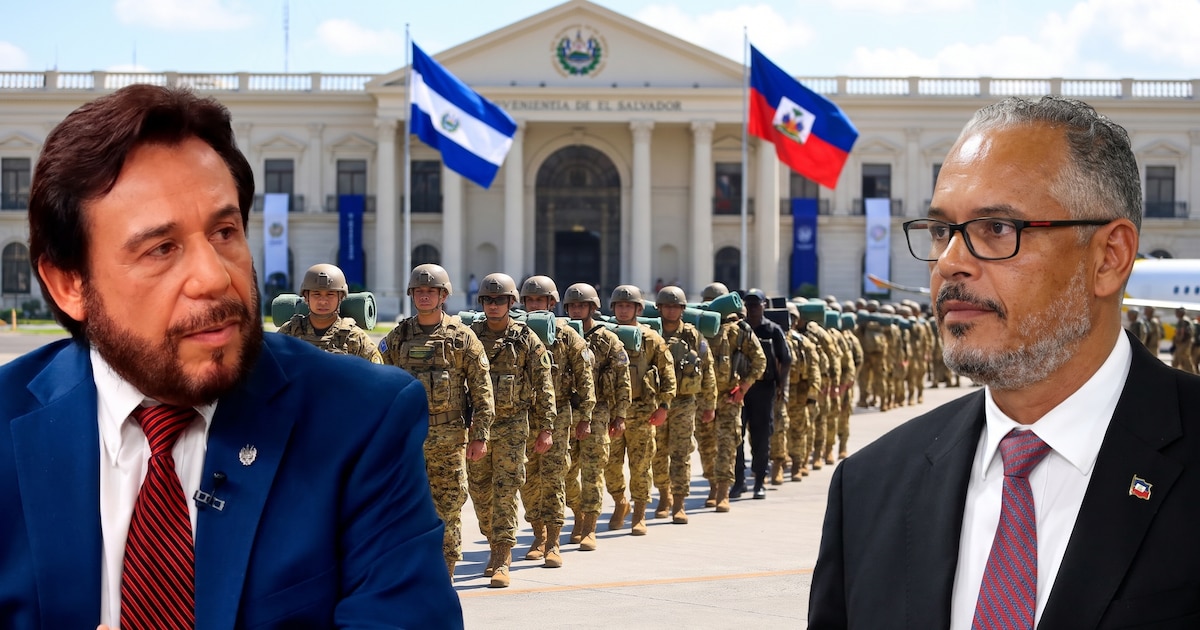
Félix Ulloa confirmó que El Salvador y Haití se sentarán a definir, dentro de dos semanas, qué pasará con las 2,000 tropas salvadoreñas desplegadas en territorio haitiano.
El vicepresidente salvadoreño adelantó a la agencia EFE que el primer ministro haitiano, Alix Didier Fils-Aimé, viajará a El Salvador el 16 y 17 de noviembre para participar en una conferencia internacional sobre el estado de la democracia.
“Ya me confirmó su asistencia el primer ministro y ahí vamos a tener la oportunidad de discutir cuál es el futuro de esta fuerza”, dijo Ulloa a la agencia.
El encuentro llega en un momento de creciente escrutinio internacional sobre el estatus legal de las tropas. Según confirmó Naciones Unidas a finales de octubre, la gran mayoría de los efectivos salvadoreños no opera bajo el mandato de la Fuerza de Supresión de Pandillas (GSF), lo que los deja fuera de los mecanismos de reporte de la organización.
El origen de la intervención: una emboscada en Croix-des-Bouquets
Todo comenzó el 18 de octubre, cuando un vehículo de la GSF —respaldada por la ONU— cayó en una emboscada en la zona de Santo, dentro de Croix-des-Bouquets, a las afueras de Puerto Príncipe. Cuatro militares salvadoreños desaparecieron en el ataque.
El presidente salvadoreño, Nayib Bukele, respondió con el envío de un contingente de 2,000 militares que incluyó fuerzas especiales, vehículos blindados y apoyo aéreo. Bukele presentó la misión como un operativo de rescate y negó que se tratara de una invasión.

El propio Ulloa reconoció ante EFE que el retorno de las tropas aún no tiene plazo fijado. La intervención no estuvo exenta de críticas: organizaciones como Médicos Sin Fronteras alertaron sobre una posible “explosión de violencia” tras el despliegue militar.
Ulloa defiende los resultados del operativo en terreno
El vicepresidente aseguró que las tropas han “ido limpiando” la zona de Croix-des-Bouquets, ubicada a unos 10 kilómetros de Puerto Príncipe. Sostuvo que tanto el pueblo como el Gobierno haitianos observan el proceso “con satisfacción”.
“Al enviar estas tropas a rescatar a nuestros compatriotas, tenemos que intervenir zonas donde las pandillas operan, porque ahí fue que los emboscaron”, explicó Ulloa. “Entonces, al entrar a la zona, hemos ido limpiando la zona, y eso es lo que el pueblo haitiano y el gobierno haitiano están viendo con mucha satisfacción y con mucha expectativa”, amplió.

Como muestra del impacto de la ofensiva, Ulloa citó el caso de Wilson Joseph, alias Lanmò San Jou (“La muerte no avisa”), líder de la banda armada 400 Mawozo que opera en la zona. Según el vicepresidente, el jefe pandillero escribió una carta a la ONU para pedir una tregua y abrir una negociación.
“Hay reacciones ya de las pandillas que están viendo que están hablando con una fuerza que realmente está haciendo su trabajo”, aseguró a la agencia.
La carta, fechada el 1 de noviembre, fue confirmada por la propia ONU, que aclaró que su recepción “no constituye un respaldo de su contenido, ni un reconocimiento de su autor, ni una posición” de la organización, según informó el portavoz Stéphane Dujarric.

El Salvador insiste en que no busca reemplazar a la fuerza multinacional
Ulloa descartó que su país pretenda sustituir a la GSF, que respalda a la policía haitiana en su intento de restablecer la seguridad. La fuerza multinacional reúne a tropas de más de 50 países.
“No quisiéramos nosotros sustituir a las fuerzas de Naciones Unidas, ya que es una fuerza multinacional, porque sería como decir que el multilateralismo está fallando, está fracasando”, afirmó el vicepresidente.
Ulloa comparó además el costo de ambas operaciones. “Con la centésima parte que Naciones Unidas ha invertido en Haití nosotros hemos estado enviando nuestro contingente y con resultados mucho más tangibles”, dijo, aunque reconoció no manejar cifras exactas sobre el costo económico de la misión salvadoreña, que según precisó corre íntegramente a cargo de El Salvador.
El respaldo público de Bukele y las dudas que persisten
El martes 4 de noviembre, Bukele escribió en su cuenta de X que ayudaría a los haitianos a “retomar el país”, según informó EFE. Fils-Aimé agradeció públicamente al mandatario y defendió que el Estado haitiano mantiene la dirección estratégica de la batalla contra la inseguridad, de acuerdo con la misma agencia.

Pese a esos gestos de unidad, persisten interrogantes sobre el marco legal de la operación. Romain Le Cour, director del Observatorio de Haití de la Iniciativa Global contra el Crimen Organizado Transnacional, advirtió a la agencia Associated Press que todavía se desconocen los términos del acuerdo con el Gobierno haitiano, quién comanda a las tropas salvadoreñas y bajo qué reglas de enfrentamiento operan.
La reunión de noviembre entre Ulloa y Fils-Aimé buscará despejar, al menos en parte, esas incógnitas sobre el futuro del contingente.
Félix Ulloa,Garry Conille,El Salvador,Haití,tropas salvadoreñas

Adepa repudió la sanción de la AFA que suspendió por tiempo indefinido las acreditaciones de TN

Reporter’s Notebook: A user’s manual to upcoming leadership elections in the House and Senate

La semana negra de Milei antes de la llegada del Papa

Es una de las mujeres más brillantes y exitosas del espectáculo, tiene 48 años y anunció que será mamá por primera vez: «Fue una beba muy buscada»

Una leyenda del boxeo argentino visitó a Lionel Messi en el entrenamiento de Inter Miami: el show de Rodrigo De Paul con los guantes

El fútbol español deja huella en Qatar

La oposición cuestionó la suspensión de embargos a las pymes y criticó el plan económico: “Llegaron tarde”

Milei parte nuevamente a España y en el gobierno dicen que no bajará el tono de sus críticas a Pedro Sánchez

Sindicatos del transporte y de la industria se diferencian de la estrategia de la CGT y deciden acciones propias

El embajador de EEUU ratificó el apoyo de Trump a la Argentina tras la derrota republicana: “Nuestro compromiso es firme”

 POLITICA2 días ago
La oposición cuestionó la suspensión de embargos a las pymes y criticó el plan económico: “Llegaron tarde”
- POLITICA3 días ago
Milei parte nuevamente a España y en el gobierno dicen que no bajará el tono de sus críticas a Pedro Sánchez
- POLITICA3 días ago
Sindicatos del transporte y de la industria se diferencian de la estrategia de la CGT y deciden acciones propias