INTERNACIONAL
Bernie Sanders warns Democrats not to spend all their time investigating Trump

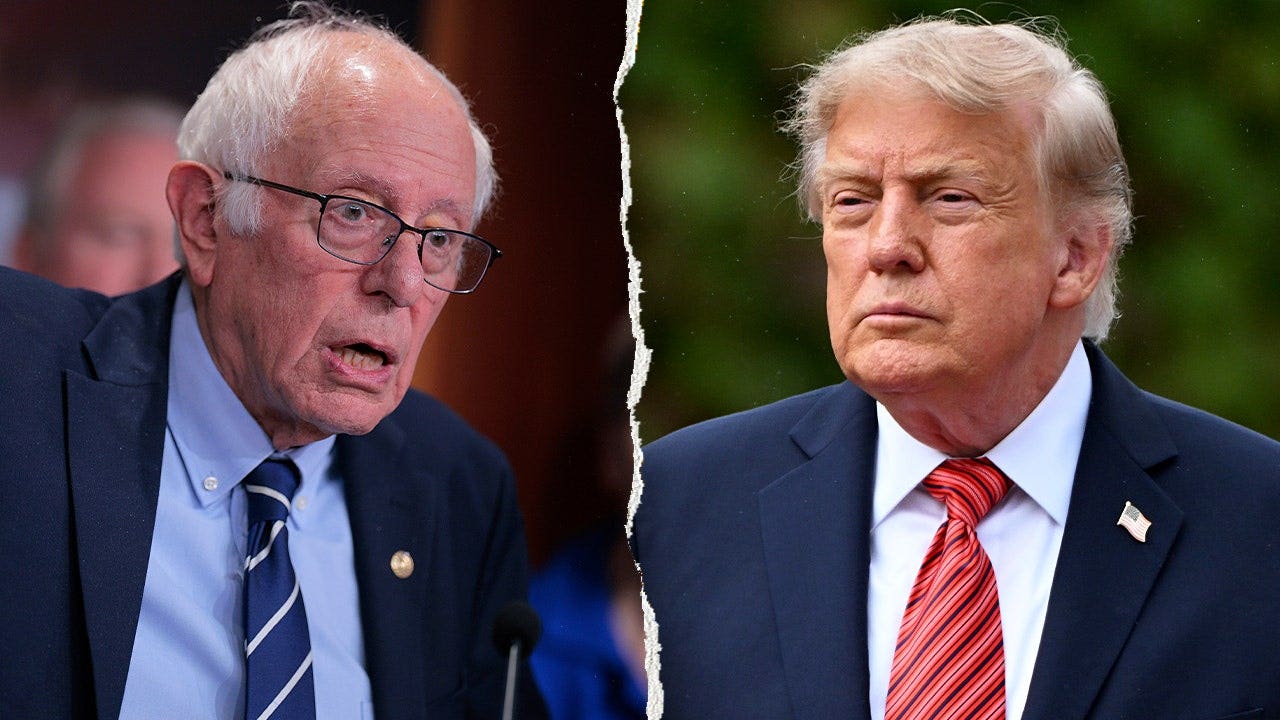
Sen. Bernie Sanders said Democrats should hold President Donald Trump accountable after taking control of the House and Senate in January, but warned the party not to spend too much time on probing the president and his allies.
During an appearance on NBC News’ «Meet the Press,» the senator said it is still important to investigate Trump administration officials for alleged corruption and illegal activity, but stressed that the priority should be tackling affordability and supporting working-class families.
Asked by host Kristen Welker if he believes that spending two years investigating Trump and his officials could jeopardize the mandate to lower prices and make life more affordable, Sanders replied, «Yes, I do.»
«Do we want to hold the Trump administration accountable for their corruption, for their illegal, unconstitutional actions? Absolutely,» Sanders said.
DEMS PIVOT FROM ‘AFFORDABILITY’ PITCH TO DHS PROBE THREATS AFTER MIDTERM WINS
However, Sanders said that Democrats «cannot spend all of our time investigating Trump.»
«At the end of the day, when you’ve got the highest rate of childhood poverty in America, of any major country, when 20% of our seniors are trying to survive on $15,000 a year, when people are scared to death that Elon Musk and the other billionaires are pushing AI down our throats with cataclysmic impacts on the economy, our privacy rights, on our health, and — and imposing an existential threat to humanity, we cannot spend all of our time investigating Trump,» he said.
«We’ve got to stand up for working-class families, make a real difference in their lives,» Sanders continued.
Democrats campaigned on affordability ahead of the midterms, blaming the Trump administration for the soaring costs of gas, groceries, housing and healthcare. Candidates linked the rise in costs, in part, to the U.S. military’s war on Iran and Trump’s tariffs on countries around the world.
The Iran war, which Trump, Vice President JD Vance and other allies partially attributed to Republicans’ midterm losses, led to surging fuel prices. Gas prices are nearly $1 per gallon higher than they were a year ago, according to AAA, which reported that the national average was $4.02 per gallon as of Sunday.
But after securing the majority in both chambers of Congress following last week’s elections, several Democrats promised to use the power of the subpoena and investigate current and former Trump officials once they are sworn in.
‘LAWYER UP’: DEMS IMMEDIATELY PUT TRUMP ON NOTICE AMID REPUBLICANS’ MIDTERM BLOODBATH
Incoming House Oversight Committee leader Rep. Robert Garcia, D-Calif., on Sunday warned that Democrats could investigate Trump’s pardons as well as allies of the president, including tech executive Elon Musk and newly appointed White House Chief of Staff Stephen Miller.
Garcia also said last week that Oversight Democrats are «ready to take on the crooks, the con men, and the Trump crime family.»
«Lawyer up,» he added.
House Minority Leader Hakeem Jeffries, D-N.Y., who is expected to be the next House Speaker, also said last week that Democrats are «going to bring accountability to those who have visited unprecedented corruption on this country.»
«Because if you have people in high office who are so focused on enriching themselves, their family members, their friends or their donors, then they’re not focused on making life better for the American people. But House Democrats will put the American people first,» he continued.
Sanders said on Sunday that the election was not just about voters wanting to stop the Trump administration’s policies.
«What I think this election was about, is the American people not only expressing disgust with Trump and his policies, but are demanding real change, no more tinkering around the edges,» said Sanders. «And what the American people are saying: ‘Look, we are working long hours. We’re worried about our kids. We can’t afford healthcare. We can’t afford housing. Meanwhile, the wealthiest people in America have never, ever had it so good.’ And right now is the moment where the Democrats have got to stand up to big money, create an economy and a government that works for all of us,» Sanders said.
The Vermont senator also accused Trump of being «mentally unbalanced» and «erratic,» but acknowledged that the president is «a good politician» and «not stupid» who Democrats may be able to work with on economic and healthcare issues.
«Trump is many things. I personally believe he is mentally unbalanced, erratic, but he’s not stupid, and he is a good politician. And I think, when Trump looks out in the world and he sees millions of people working for starvation wages, he might not be unsympathetic to raising the minimum wage to a living wage. He would love, I think, to take credit for doing what every other major country does, guaranteeing healthcare to all people. Do I think we can work with Trump? Maybe. I’m, by no means, guaranteeing it. But it is certainly worth the effort,» he said.
bernie sanders, donald trump, politics, democrats senate, midterm elections









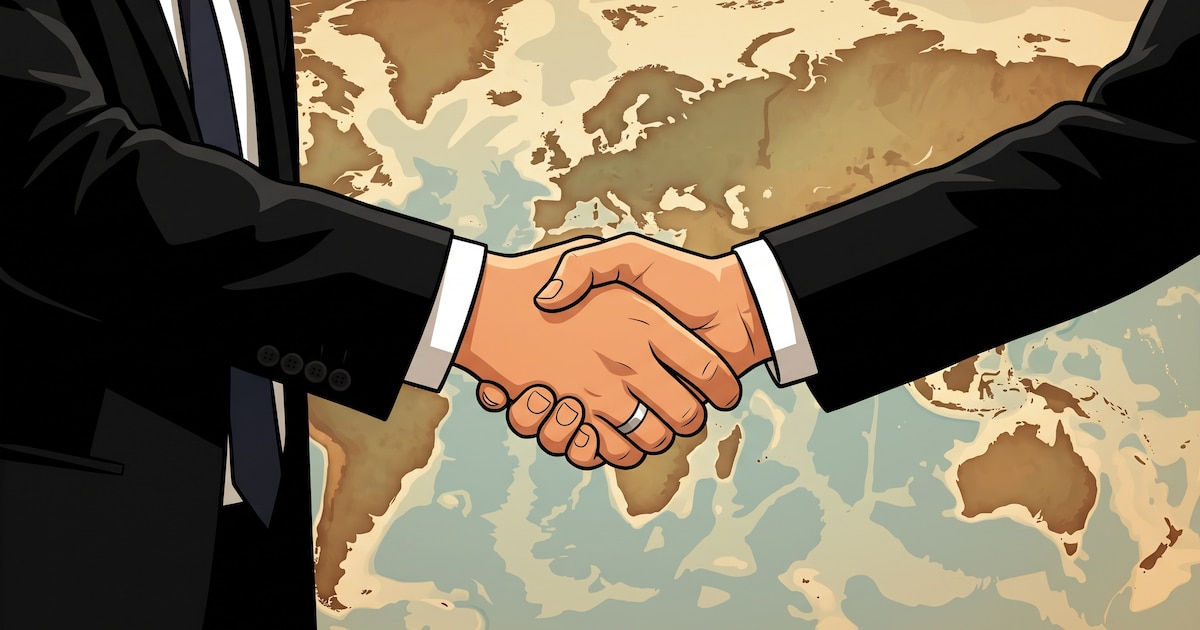
La diplomacia ha ocupado a los estadistas de todas las épocas porque enfrenta una dificultad que nadie ha resuelto del todo, la de conciliar la aspiración a un orden compartido con el reparto desigual del poder. Hoy esa tensión se siente con una intensidad particular. Las grandes potencias afirman sus intereses con hostilidad, las alianzas atraviesan pruebas que nadie esperaba y las normas que durante décadas dieron cierta previsibilidad a las relaciones internacionales chocan con resistencias cada vez más abiertas. Nada indica que se trate de un paréntesis.
Richelieu entendió que los asuntos exteriores exigen continuidad aunque las circunstancias cambien y las pasiones políticas se agiten. Metternich hizo del equilibrio la preocupación central del orden europeo. Mucho después, Henry Kissinger examinó la relación entre poder y legitimidad y advirtió que un orden se vuelve frágil cuando quienes lo integran dejan de aceptar sus fundamentos. Sus trayectorias fueron muy distintas, y en varios aspectos discutibles, pero podríamos decir que coinciden en una idea que conserva su vigencia. La diplomacia no elimina la rivalidad entre los Estados, pero impide que esa rivalidad destruya las condiciones mínimas de la convivencia.
Ernest Satow puso la inteligencia y el tacto en el centro de la conducción de las relaciones entre Estados. André Maurois, con ironía, decía que “La diplomacia es el arte de expresar la hostilidad con cortesía, la indiferencia con interés y la amistad con prudencia”. Ambos tenían algo de razón, aunque el oficio es bastante más exigente. Negociar, como sugiere Sun Tzu al hablar de que “la excelencia suprema consiste en vencer sin combatir”, supone entender las razones del interlocutor y leer sus mensajes sin renunciar a las propias convicciones. Supone también distinguir qué intereses se esconden detrás de las posiciones públicas y saber cuándo una concesión bien meditada sirve estratégicamente a un propósito más alto y duradero. Quien ignora hasta dónde puede ceder no negocia, improvisa.
Creer que la relevancia de un Estado depende solo de su tamaño es un error. Pesan también la credibilidad de su palabra y la coherencia con que cumple sus compromisos. A eso se le llama reputación, y es un capital que se acumula despacio y se pierde de golpe. A él se suma la prudencia, que no es resignación sino esa destreza que permite reconocer los límites materiales, elige con inteligencia dónde concentrar los esfuerzos y cultiva relaciones que permitan actuar cuando el viento se vuelve adverso. La soberanía, por su parte, se ejerce hoy de otra manera y se define por la capacidad tecnológica, por el control de los datos personales, por la inteligencia artificial, por las alianzas en un mundo interdependiente y por muchos otros factores.
Como presidente del Ecuador pude constatar que nuestros países pueden mantener relaciones diferenciadas con Estados Unidos, China y Europa, participar con carácter en los espacios regionales y multilaterales y conservar, a la vez, una orientación propia. Ese margen no se hereda, se defiende, y el derecho internacional ayuda a preservarlo. Sus normas no suprimen las asimetrías ni impiden todas las arbitrariedades, pero abren cauces de negociación y procedimientos para resolver controversias sin imposición. Los Estados menos poderosos son los primeros en pagar cuando la fuerza desplaza al derecho. La seguridad hemisférica y la cooperación ambiental son ejemplos que lo muestran bien, porque muchos intereses nacionales solo pueden atenderse con esfuerzos compartidos.
Quien estudia los hechos desde la historia, el periodismo o la academia tiene tiempo para revisar sus hipótesis. El gobernante decide bajo presión, con los hechos en marcha y con información insuficiente, pero no puede apagar el ordenador y pedir que el mundo espere. Allí pesan las instituciones capaces de aportar memoria y criterio donde la urgencia pretende imponer su propio guion. En un entorno incierto, un error de juicio puede comprometer lo que costó décadas construir. Desde esa experiencia he vuelto a pensar la diplomacia como una expresión exigente de la inteligencia política del Estado, muy lejos de la imagen superficial que la reduce al ceremonial o a la mera reacción por reflejo.
Las negociaciones comerciales y la gestión internacional de las vacunas durante la pandemia respondían a necesidades muy distintas. Ambas pidieron decisiones pragmáticas del presidente de la República respaldadas por equipos diplomáticos con oficio. Contaron la preparación de los interlocutores, la discreción y la continuidad de las negociaciones, tanto como la voluntad de llegar a resultados. Lo que estaba en juego se medía en vidas y en empleos. Ahí se vio con claridad que la diplomacia puede y debe servir a los ciudadanos.
La diplomacia profesional traduce todo esto en conductas de Estado. Su valor está en conocer otras sociedades, anticipar riesgos y mantener abiertos los canales de diálogo incluso en las horas difíciles. José Ayala Lasso, excanciller ecuatoriano y primer Alto Comisionado de la ONU para los Derechos Humanos, ha recordado que la diplomacia es ante todo un servicio al país y a sus ciudadanos, sostenido por principios firmes y por una vocación que no rehúye el sacrificio. La idea devuelve al oficio su tono moral porque sin probidad y sin lealtad al interés nacional, el conocimiento y la destreza negociadora pierden sentido.
Cada administración fija legítimamente sus prioridades en política exterior bajo la conducción del presidente de la República, pero los diplomáticos profesionales son quienes conocen la historia de nuestras relaciones, saben interpretar las circunstancias y entienden que la lealtad se debe al Estado. Defender esa continuidad institucional es proteger una capacidad pública que puede tardar años en recuperarse si se pierde, pues la credibilidad internacional de un país no puede reconstruirse tras cada transición.
Un país mediano no impone, convence. No dispone de flotas ni de mercados que le permitan alzar la voz, y su única ventaja sostenida es que su palabra valga y que quienes lo representan internacionalmente sepan lo que hacen. Improvisar esa capacidad equivale a empezar de cero frente a interlocutores que jamás empiezan de cero. Ningún país pequeño o mediano puede permitirse ese lujo. Detrás de cada gestión hay personas. El exportador que necesita que una puerta siga abierta, el migrante que busca amparo lejos de su casa, la familia que espera una vacuna. La diplomacia llega hasta ellos cuando funciona, y cuando falla son los primeros en notarlo.
Gobernar enseña que el Estado no empieza con nuestra llegada al poder ni termina con nuestra salida. Sus instituciones guardan una experiencia colectiva que recibimos de otros y que estamos obligados a entregar en mejores condiciones. De esa responsabilidad depende buena parte de la solidez de una república. La diplomacia nos recuerda el mérito de quienes defienden los intereses de su nación sin convertir cada desacuerdo en una demostración de fuerza, y que un país se hace respetar cuando su palabra pesa más que su tamaño, y esa palabra la sostienen, en silencio y lejos de casa, quienes lo sirven con honor.
apretón de manos,diplomacia,comercio internacional,mapa mundial
INTERNACIONAL
Qué dijeron los medios internacionales sobre la visita de León XIV a la Argentina: “Hay cordialidad a pesar de las divergencias”

La llegada del papa León XIV a la Argentina tuvo una amplia repercusión internacional, con el foco puesto en las “tensiones” y “desacuerdos” del gobierno libertario de Javier Milei con la Iglesia.
Incluso, la prensa italiana destacó que Robert Prevost “reprendió” al mandatario en su dicurso en el Palacio Libertad.
En Brasil, el diario Folha de San Pablo afirmó que “el papa León XIV llega a una Argentina que quedó huérfana tras la visita de Francisco”.
El periódico dijo que Milei “confía en la magnitud del evento para disimular las evidentes tensiones en el encuentro” y recordó que “en los últimos años, el (presidente) ultraliberal calificó al Papa Francisco de ‘imbécil’, ‘representante del maligno en la Tierra’ y ‘basura socialista’“.
El diario OGlobo dijo a su vez que “se espera que la visita ponga al descubierto desacuerdos con las políticas de Javier Milei”.
“Tras despedirse de Uruguay con un mensaje de respeto a las mujeres, el Papa llega al país este domingo con una agenda marcada por las diferencias entre las posiciones de la Iglesia y el gobierno en temas sociales, políticos y económicos”, indicó.
Según afirmó, ambos “intentarán despolitizar la visita, pero tras los gestos conciliadores subyacen dos visiones del mundo diametralmente opuestas en tensión, lo cual se hará evidente en los discursos de León XIV, en las misas populares y en otros compromisos de la agenda”.
XIV
INTERNACIONAL
Iran vows ‘astonishing’ strikes and lifts missile-range limit as US targets land routes
Iran reportedly resumes ballistic missile production
Iran proxy attacks target a key Saudi Arabian oil pipeline as host Kayleigh McEnany reports on the expanding conflict. Former Navy SEAL Jack Carr joins the program to discuss ballistic missile production and Chinese satellite intelligence linked to a strike killing three American troops. Carr warns that Houthis threaten global shipping chokepoints near the Red Sea.
NEWYou can now listen to Fox News articles!
Iran lifted its self-imposed ballistic missile-range limit and threatened to unleash new, homegrown weapons that would «astonish the entire world,» within hours of the U.S. military launching a new task force aimed at choking off Tehran’s weapons shipments and illicit trade Nov. 7.
Islamic Revolutionary Guard Corps (IRGC) spokesperson Brig. Gen. Hossein Mohebbi confirmed that Iran was now abandoning its previous 2,000-kilometer, or roughly 1,240-mile, ballistic missile-range restriction, according to The Associated Press.
«That restriction has been lifted for us,» Mohebbi clarified in the wake of the task force announcement.
RUSSIA SECRETLY BOLSTERED IRAN’S MISSILE ARSENAL BEFORE WAR WITH US, RECORDS UNCOVER
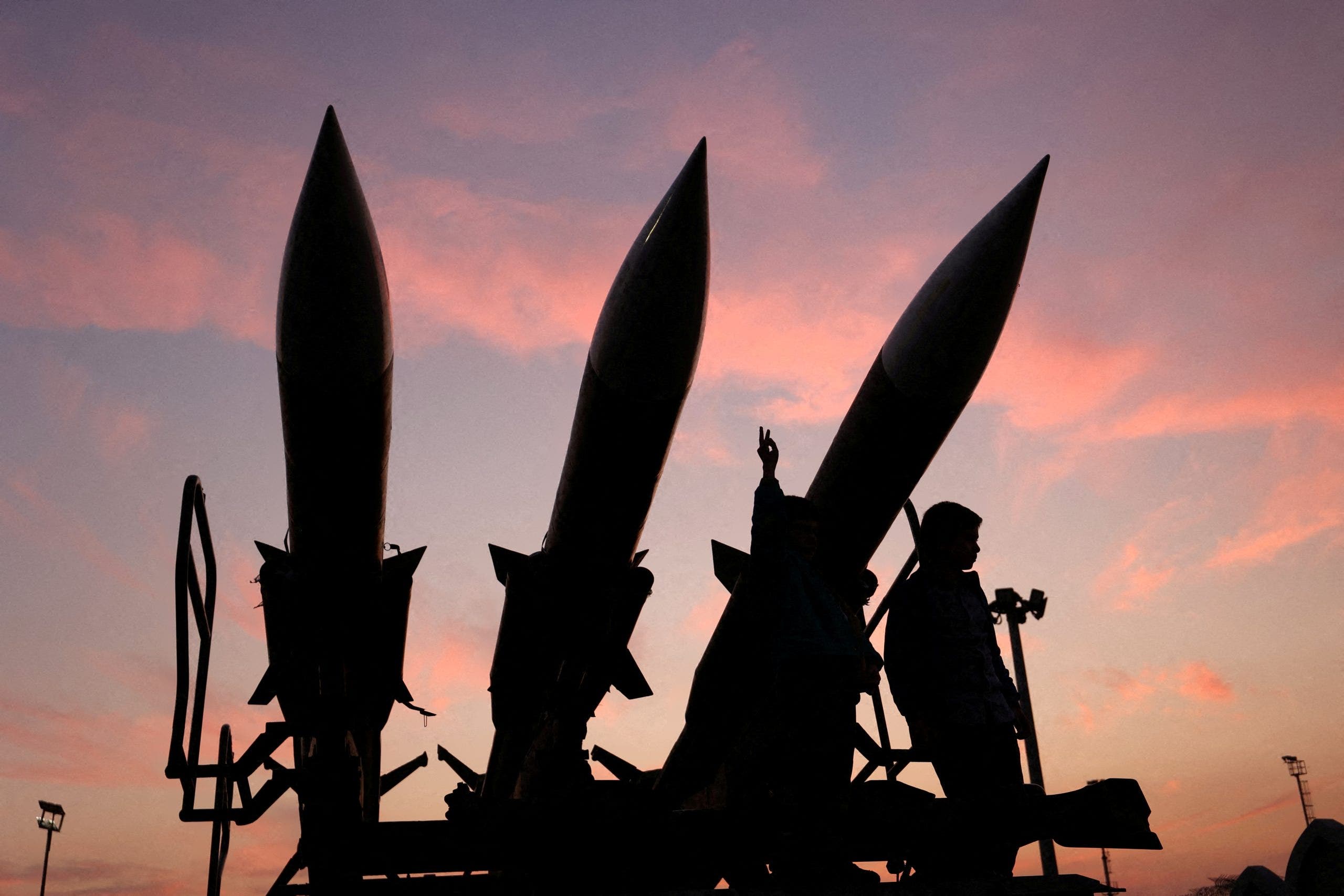
FILE PHOTO: Iranian missiles are displayed at the Islamic Revolutionary Guard Corps (IRGC) Aerospace Force Museum in Tehran, Iran, November 15, 2024. Majid Asgaripour/WANA (West Asia press Agency) via REUTERS
U.S. Central Command established «Task Force Iron Gate», an initiative targeting the movement of advanced Iranian weapons systems, dual-use materials and illicit revenue across Iran’s land borders and the Caspian Sea.
«Strengthening CENTCOM’s collaboration with US Interagency partners will further constrain Iran’s ability to finance terrorism, rebuild weapons factories, and replenish their military,» Adm. Brad Cooper, commander of U.S. Central Command, said in a statement shared on X.
According to Behnam Taleblu, senior fellow at the Foundation for Defense of Democracies (FDD), the U.S. may now carry out «targeted strikes» against facilitators while putting «political pressure on bordering states, as well as market and sanctions pressure against institutions underwriting Iran’s illicit trade.»
«It speaks volumes, of course, that this effort is being stood up within CENTCOM headquarters,» Taleblu told Fox News Digital.
Meanwhile, Iran’s IRGC quickly dismissed the new initiative as «wordplay,» claiming Tehran had already made preparations and coordinated with neighboring countries to withstand additional pressure, Fars News Agency reported.
Mohebbi also warned that Iran was developing new weapons capable of delivering devastating blows in another confrontation with the U.S. and Israel.
IRAN INSTALLS NEW WAR CHIEFS AS TEHRAN SIGNALS ‘PROLONGED CONFRONTATION,’ EXPERT WARNS
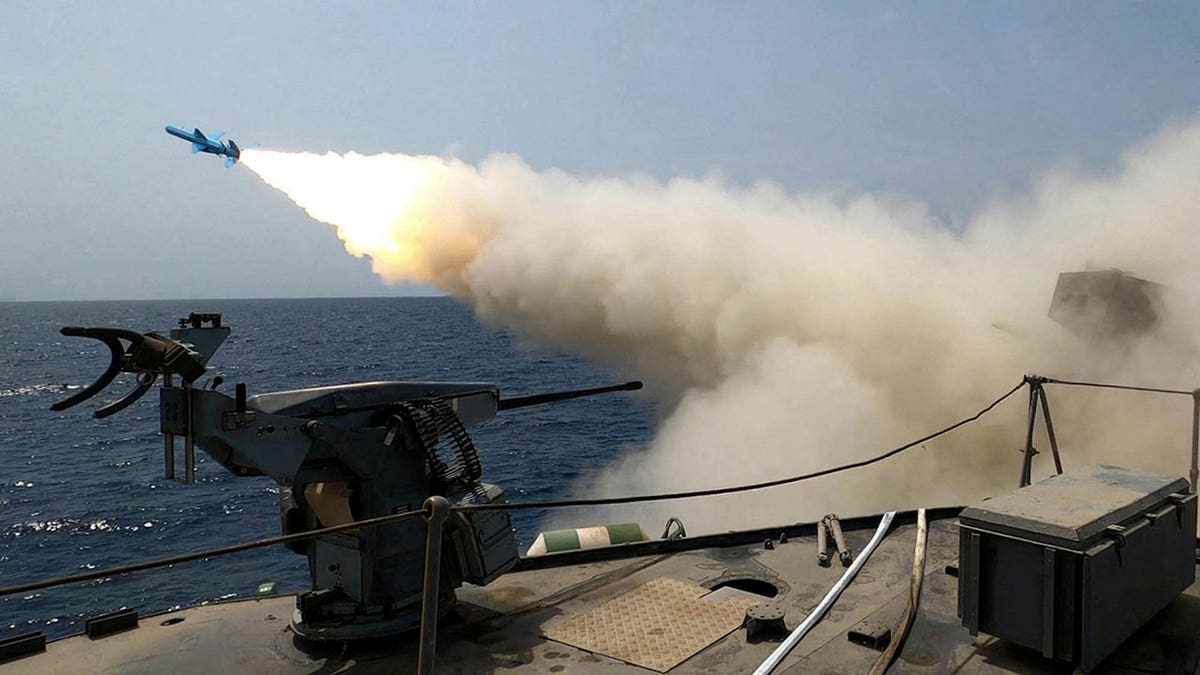
An Iranian missile is launched during a military exercise in an undisclosed location in Iran, August 20, 2025. (Iranian Army/WANA (West Asia News Agency)/Handout via REUTERS)
«There are surprises that will be unveiled and deployed on the battlefield if a third wave of confrontation with the enemy erupts. These surprises will astonish the entire world,» Mohebbi said during a news conference in Tehran on Saturday, according to Iran’s state-run Islamic Republic News Agency (IRNA).
«If they once again miscalculate, or if the Zionists, in pursuit of their own interests, lead the criminal United States into another miscalculation, they should know that Iran’s next blows will be even harder and will leave them crippled for years to come,» he added.
Iran’s previous 2,000-kilometer limit already placed the entire Arabian Peninsula, the Levant, most of Egypt and parts of Greece and the Balkans within range.
In March, Iran unsuccessfully attempted to strike the joint U.S.-British military base on Diego Garcia in the Indian Ocean, roughly 2,500 miles from the Islamic Republic.
Mohebbi also claimed Iran was preparing to unveil new underground missile facilities, as Tehran seeks to shield its weapons production from future attacks.
The installations, described by Iranian officials as «missile cities,» are designed to allow the IRGC to continue manufacturing weapons during wartime, according to IRNA.
TRUMP’S MOAB THREAT COULD PUT IRAN’S DEEPEST BUNKERS IN AMERICA’S CROSSHAIRS
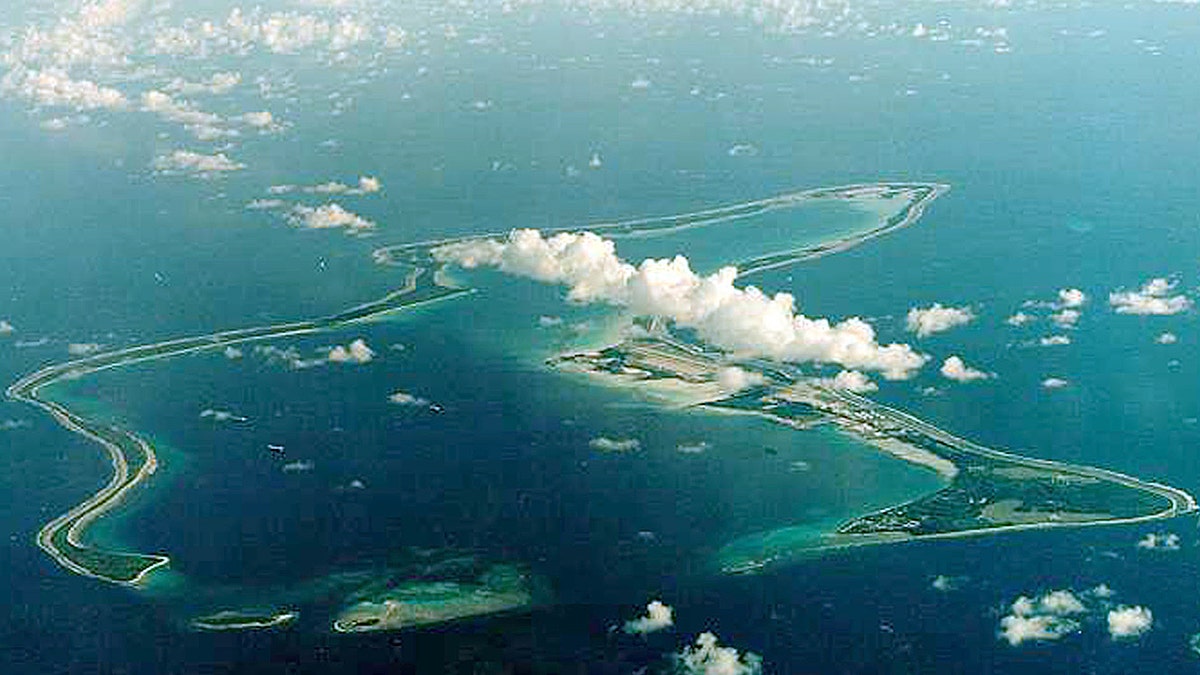
Diego Garcia, the largest island in the Chagos archipelago and site of a major United States military base in the middle of the Indian Ocean leased from the U.K. in 1966. (reuters)
The IRGC spokesman claimed Iran’s Aerospace Force continued producing missiles and drones during recent fighting, using domestic expertise without importing foreign weapons or relying on «reverse engineering of weapons captured from the enemy.»
Mohebbi also described Iran’s growing self-sufficiency in weapons production as a «very big achievement.»
Taleblu meanwhile emphasized the significance of the Caspian Sea basin, saying the world’s largest lake has «turned into a two-way sanctions-busting hub for both Iran and Russia.»
«Iranian officials always claim self-sufficiency in their military industries,» he said.
«But with domestic missile production significantly constrained due to the 40-Day War, the regime will be reliant on imports to build back, and especially at scale and at a faster rate.
«This is why efforts to constrain both land and sea trade in and out of Iran are a one-two punch for the regime.»
The warnings come as Washington intensified pressure on Iran’s regional trade routes, including its land crossings with Iraq, where Baghdad has reportedly resisted U.S. demands for full and broader border restrictions.
According to the Institute for the Study of War (ISW), Iraq has closed only one border crossing with Iran so far, despite reported American pressure to shut down most crossings between the two countries.
FRESH ACTIVITY EMERGES AT IRAN’S DEEPLY BURIED NUCLEAR SITE AS TRUMP WARNS IRAN NOT TO ‘GET CUTE’
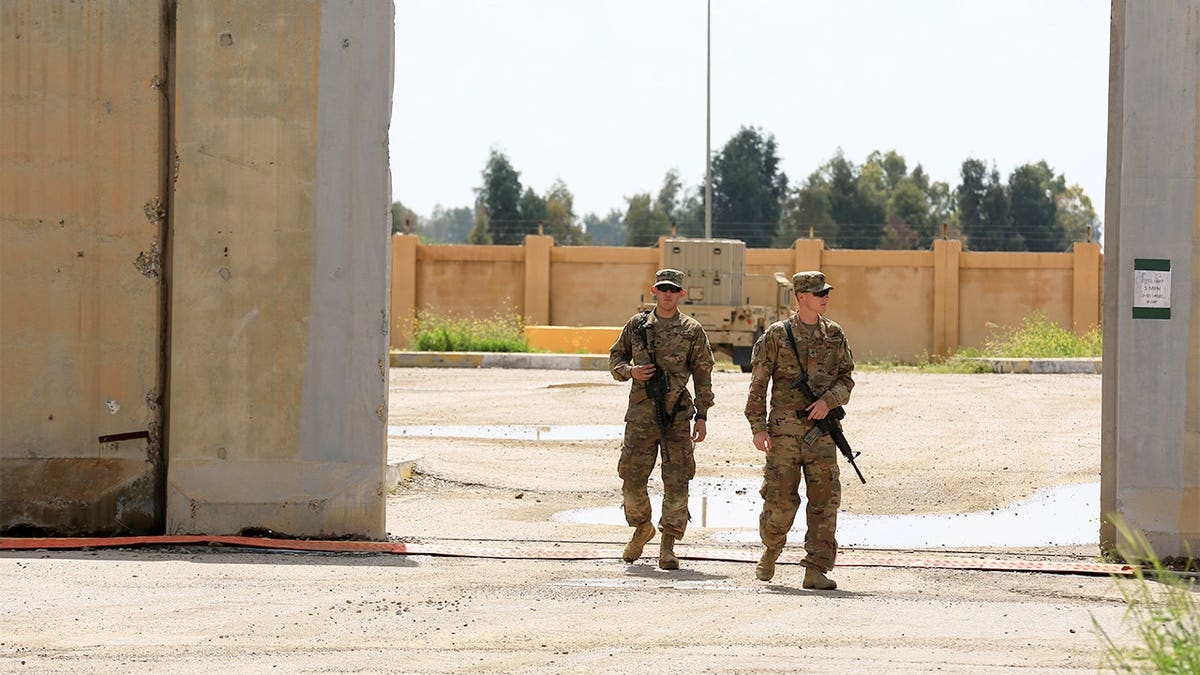
Soldiers from the US-led coalition forces are seen during the handover of the K1 Air Base to the Iraqi Army from the US-led coalition in Kirkuk, Iraq on March 29, 2020. (Associated Press)
On Sunday, the U.S. Treasury pressed Iraq to close all border crossings with Iran except for two as part of Washington’s policy of increasing economic pressure on Tehran, Iraqi Foreign Minister Fuad Hussein said, according to Reuters.
The Iraqi government had closed the al-Shayeb crossing in southeastern Iraq on Oct. 21, to review security and install equipment to prevent smuggling of prohibited materials.
Iraqi political sources told Agence France-Presse that Washington had pressured Baghdad to close most Iran-Iraq border crossings to restrict trade and financial exchanges that could help Tehran withstand U.S. sanctions, ISW reported.
ISW also said that Iranian Ambassador to Iraq Mohammad Kazem al-Sadegh was pressuring tribal leaders in Iraq’s Maysan province to push Iraqi officials and leaders of the Shiite Coordination Framework to reopen al-Shayeb.
Al-Sadegh is reportedly a member of the IRGC’s Quds Force, which oversees the organization’s foreign operations.
The institute assessed that Baghdad’s limited response likely reflects efforts to balance its relationship with Washington against the influence of Iranian-backed political factions.
world, iran, war with iran, national security, middle east, foreign affairs, geopolitics, military

La canción que Vicky Xipolitakis le cantó al papa León XIV en su llegada a la Argentina: “¡Te queremos un montón!»

Diplomacia, entre el orden y el poder

Por qué Boca Juniors pasó de 51 títulos en 2011 a los 75 de 2026 con el Campeón de Liga

El Senado prepara las últimas sesiones ordinarias: qué leyes piden oficialismo y oposición

Marcó un gol histórico con Boca y hoy es entrenador del club: la prueba en River, las enseñanzas de Bianchi y de qué se arrepiente

El análisis de las consultoras locales sobre las consecuencias para la Argentina de la derrota electoral de Donald Trump

El embajador de EEUU ratificó el apoyo de Trump a la Argentina tras la derrota republicana: “Nuestro compromiso es firme”

Santiago Peña renunció a la Presidencia de Paraguay por el escándalo del Ueno Bank

Una estrella mundial sorprendió al revelar su fanatismo extremo por Boca: el increíble pedido que le hizo su hijo al cumplir 18 años

Andrés Malamud advirtió que atarse a un solo socio condena a América Latina: “Cuanto más vínculos tenés, más oportunidades surgen”

 POLITICA11 horas ago
Así fue el saludo entre Javier Milei y el papa León XIV en Aeroparque tras la llegada a la Argentina
- POLITICA3 días ago
El Ministerio de Economía pasó a disponibilidad a más de diez empleados de planta permanente
- INTERNACIONAL3 días ago
Artemis IV: los detalles de cómo será la misión de la NASA que busca llevar astronautas a la superficie lunar en 2028