INTERNACIONAL
Mamdani makes behind-the-scenes moves to shape 2028 Democratic presidential race

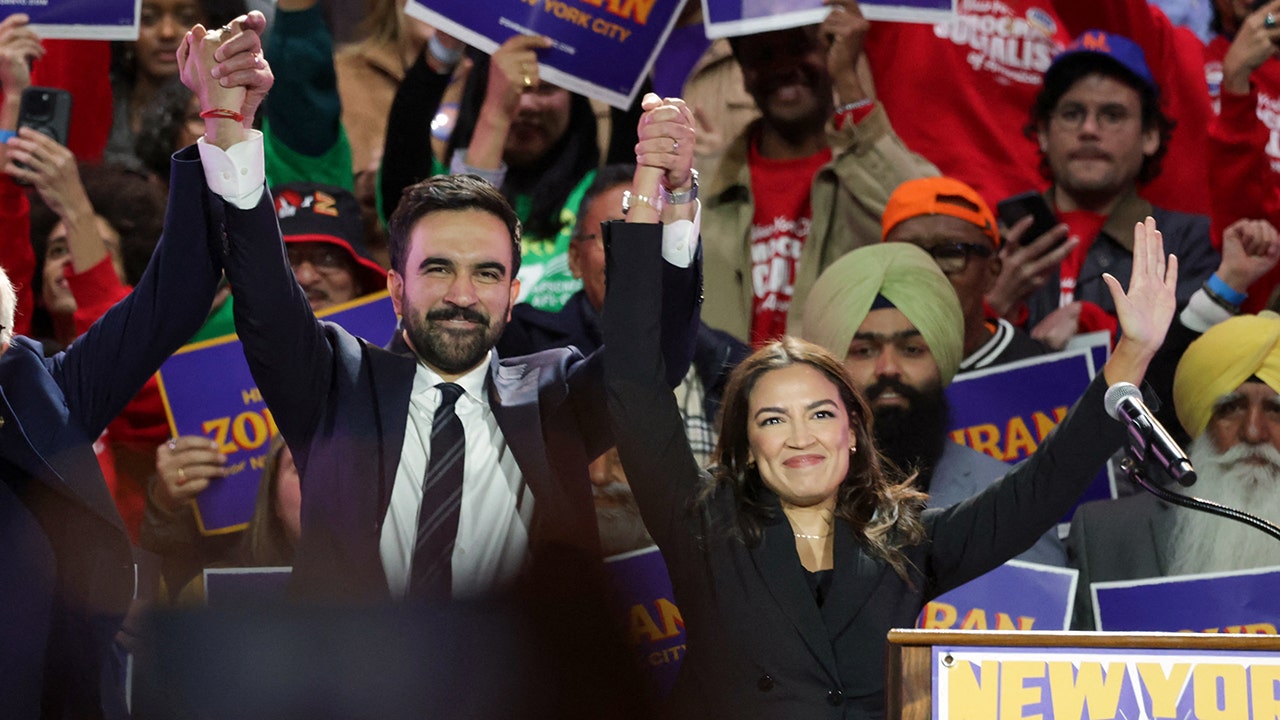
New York City Mayor Zohran Mamdani is quietly working towards a new goal: to become a progressive kingmaker in the burgeoning battle for the 2028 Democratic presidential nomination.
The socialist mayor of the nation’s most populous city, who can’t run for president himself because he’s not a natural-born U.S. citizen, has been meeting behind closed doors with labor leaders to highlight the need for a union-aligned or left-wing candidate to seek the presidency.
The mayor’s moves come as he’s reportedly said he’s uncertain whether progressive champion Rep. Alexandria Ocasio-Cortez of New York, his close political ally, will run for the White House.
According to Axios, which was first to report the news, Mamdani is concerned that if Ocasio-Cortez stays out of the 2028 race, it could leave progressives without a standard-bearer to face off against a more centrist presidential front-runner in the primary battle.
WILL TRUMP SIT OUT MAKING A 2028 ENDORSEMENT IN THE RACE TO SUCCEED HIM?
Mamdani, who is seen as a major powerbroker for the left-wing of the Democratic Party after his historic 2025 mayoral election victory, argues that the progressive movement can’t waste their momentum coming out of last week’s trouncing of Republicans in the midterm elections, as Democrats won a massive House majority and control of the Senate.
A source familiar with Mamdani’s 2028 conversations told Axios the mayor «wants the progressive ecosystem to mobilize quickly, strategically and efficiently if a moderate candidate is clearly on the rise,»
Meanwhile, Ocasio-Cortez is publicly pumping the brakes on speculation she’ll launch a presidential campaign or bid for the Senate in New York, even as a newly formed group of activists is urging her run for the White House.
VANCE, CRUZ, DESANTIS DIAGNOSE GOP’S MIDTERM DISASTER AS 2028 BATTLE BEGINS
«I think the thing that’s important here is the last thing that people want to hear from me or any other politician here is about the next election. And what they actually want to hear from us is about what we are going to do with the electoral results they just gave us on Tuesday,’ Ocasio-Cortez told reporters Monday night, as she pointed to the Democrats’ trouncing of Republicans in the midterms, as the party won a massive House majority and control of the Senate.
The comments from Ocasio-Cortez, who was re-elected last week to a fifth term representing parts of New York City, came hours after the formal launch of Ready for AOC, a political group working to encourage her to run for president by showing her she has legions of supporters ready to mobilize on her behalf.
«A people-powered movement asking Alexandria Ocasio-Cortez to run for President in 2028. No campaign. No money. Just names,» is how the group described itself on social media.
But Ocasio-Cortez said that voters are more concerned about congressional Democrats’ immediate legislative agenda rather than speculating about the next election.
«I think people are less concerned about the horse race, and they want to know: What are the investigations we’re going to be starting? What is the legislation that we’re going to be starting?» she said.
Veteran Democratic strategist David Plouffe, campaign manager for former President Barack Obama’s landmark 2008 White House victory and a senior adviser on then-Vice President Kamala Harris’ 2024 bid, said last week, «If AOC runs, she’s going to start, 20-25%, probably. The question is, can she add to that? If she doesn’t run, then that is wide open. That’s where I think someone like Abdul may say ‘even though I just won, should I look at it?’»
SIGN UP TO GET THE POLITICS NEWSLETTER
Plouffe, who was speaking at a forum hosted by Harvard University’s Institute of Politics, was referring to Democratic Sen.-elect Abdul El-Sayed of Michigan, who made history last week as the first Muslim elected to the U.S. Senate.
«That’s the thing about this race. It’s so wide open that there may be some people run who surprise us. I also think they’ll be some people who don’t run who’ll surprise us,» Plouffe added.
Ocasio-Cortez said in September that she’s weighing what to do next, whether it be a White House run or a bid for the seat currently held by Senate Minority Leader Chuck Schumer, a fellow Democrat and New Yorker.
«I know there is a lot of speculation about what I will decide to do in 2028. I get asked about it nearly every interview and event,» Ocasio-Cortez wrote in a fundraising email to supporters.
The now-37-year-old lawmaker with a massive social media footprint said in a New York Times interview two months ago that her decision, which could happen sometime after the midterm elections, would come down to answering the question, «Where can I do the most good?»
Schumer, who turns 76 later this month, has left his 2028 plans open and has not announced whether he’ll run for sixth six-year term in the Senate.
Ocasio-Cortez isn’t the only leading figure on the left who is mulling a presidential run. So is Rep. Ro Khanna of California, a top House progressive.
Allies of the soon-to-be six-term congressman last week launched a draft committee called «Run Ro» to build support and raise funds for a potential 2028 presidential campaign.
politics, zohran mamdani, alexandria ocasio cortez, abdul el sayed, chuck schumer, democrats elections, presidential primaries












Atender a una persona con diabetes sin complicaciones cuesta cerca de USD 1,000 en El Salvador, según datos de la Federación Internacional de Diabetes citados por Patricia Argueta de Cativo durante una entrevista en el programa radial El corre corre.
La especialista en prevención y educación para la salud explicó que esa estimación corresponde a información reportada dos años antes de la entrevista y se refiere al manejo de pacientes sin complicaciones. Advirtió que el impacto económico aumenta cuando aparecen daños asociados a la enfermedad y que el costo también recae en las familias, sobre todo cuando una persona enferma deja de trabajar.
Argueta de Cativo sostuvo que el sistema de salud salvadoreño debe destinar mayores esfuerzos a la prevención. Afirmó que detectar la enfermedad a tiempo puede disminuir las complicaciones y reducir la carga para los hospitales, las familias y el presupuesto público.
Prevención y atención temprana
La especialista planteó que El Salvador tiene recursos económicos limitados y que prevenir resulta menos costoso que atender casos avanzados. Señaló que el sistema sanitario debe fortalecer las acciones de educación, la detección temprana y el seguimiento médico antes de que los pacientes lleguen a los hospitales con insuficiencia renal, cetoacidosis diabética u otros cuadros graves.

También dijo que el cuidado de la salud no debe recaer solo en el sistema sanitario. Según expuso, la prevención involucra a las personas, las familias y la sociedad, porque las decisiones cotidianas sobre alimentación, actividad física, descanso y consultas médicas inciden en el riesgo de desarrollar la enfermedad.
Síntomas y daños progresivos
Argueta de Cativo definió la diabetes como la permanencia de niveles altos de glucosa, o azúcar, en la sangre durante períodos prolongados. Explicó que esa elevación puede causar daños graduales en nervios, vasos sanguíneos, corazón, ojos y riñones.
La entrevistada señaló que los síntomas pueden tardar en aparecer o confundirse con situaciones cotidianas. Entre las señales mencionó el cansancio, la necesidad frecuente de orinar, la sed persistente y el aumento del hambre. Algunas personas, indicó, atribuyen esos cambios al calor, al trabajo u otras causas y retrasan la consulta médica.
También citó la pérdida de peso sin haber iniciado una dieta ni una rutina de ejercicio, así como la visión borrosa. En este último caso, explicó que hay pacientes que consultan con un oftalmólogo cuando ya existe una afectación relacionada con la diabetes.
Las cifras sobre diabetes en El Salvador
Durante el programa se indicó que 463,300 adultos viven con diabetes en El Salvador y que el 23.2% desconoce que tiene la enfermedad. Los conductores precisaron que esas cifras corresponden a 2024.

Argueta de Cativo consideró necesario contar con datos más actualizados sobre la situación nacional. Dijo que las tendencias disponibles son preocupantes porque, a su juicio, muestran un aumento de los casos.
La especialista añadió que el rango de edad de los diagnósticos se ha ampliado. Mencionó que ya se identifica diabetes en personas menores de 20 años y en adolescentes, una situación que relacionó con los cambios en el estilo de vida y la alimentación.
Factores de riesgo y alimentación
La entrevistada explicó que tener familiares con diabetes representa un factor de riesgo, especialmente cuando la enfermedad está presente en la madre o el padre. Aclaró que ese antecedente no determina que una persona desarrollará diabetes, aunque debe servir como advertencia para aumentar los cuidados y mantener controles médicos.
Argueta de Cativo también habló sobre la prediabetes. Indicó que hay una etapa en la que los niveles de glucosa ya están elevados, aunque todavía no se cumplen todas las condiciones para el diagnóstico de diabetes. Añadió que algunos médicos evitan usar ese término porque puede llevar a las personas a pensar que aún no tienen un problema y a postergar cambios en sus hábitos.
Sobre la alimentación, sostuvo que prevenir no significa únicamente eliminar el azúcar. Recomendó una dieta balanceada, con alimentos frescos, vegetales y frutas en porciones adecuadas, y advirtió sobre el consumo frecuente de productos azucarados y harinas refinadas.

La especialista explicó que algunos alimentos, aunque no sean dulces, pueden convertirse en azúcar dentro del organismo. Mencionó el pan blanco o pan francés como ejemplo de un producto elaborado con harina refinada. También dijo que los artículos promocionados como “sin azúcar” no deben consumirse sin control ni sustituir una alimentación equilibrada.
Hábitos, actividad física y controles
Argueta de Cativo vinculó el aumento de los casos con cambios en las rutinas. Dijo que la población realiza menos actividad física, utiliza más tecnología y consume con mayor frecuencia bebidas azucaradas, dulces y productos procesados. Recordó que antes las gaseosas se asociaban más con celebraciones, mientras que ahora forman parte de las compras habituales de muchas familias.
La especialista agregó que el estrés, el descanso y la calidad del sueño pueden intervenir en los niveles de glucosa. Según explicó, esos factores, mantenidos durante períodos prolongados, pueden afectar la salud.
Como medidas de prevención, recomendó cuidar la alimentación, incorporar actividad física frecuente y asistir a controles médicos periódicos. Para una persona sana, sin molestias aparentes, sugirió acudir a consulta una o dos veces al año. En esas evaluaciones, el médico puede revisar peso, talla y otros parámetros, además de indicar exámenes como la medición de glucosa en ayunas.
Monitoreo y principales complicaciones
La entrevistada destacó que los glucómetros y los sensores de monitoreo continuo pueden ayudar a conocer los niveles de glucosa. Sin embargo, señaló que no basta con medirse: también es necesario interpretar los resultados para identificar por qué se elevan y tomar decisiones.

Argueta de Cativo explicó que el glucómetro tradicional requiere una punción en el dedo para obtener una gota de sangre, que se coloca en una tira reactiva conectada al dispositivo. Los sensores continuos, en cambio, permiten registrar la glucosa de forma constante sin realizar pinchazos frecuentes.
La especialista reiteró que la diabetes puede afectar nervios, vasos sanguíneos, corazón, riñones y vista. Sobre el pie diabético, explicó que el daño en nervios y vasos sanguíneos puede provocar pérdida de sensibilidad, especialmente en los pies, por lo que una persona podría no advertir una lesión.
Estas heridas pueden tardar en cicatrizar y requerir tratamientos prolongados. Argueta de Cativo advirtió que, sin atención oportuna y un abordaje adecuado, el pie diabético puede terminar en amputación.
glucómetro,diabetes,glucosa,control glucémico
INTERNACIONAL
Riot-torn France struggles with chaos at home as Macron eyes military mission thousands of miles away
NEWYou can now listen to Fox News articles!
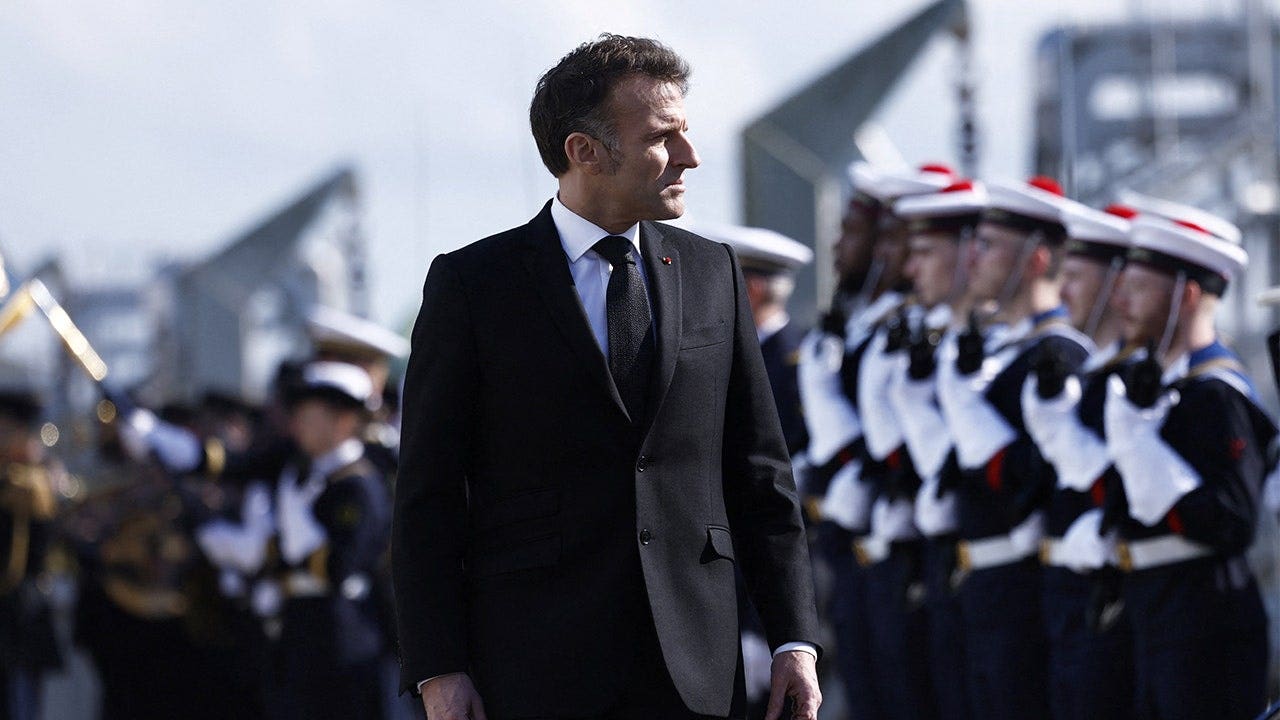
French President Emmanuel Macron is pushing ahead with plans for a new European military presence in Lebanon while struggling with mounting political and economic turmoil at home, even as the initiative encounters resistance from a key European partner and Washington considers an alternative that may not require troops.
Secretary of State Marco Rubio confirmed that he had discussed the future of the United Nations Interim Force in Lebanon (UNIFIL) with Macron, suggesting that a replacement monitoring mechanism could be civilian rather than military.
«It doesn’t have to be a military mission. It could be a civilian mission,» Rubio said in remarks published Tuesday.
Rubio explained that the administration is seeking a credible mechanism to verify arrangements under which Israeli forces withdraw from designated areas, the Lebanese Armed Forces (LAF) assume control and the Iran-backed terrorist group Hezbollah is prevented from returning.
RUBIO ANNOUNCES FRAMEWORK DEAL BETWEEN ISRAEL AND LEBANON AS EXPERTS WARN IRAN WILL FIGHT TO SABOTAGE IT
Soldiers from the United Nations Interim Force in Lebanon UNIFIL attend a ceremony marking the International Day of UN Peacekeepers in Naqoura, Lebanon, May 29, 2025. (Ali Hashisho/Xinhua via Getty Images)
He suggested France could play a constructive role but emphasized that any arrangement would require agreement from both Lebanon and Israel.
U.S. Ambassador to the United Nations Mike Waltz also made clear that Washington has no intention of preserving the existing peacekeeping mission.
«UNIFIL in its current form will not continue, and it must not continue — we are working with our international partners to draw down the mission and ensure that the Lebanese people can choose their own future and to ensure that the Lebanese Armed Forces can secure the nation’s future,» Waltz told Fox News Digital.
MACRON UNDER FIRE OVER IRAN, HEZBOLLAH POLICY AS TRUMP ADMIN HOSTS ISRAEL-LEBANON TALKS
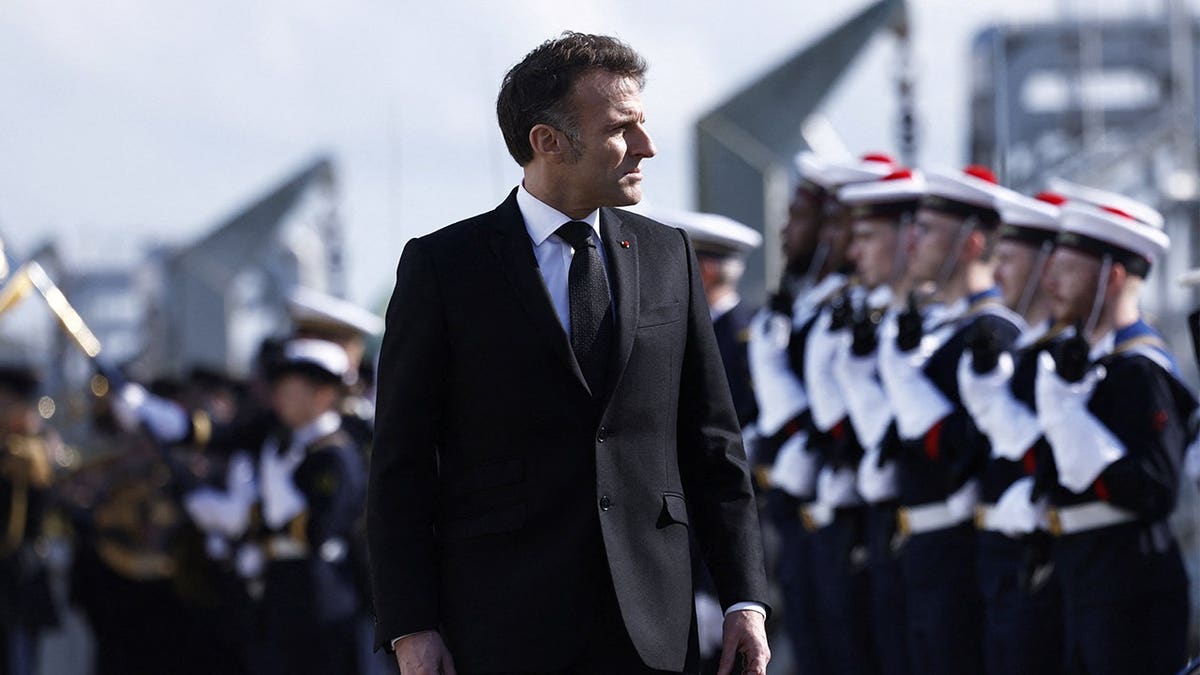
French President Emmanuel Macron reviews the troops during his visit to the nuclear submarine navy base of Ile Longue in Crozon, France, March 2, 2026 (Yoan Valat /Pool via Reuters)
The French initiative, meanwhile, envisions a multinational force potentially involving thousands of European troops to support the Lebanese army as UNIFIL prepares to end its nearly five-decade mission. The proposed force’s final size, mandate and participating countries remain unconfirmed.
However, Italy, which previously joined France in calling for an international coalition following UNIFIL’s withdrawal, does not support deploying its troops under the proposal currently advanced by Paris, three sources with knowledge of the discussions told Fox News Digital.
The initiative comes as Macron faces growing domestic pressure, with France experiencing widespread demonstrations over rising living costs, wages and deteriorating public services.
The unrest has further complicated the government’s efforts to pass its 2027 budget, as mounting debt and political divisions limit its room to maneuver, Reuters reported Nov. 5.
Against that backdrop, France’s proposed deployment raises questions about the financial and military resources Paris could commit to another overseas mission, particularly without firm support from its European partners.
Simone Rodan-Benzaquen, senior envoy for Europe at the Foundation for Defense of Democracies, argued that replacing UNIFIL with another international military force risks repeating the shortcomings of the existing mission.
«UNIFIL’s mandate should end as scheduled. Hezbollah built up its military presence in southern Lebanon with international peacekeepers already on the ground. Keeping troops there under a new mandate would repeat an approach that failed to prevent that buildup. The basis for what comes next should be the U.S.-brokered agreement Israel and Lebanon reached in June. France can help both sides put it into practice and move further,» Rodan-Benzaquen told Fox News Digital.
FRANCE IS DEVOURING ITSELF AS SCHOOL RIOTS REVEAL A CRISIS FAR BIGGER THAN BROKEN CLASSROOMS

US Secretary of State Marco Rubio sits with France’s Minister for Europe and Foreign Affairs Jean-Noël Barrot during the G7 foreign ministers summit at the Quai d’Orsay in Paris to discuss support for Ukraine and stabilization efforts in the Middle East. Nov. 9, 2026. (Christophe Petit Tesson / POOL / AFP via Getty Images)
The question of who would conduct such inspections has already proved contentious.
The United States and Israel had previously opposed France serving as a third-party verifier of Hezbollah’s disarmament, according to an Aug. 7 Reuters report citing Lebanese officials and foreign diplomats. A Lebanese official also told Reuters that Beirut had rejected an earlier proposal involving private security companies.
The challenges extend beyond diplomatic disagreements.
According to a Congressional Research Service assessment updated November 9, Hezbollah continues to refuse disarmament while Israeli forces maintain positions in southern Lebanon.
IS THE IRAN-BACKED TERRORIST MOVEMENT HEZBOLLAH ON THE ROPES IN LEBANON?
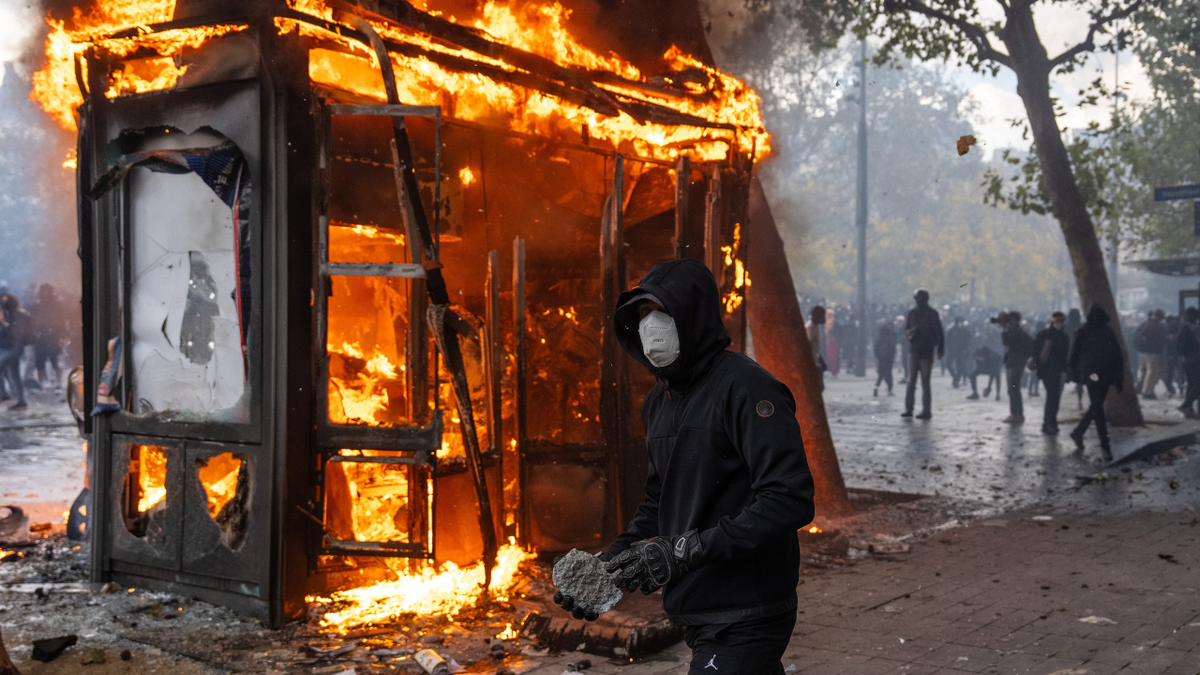
A protester holds a rock to throw at police as a kiosk burns during a demonstration near Place de la République, as the Gilets Jaunes join students for a weekend of action on October 17, 2026, in Paris, France. (Carl Court/Getty Images)
A U.S.-brokered framework agreement reached in June linked a phased Israeli withdrawal to the verified disarmament of armed groups and the deployment of Lebanese forces. But implementation has stalled beyond the initial pilot areas, and negotiations in October ended without agreement.
Rather than committing additional troops, Rodan-Benzaquen argued that Paris should focus on using its diplomatic influence to strengthen the Lebanese government’s efforts to disarm Hezbollah.
«France’s greatest leverage is notably in Beirut. The Lebanese cabinet has already outlawed Hezbollah’s military activity. Paris should work with the Lebanese government to press disarming Hezbollah. Israel needs credible evidence that Hezbollah cannot return to an area its troops are eventually leaving. Beirut needs confidence that once its army secures that area, the agreed Israeli withdrawal will eventually follow. That is where French diplomacy can make a difference.»
The debate follows the August 2025 Security Council resolution extending UNIFIL’s mandate for a final time, until December 31, 2026, with an orderly withdrawal authorized over the following year.
Washington backed terminating the mission amid longstanding concerns about its inability to prevent Hezbollah from maintaining a military presence in southern Lebanon. France, by contrast, has warned against leaving a security vacuum.
PENTAGON HOSTS FIRST-EVER ISRAELI–LEBANESE MILITARY TALKS AIMED AT CURBING HEZBOLLAH

United Nations peacekeeping force in Lebanon (UNIFIL) vehicles drive along the main road leading to Lebanon’s southern town of Naqura close to the border with Israel on October 27, 2022. (Photo by Mahmoud Zayyat/ AFP/Getty Images)
In a previous Security Council statement, the French Mission to the U.N. said: «France will support UNIFIL until the expiration of its mandate. It will contribute to defining the future international engagement in Lebanon, in support of its sovereignty and the implementation of resolution 1701.»
U.N. spokesperson Stéphane Dujarric told Fox News Digital that Secretary-General António Guterres presented three options for a future U.N. presence in June, but the Security Council has not formally selected one.
He added that the U.N. is aware of discussions about a possible non-U.N. military presence in southern Lebanon but is not directly involved in those negotiations.
With UNIFIL’s mandate approaching expiration, France faces the challenge of securing agreement not only on which countries would contribute personnel, but also on what those forces would be authorized to do in a country where Hezbollah remains armed and Israeli troops have yet to fully withdraw.
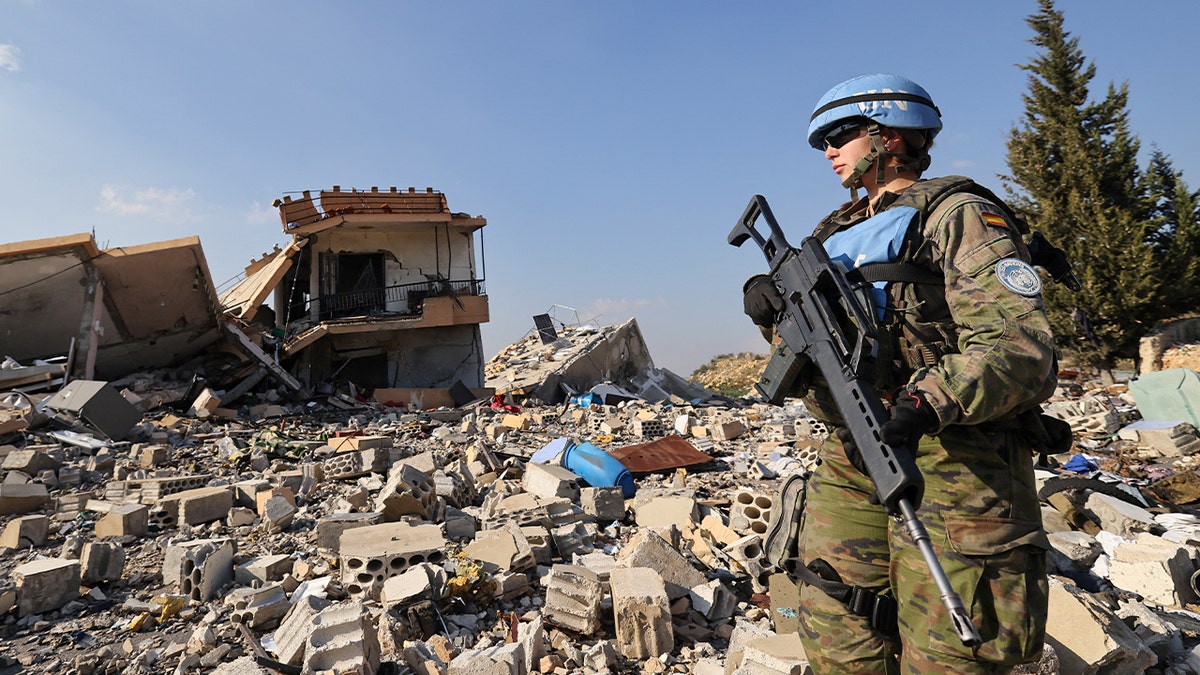
A member of the Spanish UNIFIL peacekeeper forces stands in front of the rubble of destroyed buildings during a patrol in the southern Lebanese village of Borj El Mlouk, near the border with Israel, on January 7, 2025. (ANWAR AMRO/AFP via Getty Images)
The Italian government has not responded to Fox News Digital’s request for comment. Requests for comment were also sent to the State Department, Spanish and Lebanese authorities.
france, emmanuel macron, united nations, lebanon, peacekeeping
INTERNACIONAL
Escándalo en Nvidia: el romance de su CEO con una presunta espía habría facilitado la venta de chips a China por US$7500 millones
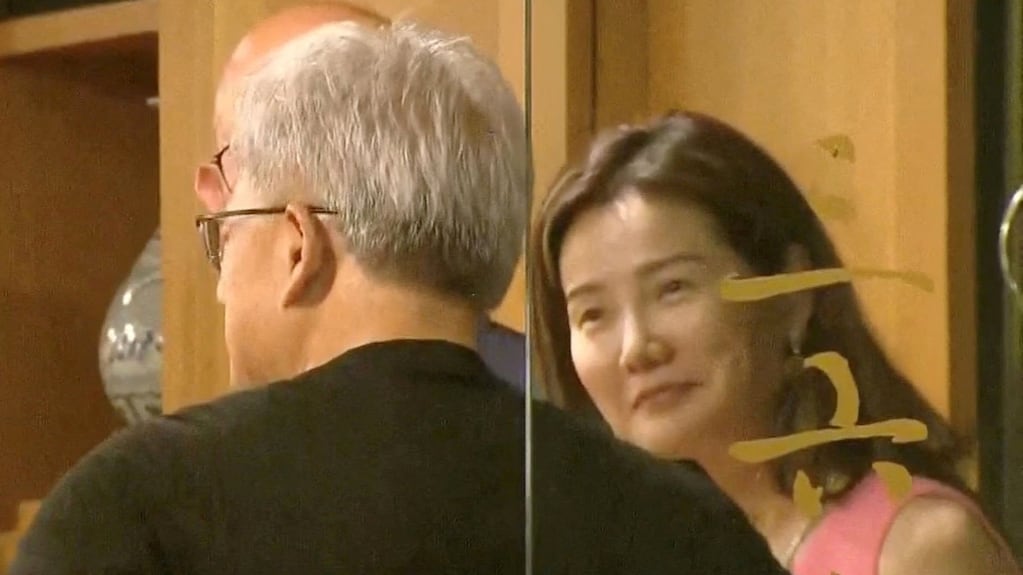
El escándalo que involucra al director ejecutivo de Nvidia, Jensen Huang, y una empresaria señalada como presunta espía del Gobierno chino sumó una nueva revelación. Según una investigación publicada este martes, la relación entre ambos habría facilitado el envío de chips de inteligencia artificial por al menos US$7500 millones a empresas chinas, mediante una red de sociedades que operaban en distintos países de Asia.
La información fue difundida por el medio especializado The Information y reproducida por la agencia Reuters. El informe, basado en testimonios de dos personas que conocen a Alice Huang, sostiene que la empresaria habría aprovechado sus vínculos con el máximo responsable de Nvidia y con distribuidores de la compañía para obtener procesadores avanzados, algunos de ellos sujetos a restricciones comerciales impuestas por Estados Unidos.
De acuerdo con la investigación, unas 240.000 unidades de los modelos H100, H200 y A100 habrían llegado a China mediante estas operaciones. Reuters aclaró que no pudo verificar de manera independiente los resultados del informe.
Según The Information, Alice Huang, junto con su marido y su hermana, construyó una estructura empresarial con sociedades registradas en China y Singapur para adquirir procesadores de Nvidia.
China

La curiosidad de Messi en la MLS: por primera vez desde su llegada a la liga, termina el año sin premios al mejor del mes

Murió Héctor Aguer, el arzobispo emérito de La Plata que fue una de las voces conservadoras de la Iglesia argentina

ANSES: cuándo cobro en noviembre 2026 si mi DNI termina en 8

La CGT destacó el mensaje del Papa y marcó siete coincidencias con sus propuestas

¿Cuánto cuesta atender a una persona con diabetes sin complicaciones en El Salvador?

Crece el escándalo con Valeria Mazza por lo ocurrido en el VIP de la misa del papa León XIV y su marido la defendió sin filtros: «Estuvimos tres horas bajo el sol»

Así fue el saludo entre Javier Milei y el papa León XIV en Aeroparque tras la llegada a la Argentina

La queja de Yanina Latorre tras asistir al VIP de la misa del papa León XIV: “Estuve al rayo del sol haciendo nada y…”

Canales para ver el Tigre vs. Sarmiento por el Torneo Clausura

Franco Colapinto le hizo probar mate a Lewis Hamilton en un evento durante el GP de Brasil: la reacción del piloto de Ferrari

 POLITICA2 días ago
Así fue el saludo entre Javier Milei y el papa León XIV en Aeroparque tras la llegada a la Argentina
- CHIMENTOS18 horas ago
La queja de Yanina Latorre tras asistir al VIP de la misa del papa León XIV: “Estuve al rayo del sol haciendo nada y…”
- POLITICA1 día ago
El Papa se emocionó en el Cottolengo Don Orione y aseguró: “El progreso de una nación se mide por la acogida a las personas con discapacidad”