INTERNACIONAL
Trump opens door to immigration deal, but Republicans have one condition


Some Senate Republicans are open to revisiting immigration policy after President Donald Trump floated a possible deal with Democrats, but they insist amnesty remains off the table.
Republicans, after sweeping midterm losses, are willing to open up the immigration policy debate after voters made clear that they didn’t support the administration’s approach: a poll published in September found that 53% of voters believed that Trump’s immigration policy had gone too far.
But there’s one thing that Senate Republicans won’t agree to: amnesty.
WHITE HOUSE DOUBLES DOWN AFTER TRUMP ANGERS BASE BY FLOATING ILLEGAL ALIEN DEAL WITH DEMS
«I trust President Trump,» Sen. Jim Banks, R-Ind., told Digital. «He’s gonna do what’s right, but as far as I’m concerned, amnesty is off the table. I’ll never go for it.»
The door creaked open on the idea when Trump, during an interview with «60 Minutes» that aired over the weekend, said that his administration’s mass deportation and enforcement policies might be «too tough.»
«Get the killers out, get the rapists out, get all the rough ones out, get the drug dealers out,» Trump said. «But let the people that are here — and in some cases here for 10 and 15 years — work a deal for them.»
The administration quickly sought to clarify Trump’s comments, with Homeland Security Secretary Markwayne Mullin affirming that there would be «no amnesty» shortly after.
HOUSE GOP ERUPTS AT STEPHEN MILLER AS TRUMP ELEVATES HIM AFTER MIDTERM MASSACRE: ‘MEGALOMANIAC’
Still, Republicans are willing to navigate the complex issue as Democrats gear up to take power next year. Some have been calling for action on the matter for months.
Sen. Thom Tillis, R-N.C., one of the administration’s sharper Republican critics on immigration policy who is retiring at the end of the year, told Digital that as early as March he texted Trump and suggested it would be the «perfect time» to codify «all the stuff that has effectively sealed the border and used it as an opportunity to get merit-based immigration reform.»
«I also said in that text, though, was, in order for this to be successful, Stephen Miller either needs to be out of the room or on his meds,» Tillis said. «And so he’s the reason they’re walking it back is because they don’t want to do it, because they have some false assumption that that’s gonna hurt our base.»
«Our base is fine with merit-based immigration reform. President Trump is fine with merit-based immigration reform,» he continued. «And if we don’t get the stuff codified that has effectively sealed the border, it’s gonna be on them when the border gets opened up if a Democrat wins in ‘28.»
The Senate, just before Trump won the 2024 election, was on the cusp of a bipartisan immigration deal when Democrats controlled the chamber. The deal collapsed after Trump criticized it and Senate Republicans withdrew support.
«There’s a lot of scar tissue on this issue, but, you know, the president, because he secured the borders, he has credibility on the issue, and he has expressed a willingness,» Senate Majority Leader John Thune, R-S.D., said. «I have not seen anything yet that’s being proposed, but we will certainly hear them out, and if there’s something he wants to do there, have a conversation about it.»
JEFFRIES VOWS DEMOCRATS WON’T ‘GIVE A DIME’ TO TRUMP’S DEPORTATION EFFORTS
The bipartisan deal was the product of negotiations among Sens. James Lankford, R-Okla., Chris Murphy, D-Conn., and former Sen. Kyrsten Sinema, and would have funneled billions for border security and shuttered the border to most asylum seekers, among several other policy changes. But conservatives balked at the deal, and Trump’s influence from the campaign trail ultimately killed it.
Years later, Lankford is again in a prime position to work on a deal with Democrats, given that he is expected to become the ranking Republican on the Homeland Security and Governmental Affairs Committee next year.
«If I’m ranking on Homeland Security, I’m right in the thick of it, whether you like it or not,» Lankford said.
Though opinions vary on what exactly the GOP’s approach would be going forward, many Republicans agree that the administration’s enforcement policies, particularly under former Homeland Security Secretary Kristi Noem, should not make a comeback.
«I think you have to make sure, first and foremost, that how you do your enforcement is not like the administration started under Kristi Noem,» Sen. Ted Budd, R-N.C., told Digital.
«I think people are for some enforcement, but not in a cruel way. And there were so many, there was a lack of training, lack of proper methodologies, and I think people want to take enforcement seriously.»
«But, again, I would say no amnesty at all,» he continued. «We don’t want to go there. Ronald Reagan, a great president, one of his few regrets, but significant regrets, was amnesty. And I don’t think Trump wants to make that mistake.»
politics, donald trump, immigration, amnesty, senate













INTERNACIONAL
UN renews Iran’s committee seat amid war with US, sparking backlash: ‘Morally bankrupt’
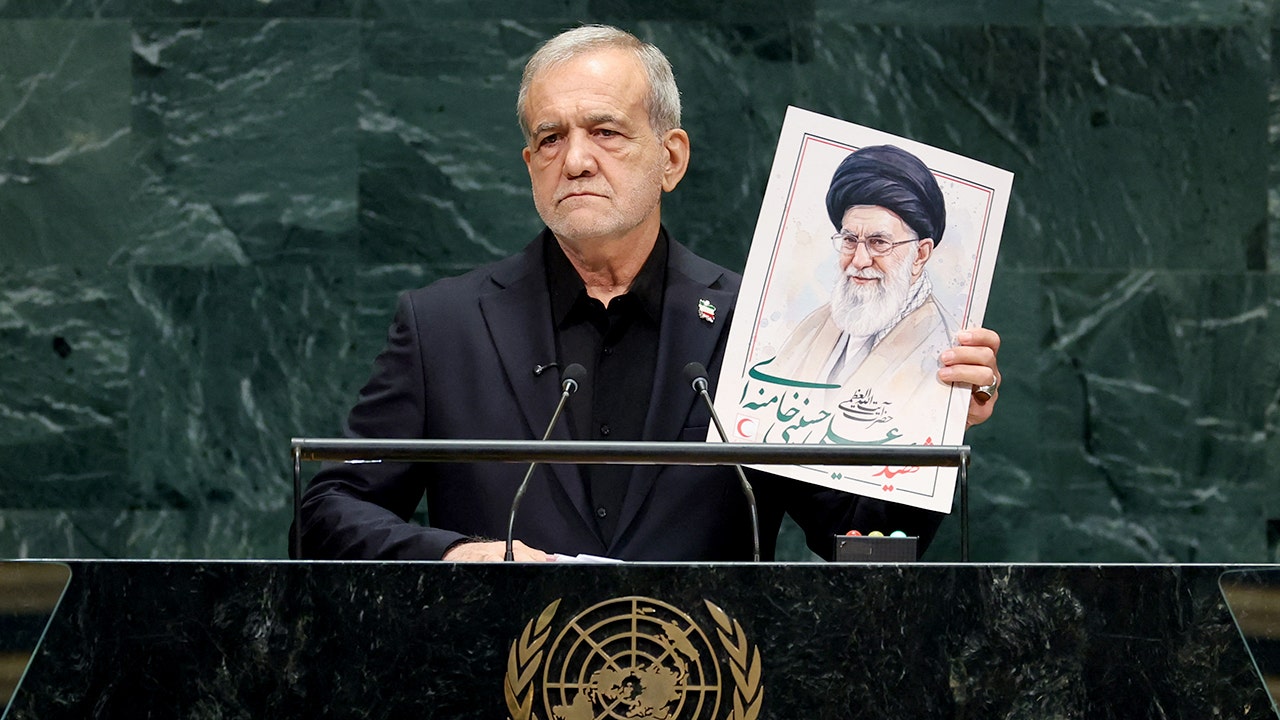
The United Nations reconfirmed Iran to its seat on the Committee for Programme and Coordination on Wednesday, sparking outrage from member states who believe the country’s record of aggression should disqualify its representatives from the committee’s work to review human rights, women’s rights and counter-terrorism programs.
Ahead of the vote, Hillel Neuer, executive director of UN Watch, a human rights watchdog, said he believes the move gives Iran another tool for the regime’s propaganda machine.
«They use it,» Neuer said. «You’ll see a headline in Iranian propaganda right away: ‘Hey, look, we were elected to yet another body.’ And it sends a signal… As they’re killing their own people, what does the world have to say?»
Neuer believes Iran’s continued spot on the committee gives Tehran a nod of international legitimacy amid its ongoing conflict with the U.S., showcasing the UN’s uneven record for creating a forum to deter international violence.
ISRAEL ACCUSES UN OF PLACING IT ON SAME SEXUAL VIOLENCE BLACKLIST AS HAMAS TERRORISTS, SEVERS TIES
«Sometimes [the UN] is effective. Sometimes they’re not. Sometimes, even when they’re effective, they’re effective in a bad way. There’s an effect, but it’s to empower dictatorships,» Neuer said.
«The UN spends a lot of its time attacking democracies like America, like Israel. America gets condemned every year for the embargo in Cuba. Last year, there was one resolution on Iran, one on North Korea, one on Myanmar — and 15 on Israel. And Hamas, Islam and Jihad were never mentioned once. That happens a lot at the UN.»
Iran was reconfirmed with the support of 144 ballots cast by the UN General Assembly.
The Committee for Programme and Coordination consists of 34 member states, each of which is elected to the body for a three-year term. Although it is not one of the UN’s six main committees, it reviews the organization’s plans and priorities, making recommendations on their design, priorities, coordination and effectiveness.
Iran’s renewal to the post prompted outcry from lawmakers in the U.S. on Tuesday afternoon.
«The United Nations elected Iran — the world’s biggest exporter of terrorism — to the committee responsible for establishing priorities on disarmament, counterterrorism and women’s rights,» the House Foreign Affairs Committee wrote in a statement posted to X.
FREED AMERICAN REVEALS BRUTAL IRAN PRISON ORDEAL, WARNS HOSTAGES FACE GREATER DANGER
«The United Nations is morally bankrupt: no sane person can take it seriously.»
Similarly, Canadian Foreign Minister Anita Anand issued her own statement condemning the move.
«Canada is steadfastly opposed to giving Iran a seat on the UN Committee for Programme and Coordination — and Canada voted against Iran’s inclusion today at the UN. The committee should be comprised of countries entrusted with shaping the work of the United Nations and must uphold the principles of its Charter. The Iranian regime silences dissent at home and fuels instability across the Middle East. We stand with the people of Iran,» Anand said.
Notably, Australia also joined the opposition, voting alongside Canada against Iran’s confirmation.
«Australia strongly opposes Iran’s nomination to the UN Committee for Programme and Coordination and voted against. Iran’s human rights violations and destabilizing conduct undermine multilateralism,» Foreign Minister Penny Wong wrote.
Neuer, director of UN Watch, believes its not just Western countries that will be watching how the UN treats Iran. He noted that aggressors constantly monitor the international field to get a sense for how it might react in the future.
«It’s like Putin looks when Obama said we ‘have a red line in Syria. Use chemical weapons — red line.’ Well, Syria used chemical weapons. And Obama… did nothing. That sent a message. Shortly thereafter, Putin invaded Ukraine. I’m not saying that invasions are gonna happen the next day, but these things send messages, and constantly governments are taking the temperature. What is the pushback?» Neuer said.
He also observed that although many in the U.S. view the UN with some skepticism, other countries still use the group as a barometer of international consensus.
«The United Nations is considered for many a repository of international legitimacy; it may not be so in the United States… but in many parts of the world it is regarded as the arbiter of international legitimacy,» Neuer said.
IRAN IS NOT A NORMAL NATION YOU CAN MAKE DEALS WITH; IT’S A NATIONAL SECURITY THREAT
«What is the signal you’re giving to the Ayatollah regime? They murdered tens of thousands of people. They’re hanging dissidents. They are torturing women who defend their right not to cover every piece of their hair. They beat political prisoners. What message does the world have to send? Did you give them a pat on the back? Or did you? Did you penalize them?»
politics, united nations, iran, foreign affairs, world
INTERNACIONAL
Cómo un gen podría convertirse en una nueva estrategia para controlar los mosquitos del dengue y Zika
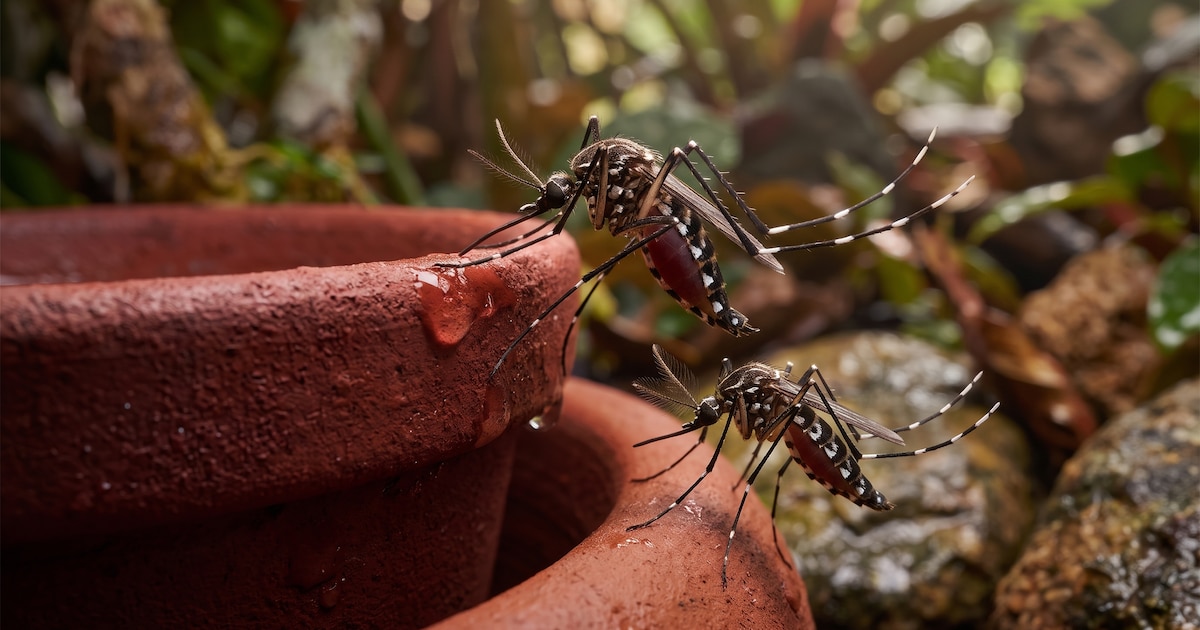
Los investigadores del Instituto de Biomoléculas Transformadoras de la Universidad de Nagoya, en Japón, identificaron que el gen fruitless permite a los mosquitos machos de Aedes aegypti reconocer el sonido de vuelo de las hembras, acercarse a ellas y aparearse.
El hallazgo, publicado en PLOS Biology y divulgado en Phys.org, surge de experimentos que mostraron cómo la mutación de ese gen altera la audición y el comportamiento reproductivo de los insectos.
El equipo, dirigido por el investigador posdoctoral Yumin Loh, el profesor asistente Matthew Su y la profesora Azusa Kamikouchi, trabajó junto con el profesor Daniel Eberl, de la Universidad de Iowa, en Estados Unidos. El estudio se centró en el mosquito que transmite la fiebre amarilla y que también puede propagar dengue y Zika.
Los resultados describen un mecanismo biológico que podría ser relevante para limitar la reproducción de estas poblaciones. Según la investigación, impedir que los machos detecten el llamado de los ejemplares femeninos puede interferir en una etapa inicial del apareamiento.
Los enjambres reúnen a los machos al caer la tarde
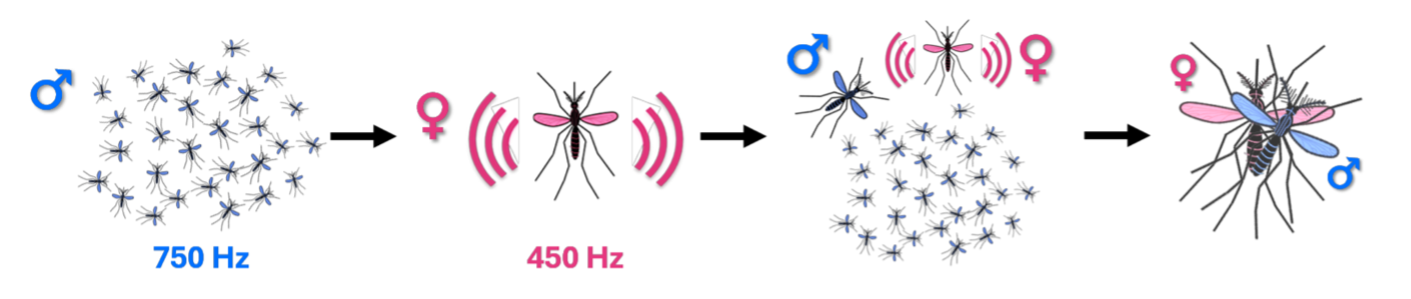
Los machos de Aedes aegypti forman enjambres al anochecer y permanecen allí a la espera de hembras. Cuando una de ellas entra en ese espacio, las ondas sonoras producidas por sus alas guían a los ejemplares machos, que la persiguen, la cortejan y se reproducen.
Las frecuencias de aleteo son distintas según el sexo: Los machos emiten un sonido de alrededor de 750 hercios (Hz), mientras que el de las hembras ronda los 450 Hz. Un hercio es la unidad que mide la frecuencia de una vibración o de una onda sonora.
Tras el apareamiento, ellas buscan un huésped, se alimentan de sangre y luego depositan huevos. Por eso, la capacidad auditiva de los machos resulta necesaria para que el ciclo reproductivo continúe.
El órgano de Johnston transforma las vibraciones en señales nerviosas
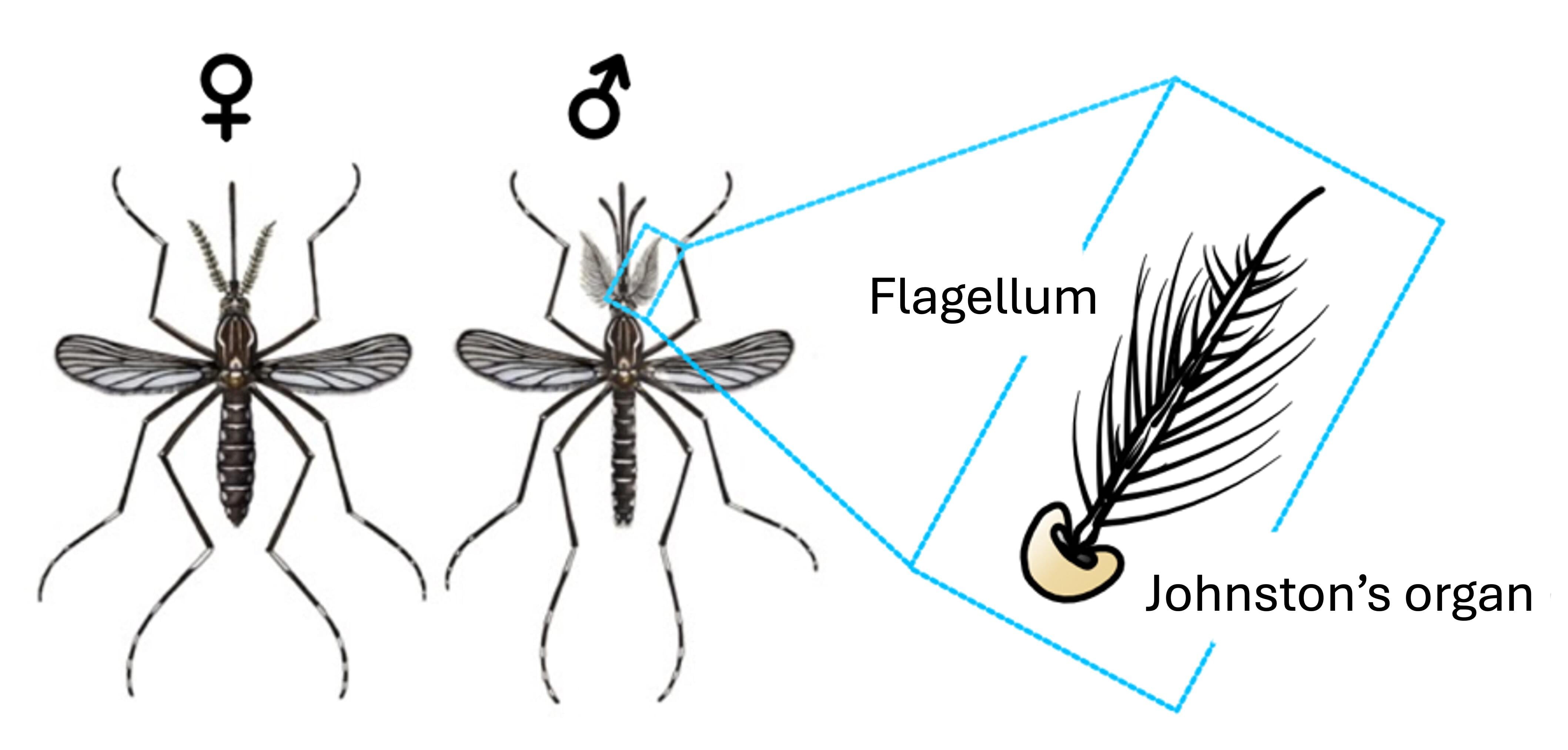
El sistema auditivo del mosquito está compuesto por el flagelo, la parte alargada de la antena, y el órgano de Johnston, ubicado en su base. El flagelo recibe el sonido y vibra; esas vibraciones llegan al órgano, donde activan neuronas que envían señales al sistema nervioso.
Los autores explicaron que los oídos de los mosquitos presentan un marcado dimorfismo sexual, es decir, diferencias anatómicas y funcionales entre ambos sexos. También están ajustados a frecuencias distintas, una característica que favorece la detección del aleteo femenino por parte de los machos.
En los insectos, el gen fruitless está relacionado con diferencias sexuales en la función neuronal. Las investigaciones anteriores en moscas de la fruta ya lo habían vinculado con comportamientos diferenciados según el sexo. Por lo que el nuevo trabajo examinó su influencia específica en la audición y la conducta de los mosquitos machos.
La mutación impide que los machos respondan al vuelo femenino
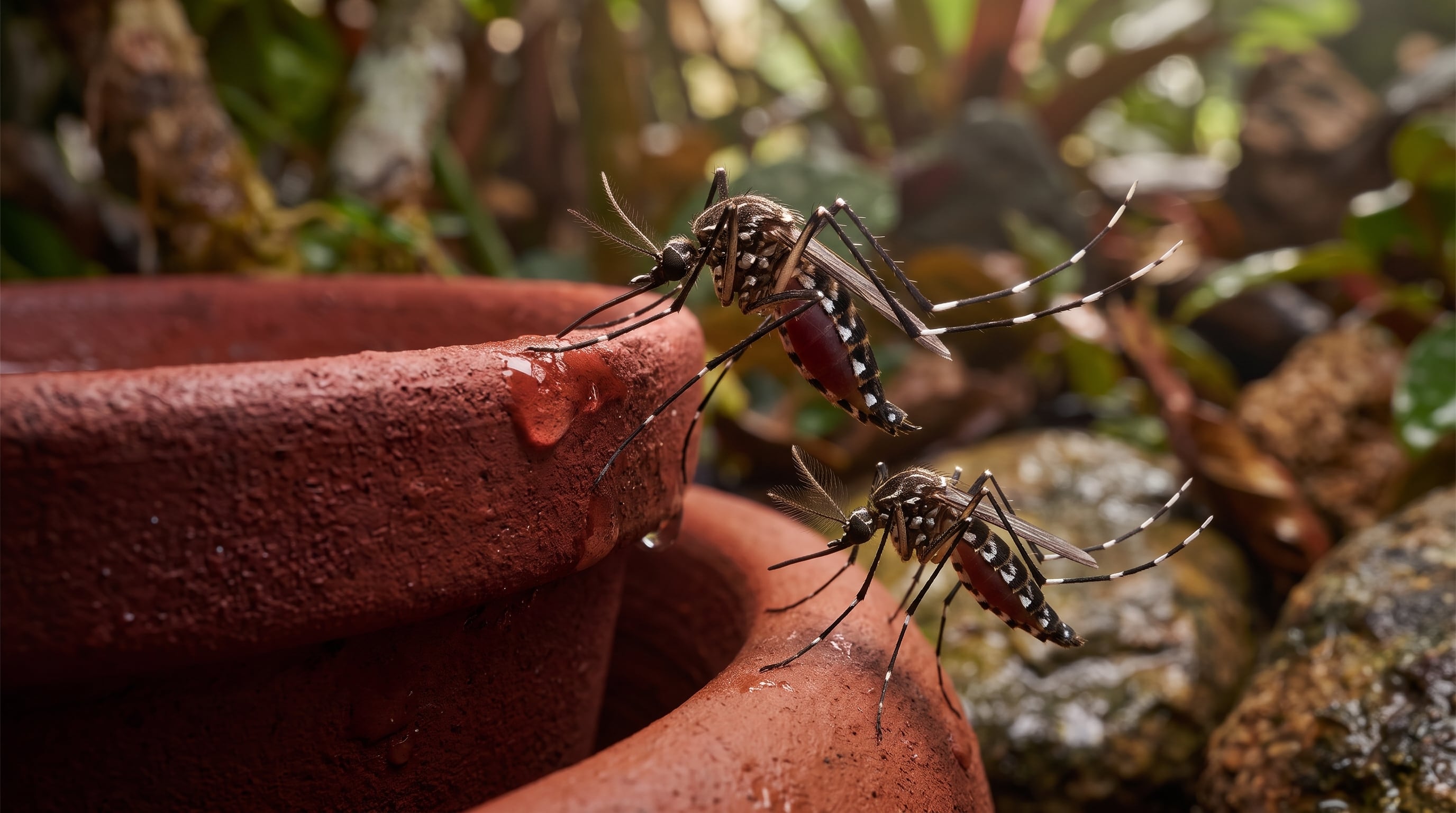
Los ensayos mostraron que los machos mutantes estériles no se agrupaban con otros al caer la tarde. En cambio, presentaban un comportamiento similar al de las hembras. Los individuos sin la mutación sí mantuvieron la conducta habitual de formación de enjambres.
La diferencia también apareció ante estímulos sonoros. Los machos normales demostraron una fuerte atracción por frecuencias equivalentes al aleteo de las hembras. Los ejemplares mutantes, por el contrario, no se sintieron atraídos por ninguna de las frecuencias analizadas.
En los individuos sin alteraciones, el oído ajusta sus vibraciones para alcanzar la mayor sensibilidad frente a la señal acústica de las alas femeninas. En los mutantes, esa sensibilidad máxima se desplazó hacia frecuencias más altas, fuera del rango asociado al vuelo de las hembras.
Las neuronas auditivas de los mutantes respondieron a los sonidos con mucha menos intensidad: apenas un sexto de la reacción registrada en los machos normales. El deterioro de la recepción sonora ayuda a explicar por qué no localizan a los ejemplares femeninos ni logran reproducirse.
Cambios en proteínas motoras afectan la amplificación del sonido
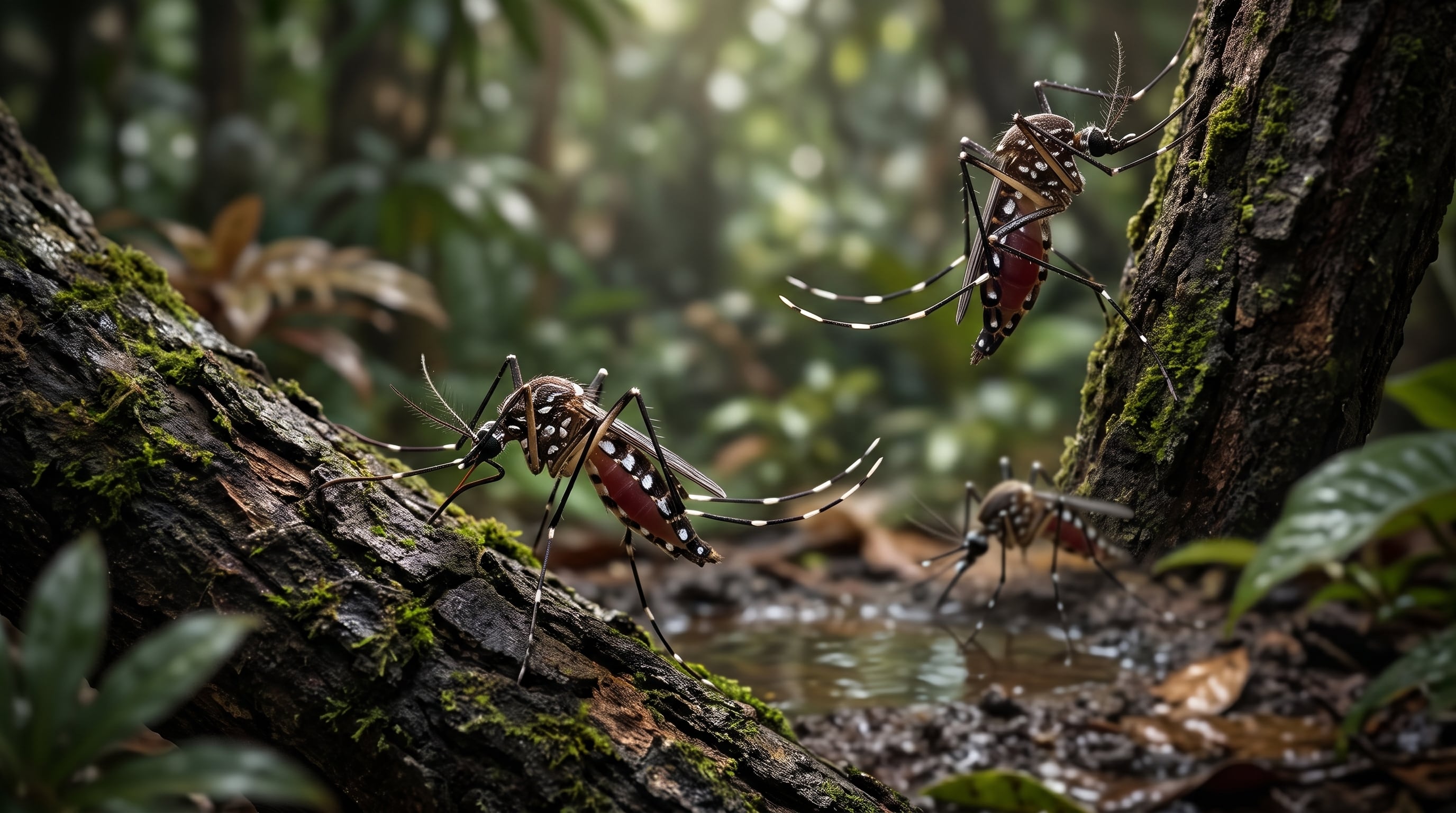
El análisis del órgano de Johnston detectó una alta expresión de fruitless, un dato que vinculó el gen con la función auditiva. Los investigadores también observaron diferencias en la red de neuronas eferentes auditivas, es decir, las que transmiten señales desde el cerebro hacia el sistema auditivo de los machos mutantes.
Estas neuronas se proyectan desde el sistema nervioso central hacia el oído y regulan su funcionamiento. El estudio indica que los mosquitos son los únicos insectos cuyos órganos auditivos contienen este tipo de neuronas.
El equipo analizó, además, conjuntos de datos de secuenciación de ARN de los oídos de mosquito. Ese procedimiento permite observar qué genes están activos en un tejido. Allí encontró cambios en la expresión de genes que codifican dineínas, proteínas motoras moleculares relacionadas previamente con diferencias auditivas entre ambos sexos.
Los tipos de dineína más expresados no fueron los mismos en los mutantes y en los mosquitos de tipo silvestre. Para los autores, la suma de esas variaciones contribuye a formar el sistema auditivo masculino que reconoce el sonido de vuelo de las hembras.
Aedes aegypti,mosquito macho,entomología
INTERNACIONAL
De un pequeño emprendimiento familiar a exportar a más de 10 países: la historia de Nutrisnacks, la empresa costarricense que nació en 1992

Lo que comenzó como un emprendimiento de dos hermanas costarricenses en 1992, con la fabricación de galletas y bizcochos para pequeños establecimientos comerciales, se convirtió en una empresa alimentaria que actualmente exporta sus productos a más de 10 países de Centroamérica y el Caribe y prepara nuevas inversiones para ampliar su capacidad de producción.
Se trata de Nutrisnacks, una compañía fundada por Ingrid e Ilse Hoffmaister, quienes decidieron dejar sus empleos para desarrollar un negocio propio que les permitiera combinar sus responsabilidades familiares con una actividad empresarial.
La iniciativa comenzó en Curridabat, bajo el nombre de Industrias Mafam, con la adquisición de maquinaria para producir alimentos como galletas de coco y bizcochos tradicionales. Sus primeros clientes fueron pulperías y pequeños comercios.
Sin embargo, una experiencia relacionada con la alimentación de sus hijos marcaría un cambio en el rumbo del negocio.
Durante una reunión escolar, una docente recomendó a los padres ofrecer meriendas con mejores características nutricionales. A partir de esa experiencia, las hermanas comenzaron a desarrollar productos con menos grasa, azúcar y aditivos.
Así surgió en 1995 la marca Nutrisnacks, junto con uno de sus primeros productos de esa nueva etapa: Biscolite, un bizcocho de maíz y queso que permitió ampliar su presencia en el mercado nacional.

De las pulperías a los mercados internacionales
Con el crecimiento de la empresa, las fundadoras comenzaron a buscar oportunidades fuera de Costa Rica, participando en capacitaciones, ferias comerciales y misiones empresariales.
En 2004, Nutrisnacks realizó sus primeras exportaciones hacia Puerto Rico, tras establecer contacto con un distribuidor durante una misión comercial organizada por la Promotora del Comercio Exterior de Costa Rica (PROCOMER).
La experiencia permitió abrir nuevos mercados y fortalecer su red de distribución internacional.
Actualmente, Puerto Rico y Panamá representan aproximadamente el 50% de las ventas externas, mientras que la otra mitad se distribuye entre destinos como Guatemala, Honduras, El Salvador, Nicaragua, República Dominicana y Trinidad y Tobago, además del canal de exportación de PriceSmart hacia el Caribe.
Manfred Dorsam, gerente de mercadeo de Nutrisnacks, explicó que la compañía pretende ampliar sus operaciones en la región.
“Centroamérica dejó de ser un destino de exportación para convertirse en una región donde queremos crecer con presencia propia”, afirmó.

Una empresa que ahora genera cerca de 150 empleos
El crecimiento también se refleja en su estructura laboral. En 2017, la compañía reportaba aproximadamente 75 trabajadores, mientras que actualmente cuenta con cerca de 150 colaboradores en su planta de Cartago.
La empresa mantiene un catálogo superior a 100 productos, que incluye galletas, granolas, barras alimenticias, premezclas y diferentes tipos de meriendas.
Como parte de su estrategia de innovación, desarrolla entre tres y cuatro lanzamientos anuales, incorporando nuevos sabores, presentaciones y categorías.
Según Dorsam, alrededor del 75% de los productos lanzados durante los últimos cinco años continúa formando parte de su catálogo.
Entre sus desarrollos se encuentra la línea +Proteína, que reúne barras, granolas y premezclas para preparar pancakes.

Nuevas inversiones para 2027
Después de más de 30 años de operaciones, Nutrisnacks anunció un proyecto para modernizar su planta en Cartago mediante la incorporación de nuevas tecnologías y líneas de producción.
La compañía también proyecta ingresar a nuevas categorías alimentarias durante 2027.
Paralelamente, mantiene el programa Bienestar 4.0, que incluye formación en salud física, finanzas personales y salud mental, además de consultas nutricionales y psicológicas gratuitas para sus trabajadores.
La empresa también informó que distribuye anualmente un porcentaje de sus utilidades entre sus colaboradores.
“Nuestro propósito es crear alimentos que nos llenan la vida”, manifestó Dorsam al referirse a la estrategia empresarial.

La expansión prevista para 2027 representa una nueva etapa para la compañía fundada por las hermanas Hoffmaister, que pasó de abastecer pequeños establecimientos costarricenses a comercializar sus productos en distintos mercados internacionales.
corresponsal:Desde San José, Costa Rica

Karina Milei y Diego Santilli aprovecharon la visita a Corrientes para tratar la eliminación de las PASO con el gobernador

La Corte Interamericana de Derechos Humanos condenó a la Argentina por la destitución del juez de la Corte Moliné O’Connor

La frase de Luck Ra sobre el desamor que generó tensión a tres meses de su separación de La Joaqui

El viaje sorpresa de Antonela Roccuzzo a Perú que revolucionó las redes sociales: el comentario viral sobre Lionel Messi

De cuánto son las asignaciones familiares de ANSES en noviembre 2026

La Justicia negó la excarcelación del hombre que se infiltró en el operativo del papa León XIV

La queja de Yanina Latorre tras asistir al VIP de la misa del papa León XIV: “Estuve al rayo del sol haciendo nada y…”

Así fue el saludo entre Javier Milei y el papa León XIV en Aeroparque tras la llegada a la Argentina

PILIPOM: UNA NUEVA HERRAMIENTA EDUCATIVA PARA QUE LOS MÁS CHICOS APRENDAN JUGANDO

El Papa se emocionó en el Cottolengo Don Orione y aseguró: “El progreso de una nación se mide por la acogida a las personas con discapacidad”

 CHIMENTOS3 días ago
La queja de Yanina Latorre tras asistir al VIP de la misa del papa León XIV: “Estuve al rayo del sol haciendo nada y…”
- SOCIEDAD2 días ago
PILIPOM: UNA NUEVA HERRAMIENTA EDUCATIVA PARA QUE LOS MÁS CHICOS APRENDAN JUGANDO
- SOCIEDAD1 día ago
Papa León XIV en la Argentina, EN VIVO: la misa en Luján y la despedida en Ezeiza hoy, minuto a minuto