INTERNACIONAL
As America turns 250, a rare 1790 exchange between Washington and Bishop Carroll takes on new relevance

NEWYou can now listen to Fox News articles!
As the United States prepares to celebrate its 250th anniversary, historians are looking back at the founding-era documents that helped define the nation’s earliest ideals.
Among them is a little-known 1790 exchange between John Carroll, the first Catholic bishop in the United States, and President George Washington — a correspondence that helped answer a fundamental question facing the young republic: Could Catholics, long viewed with suspicion under British rule, truly become equal American citizens?
The answer still rests today inside the Library of Congress.
RARE, HISTORIC US DOCUMENTS TRAVELING COUNTRY ON ‘FREEDOM PLANE’ AHEAD OF AMERICA’S 250TH ANNIVERSARY
About 50 feet from Dr. Kevin Butterfield’s office in the Library’s Manuscript Division sits the original letter Carroll sent to Washington, preserved among the George Washington Papers.
Washington «was spending the entire year of 1790, more or less, connecting with the entire nation,» said Butterfield, acting chief of the Library of Congress Manuscript Division. «He connected with the people because he believed that it was important as the new president that they interact directly with him and have a chance to see the new government in action.»
As Washington traveled through the states during his first year in office, letters poured in from religious congregations, civic organizations and local communities seeking reassurance about their place in the new federal government. Among them was a March 1790 address from John Carroll, who became the first Catholic bishop in the United States after the Vatican established the nation’s first diocese in Baltimore in 1789, and other Catholic leaders asking whether Catholics — long viewed with suspicion under British rule — would be fully included in the new republic.
A portrait painting of George Washington by Constable-Hamilton from 1794 is held by the New York Public Library. (Smith Collection/Gado/Getty Images)
Michael Breidenbach, dean of the Honors College at Ave Maria University, said the exchange also reminds Americans that Catholics were not merely beneficiaries of the nation’s founding — they helped shape it.
«As America approaches its 250th anniversary, there is a heated debate about whether the nation’s foundation had Protestant, secular or other roots,» he said. «Often missing from these conversations are the Catholic contributions to the American founding.»
Carroll’s letter, Butterfield said, stood out because it sought reassurance that Catholics would be fully included in the new republic.
«They were sharing their thoughts about religious liberty and the importance of having a nation where they were included as full citizens,» he said.
Catholic priests had ministered in the American colonies for generations, but until the Vatican established the Diocese of Baltimore in 1789, there had been no Catholic bishop in the United States. Carroll was consecrated the following year, becoming the country’s first bishop.
FINAL RESPECTS PAID TO FORGOTTEN CATHOLICS OF 300 YEARS AGO WHO VALUED RELIGIOUS LIBERTY: SEE THE PHOTOS
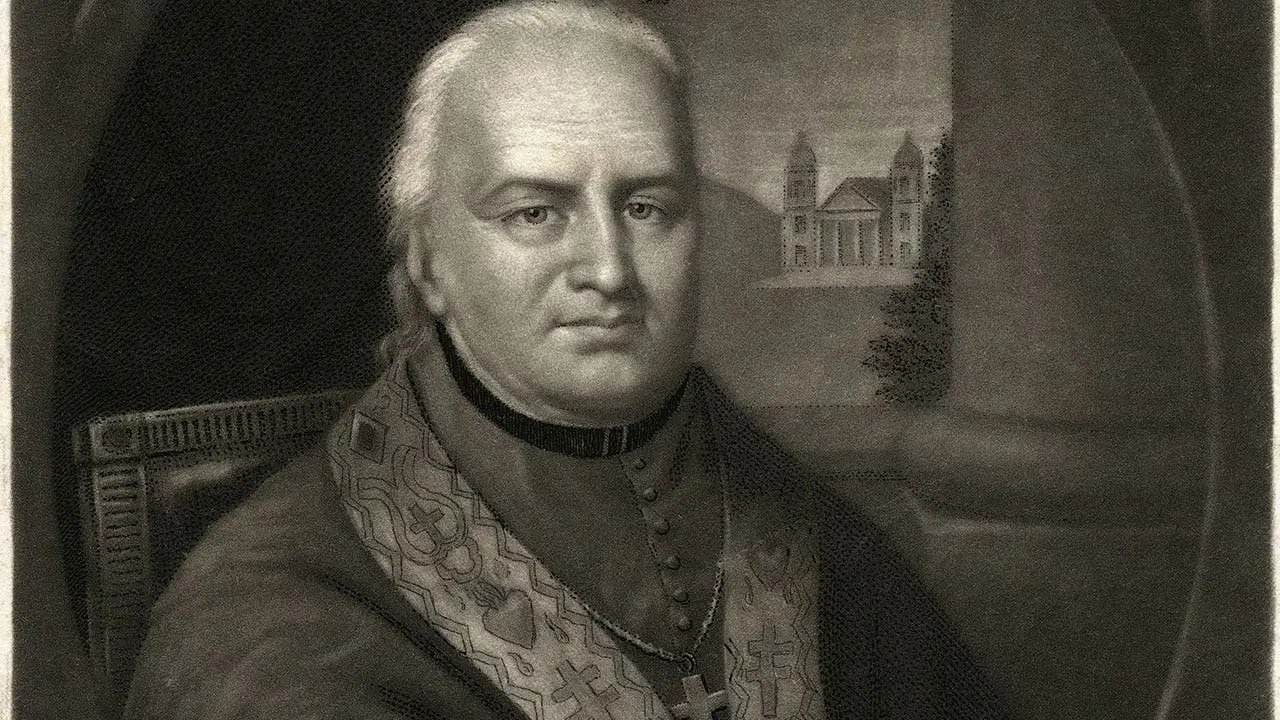
Engraving of Bishop John Carroll, the Archbishop of Baltimore. (Getty Images)
Reading from the original manuscript, Butterfield pointed to the passage that captured the Catholics’ appeal:
«Whilst our country preserves her freedom and independence, we shall have a well-founded title to claim from her justice equal rights of citizenship as the price of our blood spilt under your eyes and of our common exertions for her defense.»
The words reminded Washington that Catholics had fought beside him throughout the Revolutionary War.
«Carroll’s remembering eight years of George Washington’s service as commander in chief through the bloody war for independence and saying, as Washington fully knew, Catholics were a part of that battle from the start and served under his leadership to win independence,» Butterfield said.
For centuries before the American Revolution, Catholics in England and many of its colonies faced sweeping restrictions.
«It’s important to understand that many English people and colonists mistrusted Catholics,» said Catherine O’Donnell, a historian at Arizona State University. «They were thought to be loyal to Rome rather than to their countrymen, and to lack independence of mind.»
HISTORIC MARYLAND CHURCH OPENS DOORS TO VISITORS 320 YEARS AFTER CLOSING DOWN
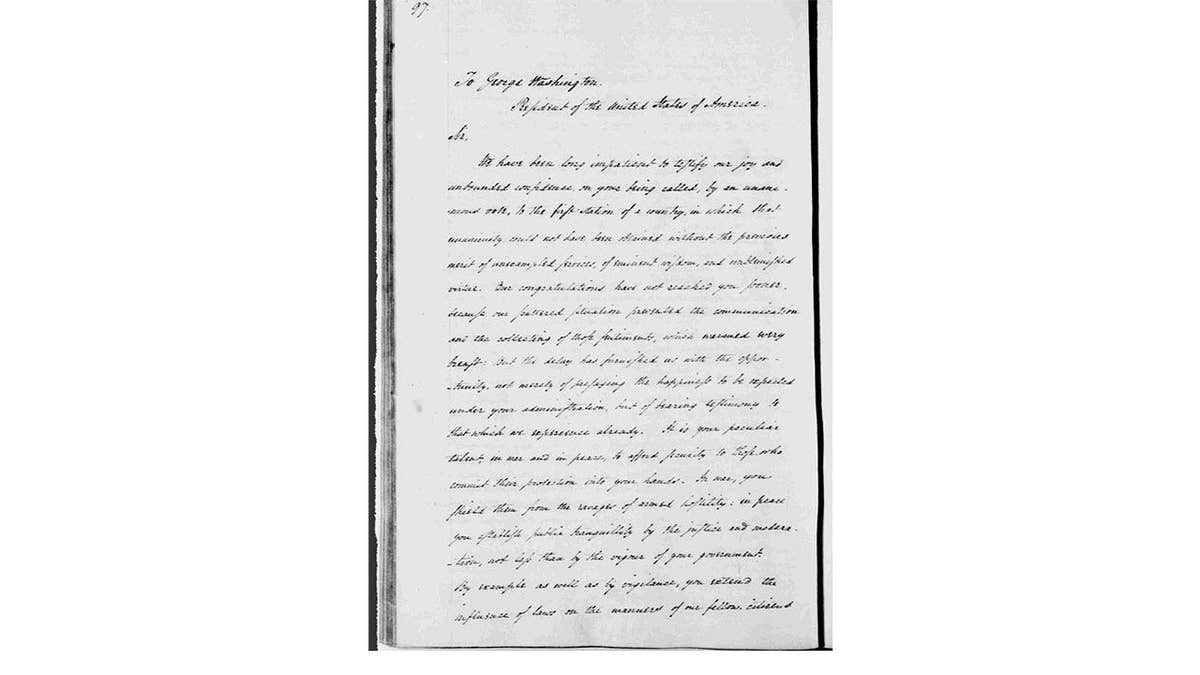
The March 15, 1790, letter from Bishop John Carroll and other Catholic leaders to President George Washington, preserved in the Library of Congress’s George Washington Papers, appealed for «equal rights of citizenship» for Catholics in the new American republic. Washington’s reply affirmed their place as full citizens. (Library of Congress)
Catholics were barred from holding office in many places, prevented from voting, required to swear oaths rejecting papal authority and, in some colonies, prohibited from openly practicing their faith.
Carroll experienced that discrimination firsthand. As a child, he was sent to Europe for a Catholic education because such schooling was unavailable to him in Maryland. He later joined the Jesuits, a Catholic religious order known for education, missionary work and scholarship. While Jesuits later became deeply rooted in American Catholic life, Carroll’s formation had to take place overseas because Catholic institutions in the colonies were still sharply limited.
Yet rather than seeking a return to an established Catholic state, Carroll believed the new American republic offered something better.
«He thought the separation of church and state was a good thing,» O’Donnell said.
The letter to Washington was sincere, she said, but also carefully calculated.
«Carroll admired Washington throughout Washington’s life,» O’Donnell said. «This letter was sincere and also in a way strategic: Carroll wanted Washington to publicly affirm Catholics’ welcome place in the new nation.»
BISHOP ROBERT BARRON: MY YEAR WITH DOJ’S RELIGIOUS LIBERTY COMMISSION: WHY I SAID YES
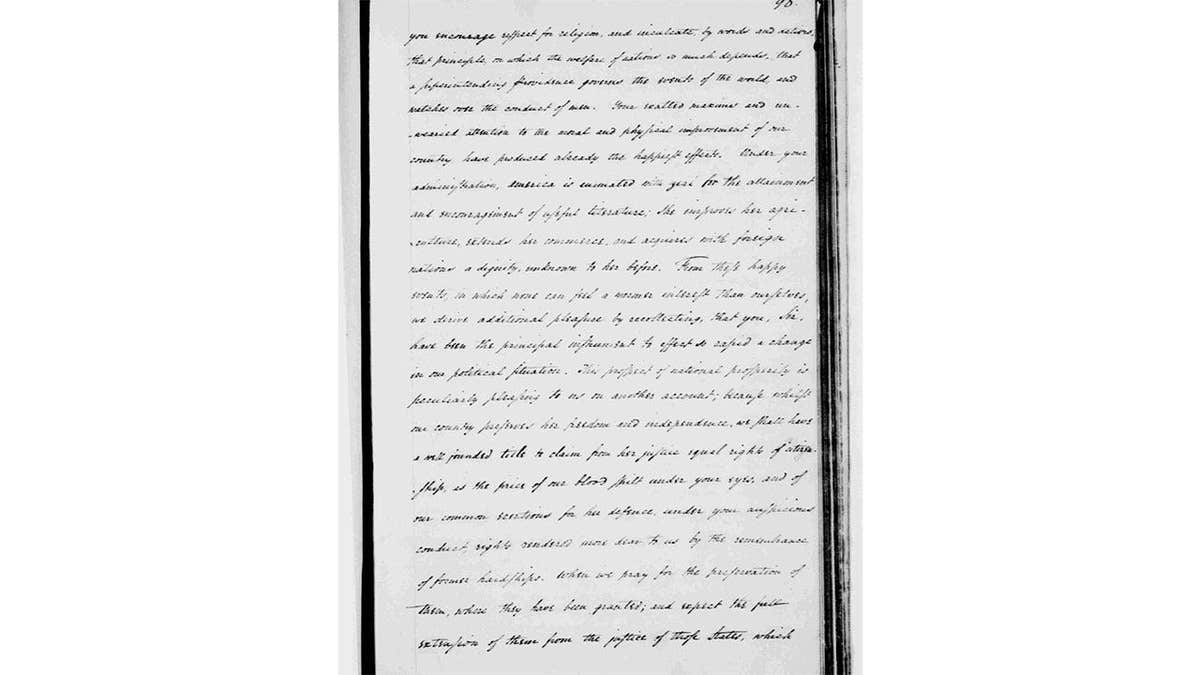
Page two of John Carroll’s March 15, 1790 letter to President George Washington, in which American Catholics appealed for «equal rights of citizenship» in the new republic. Courtesy of the Library of Congress. (The Library of Congress)
If the letter was a test, she added, it was one Carroll expected Washington to pass.
Carroll was joined by several of the young nation’s most prominent Catholic leaders. The address was signed by his cousin Charles Carroll of Carrollton — the only Catholic signer of the Declaration of Independence — as well as his relative Daniel Carroll, a signer of the U.S. Constitution, and Congressman Thomas FitzSimons of Pennsylvania. Together, they argued that American Catholics had earned the same rights of citizenship through their contributions to the Revolutionary War and the nation’s founding.
«American Catholics’ remarkable transformation — from being suspected subjects of a king to being trusted citizens of a new republic — is wonderfully illustrated in Bishop John Carroll’s 1790 letter to George Washington,» said Breidenbach, who is also the author of the book «Our Dear-Bought Liberty: Catholics and Religious Toleration in Early America».
Washington’s reply left little doubt where he stood.
He thanked Catholics for the «patriotic part» they had played during the Revolution and wrote that they were already «realizing, instead of anticipating, the benefits of the general Government.»
Butterfield said the response reflected Washington’s broader vision for the country.
«As long as you demean yourself as a good citizen and follow the laws, it doesn’t matter what your religious beliefs are,» Butterfield said, summarizing Washington’s message. «You’re fully a part of the nation.»
Washington, Butterfield said, recognized that every public word he spoke helped define the new republic.
«He is fully aware that he is a symbol of the nation, that the words that he speaks have consequences, that every word that he says matters.»
Washington expressed the same principle in his correspondence with other minority religious communities, including the Hebrew Congregation in Newport, Rhode Island.
«Washington makes clear that he’s not asserting ‘toleration,’ which would imply that a group of people are being given some kind of special permission to exist and worship,» she said. «Rather, all good citizens have the same rights regardless of religion.»
Although several states continued to maintain religious restrictions for decades, the new federal government charted a different course.
COLONIAL WILLIAMSBURG GEARS UP FOR AMERICA 250 BIRTHDAY TO REMEMBER
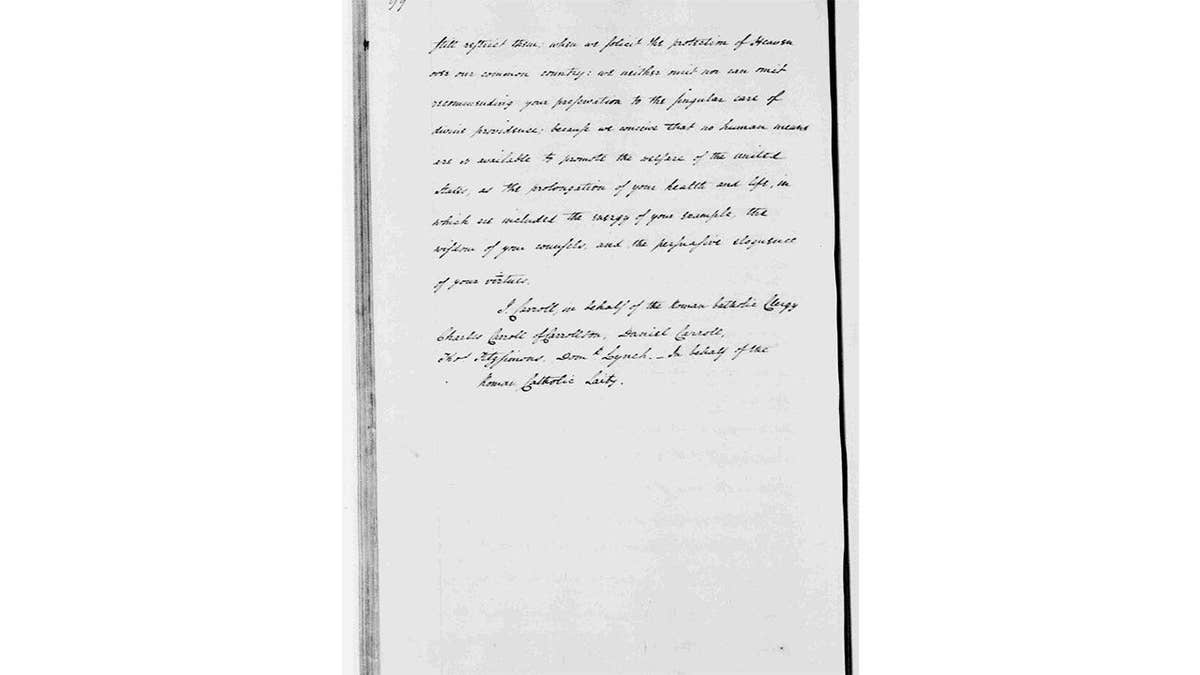
The closing page of John Carroll’s 1790 address to President George Washington includes the signatures of the Catholic leaders who appealed for equal rights of citizenship in the new American republic. Courtesy of the Library of Congress. (The Library of Congress.)
Even before the First Amendment was ratified, Article VI of the Constitution prohibited religious tests for federal office. Washington, who had presided over the Constitutional Convention, consistently defended that principle throughout his presidency.
«At the national level from day one, this was an experiment in religious freedom,» Butterfield said.
The correspondence itself survived because Washington understood that his papers would matter to future generations.
According to Butterfield, Washington preserved the collection, leaving it to his nephew, Supreme Court Justice Bushrod Washington. Congress purchased the papers in 1834, and they were later transferred from the State Department to the Library of Congress, where they remain today.
The Carroll letter is now one of roughly 77,000 items in the George Washington Papers. While researchers around the world can consult digitized versions, the original manuscript is only brought out in rare circumstances to preserve it.
O’Donnell believes the lesson extends beyond Catholic history.
«I think that it’s valuable for Americans to understand that the history of the founding period contains just about everything: ideals such as religious liberty and prejudices, such as those against Catholics,» she said.
She also believes the correspondence demonstrates the importance of public leadership.
CLICK HERE TO DOWNLOAD THE FOX NEWS APP
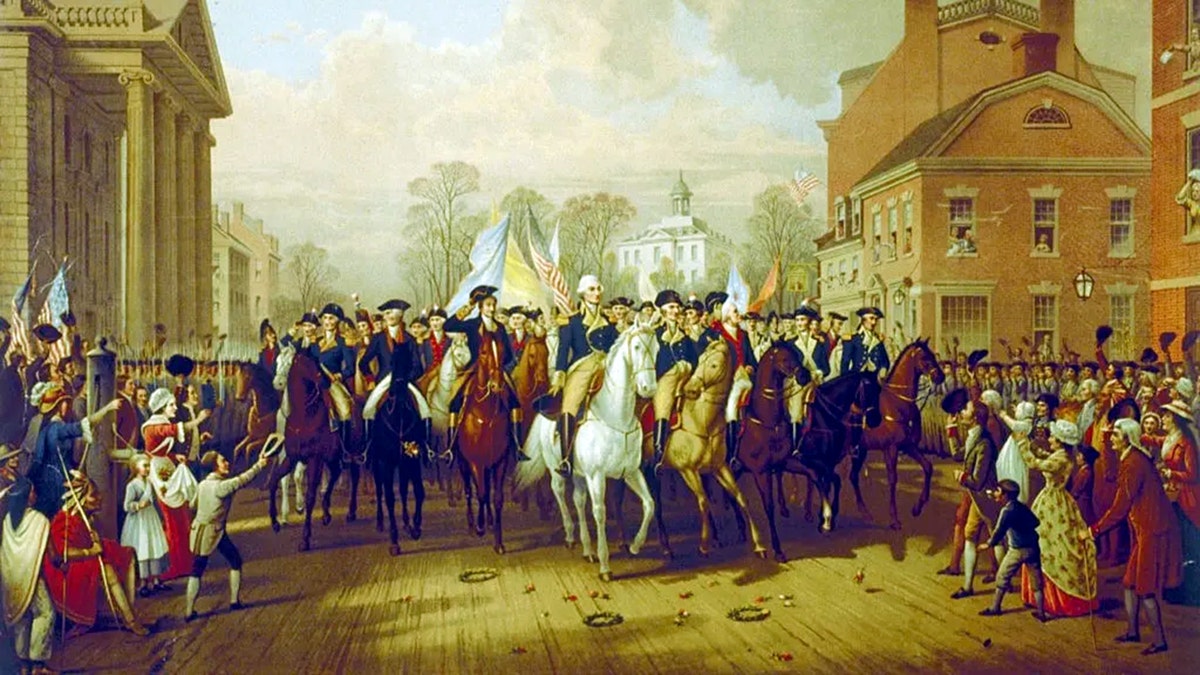
Gen. George Washington parades through Lower Manhattan on Evacuation Day, Nov. 25, 1783. (Library of Congress/Getty Images)
Washington’s belief that good citizenship did not require any particular religious views «seems timely,» O’Donnell said, as does Carroll’s belief that «public exchanges about important matters can help make ideals part of people’s sense of their community, rather than just a theoretical set of rights.»
More than two centuries later, the exchange remains more than a forgotten piece of correspondence. It captures an early moment when one of America’s smallest religious minorities asked whether the promises of the Revolution truly applied to them — and when the nation’s first president answered that they did.
america 250, roman catholic, first amendment, constitution, washington, faith values








INTERNACIONAL
Andy Burnham asume como primer ministro del Reino Unido con una economía debilitada y el avance de Reform UK como principal desafío
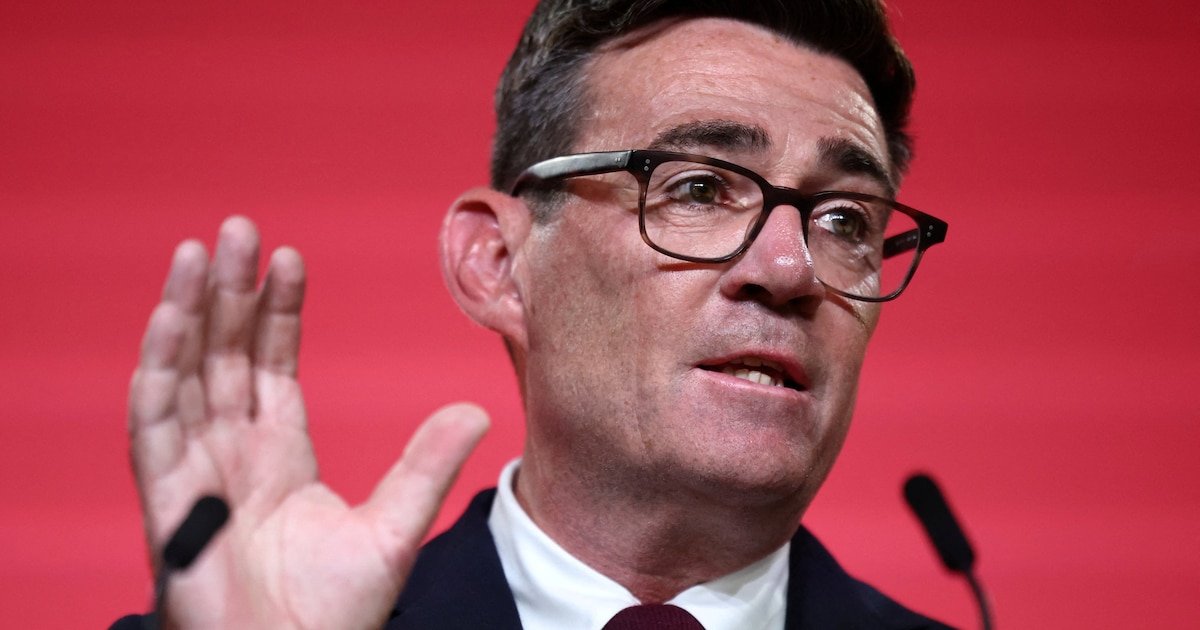
Andy Burnham asumirá este lunes como nuevo primer ministro del Reino Unido, tras recibir el encargo del rey Carlos III para formar Gobierno, en reemplazo de Keir Starmer, quien deja el cargo apenas dos años después de la amplia victoria electoral que devolvió al Partido Laborista al poder tras 14 años de gobiernos conservadores. El dirigente laborista llegará a Downing Street con una agenda marcada por el bajo crecimiento económico, el aumento del costo de vida, la inmigración irregular y el avance electoral del partido Reform UK, liderado por Nigel Farage.
La transición de poder comenzará con la visita de Starmer al Palacio de Buckingham, donde presentará formalmente su renuncia al monarca. Después de esa audiencia, ofrecerá un breve mensaje de despedida frente al número 10 de Downing Street. Más tarde, Burnham acudirá al palacio para recibir el mandato de formar Gobierno y pronunciará su primer discurso como primer ministro.
Su equipo anticipó que el nuevo jefe de Gobierno presentará las “prioridades para restaurar la confianza en el Gobierno y dar a Gran Bretaña un mayor margen de maniobra”, con especial atención sobre la crisis del costo de vida. También se espera que exponga iniciativas destinadas a impulsar el crecimiento económico y ampliar la descentralización del poder hacia las comunidades regionales.
Durante la jornada también se conocerán los principales nombramientos de su gabinete. Uno de los anuncios más esperados será la designación del nuevo ministro de Finanzas, en reemplazo de Rachel Reeves.
Burnham, de 56 años y exalcalde del Gran Manchester, recibió el respaldo del Partido Laborista después de la renuncia de Starmer el mes pasado. Los legisladores consideraron que era la figura con mayores posibilidades de contener el crecimiento de Reform UK, fuerza que ganó respaldo con un discurso centrado en la inmigración.

La vicepresidenta del Partido Laborista, Lucy Powell, sostuvo que la experiencia de Burnham fuera del centro político de Londres le permitió comprender la necesidad de aplicar medidas de mayor alcance para cumplir las promesas electorales del partido.
Según Powell, el nuevo líder pretende reformar de manera profunda el funcionamiento del Estado y modificar un sistema político que considera excesivamente centralizado. Además, afirmó que el objetivo consiste en ofrecer “seguridad para la gente común en el trabajo, seguridad en su hogar, una vivienda que puedan pagar y vivir en una comunidad de la que puedan sentirse orgullosos, con la certeza de que sus hijos tendrán oportunidades para el futuro”.
Entre los principales desafíos del nuevo Gobierno figuran una economía con escaso crecimiento, el elevado costo del endeudamiento público, el incremento del gasto en asistencia social y la llegada de migrantes irregulares en pequeñas embarcaciones a través del Canal de la Mancha, un fenómeno que impulsó el apoyo a Reform UK.
A ese escenario se suman factores internacionales, como la volatilidad de los precios de la energía por la guerra entre Estados Unidos e Irán, además de la incertidumbre derivada de la política exterior del presidente estadounidense, Donald Trump.
Burnham también afrontará restricciones fiscales que limitarán su margen de acción. El Reino Unido mantiene elevados niveles de deuda pública y reglas presupuestarias que obligan al Gobierno a equilibrar el gasto con la recaudación tributaria.

Antes de llegar a Downing Street, Burnham volvió al Parlamento hace apenas cuatro semanas. Entre 2001 y 2017 fue diputado y ocupó distintos cargos ministeriales durante los gobiernos laboristas de Tony Blair y Gordon Brown. Posteriormente construyó su perfil político como alcalde del Gran Manchester, donde adquirió notoriedad nacional.
El nuevo primer ministro dispondrá de un período relativamente corto para intentar revertir la situación del partido antes de las próximas elecciones generales, previstas para 2029. Las encuestas ubican actualmente a Reform UK como una fuerza con posibilidades de imponerse en esos comicios.
Durante un acto con simpatizantes el viernes pasado, Burnham calificó el cambio de liderazgo como la “última oportunidad” para que el Partido Laborista corrija su rumbo. También aseguró que cuenta con “un plan” para afrontar los problemas del país.
Su primera decisión política llegó incluso antes de asumir formalmente el cargo. El sábado anunció la cancelación del sistema nacional de identificación digital impulsado por Starmer, un programa cuyo costo estaba estimado en 1.800 millones de libras durante tres años.
Un portavoz del nuevo equipo de Gobierno explicó que esos recursos se destinarán “a donde más se necesitan, como ayudar con el costo de vida”, una de las prioridades que Burnham buscará instalar desde el inicio de su gestión.
(Con información de AFP)
Domestic,Politics,Europe,Government / Politics
INTERNACIONAL
Trump administration touts more than $1B in UN budget cuts as reform push gains momentum

NEWYou can now listen to Fox News articles!
UNITED NATIONS — The Trump administration says it has secured more than $1 billion in cuts to United Nations budgets in just six months, calling the reductions evidence that an institution long considered resistant to change is finally beginning to reform.
The latest milestone came June 30, when all 193 U.N. member states approved a peacekeeping budget of approximately $5.1 billion for the coming fiscal year — about $550 million, or 9.7%, less than the previous year.
Combined with a 15% reduction to the U.N.’s regular budget approved in December, U.S. officials say the agreements amount to more than $1 billion in cuts to assessed U.N. budgets, a level they describe as unprecedented.
INTERNATIONAL ‘DEEP STATE’ PRIME TARGET OF TRUMP-STYLE CANDIDATE FOR UN CHIEF
U.S. Representative for U.N. Ambassador Jeff Bartos addresses a meeting of the Security Council at U.N. headquarters in New York City, Nov. 25, 2025. (Eduardo Munoz/Reuters)
Assessed budgets are funded through mandatory contributions charged to member states under a formula based largely on the size of their economies.
«On June 30th, with U.S. leadership, all 193 countries came together again for the second time in six months,» U.S. Ambassador for U.N. Management and Reform Jeff Bartos told Fox News Digital. «We’ve achieved over a billion dollars of savings in six months, which is unprecedented. Any one cut would be unprecedented. The totality of the reforms is monumental.»
The agreement comes as the United Nations faces mounting financial pressure and prepares for a leadership transition in 2027, with Secretary-General António Guterres set to leave office at the end of his second term. At the same time, the Trump administration has made reform a central pillar of its U.N. strategy, arguing the organization has become overly bureaucratic and inefficient.
In response to questions from Fox News Digital, U.N. spokesman Stéphane Dujarric confirmed that the peacekeeping budget was reduced by roughly $550 million and the regular budget by 15%, describing both as «unprecedented reductions.»
US URGES DONORS TO ABANDON UNRWA FUNDING AS UN DEFENDS AGENCY’S MISSION
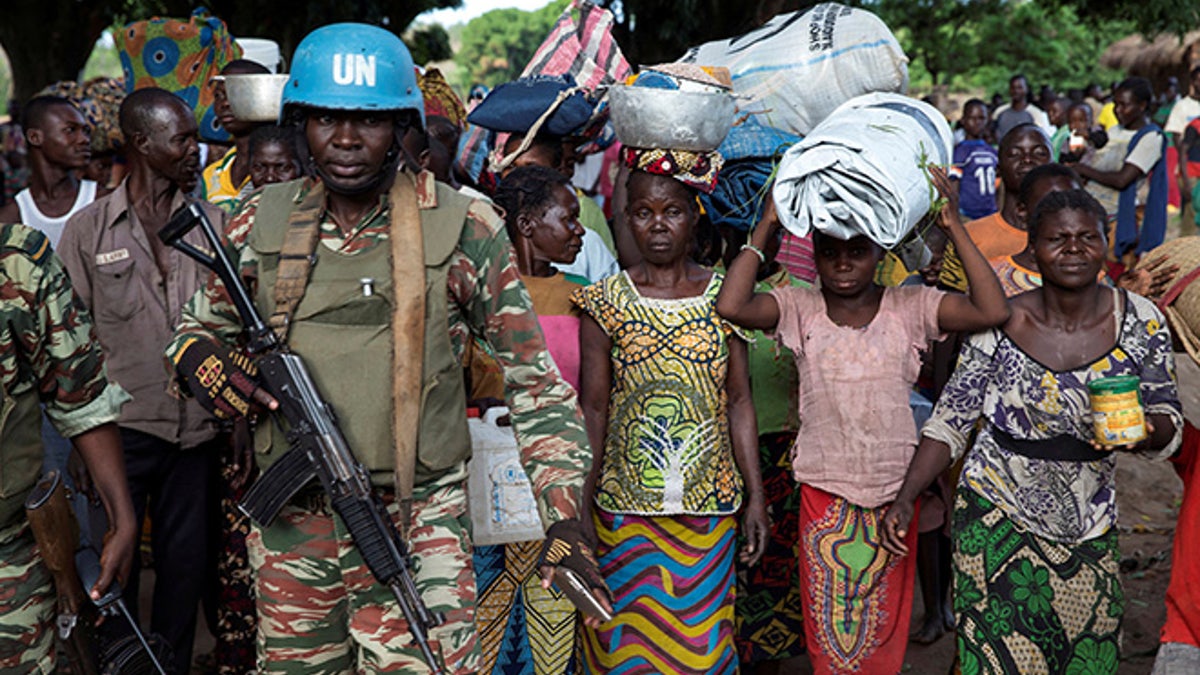
A Cameroonian United Nations peacekeeping soldier guards women as they arrive to the village of Bambara, Central African Republic, April 25, 2017. (Reuters/Baz Ratner)
Bartos argues the reforms reflect sustained pressure from the Trump administration and months of negotiations led by the U.S. Mission.
«The new budget, this reformed budget, the enhanced efficiency changes the culture of how the U.N. looks at peacekeeping,» Bartos said. «Every dollar has to achieve impact on the ground.»
He pointed to the U.N. Mission in South Sudan as an example, saying the United States worked to streamline the mission’s mandate before reducing its budget accordingly.
Another reform highlighted by the administration changes how the U.N. handles unused budget credits.
Until now, U.N. financial rules required the organization to return unspent funds to member states even if those contributions had never actually been paid, a practice critics said worsened the organization’s recurring liquidity crisis.
The General Assembly voted on June 30 to introduce, on a four-year trial basis, a new methodology under which unspent funds will be returned only when backed by cash actually received.
Bartos said the change could save the organization more than $1 billion over the next three years. That projected figure is separate from the more than $1 billion in budget reductions already approved over the past six months.
He called the change another example of «common-sense» reform and said it could save the organization more than $1 billion over the next three years.
The United Nations likewise welcomed the change, though officials noted it had been a long-standing priority of Guterres.
TRUMP CELEBRATES AFTER UN CLIMATE COMMITTEE MOVES AWAY FROM ITS MOST EXTREME GLOBAL WARMING SCENARIO
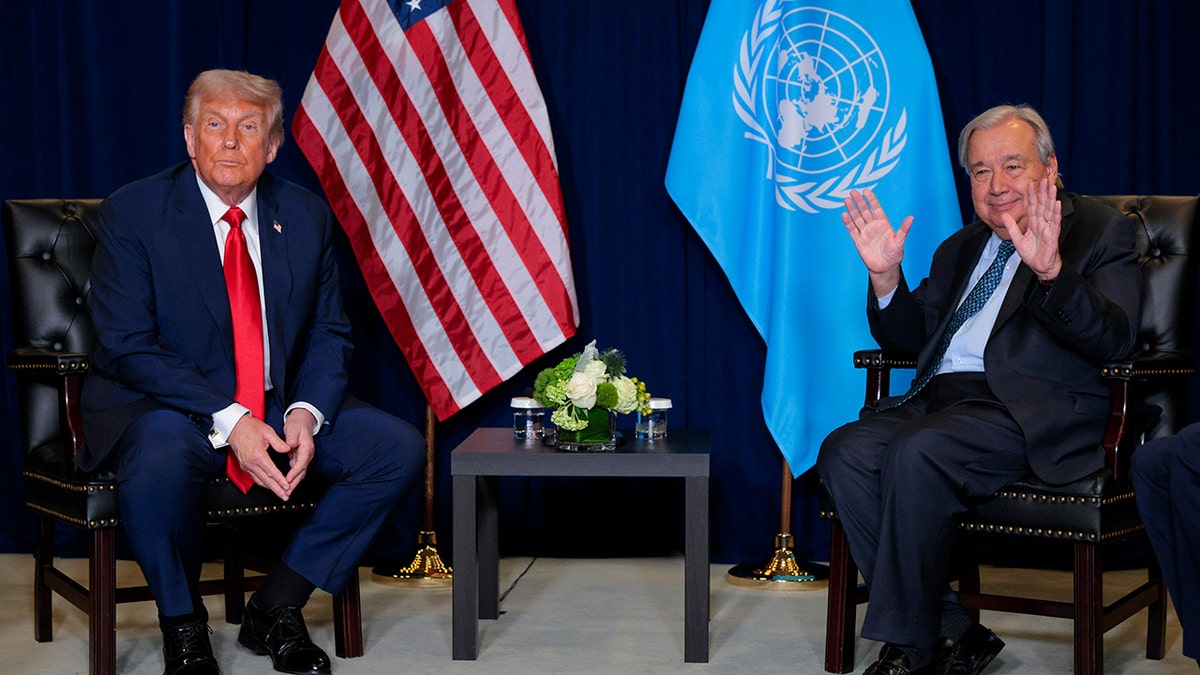
President Donald Trump meets with Secretary-General António Guterres during the 80th session of the General Assembly at the United Nations headquarters on Sept. 23, 2025, in New York City. (Chip Somodevilla/Getty Images)
«I have been pushing for this reform for almost a decade,» Guterres said after the vote. He described the previous system as a «Kafkaesque cycle» in which the organization was expected «to give back cash that did not exist.»
Dujarric said the reform would allow the U.N. to manage resources «in a more predictable and responsible way» while helping ensure operational continuity, particularly for peacekeeping missions.
Bartos insists the latest budget agreements are only the beginning.
Among the administration’s next priorities are reforms to staff compensation, employee benefits and the U.N. pension system, areas he argues consume resources that could otherwise support humanitarian operations and peacekeeping missions.
«We’re going to continue to see us push whether it’s on benefits, whether it’s on staff compensation, whether it’s on the pension system,» Bartos said. «There’s massive numbers of additional reforms that our team is working on right now.»
CLICK HERE TO DOWNLOAD THE FOX NEWS APP

Vehicles with the U.N. peacekeeping force in Lebanon drive along the main road leading to Lebanon’s southern town of Naqura, close to the border with Israel, on Oct. 27, 2022. (Mahmoud Zayyat/AFP/Getty Images)
He also suggested reform will remain a central issue as member states begin selecting the next secretary-general.
«We’re going to select the next secretary-general,» Bartos said. «That reform momentum that has been growing over the last 15, 18 months… you’ll see that continuing in 2027 with the new secretary-general.»
united nations, peacekeeping, reform, state department
INTERNACIONAL
Empresarios hacen un llamado para construir un Panamá más competitivo, sostenible, equitativo y de oportunidades
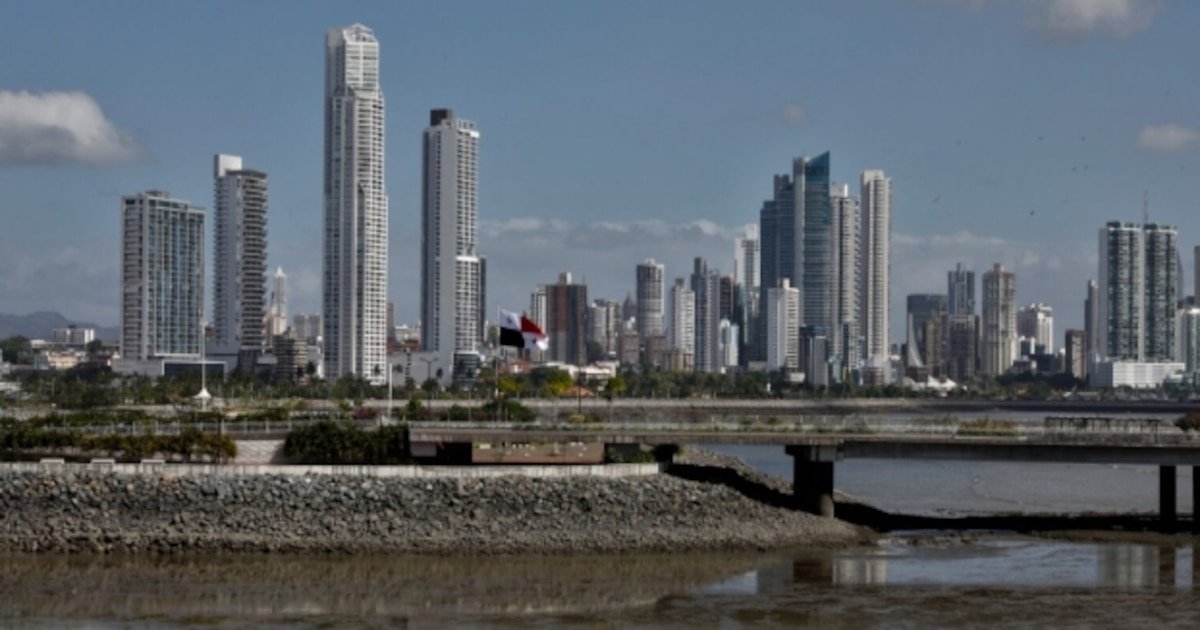
“Con profunda preocupación” la Asociación Panameña de Ejecutivos de Empresa (Apede) indica que observa el progresivo retroceso en la calidad de la democracia, situación que indica se refleja en el debilitamiento institucional y la pérdida de confianza en los contrapesos del poder.
“Sin una democracia sólida, instituciones independientes y reglas claras, es imposible atraer inversión de largo plazo o garantizar la paz social”, aduce la organización.
Apunta que el desarrollo de una nación requiere de planos claros y de una ejecución rigurosa, y por ello propone repasar los distintos niveles de una estructura que, según dice, ha venido delineando colectivamente y que constituyen las condiciones indispensables para alcanzar un progreso sostenible.
Manifiesta que al mirar en retrospectiva las posturas y propuestas durante este bienio, “descubrimos que no son planteamientos aislados; convergen en un diseño común: la planificación estratégica para edificar un Panamá verdaderamente competitivo, equitativo y de oportunidades”.
Para que cualquier obra resista el paso del tiempo, apunta que su base debe ser sólida e inquebrantable. En nuestro país, esos cimientos estructurales, entendidos como las bases no negociables del desarrollo, se componen de cuatro elementos fundamentales: seguridad jurídica, Estado de Derecho y calidad democrática; libertad económica y desburocratización; transparencia y fortalecimiento institucional; y sostenibilidad y transición ecológica.

“La seguridad jurídica, Estado de Derecho y calidad democrática constituyen el cimiento fundamental que sostiene toda la estructura”, reitera la asociación.
A su vez, añade que la libertad económica y desburocratización representan el impulso de la iniciativa privada.
“Observamos un entorno nacional cada vez más restrictivo, en el que las trabas burocráticas y la tramitología excesiva asfixian la competitividad. Defender la libertad económica exige desmantelar estos obstáculos, simplificando procesos para que el sector privado pueda emprender, competir y generar riqueza sin frenos estatales”, manifiesta.
Por su parte, la transparencia y el fortalecimiento institucional son el material que cohesiona toda la estructura. «La transparencia y la rendición de cuentas actúan como barreras frente a la corrupción y el clientelismo, prácticas que debilitan la democracia y erosionan la confianza ciudadana en el sistema».
De igual manera, para la Apede la sostenibilidad y transición ecológica constituyen un diseño pensado para resistir el futuro. Clama por la adopción de energías limpias y la protección responsable de la biodiversidad, que permiten asegurar que el crecimiento de hoy no comprometa el entorno ni las oportunidades de las próximas generaciones.

Con los cimientos asegurados, afirma que llega el momento del ensamblaje y de activar los motores del desarrollo humano y territorial.
“La estructura debe entonces levantar sus paredes, articulando el bienestar social con los sectores que dinamizan la economía real en cada región del país. Para lograrlo, se requiere avanzar en educación, talento e inteligencia artificial; dinamización sectorial e integración territorial; servicios públicos y acceso al agua; equidad de género e inclusión social; así como empleo formal y diálogo social permanente”.
La educación, talento e inteligencia artificial se convierten en el motor de la transformación humana. Enfrentar los retos de la era digital y la Inteligencia Artificial exige un sistema educativo moderno y un compromiso activo del sector privado en la capacitación y el reentrenamiento continuo de sus colaboradores, bajo un esquema estricto de meritocracia.
En cuanto a la dinamización sectorial y la integración territorial, para la Apede resulta urgente cerrar las brechas de infraestructura física y digital para potenciar nuestras ventajas competitivas. Esto, dice, implica modernizar el sector logístico, incentivar una agroindustria con vocación exportadora y desarrollar plenamente el turismo en el interior del país, contribuyendo así a una distribución más equilibrada de la riqueza.
Por otro lado, detalla que los servicios públicos y el acceso al agua son las venas que irrigan la productividad y sostienen la vida cotidiana. “Un desarrollo verdaderamente sostenible es inviable mientras persistan el desabastecimiento de agua potable y las deficiencias críticas en los servicios básicos, condiciones que afectan tanto la dignidad humana como la operatividad empresarial”, apunta el gremio.
Corresponsal:Desde Panamá

Cómo impactaron en AFA las dudas de Scaloni sobre su continuidad y el detrás de escena del vestuario de Argentina tras la derrota

Michael Bublé y Luisana Lopilato felicitaron a la Selección Argentina por el Mundial 2026: “Estamos increíblemente orgullosos”

Brasil activó su ley de reciprocidad contra los aranceles de Estados Unidos y culpó a la familia Bolsonaro

Final Fantasy X/X-2 HD Remaster confirma su tamaño de descarga en Nintendo Switch 2 – Nintenderos

La AFA envió un emotivo mensaje a los hinchas y anunció que no todos los jugadores regresarán a la Argentina

Andy Burnham asume como primer ministro del Reino Unido con una economía debilitada y el avance de Reform UK como principal desafío

El machete del arquero inglés en una botella que sorprendió a Messi tras el triunfo: el dardo de un ayudante de Scaloni a Inglaterra

El fuerte cruce público entre Victoria Villarruel y Patricia Bullrich tras los chats filtrados antes de la sesión del Senado

Adrián Ravier, vocero de Milei: “No coincidimos en el Gobierno con esto de que la gente no llega a fin de mes”

Rubio’s call to combat global funders of far-left terrorism could put Singham in crosshairs

 INTERNACIONAL2 días ago
Rubio’s call to combat global funders of far-left terrorism could put Singham in crosshairs
- INTERNACIONAL3 días ago
Sismo de 7.4 sacude a Guatemala: Autoridades declaran alerta anaranjada por daños y descartan tsunami
- DEPORTE2 días ago
Canales para ver EN VIVO el San Lorenzo vs. Deportivo Riestra por la Copa Argentina