INTERNACIONAL
Becoming a lawyer could get cheaper and faster under looming Trump admin shakeup

The Trump administration is expected to decide by late December whether to strip the American Bar Association’s (ABA) law school accrediting arm of federal recognition, a move that would not automatically end the ABA’s accreditation of law schools or change state bar-admission rules but could accelerate states’ efforts to approve alternative paths to becoming a lawyer.
Two legal education experts told Digital that while most law students would be unlikely to lose access to federal loans if the ABA’s accrediting arm loses recognition, the decision could accelerate a broader shift away from the organization’s longstanding dominance over legal education, with states increasingly exploring alternative accreditation pathways that could change how law schools operate and who qualifies to practice law.
«I think the biggest thing is, everyone should know that the federal recognition of the ABA is just the first step,» Adam Biggs, general counsel of the University of Austin, told Digital. «If they get knocked off their perch, that’s going to supercharge the conversations of these state supreme courts to create alternative pathways that are not just the ABA.»
The looming decision follows a September vote by the National Advisory Committee on Institutional Quality and Integrity (NACIQI), the federal panel that advises the Education Department on accreditation matters, which remained deadlocked over whether to recommend renewing the ABA’s federal accreditation recognition. Education Department staff have already recommended denying renewal, and now the decision rests in the hands of Under Secretary of Education Nicholas Kent to rule on whether the ABA’s accrediting arm can retain its federally recognized status, which it has held since 1952.
AI BACKLASH REACHES MAJOR UNIVERSITY WITH BOLD BAN ON LAPTOPS AND PHONES FOR LAW STUDENTS
The ABA has long served as the primary gatekeeper for legal education in the United States, with most states requiring graduates to have attended an ABA-accredited law school to qualify for the bar exam. Although losing federal recognition would not automatically end that arrangement, critics argue it could accelerate efforts already underway in some states to recognize alternative law school approval systems, potentially allowing institutions to experiment with cheaper, shorter programs outside the ABA’s traditional accreditation model.
One such alternative is taking shape in Texas, where Biggs is helping develop a new law school at the University of Austin (UATX) that would operate without ABA accreditation. The university is considering a two-year law program or a model that combines undergraduate and legal studies. It plans to make tuition free and avoid federal funding altogether. The proposed school could also depart from traditional law school staffing models by relying more heavily on practicing attorneys and federal judges as adjunct instructors, rather than maintaining the extensive full-time faculty structure that Biggs says ABA accreditation standards require and that can pose a high bar for institutions.
Biggs argued that the ABA’s longstanding influence over legal education has discouraged such experimentation by imposing what he described as a «one size fits all elitist model of education,» which he said drives up costs and limits schools’ ability to offer alternative approaches to training future lawyers.
DUKE LAW’S ALLEGED RACE-BASED ADMISSIONS ACCUSED OF DEFYING SUPREME COURT RULING: DOJ
«Right now, the model they force makes it impossible to cut overhead, and it’s going to be an expensive product,» Biggs said, criticizing the ABA’s accreditation requirements. «That makes the decision for you. Because you need to live in a big city to go work at a firm to pay off your massive amount of debt.»
Biggs added that reducing the cost of legal education could help address attorney shortages in rural and underserved communities, where graduates carrying substantial student debt may struggle to pursue lower-paying legal work. Allowing law schools to operate with less overhead, he said, could give new attorneys greater flexibility to serve those communities and potentially make legal services more affordable.
The ABA faculty requirements criticized by Biggs are also facing scrutiny from the Justice Department, which has threatened an antitrust investigation over restrictions on adjunct professors teaching core law school courses. In an Oct. 7 letter, Associate Attorney General Stanley Woodward gave the ABA 15 days to revise or justify its rules, arguing that the requirements restrict competition and contribute to higher tuition costs, The Wall Street Journal reported.
The emergence of alternative accreditation pathways could offer aspiring lawyers new opportunities, but also introduce complications for graduates hoping to practice in states other than where they attended law school.
While the federal government determines which accrediting agencies it recognizes for federal purposes, state supreme courts generally set their own bar-admission requirements. Many states currently require graduation from an ABA-accredited law school, a requirement that would not automatically disappear if the ABA loses its federal recognition.
TRUMP ADMINISTRATION ACCUSES PRESTIGIOUS LAW SCHOOL OF FAVORING BLACK APPLICANTS OVER WHITE, ASIAN PEERS
That means graduates of schools approved through alternative state-level processes, such as the one UATX hopes to pursue in Texas, could qualify for the bar in their home state but face additional hurdles elsewhere. Biggs predicted that as more states adopt alternative pathways, others could face pressure to reconsider their requirements.
«Eventually there’s gonna be a very large group of states that are not ABA or nothing,» Biggs said, predicting that states such as New York and Illinois would eventually have to confront the issue. «They’re gonna have to come to the table and try to figure out how portability is gonna work.»
Several states have already begun loosening the ABA’s longstanding hold over legal education. In January, Texas became the first state to end its exclusive reliance on ABA accreditation for bar eligibility, with the state Supreme Court assuming authority to approve qualifying law schools. Florida followed nine days later, adopting its own approach to recognizing law schools outside the traditional ABA system.
The movement has since extended to other states. Ohio’s Supreme Court proposed changes in May to establish a state-run law school approval process, while courts in Tennessee, Alabama and Washington have also taken steps toward reducing their reliance on the ABA, as Digital previously reported.
ILLEGAL IMMIGRANT TUITION PERKS PUT 4 STATES IN TRUMP DOJ CROSSHAIRS
The potential consequences for federal student loans, meanwhile, may be far more limited. Biggs explained that most law schools are affiliated with larger universities that maintain their own institutional accreditation, allowing students to access federal aid without relying exclusively on the ABA’s recognition.
«So unless you are a freestanding law school that only relies on the ABA, your students are gonna be fine,» Biggs said.
Sarah Parshall Perry, attorney and vice president of nonprofit Defending Education, similarly told Digital that the more immediate federal-aid concerns would fall on standalone law schools that rely on the ABA’s federal recognition rather than a parent university’s institutional accreditation. Perry estimated that roughly 15 standalone law schools could potentially face federal funding complications if the ABA loses its recognition.
Beyond the immediate financial implications, Perry argued that loosening the ABA’s grip on legal education could bring more fundamental changes to what law schools teach and how they prepare students for the profession.
TRUMP’S JUSTICE DEPARTMENT SUES NEW YORK, OTHER BLUE STATES OVER TUITION FOR ILLEGAL IMMIGRANTS
«These law students are actually going to get a better education,» Perry argued. «Because we get the ABA meddling away from curricular inclusions, and we get them away from race mandates in admissions and in hiring and promotions, we get back to ground zero on making excellent lawyers.»
«I don’t care what color my attorney is if I get in a car crash. I am very concerned that he recognizes principles of contract law and insurance liability. That’s what matters most,» she added.
The ABA’s accrediting council has already moved to roll back some of its DEI requirements amid concern the federal government could strip its accrediting status. In September, the council voted 10-6 to repeal Standard 206, which had required law schools to demonstrate a commitment to diversity and inclusion among students, faculty and staff.
SIGN UP TO GET THE POLITICS NEWSLETTER
Education Department officials previously told Digital that staff had recommended denying the organization’s renewed recognition after finding it out of compliance with more than 26 federal recognition criteria, including concerns about the accrediting council’s independence from the broader ABA membership and advocacy activities.
The ABA has disputed the Department’s findings and defended the independence of its accrediting council. Even if the administration ultimately revokes federal recognition, the organization could continue accrediting law schools, leaving states to decide whether to maintain their longstanding reliance on ABA approval or embrace alternative pathways as some have already started doing.
education, law, politics, justice department, regulation, reform








Un déficit de generación eléctrica de 1,890 megavatios marcó el colapso eléctrico más reciente de la red cubana, registrado el 4 de noviembre. El dato explica, en parte, el endurecimiento que Alemania acaba de aplicar a su alerta de viaje para la isla.
El Ministerio de Asuntos Exteriores alemán (Auswärtiges Amt) modificó este lunes el apartado de criminalidad de su aviso oficial para Cuba.
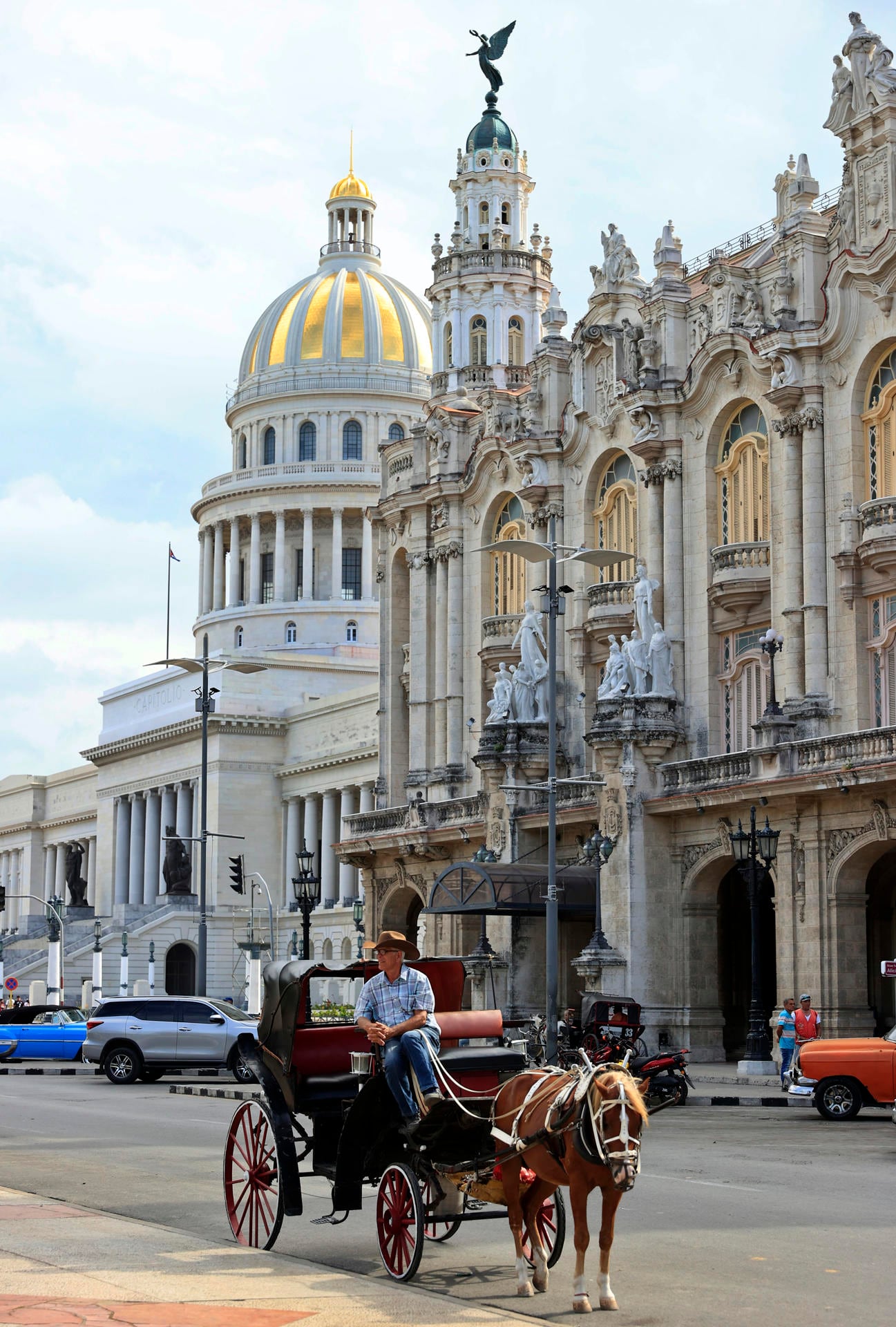
El texto sostiene ahora que “la tasa de criminalidad en Cuba está aumentando” y detalla tres focos de riesgo para los visitantes: asaltos armados en La Habana Vieja, delincuencia juvenil y perforación de tanques de combustible, según consignó CiberCuba.

Qué cambió exactamente en el aviso alemán
La recomendación de fondo —“se desaconseja urgentemente viajar a Cuba”— no es nueva. Rige desde junio de 2026 y está vinculada a la crisis energética que atraviesa la isla.
Lo que se modificó fue el detalle sobre la inseguridad. El documento describe que La Habana Vieja acumula robos y asaltos “frecuentemente en calles sin iluminación durante un apagón” y que “en casos aislados, las posibles víctimas son amenazadas con armas”, de acuerdo con el texto difundido por CiberCuba.
Berlín también alertó sobre un fenómeno que vincula directamente con el deterioro económico: “la delincuencia de subsistencia —a menudo cometida por menores— está aumentando”. El diagnóstico alemán conecta ese tipo de delito con la miseria que genera la crisis del régimen cubano.
El Auswärtiges Amt detectó un repunte de la criminalidad asociado a los apagones prolongados y a la escasez de combustible, con asaltos armados en La Habana Vieja, delitos cometidos por menores y perforación de tanques de vehículos para robar gasolina, según el aviso actualizado el 16 de noviembre.
Robos en playas, el aeropuerto y los taxis
Los riesgos documentados no se limitan a la capital. El aviso alemán registra robos de bolsos en las playas de Playas del Este, Trinidad y Cienfuegos, además de hurtos en el aeropuerto José Martí que alcanzan incluso al equipaje facturado.
Las autoridades alemanas sumaron una recomendación práctica: desconfiar de los taxistas que insisten en guardar todo el equipaje en el maletero.
La escasez de combustible, por su parte, generó una modalidad delictiva específica. “Aumentan los casos de perforación de tanques de vehículos” para sustraer gasolina, señala el texto oficial citado por el medio.

Las fallas del sistema policial cubano
El aviso también expone limitaciones del aparato de seguridad de la isla. “En ocasiones, las autoridades se niegan a tomar la denuncia de un extranjero”, indica el documento recogido por CiberCuba.
A eso se añade otro riesgo administrativo. Quien sea hallado sin documentos ni dinero —aunque haya sido víctima de un delito— puede quedar retenido varios días en un alojamiento de pago hasta que su situación quede aclarada.
Existe además una advertencia específica para los ciudadanos con doble nacionalidad cubano-alemana.
El régimen los trata exclusivamente como cubanos dentro de la isla, lo que implica posibles obligaciones de servicio militar y la imposibilidad de recibir asistencia consular alemana si son detenidos.
Otros países europeos también mantienen alertas
Alemania no es el único gobierno europeo en situación de alarma. El Reino Unido desaconseja los viajes no esenciales a Cuba y señala un aumento reciente de la delincuencia, con tirones y carterismo en La Habana Vieja.
Países Bajos mantiene, desde mayo de 2026, una alerta naranja que afirma que “no es seguro ir de vacaciones” a la isla. España, por su parte, describe a Cuba como “un destino relativamente seguro” en su propio sistema de recomendaciones, aunque reconoce que son frecuentes los asaltos a turistas en zonas céntricas de La Habana y los robos de bolsos en las playas, según el detalle publicado por el Ministerio de Asuntos Exteriores español.
El trasfondo: apagones y una meta turística incumplida
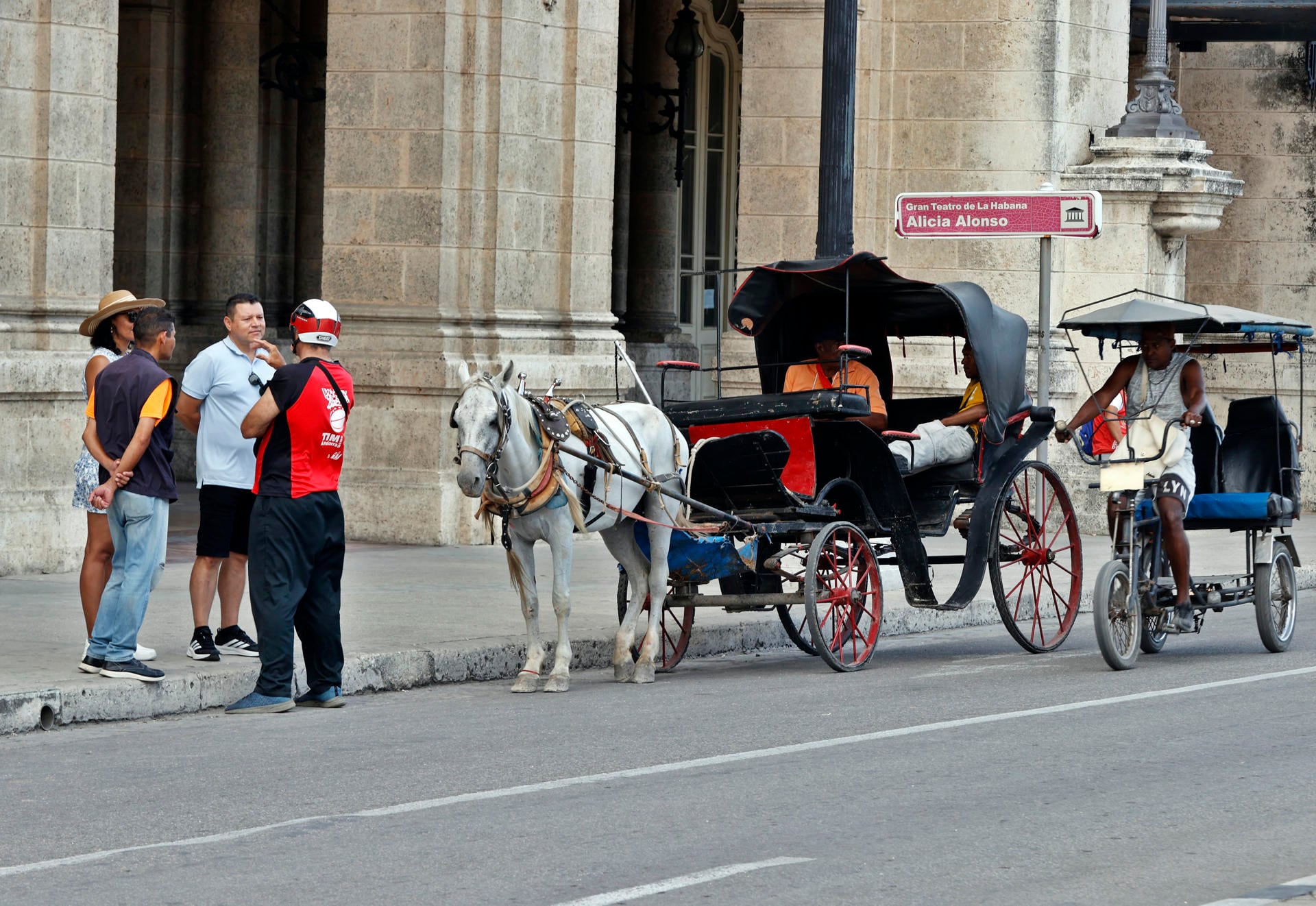
El agravamiento de la crisis eléctrica funciona como telón de fondo de todas estas alertas. Cuba sufrió su sexto colapso eléctrico total del año el 4 de noviembre, con una disponibilidad de apenas 960 megavatios frente a una demanda máxima de 2.850, de acuerdo con un análisis publicado por Infobae el 14 de noviembre. Siete unidades termoeléctricas permanecían entonces fuera de servicio por averías o mantenimiento.
El deterioro llevó incluso a Under30Experiences, una agencia especializada en viajes grupales para jóvenes, a modificar el tono de sus recomendaciones sobre la isla.
Según relevó Infobae, la empresa advirtió que los apagones son “más largos e impredecibles” y que existe “un malestar social sostenido por la crisis económica”, aunque remarcó que los delitos violentos siguen siendo infrecuentes para los visitantes extranjeros.
Ese escenario se tradujo en cifras concretas para el sector turístico. El Ministerio de Turismo de Cuba solo cumplió el 28.8% de su plan anual al cierre de octubre, con 506,074 visitantes frente a una meta de 1,757,480, según los datos difundidos por CiberCuba.
Los dos mayores operadores turísticos alemanes, TUI y Dertour, ya habían retirado al país de sus catálogos para la temporada de invierno 2026/27, una decisión que antecedió al endurecimiento del aviso oficial de Berlín.
corresponsal:Desde San Salvador, El Salvador
INTERNACIONAL
Un ciberataque masivo afectó a 178 empresas de todo el mundo: buscaban robar datos bancarios y criptomonedas
Un ciberataque a gran escala alcanzó los sitios web de 178 empresas de todo el mundo, entre ellas algunas de las empresas y medios de comunicación más conocidos, como CNN, Fox News, BBC, Zoom, HSBC y Salesforce.
Los atacantes utilizaron una vulnerabilidad en una plataforma de terceros para distribuir un código malicioso con el objetivo de robar información financiera, acceder a datos de tarjetas de crédito y apropiarse de criptomonedas.
La campaña fue detectada por investigadores en ciberseguridad, que identificaron modificaciones no autorizadas en archivos utilizados por los sitios afectados. El código también incluía herramientas diseñadas para atacar dispositivos de Apple, especialmente iPhones y iPads que funcionan con versiones vulnerables de iOS.
El incidente puso en evidencia los riesgos de seguridad que pueden generar los servicios externos que utilizan grandes compañías para administrar sus páginas web. Aunque los sitios involucrados son de organizaciones reconocidas, eso no impidió que los visitantes quedaran potencialmente expuestos a las amenazas.
Cómo fue el ciberataque que afectó a CNN, Fox News y Zoom
Los atacantes aprovecharon una vulnerabilidad en Optimizely, una plataforma que las empresas utilizan para probar distintas versiones de sus páginas web, realizar modificaciones y personalizar la experiencia de los usuarios.
Según explicó la compañía a BleepingComputer, una persona no autorizada explotó una falla en el proceso de registro de cuentas de su servicio Experimentation. De esa manera, consiguió insertar código JavaScript malicioso en los proyectos de algunos clientes.
El problema es que las páginas de las empresas afectadas cargaban esos archivos desde los servidores legítimos de Optimizely. Por eso, el código malicioso podía llegar a los visitantes a través de una herramienta que los sitios ya utilizaban habitualmente.
El investigador de seguridad Scott Helme, de Report URI, detectó 188 archivos infectados correspondientes a 178 organizaciones, después de analizar 1611 scripts de la plataforma. Los especialistas advirtieron que la cantidad real de sitios involucrados podría ser mayor.
Qué información buscaban robar los hackers
El código malicioso estaba preparado para ejecutar distintas acciones según el dispositivo y la actividad de cada visitante. Entre sus principales objetivos estaban:
- Robar criptomonedas: podía reemplazar las direcciones de billeteras digitales que aparecían en una página o que los usuarios copiaban para realizar transferencias. Así, el dinero podía terminar en cuentas controladas por los atacantes.
- Capturar datos bancarios: buscaba obtener números de tarjetas de crédito, fechas de vencimiento y códigos de seguridad ingresados en formularios de pago.
- Acceder a información de navegación: podía recopilar cookies del navegador y tomar capturas de pantalla de los dispositivos.
- Atacar dispositivos Apple: incluía herramientas de explotación conocidas como Coruna y DarkSword, destinadas a aprovechar vulnerabilidades en versiones anteriores de iOS.
De acuerdo con los investigadores, las billeteras vinculadas a los atacantes recibieron alrededor de US$7000 en criptomonedas durante el período analizado. Sin embargo, todavía no se pudo determinar cuánto dinero consiguieron robar efectivamente ni cuántos datos personales o financieros lograron obtener.
Qué empresas fueron afectadas y qué medidas tomaron
La investigación identificó páginas de organizaciones de distintos sectores, entre ellas medios de comunicación, compañías tecnológicas, entidades financieras y empresas comerciales.
Además de CNN, Fox News, BBC y Zoom, en el listado aparecen HSBC, Equifax, IKEA, GitLab, Salesforce, Air France y UNICEF USA, entre otras.
Algunas compañías comenzaron a tomar medidas preventivas. Salesforce informó que desactivó los scripts de Optimizely en sus entornos de prueba y producción mientras investigaba las modificaciones no autorizadas.
Hackeo
INTERNACIONAL
Bush-appointed judge torpedoes Trump immigration rule, rips DHS for overstepping its authority
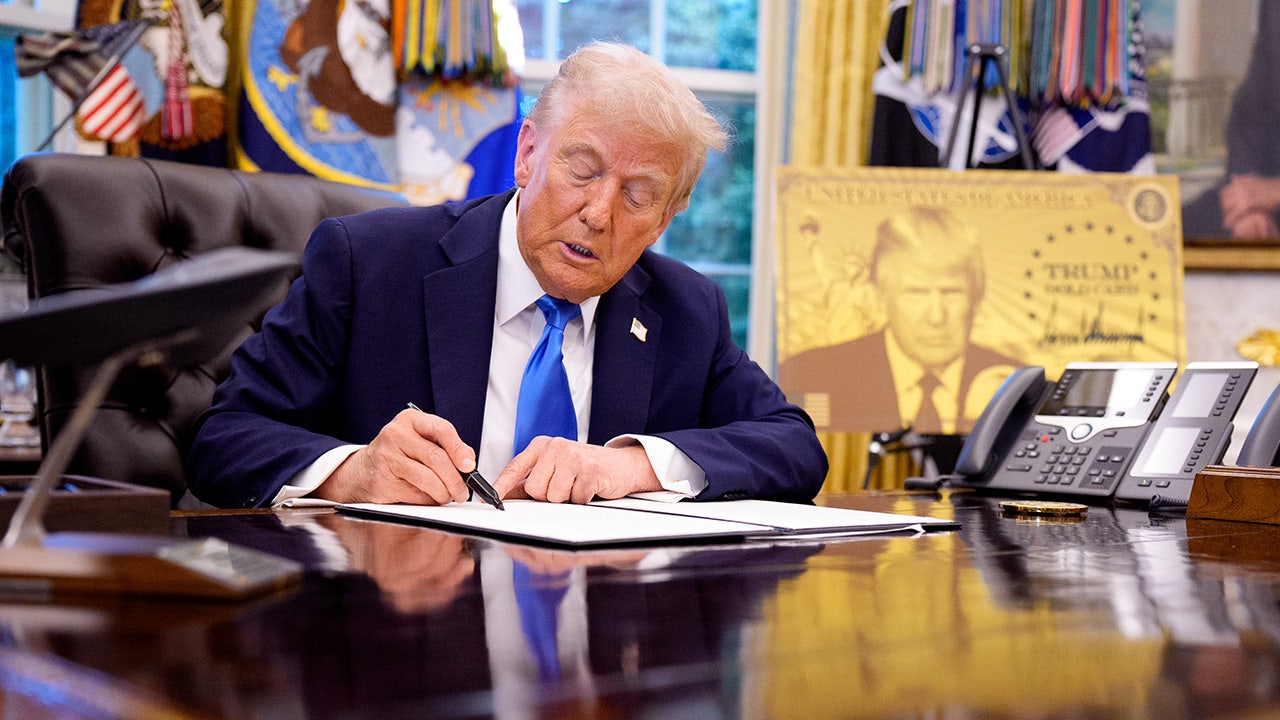
An immigration rule drafted by the Trump administration to plug an alleged gap in the visa system has met its end at the hands of a federal judge appointed by former President George W. Bush.
District Judge F. Dennis Saylor IV of Massachusetts ruled Monday that the Department of Homeland Security overstepped its authority by promulgating a rule that placed greater restrictions on visas for international students, exchange visitors and foreign journalists. His ruling represents a victory for the labor unions and university presidents that challenged the rule, and another loss in the Trump administration’s legal crusade to crack down on immigration.
The DHS rule would have replaced a longstanding policy by only allowing international students to study in America for a fixed timeframe, generally capped at four years, requiring them to apply for an extension if they wish to continue their studies. Previously, there was no fixed time limit for international students so long as they remained enrolled in a university and otherwise maintained legal status. The rule also would have imposed new restrictions on transferring schools, changing academic programs and pursuing additional degrees, while subjecting students to additional immigration reviews intended to combat fraud and national security threats.
TRUMP ADMIN SUED OVER VISA TIME RESTRICTIONS FOR FOREIGN STUDENTS, JOURNALISTS
«DHS acknowledges that there are legitimate reasons why a student may pursue another academic degree at the same or lower level as the one he or she has completed — for example, pursuing an M.B.A. after a J.D.,» the judge wrote. «But the Final Rule would effectively prohibit such a student from entering the United States to pursue those studies. And the purported reasons given by DHS for doing so — protecting national security and preventing fraud — are not reasonably related to the nature and purpose of the F-1 visa program.»
«Put bluntly, DHS is seeking to prevent or discourage the very activity — providing educational opportunities for foreign students in the United States — that Congress sought to permit and encourage,» Saylor continued. «The statute simply does not grant DHS such broad and open-ended authority to undermine the F-1 visa program.»
US STATE DEPARTMENT HAS YANKED MORE THAN 175K VISAS UNDER TRUMP ADMINISTRATION SO FAR
Saylor had already blocked the rule from taking effect in September, but Monday’s ruling went further by striking it down entirely after finding that DHS violated federal administrative law.
Lawyers representing the department disagreed with the judge’s characterization, arguing that indefinite admission periods prevent immigration officials from periodically reassessing whether foreign nationals are complying with the conditions of their visas. Mandatory extensions, in the telling of the agency, would create additional opportunities to identify fraud, security risks and immigration violations — risks it says are substantiated by past cases of fraud and abuse in the student visa system.
«The performative outrage is incredible. Where was the outrage when foreign nationals were abusing the system, violating the terms of their student visas, and making a mockery of our immigration laws? If the media really cared about legitimate international students, they would be thanking President Trump for cracking down on the rampant fraud to ensure only those truly intending to study in the United States are given the privilege,» a DHS spokesperson told Digital.
Saylor, however, further argued that DHS failed to establish how its new rule would constitute an improvement over existing systems meant to catch visa fraud.
«But DHS has not adequately explained how implementing an unreviewable, completely discretionary renewal system — after a foreign student has already been in the country for four years — meaningfully enhances the ability of DHS to root out cases of fraud, or how the benefits of such a system outweigh the immense costs of abandoning the existing system,» he wrote.
DHS PROPOSES MASSIVE $70K FEE FOR FOREIGN STUDENTS SEEKING WORK AUTHORIZATION
Currently, DHS relies on the Student and Exchange Visitor Information System (SEVIS) to monitor student visa fraud. SEVIS is a federal database that monitors international students and exchange visitors, tracking their enrollment, immigration status and compliance with visa requirements through information reported by schools and program sponsors. The agency argued that the system is a «data-reporting system for schools» that is «not designed for performing all relevant fraud and security screening.»
Saylor was identified as a Republican in a 2014 profile piece. The same piece noted Saylor had close ties to former Massachusetts Gov. Mitt Romney and that he was reportedly considered for a position in the Bush administration. He was confirmed by a bipartisan vote in the Senate, even winning the support of Democratic Sen. Ted Kennedy, a noted liberal, who praised him for his fair-mindedness and independence.
DHS did not tell Digital whether it intended to appeal Saylor’s ruling.
politics, immigration, federal courts, law, homeland security, national security, education

El tenista argentino de 14 años que fue en bicicleta y zapatillas de running a jugar un particular torneo de tenis y ganó un millón de pesos

Wall Street recortó con fuerza precios de acciones argentinas

El gobierno alemán endurece su alerta de viaje a Cuba

Condenaron a 11 meses de prisión a un hincha por insultos racistas a Kylian Mbappé

El live-action de Solo Leveling ya está a mitad del rodaje y la actriz de Cha Hae-in ha dado algunas pistas sobre el proyecto

Senado: se reúne una comisión clave para tratar la reforma electoral, pero el Gobierno no tiene aún los votos

La inflación de octubre: el dato que sorprendió a casi todos y la distancia que persiste con los parámetros internacionales

U2 vuelve con 12 nuevas canciones y una pregunta incómoda sobre si el rock todavía puede decir algo nuevo

Democrats seize on midterm wins to push massive minimum wage hikes, but economists see trouble ahead

La respuesta sin filtro de Wanda Nara a la China Suárez: «Le pidió al bobo que necesitaba una familia en Turquía»

 ECONOMIA2 días ago
La inflación de octubre: el dato que sorprendió a casi todos y la distancia que persiste con los parámetros internacionales
- INTERNACIONAL3 días ago
U2 vuelve con 12 nuevas canciones y una pregunta incómoda sobre si el rock todavía puede decir algo nuevo
- POLITICA19 horas ago
Milei dijo que el riesgo país sube por el miedo a "Orcolandia" y afirmó: "Los argentinos no van a votar hacia el pasado"