INTERNACIONAL
Bush-appointed judge torpedoes Trump immigration rule, rips DHS for overstepping its authority

An immigration rule drafted by the Trump administration to plug an alleged gap in the visa system has met its end at the hands of a federal judge appointed by former President George W. Bush.
District Judge F. Dennis Saylor IV of Massachusetts ruled Monday that the Department of Homeland Security overstepped its authority by promulgating a rule that placed greater restrictions on visas for international students, exchange visitors and foreign journalists. His ruling represents a victory for the labor unions and university presidents that challenged the rule, and another loss in the Trump administration’s legal crusade to crack down on immigration.
The DHS rule would have replaced a longstanding policy by only allowing international students to study in America for a fixed timeframe, generally capped at four years, requiring them to apply for an extension if they wish to continue their studies. Previously, there was no fixed time limit for international students so long as they remained enrolled in a university and otherwise maintained legal status. The rule also would have imposed new restrictions on transferring schools, changing academic programs and pursuing additional degrees, while subjecting students to additional immigration reviews intended to combat fraud and national security threats.
TRUMP ADMIN SUED OVER VISA TIME RESTRICTIONS FOR FOREIGN STUDENTS, JOURNALISTS
«DHS acknowledges that there are legitimate reasons why a student may pursue another academic degree at the same or lower level as the one he or she has completed — for example, pursuing an M.B.A. after a J.D.,» the judge wrote. «But the Final Rule would effectively prohibit such a student from entering the United States to pursue those studies. And the purported reasons given by DHS for doing so — protecting national security and preventing fraud — are not reasonably related to the nature and purpose of the F-1 visa program.»
«Put bluntly, DHS is seeking to prevent or discourage the very activity — providing educational opportunities for foreign students in the United States — that Congress sought to permit and encourage,» Saylor continued. «The statute simply does not grant DHS such broad and open-ended authority to undermine the F-1 visa program.»
US STATE DEPARTMENT HAS YANKED MORE THAN 175K VISAS UNDER TRUMP ADMINISTRATION SO FAR
Saylor had already blocked the rule from taking effect in September, but Monday’s ruling went further by striking it down entirely after finding that DHS violated federal administrative law.
Lawyers representing the department disagreed with the judge’s characterization, arguing that indefinite admission periods prevent immigration officials from periodically reassessing whether foreign nationals are complying with the conditions of their visas. Mandatory extensions, in the telling of the agency, would create additional opportunities to identify fraud, security risks and immigration violations — risks it says are substantiated by past cases of fraud and abuse in the student visa system.
«The performative outrage is incredible. Where was the outrage when foreign nationals were abusing the system, violating the terms of their student visas, and making a mockery of our immigration laws? If the media really cared about legitimate international students, they would be thanking President Trump for cracking down on the rampant fraud to ensure only those truly intending to study in the United States are given the privilege,» a DHS spokesperson told Digital.
Saylor, however, further argued that DHS failed to establish how its new rule would constitute an improvement over existing systems meant to catch visa fraud.
«But DHS has not adequately explained how implementing an unreviewable, completely discretionary renewal system — after a foreign student has already been in the country for four years — meaningfully enhances the ability of DHS to root out cases of fraud, or how the benefits of such a system outweigh the immense costs of abandoning the existing system,» he wrote.
DHS PROPOSES MASSIVE $70K FEE FOR FOREIGN STUDENTS SEEKING WORK AUTHORIZATION
Currently, DHS relies on the Student and Exchange Visitor Information System (SEVIS) to monitor student visa fraud. SEVIS is a federal database that monitors international students and exchange visitors, tracking their enrollment, immigration status and compliance with visa requirements through information reported by schools and program sponsors. The agency argued that the system is a «data-reporting system for schools» that is «not designed for performing all relevant fraud and security screening.»
Saylor was identified as a Republican in a 2014 profile piece. The same piece noted Saylor had close ties to former Massachusetts Gov. Mitt Romney and that he was reportedly considered for a position in the Bush administration. He was confirmed by a bipartisan vote in the Senate, even winning the support of Democratic Sen. Ted Kennedy, a noted liberal, who praised him for his fair-mindedness and independence.
DHS did not tell Digital whether it intended to appeal Saylor’s ruling.
politics, immigration, federal courts, law, homeland security, national security, education









INTERNACIONAL
Alerta en Ecuador: las inundaciones elevan el riesgo de dengue, leptospirosis y hepatitis A

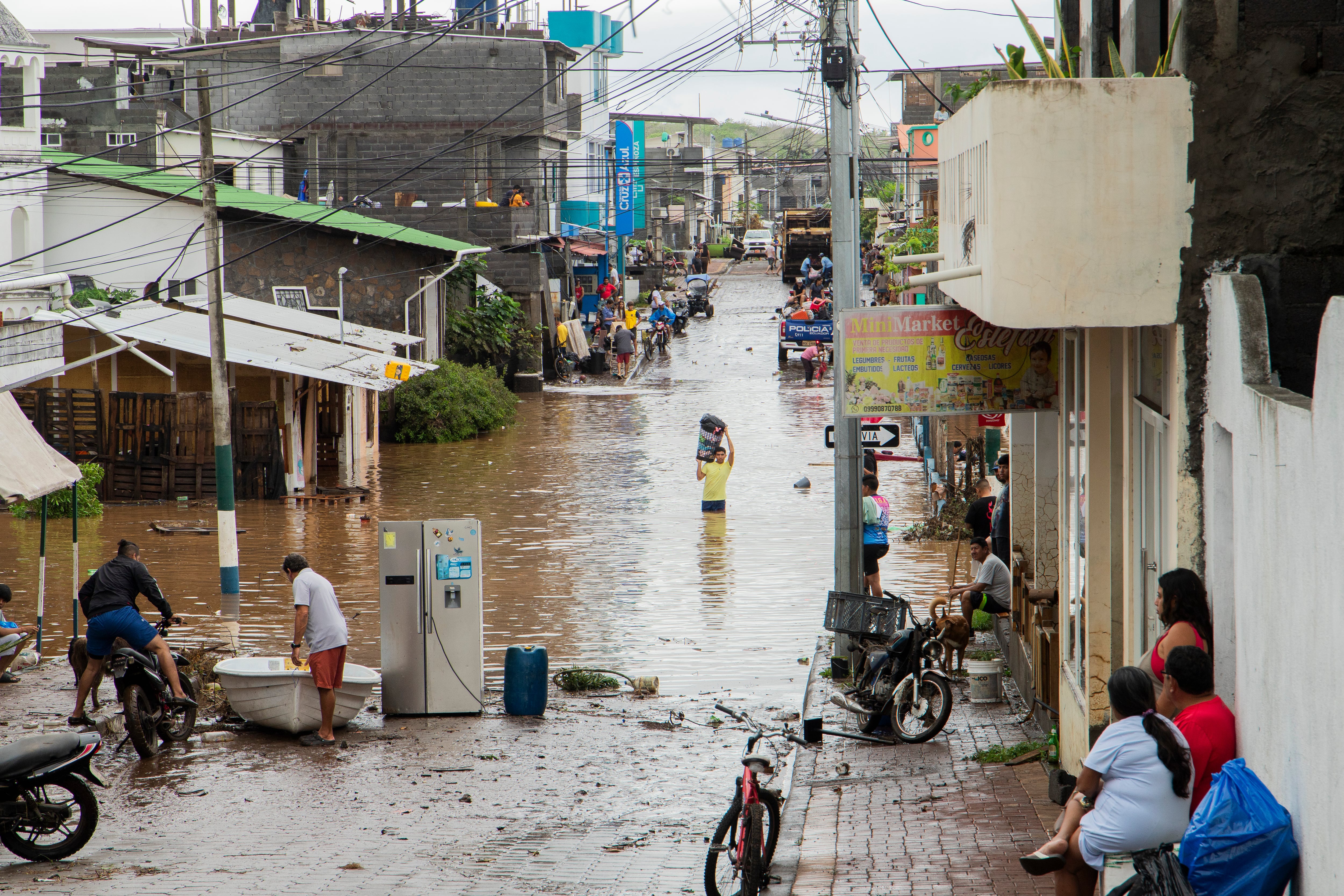
Las inundaciones que afectan a distintas zonas de Ecuador han encendido las alertas sanitarias por el riesgo de propagación de enfermedades infecciosas en comunidades expuestas a aguas contaminadas, acumulación de desechos y proliferación de mosquitos. El dengue, la leptospirosis y la hepatitis A concentran las principales preocupaciones de los especialistas, en un país que acumula casi 45.000 casos de dengue durante 2026 y enfrenta nuevas emergencias provocadas por las precipitaciones.
Según la información del Ministerio de Salud Pública, difundida por El Comercio, Ecuador registró 44.984 casos de dengue y 47 fallecidos hasta el 31 de octubre de 2026, correspondientes a la semana epidemiológica 43. La cifra representa un incremento del 26,37 % frente al mismo período del año anterior y evidencia la persistencia de esta enfermedad transmitida por mosquitos, particularmente en las provincias de la Costa.
Manabí encabeza los registros nacionales con 12.977 contagios, seguida de Guayas, con 10.559; Los Ríos, con 4.760; Santo Domingo de los Tsáchilas, con 3.485; y Esmeraldas, con 2.120. Aunque estas provincias concentran el mayor número absoluto de pacientes, Galápagos presenta la incidencia más elevada, con 2.230,03 casos por cada 100.000 habitantes, de acuerdo con los reportes epidemiológicos oficiales.
Las lluvias intensas pueden favorecer la reproducción del mosquito Aedes aegypti, transmisor del dengue, cuando dejan depósitos de agua estancada en recipientes, neumáticos y otros objetos. Sin embargo, las cifras acumuladas durante el año no permiten atribuir directamente los contagios a las inundaciones recientes, cuya repercusión epidemiológica requiere un seguimiento específico.
La preocupación también alcanza a la leptospirosis, una infección bacteriana transmitida principalmente mediante el contacto con agua o suelo contaminados por orina de animales infectados. Según la gaceta epidemiológica del Ministerio de Salud correspondiente a la semana 42, Ecuador contabilizaba 814 casos probables y confirmados, con una concentración importante en Manabí, Guayas y Orellana.
Manabí registraba 238 casos; Guayas, 109; Orellana, 75; Esmeraldas, 66; Loja, 42; y Santo Domingo de los Tsáchilas, 41. Estas cifras corresponden a una categoría de vigilancia que incluye tanto casos probables como confirmados y, por tanto, no deben confundirse con los 421 contagios confirmados mencionados en reportes periodísticos recientes.
El presidente del Colegio de Médicos del Guayas, Héctor Rosero, advirtió, según declaraciones recogidas por Ecuavisa el 16 de noviembre, que los niños que caminan descalzos por sectores inundados enfrentan una exposición particular cuando las aguas se mezclan con residuos de alcantarillado y desechos asociados a la presencia de roedores.
La leptospirosis puede comenzar con fiebre, dolores musculares y malestar general, síntomas que dificultan su diferenciación inicial de otras infecciones. En sus manifestaciones graves puede provocar insuficiencia renal, hemorragias y complicaciones hepáticas, por lo que el diagnóstico oportuno resulta determinante.
Otra enfermedad bajo vigilancia es la hepatitis A, cuya transmisión ocurre principalmente mediante el consumo de agua o alimentos contaminados con materia fecal. De acuerdo con información epidemiológica citada por Ecuavisa, el país acumulaba 1.105 casos, mientras que el Ministerio de Salud identifica el saneamiento deficiente y el acceso insuficiente a agua segura como factores relacionados con su propagación.

En Guayaquil, las consecuencias sanitarias de las inundaciones ya generan inquietud entre los habitantes de sectores vulnerables. Según información publicada por Diario Extra, familias de Las Orquídeas reportaron episodios de fiebre, vómitos, diarrea y dolores abdominales después de las precipitaciones registradas a principios de noviembre.
Las inundaciones también han dejado víctimas y daños materiales. Según el balance de Segura EP difundido por Ecuavisa, las precipitaciones del 14 y 15 de noviembre ocasionaron dos fallecidos y afectaciones en 135 inmuebles de Guayaquil, una de las principales ciudades del país y especialmente vulnerable a los anegamientos en determinados sectores urbanos.
El escenario obliga a diferenciar entre enfermedades que ya registran una circulación importante en Ecuador y nuevos contagios que podrían estar asociados a las emergencias climáticas. Los datos oficiales documentan la magnitud del dengue y la presencia de leptospirosis y hepatitis A, pero todavía no establecen que las inundaciones de noviembre hayan provocado brotes simultáneos de estas tres enfermedades.
calles inundadas,damnificados,daños materiales,el niño,enos,exterior,fenómenos climáticos,gente,inundaciones,oscilación del sur,paisaje urbano
INTERNACIONAL
Trump’s $50B air traffic control overhaul faces GOP pushback after nationwide ground stop
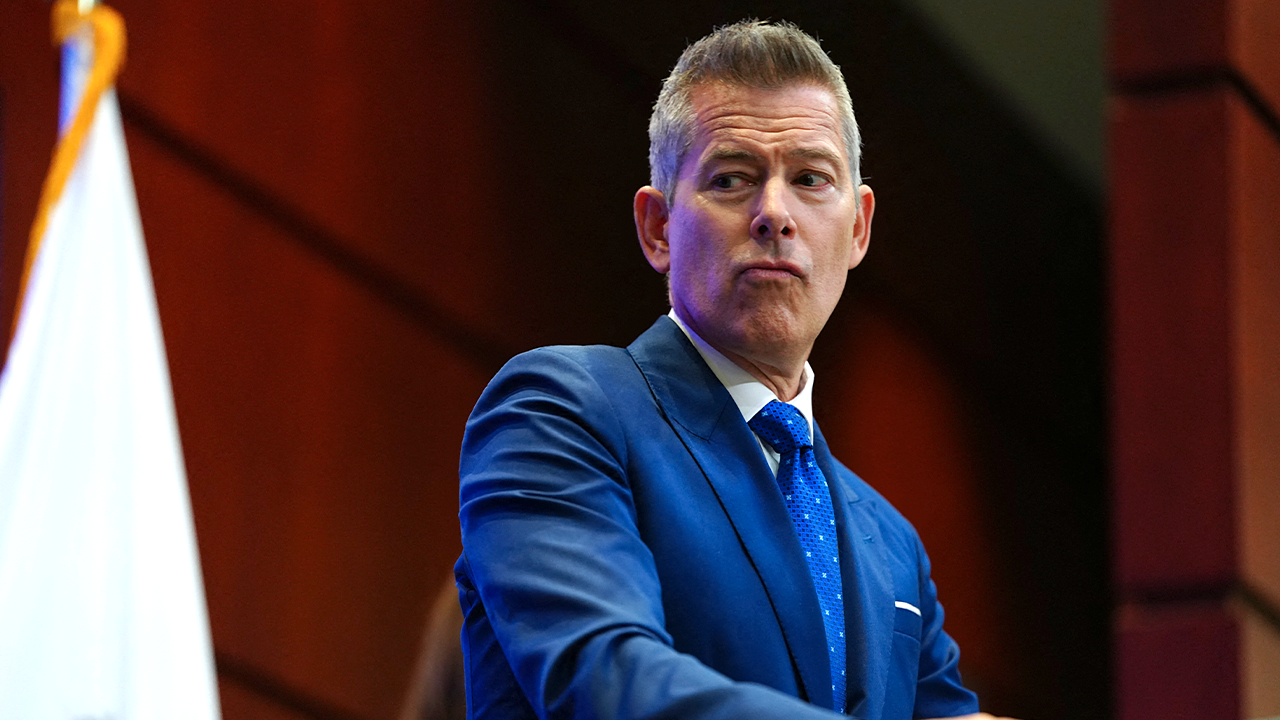
The Trump administration is pressing Congress for tens of billions in emergency funding to upgrade the nation’s air traffic control systems, but even Senate Republicans are reluctant to pay the bill.
Transportation Secretary Sean Duffy and President Donald Trump called on lawmakers to shell out $50 billion in funding after a ground stop on Friday caused thousands of flight cancellations and blamed Congress for not doling out money previously to upgrade aging air traffic control communications infrastructure.
But Congress did send $12.5 billion to the Department of Transportation as part of the «big, beautiful bill» last year meant to upgrade the archaic systems, and Republicans want receipts on what happened to the money.
FAA SAYS AIR TRAVEL SHOULD BE BACK TO NORMAL SUNDAY AFTER NATIONWIDE GROUND STOP
«Only about four [billion] has been spent,» Senate Majority Leader John Thune, R-S.D., said. «There was about eight billion of that still sitting around.»
Duffy is slated to meet with Senate Republicans behind closed doors on Tuesday where lawmakers expect a full breakdown of what happened and where the money has gone and why, suddenly, the administration is seeking an additional $20 billion.
«I haven’t seen how they’re gonna use it. I mean, in my business, you know, I spent a lot of money, and I built companies,» Sen. Rick Scott, R-Fla., told Digital. «And I understood what I was going to spend it on before I ever did anything. I’d have a budget and what the timeline is, who’s gonna do it, all that stuff.»
FORMER TOP FAA OFFICIAL WARNS OF 48-HOUR RECOVERY AFTER AGING TECH ‘OVERWHELMED’ AHEAD OF GROUND STOP
Data from the Department of Transportation (DOT) obtained by Digital showed that roughly $3.7 billion had been spent on a variety of projects, while the remainder is tied to contracts, unspent or planned for near-term upgrades, like facility consolidation.
Thune declined to say whether he had confidence in Duffy’s handling of the situation and noted that the administration had already made a separate ask for $30 billion, a chunk of which was meant to continue upgrades to air traffic control.
«I mean, there’s some explanations that have to be given as to why that number is where it is,» Thune said. «But I think we have attempted to do everything we can to ensure that the concerns they have about modernization are being met.»
Duffy’s explanation of the ground stop was attributed to replacing copper wiring in communications equipment with fiber-optic cable. About $4.8 billion of the initial funding pot was for copper wire replacement, of which about $2.3 billion has been spent, which translates to roughly 70% completion of the telecommunications replacement program, according to the DOT.
4 CRITICAL TRAVEL ISSUES FOR THOSE DELAYED AND DISRUPTED BY FAA NATIONWIDE GROUND STOP
A DOT spokesperson told Digital that the «Department has made clear for the last two years — separate funding is needed» for other work because DOT «does not have the legal flexibility to move funds from one workstream to another.»
Still, lawmakers have questions.
«He needs to talk to me like I’m a reasonably intelligent 10th grader,» Sen. John Kennedy, R-La., said. «The American people are not experts on telecommunications … nor am I.»
Kennedy, who is a member of the Transportation, Housing and Urban Development Appropriations Subcommittee, which controls the DOT’s purse strings, said he was more than «willing to appropriate money to fix this,» but needed to understand the problem first.
«I mean, we had an outage today, some problems with a number of our banks,» Kennedy said. «There have been some problems in Europe with the Internet controlling temperatures of grocery stores. I mean, this is happening a lot. I’m not saying there’s a connection, but if there is, they need to tell us.»
Sen. James Lankford, R-Okla., told Digital that the initial $12.5 billion was «a starting point — it wasn’t everything.»
«We’ve seen nothing yet of what’s the rest of the request,» Lankford said. «So that does seem like, ‘Hey, grab a number out of the air. It needs to be big.’»
Lankford added that Duffy needed to give a «postmortem» on what happened, and that whatever the administration is asking for in upgrades needs to be «shovel-ready.»
«This is a zero fail operation,» he said. «He’s keenly aware of that.»
politics, transportation, airports, white house, republicans elections
INTERNACIONAL
After UN peacekeeping mission ends, Morocco says Western Sahara dispute enters new phase
Former State Department official sounds alarm over Spain-Morocco border crisis
Former State Department Foreign Service Officer Simon Hankinson joins ‘Fox & Friends Weekend’ to analyze dramatic footage of thousands of Moroccan migrants storming Spain’s border in Ceuta. Hankinson explains how Morocco utilizes migrant surges as a hybrid threat to pressure Spain over political disputes. He details the geopolitical stakes as Spain deploys its military to secure the border.
NEWYou can now listen to Fox News articles!
Six years after President Donald Trump recognized Moroccan sovereignty over Western Sahara, a senior regional official says the decades-old territorial dispute has entered a new phase, with negotiations now focused on how Morocco’s autonomy proposal would be implemented following the end of the United Nations peacekeeping mission.
Sidi Hamdi Ould Errachid, president of the Laâyoune–Sakia El Hamra Regional Council, told Fox News Digital in an exclusive Zoom interview that Morocco remains open to negotiations with other parties, but suggested that opposition to the plan would not necessarily prevent it from moving forward.
«The Moroccan side remains open to international engagement, and we are prepared to negotiate how the autonomy proposal will be implemented,» he said through an interpreter.
US COUNTERS CHINA AS BEIJING’S ‘SHOCK WAVE’ HITS AFRICAN ECONOMIES
Sidi Hamdi Ould Errachid, right, president of the Laâyoune–Sakia El Hamra Regional Council, poses with members of a U.S. medical delegation visiting Western Sahara as part of efforts to strengthen American-Moroccan cooperation in healthcare, medical training and research. (Fox News)
Asked what remains to be negotiated with the Polisario Front, which seeks independence for Western Sahara, Ould Errachid indicated that Morocco intends to pursue its autonomy initiative regardless of whether all parties reach an agreement.
«If the other parties do not agree, we will continue implementing the autonomy proposal on the ground,» he said through the interpreter.
His remarks come after Russia vetoed a U.S.-drafted Security Council resolution on Oct. 30, preventing the renewal of the U.N. Mission for the Referendum in Western Sahara, known as MINURSO. A competing Russian proposal also failed, and the mission began winding down Nov. 1.
Established in 1991, MINURSO was originally tasked with helping organize a referendum on the territory’s future following a ceasefire between Morocco and the Algeria-backed Polisario Front. That referendum never took place, leaving the dispute unresolved.
TRUMP CALLS ON ARAB NATIONS TO SIGN ABRAHAM ACCORDS

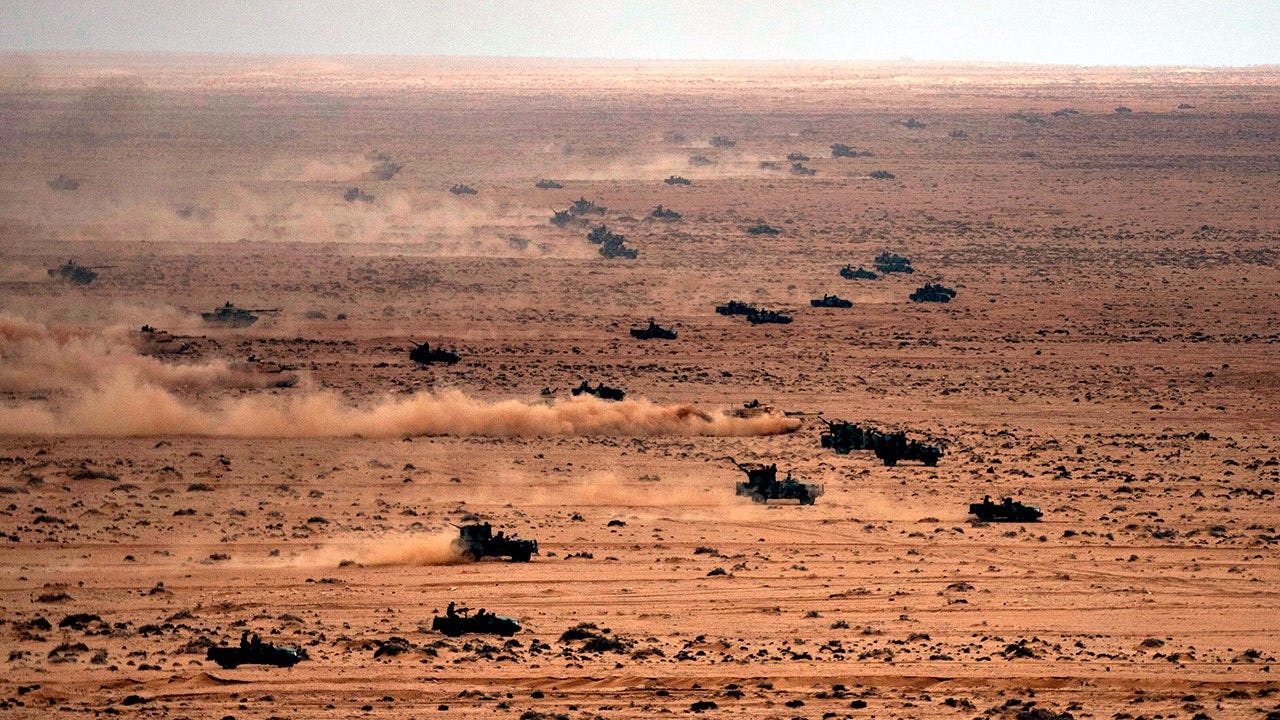
U.S. and Moroccan military forces participate in the 20th edition of the African Lion military exercise in Tantan, south of Agadir, Morocco, on May 31, 2024. (Mosa’ab Elshamy/AP)
The United States recognized Moroccan sovereignty over Western Sahara in December 2020 under Trump, a position reaffirmed by his administration in July 2026.
In October 2025, the U.N. Security Council adopted Resolution 2797, establishing Morocco’s autonomy proposal as the basis for negotiations while maintaining the goal of a mutually acceptable political solution providing for Sahrawi self-determination.
Ould Errachid, a Sahrawi politician who grew up in Laâyoune and participated in U.N.-convened negotiations in Geneva in 2018 and 2019, described the proposal as an opportunity for Sahrawis to govern their own affairs.
«Except for the king, the Moroccan flag, the currency, the armed forces and foreign affairs, we would have full autonomy to manage our own affairs,» he explained.
Asked whether the departure of the U.N. mission raised concerns about stability, he rejected the suggestion.
TRUMP GETS MAJOR WIN AGAINST CHINA IN AFRICAN RARE EARTH MINERALS RACE

Pro-Sahwari activists hold Western Sahara flags as they take part in a demonstration on Dec. 4, 2010, during a Moroccan fair in Malag (Jorge Guerrero/AFP via Getty Images)
«We are not worried. We have a credible project that guarantees a decent future for our people and for our cousins in the Polisario Front,» he said.
The Polisario Front, which seeks independence, rejects Moroccan sovereignty. Human Rights Watch warned in March 2026 that negotiations centered exclusively on Moroccan autonomy risk undermining Sahrawis’ right to self-determination.
Beyond the political dispute, Ould Errachid is seeking to translate Washington’s support into closer economic ties, inviting American companies to invest in renewable energy, manufacturing, agriculture, water desalination and healthcare.
TRUMP SAYS SAUDI NUCLEAR AGREEMENT WON’T MOVE FORWARD WITHOUT ABRAHAM ACCORDS: ‘THEY HAVE TO BE A MEMBER’

A security guard on duty during the meeting of U.N. envoy to Western Sahara Staffan de Mistura with Polisario Front officials in Tindouf, Algeria, Jan. 15, 2022. (Ramzi Boudina/ Reuters)
He praised Trump for his 2020 recognition decision and highlighted a major highway connecting Morocco with Western Sahara that has become associated with the president’s name.
«Nobody here will ever forget the moment President Donald Trump decided to support Morocco. His decision will remain engraved in the history of this region,» he said.
One example of expanding American engagement is medical cooperation. Laâyoune hosted U.S. medical delegations in February 2025 and October 2026, bringing American specialists together with Moroccan doctors and students.
The first gathering produced a partnership agreement between New York’s St. Francis Hospital & Heart Center and regional hospitals in Laâyoune. The second resulted in agreements between Laâyoune’s Faculty of Medicine and Pharmacy and two American organizations, Celenova Fertility and the Fetal Research Fund.
According to the organizers, the partnerships are intended to expand medical training, research, student exchanges and specialized care.

A view of the border between Morocco and Algeria, closed since 1994 due to political disputes, primarily over the Western Sahara issue, seen from Algeria on Jan. 29, 2026. Tensions that began between the Morocco-based administration and the pro-independence Polisario Front, which is supported by Algeria, have continued since Morocco annexed Western Sahara, formerly a Spanish colony, in 1975. While Morocco argues that the region should remain under its sovereignty, the Polisario Front claims that Western Sahara is an independent state. (Hamza Zait/Anadolu via Getty Images)
Ould Errachid said he is preparing further outreach to American investors in February or March, hoping to expand cooperation beyond medicine into additional economic sectors.
«We need your help,» he said, describing Western Sahara as a potential gateway for American companies seeking opportunities across African markets.
africa, peacekeeping, foreign affairs, world, united nations

Cuál es la estrategia del abogado de Wanda Nara y Martín Migueles tras el escándalo en Nordelta

Bush-appointed judge torpedoes Trump immigration rule, rips DHS for overstepping its authority

Suspensión de las PASO: Rogelio Frigerio elevó la propuesta a la Legislatura de Entre Rios

¿Dónde ver EN VIVO y ONLINE el Boca Juniors vs Banfield por la Copa Argentina?

Lourdes Fernández declaró en el juicio contra su expareja: “Fue terrible recordarlo”

El 92% de los jóvenes argentinos busca trabajo, pero menos de la mitad tiene empleo: cuáles son las principales barreras

La inflación de octubre: el dato que sorprendió a casi todos y la distancia que persiste con los parámetros internacionales

U2 vuelve con 12 nuevas canciones y una pregunta incómoda sobre si el rock todavía puede decir algo nuevo

Democrats seize on midterm wins to push massive minimum wage hikes, but economists see trouble ahead

La respuesta sin filtro de Wanda Nara a la China Suárez: «Le pidió al bobo que necesitaba una familia en Turquía»

 ECONOMIA2 días ago
La inflación de octubre: el dato que sorprendió a casi todos y la distancia que persiste con los parámetros internacionales
- INTERNACIONAL3 días ago
U2 vuelve con 12 nuevas canciones y una pregunta incómoda sobre si el rock todavía puede decir algo nuevo
- POLITICA3 días ago
El plan electoral de Kicillof tras la visita del Papa, la apuesta presidencial de Massa y la propuesta de Bullrich a Milei