INTERNACIONAL
Bernie Sanders’ plans to schmooze with top Beijing AI experts ignite backlash: ‘Holy s—‘


NEWYou can now listen to Fox News articles!
Sen. Bernie Sanders, I-Vt., is drawing scrutiny for cozying up to Chinese AI governance officials while championing policies that critics say would hamper America’s ability to compete with Beijing in the global artificial intelligence arms race.
Sanders, who caucuses with Senate Democrats and is a self-proclaimed democratic socialist, is expected to be speaking at a panel discussion on Capitol Hill Wednesday alongside Xue Lan, a professor at the CCP-funded Tsinghua University and chairman of the Ministry of Science and Technology-backed New Generation Artificial Intelligence Governance Professional Committee.
In attendance will also be Zeng Yi, who is the Dean of the Beijing Institute of AI Safety and Governance and is also tied to the New Generation Artificial Intelligence Governance Professional Committee chaired by Lan. Massachusetts Institute of Technology (MIT), Max Tegmark, who will also be speaking at the event, indicated the event will focus on «AI existential risk and international cooperation.»
Critics from the White House, the data center industry, and major tech-policy think tanks have argued Sanders is proposing policies that would slow the construction of the very infrastructure needed to keep the United States ahead in the race for AI dominance. Now, Sanders is facing more heat for holding an event on Capitol Hill with two Chinese Ministry of Science-linked officials who support China’s preferred AI governance model.
CHINA RACES AHEAD ON AI —TRUMP WARNS AMERICA CAN’T REGULATE ITSELF INTO DEFEAT
Sen. Bernie Sanders, I-Vt., speaks during a news conference on the impact of artificial intelligence on workers at the Hart Senate Office Building on April 16, 2026, in Washington, DC. (Heather Diehl/Getty Images)
«I think Senator Sanders’ concerns about AI are overstated, but I respect them. We should be asking questions about child safety, community impact, and economic displacement,» China policy expert at the Hudson Institute, Michael Sobolik, said. «What we shouldn’t do is partner with foreign adversaries like the Chinese Communist Party in those discussions.»
Rep. Pat Harrigan, R-N.C., pointed out that Tsinghua University is «one of China’s top universities with direct ties to the Chinese Communist Party.»
«This is the same China that just blocked Meta’s $2 billion deal to acquire Manus AI, a startup whose founders had already moved to Singapore and whose deal was already done and closed. Beijing decided it did not matter. They stepped in, killed the deal, and restricted the founders from leaving the country while it was under review,» Harrigan wrote in a Monday post on X ahead of the slated panel discussion on Capitol Hill.
«China is aggressively locking down their most powerful AI assets and shutting American companies out,» he continued. «Bernie Sanders wants to hand them a seat at the table to help decide how America handles the same technology.»
«Holy sh–,» Ruthless Podcast co-host Comfortably Smug posted on X.
«It’s a bit on the nose that communist Bernie Sanders is looking to the Chinese Communist Party for their ‘leadership’ on AI,» conservative commentator Steve Guest posted on X.
Fox News Digital reached out to Sanders’ office but did not receive a response in time for publication.
AI TECHNOLOGY RACE IS NEW ‘COLD WAR’ BETWEEN US AND CHINA THAT COULD HAVE DEVASTATING CONSEQUENCES: REPORT
In March, Sanders and Rep. Alexandria Ocasio-Cortez unveiled the Artificial Intelligence Data Center Moratorium Act, which would impose an immediate federal ban on the construction or upgrading of new AI data centers until Congress passes a broader regulatory framework. Sanders’ own office said the bill is designed to «slow down the development of AI,» and Sanders has separately argued that AI threatens jobs, privacy, democracy, the environment and «maybe the human race.»

U.S. Sen Bernie Sanders (I-VT) and Rep. Alexandria Ocasio-Cortez (D-NY) hold a press conference to announce the Artificial Intelligence Data Center Moratorium Act at the US Capitol on March 25, 2026 in Washington, DC. (Tasos Katopodis/Getty Images)
Even Democrats have balked at the policy proposal, with Sen. Mark Warner, D-Va., calling the moratorium «idiocy» at an artificial intelligence summit in D.C. last month, warning it would give China an edge in the AI race.
Cy McNeill, the senior director of federal affairs at the Data Center Coalition, a pro-industry group, said a freeze would risk «rationing access to digital services,» impair U.S. competitiveness and hit Americans’ daily lives. The Center for Data Innovation, a tech-policy think tank, similarly argued the bill relies on «well-worn anxieties» and does not justify halting data-center construction.
US TARGETS CHINESE ROBOTS OVER SECURITY FEARS
Lan, as chair of China’s national expert committee for AI governance, and Li, who told TIME last year that he is «highly involved in policymaking through national governance committees» in China, both have championed governance models that would expand China’s role in writing global AI rules that clash with a freer, more competition-driven U.S. strategy.
Yi has argued that China and the world need mandatory safety and ethics frameworks and more international cooperation, according to comments he made to TIME. He also helped develop UNESCO’s Recommendation on the Ethics of AI, the first-ever global standard on AI ethics.
Lan, meanwhile, helped establish a CCP-backed national AI safety body to help «bridge» the gap between technical experts and policymakers, according to TIME.
«China has chosen the path of top-down government control to drive its AI industry. While this strategy affords the CCP some advantages, the American model of bottom-up, free-market capitalism has long been the engine of innovation for the world, and it is more efficient in the long run,» House Energy and Commerce Chairman Brett Guthrie wrote in a February policy review for the Hatch Center.
CLICK HERE TO DOWNLOAD THE FOX NEWS APP
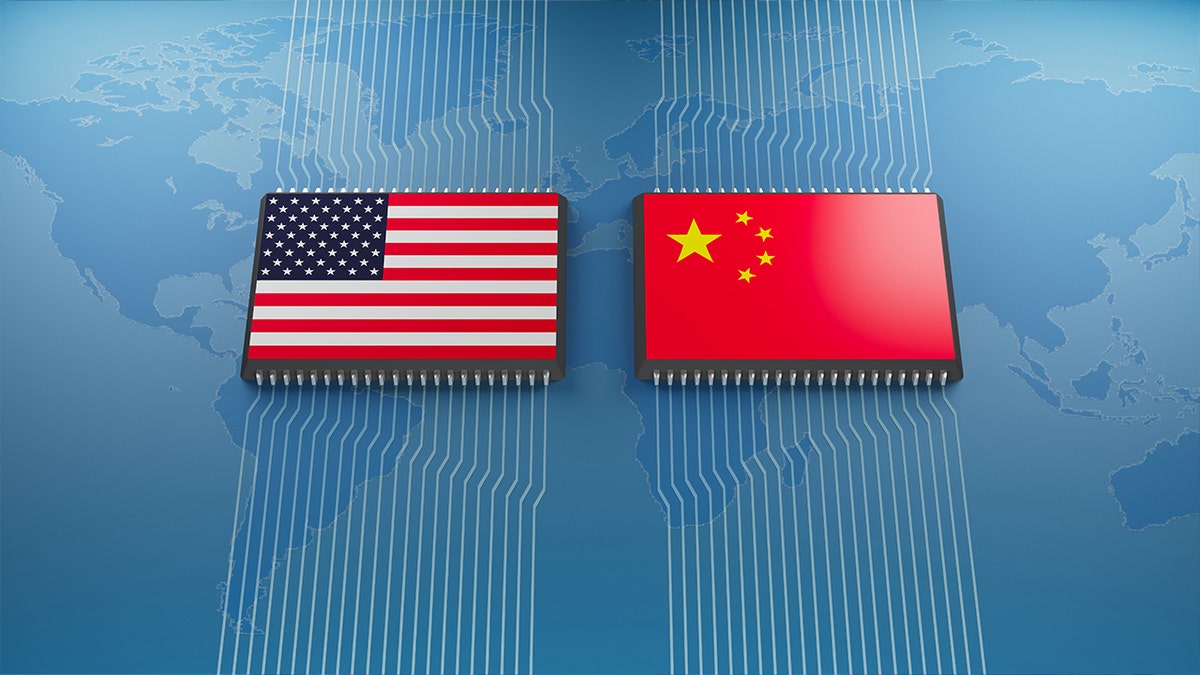
A processor chip featuring the flags of the United States and China is shown on a motherboard with a world map background in a 3D render. (Kritsapong Jieantaratip/Getty Images)
«The stakes couldn’t be higher,» Guthrie continues. «China already deploys next-generation technologies to advance many of the regime’s most sinister goals focused on enhancing the power of its Orwellian surveillance state utilizing advanced computing. Even more concerning to the American public is the threat of an adversary’s technology stack serving as the building blocks for future advancements or as a strategic chokehold.»
«The way to beat China in the AI race is to outrace them in innovation, not saddle AI developers with European-style regulations,» Sen. Ted Cruz, R-Texas, has also said. Growth and development of new AI technologies will bolster our national security, create new jobs, and stimulate economic growth»
artificial intelligence, bernie sanders, congress, xi jinping, mit














Un violento ataque armado sacudió la tranquilidad del municipio de San Miguel Dueñas, del departamento Sacatepéquez, en Guatemala.
El incidente, que inicialmente se reportó como una balacera aislada, cobró la vida de dos hombres y dejó a una tercera persona gravemente herida.
La alerta se activó en horas de la noche del sábado 18 de julio, cuando llamadas de emergencia movilizaron a los cuerpos de socorro hacia la escena del crimen. Bomberos Municipales Departamentales acudieron de inmediato para brindar asistencia médica.

Al llegar, los paramédicos evaluaron a las víctimas; sin embargo, dos de ellas ya no contaban con signos vitales debido a la gravedad y multiplicidad de los impactos de bala recibidos en órganos vitales. Una tercera víctima, que sobrevivió al ataque inicial, fue trasladada de urgencia en estado crítico hacia el hospital nacional más cercano.
El caso dio un giro determinante este domingo 19 de julio tras la revelación de grabaciones procedentes de cámaras de seguridad instaladas en los alrededores de la zona. Las imágenes captaron el momento exacto en el que se perpetró el crimen y evidenciaron que se trató de una emboscada.
En los metrajes compartidos en plataformas digitales se observa cómo las víctimas viajaban en un picop rojo cuando fueron interceptadas de manera sorpresiva por un vehículo blanco que les impidió el paso. En la escena aparece una camioneta agrícola más, de donde se bajan varias personas y abren fuego de forma directa y continua.
Un ataque armado en San Miguel Dueñas, Sacatepéquez, dejó dos hombres muertos y una tercera persona herida de gravedad. Las cámaras de seguridad revelaron que el crimen fue una emboscada y no una balacera aislada. Las grabaciones muestran que las víctimas viajaban en un picop rojo y fueron interceptadas por un vehículo blanco y otra camioneta agrícola. (Redes Sociales)
En las imágenes se observa cómo un grupo de personas que estaban sentadas en un área cercana salen huyendo al escuchar los disparos.
Mientras que las víctimas tratan de escapar, pero sólo logran movilizarse unos metros de retroceso. Luego buscan huir de frente, pero la ráfaga de disparos se los impide. Tras consolidar el crimen en cuestión de segundos, los sicarios huyeron del lugar con rumbo desconocido, aprovechando los callejones de la localidad.
Elementos de la Policía Nacional Civil (PNC) acordonaron rápidamente el perímetro para resguardar la escena y proteger las evidencias balísticas, mientras fiscales del Ministerio Público (MP) iniciaron la recolección de indicios y testimonios.

El material audiovisual de las cámaras de vigilancia se ha convertido en la pieza central de la investigación, ya que permite identificar cómo ocurrió el hecho, así como los vehículos empleados en la fuga.
Hasta el momento, las autoridades no han determinado el móvil del doble asesinato. Mientras que vecinos identificaron a una de las víctimas como Cristian Alexander López, más conocido como “Tiny Boy”. De acuerdo con medios locales, se trata de peligroso pandillero cabecilla de una clica que opera contra pilotos y comerciantes. Sin embargo, esta información aún no es confirmada por las autoridades.

Otra de las víctimas sería el cuñado de Alexander López, quien aún no ha sido identificado por nombre.
En tanto, autoridades del Ministerio Público y de las Fuerzas Especiales de la Policía Nacional Civil guatemalteca ya investigan los indicios y las posibles causas del ataque armado.
Guatemala,Emboscada,Ataque armado,San Miguel Dueñas,Sacatepéquez,Pandillas

NEWYou can now listen to Fox News articles!
A powerful earthquake ripped through Peru’s Andes region overnight, killing at least five people and leaving hundreds displaced as homes and a church collapsed, with authorities warning Sunday that an unknown number of people remain missing.
The magnitude 5.5 quake struck shortly after 9:20 p.m. Saturday near the city of Sicaya in central Peru, according to the U.S. Geological Survey. The quake injured more than 20 people and forced at least 300 residents from their homes, Peru’s National Civil Defense Institute said.
Officials were still trying to account for missing residents Sunday after several buildings collapsed or were left unsafe, including a local church and convent.
SECURITY GUARD SURVIVES EIGHT DAYS BENEATH COLLAPSED SHOPPING CENTER AFTER VENEZUELA EARTHQUAKES
Residents walk amid the debris of homes that collapsed after an earthquake struck Pumpuya, Peru, Sunday, July 19, 2026. (AP Photo/Javier Ninanya)
Authorities said the region’s widespread use of traditional adobe construction likely made the damage worse. Luis Vásquez, head of the local civil defense office, said the rustic building materials «contributed to the greater impact and damage.»

A motor tricycle is stuck amid the debris of homes that collapsed after an earthquake struck Pumpuya, Peru, Sunday, July 19, 2026. (AP Photo/Jhefry Sedano)
Images from the hard-hit farming community of Chongo Bajo showed families wrapped in blankets outside damaged homes as neighbors picked through the rubble. Animals could also be seen trapped beneath collapsed buildings.
BOY, 2, PULLED ALIVE FROM RUBBLE SIX DAYS AFTER VENEZUELA’S DEVASTATING TWIN EARTHQUAKES
«My home has been destroyed,» resident Hermenegilda Guamalato told local radio while looking for shelter with her three children in the neighboring province of Huayucachi.

Residents stand next to the covered bodies of neighbors who were killed after an earthquake struck Pumpuya, Peru, Sunday, July 19, 2026. (AP Photo/Javier Ninanya)
CLICK HERE TO DOWNLOAD THE FOX NEWS APP
Peru sits along the Pacific «Ring of Fire,» one of the world’s most active earthquake zones. In 2007, a magnitude 7.9 earthquake struck the coastal province of Pisco, killing nearly 600 people.
The Associated Press contributed to this report.
earthquakes, americas, disasters, natural disasters, world
INTERNACIONAL
‘Let’s brew it in the United States’: Teamsters target Modelo and Corona in push for Mexican beer tariffs

NEWYou can now listen to Fox News articles!
One of the nation’s largest labor unions wants President Donald Trump to make one of America’s favorite imports a lot more American.
The International Brotherhood of Teamsters are urging the administration to impose significant tariffs on Mexican beer, arguing more of it should be brewed by U.S. workers instead of across the border.
The request comes as the Office of the U.S. Trade Representative continues to assess whether certain countries’ policies have fueled unfair manufacturing advantages.
The Teamsters argue Mexico has fueled its brewing industry through government-backed investment incentives, lower labor costs and export-focused policies that have expanded production and exports, helping imported beer capture a growing share of the U.S. market.
AMERICA’S FAVORITE BEERS — AND THE JOBS TIED TO THEM — ARE AT THE CENTER OF A BREWING TRADE FIGHT
The brewer of Modelo claimed the No. 1 spot in June 2023, when Modelo Especial surpassed Bud Light on dollar sales, and it continues to rank among the country’s best-selling beers (Aaron M. Sprecher/Getty Images)
The tariff push could have implications for some of America’s best-known imported beer brands, including Modelo, Corona, Pacifico and Tecate, much of which is brewed in Mexico before being shipped to retailers across the U.S.
«We can brew Modelo beer. It’s the same recipe. Let’s brew it in the United States,» Sean O’Brien, general president of the International Brotherhood of Teamsters, told Fox News Digital. «We are very good at producing goods and services in this country,» he added.
In its filing, the union said Mexican beer production has increased 85% since 2014, with about 80% of the country’s beer exports shipped to the United States. Meanwhile, capacity utilization at major U.S. breweries fell from 82% in 2013 to 65% in 2023, a trend the Teamsters say threatens thousands of well-paying union jobs.
TRUMP BET TARIFFS WOULD BRING BACK AMERICAN FACTORY JOBS. NEW REPORT SAYS IT DIDN’T WORK

Economists say the beer industry could see job cuts as tariffs increase costs for brewers and importers. (Artur Widak/NurPhoto/Getty Images)
The union argues tariffs would help shift more beer production back to the U.S., supporting American breweries along with the farmers who grow barley and hops, aluminum manufacturers that produce cans and the truckers who move beer across the country.
«I’m pro-America, pro-American worker, pro American jobs. So if there’s an opportunity to tariff Mexican beer in this situation, which is gonna provide opportunity for our current members, which we have tens of thousands in the brewery and distribution industry, then I’m all for tariffs and all for keeping American jobs in America,» O’Brien added.
THINK YOUR STATE IS EXPENSIVE? NEW DATA REVEALS WHERE AMERICANS FACE THE HIGHEST COST OF LIVING
The Teamsters say the threat to U.S. brewery jobs is growing as major brewers continue investing billions of dollars in Mexico.
According to the filing, breweries have announced plans to add another 19 million to 23 million hectoliters of production capacity over the next five years, an expansion the union attributes to export-focused tax incentives, lower labor costs and industrial policies aimed at boosting manufacturing for foreign markets.
The filing also cites Mexico’s 2023 tax incentives for export-oriented manufacturers and its broader «Plan México» industrial strategy, arguing those policies have encouraged additional investment while suppressing wages and making it more difficult for U.S. producers to compete.
CLICK HERE TO DOWNLOAD THE FOX NEWS APP
The Teamsters have publicly backed tariffs as high as 75% on Mexican beer imports, calling them one potential remedy to what they describe as an uneven playing field. In a separate submission to USTR, the union said continued pressure from imported beer could force more U.S. brewery slowdowns or closures, jeopardizing good-paying brewery jobs that have supported American families for generations.
The Teamsters’ filing is one of several submitted as USTR weighs potential trade actions under its ongoing Section 301 investigation.
USTR did not immediately respond to Fox News Digital’s request for comment.
trade, politics, location mexico, beer, labor unions

A la espera de la gran final entre Argentina y España, el Mundial 2026 celebró su impactante ceremonia de clausura

Revelan video de una emboscada que terminó con dos hombres asesinados en Guatemala

Lecciones de regímenes que cambiaron de modelo económico en América Latina

Las lágrimas de Marcelo Tinelli antes de la final: “Me pegó el llanto como a todos los argentinos”

Ronaldo Nazario eligió a su favorito para ganar la final del Mundial 2026: «Creo que gana fácil»

Earthquake shakes Peru’s Andes region, killing at least 5, displacing hundreds

El machete del arquero inglés en una botella que sorprendió a Messi tras el triunfo: el dardo de un ayudante de Scaloni a Inglaterra

El fuerte cruce público entre Victoria Villarruel y Patricia Bullrich tras los chats filtrados antes de la sesión del Senado

Adrián Ravier, vocero de Milei: “No coincidimos en el Gobierno con esto de que la gente no llega a fin de mes”

🇦🇷La Victoria Legendaria – El llanto interminable de Lautaro Martínez tras el pase a la final del Mundial: “Soñé que iba a hacer este gol”

 POLITICA3 días ago
El fuerte cruce público entre Victoria Villarruel y Patricia Bullrich tras los chats filtrados antes de la sesión del Senado
- POLITICA3 días ago
Adrián Ravier, vocero de Milei: “No coincidimos en el Gobierno con esto de que la gente no llega a fin de mes”
- INTERNACIONAL2 días ago
Rubio’s call to combat global funders of far-left terrorism could put Singham in crosshairs