INTERNACIONAL
British adventurer returns home after 28-year walk around the world


NEWYou can now listen to Fox News articles!
Adventurer Karl Bushby has finally stepped foot on UK soil after a 28-year journey across the world.
On Oct. 5, he announced he swam the English Channel, from France to England. While resting in Dover, he said, «I’m staring at the Union Jack flying outside this hotel. I’ve seen many flags over the days, but that one is special.»
On social media he shared one of his first meals back, overjoyed to have authentic British fish and chips again.
DALE ‘GREY BEARD’ SANDERS RECLAIMS TITLE AS OLDEST PERSON TO THRU-HIKE THE APPALACHIAN TRAIL AT 91
Karl Bushby celebrates after swimming across the Caspian Sea from Kazakhstan to Azerbaijan in September 2024. (Resul Rehimov/Anadolu via Getty Images)
His journey is not over yet. He hopes to reach the finish line — his mother’s home in Hull — by the end of the month.
According to his website, he received a birthday card in the 1990s from his father about two soldiers arguing over an impossible feat, walking from London to New York via the Bering Strait. Karl grabbed a map and drew a single line, knowing he found his life’s mission.
NAVY VETERANS REUNITE AFTER 30 YEARS FOR ‘GRUELING’ CROSS-COUNTRY BIKE CHALLENGE HONORING 9/11
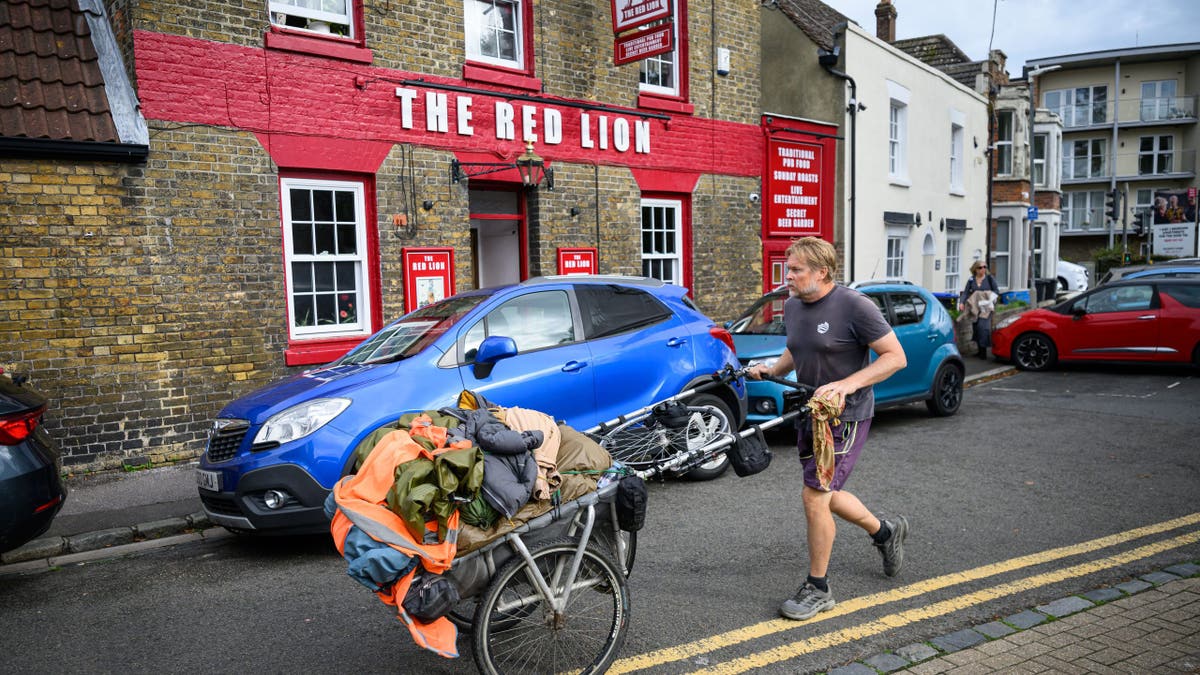
Bushby is shown moving through Dover, England, on Oct. 9 as he begins the final 250-mile leg of his 28-year journey.
On Nov. 1, 1998, the ex-paratrooper started his journey in Chile, with only a few hundred dollars in his pocket «South America, you were young, it was all new, it was the boys adventure dream,» Bushby said.
He walked north to the United States, waiting for the Bering Strait to freeze to cross from Alaska into Russia. In April 2012, Russia denied his next visa, pausing his expedition. So he started walking in the wrong direction, in protest, to the Russian Embassy in Washington, D.C. The ban was overturned and he carried on with his journey. From Russia he entered Mongolia, China, and swam the Caspian Sea from Kazakhstan to Azerbaijan.
Then it was on to Europe.
«You’ll find that you are way more capable than you think you are, people always underestimate themselves. The world always looks bigger and scarier than it actually is,» Bushby said.
MAN WHO BEAT RARE CANCER CELEBRATES BY CANOEING 2,000 MILES WITH HIS DOG
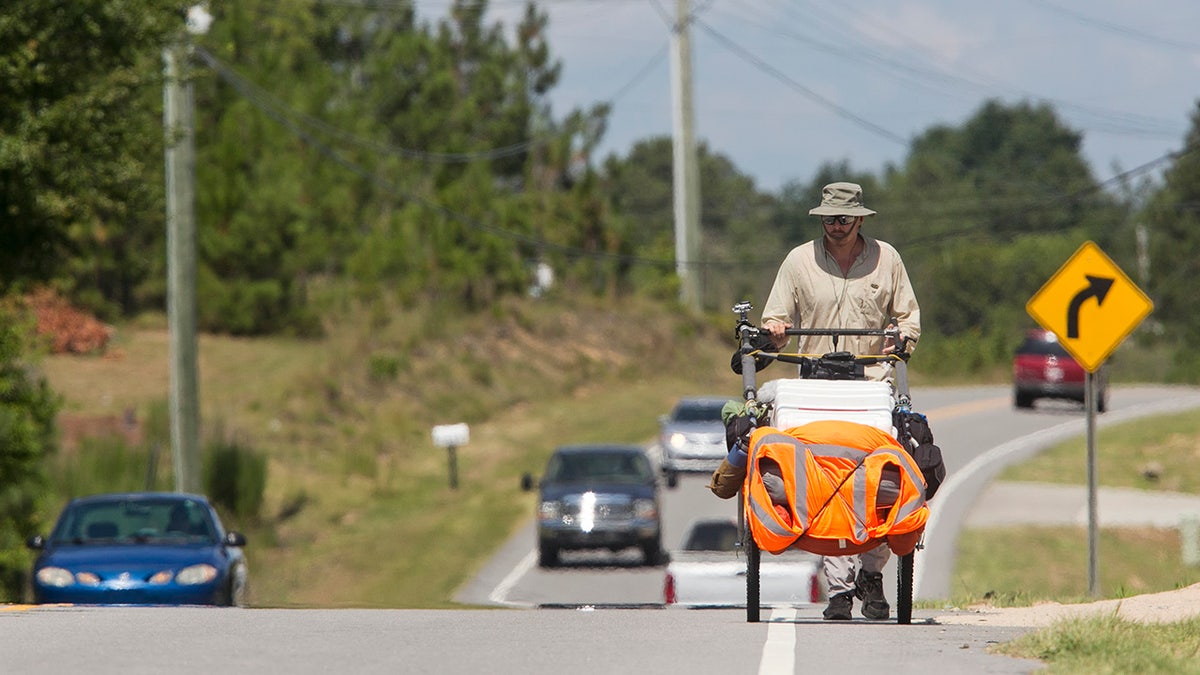
Bushby walked through Cameron, North Carolina, in 2014 during the U.S. leg of his journey. (Megan Morr/Washington Post)
He originally expected the journey to take 12 years, but visa restrictions, the 2008 financial crash, COVID-19, geopolitics, detention and some close calls slowed his progress. He says it’s the people that kept him going.
«The world is an incredible place, and it’s the people, the strangers that I have met along the way, that have kept me upright and moving forward,» Bushby said.
Bushby has roughly 240 miles left to walk. He covered more than 30,000 miles, across 29 countries. «We went at a reasonable pace, we did what we needed to do and it has worked. I know it’s time to stop, I know that much because I feel that in the knees and ankles.»
world, travel, extreme travel, united kingdom, europe










NEWYou can now listen to Fox News articles!
The Kremlin on Wednesday dismissed a new investigation estimating that at least 700,000 Russian troops have died in President Vladimir Putin’s war against Ukraine, as experts warn that mounting military losses are undermining Moscow’s ability to sustain its offensive.
The findings, published Monday by independent Russian news outlets Meduza and Mediazona, are based on leaked Russian government records and statistical analysis.
«The only entity that can officially disclose casualty figures is the Russian Defense Ministry,» Kremlin spokesman Dmitry Peskov told reporters Wednesday, according to The Moscow Times.
PUTIN’S WAR MACHINE TIED TO TROUBLING RECRUITMENT OF YOUNG WOMEN AS NEW DEALS EMERGE
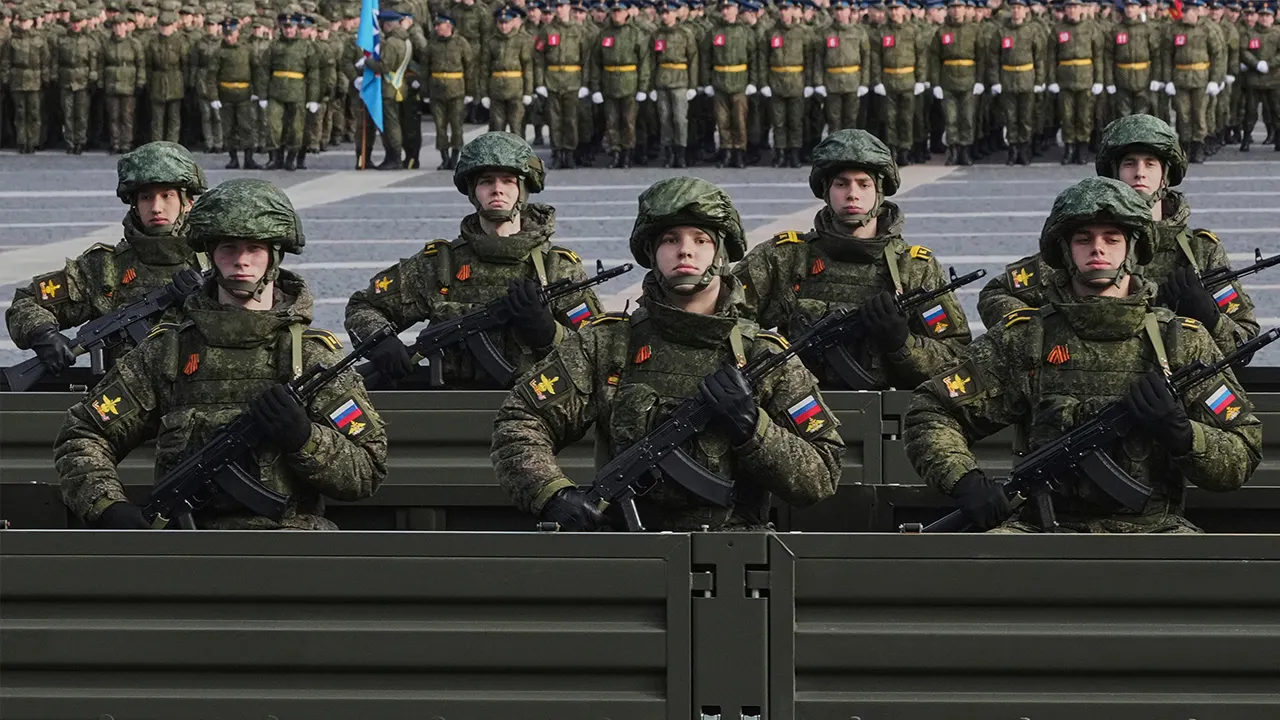
Russian soldiers ride a truck during a rehearsal for the Victory Day military parade at the Dvortsovaya (Palace) Square in St. Petersburg, Russia, April 30, 2025. (AP Photo/Dmitri Lovetsky)
Peskov urged reporters to disregard other figures but offered no updated official death toll.
The investigation draws on records obtained by the hacking groups Belarusian Cyber Partisans and Silent Crow after they breached Russia’s federal statistics agency, Rosstat.
Researchers identified at least 490,000 registered military deaths by late September 2026. However, delays in registering fatalities and soldiers who remain officially listed as missing but are believed to be dead led researchers to estimate that the actual toll had likely reached 700,000 or more by that time.
Keti Korkiya, a research analyst at the Foundation for Defense of Democracies (FDD), told Fox News Digital that she considered the estimate of more than 700,000 Russian military deaths plausible, noting that Britain’s defense chief had already put the death toll above half a million in September. «The biggest uncertainty is how many of the soldiers still listed as missing have died,» Korkiya said.
«Russia can keep fighting despite these losses,» she added. «It still recruits tens of thousands of men a month, and this week the Duma approved a budget that devotes 35% of next year’s federal spending to defense. The war is straining Russia’s economy, but that pressure is unlikely to force Putin to stop fighting anytime soon.»
UKRAINE’S ATTACKS ON RUSSIA ARE PUSHING PUTIN CLOSER TO NEGOTIATING TABLE, TRUMP NATO AMBASSADOR SAYS

In this photo taken from video distributed by Russian Defense Ministry Press Service on May 15, Russian Army soldiers prepare a 152mm howitzer Giatsint-B to fire on Ukrainian positions in Ukraine. (Russian Defense Ministry Press Service via AP)
The findings also raise questions about Russia’s ability to replenish its forces nearly five years into the war.
A European intelligence source who spoke to Fox News Digital last week described Russia’s efforts to replenish its forces as a form of «hidden mobilization,» with recruiters approaching people on the streets, including homeless individuals, and offering them military contracts.
The source said Russia continues to recruit prisoners and target people struggling with financial difficulties, including those with outstanding debts or unpaid child support, effectively offering military service as «a kind of a social deal.»
The recruitment strategy, the source said, is increasingly geared toward «more quantity, less quality.»
The mounting losses have yielded limited territorial gains for Moscow, according to a separate July 1 report by the Washington-based Center for Strategic and International Studies (CSIS).
UKRAINE HITS PUTIN’S PRIZED BRIDGE IN RECORD DRONE BLITZ AS KREMLIN TELLS LAWMAKERS TO PREPARE FOR ‘VICTORY’

The launch of Ukraine’s domestically produced long-range FP-5 «Flamingo» cruise missiles during a strike on Russian military targets. (Den Shtilierman via X/East2West)
The report, authored by Seth G. Jones and Riley McCabe, estimated that Russia had suffered approximately 1.4 million battlefield casualties, including as many as 450,000 deaths, by mid-2026.
Ukraine has also suffered significant military losses. The same CSIS report estimated that between 125,000 and 150,000 Ukrainian troops had been killed between February 2022 and June 2026, with total military casualties reaching between 525,000 and 625,000.
Despite mounting military and economic pressures, the researchers warned that Putin was unlikely to abandon his ambitions in Ukraine without facing additional costs.
«Without greater costs in blood and treasure, Putin is likely to keep fighting,» Jones and McCabe wrote.
Korkiya said Putin’s decision to continue fighting reflects his belief that Moscow can outlast both Kyiv and its Western allies. «Putin has had opportunities to stop the fighting. When Ukraine agreed to a U.S. proposal for a 30-day ceasefire, he chose to keep fighting,» she said.
«He still believes Russia can bear these losses longer than Ukraine and its allies can hold out. So far, even the deaths of hundreds of thousands of his own soldiers haven’t changed that calculation.»
Latvian President Edgars Rinkēvičs echoed that assessment in an interview with Fox News Digital on Monday, arguing that Western leaders risk underestimating the ideological and religious beliefs driving Russia’s war.
«We are too pragmatic and rational in the West,» Rinkēvičs said.
RUSSIA COULD LAUNCH NUCLEAR-CAPABLE SATELLITE WITHIN WEEKS, WESTERN INTELLIGENCE WARNS: REPORT

A mother cries at the coffin of her son, Oleh Borovyk, a Ukrainian serviceman killed in fighting with Russian forces near Pokrovsk, during his funeral ceremony in Boiarka, Ukraine, on Dec. 3, 2025. (Evgeniy Maloletka/AP)
He pointed to the concept of Russia as the «Third Rome» and the belief in its historical mission to serve as the protector of Christianity, arguing that such ideological convictions also drive Moscow’s foreign policy and its war against Ukraine.
«Russia is using all the diplomatic kind of decoys simply to prolong the war,» Rinkēvičs said.
The Latvian president suggested that a potential diplomatic opening could emerge in the spring or summer of 2027, provided Ukraine withstands Russia’s winter campaign.
«Currently, Russia explores diplomatic efforts in order to prolong the war, not to end,» he said.
Meanwhile, Ukraine continues to target Russian military assets deep inside the country.
Ukraine’s General Staff said Wednesday that its forces had damaged five Russian military aircraft at the Savasleyka airbase in Russia’s Nizhny Novgorod region, including three MiG-31 fighters and two Su-34 fighter-bombers, according to an official Ukrainian military statement.
Russia did not immediately comment on the Ukrainian claims, Reuters reported Wednesday.
The ongoing fighting has also heightened concerns about the war spilling into NATO territory.

Two suspected Russian missiles and a drone crashed in southeastern Poland on Friday, including two within 30 miles of the Polish-Ukrainian border, according to the Associated Press. Seen above are Polish soldiers on Friday. (Wojtek Radwanski/AFP via Getty Images)
Poland’s military reported Tuesday that a Russian drone had briefly entered Polish airspace during an overnight attack on western Ukraine. The incident came four days after three Russian cruise missiles landed in Poland.
Reuters contributed to this story.
russia, ukraine, wars, vladimir putin, world
INTERNACIONAL
Presidential contender’s ‘remarkably tone-deaf’ move against Trump triggers parental uproar: ‘Unconscionable’
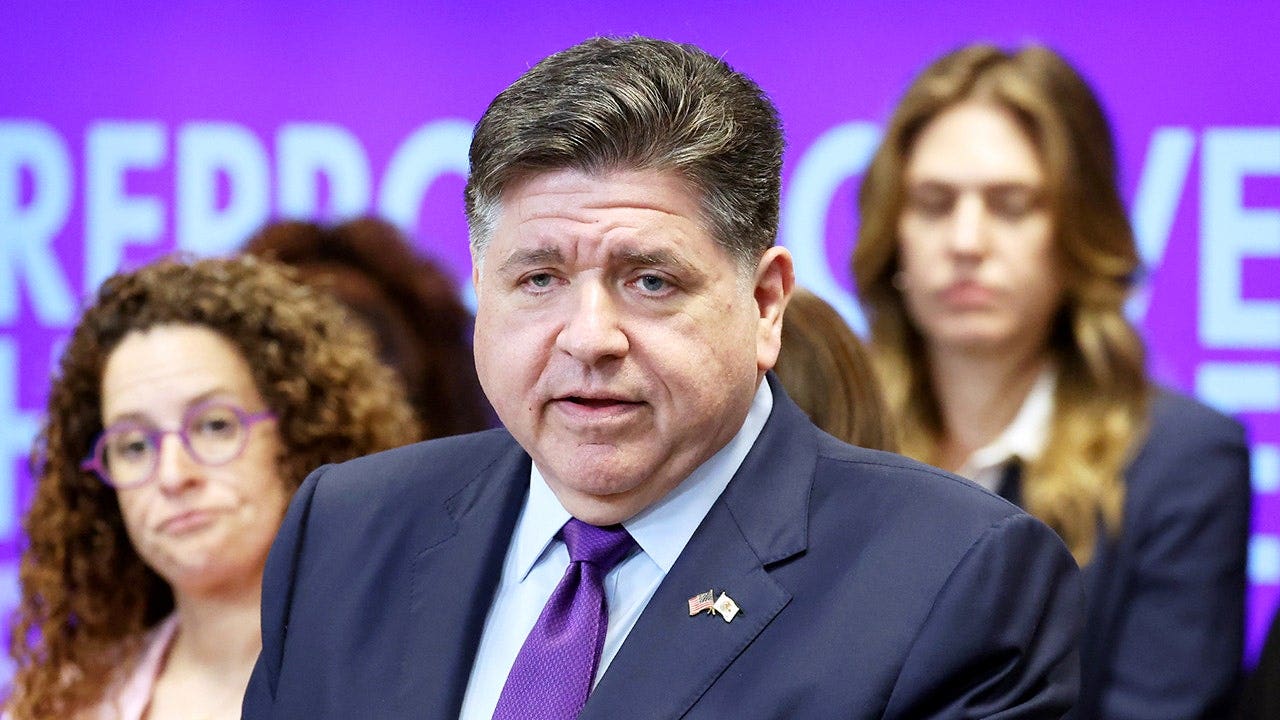
Illinois Democratic Gov. JB Pritzker, widely believed to have presidential aspirations in 2028, is facing pushback from conservative education and school choice advocates over a move to opt out of a Trump federal scholarship tax credit program. Critics say the decision was made based on politics and not student outcomes.
Pritzker announced Tuesday that the state will opt out of the Trump administration’s Federal Scholarship Tax Credit program, refusing to allow Illinois students to receive scholarships funded through the federal school-choice initiative.
In a press release, Pritzker argued that participating in what he labeled a «school voucher program» would siphon money and attention away from public education while subsidizing donations to private schools that could discriminate based on religion, sexual orientation or other characteristics.
GOV KATHY HOCHUL SIGNS NEW YORK ONTO TRUMP’S SCHOOL CHOICE PROGRAM DESPITE TEACHERS UNION OPPOSITION
«At a time when public school education needs investments more than ever, we should not siphon money from public schools for private education — especially as the Trump Administration’s policies decimate education,» Pritzker wrote.
«We have a responsibility to do right by all of our students. Taxpayer funding should not subsidize donations to private schools that could discriminate based on religion, sexual orientation, or other characteristics.»
Prominent conservative education activists and groups lambasted the move on social media, making the case that opting in takes nothing away from public schools and that Pritzker’s refusal simply blocks Illinois students from receiving privately funded scholarships while sending Illinois taxpayers’ charitable dollars to students in neighboring states.
Many also pointed to abysmal test scores in Illinois and noted that Pritzker is siding with the state’s powerful teachers unions.
«It is a remarkably tone-deaf moment from Governor Pritzker, just before Thanksgiving, to deny 1.9 million K-12 students in Illinois access to life-changing educational resources as families are faced with rising costs and an affordability crisis,» American Federation for Children CEO Tommy Schultz said in a press release.
«Make no mistake: The Education Freedom Tax Credit could have unlocked needed resources for families and students, but Governor Pritzker chose to let those resources go to other states.»
Schools for America Executive Director Jane McEnaney wrote on X, «Imagine being Governor of Illinois and hating Donald Trump more than you care about the educational opportunities of 1.9 million kids.»
PROTECTING FAILING SCHOOLS AND SUPPORTING TEACHERS UNIONS IS NOT A WINNABLE STRATEGY, CEO WARNS
Pritzker’s decision comes after three Democratic governors — New York’s Kathy Hochul, Colorado’s Jared Polis and New Mexico’s Michelle Lujan Grisham — agreed to enter the program, saying it brings millions of dollars in additional educational support to students without taking a single cent from public school or state budgets.
The U. S. Department of Education responded to Pritzker’s press release as well, posting on X that by opting out of the program, Pritzker «just handed scholarship dollars from generous Illinois taxpayers to students in other states instead.»
Department of Education official Greg Dolan also weighed in on X, saying «the only true thing in this whole statement from @GovPritzker is his name.»
«May it live in infamy for so callously and cruelly turning his back on helping students in need,» Dolan added.
Erika Sanzi, senior director of communications at Defending Education, told Digital in an interview that Pritzker’s move was «unconscionable» and a «slap in the face» to parents, who will still be able to write off the taxes. But the money will not go to programs and resources for their children or other students in their state.
«You don’t have to like the program, but can you at least describe it honestly and accurately?» Sanzi said about Pritzker’s statement. «They smear it as a voucher program because vouchers is the scary word but, like, putting aside the merits of vouchers, it’s not a voucher program.
«You can stay in the school you’re in and still take advantage of these services. That’s not a voucher program. I wish I could tell you I was surprised by Governor Pritzker. I am not, but I do think it’s disappointing. And I certainly have seen outcry from families in the state that are just extremely frustrated not only by his decision, but by what he said in relation to his decision.»
Digital reached out to Pritzker’s office for comment.
SIGN UP TO GET THE POLITICS NEWSLETTER
The state’s major teachers unions praised Pritzker’s move. Chicago Teachers Union and Illinois Federation of Teachers President Stacy Davis Gates applauded the governor for rejecting what she called «Trump’s voucher scheme,» arguing that «public dollars belong in public schools» and saying the program would pull money out of public education with «zero oversight.»
Illinois Education Association President Karl Goeke similarly thanked Pritzker for rejecting vouchers, calling them a «scam» that sends public money to private schools lacking the same testing standards as public schools.
politics, jb pritzker, education, illinois, controversies education, controversies state and local, dept of education
INTERNACIONAL
Elecciones en España: la inmigración se convierte en un eje central de la campaña mientras se agrava la emergencia en las Canarias
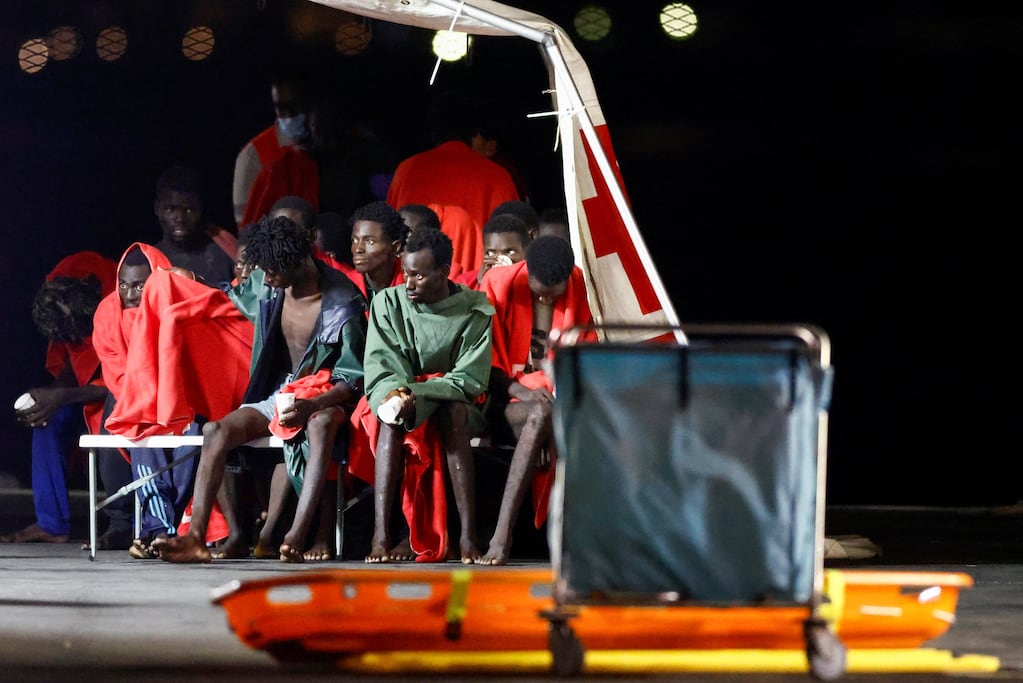
La inmigración es uno de los temas más candentes en la recta final de la campaña en España. A cuatro días de las elecciones generales del domingo, unos 2000 inmigrantes sin papeles llegaron este martes en embarcaciones precarias a las islas Canarias, frente a la costa del noroeste de África.
“Canarias no puede más. Vivimos una presión migratoria sin precedentes”, dijo en X el presidente regional, Fernando Clavijo, de la Coalición Canaria (centroderecha). Solo en la primera quincena de noviembre, 11.037 inmigrantes sin documentos llegaron a ese archipiélago español, según datos oficiales.
Canarias es uno de los dos puntos más calientes en materia migratoria del territorio español, junto con Ceuta, el enclave del norte de África, donde decenas de miles de personas llegaron a fines de julio desde Marruecos, en una de las crisis migratorias más graves de los últimos años.
El tema no escapa a la campaña electoral. Así, el Partido Popular (PP, conservador) propuso la intervención de la Armada y un mayor control fronterizo para frenar la llegada de migrantes. El ultraderechista Vox prometió militarizar las fronteras y deportar en forma inmediata a personas indocumentadas.
Desde la izquierda, el Partido Socialista (PSOE) del jefe de gobierno Pedro Sánchez defendió la inmigración y su integración a la sociedad española, mientras que la líder del Frente Amplio, la exalcaldesa de Barcelona Ada Colau, advirtió que si el líder de Vox, Santiago Abascal, llega al gobierno, imitará la estrategia de Donald Trump y desplegará “un ICE” español para “perseguir” a migrantes, feministas y personas LGTBI.
El Servicio de Inmigración y Control de Aduanas (ICE, por sus siglas en inglés) desató en Estados Unidos una ola de arrestos sin precedentes en ese país. Solo en los últimos cuatro meses se registró un récord de casi 200.000 arrestos.
El número total de deportaciones, en el segundo gobierno de Trump, asciende a unas 980.000 personas, según un informe del Migration Policy Institute.
Qué pasa con la inmigración en España
Ningún partido político español eludió el tema migratorio en campaña. Incluso ha sido uno de los caballitos de batalla de Vox, tercero en las encuestas detrás del PP y el PSOE.
El Centro de Investigaciones Sociológicas (CIS) ubicó a la migración en el segundo lugar de las preocupaciones de los españoles, detrás de la crisis de la vivienda que provocó masivas movilizaciones en distintos puntos del país en las últimas semanas después del desalojo -y posterior fallecimiento- de Maricarmen Abascal, una mujer de 87 años residente en Madrid.
El tema ocupa a diario los informes mediáticos. Se estima que en Ceuta todavía permanecen unos 10.000 inmigrantes de los casi 80.000 que entraron a nado desde Marruecos a fines de julio, lo que desató una gravísima crisis en esa ciudad autónoma española en África que todavía perdura.
La situación fue aprovechada por Vox. Allí realizó uno de sus primeros actos de campaña bajo el lema “Ni uno más”. El partido propuso además expulsiones masivas.
Pero no fue el único. El líder del PP y favorito de los sondeos, Alberto Nuñez Feijóo, viajó a Ceuta poco después de que Sánchez convocara a elecciones anticipadas y allí defendió una nueva ley de extranjería para expulsar en forma inmediata a los migrantes que entren al enclave por mar o tierra.
Lée también: El gobierno de Trump avanza con más aranceles de EE.UU. contra China, Brasil y la UE: qué pasará con la Argentina
Canarias fue otro punto de peregrinaje de candidatos. Allí llegan cientos de migrantes africanos todos los días, en una ruta marítima cosiderada una de las más peligrosas del mundo.
Hoy llegaron a la isla de El Hierro unas 2000 personas a bordo de 14 embarcaciones precarias. Se trata de una cifra sin precedentes en el archipiélago. Las autoridades de El Hierro se declararon a principios de noviembre en “emergencia social”.
Sánchez estuvo en Canarias el 21 de noviembre y defendió la inmigración como factor de prosperidad.
La propuesta del gobierno socialista apunta a favorecer la integración de los inmigrantes. En ese marco, impulso en abril pasado una regularización extraordinaria de extranjeros sin papeles que puedan acreditar al menos cinco meses de residencia continuada en el país.
Este plan es respaldado por el Frente Amplio y Podemos, un partido minoritario de izquierda que rompió con el gobierno de Sánchez en 2023.
Colau, líder del Frente Amplio, también viajó a Canarias en campaña para respaldar la regularización de inmigrantes. “No es una invasión, es una emergencia humanitaria”, dijo, citada por EFE.
España, inmigracion

Los detalles de la “reunión secreta” en el Bayern Múnich por el estado de salud de Jamal Musiala: qué pasará con el jugador

Jornada financiera: el dólar subió por séptimo día consecutivo, cayó el riesgo país y las acciones recuperaron terreno

Fuerte recuerdo: el desgarrador testimonio de Gianinna Maradona sobre la muerte de Diego y la desesperada reacción de Claudia Villafañe en la Panamericana

La Justicia extendió hasta mayo del 2027 la intervención de la UOM

Patricia Bullrich y el fantasma de Pichetto, en un Senado que requiere mantener “seriedad y austeridad”

Canales para ver el Boca Juniors vs Independiente Rivadaviapor para el Torneo Clausura

“Estoy preparada para ser presidenta”: fuerte desafío de Patricia Bullrich a Javier Milei

Financial Times duda de la economía argentina: riesgo país, financiamiento e imagen Milei

El economista Luis Secco cuestionó el programa económico de Milei: “Estamos estancados desde fines del primer trimestre de 2025″

Agustín “Rada” Aristarán se despide de Chanta: “Con esta obra dejé de ser un impostor”

 POLITICA8 horas ago
“Estoy preparada para ser presidenta”: fuerte desafío de Patricia Bullrich a Javier Milei
- ECONOMIA3 días ago
Financial Times duda de la economía argentina: riesgo país, financiamiento e imagen Milei
- ECONOMIA22 horas ago
El economista Luis Secco cuestionó el programa económico de Milei: “Estamos estancados desde fines del primer trimestre de 2025″