INTERNACIONAL
Christians increasingly targeted across Europe as watchdog warns of rising hostility

NEWYou can now listen to Fox News articles!
Attacks targeting Christians across Europe rose 44% last year, according to a new report from the Vienna-based Observatory on Intolerance and Discrimination Against Christians in Europe (OIDAC).
Their research documented 2,465 anti-Christian hate crimes and incidents in 2025, with France, England and Wales, Germany and Austria recording the highest totals.
«Our primary concern with the new data is that anti-Christian attacks that target persons, individuals themselves, have risen,» OIDAC executive director Anja Tang told Fox News Digital. «Clergy and people responsible for places of worship were those who were most attacked and also where numbers increased most strongly.»
CHRISTIAN WOMAN PLEADS NOT GUILTY TO NEW ‘ORWELLIAN’ CHARGES FOR STANDING AND SILENT PRAYER
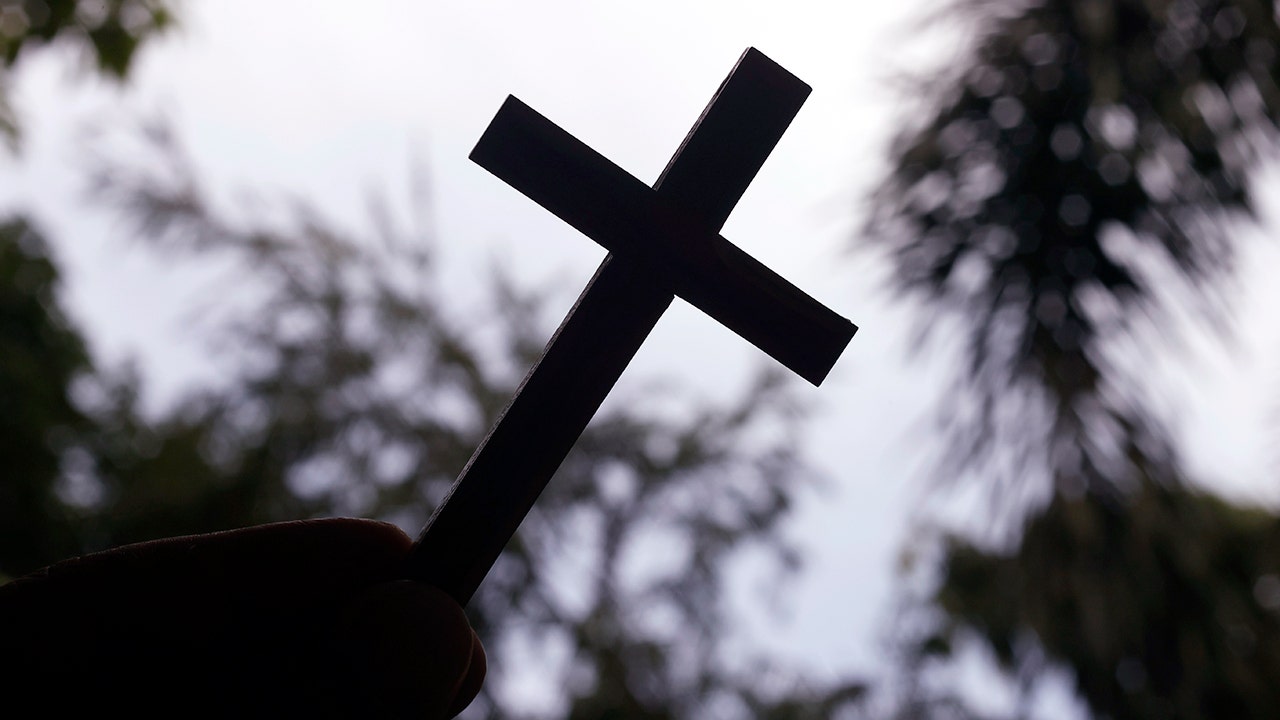
Christian cross against the sky. (Godong/Universal Images Group via Getty Images)
She added, «These would be people who were present, were visible, recognizable as Christians and kind of associated with a church.» Tang noted that while OIDAC’s numbers are «quite conservative,» saying «aggression against individuals is highly underreported» across Europe.
The group said French authorities recorded a 70% increase in attacks on individuals, the highest in Europe, although Tang notes the French government has not yet published a detailed explanation of the increase. OIDAC argues the increase in attacks against individuals warrants separate attention from incidents involving vandalism, theft and arson targeting religious property.
The findings come as the Organization for Security and Co-operation in Europe (OSCE) has begun highlighting anti-Christian hate crimes through a dedicated practical guide, and amid debate over whether attacks on Christians receive the same public attention as incidents targeting other religious communities. Tang said OIDAC is one of the largest contributors of anti-Christian hate-crime data to the OSCE’s reporting system, and OIDAC uses the OSCE’s methodology when classifying incidents.
WORLD-FAMOUS CATHOLIC SHRINE TORCHED, ‘DEVIL IN A SKIRT’ SCRAWLED ON VIRGIN MARY STATUE
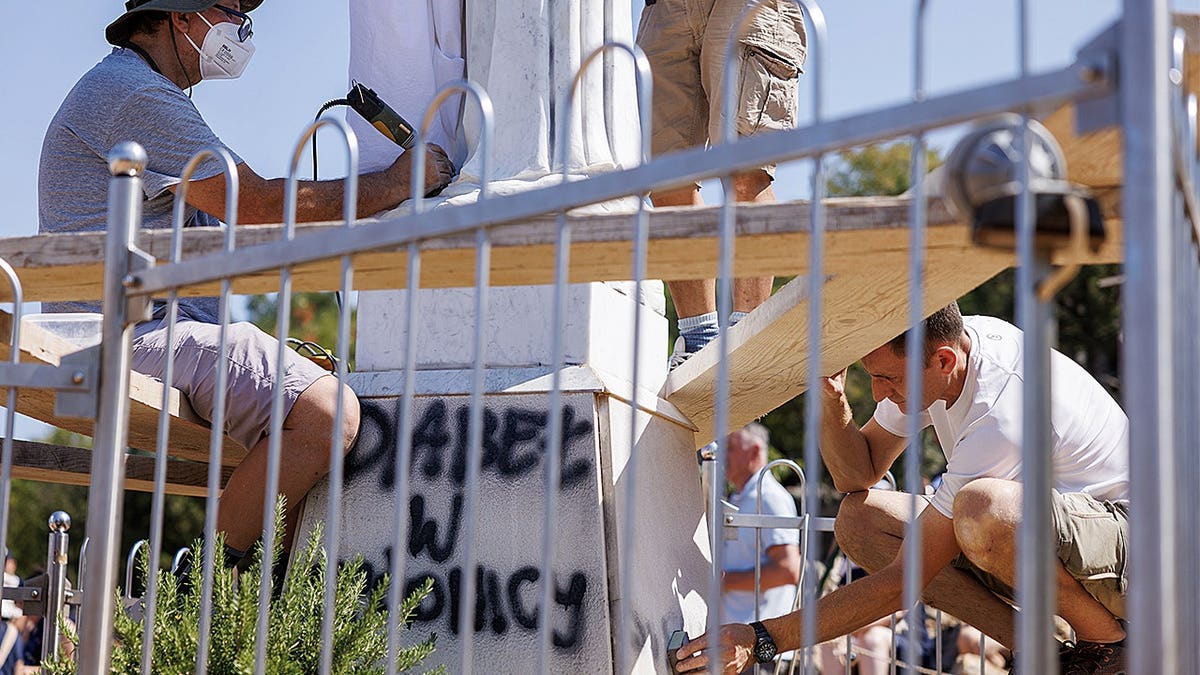
Police were first called around 4:30 a.m. on July 27 after the face and hands of the statue of the Virgin Mary on Apparition Hill, also known as Podbrdo, in Bosnia and Herzegovina, were found covered in black paint. (Associated Press)
The findings have also drawn concern from Alessandro Calcagno, deputy general secretary of the Commission of the Bishops’ Conferences of the EU (COMECE) and advisor on fundamental rights and freedom of religion within the EU. In a statement to Fox News Digital, Calcagno says «the vital and courageous work constantly carried out by» OIDAC «underscores the importance of EU mechanisms to counter a phenomenon that does exist in Europe and that therefore cannot be ignored at the institutional and policy level.»
Lorenzo Vidino, director of the Program on Extremism at George Washington University, says anti-Christian incidents appear to stem from a mix of sources, including anti-religious activists, some individuals from Muslim backgrounds and ordinary vandalism.
Vidino said anti-Christian attacks often receive less public attention than similar incidents involving other faith groups. «There’s no question there’s been acts of violence against Muslims, against Jews and that’s despicable. And when it happens, it is prosecuted,» he tells Fox News Digital. «When the same act happens against churches or Christian sites, it doesn’t happen in the same way.»
STATE DEPARTMENT PRESSES EGYPT TO RESPECT RELIGIOUS FREEDOM AS CHRISTIAN CONVERT FACES POSSIBLE EXECUTION

French police officers stand near Notre Dame in Nice, southern France, Oct. 29, 2020. French President Emmanuel Macron has announced that he will more than double number of soldiers deployed to protect against attacks to 7,000 after three people were killed at a church Thursday. (Eric Gaillard/Pool via AP)
«While the law might be neutral, the common perception of things is not neutral, and so those incidents are not prioritized,» he said.
Calcagno says protecting places of worship «cannot be reduced to acts of terrorism, but should also cover other types of attacks against them,» including vandalism, violence, profanation, disruptions of religious services, arson and harassment.
Tang said OIDAC is also concerned about migrant communities, including Christians fleeing persecution in the Middle East and asylum seekers «who have left Islam behind and are really facing quite severe aggression because of their choice of religion.» She notes these groups «really need protection,» and that most incidents involving these groups go unreported «out of fear of stigmatization.»
Tang said she was surprised by the number of attacks «connected to pro-life convictions» and carried out by «left-wing extremist groups» that OIDAC categorized as anti-Christian incidents in German-speaking Europe, noting «the level of this violence was just significantly more than what I have seen in my time observing these trends.»
CARRYING A BIBLE IN NORTHERN IRELAND HOSPITALS COULD BE A CRIME UNDER ABORTION BUFFER ZONE LAWS

Forensic police officers inspect the scene of a knife attack at Notre Dame church in Nice, southern France, Oct. 29, 2020. An attacker armed with a knife killed three people at a church in Nice, prompting the prime minister to announce that France was raising its security alert status to the highest level. (Eric Gaillard/Pool via AP)
She pointed to a café run by a Leipzig, Germany, church that was forced to close its doors after being vandalized over 26 times because of «their Christian worldview,» and an Austrian church that was forced to evacuate in the middle of holy Mass due to «a fake bomb being placed there by left-wing groups… because it was a prayer connected to a pro-life event.»
She said,»I find it shocking the level of violence that’s often shown by groups who disagree, who plead for tolerance, but then themselves behave the most intolerant.»
Calcagno backs OIDAC’s call for a dedicated EU coordinator on combating anti-Christian hatred, a position COMECE has repeatedly requested and one it «hopes that the European Commission will take up in the near future.» He stressed that such a role would complement existing EU coordinators addressing antisemitism and anti-Muslim hatred, positions that he said «rightly exist at the EU level.»
OIDAC is urging European governments to adopt recommendations contained in the OSCE’s recent practical guide on anti-Christian hate crimes, including improving the recording of incidents, strengthening prevention efforts and expanding support for victims. The group also renewed its call for the EU to appoint a coordinator dedicated to combating anti-Christian hatred.
christianity religion, hate crime, europe, faith, religion







Before polling began to show dire warning signs for the GOP ahead of the midterm elections, some in conservative circles felt they had a not-so-secret weapon that would give them an edge over their Democratic rivals — a massive amount of cash.
Across the Republican National Committee, Senate Leadership Fund, Congressional Leadership Fund, National Republican Congressional Committee and the National Republican Senatorial Committee, the GOP brought in roughly $1.7 billion in funds to fuel its ill-fated midterm campaigns.
The five equivalent Democratic committees, meanwhile, raised well over $300 million less than that total but walked away with massive pickups in even traditionally deep red strongholds like Texas, South Carolina, Kansas and Mississippi.
Experts from across the political spectrum explained this result to Digital by arguing that the impact of money on politics is less than what many in the public may assume and that massive fundraising hauls can only take a party so far when it faces political headwinds as strong as those weathered by the GOP in the run-up to election night.
MUSK PICKS HIS FIRST GOP WARRIORS AS A 2026 MONEY SURGE TAKES SHAPE
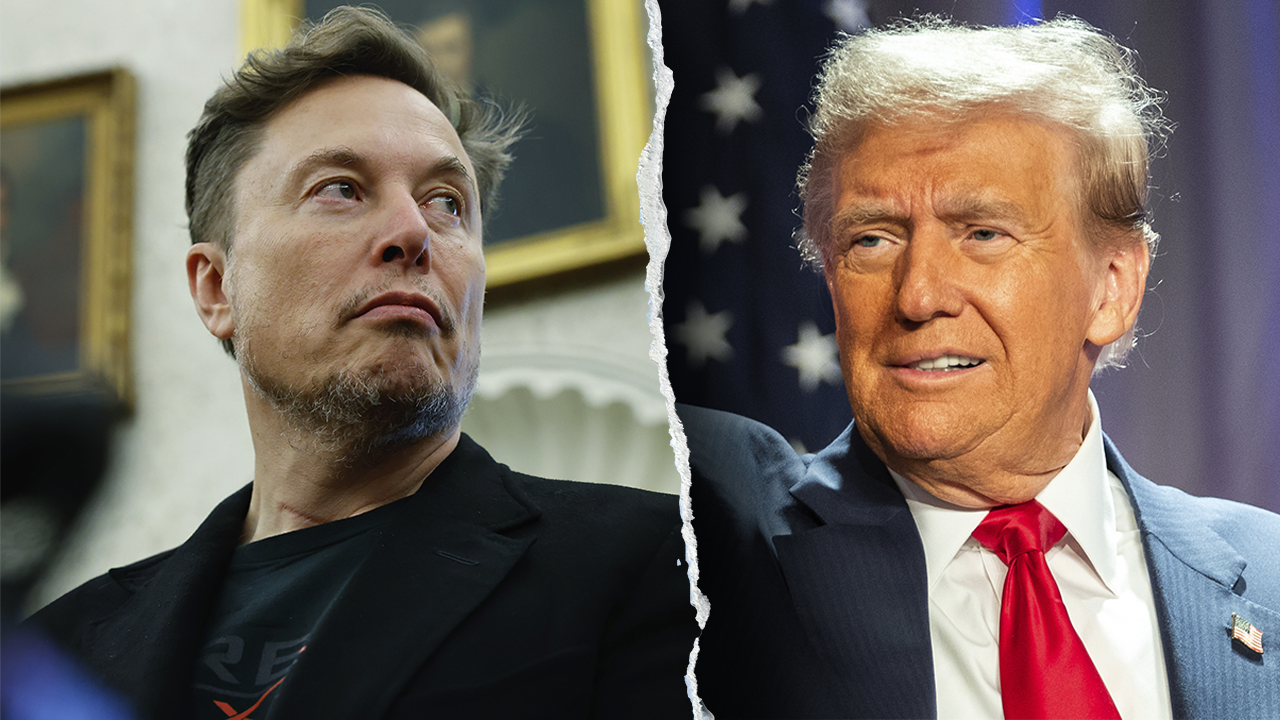
On top of their already significant nine-figure lead, GOP electoral efforts were also buoyed by a duo of PACs — President Donald Trump’s MAGA Inc. and Elon Musk’s America PAC — which themselves collected an additional $665.4 million for Republicans to burn through. Despite such a massive financial edge, the GOP suffered one of its worst midterm performances in history, losing Senate seats even in deep red jurisdictions like South Carolina and Mississippi.
Still, Capital Research Center President Scott Walter, argues: «Money is not magic.»
«Democrats should remember that when tempted to curtail political speech with donation limits, and Republicans should remember that when tempted to think more money automatically means more votes,» the leader of the right-of-center group told Digital. «That will be news to those like Sen. Sheldon Whitehouse, D-R.I., who thinks billionaires and ‘dark money’ control the cosmos.»
Walter pointed out, citing data aggregated by OpenSecrets, that the biggest donor in any given election cycle rarely ends up getting what they want out of the American political system.
Brendan Glavin, the director of insights at OpenSecrets, a nonprofit dedicated to tracking money in politics, told Digital that, while money certainly moves the needle in elections, its actual impact can be blunted by a variety of factors — many of which were at play during the recent midterms.
AI IS SUPERCHARGING POLITICAL AD WARS. BUT VIRAL DOESN’T MEAN VICTORIOUS
«Certainly, you know, the money makes a difference,» said Glavin.
«When both sides are engaging in a sort of arms race, right, and they’re both spending almost equivalently, then really the effect is lost,» he explained. «If you’re somebody [who] sees an ad for one candidate, and then it’s immediately followed by an ad for another candidate… essentially, you’re not moving the needle.»
In many of the marquee races of Election Day, such as the Senate races in Texas and Michigan, both parties had enough money to saturate the airwaves with their messaging, potentially creating the environment described by Glavin.
«This election was very unique,» he told Digital. «What people probably really didn’t see until afterward is there was this significant headwind and voters were feeling a certain way and more ads were not going to change that.»
SCHUMER WARNS OF REPUBLICAN ADVANTAGE THAT COULD CHANGE THE BATTLE FOR SENATE CONTROL
Glavin, to support his argument, pointed to the fact that self-funding candidates running in elections often fail to make much headway, serving as evidence for the claim that ludicrous amounts of money don’t automatically equate to political success.
One of the most obvious recent examples is former New York City Mayor Michael Bloomberg, who spent roughly $1.1 billion of his own money on his 2020 presidential campaign. He won only 55 delegates in the Democratic primaries at an approximate cost of $18 million per delegate.
Academics who spoke to Digital were divided on the impact money has on elections.
«Money has diminishing returns,» Ray La Raja, a professor of political science at the University of Massachusetts, Amherst, told Digital. «And in [an] election wave environment where the president and his party is overwhelmingly disliked or distrusted, money can do little to save them.»
JASON CHAFFETZ: FIVE TIMELESS POLITICAL LESSONS THAT GOT LOST IN 2026
John Sides, a political science professor at Vanderbilt University, meanwhile, pointed Digital to a 2022 study he and two other academics conducted studying the impact of television advertising on election outcomes.
According to their study, there is a relatively direct relationship between ad spending and voter share and, while there is a degree of diminishing returns in elections with very high spending, there is still a marginal impact.
Joe Arlinghaus, a Texas-based conservative political strategist, told Digital that how money is spent matters more than how much of it is spent, an assertion he said could explain why the GOP did so poorly despite its hefty cash advantage.
«Most people understand that new technologies get better and better and better as time goes on,» he said. «Bugs get worked out. Inferior practitioners get pushed aside. Trial and error leads to better and better practices. This is what has been happening in the Democratic election world.»
He noted that Republicans have failed to keep up on that front.
«I am inclined to believe that almost every dollar spent by the big SuperPAC funded by Elon Musk was worthless,» Arlinghaus added.
Glavin shared that perspective, noting how «Musk just recently commented about how he may be regretting a little bit all the money he spent.»
«It’s hard to tell how serious he is about that and whether or not he’ll just come back again for the next election,» he added, speculating that the massive flood of money seemingly doing very little for the GOP on Election Day could cause some megadonors to reconsider their future giving.
THE SOROS POLITICAL MACHINE IS PUTTING MILLIONS TO WORK BEFORE ELECTION DAY — AND ZEROING IN ON KEY RACES
One source familiar with Republican politics told Digital that «advertisements pay for mortgages in Great Falls,» a reference to claims that political consultants spend money in ways that make them wealthier, not necessarily in ways that help candidates win. Great Falls is a wealthy suburb of Washington, D.C.
While Republicans enjoyed an overall fundraising advantage, largely driven by wealthy large-dollar donors, individual Democratic candidates in high-priority races generally raised more money than their Republican rivals, as was the case in Georgia, Michigan and Texas’s Senate elections, among other contests. Some say this should have been an early warning sign for the GOP that grassroots support was wavering, though others are skeptical of such an assertion.
Colin Seeberger, the chief strategy officer at the Center for American Progress Action Fund, a liberal advocacy group, told Digital that the fundraising advantages enjoyed by individual Democrats were a «reflection of voters’ enthusiasm for those individual campaigns.»
He also said voters had an «overwhelming frustration with the direction of the country and how the president and majorities in Congress … were disconnected from what voters said that they wanted [from] the people of their government.»
BLUE WAVE NEARLY SWALLOWED SOME OF AMERICA’S REDDEST STATES AS ELECTION DATA EXPOSES GOP’S CLOSE CALLS
«I’m not sure that the party that raises more definitively has an enthusiasm advantage,» Sides, the Vanderbilt professor, said, pointing to past elections where Democrats have secured more donations than the GOP but lost anyway.
Seeberger echoed Arlinghaus’ claim that Republicans may have squandered some of their financial advantage by making poor spending decisions, saying, «When you’re spending the majority of those sums to talk about issues that register low on the rankings of what voters say are their priorities, there’s going to be limited returns on the impact.»
politics, midterm elections, elections, campaigning, republicans elections
INTERNACIONAL
El gobierno de Trump avanza con más aranceles de EE.UU. contra China, Brasil y la UE: qué pasará con la Argentina
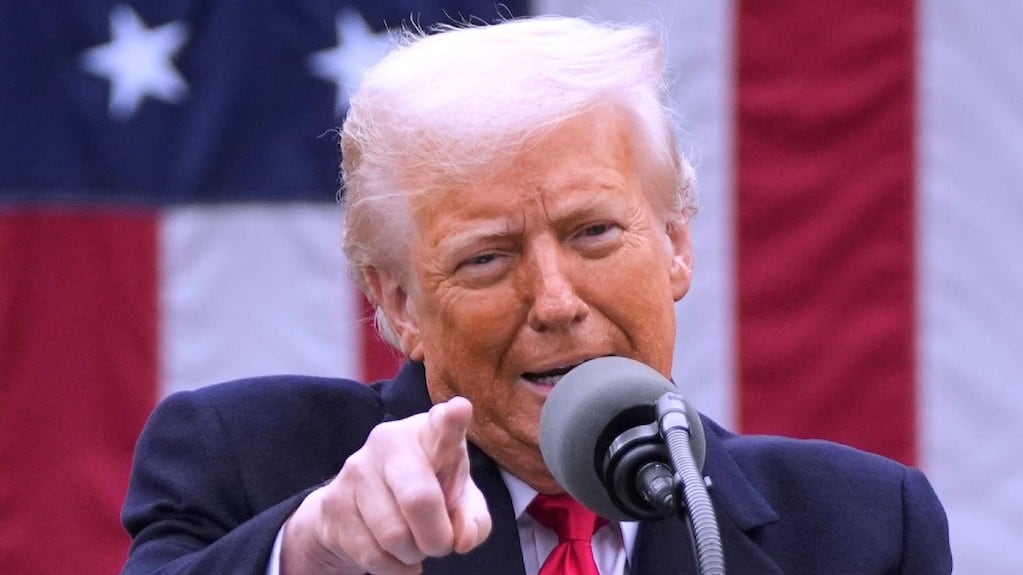
El gobierno de Donald Trump anunció este miércoles nuevas propuestas de aranceles de Estados Unidos contra 14 economías, incluidas China, Brasil y la UE, a las que acusa de apoyar a sus industrias mediante subvenciones que considera ilícitas. La Argentina no está en la lista.
Estos gravámenes, que podrían llegar al 20% en el caso de los productos procedentes de China, no entrarán en vigor hasta dentro de un mes, periodo que permitirá al público y a las empresas presentar observaciones por escrito sobre las propuestas.
“Hoy proponemos una serie de aranceles selectivos para responder a este problema de sobreproducción”, aseguró el representante de la Casa Blanca para el Comercio (USTR), Jamieson Greer, en una entrevista con CNBC.
Los países que serían afectados
Estos nuevos recargos, que se suman a los de al menos el 10% anunciados a finales de julio y que afectan a unos 60 países -entre ellos la Argentina- con el pretexto de combatir el trabajo forzoso, se presentan al finalizar una investigación iniciada en marzo por Greer.
Las medidas propuestas afectan a China y a la UE, así como a India, Bangladesh, Camboya, Indonesia, Japón, Corea del Sur, Malasia, Singapur, Suiza, Taiwán, Tailandia y Vietnam.
El USTR no se pronunció en este momento con respecto a México y Noruega, también investigados.
El gobierno estadounidense considera que el uso de subvenciones por parte de los países afectados provoca una sobreproducción industrial que acaba perjudicando a las empresas estadounidenses.
“Rechazamos firmemente esa idea”, aseguró Olof Gill, portavoz de la Comisión Europea. “Por el contrario, Europa es una de las regiones más expuestas a la sobreproducción”, especialmente la china, afirmó.
Unidos
INTERNACIONAL
Libyans pledge to retaliate after Ukraine strikes Russian warship near Benghazi, killing 2 soldiers

NEWYou can now listen to Fox News articles!
The Libyan National Army (LNA) has vowed to retaliate after a Ukrainian drone attack on a Russian warship moored at a Benghazi port killed two Libyan soldiers.
«With deep sadness and sorrow, and with hearts believing in the decree and destiny of Allah, the General Command of the Libyan Arab Armed Forces mourns two of its heroic sons belonging to the Naval Forces General Staff,» the LNA wrote in a Facebook post on Tuesday.
Calling the Ukrainian attack «sinful aggression,» the LNA also quoted the Quran, writing, «And those who have wronged are going to know to what [kind of] return they will be returned.»
RUSSIA WARNS OF ‘PREVENTIVE NUCLEAR ATTACK’ AS MEDVEDEV CLAIMS UKRAINE, NATO CROSSED LINE
The LNA said the soldiers, identified as Al-Taher Abdullah al-Sadiq and Lieutenant Ali Mohammed al-Said, died Tuesday from injuries sustained during the Sunday attack.
A satellite image shows a capsized and burning Russian naval ship and the northern port area after an explosion aboard a Russian ship docked at the Benghazi naval base, which Libya’s eastern-based government said was caused by a suspected drone attack, in Benghazi, Libya, November 22, 2026. (Vantor/Handout via REUTERS)
Libya’s eastern government, the Government of National Stability, was joined by the country’s U.N.-recognized western government, the Government of National Unity, based in the capital, Tripoli, in criticizing the attack.
US CALLS TURKEY-LIBYA MARITIME DEAL ‘UNHELPFUL AND PROVOCATIVE’ AMID REGIONAL BACKLASH
«The Ministry of Foreign Affairs and International Cooperation of the Government of National Unity has expressed its condemnation and denunciation of statements made by the Ukrainian President regarding the execution of military operations targeting Russian naval vessels in the vicinity of the city of Benghazi,» the Ministry wrote in a statement.
The Tripoli-based government also denied accusations that the Ukrainian attack was launched from Libyan territorial waters.
FRENCH TROOPS SECRETLY DEPLOYED INSIDE UKRAINE AS EX-NATO CHIEF PRAISES MACRON’S ‘GUTS’
«The Ministry categorically rejects the conduct of any foreign military operations within Libyan territory or its territorial waters,» it added.
Despite the denial, Libya’s eastern government requested an investigation into the possibility that the drone strike was launched from Western Libya, citing information that Ukrainian military could be present in «areas around Misrata, Zawiya and other potential locations,» according to news outlet Al Arabiya.
NATO FIGHTER JET CLEARED TO SHOOT DOWN RUSSIAN MISSILE OVER POLAND AS WARSAW PUSHES FOR US TROOPS
Western Libya’s government criticized the Benghazi-based eastern government for hosting Russian ships in the first place.
«Hosting illicit foreign forces and granting them access to national facilities invites the spillover of external conflicts into the country,» Tripoli said, according to Al Arabiya.

A satellite image shows a capsized and burning Russian naval ship and the northern port area after an explosion aboard a Russian ship docked at the Benghazi naval base, which Libya’s eastern-based government said was caused by a suspected drone attack, in Benghazi, Libya, November 22, 2026. (Vantor/Handout via REUTERS)
The Benghazi-based LNA is the military arm of Libya’s eastern government, one half of the ruling party in the North African nation. Following the fall of former Libyan dictator Muammar Qadaffi, rivaling power factions made claims on ruling the nation.
The United Nations-backed western government counts the U.S. and European Union among its supporters. The eastern government is broadly aligned with Russia and is not formally recognized by the U.N.
Russia supported Libya’s vow for revenge.
«Well, certainly, no state will leave an attempt on the lives of its servicemen unpunished,» Kremlin spokesman Dmitry Peskov said in a video.

Kremlin Spokesman Dmitry Peskov moderates Russian President Vladimir Putin’s annual special televised question-and-answer session and year-end news conference, held at the Gostiny Dvor trade and exhibition center in Moscow, Russia, on December 19, 2025. (Sefa Karacan/Anadolu via Getty Images)
Ukraine, while confirming the strike, claimed it was self-defense.
«Ukraine respects the sovereignty and territorial integrity of Libya. We emphasize that Ukraine’s actions are aimed at countering Russian armed aggression and are not intended to harm Libya or its people,» Ukrainian Foreign Minister Andrii Sybiha said in a message posted to Telegram.
Sybiha also said that the ships it attacked — Russian naval vessels and cargo ships transporting military equipment — were valid military targets as defined by the United Nations Charter’s Article 51.
«Ukraine is not ‘dragging’ anyone into the war or ‘transferring’ the war anywhere,» Sybiha added.
Ukrainian President Volodymyr Zelenskyy also confirmed a separate drone strike on a Russian ship in the Gulf of Finland on Saturday.
Reuters contributed to this report.
military, world, armed forces, ukraine, foreign policy, geopolitics, middle east, news events

La Ciudad sancionó a los policías responsables de remover el deck en Caballito y reconoció errores en el operativo

Diego Santilli ensaya en el Senado una defensa del rumbo económico: “No hubo un estallido, hubo crecimiento”

Christians increasingly targeted across Europe as watchdog warns of rising hostility

Why deep pockets weren’t enough to save the GOP in 2026: ‘Money is not magic’

La Casa Rosada reconoce incomodidad por las críticas de Bullrich al plan económico, pero busca evitar que las diferencias escalen

Se confirmó la sede para la final de Copa Argentina entre Boca Juniors y Platense

Financial Times duda de la economía argentina: riesgo país, financiamiento e imagen Milei

“Estoy preparada para ser presidenta”: fuerte desafío de Patricia Bullrich a Javier Milei

El economista Luis Secco cuestionó el programa económico de Milei: “Estamos estancados desde fines del primer trimestre de 2025″

Agustín “Rada” Aristarán se despide de Chanta: “Con esta obra dejé de ser un impostor”

 ECONOMIA3 días ago
Financial Times duda de la economía argentina: riesgo país, financiamiento e imagen Milei
- POLITICA5 horas ago
“Estoy preparada para ser presidenta”: fuerte desafío de Patricia Bullrich a Javier Milei
- ECONOMIA20 horas ago
El economista Luis Secco cuestionó el programa económico de Milei: “Estamos estancados desde fines del primer trimestre de 2025″