INTERNACIONAL
Deadly French wildfires threaten missile plants, nuclear sites as fourth heatwave looms

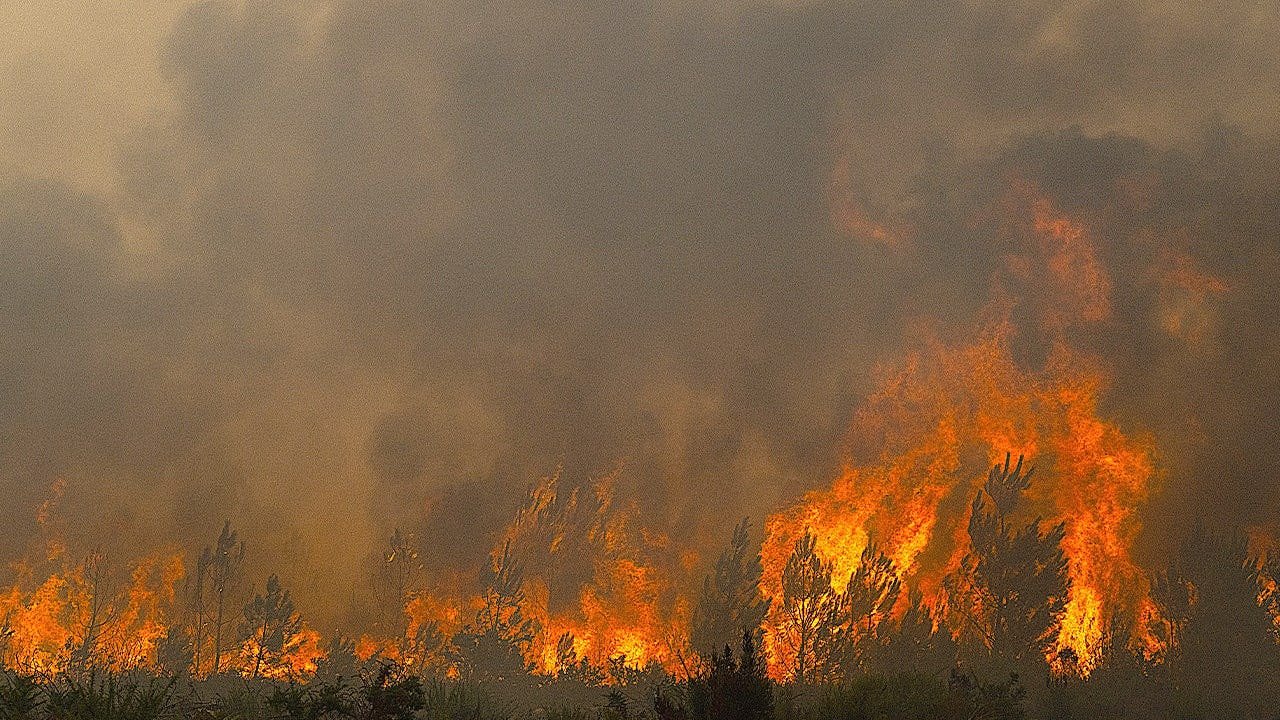
European wildfires force more than 250K evacuations across Spain, France
Wildfires are sweeping across Spain and France, forcing more than 250,000 people to evacuate. One blaze is threatening France’s famed Bordeaux wine region, while Spain has declared a national emergency. France has deployed the military, and the Tour de France has been shortened as firefighters battle the massive blazes.
NEWYou can now listen to Fox News articles!
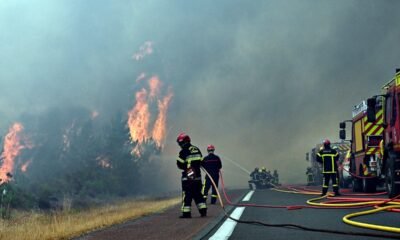
Massive wildfires sweeping through southwestern France are threatening key defense and nuclear sites near Bordeaux, forcing evacuations and emergency measures at missile factories, military research facilities and aerospace plants, according to reports.
The escalating blazes come as France braces for its fourth major heat wave of the year Tuesday, with soaring temperatures and arid conditions increasing pressure on crews battling massive wildfires near Bordeaux, according to Reuters.
Temperatures in the French region were forecast to reach 91 degrees Fahrenheit (33 degrees Celsius), about 13 degrees (7 degrees Celsius) above normal, according to the Reuters Climate Monitor.
EUROPE’S FIRES REVEAL DEADLY MIX OF RECORD HEAT, HUMAN ERROR, ARSON AND LAND MISMANAGEMENT
Wildfires sweeping through southwestern France are threatening some of the country’s most sensitive defense and nuclear facilities. (JULIEN DE ROSA / AFP via Getty)
«The situation we are dealing with today is the most severe we have ever recorded, the toughest since the Second World War,» President Emmanuel Macron, who flew to the area, had said Sunday.
French Economy Minister Roland Lescure said the fires have disrupted more than 13,000 businesses in the Gironde region, with many forced to close or evacuate.
According to The Telegraph, the fires are closing in on missile and rocket factories that store explosive materials.
At least seven sites holding hazardous substances are within 12 miles of the blaze.
FRANCE RECORDS MORE THAN 5,700 EXCESS DEATHS DURING HISTORIC EARLY SUMMER HEAT WAVE
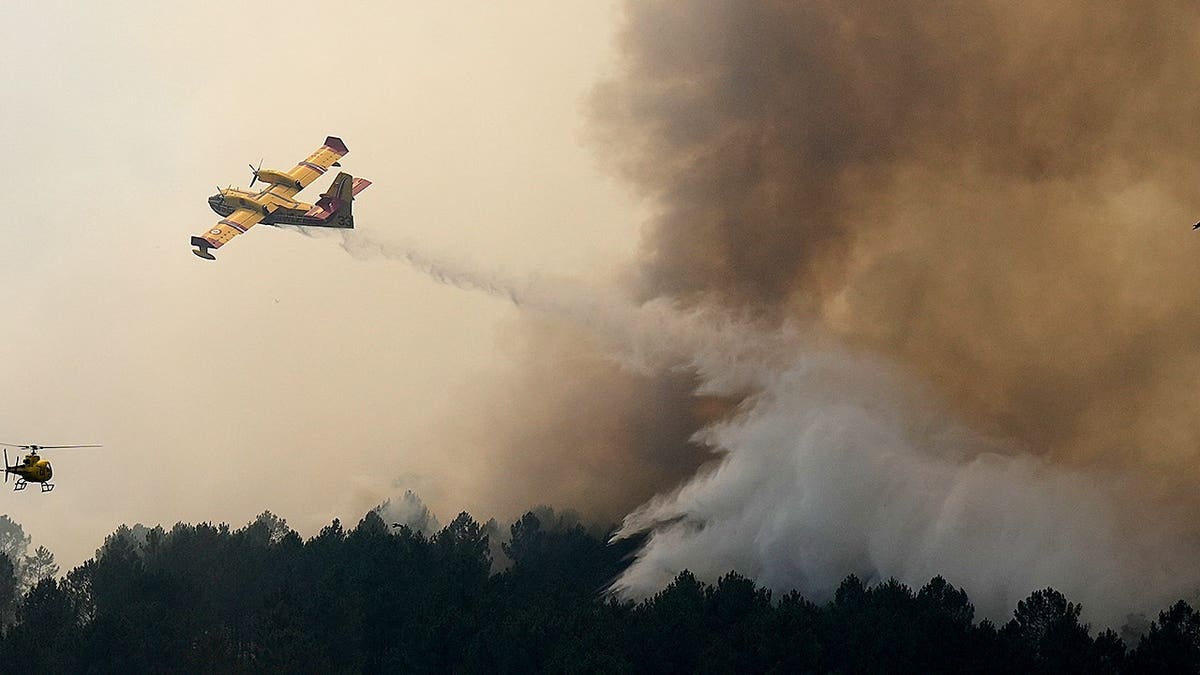
France’s Defense Ministry also said 1,500 military personnel have been deployed since July 25 to support firefighting operations and help secure strategic industrial sites. ((AP Photo/Baz Ratner, Pool))
Saint-Médard-en-Jalles, to the west-northwest, is one of the evacuated towns and is home to a large factory that produces propellants for Ariane space rockets and France’s strategic missiles.
A nearby plant in Sainte-Hélène also produces ammonium perchlorate, a key oxidizer used in solid rocket propellants.
According to Defense News, the fires are also threatening factories that make key parts for France’s nuclear missiles, Rafale fighter jets and military missiles.
ArianeGroup evacuated employees from sites in the fire zone, while France’s Alternative Energies and Atomic Energy Commission (CEA) closed its military research center in Le Barp as the wildfires first advanced toward Bordeaux.
Officials said there is no risk of radioactive leakage because the facility contains no nuclear materials, the outlet reported.
EUROPE’S FIRES REVEAL DEADLY MIX OF RECORD HEAT, HUMAN ERROR, ARSON AND LAND MISMANAGEMENT
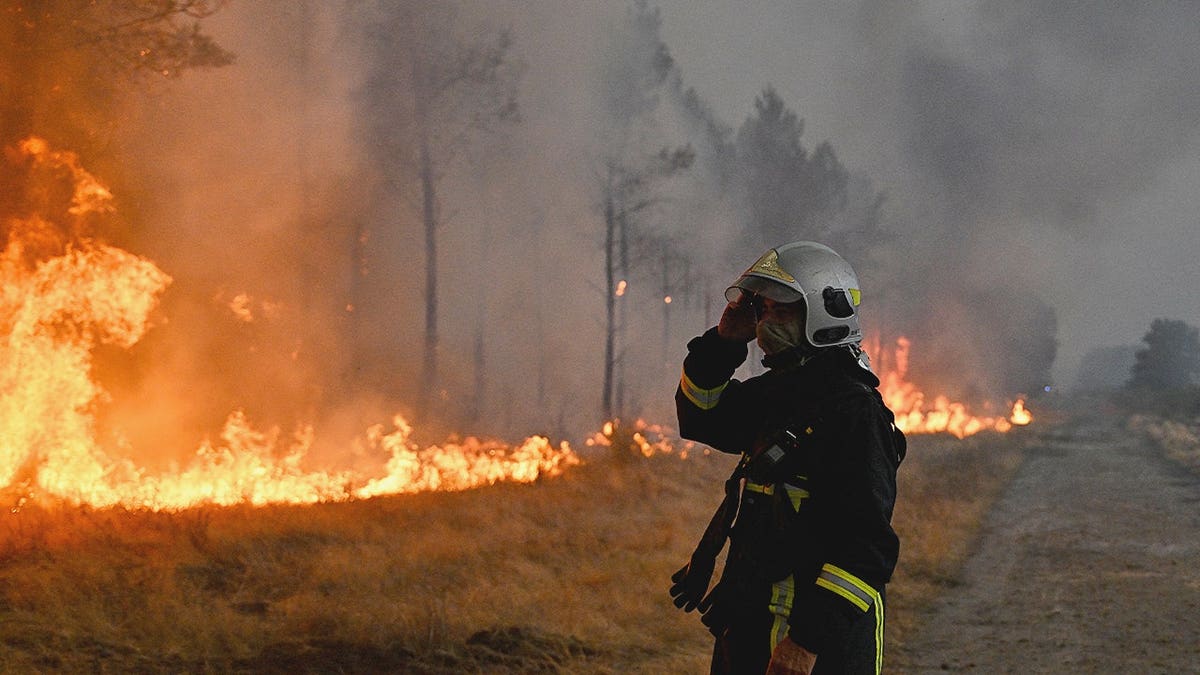
France and Spain battle one of Europe’s worst wildfire seasons in decades, roughly 360,000 people have been forced to evacuate in recent days, while nearly 100,000 hectares have burned. (Associated Press)
French Defense Minister Sébastien Lecornu said July 24 that protective measures had been deployed around the sites «given the nature of the products stored there,» Le Monde said.
Meanwhile, France’s Defense Ministry said 1,500 military personnel have been deployed since Friday to support firefighting operations and help secure strategic industrial sites.
So far, the fires have scorched more than 104,000 acres (42,000 hectares) in the Gironde region, making them among France’s largest wildfires on record.
CLICK HERE TO DOWNLOAD THE FOX NEWS APP
Authorities said about 240 homes have been destroyed, while nearly 4,000 holidaymakers have been evacuated from campsites, holiday villages and tourist resorts in Lacanau, about 35 miles west of Bordeaux.
As France and Spain battle one of Europe’s worst wildfire seasons in decades, roughly 360,000 people have been forced to evacuate in recent days.
france, europe, fires disasters, wildfire











INTERNACIONAL
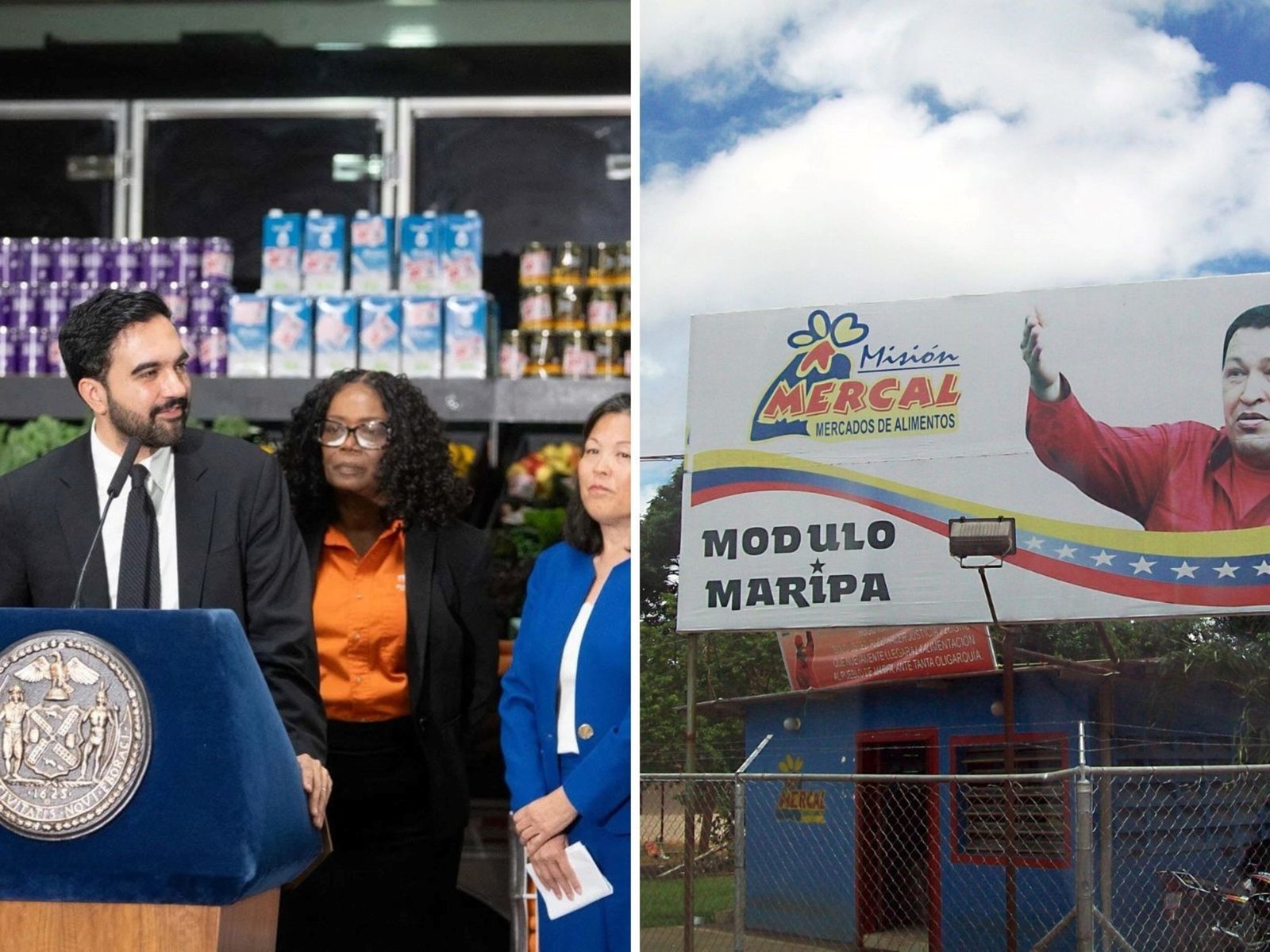
Los supermercados municipales de Zohran Mamdani con 30% de descuento están destinados al fracaso: la lección de MERCAL en Venezuela, los fantasmas de Detroit y la Nueva York de 1975
El presupuesto de los $125.800 millones de dólares: parches, recortes y la «herencia pesada»

El espejo de MERCAL y la anatomía del colapso venezolano


¿Por qué Nueva York no es Venezuela? Diferencias y la visión de la diáspora venezolana


Los antecedentes urbanos: la «Vía Detroit» y la crisis de Nueva York de 1975


De México a la India: el fracaso de los subsidios al abasto en modelos internacionales


Las señales de alerta financiera en el mercado de 2026 para Nueva York


NEWYou can now listen to Fox News articles!
Artificial intelligence is fundamentally transforming the global economy at breakneck speed, but Diogo Costa argues that the real threat to prosperity isn’t technological disruption; it’s the return of bad economic ideas.
As the president of FEE (the Foundation for Economic Education), America’s oldest free-market think tank, Costa is concerned that the affordability crisis is providing the perfect opportunity to tempt the next generation with the ideas of socialism, and argues that economic education is the antidote.
Recently, he sat down with Fox News Digital at Freedom Fest in Las Vegas for a discussion about the intellectual defense of free markets, the intersection of freedom and technology, and how his upbringing in Brazil brings a unique perspective to today’s economic policy debates.
GEN Z IS WORKING HARD, BUT THE ECONOMY IS PUTTING THE AMERICAN DREAM OUT OF REACH FOR MANY
«The biggest challenge today is the different ways that ‘anti-economics’ keeps reappearing. And this time, it’s reappearing through a new kind of socialism. So through the 20th century, we had different flavors of socialism, labor union socialism, environmental socialism, anti-globalization socialism. Now we see this cost-of-living socialism, affordability crisis socialism.»
While young people are aware that they are better off in a market economy, Costa argues, they still want heavy-handed intervention if they perceive it benefits them.
«Young people, they want to live in a market economy. They don’t want to move to Venezuela or Cuba, but they want price controls in everything. They want to freeze the rent, they want free rides in buses, they want to make sure that groceries are either run by the government or price controlled somehow. And this is not just a phenomenon in New York City or California. This is something that’s happening globally.
«And this is the new kind of ‘anti-economics.’ So, Leonard Read [founder of FEE] understood that economics is always one generation away from turning prosperity into poverty. The good ideas need to keep being recycled, they need to be reframed, and this is a challenge that we have right now, the rise of this Gen Z affordability socialism.»
He further argues that while the technology produced by vibrant market economies has incredible potential, the ideological foundation of capitalism is under attack like never before:
«We’re in a golden age for technology, not necessarily for the ideas behind it…the ideas behind the market economy are not as well understood. And when you talk about AI, people are thinking all the jobs are going to be gone. Humanity is on the verge of extinction.
«So there is a lot of pessimism at the same time that you have these wonderful technologies. So the ideas that help us explain and help us work with technology are what’s missing.»
Costa’s studies of the Austrian school of economics lead to separating the economic power of the free-market from its cultural power:

March 2, 2012: Traders crowd on the floor of the New York Stock Exchange. (AP)
«Joseph Schumpeter, the Austrian economist, said that capitalism would be economically powerful and at the same time culturally weak because you have companies that will be doing amazing things, but capitalism makes things more abstract…and at some point people stop seeing exactly how they are part of this amazing complexity.
DEMOCRATS LURE ‘POLITICALLY HOMELESS’ GEN Z TOWARD SOCIALISM — A COUNTERATTACK IS TAKING SHAPE
«That’s why with FEE we sometimes go back to a pencil. We just ask people ‘do you understand how a pencil is made?’ Because if you see the complexity, the network, the amazing, marvelous market system around… Just building a single pencil, you start to understand how you are part of the complexity and you benefit from it.»
Costa’s own experience growing up in Brazil during the economically chaotic 1990s was pivotal in shaping his outlook on policy and the need for economic education.
«I grew up in a country that had hyperinflation. When I was 10 years old, 11 years old, yearly inflation was above 1000%, 1200%, 1300%. That meant the prices were changing literally every day. And it’s hard to understand how if you live in a society that is that economically chaotic all your life is designed around those problems.
«So as a child, when I was going to the grocery store because my mom gave me a $1,000 bill to buy a bag of chips, I had to think, ‘Oh, I need to get there before the price tagger starts changing the prices’.»
«My parents had to turn a bedroom in our house into a pantry because when they got their paychecks the first thing they did was go to the grocery store and buy everything you can…So your life starts to be designed around these big issues. And this is something that some people take for granted.»
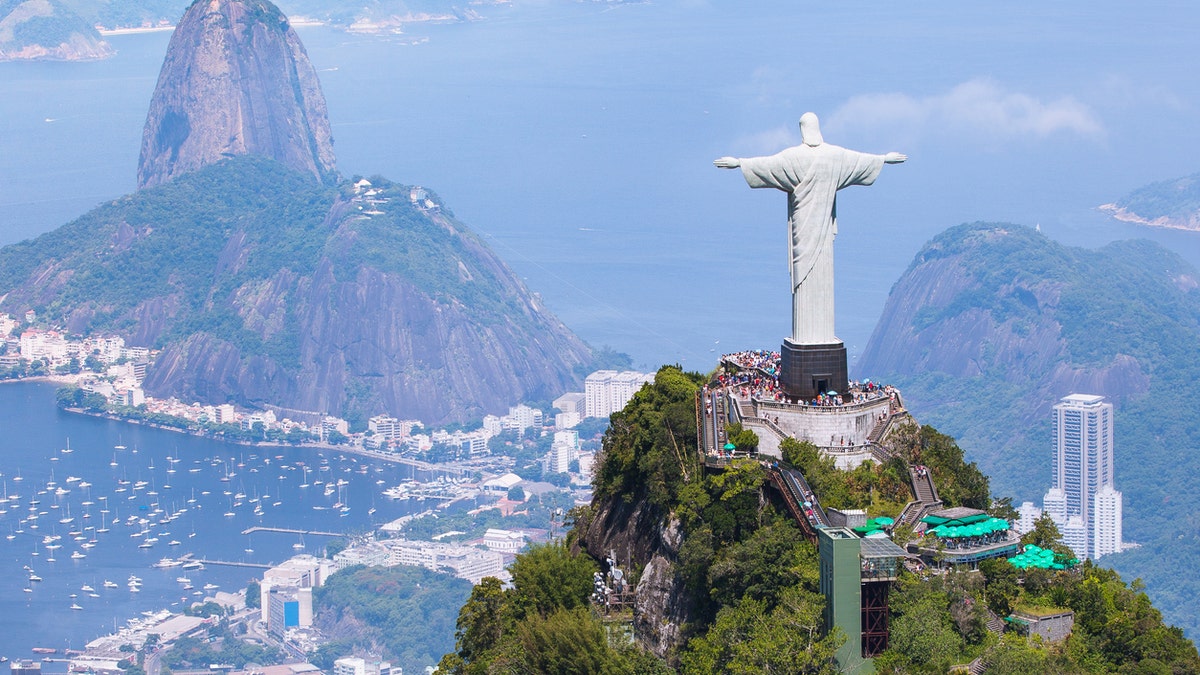
Rio de Janeiro, Brazil – December 28, 2013: Aerial view from a helicopter of Rio de Janeiro with the Corcovado mountain and the statue of Christ the Redeemer with Sugarloaf mountain in the background. (iStock)
But it was not only hyperinflation that opened Costa’s eyes about economic education; he also first hand the effects of a fundamentally protectionist economic system:
«It’s the same thing with protectionism…as a young boy in the early 90s, I wanted video games. Brazil had strict protectionism. So I could buy these dupe video games, but I couldn’t get the real deal. And this was something that people now take for granted, but this was how the Brazilian economy was being shaped.
CLICK HERE TO DOWNLOAD THE FOX NEWS APP
«And Milton Friedman has this saying that he thinks that we never actually learn economics as humanity, we learn as individuals, we learn maybe as generations, but now that we don’t live under hyperinflation people forget what that’s like, now that we don’t live under hyperprotectionism people forget what it’s like. So it’s very easy to drift towards inflation, to drift towards protectionism, to drift towards anti-economics and economics needs to be re-taught every generation.»
economic policy, economical rights, politics, education
INTERNACIONAL
Keiko Fujimori asumió la presidencia del Perú con el desafío prioritario de lograr gobernabilidad y combatir la inseguridad
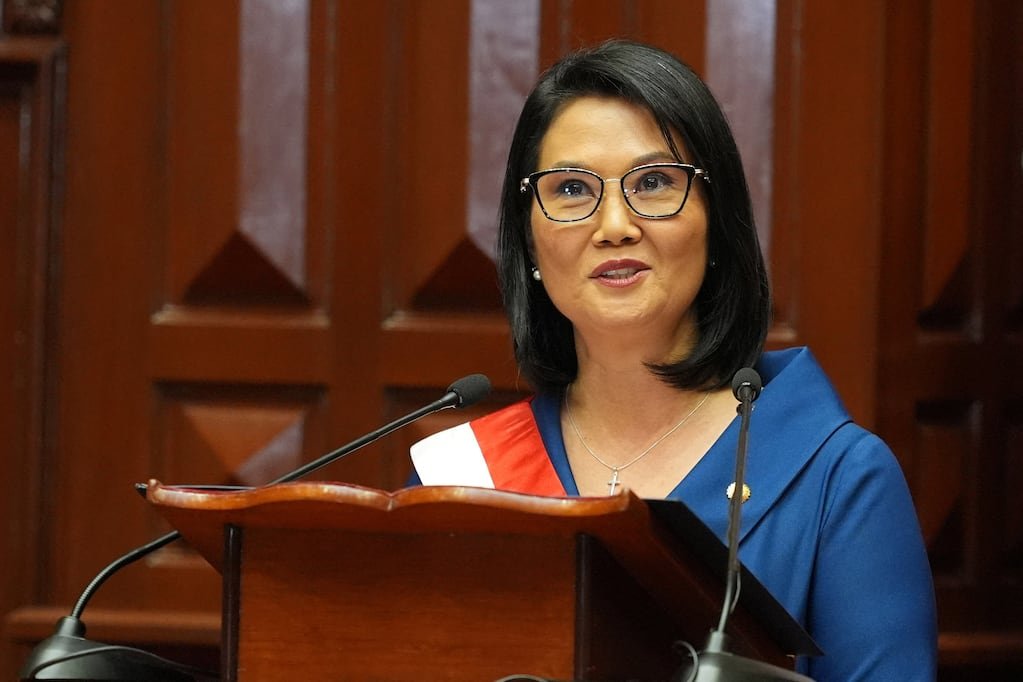
Keiko Fujimori juró este martes como la novena presidenta del Perú en la última década. Se trata de la primera mujer que asume la presidencia por voto popular en el país.
Lo hizo en una ceremonia celebrada en el Congreso peruano, a la que asistió Javier Milei, entre otros presidentes latinoamericanos. Allí precisamente es dónde se jugará el futuro de su gestión.
“Juro que cumpliré y haré cumplir la Constitución política y las leyes de Perú. Velaré por la integridad física y moral de todos los peruanos, en especial de quienes han sido históricamente postergados. Trabajaré por un país seguro, próspero y unido”, afirmó.
La dirigente derechista, hija del expresidente devenido en dictador Alberto Fujimori, asumió en su cuarto intento de llegar al poder y 36 años después de la asunción de su padre, el 28 de julio de 1990.
Keiko Fujimori, de 51 años, tendrá ahora el enorme desafío de lograr gobernabilidad en un país que tuvo ocho presidentes en los últimos 10 años y combatir la creciente violencia ciudadana.
“Desde que su papá salió del gobierno (en el año 2000), es la presidenta con mayor poder” en el Perú, resumió a TN el analista peruano David Rivera.
Cuáles son los principales desafíos del nuevo gobierno
Keiko Fujimori, hederera del viejo y cuestionado “fujimorismo”, tiene por delante cinco años de gobierno, en un país donde los presidentes duran poco más de un año en promedio.
En la última década ocho mandatarios fueron derrocados por el Congreso, en un régimen de inestabilidad política que genera una gran descreimiento ciudadano en las instituciones y en especial en los partidos políticos.
Así llegó Keiko Fujimori al Congreso antes de su toma de posesión en Lima, Perú, este martes. (Foto: Miguel Paredes/AP)
Pero Keiko Fujimori tendrá algo a favor. Llega al poder con una fuerte influencia en el Congreso, que pasa desde ahora a ser bicameral.
“Estamos pasando a un sistema bicameral. Ella tiene la mayoria en el Senado. Además, se ha encargado de capturar en los últmos años los órganos de justicia, como el Tribunal Constitucional, la Junta Nacional de Justicia y el Ministerio Público, y ahora tiene el poder ejecutivo”, dijo Rivera.
Para Rivera, el único punto débil que tendrá el nuevo gobierno estará en la Cámara de Diputados, donde la oposición tendrá mayoría.
“Ese es el único mecanismo de negociacion que tendrá la oposición para tratar de contener al gobierno”, indicó el analista.
Pero más allá de esto, Keiko Fujimori tendrá una ventaja política que no tuvieron ninguno de los presidentes que llegaron tras la renuncia de su padre, a pesar de que su victoria en el balotaje sobre el izquierdista Roberto Sánchez fue de menos de 50.000 votos.
Leé también: Un sismo de magnitud 7,1 sacudió a Japón: hay heridos, edificios colapsados y alerta de tsunami
¿Cuál es esa ventaja? Cuenta con los números suficientes en el Parlamento para frenar cualquier intento de destitución.
“Definitivamente Keiko Fujimori asume el gobierno con mayor poder que cuaquier presidente en la ultima década. No hay ningun posibilidad de que se ejerza contra ella la figura de la vacancia”, dijo a TN el analista Fernando Tuesta.
Además, afirmó: “Asume el poder sin las limitaciones que tuvieron sus antecesores. Tiene todo a su favor y el apoyo del empresariado y las Fuerzas Armadas. Empieza un quinquenio con cambios a nivel de las instituciones y de los poderes del Estado”.
Inseguridad y economía
Además de la gobernabilidad, el mayor desafío del nuevo gobierno será el de combatir la inseguridad ciudadana, considerada la mayor preocupación de los peruanos ante el creciente poder del crimen organizado y su estela de violencia, extorsión y amenazas.
Solo en el transporte público, las extorsiones a choferes causaron 152 asesinatos en Lima y en la vecina provincia del Callao entre agosto de 2024 y mayo de 2026.
La nueva presidenta prometió “mano dura” para “ordenar el Perú”. Entre sus planes figuran la construcción de al menos cinco cárceles, una de ellas de máxima seguridad, al estilo de su par salvadoreño, Nayib Bukele.
En su discurso de asunción, Fujimori anunció que los militares recuperarán el control del “orden interno” en las zonas asediadas por bandas criminales, el narcotráfico y la minería ilegal.
“Durante los estados de emergencia, las Fuerzas Armadas asumirán temporalmente el liderazgo de las operaciones de seguridad y del control del orden interno”, indicó.
También en el orden económico, Fujimori deberá poner énfasis en ordenar las cuentas fiscales ante un elevado y creciente gasto público y atraer inversiones extranjeras, a pesar de la estabilidad macroeconómica que goza el país.
Pero además deberá afrontar el peligro del fenómeno de El Niño que amenaza elevar las temperaturas del mar con sus secuelas de lluvias e inundaciones en las áreas costeras. Los expertos advierten que este fenómeno meteorológico tendrá efectos nunca vistos a fin de año.
Perú, Keiko Fujimori

Mauro Icardi compartió fotos subidas de tono de la China Suárez y le dejó una declaración de amor

Un estudio afirma que el peronismo retiene a más votantes jóvenes que La Libertad Avanza en barrios populares

Fue multicampeón en River, jugó el Mundial 2026 y podría seguir su carrera en Peñarol…

Juan Grabois dio detalles de su encuentro con Peter Thiel: “Perderse la oportunidad es una estupidez”

Jornada financiera: las oscilaciones de Wall Street y la caída del petróleo condicionaron a los activos argentinos

Garfield: Escape from Monday muestra en gameplay sus primeros 8 minutos – Nintenderos

Crisis entre Milei y Lula: la trama política, personal y geopolítica detrás del mayor choque diplomático entre Argentina y Brasil

Cuentapropismo emocional en lo profundo del conurbano

San Isidro: la ballena que quedó varada en un banco de arena murió pese al operativo de rescate

Joaquín Furriel contó cómo fue ver la final del Mundial con su novia española: “Una situación incómoda”

 POLITICA2 días ago
Crisis entre Milei y Lula: la trama política, personal y geopolítica detrás del mayor choque diplomático entre Argentina y Brasil
- POLITICA3 días ago
Cuentapropismo emocional en lo profundo del conurbano
- SOCIEDAD2 días ago
San Isidro: la ballena que quedó varada en un banco de arena murió pese al operativo de rescate